A 60-year-old mildly obese woman presents with recurrent chest pain on exertion, which has occurred over several years. She also reports painful leg cramps when walking. Her fasting blood glucose is 160 mg/dL and total serum cholesterol is 370 mg/dL. The ECG is normal and cardiac-specific proteins are negative. What is the most likely underlying condition causing her chest pain?
Destination therapy is indicated in which of the following conditions?
Which of the following is true regarding an opening snap?
A 65-year-old man, who is on aspirin, statins, and beta-blockers for chronic stable angina, develops chest pain for the past 4 hours. He becomes unconscious and unresponsive while talking to the doctor on duty. An ECG was done. What is the best step for management of this patient?

What is the most common cause of acute cor pulmonale?
What is the characteristic JVP finding in right ventricular infarction?
All of the following conditions are more commonly associated with LBBB pattern than RBBB pattern on ECG, except?
Inferoposterior wall myocardial infarction will show changes in which of the following leads?
A 56-year-old man experiences episodes of severe substernal chest pain with moderate exertion, which have increased in frequency and severity over the past year. The pain is relieved by sublingual nitroglycerin. Physical examination reveals a regular pulse of 78/min, with no murmurs or gallops. Laboratory studies show creatinine, 1.1 mg/dL; glucose, 130 mg/dL; and total serum cholesterol, 223 mg/dL. Which of the following cardiac lesions is most likely present in this man?
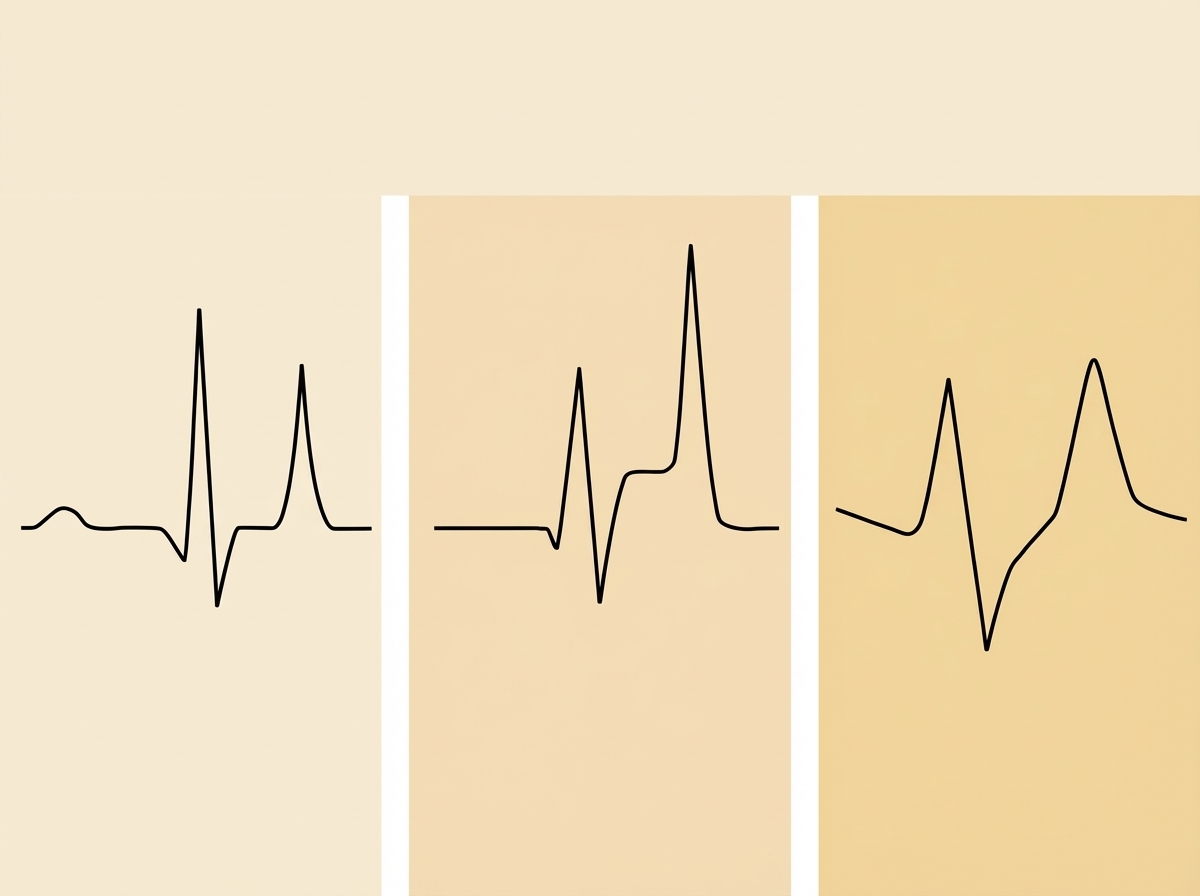
Which of the following conditions presents with a constant PR interval?
Explanation: **Explanation:** The patient presents with **Stable Angina Pectoris**, characterized by recurrent chest pain on exertion over several years [1]. The underlying pathophysiology is a mismatch between myocardial oxygen supply and demand [2], most commonly caused by **Atherosclerosis of the coronary arteries**. **1. Why Option A is Correct:** The patient has multiple major risk factors for atherosclerosis: **Age (60 years), Obesity, Diabetes Mellitus** (Fasting Glucose 160 mg/dL), and **Hypercholesterolemia** (Total Cholesterol 370 mg/dL) [4]. Furthermore, her "painful leg cramps when walking" suggest **Intermittent Claudication**, a hallmark of Peripheral Arterial Disease (PAD) [3]. The presence of systemic atherosclerosis (PAD) significantly increases the probability that her chest pain is due to coronary artery disease (CAD). **2. Why Other Options are Incorrect:** * **Option B & D:** Congenital anomalies or an intramural (myocardial bridge) course of the LAD can cause ischemia, but they typically present in younger patients and are not associated with metabolic risk factors like diabetes and hyperlipidemia. * **Option C:** Coronary arteritis (e.g., Polyarteritis Nodosa or Takayasu arteritis) is rare and usually presents with systemic inflammatory signs (fever, weight loss, elevated ESR/CRP), which are absent here. **Clinical Pearls for NEET-PG:** * **Stable Angina:** Pain occurs when the coronary lumen is narrowed by **>70%**. * **Metabolic Syndrome:** This patient likely meets the criteria (Obesity + Hyperglycemia + Dyslipidemia), which is a potent driver of premature atherosclerosis [4]. * **Normal ECG/Negative Biomarkers:** This is expected in stable angina; biomarkers (Troponin/CK-MB) only rise during acute myocardial infarction (necrosis) [1]. * **Gold Standard Investigation:** Coronary Angiography (though Stress ECG/TMT is often the initial screening step).
Explanation: **Explanation:** **Destination Therapy (DT)** refers to the permanent implantation of a **Left Ventricular Assist Device (LVAD)** in patients with end-stage (Stage D) Heart Failure who are not candidates for a heart transplant [1]. 1. **Why CHF is the Correct Answer:** In patients with refractory **Congestive Heart Failure (CHF)**, the heart can no longer pump enough blood to meet metabolic demands despite maximal medical therapy. LVADs are used in two ways: * **Bridge to Transplant (BTT):** Temporary support until a donor heart is available [1]. * **Destination Therapy (DT):** Permanent support for patients ineligible for transplant (due to age or comorbidities) to improve survival and quality of life [1]. 2. **Why Other Options are Incorrect:** * **Myocardial Infarction (MI):** Acute management involves reperfusion (PCI/Thrombolysis). While MI can lead to CHF, DT is not an acute treatment for MI. * **Arrhythmia:** Managed with anti-arrhythmics, cardioversion, or implantable cardioverter-defibrillators (ICD), not mechanical circulatory support as a destination. * **Infective Endocarditis (IE):** Managed with prolonged antibiotics or valve replacement surgery. Active infection is actually a contraindication for LVAD implantation. **High-Yield Clinical Pearls for NEET-PG:** * **Indication:** NYHA Class IV heart failure with an Ejection Fraction <25%. * **Device Type:** Continuous-flow pumps (e.g., HeartMate 3) are currently the gold standard. * **Common Complication:** The most common cause of death post-LVAD is stroke (hemorrhagic or ischemic) and GI bleeding (due to acquired von Willebrand syndrome) [1]. * **Physical Exam:** Patients with continuous-flow LVADs often have **absent peripheral pulses** and unmeasurable blood pressure by traditional sphygmomanometry; Mean Arterial Pressure (MAP) is measured via Doppler.
Explanation: ### Explanation **1. Why Option A is Correct:** The **Opening Snap (OS)** is a classic physical finding in **Mitral Stenosis (MS)** [1]. It is a sharp, high-pitched, snappy diastolic sound caused by the sudden tensing of the chordae tendineae and the stenotic valve leaflets as they reach their maximum opening limit. It occurs shortly after the second heart sound (S2), specifically during the early diastolic phase when the left atrial pressure exceeds the left ventricular pressure [1]. **2. Why the Other Options are Incorrect:** * **Option B:** An opening snap is associated with the **mitral valve** (and rarely the tricuspid valve), not the aortic valve [1]. Opening of a stenosed aortic valve produces an **ejection click**, which is a systolic sound [1]. * **Option C:** While pulmonary hypertension can occur as a complication of mitral stenosis (leading to a loud P2), the opening snap itself is a direct result of the **valvular anatomy and pressure gradients**, not the pulmonary artery pressure. * **Option D:** The OS occurs **after** the second heart sound (S2) [1]. The sequence is: S2 (A2-P2) → OS → Diastolic Rumble [2]. **3. High-Yield Clinical Pearls for NEET-PG:** * **S2-OS Interval:** The interval between the Aortic component of S2 (A2) and the Opening Snap is an indicator of the **severity of Mitral Stenosis** [1]. * **The Rule of Inverse Proportions:** A **shorter A2-OS interval** indicates **more severe MS** [1]. This is because higher left atrial pressure causes the mitral valve to "snap" open earlier in diastole. * **Disappearance of OS:** The opening snap disappears if the valve becomes **severely calcified** or immobile, as the leaflets can no longer "snap" open [1]. * **Best heard at:** The apex or the left lower sternal border using the **diaphragm** of the stethoscope (due to its high pitch).
Explanation: ***Non-synchronous DC shock*** - Patient with **acute coronary syndrome** who becomes unconscious likely has **ventricular fibrillation (VF)** or **pulseless ventricular tachycardia (pVT)**, requiring immediate **defibrillation**. - **Non-synchronous DC shock** (defibrillation) is the definitive treatment for **shockable rhythms** like VF/pVT in cardiac arrest. *Chest compressions* - While **CPR** is essential in cardiac arrest, **defibrillation takes priority** in witnessed arrest with shockable rhythms. - Chest compressions should be started immediately after defibrillation if **return of spontaneous circulation (ROSC)** is not achieved. *IV amiodarone* - **Antiarrhythmic medication** used after **3 unsuccessful defibrillation attempts** in the ACLS algorithm. - Not the **first-line treatment** for VF/pVT; immediate electrical therapy is more effective than pharmacological intervention. *Synchronous DC shock* - **Cardioversion** is used for **hemodynamically unstable** but **conscious patients** with organized rhythms like **atrial fibrillation** or **ventricular tachycardia with pulse**. - **Synchronization** prevents shock delivery during the vulnerable **T-wave period**, which is irrelevant in VF where there are no organized QRS complexes.
Explanation: Explanation: Cor pulmonale is defined as right ventricular (RV) hypertrophy or dilatation resulting from diseases affecting the pulmonary vasculature or parenchyma. The key to answering this question lies in the word "Acute." 1. Why Pulmonary Thromboembolism (PTE) is correct: Acute cor pulmonale occurs when there is a sudden, massive increase in pulmonary vascular resistance, leading to acute RV pressure overload and failure. Pulmonary thromboembolism is the most common cause of this phenomenon [1]. A large embolus (such as a Saddle Embolus) mechanically obstructs the pulmonary arteries, causing a rapid rise in pulmonary artery pressure that the thin-walled right ventricle cannot compensate for, leading to acute dilatation [1]. 2. Why the other options are incorrect: * Chronic Obstructive Pulmonary Disease (COPD): This is the most common cause of Chronic cor pulmonale worldwide. It leads to RV hypertrophy over years due to chronic hypoxia-induced vasoconstriction and destruction of the pulmonary capillary bed. * Pneumonia: While severe pneumonia can cause hypoxia and strain the heart, it typically presents as an infectious process rather than a primary cause of acute RV failure. * Primary Spontaneous Pneumothorax: While a tension pneumothorax can cause acute hemodynamic collapse, it does so primarily by decreasing venous return (preload) rather than isolated pulmonary hypertension leading to cor pulmonale. Clinical Pearls for NEET-PG: * Most common cause of Cor Pulmonale (overall/chronic): COPD. * Most common cause of Acute Cor Pulmonale: Pulmonary Thromboembolism. * ECG Finding: The classic S1Q3T3 pattern (deep S in lead I, Q wave and inverted T in lead III) is a sign of acute RV strain, highly suggestive of PTE [1]. * Gold Standard Diagnosis for PTE: CT Pulmonary Angiography (CTPA).
Explanation: ### Explanation **Correct Option: C. Kussmaul sign** Right Ventricular Infarction (RVI) leads to acute right-sided heart failure. The infarcted right ventricle becomes stiff and non-compliant, behaving like a rigid box. During inspiration, the negative intrathoracic pressure increases venous return to the right atrium. However, because the stiff RV cannot expand to accommodate this extra volume, the pressure is transmitted back to the jugular veins. This results in a paradoxical rise in JVP during inspiration, known as the **Kussmaul sign**. [1] **Analysis of Incorrect Options:** * **A. Cannon a wave:** These occur during atrioventricular dissociation (e.g., Complete Heart Block or VT) when the atrium contracts against a closed tricuspid valve. While RVI can cause heart block, cannon waves are not its *characteristic* JVP finding. * **B. Prominent x descent:** This is typically seen in **Cardiac Tamponade**. [2] In RVI, the *y* descent is usually more prominent (sharp/steep) due to the elevated atrial pressure emptying into the ventricle. * **D. Slow y descent:** A slow or delayed y descent is seen in **Tricuspid Stenosis** or Cardiac Tamponade (where it may be absent). [2] In RVI, the y descent is typically rapid. **NEET-PG High-Yield Pearls:** 1. **Clinical Triad of RVI:** Hypotension, Clear Lungs, and Elevated JVP (often with Kussmaul sign). 2. **Diagnosis:** ST-elevation in **V4R** (most sensitive lead). 3. **Management:** Treatment of choice is **IV Fluids** (to maintain preload). **Avoid Nitrates, Diuretics, and Morphine**, as they decrease preload and can precipitate severe hypotension. 4. **Differential for Kussmaul Sign:** Constrictive Pericarditis (most common cause), Restrictive Cardiomyopathy, and Right Ventricular Infarction. [1] (Note: It is usually *absent* in Cardiac Tamponade). [2]
Explanation: The correct answer is **Ashman phenomenon**, which is more commonly associated with a **Right Bundle Branch Block (RBBB)** pattern. **1. Why Ashman Phenomenon is the correct answer:** The Ashman phenomenon refers to an aberrant ventricular conduction (usually a wide QRS complex) that occurs when a short R-R interval follows a long R-R interval. This is most frequently seen in Atrial Fibrillation. The physiological basis is that the refractory period of the conduction system is proportional to the preceding cycle length. The **Right Bundle Branch (RBB)** has a longer inherent refractory period than the Left Bundle Branch (LBB). Therefore, when a premature impulse arrives, the RBB is more likely to still be refractory, resulting in an **RBBB pattern** of aberration. **2. Why the other options are incorrect:** * **Acute MI:** While both can occur, a new-onset **LBBB** is a significant clinical marker of extensive myocardial damage (often involving the septum or LAD territory) and is considered a STEMI equivalent in the right clinical context [1]. * **Aortic Valve Disease:** Conditions like Aortic Stenosis or Regurgitation cause significant Left Ventricular Hypertrophy (LVH) and strain, which leads to progressive fibrosis of the conduction system, predominantly manifesting as **LBBB** [2]. * **Lev’s Disease:** This involves "inside-to-outside" calcification of the cardiac skeleton (mitral annulus, aortic valve, and septum). Because the LBB is a broad fan-like structure sensitive to these proximal calcifications, it is more frequently associated with **LBBB**. **High-Yield Clinical Pearls for NEET-PG:** * **RBBB** is often "benign" and can be seen in healthy individuals, whereas **LBBB** is almost always pathological, signifying underlying structural heart disease (Ischemic heart disease, Hypertension, or Cardiomyopathy) [2]. * **Lenegre’s Disease:** An isolated primary degenerative disease of the conducting system (intrinsic), whereas **Lev’s disease** is due to extrinsic calcification. * **Sgarbossa Criteria:** Used to diagnose Acute MI in the presence of a pre-existing LBBB.
Explanation: ### Explanation The diagnosis of myocardial infarction (MI) via ECG is based on the anatomical orientation of the leads relative to the heart's surfaces [1]. **1. Why Option D is Correct:** The question asks for leads reflecting an **Inferoposterior** MI. While inferior wall changes are seen in II, III, and aVF, the "posterior" component is traditionally represented by lateral leads or reciprocal changes in anterior leads. In many clinical scenarios and standardized exams, the extension of an inferior MI into the **apical or low-lateral segments** (often supplied by a dominant Right Coronary Artery or Left Circumflex) manifests in leads **V5 and V6** [1]. These leads represent the low lateral wall and the apex, which are frequently involved when an inferior MI extends posteriorly and laterally. **2. Analysis of Incorrect Options:** * **Options A & B (II, III, aVF):** These are the primary leads for an **isolated Inferior wall MI**. While they are involved in an inferoposterior MI, they do *not* represent the posterior component. * **Option C (V1 and V2):** These leads represent the **Septal wall** [1]. In a posterior MI, you would see **reciprocal changes** here (ST-depression and tall R-waves), but they do not directly show the primary "infarct" changes (ST-elevation) for the posterior wall. **3. NEET-PG High-Yield Pearls:** * **True Posterior MI:** Look for ST-depression in V1–V3. To confirm, use posterior leads **V7–V9** (ST-elevation $\geq$ 0.5mm is significant). * **Right Ventricular MI:** Often associated with Inferior MI. Diagnosis requires **Right-sided leads (V3R, V4R)**. * **Artery Involved:** Inferior MI is usually the **Right Coronary Artery (RCA)**. If V5, V6, and Lead I/aVL are involved, consider the **Left Circumflex (LCx)** [2]. * **Reciprocal Changes:** ST-depression in Lead I and aVL is highly specific for an acute Inferior MI.
Explanation: ### Explanation **Correct Answer: B. Coronary atherosclerosis** The clinical presentation describes **Stable Angina Pectoris**. The patient exhibits the classic triad of angina: substernal chest pain, triggered by exertion, and relieved by rest or sublingual nitroglycerin [1]. The "increasing frequency and severity" over a year suggests a progression of the underlying disease, which is most commonly **coronary atherosclerosis** [2]. Atherosclerotic plaques cause fixed narrowing of the coronary arteries. When myocardial oxygen demand increases (e.g., during exertion), the stenotic vessels cannot provide adequate blood flow, leading to reversible ischemia [2]. The laboratory findings of elevated glucose (130 mg/dL) and hypercholesterolemia (223 mg/dL) are significant metabolic risk factors that accelerate the atherosclerotic process [3]. **Why the other options are incorrect:** * **A. Calcific aortic stenosis:** While this can cause exertional angina, physical examination would typically reveal a **harsh systolic ejection murmur** radiating to the carotids and a slow-rising pulse (*pulsus tardus et parvus*). This patient has no murmurs [3]. * **C. Restrictive cardiomyopathy:** This usually presents with signs of right-sided heart failure (JVP elevation, edema) and dyspnea rather than classic exertional angina. * **D. Rheumatic mitral stenosis:** This would present with a **diastolic rumble** at the apex and symptoms of pulmonary congestion (dyspnea, hemoptysis), not isolated exertional chest pain relieved by nitroglycerin. **NEET-PG High-Yield Pearls:** * **Stable Angina:** Occurs when a coronary artery is narrowed by **>70%**. * **Nitroglycerin Mechanism:** Primarily acts via **venodilation**, which decreases preload and myocardial wall tension, thereby reducing oxygen demand. * **Risk Factors:** Diabetes mellitus (the "equivalent" of established CAD) and hyperlipidemia are critical drivers of atherosclerosis [3]. * **Gold Standard Investigation:** Coronary Angiography (to visualize the extent of stenosis).
Explanation: In atrioventricular (AV) blocks, the behavior of the PR interval is the primary diagnostic feature used to differentiate the types. ### **Why Mobitz Type II is the Correct Answer** In **Mobitz Type II second-degree AV block**, the conduction system (usually below the AV node, in the His-Purkinje system) fails suddenly and unpredictably. Because the underlying conduction through the AV node is normal until the moment of the "drop," the **PR interval remains constant and fixed** for all conducted beats [1]. There is no progressive lengthening; a P-wave is simply followed by a sudden QRS drop [1]. ### **Analysis of Incorrect Options** * **First-degree AV block:** While the PR interval is constant, it is **prolonged** (>0.20 seconds) [1]. Every P-wave is followed by a QRS complex. * **Mobitz Type I (Wenckebach):** This is characterized by **progressive PR interval prolongation** until a QRS complex is dropped [1]. The PR interval is never constant. * **Third-degree (Complete) AV block:** There is total AV dissociation. P-waves and QRS complexes occur independently; therefore, the PR interval is **variable and inconsistent**. ### **High-Yield Clinical Pearls for NEET-PG** * **Site of Block:** Mobitz I usually occurs at the **AV node** (reversible/benign), while Mobitz II occurs **infra-nodal** (Bundle of His/Purkinje fibers) and is more dangerous [1]. * **Prognosis:** Mobitz II has a high risk of progressing to complete heart block and sudden cardiac death; it almost always requires a **permanent pacemaker**. * **Vagal Maneuvers:** Carotid sinus massage worsens Mobitz I but may paradoxically improve Mobitz II. Atropine improves Mobitz I but worsens Mobitz II.
Coronary Artery Disease and Angina
Practice Questions
Acute Coronary Syndromes
Practice Questions
Heart Failure
Practice Questions
Cardiac Arrhythmias
Practice Questions
Valvular Heart Diseases
Practice Questions
Cardiomyopathies
Practice Questions
Pericardial Diseases
Practice Questions
Congenital Heart Disease in Adults
Practice Questions
Hypertension and Hypertensive Emergencies
Practice Questions
Pulmonary Hypertension
Practice Questions
Non-invasive Cardiac Diagnostics
Practice Questions
Preventive Cardiology
Practice Questions
Get full access to all questions, explanations, and performance tracking.
Start For Free