Which gene alteration is most commonly associated with dilated cardiomyopathy?
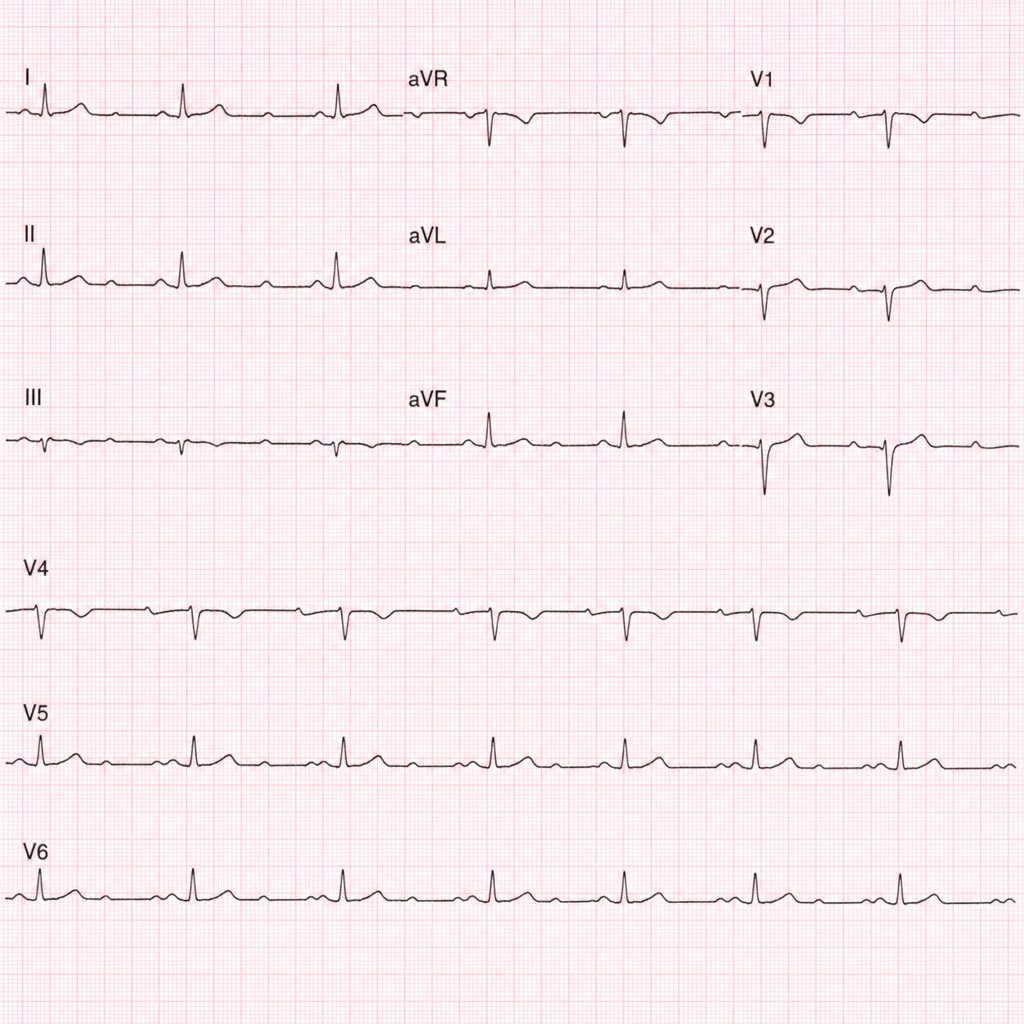
Comment on the diagnosis of the patient based on ECG?

What is the most common cause of arrhythmia?
Which infection is known to cause Coronary Artery Disease (CAD)?
A fixed PR interval with occasional dropped beats in a 2:1, 3:1, or 4:1 pattern, accompanied by a wide QRS complex, is characteristic of which condition?
What is the most common cause of embolism leading to cerebrovascular disease?
A 45-year-old man presents to the emergency department with dizziness. He has a history of supraventricular beats and is currently taking aspirin, atenolol, and quinine. His EKG reveals Torsades De Pointes. How should he be managed?
A 50-year-old man has a 2-year history of angina pectoris that occurs during exercise. On physical examination, his blood pressure is 135/75 mm Hg, and his heart rate is 79/min and slightly irregular. Coronary angiography shows a fixed 75% narrowing of the anterior descending branch of the left coronary artery. He has several risk factors for atherosclerosis: smoking, hypertension, and hypercholesterolemia. Which of the following is the earliest event resulting from the effects of these factors?
Severity of mitral stenosis is judged by?
Electrical alternans is seen in which of the following conditions?
Explanation: **Explanation:** **1. Why Titin is the Correct Answer:** Dilated Cardiomyopathy (DCM) is characterized by ventricular dilation and systolic dysfunction. While DCM can be idiopathic, toxic, or infectious, approximately 30-40% of cases are familial. Mutations in the **TTN gene**, which encodes the protein **Titin**, are the most common genetic cause, accounting for roughly **25% of familial DCM** cases and 10-15% of sporadic cases. Titin is the largest protein in the human body and acts as a molecular spring, maintaining the structural integrity and passive stiffness of the sarcomere. Truncating mutations (TTNtv) lead to haploinsufficiency and impaired sarcomere function, resulting in ventricular remodeling. **2. Analysis of Incorrect Options:** * **Dystrophin:** Mutations in the dystrophin gene cause Duchenne and Becker muscular dystrophies. While these patients frequently develop DCM, it is not the *most common* genetic cause in the general population. * **Sarcomere (e.g., MYH7, TNNT2):** Mutations in sarcomeric proteins (Beta-myosin heavy chain, Troponin T) are the hallmark of **Hypertrophic Cardiomyopathy (HCM)**. While they can cause DCM, they are less frequent than Titin mutations. * **Mitochondrial genes:** These are associated with syndromic cardiomyopathies (e.g., MELAS) and typically present in pediatric populations with multi-organ involvement; they are a rare cause of isolated DCM. **3. High-Yield Clinical Pearls for NEET-PG:** * **Most common genetic cause of DCM:** Titin (TTN). * **Most common genetic cause of HCM:** Beta-myosin heavy chain (MYH7) or Myosin-binding protein C (MYBPC3). * **Arrhythmogenic Right Ventricular Dysplasia (ARVD):** Associated with desmosomal protein mutations (e.g., Plakoglobin, Desmoplakin). * **Lamin A/C (LMNA) mutations:** A high-yield cause of DCM associated with significant conduction system disease (AV blocks).
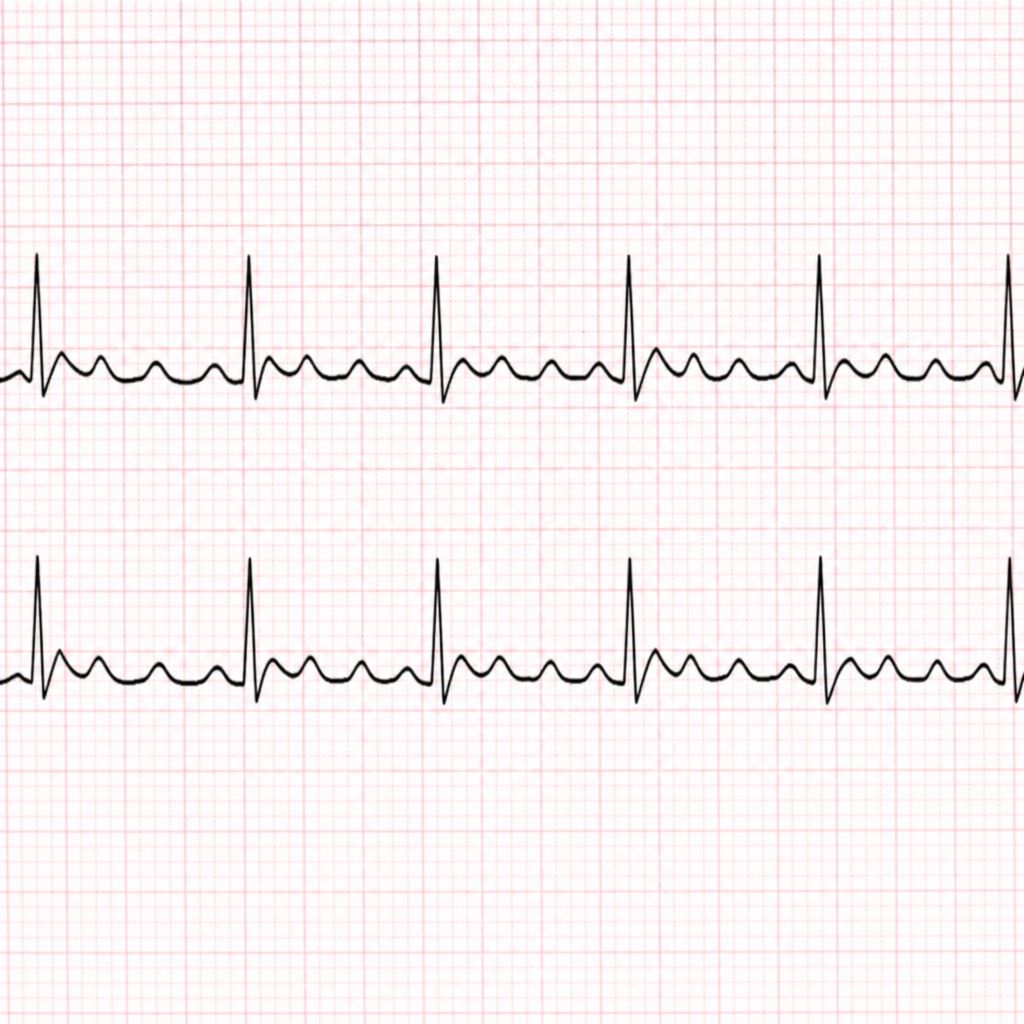
Explanation: ***Multifocal atrial tachycardia*** - Characterized by **≥3 distinct P-wave morphologies**, **heart rate >100 bpm**, and **irregularly irregular rhythm** with varying **PR intervals**. - Commonly associated with **COPD exacerbations**, **hypomagnesemia**, and **theophylline toxicity**. *Atrial fibrillation* - Shows **absence of discrete P waves** with **fibrillatory waves** creating a wavy baseline between QRS complexes. - Results in **irregularly irregular rhythm** but lacks the multiple distinct P-wave morphologies seen in MAT. *Mobitz II heart block* - Presents with **intermittently dropped QRS complexes** following normal P waves with **fixed PR intervals**. - The **atrial rate remains regular** (typically 60-100 bpm) with periodic **non-conducted P waves**. *Wolff-Parkinson-White syndrome* - Characterized by **delta waves** (slurred upstroke of QRS), **short PR interval** (<0.12 seconds), and **wide QRS complex**. - May present with **supraventricular tachycardia** but shows consistent **pre-excitation pattern**, not multiple P-wave morphologies.
Explanation: **Explanation:** **Why Ischemic Injury is Correct:** Ischemic heart disease (IHD) is the most common underlying cause of cardiac arrhythmias [1]. Ischemia leads to cellular hypoxia, which disrupts the Na+/K+ ATPase pump, causing electrolyte imbalances and altered resting membrane potentials. This creates a substrate for **reentry**, the most common mechanism for clinically significant arrhythmias (like Ventricular Tachycardia or Atrial Flutter) [1]. In the acute phase of a myocardial infarction, ischemia-induced electrical instability is the leading cause of sudden cardiac death [3]. **Why Other Options are Incorrect:** * **B. Automatism (Automaticity):** This refers to the heart's ability to initiate its own impulse (e.g., SA node). While *abnormal* automaticity can cause arrhythmias (like catecholamine-induced tachycardia), it is a **mechanism**, not a primary clinical cause or etiology [2]. * **C. Triggered Activity:** This involves oscillations in membrane potential called "afterdepolarizations" (EADs or DADs), seen in conditions like Long QT Syndrome or Digoxin toxicity [3]. Like automaticity, this is a **cellular mechanism** rather than the most frequent underlying clinical cause. * **D. Heart Failure:** While heart failure is a major risk factor for arrhythmias due to structural remodeling and stretch, it is often a *consequence* of ischemic injury. Statistically, ischemia remains the more prevalent primary driver across the general population. **High-Yield Clinical Pearls for NEET-PG:** * **Most common mechanism of arrhythmia:** Reentry [1]. * **Most common arrhythmia overall:** Sinus Tachycardia. * **Most common sustained arrhythmia:** Atrial Fibrillation [2]. * **Most common cause of death post-MI (within 24 hours):** Ventricular Fibrillation (due to ischemia) [3]. * **Electrolyte trigger:** Hypokalemia and Hypomagnesemia are the most common electrolyte triggers for arrhythmias in clinical practice.
Explanation: The association between infection and atherosclerosis is a well-studied concept in vascular biology. **Chlamydia pneumoniae**, an obligate intracellular bacterium, is the most strongly linked pathogen to the development and progression of **Coronary Artery Disease (CAD)**. **1. Why Chlamydia pneumoniae is correct:** The "Infectious Theory of Atherosclerosis" suggests that chronic inflammation triggered by certain pathogens contributes to plaque formation. *C. pneumoniae* has been identified within human atherosclerotic plaques via PCR and electron microscopy [1]. It induces pro-inflammatory cytokines, promotes macrophage foam cell formation, and causes endothelial dysfunction, all of which accelerate the atherosclerotic process [2]. **2. Why the other options are incorrect:** * **Streptococcus:** While Group A Streptococcus is famously associated with **Rheumatic Heart Disease (RHD)** affecting heart valves, it does not directly cause coronary artery atherosclerosis. * **Proteus:** This organism is primarily associated with urinary tract infections (UTIs) and the formation of staghorn calculi (struvite stones); it has no established link to CAD. * **Ureaplasma urealyticum:** This is a genital tract pathogen associated with urethritis and pregnancy complications, but not with coronary vascular pathology. **Clinical Pearls for NEET-PG:** * **Other linked pathogens:** Cytomegalovirus (CMV), *Helicobacter pylori*, and Periodontal pathogens (e.g., *Porphyromonas gingivalis*) have also been implicated in atherosclerosis, though evidence for *C. pneumoniae* remains the most robust. * **Inflammatory Marker:** High-sensitivity C-Reactive Protein (**hs-CRP**) is the clinical marker used to assess this underlying "inflammatory burden" in CAD risk stratification. * **Treatment Note:** Despite the association, large clinical trials (like the ACES and WIZARD trials) showed that prolonged antibiotic therapy does **not** reduce the risk of future cardiovascular events.
Explanation: The correct answer is **Mobitz Type II block**. This condition is characterized by an intermittent failure of conduction through the His-Purkinje system. Unlike Type I, the **PR interval remains constant (fixed)** before and after the dropped beat. It often presents in fixed ratios (2:1, 3:1, etc.) [1]. Because the block occurs below the AV node (infra-nodal), the escape rhythm or conducted beats usually exhibit a **wide QRS complex**, indicating bundle branch involvement. **Why other options are incorrect:** * **Wenckebach (Mobitz Type I):** This involves a progressive lengthening of the PR interval until a beat is dropped [1]. The QRS is typically narrow because the block is at the level of the AV node. * **WPW Syndrome:** This is a pre-excitation syndrome characterized by a short PR interval and a delta wave [2]. It does not cause dropped beats in a fixed PR ratio. * **Complete Heart Block (CHB):** In CHB, there is total AV dissociation. The P waves and QRS complexes have no relationship with each other, meaning the PR interval is not "fixed" but completely variable. **High-Yield Clinical Pearls for NEET-PG:** * **Site of Block:** Mobitz I is usually **intranodal** (reversible, better prognosis); Mobitz II is **infranodal** (permanent, high risk of progression to CHB) [1]. * **Vagal Maneuvers:** Carotid sinus massage worsens Mobitz II (by increasing AV conduction but exposing the distal block) but improves Mobitz I. * **Management:** Mobitz Type II always requires a **permanent pacemaker**, even if the patient is asymptomatic, due to the high risk of sudden cardiac arrest [1].
Explanation: ### Explanation **Correct Answer: B. Non-rheumatic atrial fibrillation** **Concept:** Embolic strokes account for approximately 20% of all ischemic strokes. The most common source of these emboli is the heart (cardioembolism). Among all cardiac conditions, **Non-rheumatic Atrial Fibrillation (AF)** is the leading cause [1]. In AF, the ineffective contraction of the atria (particularly the left atrial appendage) leads to blood stasis, thrombus formation, and subsequent embolization to the cerebral circulation [2]. The risk increases significantly with age and the presence of other comorbidities (calculated via the CHA₂DS₂-VASc score) [2]. **Analysis of Incorrect Options:** * **A. Prosthetic valves:** While mechanical prosthetic valves carry a high risk of thromboembolism, they are statistically less common in the general population compared to the high prevalence of AF. * **C. Paradoxical embolus:** This occurs when a venous thrombus enters the systemic circulation through a Right-to-Left shunt (e.g., Patent Foramen Ovale). While a significant cause of "cryptogenic" stroke in young adults, it is not the most common cause overall. * **D. Paroxysmal supraventricular tachycardia (PSVT):** Unlike AF, PSVT (like AVNRT) does not typically cause atrial stasis or thrombus formation and is not a recognized major risk factor for systemic embolism. **NEET-PG High-Yield Pearls:** * **Most common source of cardioembolism:** Non-rheumatic Atrial Fibrillation. * **Most common site of thrombus in AF:** Left Atrial Appendage (LAA). * **Most common site of embolization in the brain:** Middle Cerebral Artery (MCA) territory [4]. * **Anticoagulation:** In non-valvular AF, DOACs (Apixaban, Rivaroxaban) are now preferred over Warfarin unless there is moderate-to-severe mitral stenosis or a mechanical heart valve [3].
Explanation: The patient is presenting with **Torsades de Pointes (TdP)**, a specific form of polymorphic ventricular tachycardia characterized by a "twisting of the points" around the isoelectric line [1]. This condition is typically associated with a **prolonged QT interval** [1]. In this clinical scenario, the patient’s use of **Quinine** (a Class IA antiarrhythmic property drug) is the likely precipitant of QT prolongation. **1. Why Magnesium is Correct:** Intravenous **Magnesium Sulfate** is the first-line treatment for Torsades de Pointes, regardless of the patient's serum magnesium levels. It works by stabilizing the cardiac membrane and suppressing the early afterdepolarizations (EADs) that trigger the arrhythmia, even if the baseline magnesium is normal [2]. **2. Why Other Options are Incorrect:** * **Digoxin:** This drug shortens the refractory period and can increase myocardial excitability. It is contraindicated here as it can worsen ventricular arrhythmias. * **Calcium:** While used in hyperkalemia-induced arrhythmias, it has no role in treating TdP and may theoretically worsen triggered activity. * **Atropine:** Used for bradycardia. While increasing the heart rate can sometimes shorten the QT interval (overdrive pacing), Magnesium remains the definitive immediate pharmacological intervention. **Clinical Pearls for NEET-PG:** * **Drug-Induced QT Prolongation:** Remember the mnemonic **"ABCDE"**: **A**ntiarrhythmics (Class IA, III), **B**iotics (Macrolides, Quinolones), **C**isapride (Antipsychotics/Antiemetics), **D**epressants (TCAs), and **E**lectrolytes (Hypokalemia, Hypomagnesemia, Hypocalcemia) [2]. * **Management Algorithm:** If the patient is unstable, immediate **Defibrillation** is required. If stable, IV Magnesium is the drug of choice. * **Secondary Prevention:** Discontinue the offending agent (Quinine in this case) and correct electrolyte imbalances [2].
Explanation: ### Explanation The correct answer is **C. Dysfunction from endothelial injury.** **1. Why it is correct:** The development of atherosclerosis follows the **"Response to Injury" hypothesis**. The earliest initiating event is chronic, subtle endothelial injury caused by risk factors such as hypertension, hyperlipidemia (elevated LDL), and toxins from cigarette smoke [1]. This injury leads to **endothelial dysfunction**, which increases vascular permeability, enhances leukocyte adhesion, and promotes a pro-thrombotic state [1]. This precedes any structural changes like fatty streaks or plaque formation. **2. Why other options are incorrect:** * **A. Alteration in vasomotor tone regulation:** While endothelial dysfunction leads to impaired vasodilation (due to decreased Nitric Oxide), this is a *consequence* of the initial injury, not the very first event. * **B. Conversion of smooth muscle cells to foam cells:** Foam cells are primarily derived from **macrophages** that have ingested oxidized LDL [1]. Highlighted in early lesions, monocytes bind to receptors expressed by endothelial cells and migrate into the intima to take up oxidized LDL [1]. While some smooth muscle cells can become foam cells later in the process, this occurs much later than the initial endothelial injury. * **D. Inhibition of LDL oxidation:** This is factually incorrect. Atherosclerosis is driven by the **promotion** of LDL oxidation. Once LDL enters the subendothelial space (due to increased permeability from injury), it becomes oxidized, which then triggers macrophage recruitment. **3. NEET-PG High-Yield Pearls:** * **Earliest visible lesion:** Fatty streak (can be seen in children) [1]. * **Earliest microscopic event:** Endothelial injury/dysfunction. * **Key cell type in fatty streaks:** Macrophages (Foam cells) [1]. * **Most common site of atherosclerosis:** Abdominal aorta > Coronary arteries > Popliteal arteries > Internal carotid. * **Critical Stenosis:** Symptoms of stable angina (like in this patient) typically appear when the lumen is narrowed by **>70-75%** [2].
Explanation: **Explanation:** The severity of Mitral Stenosis (MS) is primarily determined by the pressure gradient between the Left Atrium (LA) and the Left Ventricle (LV). [2] **Why S2-OS gap is the correct answer:** The **Opening Snap (OS)** occurs when the stenotic mitral valve opens. This happens when LA pressure exceeds LV pressure. In severe MS, the LA pressure is significantly elevated to overcome the narrow orifice. Consequently, the LA pressure crosses the falling LV pressure curve much earlier during diastole. This shortens the interval between the **Aortic component of S2 (A2)** and the **Opening Snap**. [1] * **Rule:** The shorter the S2-OS interval, the more severe the Mitral Stenosis. [1] **Analysis of Incorrect Options:** * **A. Loud S1:** While a loud S1 is a classic sign of MS, it indicates a mobile, non-calcified valve. As the disease progresses and the valve becomes heavily calcified and immobile, S1 actually becomes soft. [2] Thus, it is not a reliable indicator of severity. * **C. Loud S2:** A loud P2 (pulmonary component of S2) suggests secondary Pulmonary Hypertension, which can occur in MS, but the S2-OS gap is a more direct bedside indicator of the valvular gradient itself. [2] * **D. S3:** An S3 (ventricular gallop) is caused by rapid ventricular filling. It is typically **absent** in significant MS because the stenotic valve restricts rapid filling. Its presence usually suggests associated Mitral Regurgitation or Heart Failure. **High-Yield Clinical Pearls for NEET-PG:** 1. **Length of the Mid-Diastolic Murmur (MDM):** The longer the duration of the murmur, the more severe the MS. 2. **S2-OS Interval:** <0.07 seconds indicates severe MS; >0.11 seconds indicates mild MS. [1] 3. **Graham Steell Murmur:** An early diastolic murmur of pulmonary regurgitation seen in severe MS with pulmonary hypertension. 4. **Most common cause:** Rheumatic Heart Disease.
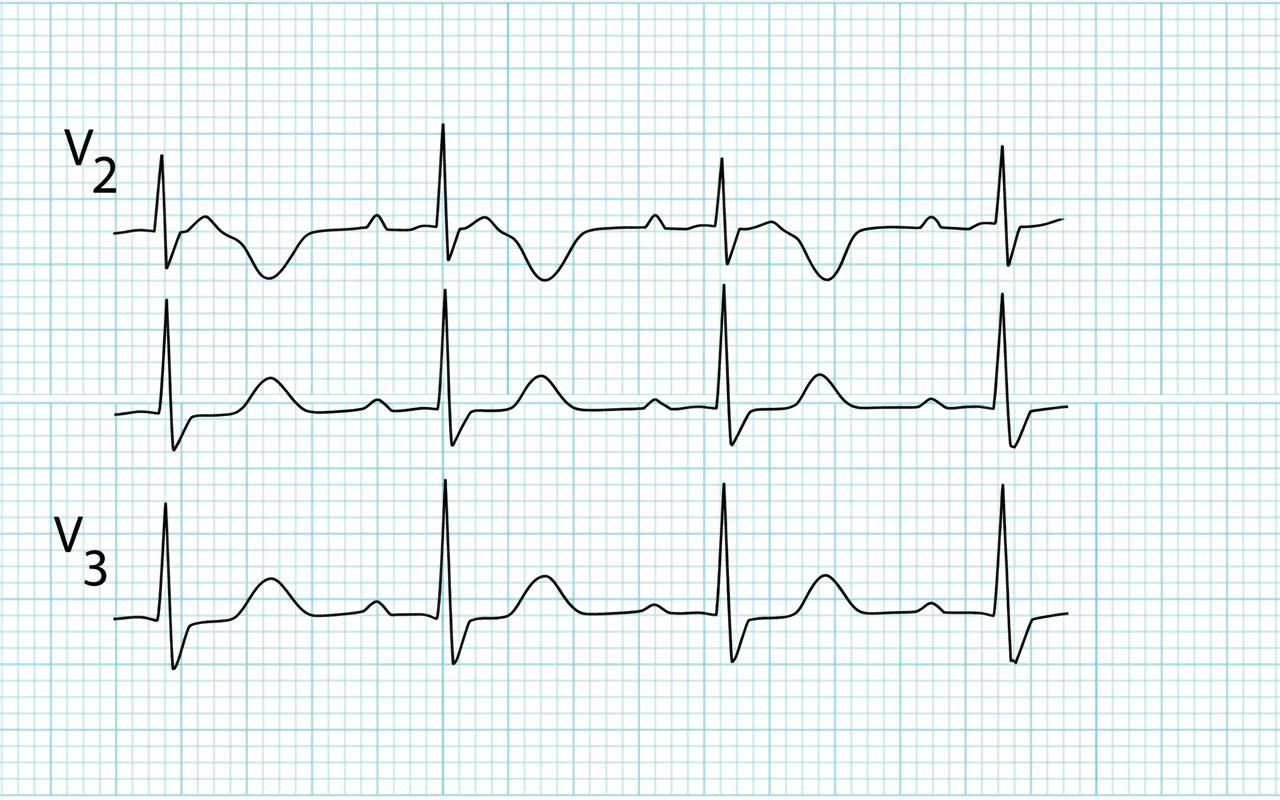
Explanation: **Explanation:** **Electrical alternans** is a pathognomonic ECG finding characterized by a beat-to-beat variation in the amplitude or axis of the QRS complexes (and sometimes P or T waves). 1. **Why Cardiac Tamponade is correct:** In large pericardial effusions or cardiac tamponade, the heart is suspended in a fluid-filled sac [1]. This allows the heart to physically oscillate or "swing" back and forth within the pericardium with each contraction [1]. As the heart moves closer to and further from the chest wall electrodes, the electrical vector changes, resulting in alternating heights of the QRS complexes on the ECG [1]. 2. **Why other options are incorrect:** * **Restrictive Cardiomyopathy:** Characterized by stiff ventricles and impaired filling. The ECG typically shows low voltage QRS complexes, but not the rhythmic "swinging" motion required for alternans. * **Constrictive Pericarditis:** Involves a rigid, scarred pericardium that limits heart movement. Since the heart is "encased" and cannot swing, electrical alternans does not occur. * **Right Ventricular MI:** Presents with ST-elevation in right-sided leads (V4R) [3]. While it may cause hypotension similar to tamponade, the underlying mechanism is ischemia, not fluid accumulation [2]. **High-Yield Clinical Pearls for NEET-PG:** * **Beck’s Triad (Tamponade):** Hypotension, Jugular Venous Distension (JVD), and Muffled heart sounds. * **Pulsus Paradoxus:** A classic physical sign of tamponade (drop in systolic BP >10 mmHg during inspiration). * **Total Electrical Alternans:** When P, QRS, and T waves all show alternans, it is highly specific for tamponade. * **Low Voltage QRS:** While common in tamponade, it is also seen in obesity, COPD, and hypothyroidism [1]. Alternans is more specific for effusion.
Coronary Artery Disease and Angina
Practice Questions
Acute Coronary Syndromes
Practice Questions
Heart Failure
Practice Questions
Cardiac Arrhythmias
Practice Questions
Valvular Heart Diseases
Practice Questions
Cardiomyopathies
Practice Questions
Pericardial Diseases
Practice Questions
Congenital Heart Disease in Adults
Practice Questions
Hypertension and Hypertensive Emergencies
Practice Questions
Pulmonary Hypertension
Practice Questions
Non-invasive Cardiac Diagnostics
Practice Questions
Preventive Cardiology
Practice Questions
Get full access to all questions, explanations, and performance tracking.
Start For Free