What is true about the third heart sound?
Which of the following forms of ischemic heart disease manifests with slowly progressive heart failure, with or without other clinical manifestations of myocardial ischemia?
A patient with coronary artery disease and diabetes mellitus experienced a myocardial infarction two months ago. Their lipid profile shows serum triglyceride of 234 mg/dL, LDL of 124 mg/dL, and HDL of 32 mg/dL. Which of the following drugs would be most appropriate to administer?
All of the following are true for mitral valve prolapse, except?
Which of the following is NOT a sign of left heart failure?
Beck's triad of cardiac tamponade does not include which of the following?
Which of the following parameters is not used for risk assessment and need for anticoagulation in a patient of atrial fibrillation?
Giant V wave on examination of the jugular venous pulse is suggestive of which condition?
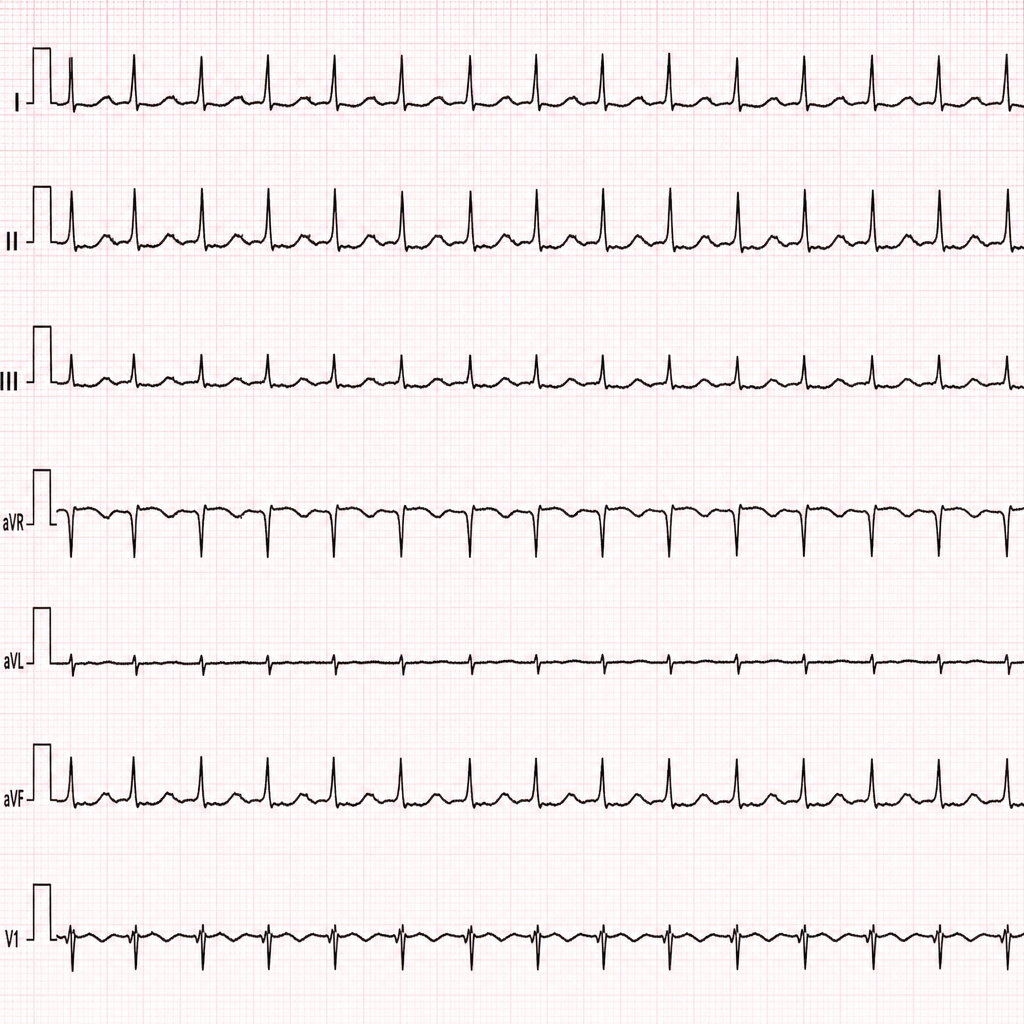
A 21-year-old male presents with exertional dyspnea, raised JVP, and loud P2. ECG shows right axis deviation. All of the following conditions are possible except?
What is the characteristic feature of JVP in cardiac tamponade?
Explanation: ### Explanation The **third heart sound (S3)**, also known as the "ventricular gallop," occurs during the early phase of diastole (rapid ventricular filling) [1]. It is caused by the sudden deceleration of blood flow into a compliant ventricle. **Why the correct answer is right:** * **Option D:** S3 can be a **physiological** finding in children, young adults (under 40), pregnant women, and **athletes**. In athletes, it is associated with a highly compliant, physiologically dilated left ventricle that accommodates increased stroke volume. **Why the other options are wrong:** * **Option A:** In chronic constrictive pericarditis, a similar sound called a **Pericardial Knock** is heard. While it occurs in early diastole like S3, it is higher pitched and results from the sudden cessation of ventricular filling by a rigid, calcified pericardium. * **Option B:** An aortic aneurysm does not typically affect the early diastolic filling phase of the ventricles in a way that would consistently abolish an S3. * **Option C:** This is a classic "trap." S3 is **absent in significant mitral stenosis** because the narrowed valve restricts the rapid inflow of blood into the ventricle [2], preventing the sudden "thud" required to produce the sound. (Note: The question asks what is *true*; while S3 is absent in MS, Option D is the definitive physiological characteristic often tested). **High-Yield Clinical Pearls for NEET-PG:** * **Pathological S3:** In older adults, it is a hallmark of **Congestive Heart Failure (CHF)** and indicates ventricular overfilling or reduced ejection fraction. * **Mnemonic:** S3 follows the cadence of the word **"Kentucky"** (S1-S2-S3). * **Best heard:** At the apex with the **bell** of the stethoscope in the left lateral decubitus position. * **S4 (Atrial Gallop):** Always pathological (except in some elderly patients); associated with "stiff" ventricles (LVH, Hypertension). Cadence: **"Tennessee."**
Explanation: **Explanation:** **Chronic Ischemic Heart Disease (CIHD)**, also known as ischemic cardiomyopathy, refers to a clinical syndrome characterized by progressive heart failure resulting from chronic, long-term ischemic myocardial damage [1]. In these patients, the cumulative effect of multiple small infarcts or chronic hypoperfusion leads to the replacement of functional myocardium with fibrous tissue. This results in ventricular dilation and systolic dysfunction, manifesting as **slowly progressive heart failure**, even in the absence of acute episodes of chest pain [1]. **Analysis of Incorrect Options:** * **Myocardial Infarction (MI):** This is an acute event caused by sudden coronary occlusion leading to myocardial necrosis [3]. It presents with sudden-onset crushing chest pain and acute complications, rather than a slow, insidious progression [4]. * **Prinzmetal Angina:** This is a form of unstable angina caused by coronary artery vasospasm. It is characterized by episodic chest pain at rest with transient ST-segment elevation, not progressive heart failure. * **Stable Angina:** This involves predictable chest pain triggered by exertion due to a fixed atherosclerotic plaque [2]. While it indicates ischemia, the primary manifestation is exertional pain, not the structural remodeling seen in heart failure. **High-Yield Clinical Pearls for NEET-PG:** * **Morphology:** CIHD hearts are typically enlarged and heavy (cardiomegaly) with ventricular hypertrophy and dilation. * **Histology:** Look for diffuse subendocardial vacuolization (myocytolysis), interstitial fibrosis, and scars of healed previous infarcts. * **Diagnosis of Exclusion:** Ischemic cardiomyopathy is often diagnosed when a patient presents with heart failure and significant coronary artery disease is found, after ruling out other causes like valvular or primary dilated cardiomyopathy.
Explanation: The core concept in this question is the management of **Secondary Prevention** in patients with established Atherosclerotic Cardiovascular Disease (ASCVD). [3] **1. Why Atorvastatin 80 mg is correct:** This patient has multiple high-risk factors: a history of Myocardial Infarction (MI), Coronary Artery Disease (CAD), and Diabetes Mellitus. According to current AHA/ACC and ESC guidelines, all patients with established ASCVD (regardless of baseline LDL) should be started on **High-Intensity Statin** therapy. High-intensity statins are defined as those that lower LDL-C by ≥50%. [1] The two standard regimens are: * **Atorvastatin 40–80 mg** * **Rosuvastatin 20–40 mg** **2. Why other options are incorrect:** * **Fenofibrate (A):** While the triglycerides are elevated (234 mg/dL), statins remain the first-line treatment. Fibrates are generally reserved for severe hypertriglyceridemia (>500 mg/dL) to prevent pancreatitis. [2] * **Rosuvastatin plus fenofibrate (B):** Routine combination therapy is not recommended as initial management and increases the risk of myopathy/rhabdomyolysis without significant cardiovascular benefit in most trials (e.g., ACCORD trial). * **Rosuvastatin 10 mg (D):** This is a **Moderate-Intensity Statin** (lowers LDL by 30-49%). It is insufficient for a post-MI patient who requires maximal plaque stabilization and LDL reduction. **Clinical Pearls for NEET-PG:** * **Target LDL:** For very high-risk ASCVD patients, the goal is often **<55 mg/dL**. * **Diabetes + Age 40-75:** Even without ASCVD, these patients require at least a moderate-intensity statin. * **Pleiotropic effects:** Statins work beyond lipid-lowering by stabilizing atherosclerotic plaques, improving endothelial function, and reducing inflammation (decreased CRP). [1] * **Rule of 6:** Each doubling of the statin dose only yields an additional 6% reduction in LDL-C.
Explanation: Mitral Valve Prolapse (MVP), also known as Barlow’s Syndrome, is the most common cause of isolated mitral regurgitation (MR) in developed countries. However, the clinical presentation varies significantly. **Why Option B is the Correct Answer (The False Statement):** While MVP is a leading cause of MR, the **majority of patients are actually asymptomatic** and are diagnosed incidentally during routine physical examination or echocardiography. When symptoms do occur, they are often non-specific (e.g., palpitations, atypical chest pain, or anxiety), collectively termed "MVP Syndrome." Significant MR develops only in a subset of patients over time. **Analysis of Other Options:** * **Option A:** MVP can occur sporadically, but familial forms are well-documented, often showing an **autosomal dominant** inheritance pattern with variable penetrance. * **Option C:** The hallmark pathological finding is **myxomatous degeneration**, characterized by the proliferation of the spongiosa layer and deposition of glycosaminoglycans, which weakens the chordae tendineae and leaflets. * **Option D:** MVP is a classic cardiovascular manifestation of connective tissue disorders, most notably **Marfan’s Syndrome** and Ehlers-Danlos Syndrome, due to underlying cystic medial necrosis and collagen defects. **Clinical Pearls for NEET-PG:** * **Auscultation:** The classic finding is a **Mid-systolic click** followed by a **Late systolic murmur** (if MR is present) [1]. * **Dynamic Auscultation:** Any maneuver that **decreases LV volume** (e.g., Standing, Valsalva) makes the click/murmur occur **earlier** in systole and often louder [1]. Conversely, Squatting (increasing preload) delays the click. * **Complications:** Infective endocarditis, chordal rupture, and sudden cardiac death (rare).
Explanation: To understand this question, one must differentiate between the clinical manifestations of **Left-Sided Heart Failure (LHF)** and **Right-Sided Heart Failure (RHF)**. [1] ### **Explanation of the Correct Answer** **B. Pedal Edema:** This is a classic sign of **Right Heart Failure**. When the right ventricle fails, blood backs up into the systemic venous circulation. This increases hydrostatic pressure in the peripheral veins, leading to fluid extravasation into the interstitial tissues of the lower limbs. While chronic LHF can eventually lead to RHF (the most common cause of RHF), pedal edema is physiologically a manifestation of systemic venous congestion, not pulmonary congestion. ### **Analysis of Incorrect Options (Signs of LHF)** * **A. S3 Gallop:** This occurs during the rapid ventricular filling phase. In LHF, it signifies a dilated, non-compliant left ventricle and is a hallmark of volume overload. [1] * **C. Bilateral lung base crepitations:** In LHF, the left ventricle cannot pump blood effectively, causing pressure to back up into the pulmonary veins and capillaries. This leads to **pulmonary edema**, which manifests as fine inspiratory crackles (crepitations) at the lung bases. [1] * **D. Orthopnea:** This is shortness of breath when lying flat. It occurs in LHF because recumbency redistributes blood from the lower extremities to the lungs, worsening pulmonary congestion. [1] ### **High-Yield Clinical Pearls for NEET-PG** * **Most common cause of RHF:** Left-sided heart failure. * **Most common cause of LHF:** Ischemic heart disease or Hypertension. * **Pulsus Alternans:** A specific physical finding for severe left ventricular systolic failure. * **Paroxysmal Nocturnal Dyspnea (PND):** Highly specific for LHF; it occurs due to the gradual resorption of edema from the lower body into the circulation during sleep, overloading the failing left heart. [1] * **Framingham Criteria:** Used for the clinical diagnosis of Heart Failure (requires 2 major or 1 major + 2 minor criteria).
Explanation: ### Explanation **Beck’s Triad** is a classic clinical sign used to diagnose acute **cardiac tamponade**, a condition where fluid accumulation in the pericardial sac leads to increased intrapericardial pressure, restricting ventricular filling [1]. **Why "Silent heart sounds" is the correct answer:** While heart sounds in cardiac tamponade are often described as "muffled" or "distant" due to the insulating effect of the pericardial fluid, they are **not silent**. In medical examinations, precision in terminology is key; "silent" implies a total absence of sound, which is clinically inaccurate. Therefore, it is not a component of the triad. **Analysis of Incorrect Options (Components of Beck's Triad):** * **Hypotension (A):** Occurs because the fluid pressure prevents the heart from filling adequately (decreased preload), leading to a drop in stroke volume and cardiac output. * **Neck vein distension (B):** Increased intrapericardial pressure prevents blood from entering the right atrium, leading to back-pressure in the superior vena cava and visible jugular venous distension (JVD). * **Muffled heart sounds (D - corrected):** The fluid surrounding the heart dampens the transmission of sound to the chest wall. **Clinical Pearls for NEET-PG:** 1. **Pulsus Paradoxus:** Defined as an inspiratory fall in systolic blood pressure **>10 mmHg**. While a hallmark of tamponade, it is **not** part of Beck’s Triad. 2. **ECG Findings:** Look for **Electrical Alternans** (varying QRS amplitude) and low-voltage complexes [1]. 3. **Echocardiography:** The gold standard for diagnosis; shows "swinging heart" and diastolic collapse of the right atrium/ventricle [1]. 4. **Management:** The definitive treatment is immediate **pericardiocentesis**.
Explanation: In patients with Atrial Fibrillation (AF), the decision to initiate anticoagulation is based on the risk of thromboembolism (stroke), not the ventricular rate [1]. **Explanation of the Correct Answer:** **Option B (Heart rate)** is the correct answer because it is used for **symptom management** and **rate control** strategies, but it does not predict the risk of clot formation in the left atrial appendage [1]. Whether a patient has a heart rate of 60 bpm or 160 bpm, their stroke risk remains dependent on their underlying comorbidities, not the rate itself. **Explanation of Incorrect Options:** The standard tool for risk stratification in AF is the **CHA₂DS₂-VASc score**. The parameters included are: * **Age (Option A):** Age 65–74 years (1 point) and ≥75 years (2 points) are significant risk factors [1]. * **Gender (Option C):** Female sex (1 point) is a recognized risk modifier [1]. * **Vascular disease (Option D):** Prior MI, peripheral artery disease, or aortic plaque (1 point) increases the risk of systemic embolism [1]. * *Other components:* Congestive heart failure, Hypertension, Diabetes mellitus, and prior Stroke/TIA (2 points) [1]. **High-Yield Clinical Pearls for NEET-PG:** 1. **Anticoagulation Threshold:** Generally, anticoagulation is recommended if the CHA₂DS₂-VASc score is **≥2 in men** or **≥3 in women** [1]. 2. **Valvular AF:** If AF is associated with moderate-to-severe Mitral Stenosis or a Mechanical Heart Valve, the CHA₂DS₂-VASc score is not used; these patients require **Warfarin** regardless of the score. 3. **NOACs vs. Warfarin:** Non-vitamin K antagonist oral anticoagulants (e.g., Apixaban, Dabigatran) are now preferred over Warfarin for non-valvular AF. 4. **HAS-BLED Score:** Used to assess bleeding risk before starting anticoagulation, but a high score is not a contraindication; it warrants closer monitoring.
Explanation: ### Explanation **Correct Answer: B. Tricuspid incompetence (Tricuspid Regurgitation)** The **v wave** in the jugular venous pulse (JVP) represents atrial filling against a closed tricuspid valve during ventricular systole. In **Tricuspid Incompetence (Regurgitation)**, blood leaks backward from the right ventricle into the right atrium during systole [1]. This additional volume causes the right atrium to fill rapidly and excessively, leading to a **"Giant V wave"** (also known as a Lancisi wave) [1]. This wave often obliterates the 'x' descent, creating a single large positive deflection during systole [1]. **Analysis of Incorrect Options:** * **A. Atrial flutter:** Typically presents with rapid, regular "flutter waves" (saw-tooth appearance) in the JVP, but not giant v waves. * **C. Ventricular septal defect (VSD):** Usually does not affect the JVP unless it leads to significant right heart failure or Eisenmenger syndrome. Even then, it typically presents with a prominent 'a' wave due to decreased right ventricular compliance. * **D. Pulmonary stenosis:** Characterized by a **Giant 'a' wave** because the right atrium must contract against a stiff, hypertrophied right ventricle (increased resistance to filling). **High-Yield Clinical Pearls for NEET-PG:** * **Giant 'a' wave:** Seen in Tricuspid Stenosis, Pulmonary Stenosis, and Pulmonary Hypertension (Right atrium contracting against resistance). * **Cannon 'a' wave:** Seen in AV dissociation (Complete Heart Block, Ventricular Tachycardia) when the atrium contracts against a *closed* tricuspid valve. * **Absent 'a' wave:** Characteristic of Atrial Fibrillation. * **Friedreich’s Sign:** Steep 'y' descent seen in Constrictive Pericarditis. * **Kussmaul’s Sign:** Paradoxical rise in JVP on inspiration (Constrictive Pericarditis, Right Ventricular Infarction).
Explanation: The clinical presentation of exertional dyspnea, raised JVP, loud $P_2$, and ECG evidence of **Right Axis Deviation (RAD)** points toward **Pulmonary Hypertension** and **Right Ventricular Hypertrophy (RVH)** [1], [4]. **Why Ostium Primum is the Correct Answer:** While both Ostium Secundum and Ostium Primum ASDs cause right-sided volume overload, **Ostium Primum ASD** is characteristically associated with **Left Axis Deviation (LAD)** on ECG. This occurs because the conduction system is displaced, often accompanied by a cleft mitral valve. Since the question specifies RAD, Ostium Primum is the "except" condition. **Analysis of Other Options:** * **Atrial Septal Defect (Secundum):** This is the most common type of ASD. It leads to right ventricular overload and typically presents with **Right Axis Deviation** and RSR' pattern [2]. * **Mitral Stenosis:** Chronic mitral stenosis leads to pulmonary venous hypertension, reactive pulmonary arterial hypertension, and eventually RVH, which manifests as **Right Axis Deviation**. * **Pulmonary Thromboembolism:** Acute or chronic pulmonary embolism increases right ventricular afterload, leading to right heart strain and **Right Axis Deviation** (often seen as part of the S1Q3T3 pattern or persistent RAD in chronic cases) [1]. ### High-Yield NEET-PG Pearls: * **ASD Axis Rule:** * **Ostium Secundum:** Right Axis Deviation (RAD). * **Ostium Primum:** Left Axis Deviation (LAD). * **Loud $P_2$:** A hallmark sign of Pulmonary Arterial Hypertension [3], [4]. * **ECG in RVH:** Look for R wave > S wave in V1 and Right Axis Deviation (> +90°) [4]. * **Ostium Primum Associations:** Frequently associated with Down Syndrome and Endocardial Cushion Defects.
Explanation: In **cardiac tamponade**, the hallmark of the Jugular Venous Pulse (JVP) is a **prominent 'x' descent with an absent or blunted 'y' descent.** [1] ### Pathophysiology * **Prominent 'x' descent:** This represents atrial relaxation and the downward displacement of the tricuspid annulus during ventricular systole. In tamponade, the heart is compressed by fluid within a fixed pericardial space. As the ventricles contract (systole), the heart volume decreases slightly, momentarily reducing the intrapericardial pressure and allowing the right atrium to expand and fill. [1] * **Absent 'y' descent:** The 'y' descent represents the rapid filling of the right ventricle after the tricuspid valve opens. In tamponade, the intrapericardial pressure is so high that it equals or exceeds the diastolic filling pressure. This prevents rapid ventricular filling, effectively "abolishing" the 'y' descent. ### Analysis of Incorrect Options * **Option A:** Prominent 'x' and 'y' descents (the "W" sign) are characteristic of **Constrictive Pericarditis**, not tamponade. [2] * **Option C & D:** The 'x' descent is preserved in tamponade because systolic contraction still provides a brief window for atrial filling; its absence would suggest severe tricuspid regurgitation (where it is replaced by a large 'v' or 'cv' wave). ### High-Yield Clinical Pearls for NEET-PG * **Beck’s Triad:** Hypotension, Muffled heart sounds, and Raised JVP. * **Pulsus Paradoxus:** A drop in systolic BP >10 mmHg during inspiration (a key diagnostic sign). * **Kussmaul’s Sign:** Paradoxical rise in JVP on inspiration. **Important:** This is typically **absent** in tamponade but **present** in Constrictive Pericarditis. [2] * **Echocardiography:** The gold standard for diagnosis, showing late diastolic right atrial collapse and early diastolic right ventricular collapse. [1]
Coronary Artery Disease and Angina
Practice Questions
Acute Coronary Syndromes
Practice Questions
Heart Failure
Practice Questions
Cardiac Arrhythmias
Practice Questions
Valvular Heart Diseases
Practice Questions
Cardiomyopathies
Practice Questions
Pericardial Diseases
Practice Questions
Congenital Heart Disease in Adults
Practice Questions
Hypertension and Hypertensive Emergencies
Practice Questions
Pulmonary Hypertension
Practice Questions
Non-invasive Cardiac Diagnostics
Practice Questions
Preventive Cardiology
Practice Questions
Get full access to all questions, explanations, and performance tracking.
Start For Free