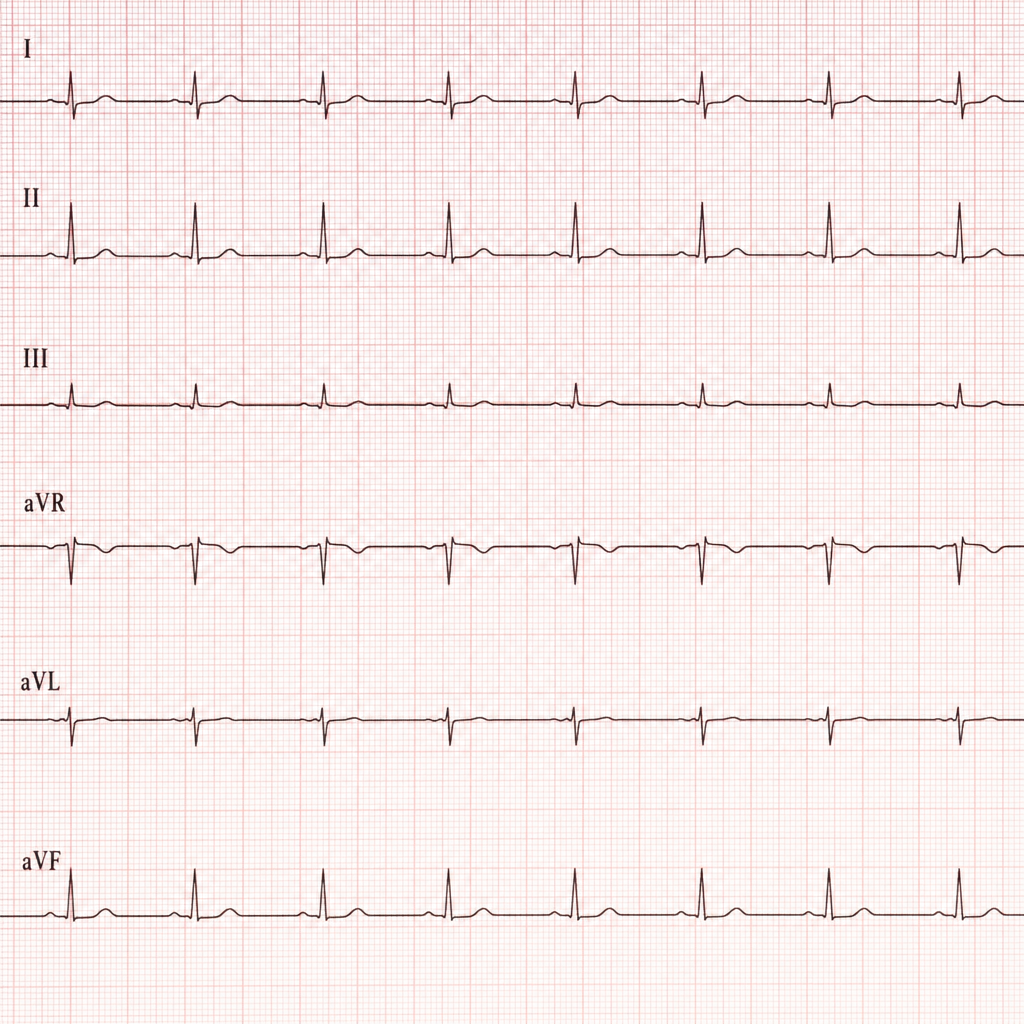
A 68-year-old man presents with progressive shortness of breath. He had a metallic heart valve replacement 13 years ago for severe aortic stenosis. Which of the following clinical findings is most indicative of a failing aortic valve replacement?
What is the most common infection in patients with prosthetic valves?
Which of the following is associated with atherosclerosis?
A patient develops sudden palpitation with a heart rate of 150 beats per minute, which is regular. What could be the cause?
Austin Flint murmur is a:
Epsilon wave is seen in which condition?
An ejection click is heard in which phase of the cardiac cycle?
A 60-year-old retired banker complains of feeling dizzy with palpitations and breathlessness. His BP becomes unrecordable while ECG is being recorded. What should be the first step in the management of this patient?
Which of the following statements about the pathophysiology of mitral stenosis is accurate?
Haemorrhagic pericarditis occurs in all of the following conditions except?
Explanation: ### Explanation **1. Why Option B is Correct:** The presence of an **early diastolic murmur (EDM)** at the left sternal edge is the hallmark sign of **aortic regurgitation (AR)** [1]. In a patient with a prosthetic aortic valve, an EDM is highly pathological and indicates **paravalvular leak** (due to suture dehiscence or endocarditis) or structural valve failure. While native aortic stenosis (AS) is common, prosthetic valves are more prone to developing regurgitation over time as a sign of failure. **2. Why the Other Options are Incorrect:** * **Option A (Clicking sound to S2):** A crisp, metallic "opening and closing click" is a **normal** finding in mechanical valves. The loss or softening of these clicks would actually be more indicative of valve thrombosis or dysfunction. * **Option B (New onset atrial fibrillation):** While AFib can occur due to left atrial enlargement or heart failure, it is non-specific. It is more commonly associated with mitral valve disease than isolated aortic valve failure [2]. * **Option D (Ejection systolic murmur):** Most mechanical aortic valves have a baseline "flow murmur" (ejection systolic) because the valve apparatus itself creates a degree of physiological stenosis [3]. Therefore, a systolic murmur alone is not a reliable indicator of failure unless it significantly changes in intensity. **3. Clinical Pearls for NEET-PG:** * **Mechanical vs. Bioprosthetic:** Mechanical valves (like the one in this 13-year-old case) are durable but require lifelong anticoagulation (Warfarin, target INR 2.0–3.0 for Aortic; 2.5–3.5 for Mitral). * **Hemolysis:** Failing mechanical valves often cause **microangiopathic hemolytic anemia (MAHA)** due to high-shear stress (look for schistocytes and raised LDH). * **Best Diagnostic Tool:** Transthoracic Echocardiography (TTE) is the initial step, but **Transesophageal Echocardiography (TEE)** is the gold standard for visualizing paravalvular leaks and vegetations.
Explanation: The most common cause of Prosthetic Valve Endocarditis (PVE) is **Staphylococcus**. The etiology is further divided based on the timing of the infection post-surgery: 1. **Early PVE (<1 year post-surgery):** The most common organism is **Staphylococcus epidermidis** (Coagulase-negative Staphylococci) [1]. These infections are typically acquired perioperatively due to contamination of the prosthesis or the surgical site [1]. 2. **Late PVE (>1 year post-surgery):** The microbiology begins to resemble native valve endocarditis, where **Staphylococcus aureus** and Viridans group Streptococci are the most frequent isolates [2]. Since both early and late phases are dominated by different species of the same genus, **Staphylococcus** is the overall correct answer. **Analysis of Incorrect Options:** * **Pneumococcus (Streptococcus pneumoniae):** While a cause of native valve endocarditis (historically part of Osler’s triad), it is an uncommon cause of prosthetic valve infections [2]. * **Pseudomonas:** This is a Gram-negative organism occasionally seen in intravenous drug users (IVDU) or healthcare-associated infections, but it is not the most common overall. * **Enterococci:** These are the third most common cause of PVE (after Staphylococci and Streptococci), often associated with urinary tract manipulations or gastrointestinal procedures [2]. **Clinical Pearls for NEET-PG:** * **Most common overall cause of Endocarditis (Native Valve):** *Staphylococcus aureus* (previously Viridans Streptococci) [2]. * **Most common cause in IV drug users:** *Staphylococcus aureus* (often involving the Tricuspid valve) [2]. * **Culture-negative Endocarditis:** Most commonly due to prior antibiotic use or fastidious organisms like the **HACEK** group or *Coxiella burnetii*. * **Streptococcus bovis (S. gallolyticus):** If found in endocarditis, always screen the patient for **Colorectal Carcinoma** [2].
Explanation: **Explanation:** The correct answer is **Chlamydia pneumoniae**. Atherosclerosis is increasingly recognized as a chronic inflammatory process rather than a simple lipid storage disease [1]. **Chlamydia pneumoniae**, an obligate intracellular bacterium primarily known for causing atypical pneumonia, has been strongly implicated in the pathogenesis of atherosclerosis. 1. **Pathophysiology:** *C. pneumoniae* can infect vascular endothelial cells, smooth muscle cells, and macrophages (foam cells) within the arterial wall. It promotes atherosclerosis by inducing the production of pro-inflammatory cytokines, increasing the expression of adhesion molecules, and stimulating the oxidation of LDL cholesterol [1]. Evidence of its presence has been found in human atherosclerotic plaques via PCR and electron microscopy. **Analysis of Incorrect Options:** * **A. Chlamydia trachomatis:** This is the leading cause of bacterial sexually transmitted infections (STIs) and can cause trachoma (blindness) and lymphogranuloma venereum. It is not associated with vascular inflammation. * **C. Chlamydia psittaci:** This is the causative agent of Psittacosis (parrot fever), a zoonotic pneumonia transmitted from birds. It does not play a role in chronic arterial disease. * **D. Chlamydia gingivalis:** This is not a standard recognized species in human pathology; however, periodontal pathogens like *Porphyromonas gingivalis* are linked to atherosclerosis, but they belong to a different genus. **High-Yield Clinical Pearls for NEET-PG:** * **Inflammatory Markers:** High-sensitivity C-reactive protein (**hs-CRP**) is a key marker used clinically to assess the inflammatory component of atherosclerotic risk. * **Other Pathogens:** Besides *C. pneumoniae*, other agents linked to atherosclerosis include **Cytomegalovirus (CMV)** and **Helicobacter pylori**, though the evidence for *C. pneumoniae* remains the most robust. * **Treatment Note:** Despite the association, large-scale clinical trials (like the ACES and WIZARD trials) showed that long-term antibiotic therapy (e.g., Azithromycin) does **not** reduce the risk of secondary cardiovascular events.
Explanation: ### Explanation **1. Why PSVT is the Correct Answer:** The clinical hallmark of **Paroxysmal Supraventricular Tachycardia (PSVT)** is a sudden onset and termination of palpitations [1]. In PSVT (most commonly AVNRT), the heart rate typically ranges between **140–220 bpm** and is characteristically **regular** [1]. The "sudden" nature described in the question points toward a re-entrant mechanism rather than a gradual physiological response, which involves two pathways with different conducting properties [2]. **2. Analysis of Incorrect Options:** * **Sinus Tachycardia:** While regular, it usually has a gradual onset and offset (not sudden). It is typically a physiological response to stress, fever, or exercise, and rarely exceeds 150 bpm in a resting adult. * **Ventricular Tachycardia (VT):** Although regular, VT usually presents in patients with structural heart disease or prior MI [3]. While it can cause palpitations, PSVT is a more common cause of a regular rate of exactly 150 bpm in a stable, "sudden onset" scenario unless hemodynamic instability is mentioned. * **Atrial Flutter with Block:** Atrial flutter typically has an atrial rate of 300 bpm. With a 2:1 conduction block, the ventricular rate is exactly **150 bpm**. However, the "sudden" paroxysmal onset in a general clinical vignette most classically refers to PSVT. **3. NEET-PG High-Yield Pearls:** * **Vagal Maneuvers:** The first-line treatment for stable PSVT (Carotid sinus massage or Valsalva). * **Drug of Choice:** **Adenosine** (6mg IV rapid bolus) is the DOC for terminating acute PSVT. * **ECG Findings:** Narrow QRS complex, regular rhythm, and P-waves often buried within or following the QRS complex [1]. * **Definitive Treatment:** Radiofrequency ablation of the slow pathway.
Explanation: **Explanation:** The **Austin Flint murmur** is a classic physical sign associated with **severe chronic Aortic Regurgitation (AR)** [1]. It is a low-pitched, rumbling **middiastolic murmur** heard best at the apex [1]. **Mechanism:** The murmur is produced by the "functional mitral stenosis" effect. In severe AR, the regurgitant jet from the aorta strikes the anterior leaflet of the mitral valve, causing it to partially close or vibrate [1]. This creates a narrow orifice for the incoming blood from the left atrium during diastole, resulting in a turbulent flow that mimics the sound of mitral stenosis [1]. **Analysis of Options:** * **Option C (Correct):** It occurs during mid-diastole as the regurgitant aortic flow displaces the mitral leaflet during the passive filling phase of the left ventricle [1]. * **Option A (Pansystolic):** These are typically seen in Mitral Regurgitation (MR), Tricuspid Regurgitation (TR), or Ventricular Septal Defect (VSD). * **Option B (Midsystolic):** These are ejection systolic murmurs, characteristic of Aortic Stenosis (AS) or Pulmonic Stenosis (PS) [2]. * **Option D (Continuous):** These are heard throughout the cardiac cycle, most commonly in Patent Ductus Erasus (PDA). **High-Yield Clinical Pearls for NEET-PG:** * **Differentiation:** Unlike true Mitral Stenosis, the Austin Flint murmur **lacks** an Opening Snap (OS) and a loud S1 [2]. * **Amyl Nitrite Maneuver:** Inhalation of Amyl Nitrite (a vasodilator) decreases afterload, reducing AR and thus **decreasing** the intensity of the Austin Flint murmur. (In contrast, it increases the murmur of true MS). * **Association:** It is a marker of **severity** in chronic aortic regurgitation [1].
Explanation: **Explanation:** The **Epsilon wave** is a pathognomonic ECG finding characterized by a small positive deflection (a "blip" or notch) located at the end of the QRS complex and the beginning of the ST segment, most commonly seen in leads **V1–V3**. **1. Why Arrhythmogenic Right Ventricular Dysplasia (ARVD) is correct:** ARVD (now often called ARVC) is a genetic cardiomyopathy where right ventricular myocardium is replaced by fatty and fibrous tissue. This fibro-fatty replacement causes **delayed ventricular depolarization**. The Epsilon wave represents this slowed conduction in small islands of surviving myocytes within the scarred RV wall. It is one of the major diagnostic criteria for ARVD. **2. Why other options are incorrect:** * **Hypothermia:** Characterized by **Osborn waves (J waves)**, which are positive deflections at the J-point. * **WPW Syndrome:** Characterized by a short PR interval and a **Delta wave** (slurred upstroke of the QRS) due to pre-excitation via an accessory pathway. * **Brugada Syndrome:** Characterized by coved ST-segment elevation followed by a negative T-wave in V1–V3 (Type 1 pattern), but not Epsilon waves. **High-Yield Clinical Pearls for NEET-PG:** * **ARVD Presentation:** Young athlete with palpitations, syncope, or sudden cardiac death (SCD) triggered by exercise. * **ECG in ARVD:** Look for Epsilon waves (seen in ~30-50% of cases), T-wave inversion in V1-V3, and localized QRS widening (>110ms) in V1-V3. * **Imaging:** Cardiac MRI is the gold standard for visualizing fatty infiltration and RV structural changes. * **Treatment:** Exercise restriction and ICD (Implantable Cardioverter Defibrillator) to prevent SCD.
Explanation: ### Explanation **1. Why Early Systole is Correct:** Ejection clicks are high-pitched, sharp sounds occurring shortly after the first heart sound ($S_1$). They mark the end of the **isovolumetric contraction phase** and the beginning of the **ventricular ejection phase** [1]. The sound is produced by the sudden tensing of the aortic or pulmonary valve leaflets as they reach their maximum opening excursion [1]. This occurs in **early systole** when the pressure in the ventricles exceeds the pressure in the great arteries, forcing the semilunar valves to snap open. **2. Why the Other Options are Incorrect:** * **Late Systole:** This phase is associated with **mid-to-late systolic clicks**, which are characteristic of **Mitral Valve Prolapse (MVP)** due to the sudden tensing of chordae tendineae, not the opening of semilunar valves [1]. * **Early Diastole:** This phase is associated with the **Opening Snap** (Mitral Stenosis) or $S_3$ (ventricular gallop) [1]. These occur after the second heart sound ($S_2$). * **Late Diastole:** This phase is associated with $S_4$ (atrial gallop), which occurs during atrial contraction just before $S_1$. **3. Clinical Pearls for NEET-PG:** * **Aortic Ejection Click:** Best heard at the apex and base; it does **not** vary with respiration. Common in bicuspid aortic valve and aortic stenosis [1]. * **Pulmonary Ejection Click:** Best heard at the left second intercostal space. It is the **only** right-sided sound that **decreases/disappears during inspiration** (due to increased venous return keeping the valve partially open). * **Disappearance:** As valvular stenosis becomes severe and the valve becomes calcified/immobile, the ejection click may disappear [1].
Explanation: ### Explanation The patient is presenting with **hemodynamic instability**, evidenced by an unrecordable blood pressure (hypotension/shock) associated with symptoms of palpitations and breathlessness [3]. In any tachyarrhythmia (implied by palpitations and the need for ECG), the presence of "Red Flag" signs—such as hypotension, altered mental status, chest pain, or acute heart failure—mandates immediate **Synchronized DC Cardioversion** [1]. **Why Cardioversion is correct:** According to ACLS (Advanced Cardiovascular Life Support) guidelines, the priority in an unstable patient with a pulse is to restore sinus rhythm electrically [1]. Pharmacological interventions are bypassed because they take too long to act and may further depress myocardial function or blood pressure [4]. **Why other options are incorrect:** * **A. IV Amiodarone:** This is an anti-arrhythmic used for stable ventricular or supraventricular tachycardias. In an unstable patient, waiting for an infusion is contraindicated. * **B. IV Lasix:** While the patient has breathlessness (potential pulmonary edema), the primary cause is the arrhythmia-induced hemodynamic collapse. Diuretics will not correct the rhythm and may worsen hypotension [4]. * **D. IV Lignocaine:** Previously a first-line agent for VT, it is now considered second-line to Amiodarone and is only used in stable patients or after successful resuscitation. **Clinical Pearls for NEET-PG:** 1. **Unstable + Pulse:** Synchronized Cardioversion. 2. **Unstable + No Pulse (VF/Pulseless VT):** Defibrillation (Unsynchronized) [2]. 3. **Stable Tachycardia:** Narrow Complex (Vagal maneuvers/Adenosine); Wide Complex (Amiodarone/Procainamide). 4. **Energy Levels:** For narrow regular rhythms (SVT/Atrial Flutter), start with 50-100J; for narrow irregular (Atrial Fibrillation) or wide regular (VT), start with 120-200J.
Explanation: **Explanation:** In **Mitral Stenosis (MS)**, the narrowing of the mitral valve orifice creates a mechanical obstruction to blood flow from the left atrium (LA) to the left ventricle (LV) during diastole. **Why Option B is correct:** Because the stenotic valve restricts blood flow, the **Left Ventricle (LV) is chronically under-filled**. This leads to a state of **decreased preload** (under-loading) [1]. Consequently, the LV remains small and protected from pressure or volume overload, unless there is associated mitral regurgitation or aortic valve disease. **Analysis of Incorrect Options:** * **Option A:** In MS, the LA must generate higher pressure to push blood through the narrow valve. This leads to **increased LA pressure**, which is then transmitted backward into the pulmonary vasculature, causing pulmonary congestion [1]. * **Option C:** Left ventricular hypertrophy (LVH) is **not** a feature of isolated MS. LVH occurs in conditions of pressure overload (e.g., Aortic Stenosis or Hypertension). In MS, the LV is "disused" rather than overworked. * **Option D:** Although the pressure gradient is increased, the mechanical obstruction is so significant that the **net diastolic filling of the LV is decreased**, not increased [1]. This leads to a reduced stroke volume and cardiac output [1]. **High-Yield Clinical Pearls for NEET-PG:** * **LA Enlargement:** Increased LA pressure leads to dilatation, which can cause **Atrial Fibrillation** [1] and **Ortner’s Syndrome** (hoarseness due to recurrent laryngeal nerve compression). * **Auscultation:** Characterized by a loud S1 (in pliable valves), an **Opening Snap (OS)**, and a mid-diastolic rumbling murmur [1]. * **Severity:** The closer the Opening Snap is to S2 (short A2-OS interval), the more severe the stenosis. * **Chest X-ray:** Shows a "straightening of the left heart border" due to LA appendage enlargement.
Explanation: The correct answer is **Constrictive pericarditis**. **1. Why Constrictive Pericarditis is the correct answer:** Constrictive pericarditis is a chronic condition characterized by the thickening, fibrosis, and often calcification of the pericardium [1]. This process leads to the loss of elasticity and "encasement" of the heart, restricting diastolic filling. It is a **fibrotic/restrictive process**, not an acute inflammatory or erosive one that causes bleeding. Therefore, it does not typically present with a hemorrhagic effusion. **2. Analysis of Incorrect Options (Causes of Hemorrhagic Pericarditis):** * **Transmural Myocardial Infarction:** Can lead to hemorrhagic pericarditis through two mechanisms: early post-MI pericarditis (inflammatory) or, more catastrophically, via **ventricular wall rupture** leading to hemopericardium [2]. * **Dissecting Aneurysm of Aorta:** An aortic dissection (Type A) can rupture into the pericardial sac, causing rapid accumulation of blood (hemopericardium) and cardiac tamponade [2]. * **Metastatic Disease:** Malignancy (especially lung, breast, and lymphoma) is one of the most common causes of hemorrhagic pericardial effusion due to the erosion of blood vessels by tumor cells [2]. **3. NEET-PG High-Yield Pearls:** * **Common causes of Hemorrhagic Pericarditis:** Malignancy (most common), Tuberculosis, Uremia, Post-pericardiotomy syndrome, and Trauma [2]. * **Constrictive Pericarditis Hallmark:** Look for **Kussmaul’s sign** (paradoxical rise in JVP on inspiration) and a **Pericardial Knock** on auscultation. * **Imaging:** Chest X-ray may show a "eggshell calcification" of the heart silhouette in chronic cases [1]. * **Differentiating Feature:** While Tuberculosis is a common cause of both hemorrhagic effusion (initially) and constrictive pericarditis (later), the *constrictive stage* itself is defined by fibrosis, not active hemorrhage [1].
Coronary Artery Disease and Angina
Practice Questions
Acute Coronary Syndromes
Practice Questions
Heart Failure
Practice Questions
Cardiac Arrhythmias
Practice Questions
Valvular Heart Diseases
Practice Questions
Cardiomyopathies
Practice Questions
Pericardial Diseases
Practice Questions
Congenital Heart Disease in Adults
Practice Questions
Hypertension and Hypertensive Emergencies
Practice Questions
Pulmonary Hypertension
Practice Questions
Non-invasive Cardiac Diagnostics
Practice Questions
Preventive Cardiology
Practice Questions
Get full access to all questions, explanations, and performance tracking.
Start For Free