What is the most common cardiac arrhythmia?
A 22-year-old woman presents with sharp chest pain, exacerbated by lying down, especially on her left side. One week prior, she experienced flu-like symptoms with fevers, chills, and myalgias. Her past medical history is negative, and she takes no medications. On physical examination, blood pressure is 130/80 mm Hg, heart rate is 100/min, with no pulsus paradoxus. Heart sounds are normal, but a pericardial rub is heard best at the apex in the left lateral decubitus position. Lungs are clear, and there is no peripheral edema. Which of the following features determines the patient's clinical course and prognosis?
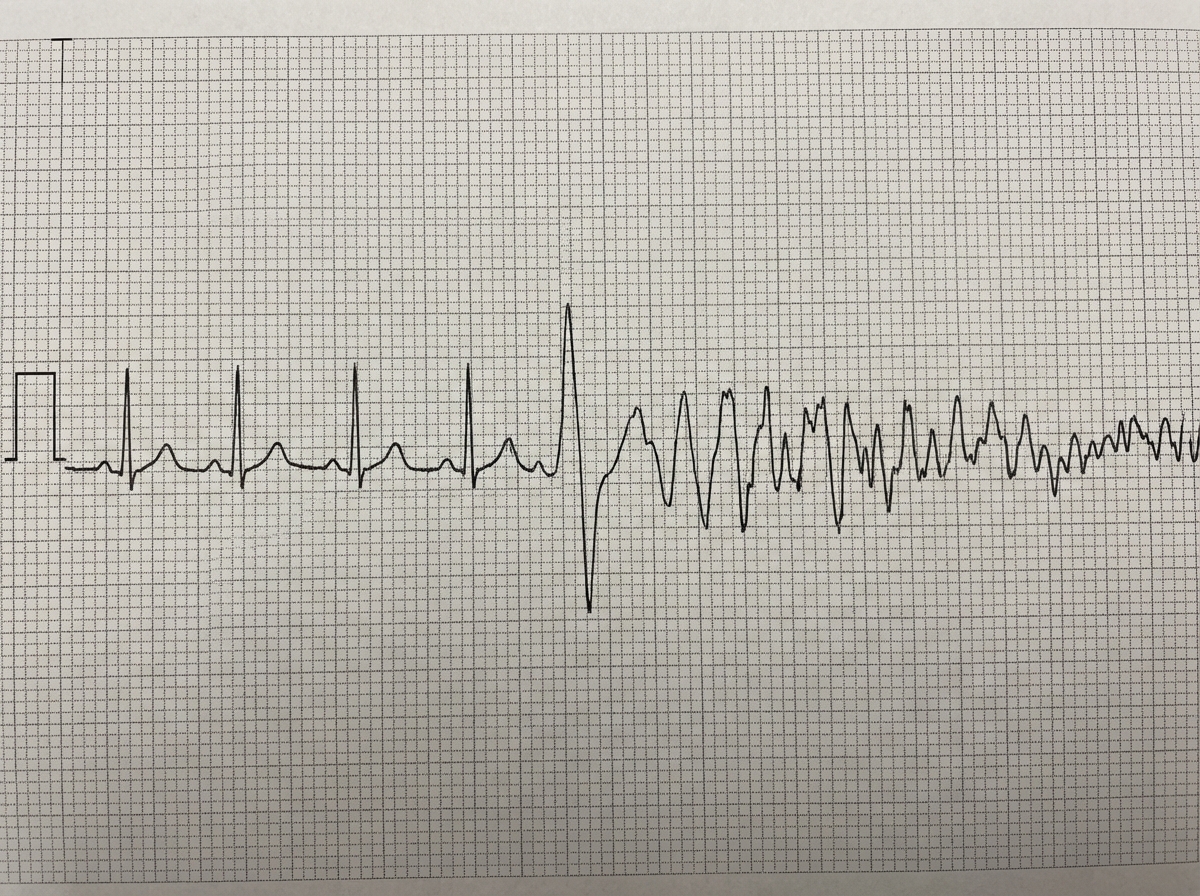
Which of the following cardiac rhythms is NOT associated with hyperkalemia?
Which of the following conditions are typically associated with a continuous murmur?
J waves are typically seen in which of the following conditions?
Regarding Wolf-Parkinson-White (WPW) syndrome, which of the following statements is incorrect?
A bisferiens pulse is seen in all of the following conditions except?
What are the causes of a water-hammer pulse?
A patient's history reveals dyspnea, orthopnea, and edema of the ankles and palpitations. What is the most likely diagnosis?
What is considered a wide QRS duration?
Explanation: **Explanation:** **Atrial Fibrillation (AF)** is the correct answer as it is globally recognized as the most common sustained cardiac arrhythmia in clinical practice [1]. Its prevalence increases significantly with age, affecting approximately 10% of individuals over the age of 80 [1]. The underlying pathophysiology involves multiple re-entrant wavelets or focal triggers (most commonly originating from the **pulmonary veins**) that lead to disorganized atrial electrical activity and an "irregularly irregular" ventricular response [1]. **Analysis of Incorrect Options:** * **Inappropriate Sinus Tachycardia (IST):** This is a relatively rare condition characterized by an elevated resting heart rate or disproportionate response to exertion without an underlying cause. It is far less common than AF. * **Premature Junctional Complexes (PJCs):** While these are common ectopics, they are usually transient and do not constitute a sustained rhythm disorder like AF [2]. * **Atrial Flutter:** Although it shares similar risk factors with AF, it is significantly less common. It is characterized by a "saw-tooth" pattern on ECG and is caused by a large re-entrant circuit, typically around the tricuspid annulus (macro-reentry) [2]. **High-Yield Clinical Pearls for NEET-PG:** * **Most common cause:** Hypertension and Valvular Heart Disease (Mitral Stenosis). * **ECG Hallmark:** Absence of P-waves and "irregularly irregular" R-R intervals. * **Management:** The primary goals are rate control (Beta-blockers/CCBs), rhythm control (Amiodarone/Flecainide), and **anticoagulation** (based on CHADS₂-VASc score) to prevent embolic stroke [1]. * **Ashman Phenomenon:** A long R-R interval followed by a short R-R interval resulting in an aberrantly conducted QRS complex, often seen in AF.
Explanation: ### Explanation **Clinical Diagnosis:** The patient presents with classic features of **Acute Pericarditis**, likely viral or idiopathic following a flu-like prodrome [1]. Key diagnostic markers include pleuritic chest pain (relieved by sitting forward), a pericardial friction rub, and the absence of tamponade signs (no pulsus paradoxus). **Why Option C is Correct:** In acute pericarditis, the **underlying etiology** is the primary determinant of the clinical course and prognosis [2]. * **Idiopathic/Viral cases** (like this patient) generally have a benign, self-limiting course with an excellent prognosis when treated with NSAIDs and Colchicine [1]. * **Non-viral causes** (e.g., malignancy, tuberculosis, uremia, or systemic lupus erythematosus) carry a much poorer prognosis, higher risk of recurrence, and a greater likelihood of progressing to cardiac tamponade or constrictive pericarditis. **Why Other Options are Incorrect:** * **Options A, B, and D:** While analyzing pericardial fluid (specific gravity, presence of blood, or cell count) can help narrow the differential diagnosis (e.g., hemorrhagic fluid in malignancy or TB), these parameters do not independently dictate the long-term prognosis. For instance, a "bloody" effusion can occur in both benign (post-cardiac surgery) and malignant conditions; it is the **cause** of the blood, not the blood itself, that determines the outcome. **NEET-PG High-Yield Pearls:** 1. **Most common cause:** Viral (Coxsackievirus B) or Idiopathic. 2. **ECG Findings:** Diffuse ST-segment elevation (concave upwards) and **PR-segment depression** (most specific) [1]. 3. **Physical Exam:** Pericardial rub is best heard with the diaphragm at the left lower sternal border while the patient leans forward. 4. **Treatment:** First-line therapy is **NSAIDs (Aspirin/Ibuprofen) + Colchicine** [1]. Colchicine is added specifically to reduce the rate of recurrence. 5. **Prognostic Red Flags:** High fever (>38°C), subacute onset, large effusion, or failure to respond to NSAIDs within 7 days.
Explanation: Explanation: **Hyperkalemia** affects cardiac conduction by partially depolarizing the resting membrane potential, which decreases the excitability of the myocardium and slows impulse conduction [1]. **Why Torsades de pointes is the correct answer:** Torsades de pointes (TdP) is a specific form of polymorphic ventricular tachycardia associated with a **prolonged QT interval** [2]. It is characteristically caused by **hypokalemia**, hypomagnesemia, and hypocalcemia—not hyperkalemia [3]. Hyperkalemia typically causes a *shortened* QT interval due to rapid repolarization (manifesting as tall, peaked T waves) [1]. **Analysis of incorrect options:** * **Sinus Bradycardia & Sinus Arrest:** As potassium levels rise, the sinoatrial (SA) node becomes depressed. This leads to bradycardia and, eventually, sinus arrest or "sine wave" rhythms as the P-wave disappears due to atrial paralysis [1]. * **Ventricular Fibrillation:** Severe hyperkalemia (typically >8.0 mEq/L) leads to profound conduction delays and increased myocardial irritability, which can degenerate into ventricular tachycardia or ventricular fibrillation, leading to cardiac arrest [1]. **High-Yield Clinical Pearls for NEET-PG:** * **Sequential ECG changes in Hyperkalemia:** Tall peaked T waves (earliest) → Prolonged PR interval → Loss of P waves (Atrial paralysis) → Widening of QRS complex → Sine wave pattern → Asystole/V-Fib [1]. * **Treatment Priority:** Intravenous **Calcium Gluconate** is the first-line treatment to stabilize the cardiac membrane (it does not lower K+ levels). * **Rule of Thumb:** "Hypo" (K, Mg, Ca) prolongs the QT; "Hyper" (K, Ca) shortens the QT.
Explanation: **Explanation** A **continuous murmur** is defined as a murmur that begins in systole and continues through the second heart sound (S2) into all or part of diastole. This occurs when there is a persistent pressure gradient between two chambers or vessels throughout the entire cardiac cycle [1]. **Why Option C is the Correct Answer (Concept):** In a typical **Patent Ductus Arteriosus (PDA)**, the pressure in the aorta is higher than in the pulmonary artery during both systole and diastole, creating a classic "machinery" continuous murmur [1]. However, when **reversal of shunt** occurs (Eisenmenger syndrome), pulmonary artery pressures equal or exceed systemic pressures. This abolishes the diastolic gradient, and often the systolic one as well, causing the continuous murmur to **disappear** [1]. *(Note: In many standard medical exams, PDA and Aortopulmonary window are classic causes of continuous murmurs. However, if the question specifically asks for conditions associated with a continuous murmur and includes "PDA with reversal," it is often a "except" style logic or testing the disappearance of the murmur.)* **Analysis of Other Options:** * **A. Aortic stenosis + Aortic regurgitation:** This produces a **"to-and-fro" murmur**, not a continuous one [2]. There is a gap between the systolic murmur (ejection) and diastolic murmur (regurgitant) at the time of the second heart sound. * **B. Systemic arteriovenous fistula:** This is a classic cause of a **continuous murmur** because the high-pressure artery always has higher pressure than the low-pressure vein. * **D. Aortopulmonary window:** This typically produces a **continuous murmur** similar to PDA, as it is a direct communication between the ascending aorta and the pulmonary trunk. **NEET-PG High-Yield Pearls:** 1. **Classic Continuous Murmurs:** PDA (Gibson’s murmur), Ruptured Sinus of Valsalva (RSOV), Venous hum (most common innocent continuous murmur), and Mammary souffle. 2. **Distinction:** A "To-and-Fro" murmur (AS+AR) is NOT continuous because it does not envelop the S2 [2]. 3. **PDA Fact:** The murmur of PDA is loudest at the left infraclavicular area and peaks at S2 [1]. It disappears if pulmonary hypertension develops (Eisenmenger’s) [1],[3].
Explanation: Explanation: J waves, also known as Osborn waves, are positive deflections occurring at the junction between the QRS complex and the ST segment (the J-point). 1. Why Hypothermia is Correct: Hypothermia is the classic cause of J waves. They typically appear when the core body temperature drops below 32°C (90°F). The physiological basis involves a temperature-sensitive gradient between the epicardium and endocardium during early ventricular repolarization, leading to a prominent notch at the J-point. The size of the J wave often correlates with the severity of the hypothermia. 2. Why Incorrect Options are Wrong: * Hyperthermia: Does not cause J waves; it is more commonly associated with sinus tachycardia or nonspecific ST-T changes [1]. * Hypokalemia: Characterized by U waves, flattened T waves, and ST-segment depression. * Hyperkalemia: Classically presents with tall, peaked "tented" T waves, widened QRS complexes, and loss of P waves [1]. 3. NEET-PG High-Yield Pearls: * Other causes of J waves: Hypercalcemia, Brugada syndrome, and early repolarization syndrome (normal variant). * ECG Triad of Hypothermia: 1. Sinus bradycardia (most common arrhythmia). 2. J waves (Osborn waves). 3. Prolonged PR, QRS, and QT intervals. * Artifact Alert: Shivering in hypothermic patients can cause a baseline artifact on ECG that mimics atrial flutter. * Management: Treatment focuses on active/passive rewarming rather than anti-arrhythmics, as J waves resolve with normalization of temperature.
Explanation: **Explanation** **1. Why Option C is the Incorrect Statement (The Correct Answer):** In Wolff-Parkinson-White (WPW) syndrome, **Type B** (not Type A) is classically associated with **Ebstein’s anomaly**. * **Type A WPW:** The accessory pathway is on the left side. On ECG, it shows a positive delta wave and tall R-waves in precordial leads (V1-V2), mimicking a Right Bundle Branch Block (RBBB). * **Type B WPW:** The accessory pathway is on the right side. On ECG, it shows a negative delta wave in V1-V2, mimicking a Left Bundle Branch Block (LBBB). Since Ebstein’s anomaly involves the right side of the heart (tricuspid valve), it is associated with Type B. **2. Analysis of Other Options:** * **Option A:** Patients with WPW are at risk for **Ventricular Tachycardia (VT)** and Ventricular Fibrillation (VF). This occurs if Atrial Fibrillation (AF) develops; the accessory pathway allows rapid, 1:1 conduction to the ventricles, leading to hemodynamic collapse [2]. * **Option B:** WPW can manifest in utero as sustained supraventricular tachycardia (SVT), leading to high-output heart failure and **Hydrops Fetalis**. * **Option D:** **Flecainide** (Class IC antiarrhythmic) is effective because it slows conduction and increases the refractory period of the accessory pathway, thereby preventing re-entrant tachycardias [2]. **Clinical Pearls for NEET-PG:** * **Classic Triad:** Short PR interval (<0.12s), Delta wave (slurred upstroke of QRS), and widened QRS complex [1]. * **Ebstein’s Anomaly:** Associated with Type B WPW and "Giant" P-waves (Himalayan P-waves). * **Drug of Choice:** For acute SVT in WPW, Adenosine is used. For long-term management, **Radiofrequency Ablation** of the accessory pathway is the definitive treatment. * **Contraindicated Drugs in WPW + AF:** ABCD (Adenosine, Beta-blockers, Calcium channel blockers, Digoxin) as they block the AV node and may paradoxically increase conduction through the accessory pathway.
Explanation: ### Explanation A **bisferiens pulse** (from Latin *bis* meaning twice and *ferire* meaning to beat) is a physical finding characterized by two systolic peaks in the arterial pulse [3]. It is best palpated in the carotid or brachial arteries [3]. **1. Why Tetralogy of Fallot (TOF) is the correct answer:** In TOF, the primary hemodynamic issue is right-to-left shunting across a VSD and right ventricular outflow tract obstruction. This leads to a **diminished** or normal pulse volume, but not a double-peaked systolic pulse. Therefore, it is the "except" in this list. **2. Analysis of other options:** * **Aortic Stenosis with Aortic Regurgitation (AS + AR):** This is the classic cause. The first peak (percussion wave) is due to the rapid ejection of a large stroke volume (from AR), and the second peak (tidal wave) is caused by the obstruction and reflected waves (from AS). * **Aortic Regurgitation (AR):** Severe isolated AR can present with a bisferiens pulse due to the massive stroke volume being ejected rapidly into the aorta [2], followed by a momentary collapse and a second reflected wave. * **Hypertrophic Obstructive Cardiomyopathy (HOCM):** In HOCM, the pulse is "spike and dome." **3. NEET-PG High-Yield Pearls:** * **Pulsus Alternans:** Sign of severe Left Ventricular Failure (LVF). * **Pulsus Paradoxus:** Seen in Cardiac Tamponade, Severe Asthma, and COPD. * **Anacrotic Pulse:** Characteristic of isolated severe Aortic Stenosis [1]. * **Water-hammer Pulse:** Seen in isolated Aortic Regurgitation (large volume, rapid collapse) [2].
Explanation: ### Explanation A **water-hammer pulse** (also known as Corrigan’s pulse or a collapsing pulse) is characterized by a rapid upstroke and a sudden, forceful collapse [1]. The physiological basis for this is a **large stroke volume** coupled with a **rapid runoff** of blood from the arterial system into a low-pressure chamber or vessel during diastole. This leads to a wide pulse pressure. **Why Both A and B are Correct:** 1. **Patent Ductus Arteriosus (PDA):** In PDA, blood shunts from the high-pressure aorta into the low-pressure pulmonary artery during diastole. This "runoff" causes a rapid drop in diastolic blood pressure, while the increased venous return to the left heart increases stroke volume (systolic pressure), resulting in a wide pulse pressure and a collapsing pulse. 2. **Truncus Arteriosus:** This is a cyanotic congenital heart disease where a single large vessel overrides both ventricles. The presence of a large systemic-to-pulmonary shunt (similar to PDA) or associated truncal valve regurgitation leads to a rapid diastolic runoff into the pulmonary circulation, producing a water-hammer pulse. **Clinical Pearls for NEET-PG:** * **Most Common Cause:** Aortic Regurgitation (AR) is the classic cause cited in exams [1]. * **Other High-Yield Causes:** * **Hyperdynamic states:** Fever, Anemia, Thyrotoxicosis, Pregnancy, Beri-beri. * **Arteriovenous shunts:** Large AV fistulas, Paget’s disease of the bone. * **Cardiac:** Ruptured Sinus of Valsalva. * **Physical Exam Tip:** To best elicit a water-hammer pulse, palpate the patient's radial artery with the palm of your hand while elevating the patient's arm above the level of the heart. This accentuates the diastolic collapse due to gravity.
Explanation: **Explanation:** The patient presents with a classic triad of symptoms indicating **Congestive Heart Failure (CHF)**: pulmonary congestion (dyspnea, orthopnea) and systemic venous congestion (peripheral edema). [1] **1. Why Congestive Heart Failure is Correct:** CHF occurs when the heart cannot pump sufficient blood to meet metabolic demands. * **Left-sided failure** leads to pulmonary venous congestion, causing **dyspnea** and **orthopnea** (shortness of breath when lying flat, relieved by sitting up). [1] * **Right-sided failure** leads to systemic venous congestion, manifesting as dependent **pitting edema** of the ankles. * **Palpitations** often result from compensatory tachycardia or associated arrhythmias like Atrial Fibrillation, commonly seen in failing hearts. [1] **2. Why Other Options are Incorrect:** * **Respiratory problem:** While it causes dyspnea, it typically does not cause orthopnea (unless severe COPD/Asthma) or bilateral ankle edema (unless it leads to Cor Pulmonale). * **Hepatic failure:** May cause edema and ascites due to hypoalbuminemia and portal hypertension, but it rarely presents with orthopnea unless there is massive ascites limiting diaphragmatic movement. * **Uremia:** While chronic kidney disease causes fluid overload and edema, the primary presentation usually involves uremic symptoms (nausea, pruritus, encephalopathy) and does not specifically explain the orthopnea-palpitation complex as clearly as CHF. **NEET-PG High-Yield Pearls:** * **Framingham Criteria:** Used for clinical diagnosis of CHF (requires 2 major or 1 major + 2 minor criteria). Orthopnea is a **Major** criterion. * **Most sensitive sign:** Displaced apex beat. * **Most specific sign:** Third heart sound (S3 gallop). * **BNP (B-type Natriuretic Peptide):** High negative predictive value; used to rule out CHF in acute dyspnea. [1]
Explanation: ### Explanation The QRS complex represents **ventricular depolarization**. In a healthy heart, electrical impulses travel rapidly through the specialized His-Purkinje system, ensuring synchronous ventricular contraction. **1. Why 0.12 seconds is correct:** A normal QRS duration is typically between **0.06 and 0.10 seconds** (1.5 to 2.5 small squares). A duration of **≥ 0.12 seconds** (3 small squares) is the standard diagnostic threshold for a **"Wide QRS."** This delay indicates that ventricular depolarization is occurring slowly, usually because the impulse is traveling through the working myocardium rather than the rapid conduction system [1]. **2. Why the other options are incorrect:** * **Options A and B (0.8 and 0.9 seconds):** These values are physiologically impossible for a single QRS complex. A duration of 0.8 seconds would mean a single heartbeat takes nearly a full second just to depolarize the ventricles, which is incompatible with life. These options likely confuse *seconds* with *milliseconds* (e.g., 80ms or 90ms), which fall within the normal range. * **Option D:** Since A and B are incorrect, "All the above" is invalid. **Clinical Pearls for NEET-PG:** * **Differential Diagnosis of Wide QRS:** 1. **Bundle Branch Blocks (RBBB/LBBB):** The most common cause. 2. **Ventricular Ectopy:** Premature Ventricular Contractions (PVCs) or Ventricular Tachycardia (VT) [2]. 3. **Pre-excitation:** Wolff-Parkinson-White (WPW) syndrome (due to the Delta wave) [1]. 4. **Metabolic/Toxic:** Hyperkalemia (classic "sine wave" appearance) or Sodium Channel Blocker toxicity (e.g., TCA overdose) [3]. 5. **Pacemaker-induced** rhythms. * **High-Yield Tip:** In the setting of tachycardia, a wide QRS should be considered **Ventricular Tachycardia** until proven otherwise [2].
Coronary Artery Disease and Angina
Practice Questions
Acute Coronary Syndromes
Practice Questions
Heart Failure
Practice Questions
Cardiac Arrhythmias
Practice Questions
Valvular Heart Diseases
Practice Questions
Cardiomyopathies
Practice Questions
Pericardial Diseases
Practice Questions
Congenital Heart Disease in Adults
Practice Questions
Hypertension and Hypertensive Emergencies
Practice Questions
Pulmonary Hypertension
Practice Questions
Non-invasive Cardiac Diagnostics
Practice Questions
Preventive Cardiology
Practice Questions
Get full access to all questions, explanations, and performance tracking.
Start For Free