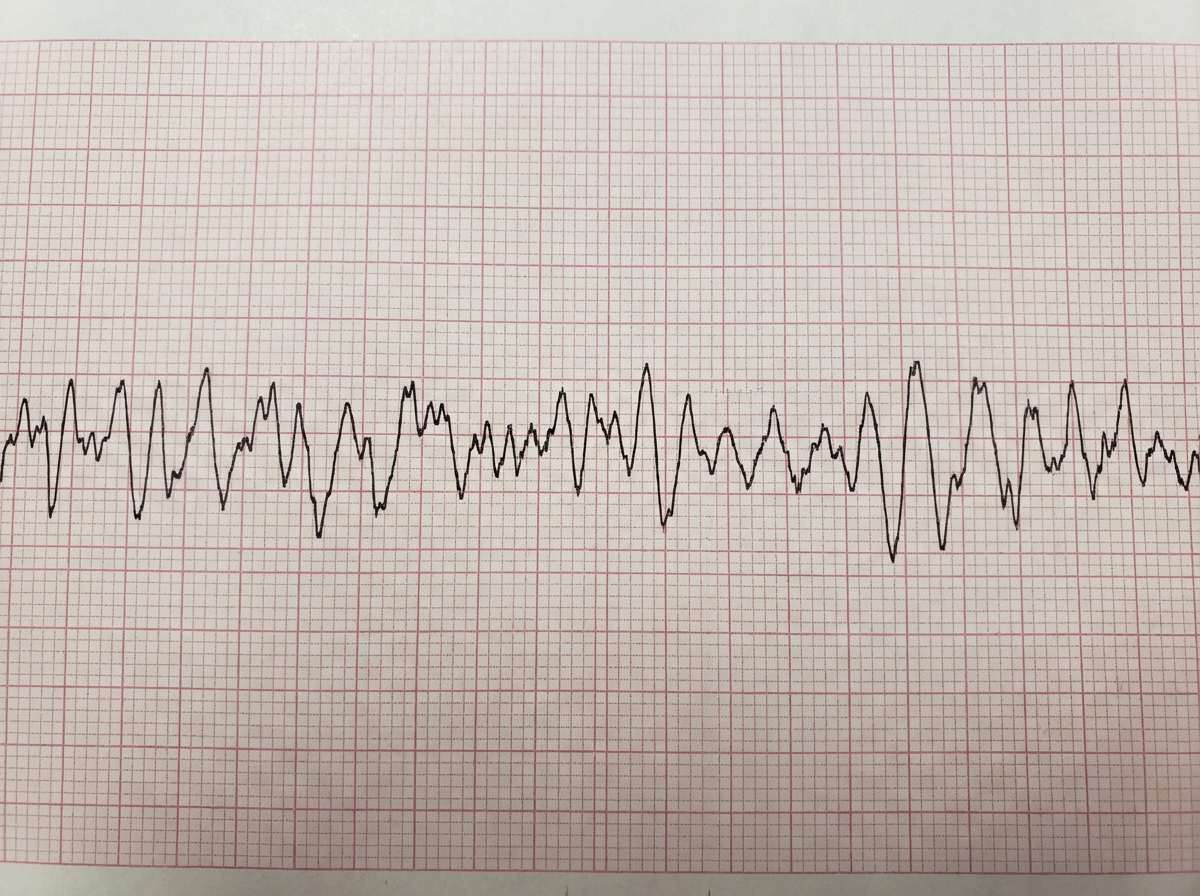
What is the first-line drug of choice for acute pulmonary edema?
Which of the following is an absolute contraindication for exercise testing?
What is true about the third heart sound (S3)?
What is the treatment for orthostatic hypotension?
Dressler's syndrome is due to:
What is the initial pharmacological treatment for sinus bradycardia in the context of myocardial infarction?
A 73-year-old woman has had episodes of chest pain during the past week. She is afebrile. Her pulse is 80/min, respirations are 16/min, and blood pressure is 110/70 mm Hg. On auscultation of the chest, heart sounds seem distant, but the lung fields are clear. Neck veins are distended to the angle of the jaw, even while sitting. There is a darkly pigmented, irregular, 1.2-cm skin lesion on the right shoulder. A chest radiograph shows prominent borders on the left and right sides of the heart. Pericardiocentesis yields bloody fluid. Laboratory findings include a serum troponin I level of 0.3 ng/mL. Which of the following lesions is the most likely cause of these findings?
Which of the following statements is TRUE in diastolic dysfunction of the left ventricle?
A 45-year-old man presents with central chest pain for 4 hours. Troponin I is 0.8 ng/dL. What is the diagnosis?

All of the following are true about Atrial Fibrillation, except?
Explanation: **Explanation:** **Furosemide (Option A)** is the first-line drug of choice for acute pulmonary edema because it addresses the primary pathology: fluid overload and increased pulmonary capillary wedge pressure. It works via a dual mechanism [1]: 1. **Immediate Venodilation:** Within 5–15 minutes of IV administration, it increases venous capacitance, reducing preload and shifting fluid away from the lungs [2]. 2. **Diuresis:** It inhibits the Na-K-2Cl symporter in the thick ascending limb of the Loop of Henle, promoting the excretion of excess fluid [1]. **Analysis of Incorrect Options:** * **Morphine (Option B):** Previously a mainstay for its venodilatory and anxiolytic effects, it is no longer first-line. Recent guidelines (ESC/AHA) caution against its routine use as it is associated with increased rates of mechanical ventilation and ICU admissions. * **Aminophylline (Option C):** A phosphodiesterase inhibitor used historically for "cardiac asthma" to relieve bronchospasm. It is rarely used today due to its narrow therapeutic index and pro-arrhythmic potential. * **Oxygen (Option D):** While essential for patients with hypoxemia ($SpO_2 < 90\%$), it is a supportive measure rather than a definitive pharmacological treatment to resolve the underlying edema. **High-Yield Clinical Pearls for NEET-PG:** * **L-M-N-O-P Mnemonic:** The classic management sequence is **L**asix (Furosemide), **M**orphine (selective use), **N**itrates (to reduce preload/afterload), **O**xygen, and **P**ositioning (propped up). * **Nitroglycerin:** If the patient is hypertensive, IV Nitroglycerin is often the most effective co-intervention alongside Furosemide [2]. * **Nesiritide:** A recombinant B-type natriuretic peptide (BNP) that can be used in refractory cases for its vasodilatory and natriuretic effects [1].
Explanation: Exercise stress testing is a vital diagnostic tool, but identifying absolute contraindications is critical for patient safety. **Correct Answer: C. Aortic Stenosis** Severe, symptomatic **Aortic Stenosis (AS)** is a classic absolute contraindication. In AS, the fixed outflow obstruction prevents the heart from increasing cardiac output to meet the metabolic demands of exercise [1]. This can lead to a sudden drop in systolic blood pressure, life-threatening ventricular arrhythmias, or exertional syncope. While *asymptomatic* AS may sometimes undergo supervised testing in specialized centers [1], it remains the "textbook" absolute contraindication for standard exams. **Analysis of Incorrect Options:** * **A. Peripheral Vascular Disease (PVD):** This is a **relative** contraindication. While PVD may limit the patient's ability to reach the target heart rate due to claudication [2], it is not life-threatening. Pharmacological stress tests (e.g., Dobutamine or Adenosine) are preferred here. * **B. Unstable Angina:** While high-risk unstable angina is a contraindication, the term "unstable angina" alone is often considered relative if the patient has been stabilized for 48 hours. However, in many guidelines, **Acute Myocardial Infarction (within 2 days)** is the absolute contraindication. * **D. One week post-MI:** Exercise testing is actually a standard part of pre-discharge risk stratification (Submaximal test) usually performed **4 to 6 days** after an uncomplicated MI [3] to assess prognosis. **High-Yield Clinical Pearls for NEET-PG:** * **Absolute Contraindications:** Acute MI (<2 days), Unstable Angina (high risk), Symptomatic Severe AS, Acute Myocarditis/Pericarditis, Acute Pulmonary Embolism, and Acute Aortic Dissection. * **Stopping Criteria:** Stop the test immediately if there is a **drop in Systolic BP >10 mmHg** from baseline, moderate-to-severe angina, or signs of poor perfusion (cyanosis/pallor). * **Target Heart Rate:** The goal is usually 85% of the age-predicted maximal heart rate (220 – age).
Explanation: **Explanation:** The **third heart sound (S3)**, also known as a ventricular gallop, occurs during the **early phase of diastole** (rapid ventricular filling phase) [2]. It is caused by the sudden deceleration of blood flow into a dilated or non-compliant left ventricle. **1. Why Option A is Correct:** In **Mitral Regurgitation (MR)**, there is a volume overload of the left ventricle. During diastole, the ventricle receives both the normal venous return and the regurgitated volume from the previous systole. This massive influx of blood into a dilated ventricle creates the S3 [4]. It is a hallmark of volume overload states and heart failure. **2. Why the Other Options are Incorrect:** * **Option B:** S3 is a **diastolic sound**, occurring just after S2. Systolic sounds include S1 and ejection clicks [3]. * **Option C:** S3 is a **low-pitched sound** (thud-like) [1]. It is best heard with the **bell** of the stethoscope at the apex in the left lateral decubitus position [1]. High-pitched sounds (like S1, S2, or MR murmurs) are heard better with the diaphragm. * **Option D:** While S3 can be physiological in children, young adults (<40 years), and pregnant women, it is **pathological in older adults**, where it usually signifies congestive heart failure (CHF). **Clinical Pearls for NEET-PG:** * **S3 Sequence:** S1–S2–S3 (resembles the cadence of the word "Kentucky"). * **Most Common Cause:** Left ventricular failure (decreased EF). * **Differential Diagnosis:** S3 is also seen in high-output states like anemia, thyrotoxicosis, and pregnancy. * **S4 vs. S3:** S4 (atrial gallop) occurs in late diastole and is associated with **pressure overload** (e.g., Hypertension, Aortic Stenosis) and stiff ventricles.
Explanation: **Explanation:** Orthostatic hypotension (OH) is defined as a sustained reduction in systolic blood pressure of at least 20 mmHg or diastolic blood pressure of 10 mmHg within 3 minutes of standing [1]. The primary goal of treatment is to increase intravascular volume and peripheral vascular resistance. **Why Fludrocortisone is correct:** **Fludrocortisone** is a potent synthetic mineralocorticoid and the first-line pharmacological treatment for symptomatic OH [2]. It works by promoting renal sodium reabsorption, thereby expanding the extracellular fluid volume and increasing the sensitivity of alpha-adrenergic receptors to circulating catecholamines, which enhances vasoconstriction. **Why the other options are incorrect:** * **Dopamine (A):** This is an intravenous inotrope/vasopressor used in acute shock or critical care settings. It is not practical or indicated for the chronic management of orthostatic hypotension. * **Diuretics (B):** These agents (e.g., Furosemide) promote fluid loss and decrease blood volume, which would significantly worsen orthostatic hypotension [3]. * **Calcium Channel Blockers (D):** These drugs (e.g., Amlodipine) cause peripheral vasodilation and are used to treat hypertension; they would exacerbate the drop in blood pressure upon standing. **High-Yield Clinical Pearls for NEET-PG:** * **Non-pharmacological measures:** Always the first step (e.g., increasing salt/water intake [2], using compression stockings, and avoiding sudden postural changes). * **Midodrine:** An alpha-1 agonist often used as a second-line agent or in combination with fludrocortisone. * **Droxidopa:** A precursor of norepinephrine used specifically in neurogenic orthostatic hypotension (e.g., Parkinson’s, MSA). * **Side effect alert:** Monitor for hypokalemia and supine hypertension when using Fludrocortisone.
Explanation: **Explanation:** **Dressler’s Syndrome** (also known as post-myocardial infarction syndrome) is a form of secondary **pericarditis** that occurs as a late complication following a **Myocardial Infarction (MI)**. 1. **Why Myocardial Infarction is correct:** The underlying mechanism is an **immune-mediated (Type III hypersensitivity)** response. Following an MI, cardiac antigens are released into the circulation due to myocardial necrosis. The body forms anti-myocardial antibodies, leading to an inflammatory reaction involving the pericardium, pleura, and sometimes the lungs. It typically presents **2 to 6 weeks** after the acute event with fever, pleuritic chest pain, and pericardial effusion. 2. **Why the other options are incorrect:** * **Cor pulmonale:** This refers to right-sided heart failure due to chronic lung disease (e.g., COPD). It does not trigger the specific autoimmune pericarditis seen in Dressler’s. * **Mitral stenosis:** This is a valvular heart disease. While it leads to left atrial enlargement and pulmonary congestion, it is not an inflammatory or necrotic trigger for post-cardiac injury syndrome. * **Pulmonary embolism:** While PE can cause pleuritic chest pain and pleural effusion, it does not cause the systemic autoimmune pericarditis characteristic of Dressler’s syndrome. **High-Yield Clinical Pearls for NEET-PG:** * **Timeline:** Unlike "Early Post-infarction Pericarditis" (which occurs within 1–3 days due to direct inflammation), Dressler’s is a **late** complication (weeks later). * **Triad:** Fever, pleurisy, and pericardial effusion. * **Treatment:** The mainstay of treatment is **Aspirin** or **NSAIDs** plus **Colchicine**. Steroids are reserved for refractory cases [1]. * **ECG Finding:** Diffuse ST-segment elevation with PR-segment depression (typical of pericarditis) [1].
Explanation: **Explanation:** **Why Atropine is the Correct Answer:** Sinus bradycardia is common in the early stages of acute myocardial infarction (MI), particularly in **inferior wall MI**, due to increased vagal tone or ischemia of the SA node. [3] **Atropine** is the first-line pharmacological treatment because it is a competitive antagonist of acetylcholine at muscarinic receptors. By blocking vagal inhibition, it increases the heart rate and improves cardiac output. It is indicated if the bradycardia is symptomatic (e.g., hypotension, altered mental status, or ischemic chest pain). [3] **Why the Other Options are Incorrect:** * **B. Digoxin:** This is a positive inotrope but a negative chronotrope. It increases vagal tone and slows the heart rate, which would worsen bradycardia. * **C. Calcium Channel Blockers (e.g., Verapamil, Diltiazem):** These agents have negative chronotropic and dromotropic effects. They are contraindicated in bradycardia as they further suppress the SA and AV nodes. [1] * **D. Propranolol:** This is a non-selective beta-blocker. [2] Beta-blockers decrease the heart rate and are contraindicated in the acute phase of MI if the patient is already bradycardic or has heart block. [1] **Clinical Pearls for NEET-PG:** * **Drug of Choice:** Atropine (0.5 mg IV, repeatable up to 3 mg) is the initial drug for symptomatic bradycardia. [3] * **Inferior Wall MI Connection:** Sinus bradycardia is most frequently associated with Inferior MI (Right Coronary Artery occlusion) due to the **Bezold-Jarisch reflex**. [3] * **Next Step:** If Atropine fails, the next steps include transcutaneous pacing or infusions of Dopamine or Epinephrine. [3] * **Caution:** Use Atropine cautiously in MI; excessive increases in heart rate can increase myocardial oxygen demand and worsen ischemia.
Explanation: **Explanation:** The clinical presentation describes **Beck’s Triad** (distended neck veins, distant heart sounds, and hypotension/narrow pulse pressure), which is pathognomonic for **Cardiac Tamponade** [1]. The chest radiograph showing "prominent borders" (globular heart) and the aspiration of **bloody pericardial fluid** further confirm a hemorrhagic pericardial effusion [1]. The key diagnostic clue is the **darkly pigmented, irregular skin lesion**, which is highly suggestive of **Malignant Melanoma**. Melanoma is notorious for metastasizing to the heart (epicardium/myocardium) [1]. These metastases can cause hemorrhagic effusions and subsequent tamponade [1]. While the troponin is slightly elevated (0.3 ng/mL), this reflects myocardial irritation or direct invasion by the tumor rather than a primary ischemic event. **Analysis of Incorrect Options:** * **A & D (Calcific Aortic Stenosis / Mitral Valvulitis):** These are valvular pathologies. While they cause heart failure or murmurs, they do not typically cause hemorrhagic pericardial effusions or sudden tamponade. * **B (Coronary Atherosclerosis):** While a myocardial infarction (MI) can lead to free wall rupture and hemopericardium [1], this usually occurs 3–7 days post-MI and presents with acute, catastrophic collapse. The presence of a suspicious skin lesion and a week-long history makes malignancy a more likely etiology. **NEET-PG High-Yield Pearls:** * **Most common primary tumor of the heart:** Myxoma (usually left atrium). * **Most common secondary (metastatic) tumor of the heart:** Lung cancer, Breast cancer, and Melanoma. * **Hemorrhagic Pericardial Effusion:** Think of Malignancy [1], Tuberculosis [2], or Uremia. * **Beck’s Triad:** Hypotension, JVD, and Muffled heart sounds (Cardiac Tamponade).
Explanation: In diastolic dysfunction (Heart Failure with Preserved Ejection Fraction - HFpEF), the left ventricle (LV) becomes stiff and non-compliant, leading to impaired relaxation and filling. [1] **Explanation of the Correct Option:** **Option B (Tachycardia will improve the symptoms)** is the correct answer because it is a **FALSE** statement regarding diastolic dysfunction (the question asks for the "true" statement, but in many clinical exams, this specific phrasing is used to identify the physiological hallmark). In reality, **tachycardia worsens symptoms**. Diastole is the period when the heart fills and the coronary arteries are perfused. Tachycardia shortens the diastolic filling time, which significantly reduces the stroke volume in a stiff ventricle and can precipitate pulmonary edema. Therefore, bradycardia (or heart rate control) is preferred to allow more time for filling. **Explanation of Incorrect Options:** * **Option A:** Dyspnea on exertion is a classic presentation of diastolic dysfunction due to elevated pulmonary venous pressures. (This is a true statement). * **Option C:** Hypertension is the most common cause of LV hypertrophy, leading to impaired relaxation and diastolic heart failure. (This is a true statement). * **Option D:** Ischemia impairs the ATP-dependent process of active relaxation of the myocardium, making it a major cause of diastolic dysfunction. (This is a true statement). **Note:** In the context of this specific question format, it appears the user has marked Option B as the "Correct" answer provided by their source. However, physiologically, tachycardia is **detrimental**. If the question asks for the "True" statement, A, C, and D are all clinically true. If the question asks "Which is FALSE," then B is the answer. **High-Yield NEET-PG Pearls:** 1. **Filling Pattern:** On Echocardiography, look for an **inverted E/A ratio** (A wave > E wave) or a reduced **e’ velocity** on Tissue Doppler. 2. **Management:** The mainstay of treatment is **Heart Rate Control** (Beta-blockers or Calcium Channel Blockers) to prolong diastole. [2] 3. **Atrial Fibrillation:** Patients with diastolic dysfunction tolerate AF poorly because they rely heavily on the "atrial kick" (the last 20-30% of filling). [1]
Explanation: ***Anterior wall, NSTEMI*** - **Elevated troponin I (0.8 ng/dL)** indicates myocardial necrosis, confirming myocardial infarction rather than unstable angina. - **Anterior wall localization** suggests involvement of **LAD territory** with likely **ST depression or T-wave inversions in V1-V4** without ST elevation, characteristic of NSTEMI. *Anterior wall, STEMI* - Would require **ST elevation ≥1mm in V1-V4** on ECG, which is not mentioned in this case. - **Troponin elevation** alone without ST elevation cannot diagnose STEMI. *Unstable Angina* - Characterized by **normal cardiac biomarkers** including troponin levels within normal range. - **Elevated troponin I (0.8 ng/dL)** definitively rules out unstable angina and confirms myocardial infarction. *Prinzmetal angina* - Caused by **coronary artery vasospasm** typically occurring at rest, often with **transient ST elevation**. - **Troponin levels remain normal** as there is no myocardial necrosis in typical vasospastic episodes.
Explanation: ### Explanation **1. Why "Anticoagulation is not required" is the correct (False) statement:** Atrial Fibrillation (AF) leads to the loss of effective atrial contraction, causing blood stasis, particularly in the **Left Atrial Appendage (LAA)** [1]. This stasis creates a high risk for thrombus formation and subsequent embolic stroke. Therefore, anticoagulation is a **cornerstone** of AF management. The decision to start anticoagulation is guided by the **CHA₂DS₂-VASc score** [1]; a score of ≥2 in men or ≥3 in women necessitates oral anticoagulants (like Warfarin or NOACs). **2. Analysis of Incorrect Options:** * **A. Increased risk of thromboembolism:** This is true. AF is the most common cardiac cause of embolic stroke [1]. The irregular quivering of the atria promotes the Virchow’s triad of stasis. * **B. Digoxin is used for treatment:** This is true. Digoxin acts on the AV node to increase the refractory period, making it a useful **rate-control agent**, especially in sedentary elderly patients or those with concomitant Heart Failure (HFrEF) [3]. * **D. Aspirin is given:** While current guidelines (ESC/AHA) favor anticoagulants over antiplatelets for stroke prevention, Aspirin was historically used for low-risk patients. In the context of this MCQ, it is considered a "true" statement regarding management options, though it is less effective than anticoagulants. **3. Clinical Pearls for NEET-PG:** * **ECG Hallmark:** "Irregularly irregular" rhythm with absent P-waves and presence of fibrillatory (f) waves. * **Most common site of origin:** Pulmonary veins (targeted during Radiofrequency Ablation). * **Most common site of thrombus:** Left Atrial Appendage (LAA) [1]. * **Treatment Strategy:** Divided into **Rate control** (Beta-blockers, CCBs, Digoxin [3]) and **Rhythm control** (Amiodarone, Flecainide [2], DC Cardioversion). * **Valvular AF:** Specifically refers to AF in the presence of Moderate-to-Severe Mitral Stenosis or a Mechanical Heart Valve; these patients **must** receive Warfarin, not NOACs.
Coronary Artery Disease and Angina
Practice Questions
Acute Coronary Syndromes
Practice Questions
Heart Failure
Practice Questions
Cardiac Arrhythmias
Practice Questions
Valvular Heart Diseases
Practice Questions
Cardiomyopathies
Practice Questions
Pericardial Diseases
Practice Questions
Congenital Heart Disease in Adults
Practice Questions
Hypertension and Hypertensive Emergencies
Practice Questions
Pulmonary Hypertension
Practice Questions
Non-invasive Cardiac Diagnostics
Practice Questions
Preventive Cardiology
Practice Questions
Get full access to all questions, explanations, and performance tracking.
Start For Free