Which of the following is a risk factor for atherosclerosis?
Which condition is characterized by a 'hockey-stick' appearance on echocardiography?
Which of the following statements about blood pressure measurement is INCORRECT?
ST depression and T wave inversion in V1 to V6 and aVL leads indicate:
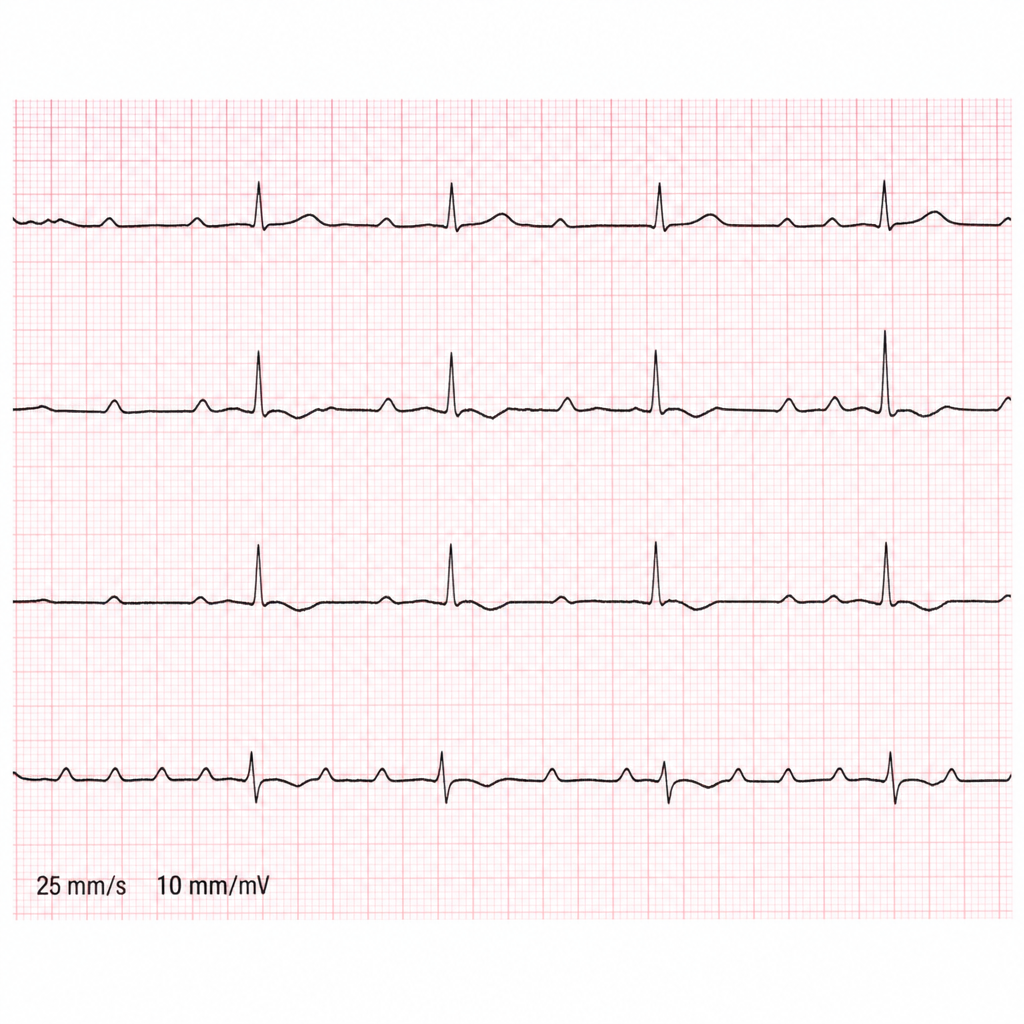
A patient in CCU on day 2 of PCI procedure has the following rhythm. BP=90/60mmHg. Which is the next best step for management of this patient?

Postural orthostatic tachycardia syndrome is characterized by all EXCEPT?
What condition is associated with the presence of Visser's sign?
Reduced risk of cardiovascular disease is associated with all of the following EXCEPT:
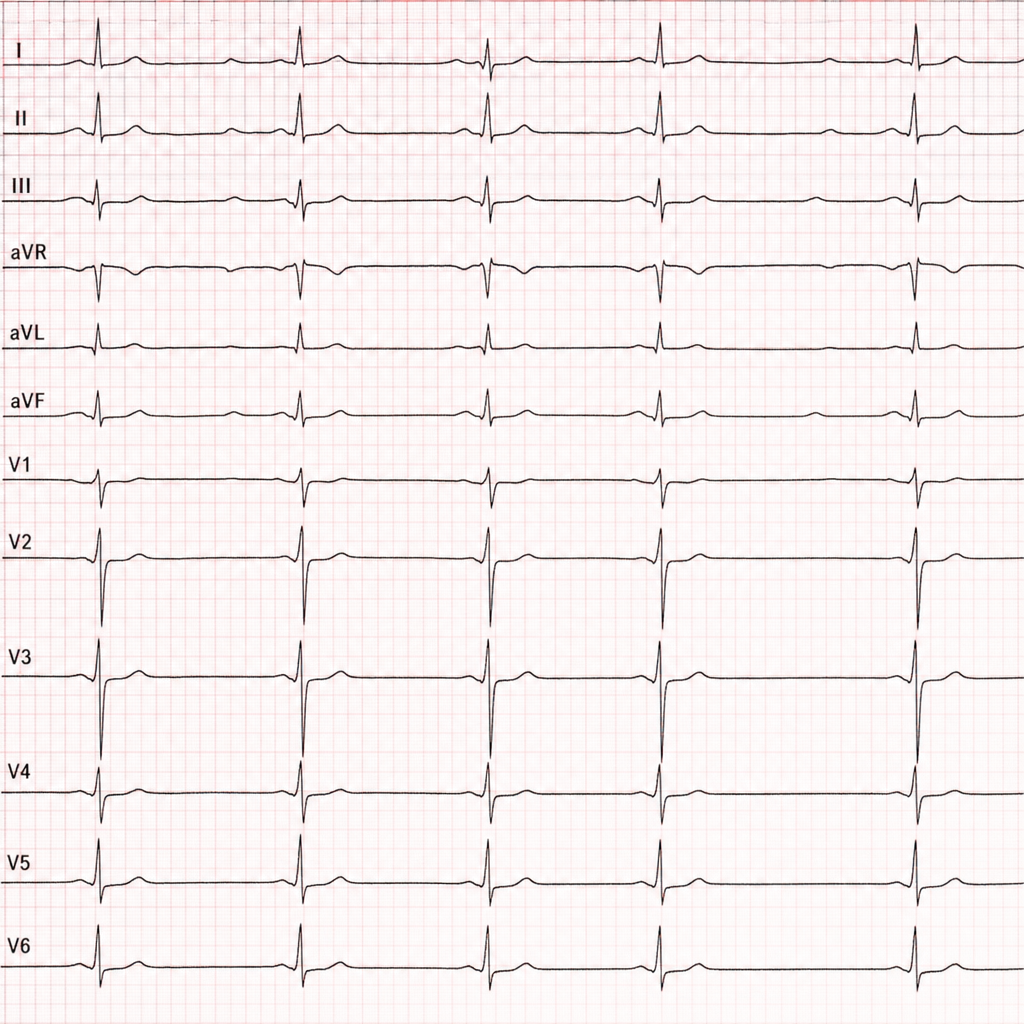
A 56-year-old man presents with severe chest pain and difficulty in breathing. An immediate ECG was taken. What diagnosis does the ECG suggest?

What is the best modality of treatment for a patient with acute inferior wall myocardial infarction?
Explanation: **Explanation:** Atherosclerosis is a chronic inflammatory process characterized by the formation of fibro-fatty plaques within the arterial wall. Its pathogenesis is best explained by the **"Response to Injury" hypothesis**, where chronic endothelial damage leads to lipid accumulation and plaque formation [1]. * **Smoking:** It is one of the most potent modifiable risk factors [1]. It induces oxidative stress, reduces Nitric Oxide (NO) bioavailability, and promotes endothelial dysfunction and platelet aggregation. * **Hypertension:** Chronic high blood pressure causes mechanical shear stress on the vascular endothelium [1]. This damage facilitates the entry of LDL cholesterol into the tunica intima, accelerating plaque formation. * **Diabetes Mellitus:** Hyperglycemia leads to the formation of **Advanced Glycation End-products (AGEs)** and induces a pro-thrombotic state. Diabetics often have a specific lipid triad (high triglycerides, low HDL, and small dense LDL), which is highly atherogenic. Since all three factors independently and synergistically contribute to the development of atherosclerotic plaques, **"All of the above"** is the correct answer. **High-Yield Clinical Pearls for NEET-PG:** * **Most common site of atherosclerosis:** Abdominal aorta > Coronary arteries > Popliteal arteries > Internal carotid arteries. * **Non-modifiable risk factors:** Age, Male gender, and Family history (Genetic predisposition). * **Modifiable risk factors:** Dyslipidemia (High LDL is the most significant), Hypertension, Smoking, and Diabetes. * **Emerging risk factors:** High CRP (marker of inflammation), Hyperhomocysteinemia, and Lipoprotein(a). * **Protective factor:** High HDL levels (Reverse cholesterol transport).
Explanation: The **'hockey-stick' appearance** is a classic echocardiographic hallmark of **Mitral Stenosis (MS)**, specifically seen in rheumatic etiology [1]. **1. Why Mitral Stenosis is correct:** In rheumatic mitral stenosis, the leaflets undergo commissural fusion and thickening. During diastole, the high pressure in the Left Atrium attempts to push the mitral valve open [1]. While the tips of the leaflets are restricted and fused, the mid-portions of the **Anterior Mitral Leaflet (AML)** remain relatively mobile. This results in **diastolic doming** of the AML, which resembles the shape of a hockey stick when viewed in the Parasternal Long Axis (PLAX) view [1]. **2. Why other options are incorrect:** * **Mitral Incompetence (Regurgitation):** Characterized by poor coaptation, prolapse, or flail leaflets, but does not exhibit the specific restricted doming seen in MS [2]. * **Aortic Stenosis:** Associated with a "bicuspid" appearance or heavy calcification of the aortic cusps, often showing restricted opening (systolic doming in bicuspid valves), but not the 'hockey-stick' sign. * **Aortic Regurgitation:** May show "fluttering" of the anterior mitral leaflet due to the regurgitant jet hitting it, but not the characteristic doming of MS [3]. **High-Yield Clinical Pearls for NEET-PG:** * **M-Mode Echo in MS:** Shows a "Square root sign," decreased E-F slope, and paradoxical anterior movement of the Posterior Mitral Leaflet (PML). * **Auscultation:** Loud S1, Opening Snap (OS), and a Mid-diastolic rumbling murmur [1]. * **Severity:** The interval between S2 and the Opening Snap (S2-OS gap) is inversely proportional to the severity of MS (shorter gap = more severe). * **Most common cause:** Rheumatic Heart Disease.
Explanation: The correct answer is **B** because, according to standard clinical guidelines (AHA/ESH), **Diastolic Blood Pressure (DBP)** in adults is indicated by the **fifth Korotkoff sound (Phase V)**, which is the point of complete disappearance of sound. The fourth Korotkoff sound (Phase IV), characterized by distinct muffling, is only used to estimate DBP in specific populations where sounds persist to near zero, such as in children, pregnant women, or patients with high-output states (e.g., severe anemia or thyrotoxicosis). **Analysis of other options:** * **Option A:** This is a standard requirement. The bladder width should be approximately **40%** of the arm circumference, and the length should be **80%** to ensure accurate pressure transmission. * **Option C:** Using a cuff that is too small (narrow) for a large arm requires higher inflation pressure to occlude the artery, leading to **spuriously elevated** readings (cuff hypertension). Conversely, a cuff that is too large will give falsely low readings. * **Option D:** **Mönckeberg medial calcific sclerosis** involves calcification of the tunica media of medium-sized arteries. This makes the vessels non-compressible, requiring very high cuff pressures to occlude them, resulting in a falsely high BP reading (**pseudohypertension**) despite normal intra-arterial pressure. **High-Yield Clinical Pearls for NEET-PG:** * **Osler’s Maneuver:** Used to detect pseudohypertension; if the radial pulse remains palpable even after the cuff is inflated above systolic pressure, the patient is "Osler positive." * **Auscultatory Gap:** A silent interval between Phase I and Phase II sounds; failure to recognize it leads to underestimation of systolic or overestimation of diastolic BP. [1] * **Positioning:** The arm must be supported at the level of the **right atrium** (mid-sternum). If the arm is below heart level, BP will be falsely elevated.
Explanation: The correct answer is **Posterior wall AMI**. [1] **1. Why Posterior Wall AMI is correct:** The standard 12-lead ECG does not have leads placed directly over the posterior wall of the heart. Therefore, we must look for **reciprocal changes** in the anterior leads (V1–V3/V4). [2] In a posterior wall MI, the typical ST-elevation and Q-waves are "mirrored." Instead of ST-elevation, we see **ST-depression**; instead of Q-waves, we see **tall R-waves**; and instead of T-wave inversion, we see **upright, prominent T-waves**. However, in the acute phase, deep T-wave inversions across the precordial leads (V1–V6) and lateral leads (aVL) are classic reciprocal manifestations of posterior injury. To confirm, one should perform an ECG with posterior leads (**V7–V9**), which would show ST-elevation. **2. Why the other options are incorrect:** * **Anterolateral wall AMI:** This would typically present with ST-segment **elevation** in leads V1–V6, I, and aVL, not depression. [1] * **Inferior AMI:** This presents with ST-elevation in the diaphragmatic leads (**II, III, and aVF**). [1] * **Lateral AMI:** This is characterized by ST-elevation in leads **I, aVL, V5, and V6**. **Clinical Pearls for NEET-PG:** * **The "Mirror Test":** If you flip a posterior MI ECG upside down and look at it in a mirror, the V1–V3 leads will look like a classic STEMI. * **Isolated Posterior MI:** Often caused by occlusion of the **Left Circumflex Artery (LCx)** or a dominant Right Coronary Artery (RCA). * **High-Yield Sign:** A tall R-wave in V1 (R/S ratio > 1) in the absence of Right Ventricular Hypertrophy is highly suggestive of a previous or evolving posterior MI.
Explanation: ***Pacemaker*** - The patient has **complete (third-degree) AV block** post-PCI with hemodynamic compromise (BP 90/60 mmHg), requiring urgent **temporary pacemaker** insertion. - **AV block** following PCI is a mechanical complication that needs **electrical support**, not antiarrhythmic medications. *Lignocaine* - Used for **ventricular arrhythmias** like VT/VF, not for **bradyarrhythmias** or conduction blocks. - Would worsen the situation by potentially causing further **cardiac depression** and hypotension. *Amiodarone* - Primarily used for **tachyarrhythmias** and has **negative chronotropic effects** that would worsen bradycardia. - Can further **suppress AV conduction** and is contraindicated in complete heart block. *Synchronized cardioversion* - Used for **tachyarrhythmias** with hemodynamic instability, not for **bradyarrhythmias**. - The patient has **slow heart rate with AV dissociation**, not a fast rhythm requiring cardioversion.
Explanation: Postural Orthostatic Tachycardia Syndrome (POTS) is a form of orthostatic intolerance characterized by an excessive increase in heart rate upon standing **without a significant drop in blood pressure.** **Why Option D is the correct answer (The Exception):** The hallmark of POTS is the **absence of orthostatic hypotension.** By definition, the systolic blood pressure should not drop by more than 20 mmHg (or diastolic by 10 mmHg) within 3 minutes of standing. If significant hypotension is present, the diagnosis shifts toward autonomic failure or simple orthostatic hypotension rather than POTS. **Analysis of Incorrect Options:** * **Option A:** POTS shows a strong female predilection, typically affecting women of childbearing age (ratio approx. 4:1 or 5:1). * **Option C & B:** The diagnostic criteria for POTS in adults include an increase in heart rate of **≥30 beats per minute (bpm)** within 10 minutes of standing (or head-up tilt) OR a sustained heart rate of **>120 bpm**, in the absence of orthostatic hypotension. **High-Yield Clinical Pearls for NEET-PG:** * **Demographics:** Most common in females aged 15–50 years. * **Symptoms:** Palpitations, lightheadedness, fatigue, and "brain fog" upon standing, which are relieved by lying down. * **Pathophysiology:** Often associated with mild distal autonomic neuropathy, hyperadrenergic states, or deconditioning. * **Management:** Non-pharmacological measures are first-line (increased salt/fluid intake, compression stockings, exercise). Pharmacological options include Fludrocortisone, Midodrine, or Beta-blockers (e.g., Propranolol).
Explanation: **Explanation:** **Visser’s Sign** is a clinical sign characterized by an **expansile pulsation of the liver** felt during palpation. It is a classic finding in severe **Tricuspid Regurgitation (TR)** [3]. **Why Tricuspid Regurgitation is Correct:** In TR, the tricuspid valve fails to close properly during ventricular systole. This allows a high-pressure jet of blood to regurgitate from the right ventricle back into the right atrium. Since there are no valves between the right atrium and the vena cava, this pressure wave is transmitted retrogradely through the inferior vena cava into the hepatic veins. This results in the liver expanding and contracting synchronously with the heartbeat (systolic hepatic pulsations) [3]. **Why Other Options are Incorrect:** * **Mitral Stenosis:** Characterized by a mid-diastolic murmur and signs of left atrial enlargement. While it can lead to secondary TR via pulmonary hypertension, Visser’s sign is specifically a manifestation of the TR itself. * **Aortic Stenosis:** Associated with a slow-rising pulse (pulsus tardus et parvus) and a systolic ejection murmur radiating to the carotids, not hepatic pulsations [4]. * **Aortic Regurgitation:** Associated with wide pulse pressure and peripheral signs like Quincke’s pulse or Corrigan’s pulse [2], but these involve arterial pulsations rather than venous/hepatic expansion [1]. **Clinical Pearls for NEET-PG:** * **Dressler’s Sign:** A left parasternal lift/heave indicating right ventricular hypertrophy (often seen alongside TR). * **Carvallo’s Sign:** The pansystolic murmur of TR increases in intensity during **inspiration** (due to increased venous return). * **JVP in TR:** Characterized by a prominent **'v' wave** and a steep 'y' descent [3].
Explanation: ### Explanation The correct answer is **A. Vitamin E supplementation**. **1. Why Vitamin E supplementation is the correct answer:** While oxidative stress is a known factor in the pathogenesis of atherosclerosis, large-scale randomized controlled trials (such as the **HOPE study**) and meta-analyses have consistently shown that **Vitamin E supplementation does not reduce the risk of cardiovascular disease (CVD)**. In fact, some studies suggest that high doses of Vitamin E (≥400 IU/day) may be associated with an *increased* risk of heart failure and all-cause mortality. The biochemical basis for this lack of benefit is theorized to be that the tocopheroxyl radical may persist long enough to penetrate deeper into lipoproteins, causing further damage [1]. Therefore, it is not recommended for primary or secondary prevention of CVD. **2. Why the other options are incorrect:** * **B. Low to moderate daily alcohol consumption:** Epidemiological data (the "J-shaped curve") suggests that moderate alcohol intake (1 drink/day for women, 1–2 for men) is associated with a reduced risk of CAD, primarily by increasing HDL-C levels and improving insulin sensitivity. * **C. Regular physical activity:** Exercise is a cornerstone of CV health. It reduces blood pressure, improves lipid profiles (increases HDL, lowers TG), enhances endothelial function, and aids in weight management [2]. * **D. Potassium supplementation:** High potassium intake (through diet or supplements) is associated with lower blood pressure and a reduced risk of stroke and CVD, as it promotes sodium excretion and reduces vascular tension. **3. Clinical Pearls for NEET-PG:** * **Antioxidants:** Neither Vitamin E, Vitamin C, nor Beta-carotene have proven benefits in preventing CVD. * **Aspirin:** Current guidelines have de-escalated the use of Aspirin for *primary* prevention in older adults due to bleeding risks; it remains vital for *secondary* prevention. * **Potassium:** The **DASH diet**, rich in potassium, calcium, and magnesium, is highly effective in reducing hypertension. * **Alcohol:** While moderate intake may be protective, the AHA does not recommend starting alcohol consumption solely for heart health due to the risk of addiction and cardiomyopathy.
Explanation: ***Atrial fibrillation*** - Characterized by **absent P waves** and an **irregularly irregular rhythm** on ECG, which fits with chest pain and dyspnea presentation. - Shows a **fibrillatory baseline** with chaotic atrial activity and variable ventricular response rates. *Ventricular fibrillation* - Presents as **chaotic, disorganized waveforms** without identifiable QRS complexes on ECG. - Would cause **immediate cardiac arrest** and unconsciousness, not chest pain with maintained consciousness. *Acute pulmonary embolism* - ECG typically shows **sinus tachycardia** or the classic **S1Q3T3 pattern** (deep S in lead I, Q wave and inverted T in lead III). - Does not produce the **irregularly irregular rhythm** characteristic of atrial fibrillation. *Second degree heart block* - Shows **dropped QRS complexes** with either progressive PR prolongation (Mobitz I) or intermittent non-conducted P waves (Mobitz II). - Maintains **regular P waves** and organized atrial activity, unlike the chaotic pattern in atrial fibrillation.
Explanation: In the setting of an **Acute Inferior Wall Myocardial Infarction (IWMI)**, approximately 40% of cases involve the **Right Ventricle (RV)**. The right ventricle is a thin-walled, low-pressure chamber that is highly dependent on **preload** (venous return) to maintain stroke volume. When the RV is infarcted, it becomes a passive conduit, and its contractility significantly drops. To maintain cardiac output, the filling pressure must be increased. Therefore, **IV fluids (Normal Saline)** are the mainstay of treatment to optimize preload and maintain hemodynamic stability. **Why other options are incorrect:** * **Diuretics (C) and Vasodilators (D):** These are strictly contraindicated in RV infarction. Diuretics reduce intravascular volume, and vasodilators (like Nitroglycerin or Morphine) increase venous pooling. Both actions lead to a sudden drop in preload, which can cause profound, life-threatening hypotension [1]. * **Digoxin (B):** While it has positive inotropic effects, it has no role in the acute management of MI. It may increase myocardial oxygen demand and predispose the ischemic heart to arrhythmias. **Clinical Pearls for NEET-PG:** * **Triad of RV Infarct:** Hypotension, clear lung fields (absence of pulmonary edema), and elevated Jugular Venous Pressure (JVP). * **ECG Diagnosis:** Look for ST-elevation in lead **V4R** (most sensitive indicator) on a right-sided ECG [1]. * **Management Rule:** If a patient with IWMI develops hypotension after being given Nitroglycerin, suspect RV involvement and immediately start aggressive fluid resuscitation [1].
Coronary Artery Disease and Angina
Practice Questions
Acute Coronary Syndromes
Practice Questions
Heart Failure
Practice Questions
Cardiac Arrhythmias
Practice Questions
Valvular Heart Diseases
Practice Questions
Cardiomyopathies
Practice Questions
Pericardial Diseases
Practice Questions
Congenital Heart Disease in Adults
Practice Questions
Hypertension and Hypertensive Emergencies
Practice Questions
Pulmonary Hypertension
Practice Questions
Non-invasive Cardiac Diagnostics
Practice Questions
Preventive Cardiology
Practice Questions
Get full access to all questions, explanations, and performance tracking.
Start For Free