Which of the following is true about symptomatic mitral valve prolapse?
The echocardiogram of a patient presenting with exertional dyspnea, bilateral pedal edema, and elevated jugular venous pressure is shown. What is the most likely diagnosis?

All of the following conditions produce restrictive cardiomyopathy except?
Calcification of the aortic valve is seen in which condition?
All of the following are clinical features of myxoma, except?
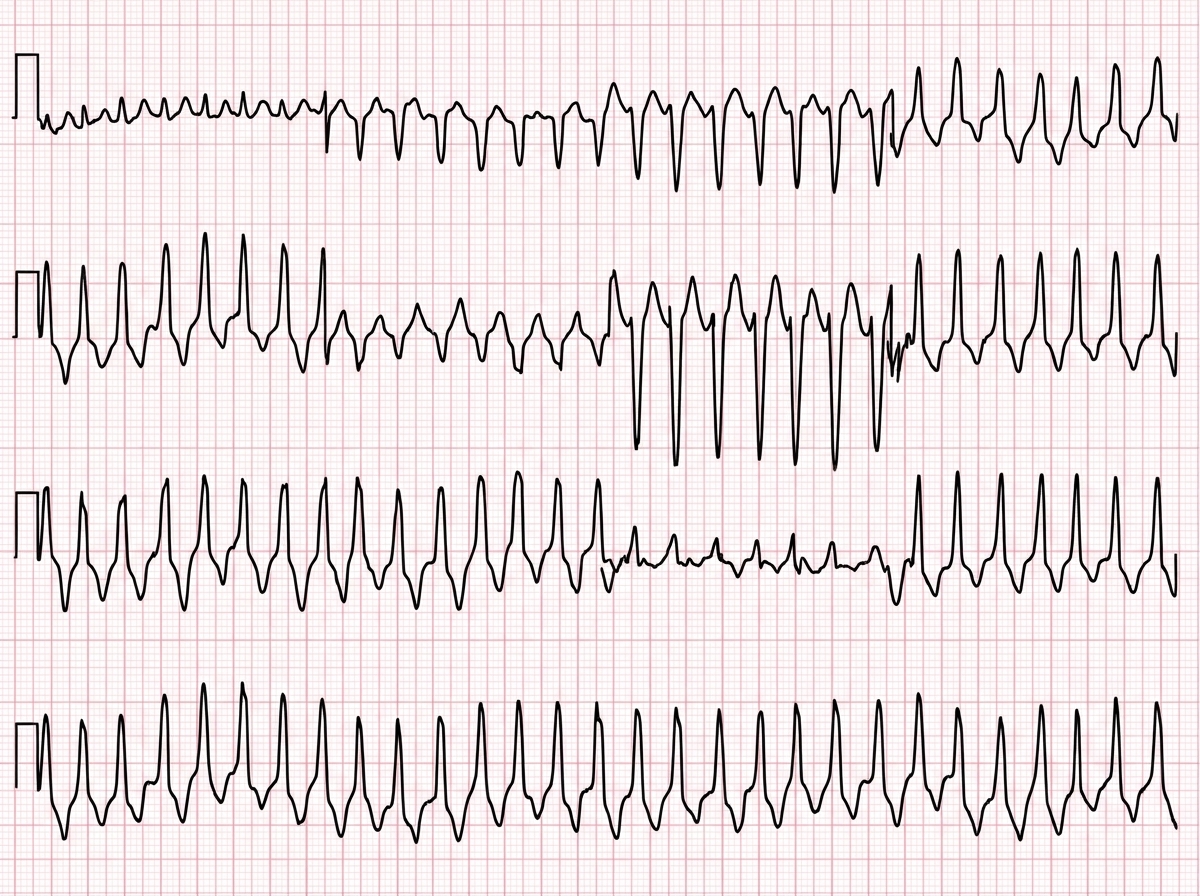
A 65-year-old man with diabetes, on an oral hypoglycemic, presents to the ER with a spontaneous right shoulder injury. His heart rate was noted to be irregular and the following ECG was obtained. What is the best immediate therapy?

A 35-year-old lady has Idiopathic pulmonary artery hypertension. Which findings best describe this patient?
A smoker presents with a four-year history of blanching of the fingers on exposure to cold. What is the most likely diagnosis?
All of the following statements regarding the Valsalva maneuver are true, EXCEPT:
What is the most common cause of morbidity and mortality late in the course of mitral stenosis?
Explanation: **Explanation:** **Mitral Valve Prolapse (MVP)**, also known as Barlow’s syndrome, is the most common cause of isolated mitral regurgitation [1]. 1. **Why Option A is Correct:** The hallmark of MVP is the **superior displacement** (prolapse) of one or both mitral valve leaflets by more than **2 mm** into the left atrium during systole [1]. This occurs due to myxomatous degeneration of the valve leaflets and chordae tendineae. 2. **Why the Other Options are Incorrect:** * **Option B:** During **squatting** (which increases venous return/preload and afterload), the left ventricular volume increases. This delays the prolapse, causing the mid-systolic click and late-systolic murmur to move **away from S1** (towards S2) and decrease in intensity. Movement towards S1 occurs with maneuvers that decrease preload (e.g., standing, Valsalva). * **Option C:** Beta-blockers are not indicated for prophylaxis in asymptomatic patients. They are reserved for symptomatic patients experiencing palpitations, chest pain, or significant anxiety. * **Option D:** Most patients with MVP have a benign prognosis. Restriction of vigorous exercise is **not** routinely recommended unless the patient has high-risk features (e.g., history of syncope, family history of SCD, prolonged QTc, or severe MR). **High-Yield Clinical Pearls for NEET-PG:** * **Auscultation:** Characterized by a **Mid-systolic click** followed by a **Late-systolic murmur**. * **Dynamic Auscultation:** Any maneuver that **decreases LV volume** (Standing, Valsalva) makes the click/murmur occur **earlier** (closer to S1). * **Association:** Often associated with connective tissue disorders like **Marfan syndrome** and Ehlers-Danlos syndrome. * **Complications:** Most common cause of mitral regurgitation requiring surgery; increased risk of infective endocarditis and chordal rupture [1].
Explanation: ***Tricuspid regurgitation*** - **Exertional dyspnea**, **bilateral pedal edema**, and **elevated jugular venous pressure** indicate **right heart failure**, characteristic of tricuspid regurgitation. - Echocardiogram shows **right ventricular dilatation** and **tricuspid valve insufficiency** with a **regurgitant jet** into the right atrium. *Aortic regurgitation* - Typically presents with **wide pulse pressure**, **diastolic murmur**, and **left ventricular volume overload** on echocardiogram. - Clinical features include **water hammer pulse** and **head bobbing**, not right-sided heart failure signs. *Mitral regurgitation* - Causes **left atrial enlargement** and **left ventricular dilatation** with **pulmonary edema** rather than peripheral edema. - Presents with **apical systolic murmur** radiating to the axilla and **left heart failure** symptoms. *Cor-triatriatum* - A rare **congenital anomaly** with **fibromuscular membrane** dividing the left or right atrium. - Usually presents in **childhood** with **pulmonary congestion** and requires surgical correction, not typical adult presentation.
Explanation: **Explanation:** Restrictive Cardiomyopathy (RCM) is characterized by rigid ventricular walls that resist diastolic filling, leading to elevated filling pressures despite normal or near-normal systolic function. **Why Hypothyroidism is the correct answer:** Hypothyroidism is primarily associated with **Dilated Cardiomyopathy (DCM)** or pericardial effusion [1]. In severe cases (Myxedema heart), there is a reduction in cardiac output, bradycardia, and weakened contractility. It does not typically cause the rigid, non-compliant ventricular physiology seen in restrictive patterns. **Analysis of Incorrect Options:** * **Amyloidosis:** This is the **most common cause** of infiltrative RCM [2]. Extracellular deposition of amyloid fibrils increases ventricular wall thickness and stiffness, leading to a classic "speckled" appearance on echocardiography. * **Hyper-eosinophilic Syndrome (Löffler Endocarditis):** This is an obliterative RCM where eosinophilic infiltration leads to endomyocardial damage, thrombus formation, and eventual fibrosis, "filling in" the ventricular apex [2]. * **Tropical Endomyocardial Fibrosis (EMF):** A common cause of RCM in tropical regions (like parts of India), characterized by fibrous replacement of the endocardium and myocardium, leading to apical obliteration and severe diastolic dysfunction [2]. **High-Yield Clinical Pearls for NEET-PG:** * **Kussmaul’s Sign:** Often positive in RCM (unlike in cardiac tamponade). * **Differentiating RCM from Constrictive Pericarditis:** RCM typically shows higher pulmonary artery pressures (>50 mmHg) and a thicker ventricular wall on Echo/MRI. * **Sarcoidosis:** Another high-yield cause of RCM, often presenting with conduction blocks [2]. * **Hemochromatosis:** Unique because it can present as either RCM (early) or DCM (late) [2].
Explanation: **Explanation:** The correct answer is **Syphilis**. **1. Why Syphilis is Correct:** Cardiovascular syphilis (Tertiary Syphilis) typically manifests as **syphilitic aortitis**. The underlying pathology is *endarteritis obliterans* of the vasa vasorum, leading to ischemia and destruction of the aortic media (elastic tissue). This results in aneurysmal dilatation of the ascending aorta. As the aortic root dilates, it pulls the valve cusps apart, leading to aortic regurgitation [3]. A hallmark radiological and pathological finding in syphilitic aortitis is **linear calcification of the ascending aorta**, which often extends to involve the aortic valve annulus and cusps. **2. Why the Other Options are Incorrect:** * **Marfan’s Syndrome:** This is a connective tissue disorder characterized by cystic medial necrosis. While it leads to aortic root dilatation and aortic regurgitation, it is typically associated with a "floppy" valve or dissection rather than dystrophic calcification [1]. * **Hurler’s and Hunter’s Syndromes:** These are Mucopolysaccharidoses (MPS). While they involve the heart, the primary pathology is the deposition of dermatan and heparan sulfate within the valve leaflets, leading to **thickening and fibrosis** (causing mitral or aortic stenosis/regurgitation), but they are not classic causes of isolated aortic valve calcification in the same clinical context as syphilis. **3. NEET-PG High-Yield Pearls:** * **Syphilis:** Look for "Tree-barking" appearance of the aortic intima and "Linear calcification of the ascending aorta" on X-ray. It characteristically spares the descending aorta. * **Most Common Cause of Aortic Calcification:** In modern clinical practice, the most common cause is **Senile Degenerative Calcification** [2] (wear and tear), followed by **Bicuspid Aortic Valve**. * **Aortic Regurgitation (AR):** Syphilis causes AR due to root dilatation (functional), whereas Rheumatic Heart Disease causes AR due to direct cusp inflammation and scarring [3].
Explanation: **Explanation:** Atrial myxoma is the most common primary cardiac tumor in adults. It typically presents with a classic triad of **obstructive, embolic, and constitutional symptoms.** **Why Hypertension is the Correct Answer:** Hypertension is **not** a clinical feature of atrial myxoma. Myxomas are localized intracardiac masses and do not possess endocrine mechanisms to elevate systemic blood pressure. In fact, if a myxoma causes severe mitral valve obstruction, it may lead to decreased cardiac output and **hypotension** or syncope (the "tumor plop" phenomenon). **Analysis of Other Options:** * **Fever (A):** Myxomas frequently produce **Interleukin-6 (IL-6)**, a pro-inflammatory cytokine. This leads to constitutional symptoms such as fever, weight loss, and malaise, often mimicking systemic vasculitis or endocarditis. * **Clubbing (B):** While less common than fever, digital clubbing can occur in patients with atrial myxoma due to chronic systemic inflammation or right-to-left shunting if the tumor involves the atrial septum. * **Embolic Phenomenon (D):** Myxomas are friable (easily crumbled). Fragments of the tumor or overlying thrombi can break off and enter the systemic circulation, leading to strokes, mesenteric ischemia, or peripheral arterial occlusion. **NEET-PG High-Yield Pearls:** * **Location:** 75–80% occur in the **Left Atrium** (usually attached to the fossa ovalis). * **Auscultation:** Characterized by a **"Tumor Plop"** (a low-pitched sound heard during early or mid-diastole as the tumor drops into the mitral orifice). * **Diagnosis:** Transthoracic Echocardiography (TTE) is the initial investigation of choice. * **Carney Complex:** An autosomal dominant syndrome involving atrial myxomas, spotty skin pigmentation (lentigines), and endocrine overactivity.
Explanation: ***Observation*** - **Wandering atrial pacemaker (WAP)** is a benign arrhythmia characterized by ≥3 different **P-wave morphologies** with varying **PR intervals**, commonly seen in elderly patients and diabetics. - Since WAP is typically **asymptomatic** and **hemodynamically stable**, observation with monitoring of underlying triggers like **hypoglycemia** from oral hypoglycemics is appropriate. *Atropine* - Atropine is used for **symptomatic bradycardia** with hemodynamic compromise, not for **wandering atrial pacemaker**. - WAP typically maintains adequate **heart rate** and **cardiac output**, making atropine unnecessary and potentially harmful. *Pacemaker* - Pacemaker insertion is indicated for **symptomatic bradyarrhythmias** or **complete heart block** with hemodynamic instability. - WAP is a **benign arrhythmia** that doesn't require permanent pacing as it maintains adequate ventricular response. *Electrical cardioversion* - Cardioversion is used for **unstable tachyarrhythmias** like atrial fibrillation or ventricular tachycardia with hemodynamic compromise. - WAP is not a **life-threatening arrhythmia** and doesn't cause hemodynamic instability requiring emergency cardioversion.
Explanation: **Explanation:** Idiopathic Pulmonary Artery Hypertension (IPAH) leads to increased resistance in the pulmonary circuit, causing right ventricular (RV) pressure overload and eventual right heart failure. [1] **Why Option B is Correct:** 1. **Elevated JVP:** As the RV fails due to high afterload, right atrial pressure rises, manifesting as an elevated Jugular Venous Pressure (often with a prominent 'a' wave due to forceful atrial contraction against a stiff RV) [1]. 2. **Singular Loud S2:** In pulmonary hypertension, the pulmonary component of the second heart sound (P2) becomes significantly louder due to the high-pressure closure of the pulmonary valve [1]. As P2 becomes louder and occurs earlier (due to decreased RV stroke volume), it merges with the aortic component (A2), resulting in a **loud, single S2**. 3. **Systolic Murmur:** High pulmonary pressures lead to functional stretching of the tricuspid annulus, causing **Tricuspid Regurgitation (TR)**. This presents as a pansystolic murmur loudest at the left lower sternal border, which increases with inspiration (Carvallo’s sign). **Why Other Options are Incorrect:** * **Option A:** A diastolic murmur (Graham Steell murmur) can occur in late-stage PAH due to pulmonary regurgitation, but the "normal S1 S2" description is incorrect for PAH. * **Option C:** A **wide fixed split S2** is the hallmark of an **Atrial Septal Defect (ASD)**, not IPAH. * **Option D:** Barrel chest is characteristic of COPD/Emphysema. **Reverse (paradoxical) splitting** of S2 is seen in conditions that delay LV emptying (e.g., Left Bundle Branch Block or Aortic Stenosis). **High-Yield Clinical Pearls for NEET-PG:** * **Definition:** IPAH is defined by a Mean Pulmonary Artery Pressure (mPAP) **>20 mmHg** at rest with a normal pulmonary capillary wedge pressure (≤15 mmHg). * **Physical Signs:** Look for a palpable P2 (in the 2nd left intercostal space) and an RV heave [1]. * **ECG Findings:** Right axis deviation, "P pulmonale" (tall peaked P waves), and RV hypertrophy [1].
Explanation: ### Explanation **Correct Option: A. Thromboangiitis obliterans (Buerger’s Disease)** The clinical presentation of a **smoker** with a chronic history of **Raynaud’s phenomenon** (blanching of fingers on cold exposure) is a classic hallmark of Thromboangiitis obliterans (TAO). TAO is a non-atherosclerotic, segmental, inflammatory disease that primarily affects small and medium-sized arteries and veins in the extremities. * **Pathophysiology:** It is strongly associated with tobacco use. The inflammation leads to thrombus formation, causing ischemia [1]. * **Clinical Triad:** Distal extremity ischemia (claudication/ulcers), Raynaud’s phenomenon, and migratory superficial thrombophlebitis [1]. **Why other options are incorrect:** * **B. Marantic endocarditis:** Also known as Non-Bacterial Thrombotic Endocarditis (NBTE), this involves sterile vegetations on heart valves, typically associated with advanced malignancies or wasting diseases. It presents with systemic embolization, not chronic cold-induced digital blanching. * **C. Kawasaki disease:** This is an acute febrile vasculitis of childhood. While it involves medium-sized vessels (specifically coronary arteries), it does not typically present with a four-year history of Raynaud’s in an adult smoker. * **D. Brachial artery entrapment syndrome:** This is a rare anatomical compression syndrome. It usually presents with exertional arm pain or acute ischemia rather than chronic, bilateral cold-induced color changes. **High-Yield Clinical Pearls for NEET-PG:** * **Gold Standard Diagnosis:** Biopsy (shows highly cellular "inflammatory" thrombus with preserved vessel wall structure). * **Angiographic Finding:** "Corkscrew collaterals" (Martorell’s sign) due to recanalization of the arteries. * **Treatment:** The only definitive treatment to prevent amputation is **absolute smoking cessation**. * **Demographics:** Traditionally seen in young males (<45 years) who are heavy smokers [1].
Explanation: The **Valsalva maneuver** (specifically the strain phase) involves forced expiration against a closed glottis. This increases intrathoracic pressure, leading to decreased venous return (preload) and a subsequent **decrease in left ventricular (LV) volume** [1]. ### Explanation of the Correct Answer **Option D is the correct (false) statement.** In **Hypertrophic Obstructive Cardiomyopathy (HOCM)**, the murmur is caused by dynamic subaortic obstruction [2]. When LV volume decreases (due to reduced preload during Valsalva), the ventricular walls and the anterior mitral leaflet move closer together, **increasing the obstruction**. This results in an **increase in the intensity** of the systolic murmur, not a decrease. ### Analysis of Other Options * **Option A:** True. By increasing intrathoracic pressure, the maneuver impedes venous return to the heart, directly reducing LV end-diastolic volume [1]. * **Option B:** True. **Mitral Stenosis** is a flow-dependent diastolic murmur. Reduced venous return leads to decreased flow across the mitral valve, making the murmur softer [1], [2]. * **Option C:** True. **Aortic Stenosis** is a flow-dependent systolic murmur. Decreased stroke volume during the strain phase results in less blood being ejected across the stenotic valve, making the murmur softer [2]. ### High-Yield Clinical Pearls for NEET-PG * **The "Rule of Two":** Most murmurs decrease in intensity during the Valsalva strain phase. The **only two exceptions** (murmurs that get louder) are **HOCM** and **Mitral Valve Prolapse (MVP)**. * **Handgrip Exercise:** Unlike Valsalva, handgrip increases afterload. This **decreases** the HOCM murmur but **increases** the murmurs of Mitral Regurgitation and Ventricular Septal Defect. * **Squatting:** Increases both preload and afterload, which **decreases** the HOCM murmur (the opposite effect of Valsalva).
Explanation: In the natural history of **Mitral Stenosis (MS)**, the pathophysiology evolves from mechanical obstruction to systemic and pulmonary vascular complications. **Why Recurrent Pulmonary Emboli is Correct:** Late-stage Mitral Stenosis is characterized by severe left atrial enlargement and a high incidence of **Atrial Fibrillation (AF)**. The combination of stasis in the left atrial appendage (Virchow’s triad) and AF leads to thrombus formation [1]. While systemic embolization (stroke) is a major risk, **recurrent pulmonary emboli** (often originating from right-sided heart chambers or deep vein thrombosis secondary to right heart failure and venous stasis) and **pulmonary infarction** are leading causes of morbidity and mortality in the late, chronic phase of the disease [1]. **Analysis of Incorrect Options:** * **Infective Endocarditis:** While a known risk, the incidence of IE in isolated MS is actually lower than in mitral regurgitation or aortic valve disease because the low-pressure gradient across the stenotic valve is less likely to cause endocardial jet lesions [2]. Antibiotic prophylaxis against infective endocarditis is no longer routinely recommended for MS [2]. * **Pulmonary Edema:** This is typically an **acute** manifestation or seen in early-to-mid stages during triggers like pregnancy or tachycardia [1]. In late-stage MS, the development of reactive pulmonary hypertension and right ventricular failure actually "protects" the lungs from acute hydrostatic edema. * **Pulmonary Infections:** These are common complications (due to pulmonary congestion) but are generally manageable and less frequently the primary cause of death compared to embolic phenomena. **NEET-PG High-Yield Pearls:** * **Most common cause of MS:** Rheumatic Heart Disease (99% of cases). * **Most common symptom:** Dyspnea on exertion. * **Most common arrhythmia:** Atrial Fibrillation (occurs in ~40-50% of patients) [1]. * **Lutembacher Syndrome:** MS + Atrial Septal Defect (ASD). * **Ortner’s Syndrome:** Hoarseness of voice due to left recurrent laryngeal nerve compression by a giant left atrium.
Coronary Artery Disease and Angina
Practice Questions
Acute Coronary Syndromes
Practice Questions
Heart Failure
Practice Questions
Cardiac Arrhythmias
Practice Questions
Valvular Heart Diseases
Practice Questions
Cardiomyopathies
Practice Questions
Pericardial Diseases
Practice Questions
Congenital Heart Disease in Adults
Practice Questions
Hypertension and Hypertensive Emergencies
Practice Questions
Pulmonary Hypertension
Practice Questions
Non-invasive Cardiac Diagnostics
Practice Questions
Preventive Cardiology
Practice Questions
Get full access to all questions, explanations, and performance tracking.
Start For Free