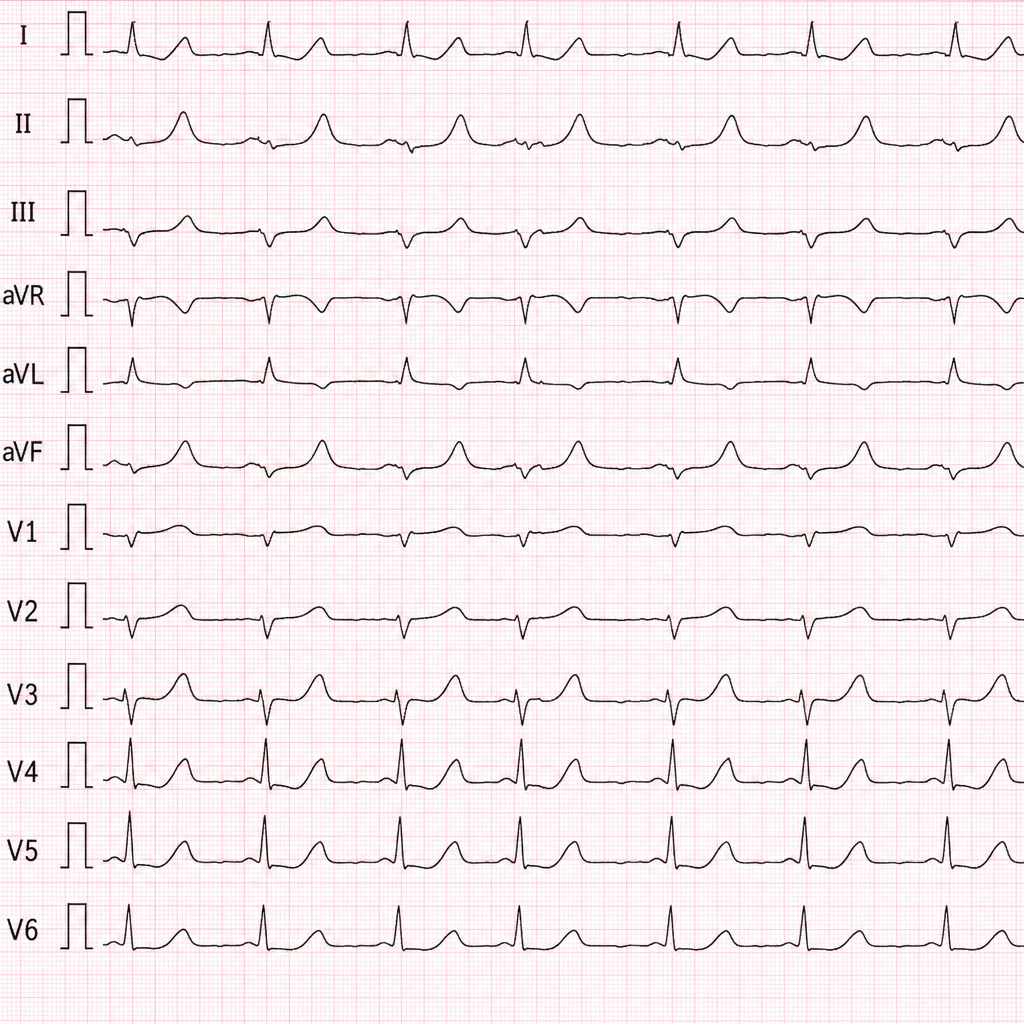
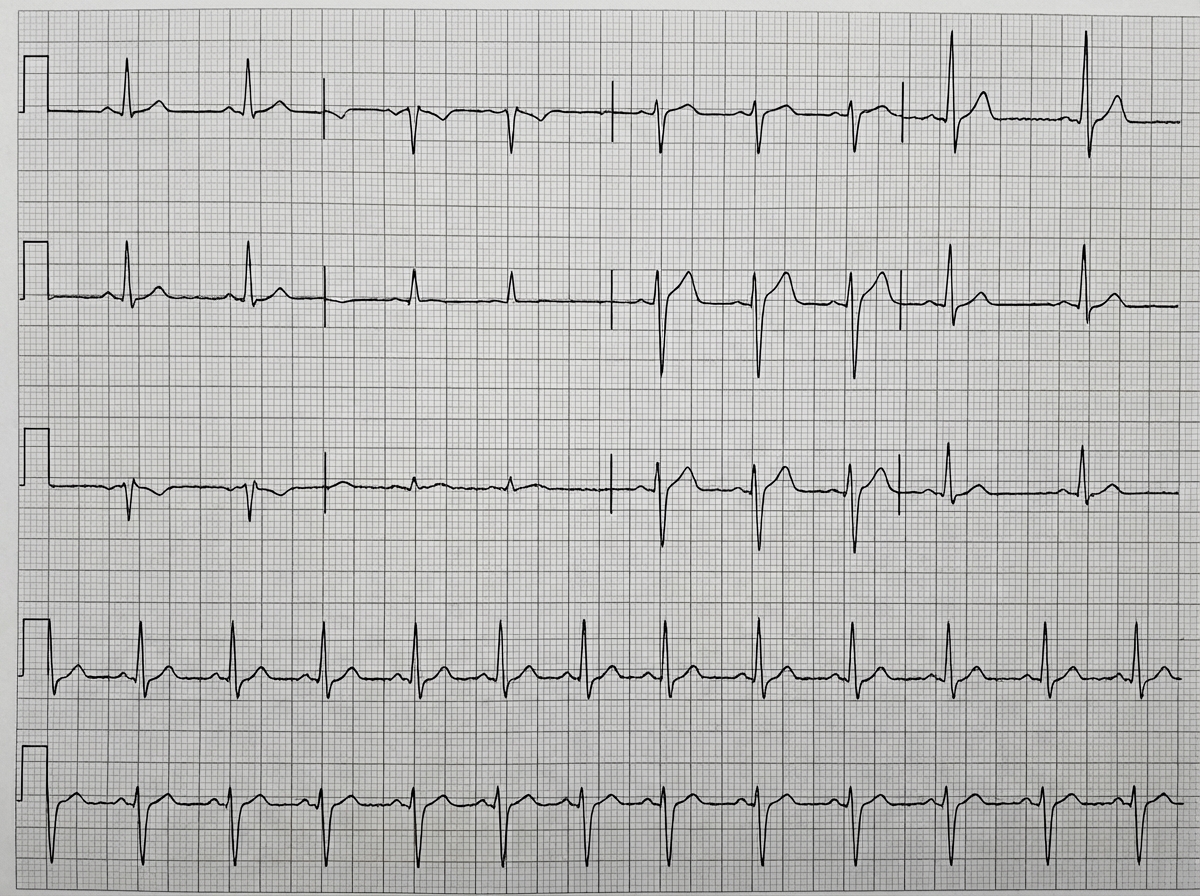
A patient presents with chest pain. Two days later, cardiac enzyme levels (CK and CK-MB) are within the normal range. Which of the following is true?
Rheumatic heart disease is caused by all of the following except?
Anticoagulants are indicated in all of the following conditions except:
Severity of mitral regurgitation can be assessed by which of the following findings?
A 15-year-old boy presented in an unconscious state with diagnosed atrial fibrillation on ECG. He had similar episodes of syncope in the past. Lab studies revealed normal potassium and calcium levels, and normal CK-MB levels. The patient died of cardiac arrest. Previous ECGs showed undue abnormalities, and there was a history of sudden cardiac death in the family. What is the most likely genetic defect in this patient?
All of the following are true about Acute Coronary Syndrome EXCEPT:
Which of the following is not a cause of Cor pulmonale?
A mid-diastolic murmur with a presystolic accentuation is typically heard in which condition?
What is the expected finding in severe mitral stenosis?
All of the following can lead to sudden death except:
Explanation: **Explanation:** The diagnosis of Myocardial Infarction (MI) relies on the detection of a rise and/or fall of cardiac biomarkers [2]. **CK-MB (Creatine Kinase-MB)** is a highly sensitive and specific marker for myocardial necrosis [2]. **1. Why Option A is Correct:** CK-MB begins to rise 4–6 hours after the onset of chest pain, peaks at **18–24 hours**, and typically returns to baseline within **48–72 hours (2–3 days)**. If a patient presents with chest pain and the CK-MB levels are measured two days later and found to be normal, it implies that no significant myocardial necrosis occurred during that window. Therefore, a normal CK-MB level at the 48-hour mark effectively excludes a diagnosis of MI that occurred two days prior. **2. Why Other Options are Incorrect:** * **Option B:** Reperfusion (either via PCI or thrombolysis) actually causes a **"washout phenomenon,"** leading to an earlier and higher peak of CK-MB, not a normal level. * **Option C:** While normal enzymes *can* occur in extracardiac pain, the clinical utility of the test in this context is specifically to rule out MI [3]. * **Option D:** Cardiac surgery typically **elevates** CK-MB due to direct surgical trauma to the myocardium [1]. **High-Yield Clinical Pearls for NEET-PG:** * **Troponins (T and I):** The gold standard for MI. They stay elevated for **7–14 days**, making them better for late diagnosis. * **CK-MB:** The marker of choice for detecting **re-infarction** because it returns to normal quickly (within 3 days). * **Myoglobin:** The earliest marker to rise (1–3 hours) but lacks specificity. * **LDH:** Rises late and stays elevated for up to 2 weeks (historical marker).
Explanation: **Explanation** The question asks for the condition that is **not** associated with the pathogenesis or clinical presentation of valvular heart disease similar to Rheumatic Heart Disease (RHD). **Why Option A is the Correct Answer:** **Fatty infiltration of the myocardium** (also known as *Adiposis cordis*) refers to the presence of fat cells between myocardial fibers. While it can be associated with obesity or certain cardiomyopathies (like Arrhythmogenic Right Ventricular Dysplasia), it **does not cause valvular damage**. RHD is primarily a valvular disease characterized by "commissural fusion" and "fish-mouth" stenosis; fatty infiltration affects the muscle, not the valves. **Analysis of Incorrect Options:** * **Amyloidosis (Option B):** Systemic amyloidosis involves the deposition of insoluble proteins in various cardiac structures, including the endocardium and **valves**, leading to thickening and dysfunction that can mimic or coexist with valvular heart disease [2]. * **Ergotamine (Option C):** Chronic use of ergot alkaloids (used for migraines) is a well-known cause of **drug-induced valvular heart disease**. It stimulates 5-HT2B receptors, leading to myofibroblast proliferation and valvular fibrosis similar to RHD. * **Carcinoid Syndrome (Option D):** This syndrome produces high levels of serotonin, causing **fibrous plaque-like thickening** of the endocardium and valves (predominantly on the right side), leading to tricuspid regurgitation and pulmonary stenosis. **High-Yield NEET-PG Pearls:** * **RHD Pathogenesis:** Type II hypersensitivity reaction (Molecular Mimicry) between Group A Beta-hemolytic *Streptococcus* M-protein and cardiac myosin. * **Most Common Valve Involved:** Mitral Valve (followed by Aortic) [1]. * **Pathognomonic Feature:** **Aschoff bodies** (granulomas) containing **Anitschkow cells** ("caterpillar cells"). * **Drug-induced Valvular Disease:** Besides Ergotamine, look for **Methysergide**, **Pergolide**, and the weight-loss drug **Fenfluramine**.
Explanation: **Explanation:** The primary goal of anticoagulation is to prevent the formation or propagation of thrombi. In **Pericarditis** (Option C), the underlying pathology is inflammation of the pericardial layers, not a prothrombotic state. Administering anticoagulants in acute pericarditis is generally **contraindicated** because it significantly increases the risk of hemorrhagic transformation, leading to **cardiac tamponade** (hemopericardium). The standard treatment involves NSAIDs, Colchicine, or Steroids to address inflammation. **Why the other options are incorrect:** * **Pulmonary Embolism (A) & DVT (B):** These are components of Venous Thromboembolism (VTE). Anticoagulation (Heparin followed by Warfarin or DOACs) is the gold standard treatment to prevent clot extension and recurrence [1]. Heparins act by binding to antithrombin, and warfarin inhibits vitamin K-dependent factors [2]. * **Myocardial Infarction (D):** Acute MI involves plaque rupture and subsequent thrombus formation in the coronary arteries. Anticoagulants (like UFH or Enoxaparin) are essential components of the standard "MONA-BASH" protocol to maintain vessel patency, especially during PCI or fibrinolysis [3]. **NEET-PG High-Yield Pearls:** * **Dressler Syndrome:** A late post-MI pericarditis (2–10 weeks post-event). Anticoagulants should be stopped if pericarditis develops to avoid tamponade. * **ECG in Pericarditis:** Look for diffuse ST-segment elevation (concave upwards) and PR-segment depression (most specific finding). * **Exception:** Anticoagulation is only continued in pericarditis if there is a compelling co-existing indication, such as a mechanical heart valve or high-risk Atrial Fibrillation, but with extreme caution.
Explanation: In Mitral Regurgitation (MR), the severity is determined by the volume of blood leaking back into the left atrium, which subsequently leads to volume overload of the Left Ventricle (LV). [1] ### **Why Option C is Correct** The **presence of a low-pitched S3 gallop** is the most reliable clinical indicator of **severe MR**. It occurs during the rapid filling phase of diastole. In severe MR, the massive volume of blood that leaked into the atrium during systole rushes back into the ventricle during diastole. [1] This sudden impact of a large volume of blood against a dilated, compliant LV wall creates the S3 sound. It signifies hemodynamically significant volume overload. ### **Why Other Options are Incorrect** * **A & B (Intensity and Duration):** The loudness (grade) of a pansystolic murmur correlates poorly with the severity of MR. A very loud murmur can be heard in mild MR if the orifice is small (high velocity), while a "silent" or soft murmur can occur in severe acute MR due to rapid equalization of pressures. * **D (Loud S1):** In chronic MR, the S1 is typically **soft or absent** because the mitral leaflets fail to appose properly or are structurally damaged. A loud S1 is a hallmark of Mitral Stenosis, not MR. ### **High-Yield Clinical Pearls for NEET-PG** * **Indicators of Severe MR:** 1. Presence of **S3 gallop**. [1] 2. **Mid-diastolic flow rumble** (due to increased flow across the mitral valve). [2] 3. **Early closure of A2** (leading to wide splitting of S2). 4. **Leftward displacement** of the apex beat (indicates LV enlargement). * **Murmur Character:** A classic pansystolic murmur radiating to the axilla. [1] If the posterior leaflet is involved, the murmur may radiate to the base of the heart/aorta.
Explanation: The clinical presentation of a young patient with recurrent syncope, atrial fibrillation (AF), and a family history of sudden cardiac death (SCD) strongly suggests an inherited primary arrhythmia syndrome. In pediatric and adolescent populations, the most common genetic link to familial atrial fibrillation and associated SCD is a mutation in the **SCN5A** gene. **1. Why SCN5A is correct:** The **SCN5A** gene encodes the **alpha subunit of the cardiac sodium channel (Nav1.5)**. Mutations in this gene are "pleiotropic," meaning they can cause various phenotypes, including: * **Brugada Syndrome:** Characterized by ST-segment elevation in V1-V3 and high risk of SCD. * **Long QT Syndrome Type 3 (LQT3):** Leading to torsades de pointes [1]. * **Familial Atrial Fibrillation:** SCN5A mutations are the most common genetic cause of lone AF in young patients. The combination of AF and SCD risk in a 15-year-old points directly to a sodium channelopathy. **2. Why other options are incorrect:** * **KCN5A:** While potassium channel genes (like KCNQ1 or KCNH2) are involved in Long QT syndrome, "KCN5A" is not a standard nomenclature for a major cardiac channel gene associated with this specific clinical triad. * **CCN5A & PCN5A:** These are distractors. They do not represent recognized cardiac ion channel genes associated with familial arrhythmia or sudden cardiac death. **Clinical Pearls for NEET-PG:** * **Brugada Syndrome:** Look for "Pseudo-right bundle branch block" and ST-elevation in V1-V3. It is a common cause of SCD in young males of Southeast Asian descent. * **Lone AF:** AF occurring in patients <60 years old without structural heart disease or hypertension [2]. * **SCN5A Summary:** Loss-of-function leads to Brugada/Conduction disease; Gain-of-function leads to LQT3.
Explanation: ### Explanation **Acute Coronary Syndrome (ACS)** is an umbrella term used to describe a range of clinical conditions associated with sudden, reduced blood flow to the heart, typically resulting from the acute rupture of an atherosclerotic plaque and subsequent thrombus formation [2]. **Why "Stable Angina" is the correct answer:** Stable angina is **not** part of ACS [1][4]. It is a manifestation of **Chronic Coronary Syndrome**. In stable angina, the atherosclerotic plaque is stable and calcified, leading to predictable chest pain that occurs only during exertion and is relieved by rest or nitroglycerin [1]. There is no acute thrombus formation or sudden occlusion of the vessel. **Analysis of other options (Components of ACS):** * **Unstable Angina (UA):** Characterized by clinical symptoms of ischemia at rest or with minimal exertion, but without detectable myocardial necrosis (negative cardiac biomarkers) [2]. * **NSTEMI:** Involves subendocardial myocardial necrosis (positive cardiac biomarkers) without ST-segment elevation on ECG [2]. * **STEMI:** Represents complete, transmural myocardial ischemia and necrosis, characterized by ST-segment elevation on ECG and positive cardiac biomarkers [2]. **High-Yield Clinical Pearls for NEET-PG:** * **Pathophysiology:** ACS is usually caused by **plaque rupture** (leading to a red/fibrin-rich thrombus in STEMI or a white/platelet-rich thrombus in UA/NSTEMI) [2]. * **Biomarkers:** Troponin I and T are the most sensitive and specific markers for myocardial necrosis [2]. They are elevated in NSTEMI and STEMI but **absent** in Unstable Angina and Stable Angina [1]. * **ECG Findings:** ST-depression and T-wave inversion are common in UA/NSTEMI, whereas ST-elevation and new Left Bundle Branch Block (LBBB) are diagnostic of STEMI [3]. * **Management:** STEMI requires immediate reperfusion (Primary PCI or Thrombolysis), whereas UA/NSTEMI are managed with antiplatelets, anticoagulants, and risk stratification [4].
Explanation: **Explanation:** **Cor pulmonale** is defined as hypertrophy and/or dilatation of the right ventricle (RV) resulting from diseases affecting the **pulmonary vasculature** or the **lung parenchyma**. A critical diagnostic criterion is that the right-sided heart failure must **not** be secondary to left-sided heart disease or congenital heart disease. **Why Mitral Stenosis is the Correct Answer:** In **Mitral Stenosis (Option D)**, there is an obstruction to blood flow from the left atrium to the left ventricle [1]. This leads to increased left atrial pressure, which is transmitted backward into the pulmonary veins and capillaries (post-capillary pulmonary hypertension), eventually causing RV failure [1]. Because the primary pathology originates in the **left heart**, it is excluded from the definition of Cor pulmonale. **Analysis of Incorrect Options:** * **COPD (Option C):** The most common cause of Cor pulmonale worldwide. It causes RV strain via alveolar hypoxia, which triggers pulmonary vasoconstriction and parenchymal destruction. * **Kyphoscoliosis (Option B):** A restrictive lung disease where chest wall deformity leads to alveolar hypoventilation and chronic hypoxia, resulting in pulmonary hypertension. * **Intermittent Pulmonary Embolism (Option A):** Recurrent small emboli lead to Chronic Thromboembolic Pulmonary Hypertension (CTEPH), a classic vascular cause of Cor pulmonale. **NEET-PG High-Yield Pearls:** * **Gold Standard Diagnosis:** Right heart catheterization (showing mean Pulmonary Artery Pressure >20 mmHg at rest). * **ECG Findings:** Right axis deviation, dominant R wave in V1, and "P pulmonale" (tall, peaked P waves in lead II). * **Key Distinction:** If RV failure is due to Pulmonary Edema or Left Heart Failure, it is **not** Cor pulmonale [1]. * **Most Common Acute Cause:** Massive Pulmonary Embolism.
Explanation: ### Explanation **Correct Option: A. Mitral Stenosis (MS)** The hallmark murmur of Mitral Stenosis is a **low-pitched, rumbling mid-diastolic murmur** heard best at the apex with the bell of the stethoscope [1]. * **Mechanism:** The murmur occurs during the passive filling phase of diastole as blood flows across a narrowed mitral valve [1]. * **Presystolic Accentuation:** This is a terminal increase in the murmur's intensity just before S1. It is caused by **atrial systole** (atrial kick), which increases the velocity of blood flow across the stenotic valve [2]. * *Note:* Presystolic accentuation disappears if the patient develops **Atrial Fibrillation**, as there is no coordinated atrial contraction [2]. **Incorrect Options:** * **B. Mitral Regurgitation:** Characterized by a **holosystolic (pansystolic) murmur** at the apex that radiates to the axilla. * **C. Aortic Stenosis:** Presents as a **crescendo-decrescendo systolic ejection murmur** heard best at the right second intercostal space, radiating to the carotids. * **D. Mitral Valve Prolapse:** Typically associated with a **mid-systolic click** followed by a late systolic murmur [1]. **High-Yield Clinical Pearls for NEET-PG:** 1. **Opening Snap (OS):** A high-pitched sound following S2 in MS. The shorter the **S2-OS interval**, the more severe the stenosis [1]. 2. **Loud S1:** A classic sign of MS (pliable valves). S1 becomes soft as the valve becomes calcified [2]. 3. **Graham Steell Murmur:** An early diastolic decrescendo murmur of pulmonary regurgitation, often seen in severe MS due to pulmonary hypertension. 4. **Malat Facies:** Pinkish-purple patches on the cheeks associated with chronic severe MS [2].
Explanation: **Explanation:** **1. Why Option D is Correct:** Mitral Stenosis (MS) occurs due to the narrowing of the mitral valve orifice, creating a pressure gradient between the left atrium and left ventricle. The characteristic murmur is a **low-pitched, mid-diastolic rumbling murmur**, best heard at the apex with the bell of the stethoscope in the left lateral decubitus position [1], [3]. It is often preceded by an **Opening Snap (OS)** [1]. In severe MS, the murmur lasts longer (longer duration) because the pressure gradient persists throughout diastole. **2. Why the Other Options are Incorrect:** * **A. Parasternal heave:** While a left parasternal heave can occur in MS due to right ventricular hypertrophy (secondary to pulmonary hypertension), it is a sign of *complications* rather than a direct finding of the valve lesion itself [1]. * **B. Unsplit S2:** In MS, the S2 is typically normally split. However, if pulmonary hypertension develops, the P2 component becomes loud (accentuated), but the split remains [1]. * **C. Soft S1:** In MS, the S1 is typically **loud and snapping** because the valve leaflets are held wide apart by the high atrial pressure and shut forcefully at the onset of systole [1]. A soft S1 in MS actually suggests heavy calcification or associated mitral regurgitation. **3. NEET-PG High-Yield Pearls:** * **Severity Markers:** The severity of MS is best indicated by the **duration** of the murmur and the **A2-OS interval**. A shorter A2-OS interval indicates more severe MS (higher left atrial pressure) [2]. * **Lutembacher Syndrome:** MS associated with an Atrial Septal Defect (ASD). * **Ortner’s Syndrome:** Hoarseness of voice due to left recurrent laryngeal nerve compression by a dilated left atrium. * **Graham Steell Murmur:** An early diastolic murmur of pulmonary regurgitation seen in MS patients with severe pulmonary hypertension [1].
Explanation: **Explanation:** The correct answer is **Atrial flutter** because it is generally a hemodynamically stable supraventricular tachycardia. Unlike ventricular arrhythmias, atrial flutter rarely leads to immediate circulatory collapse or sudden cardiac death (SCD) because the atrioventricular (AV) node acts as a "gatekeeper," filtering the rapid atrial impulses and preventing a 1:1 conduction to the ventricles [2]. **Why the other options are incorrect:** * **Massive Myocardial Infarction:** This is a leading cause of SCD. Large-scale ischemia causes profound pump failure (cardiogenic shock) or triggers lethal arrhythmias like ventricular fibrillation due to electrical instability in the myocardium. * **Ventricular Fibrillation (VF):** VF is the most common terminal rhythm in sudden cardiac arrest [1]. It involves chaotic electrical activity that results in zero cardiac output; without immediate defibrillation, death occurs within minutes [3]. * **Massive Pulmonary Emboli (PE):** A "saddle embolus" or massive PE causes a sudden obstruction of the pulmonary artery. This leads to acute right ventricular failure, a drastic drop in left ventricular preload, and obstructive shock, often resulting in instantaneous death. **High-Yield Clinical Pearls for NEET-PG:** * **Definition of SCD:** Death occurring within 1 hour of the onset of symptoms. * **Most Common Cause:** Coronary Artery Disease (CAD) is responsible for ~80% of SCD cases. * **Atrial Flutter ECG:** Characterized by a "saw-tooth" pattern (F-waves), most prominent in leads II, III, and aVF [2]. * **Risk of Atrial Flutter:** While not typically fatal, its main risks are systemic thromboembolism (stroke) and tachycardia-induced cardiomyopathy if left untreated.
Coronary Artery Disease and Angina
Practice Questions
Acute Coronary Syndromes
Practice Questions
Heart Failure
Practice Questions
Cardiac Arrhythmias
Practice Questions
Valvular Heart Diseases
Practice Questions
Cardiomyopathies
Practice Questions
Pericardial Diseases
Practice Questions
Congenital Heart Disease in Adults
Practice Questions
Hypertension and Hypertensive Emergencies
Practice Questions
Pulmonary Hypertension
Practice Questions
Non-invasive Cardiac Diagnostics
Practice Questions
Preventive Cardiology
Practice Questions
Get full access to all questions, explanations, and performance tracking.
Start For Free