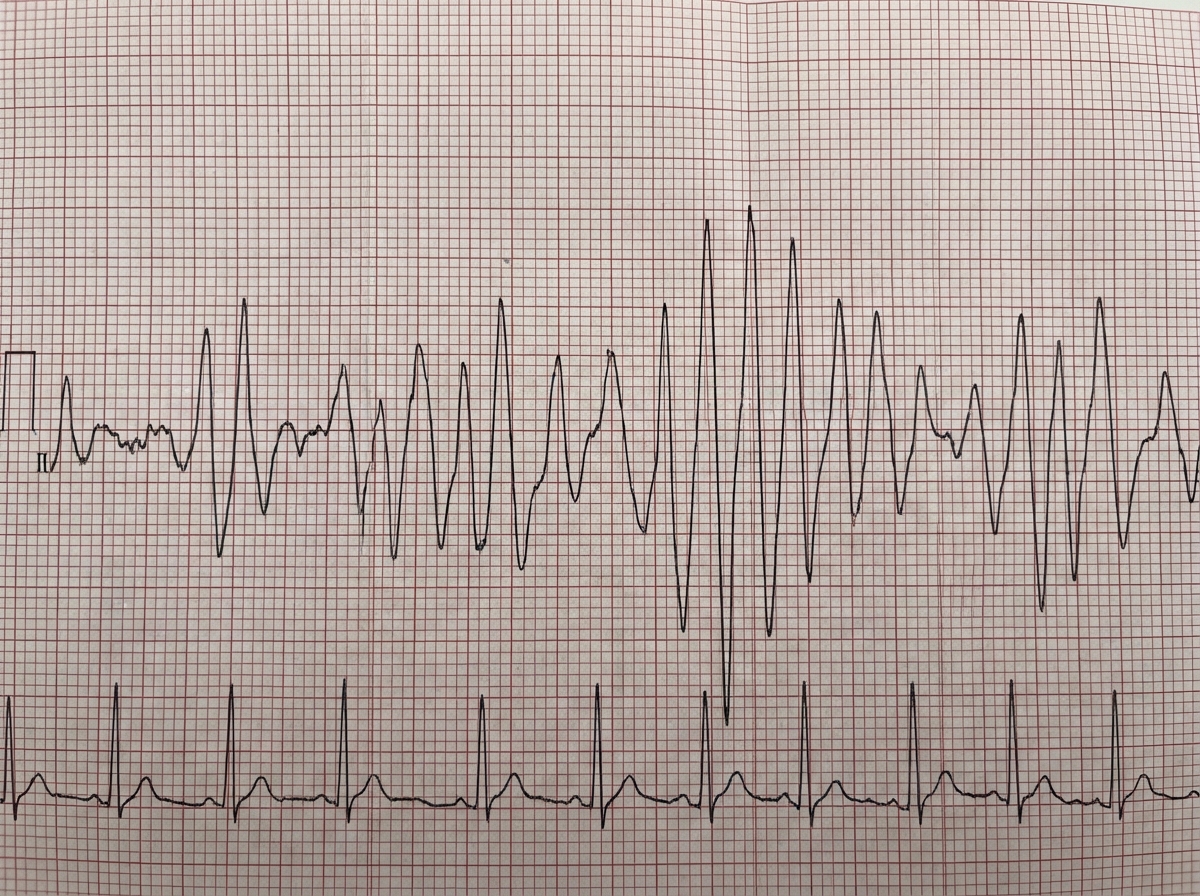
An early systolic murmur may be caused by all of the following except?
Pulsus bisferiens occurs in which of the following conditions?
Pulmonary apoplexy is seen in which of the following conditions?
All of the following are signs of cor pulmonale except?
Which of the following can NOT be used to treat peripheral arterial disease?
Hemorrhagic pericarditis is seen in which of the following conditions?
Prophylactic antibiotic coverage before dental extraction is indicated for all the following conditions except:
Reciprocal ST depression in leads V1-V3 is typically seen in which type of myocardial infarction?
Cyanosis not improving with 100% oxygen suggests which of the following conditions?
Which one of the following drugs should be avoided in Wolff-Parkinson-White (WPW) Syndrome?
Explanation: ### Explanation **1. Why Aortic Stenosis is the correct answer:** Aortic stenosis (AS) typically produces a **mid-systolic (ejection systolic) murmur** [1]. The murmur begins after the first heart sound (S1), following the period of isovolumetric contraction, peaks in mid-systole as flow across the valve reaches maximum velocity, and ends before the second heart sound (S2) [1]. It is crescendo-decrescendo in shape. Therefore, it is not an "early systolic" murmur. **2. Analysis of Incorrect Options:** * **Small Ventricular Septal Defect (VSD):** While large VSDs cause holosystolic murmurs, a small VSD (Maladie de Roger) often produces an **early systolic murmur**. As the pressure in the small defect rises during systole, the shunt may be pinched off or the pressure gradient may equalize rapidly, causing the murmur to end before S2. * **Papillary Muscle Dysfunction:** This leads to acute or transient mitral regurgitation. Because the valve leaflets fail to coapt properly only during the initial high-pressure phase of contraction, it often manifests as an **early systolic murmur**, especially in the setting of acute myocardial infarction. * **Tricuspid Regurgitation (TR):** In cases of organic TR with normal pulmonary artery pressures (e.g., endocarditis), the murmur is often **early systolic** rather than holosystolic because the right atrial pressure rises rapidly to meet the right ventricular pressure, abolishing the gradient early in systole. **3. NEET-PG High-Yield Pearls:** * **Holosystolic Murmurs:** Classic for Mitral Regurgitation (MR), Tricuspid Regurgitation (TR), and large VSDs. * **Mid-Systolic Murmurs:** Characteristic of Aortic Stenosis (AS), Pulmonic Stenosis (PS), and Hypertrophic Cardiomyopathy (HCM) [1]. * **The "Small VSD" Rule:** Remember that the smaller the VSD, the louder and shorter (more early-systolic) the murmur usually is. * **Carvallo’s Sign:** Right-sided murmurs (like TR) increase in intensity during inspiration, helping differentiate them from left-sided murmurs.
Explanation: **Explanation:** **Pulsus Bisferiens** (from Latin *bis* meaning twice and *ferire* meaning to strike) is a physical finding where the arterial pulse has two distinct systolic peaks [1]. This occurs due to a rapid initial ejection of blood followed by a brief decline and a second tidal wave. **Why "All of the Above" is correct:** 1. **HOCM:** In HOCM, there is a rapid initial ejection (first peak), followed by a sudden obstruction of the left ventricular outflow tract (LVOT) due to Systolic Anterior Motion (SAM) of the mitral valve. This causes a temporary dip, followed by a second peak as the ventricle overcomes the obstruction. This is often called the **"Spike and Dome"** pulse. 2. **Aortic Regurgitation (AR):** The large stroke volume ejected rapidly into the aorta creates the first peak (percussion wave), while the reflected wave from the periphery creates the second peak (tidal wave) due to the high-volume state [1]. 3. **Combined AS and AR:** This is a classic cause. The AR provides a large stroke volume (wide pulse pressure), while the AS creates the obstruction that splits the systolic peak. **Clinical Pearls for NEET-PG:** * **Best site to palpate:** Pulsus bisferiens is best appreciated in the **Brachial or Femoral arteries** (peripheral arteries) rather than the Carotid, as the two peaks become more distinct further from the heart. * **Differentiate from Pulsus Alternans:** Alternans is a beat-to-beat variation in amplitude (sign of LV failure), whereas Bisferiens has two peaks within a *single* pulse. * **Differentiate from Dicrotic Pulse:** In a dicrotic pulse, the second peak occurs in **diastole** (after the second heart sound), whereas in bisferiens, both peaks are in **systole** [1].
Explanation: Explanation: **Pulmonary apoplexy** refers to sudden, profuse, and life-threatening hemoptysis. It occurs due to the rupture of dilated, thin-walled **bronchial veins** that have developed as collateral channels. **Why Mitral Stenosis (MS) is the correct answer:** In MS, there is an obstruction to blood flow from the left atrium to the left ventricle, leading to chronically elevated **Left Atrial Pressure (LAP)**. This pressure is transmitted backward into the pulmonary veins [1]. To bypass this high-pressure system, collateral communications form between the pulmonary veins and the bronchial veins (which drain into the systemic azygos system). These bronchial veins become varicose and hypertensive; a sudden surge in pressure can cause them to rupture, leading to the dramatic hemoptysis known as pulmonary apoplexy. **Why other options are incorrect:** * **Mitral Regurgitation (MR):** While MR causes elevated LAP, it is usually more gradual and associated with a more compliant left atrium, making the sudden rupture of bronchial collaterals less characteristic than in tight MS [3]. * **Aortic Stenosis (AS) & Aortic Regurgitation (AR):** These are left-sided valvular lesions that primarily affect the left ventricle. While they can eventually lead to secondary pulmonary hypertension in late stages (heart failure), they do not typically present with the specific pathophysiology of bronchial venous varicosities seen in MS. **High-Yield Clinical Pearls for NEET-PG:** * **Most common cause of hemoptysis in MS:** Paroxysmal nocturnal dyspnea associated with pink frothy sputum (pulmonary edema) [2]. * **Pulmonary Apoplexy:** Though dramatic, it is rarely fatal because the pressure in the bronchial veins drops as soon as the patient sits up or the bleeding starts. * **Ortner’s Syndrome:** Hoarseness of voice in MS due to compression of the left recurrent laryngeal nerve by a dilated left atrium. * **Auscultation in MS:** Loud S1, Opening Snap (OS), and a Mid-Diastolic Murmur (MDM) at the apex [1].
Explanation: **Explanation:** **Cor pulmonale** is defined as hypertrophy and/or dilation of the right ventricle (RV) resulting from pulmonary hypertension caused by diseases of the lung parenchyma or pulmonary vasculature (e.g., COPD, Interstitial Lung Disease). **Why "Feeble Pulse" is the Correct Answer:** A "feeble" or weak pulse typically indicates low cardiac output or systemic hypotension, often seen in left-sided heart failure or shock. In cor pulmonale, the primary pathology is **Right Heart Failure (RHF)**. While severe RHF can eventually lead to decreased left-sided filling and low output, a feeble pulse is not a classic or diagnostic sign of cor pulmonale. Instead, the pulse is usually normal in volume unless the patient is in extremis. **Analysis of Incorrect Options (Signs of Cor Pulmonale):** * **Elevated JVP:** This is the most sensitive sign of right-sided heart pressure overload [1]. The JVP is elevated with a prominent 'a' wave (due to forceful atrial contraction against a stiff RV) [1] or a 'v' wave (if tricuspid regurgitation develops). * **Hepatomegaly:** Increased systemic venous pressure leads to passive congestion of the liver. This may be associated with "pulsatile liver" if tricuspid regurgitation is present [1]. * **Peripheral Edema:** Increased hydrostatic pressure in the systemic circulation causes fluid to leak into the interstitium, manifesting as bilateral pitting pedal edema [1]. **Clinical Pearls for NEET-PG:** * **Gold Standard Diagnosis:** Right heart catheterization (to measure pulmonary artery pressures). * **Most Common Cause:** COPD is the leading cause of chronic cor pulmonale. * **ECG Findings:** Right axis deviation, "P-pulmonale" (tall, peaked P waves in lead II), and R/S ratio >1 in V1 [1]. * **Auscultation:** Loud P2 (pulmonary component of the second heart sound) [1] and a pansystolic murmur of tricuspid regurgitation at the left lower sternal border [1].
Explanation: **Explanation:** Peripheral Arterial Disease (PAD) is characterized by atherosclerotic narrowing of the peripheral arteries, leading to claudication and limb ischemia [1]. The management focuses on risk factor modification, exercise, and improving blood flow. **Why Sildenafil is the Correct Answer:** Sildenafil is a **Phosphodiesterase-5 (PDE-5) inhibitor** primarily used for erectile dysfunction and pulmonary arterial hypertension. While it causes vasodilation, it has **no proven clinical efficacy** in improving walking distance or reducing symptoms in patients with PAD. Therefore, it is not a standard of care for this condition. **Analysis of Other Options:** * **Cilostazol:** A **Phosphodiesterase-3 (PDE-3) inhibitor** with antiplatelet and vasodilatory properties. It is the **first-line pharmacological treatment** for symptomatic claudication as it significantly increases pain-free walking distance. * **Pentoxifylline:** A xanthine derivative that acts as a **rheologic modifier**. It reduces blood viscosity and improves erythrocyte flexibility, allowing better flow through stenosed vessels. It is a second-line agent compared to Cilostazol. * **Percutaneous Angioplasty:** This is a standard **revascularization procedure** used for patients with lifestyle-limiting claudication or critical limb ischemia who do not respond to medical therapy [1]. **High-Yield Clinical Pearls for NEET-PG:** * **Gold Standard Investigation for PAD:** Digital Subtraction Angiography (DSA). * **Best Initial Test:** Ankle-Brachial Index (ABI). An ABI **< 0.9** is diagnostic of PAD [1]. * **Cilostazol Contraindication:** It is strictly contraindicated in patients with **Heart Failure** of any severity (due to increased mortality associated with PDE-3 inhibitors). * **Smoking Cessation:** This is the most important modifiable risk factor to prevent disease progression.
Explanation: Hemorrhagic pericarditis refers to the presence of blood within the pericardial space, often leading to a "bread and butter" appearance or frank bloody effusion [2]. It is characterized by inflammation of the pericardium accompanied by the leakage of red blood cells. **1. Why "All of the Above" is Correct:** * **Tuberculosis (TB):** This is the most common cause of chronic hemorrhagic pericarditis in developing countries [1]. It causes granulomatous inflammation that erodes small vessels, leading to a bloody or serosanguinous effusion [2]. * **Neoplasm:** Malignancy (most commonly lung cancer, breast cancer, or lymphoma) involves direct invasion or metastatic seeding of the pericardium. These friable tumor vessels bleed easily into the pericardial sac. * **Uremia:** While uremic pericarditis is typically "fibrinous," it is frequently associated with a hemorrhagic component due to platelet dysfunction (uremic coagulopathy) and the highly vascular nature of the inflammatory adhesions. **2. Clinical Pearls for NEET-PG:** * **Most common cause overall:** Viral pericarditis (usually leads to serous or fibrinous effusion, not typically hemorrhagic) [3]. * **Most common cause of hemorrhagic effusion:** Malignancy and Tuberculosis. * **Post-MI (Dressler’s Syndrome):** Can also present with hemorrhagic pericarditis. * **Triad of Cardiac Tamponade (Beck’s Triad):** Hypotension, JVD, and muffled heart sounds. This is a critical complication of rapidly accumulating hemorrhagic effusions [1]. * **Diagnostic Clue:** If a pericardial tap reveals blood that **does not clot**, it confirms it is a true hemorrhagic effusion (rather than an accidental traumatic tap), as the blood has already undergone fibrinolysis within the pericardium.
Explanation: The primary goal of antibiotic prophylaxis before dental procedures is to prevent **Infective Endocarditis (IE)** in patients with high-risk cardiac substrates. [1] ### **Explanation of the Correct Answer** **D. Coronary Artery Bypass Graft (CABG) surgery:** This is the correct answer because CABG involves revascularization of the heart using the patient's own vessels (e.g., internal mammary artery or saphenous vein). [2] It does not involve prosthetic material within the heart chambers or valves, nor does it increase the risk of IE. Therefore, prophylactic antibiotics are **not indicated** for patients with a history of CABG or stents. [1] ### **Analysis of Incorrect Options** * **A. Kidney damage on hemodialysis:** Patients on hemodialysis are considered high-risk because they have frequent vascular access, are often immunocompromised, and frequently develop valvular calcifications. Guidelines recommend prophylaxis to prevent both IE and access-site infections. * **B. Prosthetic aortic valve:** This is a **Class I indication**. Any prosthetic heart valve (mechanical or bioprosthetic) carries the highest risk of morbidity and mortality if IE occurs. [1] * **C. Rheumatic heart disease (RHD):** While the 2007 AHA guidelines narrowed the criteria for prophylaxis, many national guidelines (including those in high-prevalence areas like India) still recommend coverage for RHD patients undergoing high-risk dental extractions due to the significant risk of valvular damage. [3] ### **High-Yield NEET-PG Pearls** 1. **Current AHA/ESC Guidelines:** Prophylaxis is now restricted to: * Prosthetic heart valves or prosthetic material used for valve repair. [1] * Prior history of Infective Endocarditis. * Unrepaired cyanotic congenital heart disease (CHD). * Repaired CHD with prosthetic material (for 6 months post-op). * Cardiac transplant recipients with valvular regurgitation. 2. **Drug of Choice:** Oral **Amoxicillin (2g)** 30–60 minutes before the procedure. If allergic to penicillin, use **Clindamycin (600mg)** or Azithromycin. 3. **Procedures:** Prophylaxis is only for dental procedures involving manipulation of **gingival tissue** or the periapical region of teeth. It is *not* required for routine anesthetic injections or radiographs. [1]
Explanation: The correct answer is **Posterior wall MI**. This is a classic "mirror image" phenomenon in electrocardiography [1]. Because the standard 12-lead ECG does not have electrodes placed directly on the back, we must look for reciprocal changes in the anterior leads (V1-V3), which are positioned directly opposite the posterior wall [2], [3]. **Why Posterior MI is correct:** In a posterior MI, the injury current travels toward the back (away from V1-V3). This results in **ST depression** (the reciprocal of ST elevation) and **tall R waves** (the reciprocal of deep Q waves) in leads V1, V2, and V3. Think of V1-V3 as looking at the heart from the front; if the back is "elevated," the front appears "depressed." **Analysis of Incorrect Options:** * **Inferior wall MI:** Characterized by ST elevation in leads II, III, and aVF. Reciprocal changes are typically seen in lead aVL [1]. * **Anterior wall MI:** Characterized by ST elevation in leads V1-V4 [1], [2]. * **Lateral wall MI:** Characterized by ST elevation in leads I, aVL, V5, and V6. **NEET-PG High-Yield Pearls:** 1. **Confirmatory Test:** If you suspect a posterior MI based on ST depression in V1-V3, the next step is to perform a **Posterior ECG** using leads **V7, V8, and V9**. ST elevation ≥ 0.5 mm in these leads confirms the diagnosis. 2. **The "Flip Test":** If you flip the ECG paper upside down and look at V1-V3 in a mirror, the ST depression and tall R waves will look like a classic STEMI pattern. 3. **Artery Involved:** Most commonly caused by occlusion of the **Right Coronary Artery (RCA)** or the Left Circumflex Artery (LCx). 4. **Association:** Posterior MI often occurs concurrently with Inferior wall MI. Always check II, III, and aVF.
Explanation: The clinical scenario describes a failure of cyanosis to improve with 100% oxygen, a phenomenon known as a **negative Hyperoxic Test**. [2] This occurs when there is a **Right-to-Left (R-L) shunt**, where deoxygenated blood bypasses the lungs entirely and enters the systemic circulation directly. **1. Why Tetralogy of Fallot (TOF) is correct:** TOF is a cyanotic congenital heart disease characterized by a large ventricular septal defect (VSD) and right ventricular outflow tract obstruction (pulmonary stenosis). [1] Because the blood is shunted from the right ventricle to the aorta without passing through the pulmonary capillaries, increasing the fraction of inspired oxygen ($FiO_2$) cannot oxygenate this "shunted" blood. [2] Therefore, the arterial $PaO_2$ remains low despite 100% oxygen therapy. **2. Why the other options are incorrect:** * **Interstitial Lung Disease (ILD) & Bronchial/Cardiac Asthma:** These are primarily pulmonary causes of hypoxia (V/Q mismatch or diffusion defects). In these conditions, the blood still comes into contact with the alveoli. Providing 100% oxygen increases the alveolar-arterial gradient, forcing more oxygen into the blood and significantly improving $PaO_2$ and cyanosis. **Clinical Pearls for NEET-PG:** * **Hyperoxic Test:** Used to differentiate between cardiac (R-L shunt) and pulmonary causes of cyanosis. If $PaO_2$ remains $<100$ mmHg after 100% $O_2$, a cardiac shunt is highly likely. * **TOF Components:** VSD, Overriding of Aorta, Pulmonary Stenosis, and RV Hypertrophy. [1] * **X-ray finding in TOF:** "Boot-shaped heart" (Coeur en sabot). * **Management of "Tet Spells":** Knee-chest position (increases systemic vascular resistance to reduce R-L shunt), oxygen, and morphine.
Explanation: **Explanation:** In **Wolff-Parkinson-White (WPW) Syndrome**, patients possess an accessory pathway (Bundle of Kent) that bypasses the AV node [2]. The primary danger in WPW occurs during atrial tachyarrhythmias (like Atrial Fibrillation), where impulses can conduct rapidly down the accessory pathway, leading to Ventricular Fibrillation and sudden cardiac death. **Why Digoxin is avoided:** Digoxin (along with Calcium Channel Blockers like Verapamil and Beta-blockers) acts by **blocking or slowing conduction through the AV node** [1]. When the AV node is inhibited, the "braking" mechanism of the heart is lost, forcing more impulses to travel exclusively through the accessory pathway. Digoxin also shortens refractory periods and enhances excitability in accessory pathways, which paradoxically increases the ventricular rate, potentially triggering fatal arrhythmias [1]. **Analysis of other options:** * **Adenosine:** While generally avoided in WPW with AFib for similar reasons as Digoxin (AV nodal blockade), it is used in stable, narrow-complex orthodromic SVT [1]. However, Digoxin is the classic "absolute contraindication" taught for board exams. * **Procainamide:** This is the **drug of choice** for stable WPW with tachycardia. It works by increasing the refractory period of the accessory pathway itself, slowing down the rapid conduction. * **Amiodarone:** Can be used as it affects both the AV node and the accessory pathway, though Procainamide is preferred. **High-Yield Clinical Pearls for NEET-PG:** * **The "ABCD" of drugs to avoid in WPW with AFib:** **A**denosine, **B**eta-blockers, **C**alcium channel blockers (Verapamil/Diltiazem), and **D**igoxin. * **Definitive Treatment:** Radiofrequency Ablation of the accessory pathway. * **ECG Triad of WPW:** Short PR interval (<0.12s), Delta wave (slurred upstroke of QRS), and Wide QRS complex [2].
Coronary Artery Disease and Angina
Practice Questions
Acute Coronary Syndromes
Practice Questions
Heart Failure
Practice Questions
Cardiac Arrhythmias
Practice Questions
Valvular Heart Diseases
Practice Questions
Cardiomyopathies
Practice Questions
Pericardial Diseases
Practice Questions
Congenital Heart Disease in Adults
Practice Questions
Hypertension and Hypertensive Emergencies
Practice Questions
Pulmonary Hypertension
Practice Questions
Non-invasive Cardiac Diagnostics
Practice Questions
Preventive Cardiology
Practice Questions
Get full access to all questions, explanations, and performance tracking.
Start For Free