Which of the following is a manifestation of Tetralogy of Fallot?
Which of the following statements is false about ostium secundum ASD?
Causes of wide fixed splitting of second heart sound include all except:
Eisenmenger syndrome-True are All except ?
About carey coombs murmur which is false –
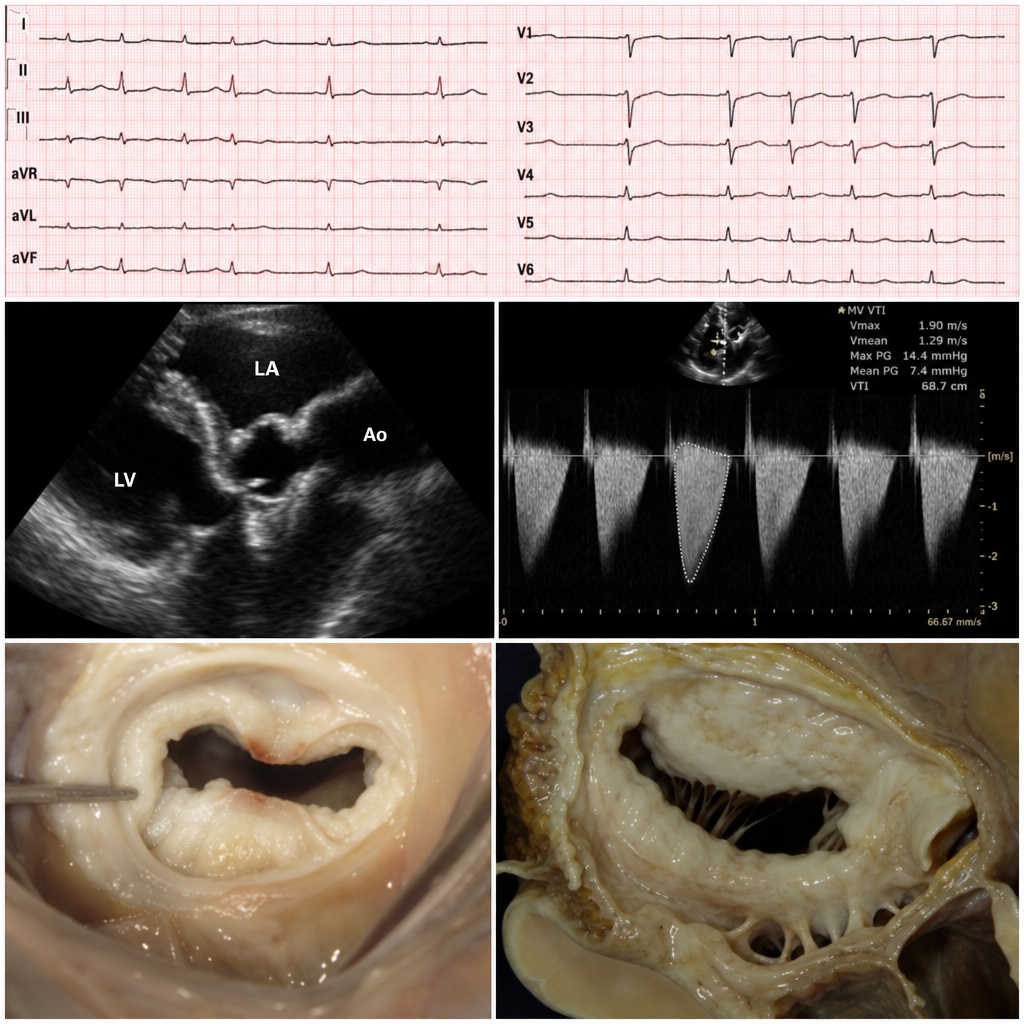
Which chamber of the heart is enlarged first in a patient with mitral stenosis?
A person was brought to emergency department and was diagnosed with Supra ventricular tachycardia and suddenly he became unstable. What is the next line of management?
Which disease does not cause AV nodal block?
A man who is chronic alcoholic will develop which type of cardiomyopathy?
Falsely elevated ankle brachial index is used for evaluation of?
Explanation: **VSD** - A **ventricular septal defect (VSD)** is one of the four cardinal defects comprising Tetralogy of Fallot, allowing for communication between the right and left ventricles [1]. - The size of the VSD is typically large, leading to equalization of pressures between the two ventricles [1]. *Left axis deviation* - **Left axis deviation** is not a typical electrocardiographic finding in Tetralogy of Fallot; instead, right axis deviation is more common due to **right ventricular hypertrophy** [1]. - It is more characteristic of conditions like **left anterior fascicular block** or chronic left ventricular overload. *Left ventricular hypertrophy* - **Left ventricular hypertrophy** is not a characteristic feature of Tetralogy of Fallot; rather, **right ventricular hypertrophy** is a diagnostic component due to the obstruction of the right ventricular outflow tract [1]. - While the left ventricle may be affected by volume changes, it does not typically undergo hypertrophy in Tetralogy of Fallot. *All of the options* - This option is incorrect because, as explained, **left axis deviation** and **left ventricular hypertrophy** are not characteristic manifestations of Tetralogy of Fallot. - Only a **VSD** is one of the core defects in this complex congenital heart condition [1].
Explanation: ***Narrow splitting of the second heart sound is a feature of ostium secundum ASD.*** - This statement is **false**. In ostium secundum ASD, there is **fixed and wide splitting of the second heart sound (S2)** due to prolonged ejection of blood from the right ventricle [1]. - The constant volume overload on the right ventricle (RV) from the left-to-right shunt causes a fixed delay in pulmonic valve closure, leading to wide and fixed splitting of S2. *A prominent shunt murmur is often heard in ostium secundum ASD.* - This statement is **true**. A prominent **systolic ejection murmur** is often heard over the pulmonary area (left upper sternal border) due to increased blood flow across the **pulmonic valve**, not directly from the shunt itself [1]. - The murmur is caused by the increased volume of blood flowing through a normal-sized pulmonic valve, creating a turbulence [2]. *Fixed splitting of the second heart sound is a feature of ostium secundum ASD.* - This statement is **true**. The presence of a **fixed and wide splitting of the second heart sound (S2)** is a classic auscultatory finding in ASD [1]. - The large left-to-right shunt causes a continuous volume overload on the right ventricle, making the pulmonic component of S2 delayed and relatively insensitive to respiratory variations. *Left axis deviation in ECG is commonly seen in ostium secundum ASD.* - This statement is **false**. **Left axis deviation** on an ECG is actually more commonly associated with **ostium primum ASD** (a type of AV canal defect), due to abnormal mitral valve structure and bundle branch anatomy [1]. - Ostium secundum ASD typically presents with **right axis deviation** or a normal axis on ECG, due to right ventricular enlargement and hypertrophy. *Right axis deviation in ECG is commonly seen in ostium secundum ASD.* - This statement is **true**. Due to the chronic volume overload of the right side of the heart, the **right ventricle (RV) undergoes hypertrophy and dilation**, leading to **right axis deviation** on the ECG [3]. - Additionally, an **incomplete right bundle branch block (IRBBB)** pattern is also a common finding on the ECG in patients with ostium secundum ASD.
Explanation: ***Ebstein anomaly*** - Ebstein anomaly is characterized by a **downward displacement of the tricuspid valve leaflets** into the right ventricle. - While it can cause wide splitting of S2 due to **right ventricular dysfunction** and prolonged RV ejection, the splitting is typically not fixed. *Right bundle branch block* - This condition causes a **delay in right ventricular depolarization**, leading to a prolonged right ventricular ejection time. - The delayed closure of the **pulmonary valve (P2)** relative to the aortic valve (A2) results in wide splitting of the second heart sound. *Total anomalous pulmonary venous return* - This condition involves all four **pulmonary veins connecting abnormally to the systemic venous circulation**. - It leads to an **obligate left-to-right shunt** at the atrial level, causing a chronic right ventricular volume overload and wide fixed splitting of S2 due to prolonged RV ejection time. *Atrial septal defect* - An **atrial septal defect (ASD)** results in a **left-to-right shunt**, increasing blood flow through the right ventricle and pulmonary artery [2]. - This increased flow prolongs **right ventricular ejection time**, leading to a physiologically fixed and wide splitting of the second heart sound [1][2].
Explanation: ***RV & LV walls come back to normal size*** - In **Eisenmenger syndrome**, there is **irreversible pulmonary hypertension** and **ventricular hypertrophy** due to chronic volume and pressure overload. - The right ventricle (RV) undergoes significant hypertrophy and dilatation to pump against increased pulmonary vascular resistance, and the left ventricle (LV) may also be affected due to the shift in the ventricular septum and changes in preload and afterload conditions. Therefore, these chambers **do not revert to normal size**. *Dilatation of central pulmonary artery* - This is a characteristic finding in **pulmonary hypertension**, which is a hallmark of Eisenmenger syndrome. - The central pulmonary arteries **dilate** due to the increased pressure, while more distal arteries constrict. *Peripheral pruning of pulmonary arteries* - In Eisenmenger syndrome, there is **progressive remodeling** of the pulmonary vasculature, leading to **narrowing and obliteration** of the smaller arteries. - This "pruning" effect means the distal pulmonary arteries become less visible on imaging. *Pulmonary veins are not distended* - **Eisenmenger syndrome** is primarily a condition of the **pulmonary arteries**, characterized by increased pressure and resistance. - The pulmonary veins which carry oxygenated blood to the left atrium, typically **do not become distended** as the primary issue is arterial and not a post-capillary or left-sided heart failure problem that would cause venous congestion.
Explanation: *Carey Coombs murmur can be associated with AR* - The Carey Coombs murmur is caused by inflammation and thickening of the mitral valve in **acute rheumatic fever**, leading to increased flow velocity across the valve during diastole [3]. - It is **not directly associated with aortic regurgitation (AR)**; instead, AR can occur concurrently as part of the overall rheumatic heart disease aetiology, but the murmur itself is mitral in origin [1], [3]. *Mid-diastolic murmur* - The Carey Coombs murmur is indeed a **mid-diastolic murmur**, heard at the apex [2]. - This timing is due to the turbulent flow of blood across the inflamed **mitral valve** during the middle part of ventricular diastole [2]. *Seen in rheumatic fever* - The Carey Coombs murmur is a classic sign specifically associated with **acute rheumatic fever** [3]. - It results from inflammation of the mitral valve causing relative **mitral stenosis** and turbulence during diastole. *Low pitched murmur* - This murmur is typically described as **low-pitched and rumbling**, heard best with the bell of the stethoscope [2]. - Its low pitch is characteristic of turbulent flow caused by relative mitral stenosis [2].
Explanation: ***Left atrium*** - **Mitral stenosis** obstructs blood flow from the left atrium to the left ventricle, leading to a build-up of pressure in the left atrium [1]. - This chronic pressure overload causes the **left atrium to dilate and hypertrophy** in an attempt to pump blood through the narrowed valve [1]. *Left ventricle* - In **mitral stenosis**, the left ventricle typically receives a reduced volume of blood, leading to a **smaller, underfilled left ventricle**, rather than enlargement. - Its workload is decreased due to reduced preload, so it does not hypertrophy or dilate primarily. *Right ventricle* - **Right ventricular enlargement** can eventually occur in severe and chronic mitral stenosis due to **pulmonary hypertension** caused by back pressure from the left atrium, but it is not the *first* chamber to be affected [1], [2]. - Increased pressure in the pulmonary circulation increases the workload on the right ventricle, leading to hypertrophy and dilation over time [1], [2]. *Right atrium* - **Right atrial enlargement** is a consequence of chronic and severe pulmonary hypertension affecting the right ventricle, which then causes back pressure into the right atrium [1]. - This is a very late manifestation of mitral stenosis, occurring after significant involvement of the left atrium and pulmonary vasculature.
Explanation: ***DC Cardioversion*** - For **unstable supraventricular tachycardia (SVT)**, immediate **direct current (DC) cardioversion** is the definitive treatment to restore sinus rhythm. - Instability in SVT includes symptoms like hypotension, altered mental status, signs of shock, ischemic chest discomfort, or acute heart failure. *Intravenous ibutilide* - **Ibutilide** is an antiarrhythmic drug used for pharmacological cardioversion of recent-onset atrial fibrillation or flutter, but not typically for unstable SVT. - While it can convert certain supraventricular arrhythmias, it is generally reserved for **stable patients** and takes longer to act than immediate electrical cardioversion. *Intravenous Diltiazem* - **Diltiazem** is a calcium channel blocker used to control ventricular rate in **stable SVT**, atrial fibrillation, or flutter [1]. - It is contraindicated in unstable patients as it can further depress cardiac contractility and worsen hypotension [2]. *Intravenous Flecainide* - **Flecainide** is a class Ic antiarrhythmic drug used to maintain sinus rhythm in patients with supraventricular arrhythmias, including SVT. - It also takes time to act and is used in **stable patients** without structural heart disease, not in emergency unstable situations where immediate rhythm conversion is required.
Explanation: ### Cat scratch - While cat scratch disease (caused by *Bartonella henselae*) can cause **lymphadenopathy** and other systemic symptoms, it is not typically associated with **AV nodal block** or direct cardiac involvement [1]. - The disease is usually self-limiting and rarely affects the electrical conduction system of the heart. ### Toxoplasmosis - **Toxoplasmosis**, caused by *Toxoplasma gondii*, can lead to **myocarditis** and **pericarditis**, which may disrupt the heart's electrical activity and cause AV nodal blocks, especially in immunocompromised individuals. - The parasite can directly infect cardiac muscle cells, leading to inflammation and conduction abnormalities. ### Chagas - **Chagas disease**, caused by *Trypanosoma cruzi*, is well-known for its propensity to cause **chronic Chagasic cardiomyopathy**, which frequently includes **AV nodal block** and other conduction defects [2]. - The parasite directly invades cardiac tissue, leading to fibrosis and destruction of the conduction system [2]. ### Lyme disease - **Lyme carditis**, a manifestation of Lyme disease caused by *Borrelia burgdorferi*, is a common cause of **AV nodal block**, often presenting with varying degrees of block. - The spirochete can directly infect the heart muscle, leading to inflammation and disruption of electrical pathways.
Explanation: ***Dilated cardiomyopathy*** - Chronic alcohol abuse is a major cause of **dilated cardiomyopathy**, where the heart's pumping chambers (ventricles) become enlarged and weakened, leading to reduced cardiac output [1]. - This condition often called **alcoholic cardiomyopathy**, is characterized by **ventricular dilation** and **systolic dysfunction**. *Hypertrophic cardiomyopathy* - This condition involves thickening of the heart muscle, often genetic, and is not directly caused by **chronic alcoholism**. - While alcohol can worsen pre-existing heart conditions, it does not typically lead to primary **hypertrophic cardiomyopathy**. *Myocarditis* - **Myocarditis** is an inflammation of the heart muscle, usually caused by viral infections or autoimmune processes. - Although heavy alcohol use can weaken the immune system, it is not a direct cause of viral or primary inflammatory myocarditis. *Pericarditis* - **Pericarditis** is the inflammation of the pericardium, the sac surrounding the heart, most commonly due to viral infections or autoimmune conditions. - While alcohol abuse can have various systemic effects, it is not a recognized direct cause of **pericarditis**.
Explanation: A falsely elevated **ankle-brachial index (ABI)**, often >1.3, indicates that the **ankle arteries are non-compressible** due to calcification [1]. This calcification is common in conditions like **diabetes** and **end-stage renal disease**, where the vessels become stiff and resist compression, leading to inaccurate pressure readings [1].
Coronary Artery Disease and Angina
Practice Questions
Acute Coronary Syndromes
Practice Questions
Heart Failure
Practice Questions
Cardiac Arrhythmias
Practice Questions
Valvular Heart Diseases
Practice Questions
Cardiomyopathies
Practice Questions
Pericardial Diseases
Practice Questions
Congenital Heart Disease in Adults
Practice Questions
Hypertension and Hypertensive Emergencies
Practice Questions
Pulmonary Hypertension
Practice Questions
Non-invasive Cardiac Diagnostics
Practice Questions
Preventive Cardiology
Practice Questions
Get full access to all questions, explanations, and performance tracking.
Start For Free