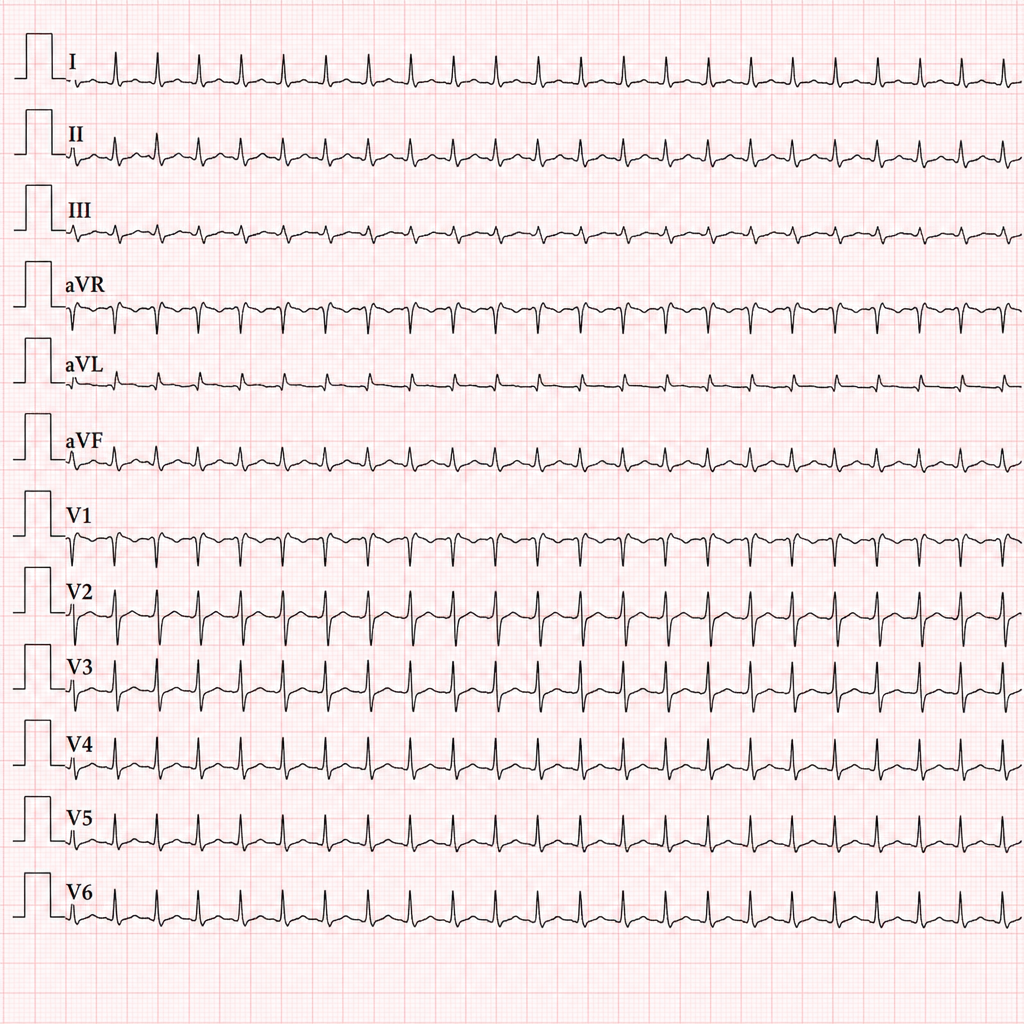
Which of the following is not a prominent risk factor for stroke?
18 year old girl with rheumatic carditis, with mitral insufficiency. Which of the following will be seen?
Pericardial calcification is caused by all except:
True about VSD is all except -
Swan Ganz catheter is used for what ?
True about Rheumatic carditis –
During your preoperative assessment, a 28-year-old woman complains of dyspnea on exertion. Upon auscultation of her heart, you notice a mid-diastolic rumbling murmur. This murmur is most characteristic of which valvular lesion?
Infective endocarditis is not seen in –
Which of these acyanotic congenital heart diseases is associated with volume overload?
The non-modifiable risk factor for hypertension is -
Explanation: ***Moderate alcohol consumption*** - While excessive alcohol intake is a risk factor for stroke, **moderate alcohol consumption** (e.g., one drink per day for women, two for men) has not been consistently shown to be a prominent risk factor; some studies even suggest a potential protective effect, though this remains controversial. - The impact of moderate alcohol on stroke risk is complex and often confounded by other lifestyle factors, making it less direct and prominent compared to other listed risk factors. *Smoking* - **Smoking** is a major modifiable risk factor for stroke, significantly increasing the risk of both ischemic and hemorrhagic stroke [2]. - It damages **blood vessels**, promotes **atherosclerosis**, and increases **blood clotting**, all of which contribute to stroke. *Elevated cholesterol* - **High cholesterol levels**, particularly high low-density lipoprotein (LDL) cholesterol, contribute to the development of **atherosclerosis**, which can narrow and harden arteries in the brain and neck [3]. - This narrowing significantly increases the risk of **ischemic stroke** by forming plaques that can rupture or lead to clot formation [1]. *High blood pressure* - **High blood pressure (hypertension)** is the single most important modifiable risk factor for stroke, increasing the risk of both ischemic and hemorrhagic strokes [2]. - It directly damages **blood vessel walls**, leading to **atherosclerosis** and making vessels more prone to **rupture** (hemorrhagic stroke) or obstruction (ischemic stroke).
Explanation: Decreased functional residual capacity - **Mitral insufficiency** leads to increased left atrial pressure, which can cause **pulmonary congestion** and **edema** [1]. - This fluid accumulation in the lungs reduces lung compliance and restricts alveolar expansion, leading to a **decreased functional residual capacity (FRC)** [3]. *Increased residual volume* - **Increased residual volume** is typically seen in **obstructive lung diseases**, where air trapping occurs due to difficulty in exhaling [2]. - Mitral insufficiency, however, causes **restrictive lung physiology** due to pulmonary congestion, which would tend to decrease lung volumes, including residual volume. *Increased vital capacity* - **Increased vital capacity** indicates greater lung functional reserve, which is usually seen in healthy individuals or athletes with well-developed lung mechanics. - In cases of **pulmonary congestion** due to mitral insufficiency, lung compliance is reduced, leading to a **decrease** in vital capacity [1]. *Increased peak expiratory flow rate* - An **increased peak expiratory flow rate (PEFR)** is a measure of how fast a person can exhale air, often seen in healthy individuals or after bronchodilator use in obstructive diseases if reversible. - **Pulmonary congestion** from mitral insufficiency would instead lead to **decreased lung mechanics** and potentially a lower PEFR due to reduced lung compliance and potential airway narrowing from edema [3].
Explanation: ***Methysergide therapy*** - **Methysergide** is known to cause **retroperitoneal fibrosis**, which can extend to the pericardium, leading to constrictive pericarditis but typically not calcification. - While it can cause pericardial fibrosis and constriction, **calcification** is not a characteristic feature of methysergide-induced pericardial disease. *Benign pericarditis* - **Benign pericarditis** (often viral) usually resolves without sequelae and does not lead to **pericardial calcification** [1]. - Recurrent inflammation rarely results in calcification unless there are specific co-morbidities or chronic effusions. *Radiotherapy to the mediastinum* - **Radiotherapy** can cause severe, **constrictive pericarditis** often accompanied by calcification, due to chronic inflammation and fibrosis [2]. - The radiation induces damage to pericardial tissues, leading to chronic inflammation and subsequent scarring and calcification. *Anticoagulant therapy* - **Anticoagulant therapy** itself does not directly cause **pericardial calcification**. - While patients on anticoagulants might develop **hemopericardium**, this does not typically progress to calcification unless there is chronic inflammation or a pre-existing condition.
Explanation: ***Pulmonary Oligemia in chest x-ray*** - **Ventricular Septal Defects (VSDs)** with a significant left-to-right shunt typically cause **pulmonary plethora** (increased pulmonary vascular markings) due to increased blood flow to the lungs, not oligemia. - **Pulmonary oligemia** (decreased pulmonary vascular markings) is seen in conditions with reduced pulmonary blood flow, such as severe pulmonary stenosis or tetralogy of Fallot [2]. *Small hole closes spontaneously* - Many **small, restrictive VSDs**, particularly those in the muscular septum, close spontaneously within the first few years of life. - This spontaneous closure is observed in up to 30-50% of VSDs, making it a common outcome for smaller defects. *Defect is usually in membranous part* - The **membranous portion of the interventricular septum** is the most common site for VSDs, accounting for approximately 80% of all defects [1]. - VSDs in this region are often referred to as perimembranous VSDs [1]. *Endocarditis is a common complication* - Patients with VSDs, especially those with smaller or moderate defects where there is a turbulent flow and high-velocity jet, are at an increased risk of developing **infective endocarditis**. - The turbulent blood flow at the site of the VSD can damage the endocardial lining, making it more susceptible to bacterial colonization.
Explanation: ***Pulmonary capillary pressure*** - A Swan-Ganz catheter, when properly wedged, measures the **pulmonary capillary wedge pressure (PCWP)**, which is an indirect estimate of the left atrial pressure [1] and, consequently, the **left ventricular end-diastolic pressure (LVEDP)** or **preload**. - This measurement helps in assessing left heart function and fluid status [1]. *saturation in mixed venous blood* - While a Swan-Ganz catheter can measure **mixed venous oxygen saturation (SvO2)** from the distal port positioned in the pulmonary artery, this is not its primary or most unique diagnostic application. - SvO2 reflects the balance between oxygen delivery and consumption, providing insights into overall tissue perfusion and oxygen utilization. *LV filling pressure* - The Swan-Ganz catheter does not directly measure the **left ventricular (LV) filling pressure**. Instead, it estimates it indirectly via the **pulmonary capillary wedge pressure (PCWP)**, which is typically a good surrogate for LVEDP [1]. - Direct measurement of LV filling pressure would require a catheter to be placed within the left ventricle. *Pulmonary artery occlusion pressure* - **Pulmonary artery occlusion pressure (PAOP)** is the technical term for the pressure measured when the balloon at the tip of the Swan-Ganz catheter is inflated, occluding a branch of the pulmonary artery [1]. This pressure is synonymous with the **pulmonary capillary wedge pressure (PCWP)**. - Therefore, while the Swan-Ganz catheter measures PAOP, PCWP is a more common and direct description of the physiological parameter being assessed, which represents the pulmonary capillary pressure.
Explanation: ***Pancarditis*** - **Rheumatic carditis** is characterized by inflammation of all three layers of the heart: the **pericardium** (pericarditis), **myocardium** (myocarditis), and **endocardium** (endocarditis) [1]. - This widespread inflammation explains why it is termed **pancarditis**, affecting the heart comprehensively [1]. *Only Pericarditis* - While **pericarditis** can occur in rheumatic fever, it is rarely the sole manifestation of cardiac involvement and is usually accompanied by inflammation of other heart layers. - Isolated pericarditis without signs of myocarditis or endocarditis would not be classified as rheumatic carditis. *Only myocarditis* - **Myocarditis**, or inflammation of the heart muscle, is a significant component of rheumatic carditis, often leading to impaired heart function. - However, rheumatic carditis typically involves the endocardium (specifically the heart valves) and can also involve the pericardium, making "only myocarditis" an incomplete description [1]. *Only endocarditis* - **Endocarditis**, especially of the heart valves, is a hallmark feature of rheumatic carditis, leading to characteristic **valvular lesions** [1]. - Although critical, endocarditis in rheumatic fever is almost always accompanied by some degree of myocardial and/or pericardial involvement, classifying it as part of a pancarditis [1].
Explanation: ***Mitral stenosis*** - A **mid-diastolic rumbling murmur** is the classic auscultatory finding in **mitral stenosis**, caused by turbulent blood flow across a narrowed mitral valve during ventricular filling [1], [4]. - The associated **dyspnea on exertion** is due to increased left atrial pressure and pulmonary congestion resulting from the stenotic mitral valve [1]. *Aortic regurgitation* - Characterized by a **diastolic decrescendo murmur**, best heard at the left sternal border, not a rumbling mid-diastolic murmur. - Often presents with a **wide pulse pressure** and peripheral signs like head bobbing (De Musset's sign) or pulsating nail beds (Quincke's sign). *Aortic stenosis* - Typically produces a **systolic ejection murmur** that **radiates to the carotids**, best heard at the right upper sternal border. - Main symptoms include **dyspnea**, **angina**, and **syncope** on exertion [2]. *Mitral regurgitation* - Presents with a **holosystolic murmur** that **radiates to the axilla**, indicating continuous backflow of blood into the left atrium during systole. - Can lead to **dyspnea** and **fatigue** due to decreased forward cardiac output and pulmonary congestion [3].
Explanation: Atrial septal defect (ASD) is generally considered a low-risk lesion for infective endocarditis because the pressure gradient across the defect is low, leading to less turbulent flow and less endothelial damage. While IE very rarely occurs, it is not common cause for IE. Generally the risk of infective endocarditis in an uncomplicated ASD is comparable to the general population. Tetralogy of Fallot (TOF) is a cyanotic congenital heart disease characterized by four defects (pulmonary stenosis, VSD, overriding aorta, right ventricular hypertrophy) that create turbulent flow, significantly increasing the risk of infective endocarditis. The abnormal anatomy and high flow jets in TOF predispose the heart valves and endocardium to damage, making them fertile ground for bacterial adherence and infection. Ventricular septal defect (VSD) involves an abnormal opening between the ventricles, causing a high-pressure, high-velocity jet of blood flow [1]. This turbulent flow leads to endothelial damage, particularly on the right ventricular side of the defect or the tricuspid valve, creating a nidus for bacterial colonization and infective endocarditis [1]. Mitral regurgitation (MR), especially due to degenerative valve disease or rheumatic heart disease, creates turbulent backward flow into the left atrium during systole. This chronic turbulent flow can cause endothelial injury on the mitral valve leaflets or the atrial wall, increasing the susceptibility to bacterial adherence and subsequent infective endocarditis.
Explanation: ***Ventricular septal defect*** - A **ventricular septal defect (VSD)** causes a left-to-right shunt, leading to increased blood flow to the **pulmonary circulation** and the left side of the heart [1]. - This increased blood flow results in a **volume overload state** for the left atrium and left ventricle [1]. *Aortic stenosis* - **Aortic stenosis (AS)** is characterized by an obstruction to outflow from the left ventricle, leading to **pressure overload** on the left ventricle, not volume overload. - While prolonged AS can cause left ventricular hypertrophy, it doesn't primarily cause the type of volume overload seen with shunts. *None of the options* - This option is incorrect because **ventricular septal defect** is a specific acyanotic congenital heart disease that causes significant volume overload [1]. - **VSDs** are a classic example of conditions leading to increased pulmonary blood flow and chamber dilation due to shunting [1]. *Coarctation of aorta* - **Coarctation of the aorta** is a narrowing of the aorta, primarily causing **pressure overload** in the left ventricle due to increased resistance to systemic blood flow. - It does not cause a shunt or increased pulmonary blood flow, thus not leading to volume overload in the same way as VSD.
Explanation: ***Age*** - Age is a **non-modifiable** risk factor because it is an inherent biological process that cannot be changed. [3] - The risk of developing **hypertension** generally increases with advancing age due to arterial stiffening and other physiological changes. [1] *Environment stress* - **Environmental stress** is considered a **modifiable** risk factor because individuals can learn coping mechanisms or make lifestyle changes to reduce its impact. - Chronic stress can lead to **sympathetic nervous system activation**, contributing to elevated blood pressure. [4] *Obesity* - **Obesity** is a **modifiable** risk factor, as it can be directly addressed through diet, exercise, and other lifestyle interventions. [2] - It increases the risk of hypertension by fostering **insulin resistance**, **inflammation**, and increased **cardiac output**. *Salt intake* - **Salt intake** is a **modifiable** risk factor as it can be controlled through dietary choices. [2] - Excessive sodium consumption can lead to **fluid retention** and increased blood volume, thereby raising blood pressure.
Coronary Artery Disease and Angina
Practice Questions
Acute Coronary Syndromes
Practice Questions
Heart Failure
Practice Questions
Cardiac Arrhythmias
Practice Questions
Valvular Heart Diseases
Practice Questions
Cardiomyopathies
Practice Questions
Pericardial Diseases
Practice Questions
Congenital Heart Disease in Adults
Practice Questions
Hypertension and Hypertensive Emergencies
Practice Questions
Pulmonary Hypertension
Practice Questions
Non-invasive Cardiac Diagnostics
Practice Questions
Preventive Cardiology
Practice Questions
Get full access to all questions, explanations, and performance tracking.
Start For Free