DASH diet plan is advocated in the control of which one of the following diseases?
Consider the following statements regarding claudication: 1. It is a marker for silent coronary disease 2. Structured exercise program ( 2 hours per week for 3 months) leads to improvement in symptoms 3. Diabetes mellitus increases the risk and severity of claudication 4. Beta blockers may exacerbate claudication Which of the above statements are correct?
The PR interval was measured at 0.21 seconds on a routine ECG of a patient. What is the correct interpretation?
A patient presents with shortness of breath. Vitals are HR = 120/min with BP = 90/60 mm Hg. Echocardiography shows diastolic collapse of the ventricles. What is the best management for this patient?
A 12-year-old boy presents with weak pulses in the upper limbs, a blood pressure of 90/60 mmHg , and retinal hemorrhages. What is the most likely diagnosis?
All of the following are the causes of High output cardiac failure, except?
Which of the following describes aortic regurgitation murmur?
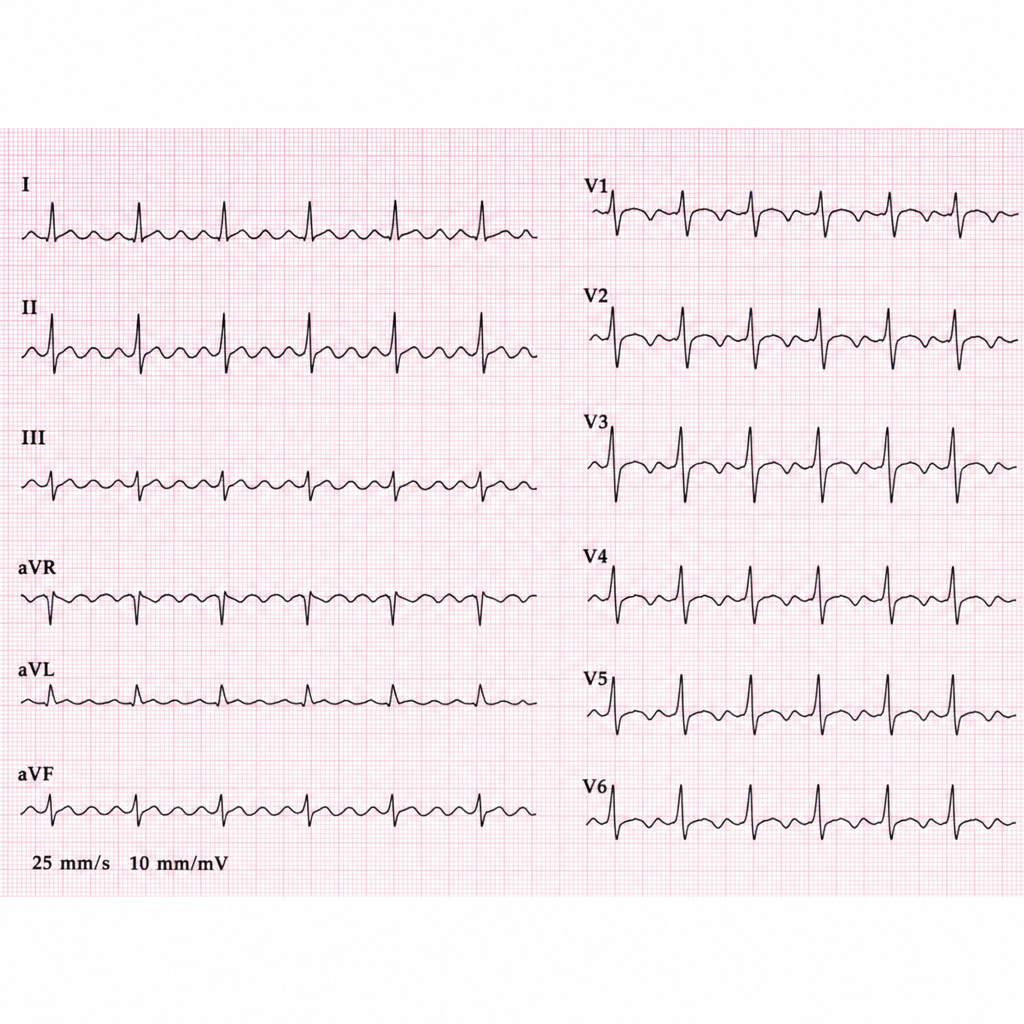
Identify the ECG given below?

What is the correct order for cardiac auscultation on the left side, from superior to inferior? a. Pulmonary b. Tricuspid c. Mitral
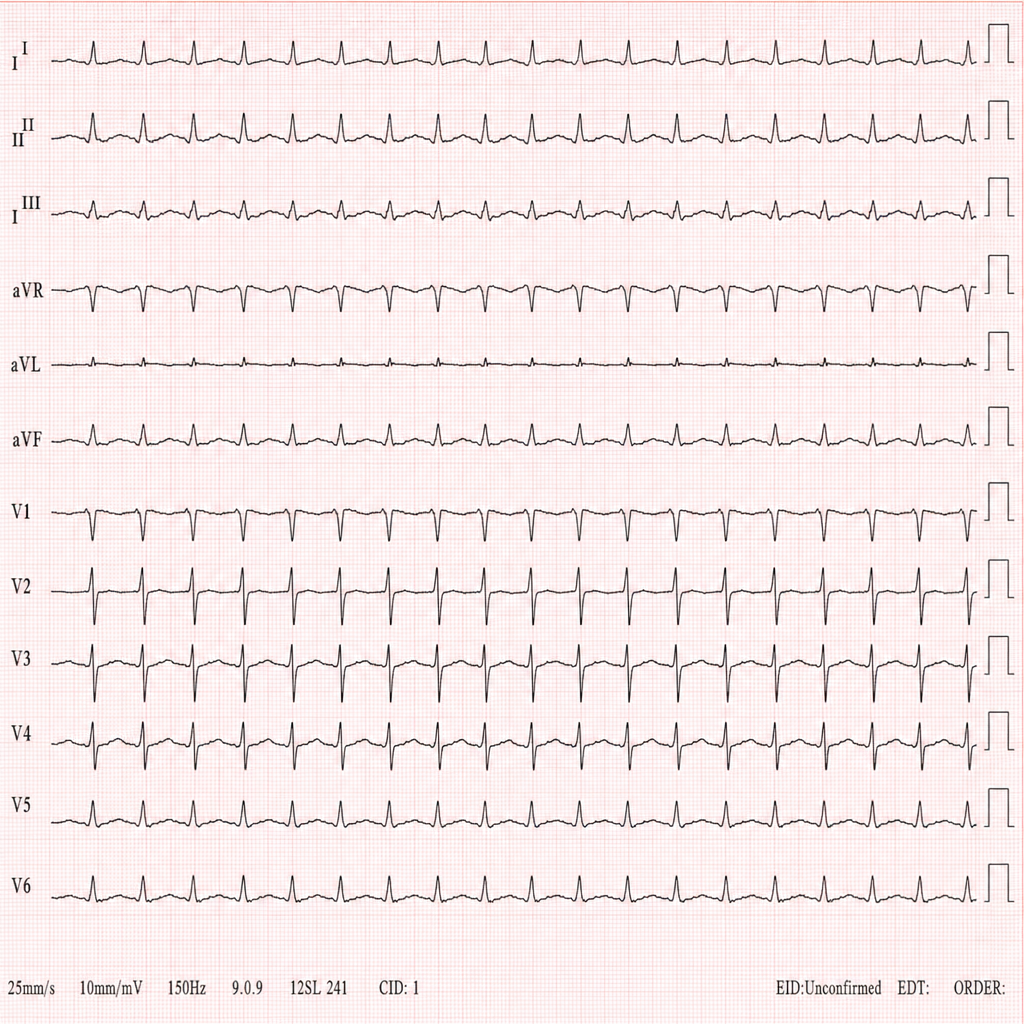
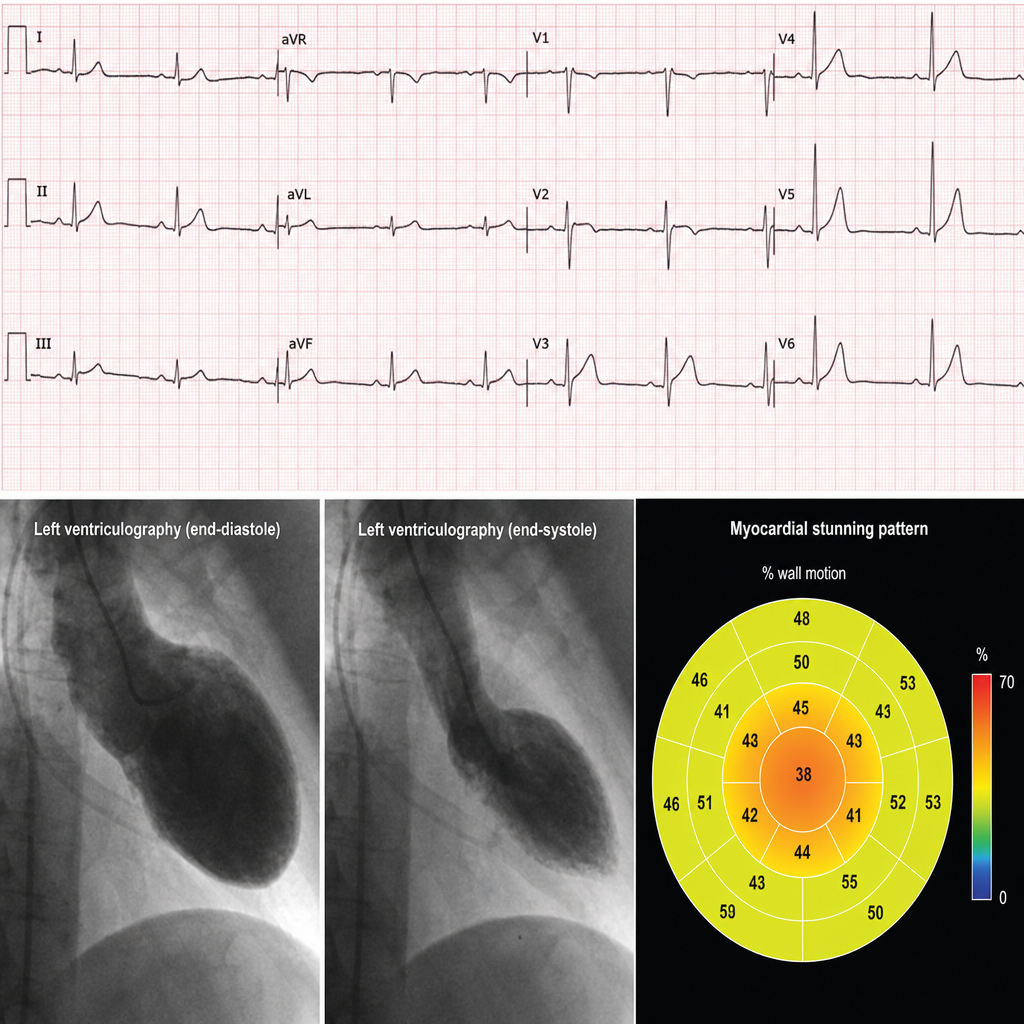
What does the given ECG show?

Explanation: ***Hypertension*** - The **DASH (Dietary Approaches to Stop Hypertension)** diet is specifically designed to **lower blood pressure**, making it the primary dietary intervention for hypertension [1]. - It emphasizes foods rich in **potassium**, **calcium**, and **magnesium**, such as fruits, vegetables, and low-fat dairy, while limiting sodium, saturated fat, and cholesterol [1]. *Rheumatic heart disease* - **Rheumatic heart disease** is a consequence of untreated streptococcal infection and is not primarily managed through dietary interventions like the DASH diet. - Management focuses on **antibiotic treatment** and preventing recurrent infections, as well as addressing heart complications. *Cancer* - While a healthy diet contributes to overall cancer prevention and management, the **DASH diet** is not specifically tailored or broadly advocated as the primary dietary intervention for **cancer** control. - Dietary recommendations for cancer often vary based on the type of cancer and individual patient needs, sometimes focusing on specific antioxidants or anti-inflammatory foods. *Chronic Obstructive Pulmonary Disease* - **Chronic Obstructive Pulmonary Disease (COPD)** management primarily involves smoking cessation, bronchodilators, steroids, and oxygen therapy, with nutrition playing a supportive, rather than primary, role. - Nutritional support for COPD patients often focuses on maintaining adequate weight and energy intake, rather than a specific diet like DASH, which is aimed at blood pressure regulation.
Explanation: ***1, 2, 3 and 4*** - All four statements are correct regarding **claudication**, a symptom of **peripheral arterial disease (PAD)**, where reduced blood flow to the limbs causes pain during exercise [1]. - **Claudication** is a significant marker for systemic **atherosclerosis** and **coronary artery disease**, increasing the risk of cardiovascular events, and **structured exercise programs** are a cornerstone of treatment [1]. *1, 3 and 4 only* - This option is incorrect because it omits statement 2. **Structured exercise programs** are unequivocally beneficial in improving claudication symptoms and functional capacity. - Omitting the beneficial effect of exercise contradicts current clinical guidelines for managing **PAD**. *1 and 2 only* - This option is incorrect as it fails to include statements 3 and 4. **Diabetes mellitus** is a major risk factor that significantly worsens PAD and claudication, while **beta-blockers** can indeed exacerbate symptoms in some patients due to their vasoconstrictive effects. - Ignoring the impact of **diabetes** and the potential adverse effects of **beta-blockers** provides an incomplete understanding of claudication management. *2, 3 and 4 only* - This option is incorrect because it excludes statement 1. **Claudication** is a strong indicator of widespread **atherosclerosis** and thus a marker for **silent coronary disease**, warranting investigation for broader cardiovascular risk [1]. - Failing to recognize claudication as a marker for **coronary disease** overlooks a critical aspect of its clinical significance and patient management.
Explanation: ***First degree heart block*** - A **PR interval** greater than **0.20 seconds** (or 200 milliseconds) is the defining characteristic of **first-degree atrioventricular (AV) block** [1]. - In this condition, every atrial impulse is conducted to the ventricles, but the conduction is **delayed** [1]. *Second degree heart block* - This involves some, but not all, **P waves** being followed by a **QRS complex**, indicating **intermittent conduction failure** at the AV node [1]. - It presents as either **Mobitz type I (Wenckebach)** with progressive PR lengthening before a dropped beat, or **Mobitz type II** with sudden, unexpected dropped beats without prior PR prolongation [1]. *Normal rhythm* - A **normal PR interval** typically falls between **0.12 and 0.20 seconds** (120-200 milliseconds). - A measurement of **0.21 seconds** is outside this normal range, indicating an abnormality in AV conduction. *Complete heart block* - This is characterized by a complete dissociation between atrial and ventricular activity, where **no atrial impulses** are conducted to the ventricles. - On the ECG, this appears as P waves and QRS complexes occurring independently, with **regular but asynchronous** rhythms.
Explanation: **Pericardiocentesis** * The constellation of **tachycardia**, **hypotension**, and **diastolic collapse of the ventricles** on echocardiography is highly suggestive of **cardiac tamponade**, a life-threatening condition [1]. * **Pericardiocentesis** is the definitive treatment for cardiac tamponade, as it relieves the pressure on the heart by draining the pericardial fluid, thereby restoring cardiac output and improving hemodynamics [1]. * *Start diuretic with BP monitoring* * Administering **diuretics** would further decrease intravascular volume and worsen already compromised cardiac output in the setting of hypotension due to cardiac tamponade. * While **blood pressure monitoring** is essential, diuretics are contraindicated and would exacerbate the patient's hemodynamic instability. * *Intra-aortic balloon pump* * An **intra-aortic balloon pump (IABP)** primarily assists in improving **coronary perfusion** and reducing **afterload** in conditions like cardiogenic shock or severe heart failure. * An IABP does not address the fundamental problem of external compression of the heart in cardiac tamponade and would not relieve the diagnostic finding of diastolic collapse of the ventricles. * *Ventricular assist device* * A **ventricular assist device (VAD)** is used to support failing ventricles by pumping blood from the heart to the rest of the body, typically in cases of advanced heart failure. * A VAD does not resolve the external compression on the heart caused by pericardial fluid in cardiac tamponade and is an invasive measure not indicated as a primary treatment in this scenario.
Explanation: ***Takayasu arteritis*** - **Weak pulses** in the upper limbs, **lower blood pressure** (90/60 mmHg), and **retinal hemorrhages** are classic signs of Takayasu arteritis, which primarily affects the aortic arch and its major branches. [1] - This condition is also known as "pulseless disease" due to the significant narrowing of peripheral arteries, leading to diminished or absent pulses. [1] *Henoch-Schönlein purpura (HSP)* - HSP is characterized by a **palpable purpuric rash**, **arthralgia**, **abdominal pain**, and **renal involvement** (hematuria/proteinuria), none of which are explicitly mentioned here. - It typically affects **small vessels** and does not cause weak pulses in the upper limbs or systemic hypotension in this manner. *Polyarteritis nodosa (PAN)* - PAN is a **necrotizing vasculitis** of medium-sized arteries, often presenting with **fever**, **weight loss**, **myalgia**, and visceral infarcts. - While it can affect various organs, it does not typically cause the specific pattern of weak upper limb pulses and retinal hemorrhages observed here, which points to large vessel involvement. *Microscopic polyangiitis* - This is a **small-vessel vasculitis** characterized by **glomerulonephritis** and **pulmonary capillaritis**, often presenting with hemoptysis and rapidly progressive renal failure. - It does not cause the large vessel symptoms like weak upper limb pulses or significant systemic hypotension seen in the patient.
Explanation: ***Cor pulmonale*** - **Cor pulmonale** is **right-sided heart failure** [1] caused by **pulmonary hypertension**, which is typically a low-output state unless accompanied by other contributing factors. - While it affects cardiac function, it fundamentally involves increased pulmonary vascular resistance leading to ventricular dysfunction, not an increase in **cardiac output**. *Systemic AV shunt* - A **systemic AV shunt** can cause high-output heart failure by diverting a significant volume of blood directly from the arterial to the venous system, bypassing the capillary beds. - This significantly **increases venous return** and **cardiac preload**, requiring the heart to pump more blood to maintain adequate systemic perfusion. *Beri beri* - **Beri-beri heart disease**, caused by severe **thiamine (vitamin B1) deficiency**, leads to high-output cardiac failure due to **peripheral vasodilation**. - This vasodilation markedly **reduces systemic vascular resistance**, increasing venous return and necessitating a higher cardiac output to maintain blood pressure. *Anemia* - **Severe anemia** causes high-output cardiac failure because the reduced oxygen-carrying capacity of the blood forces the heart to significantly **increase cardiac output** to meet the body's metabolic demands. - This compensatory mechanism involves both an **increased heart rate** and **stroke volume** to ensure adequate tissue oxygenation despite lower hemoglobin levels.
Explanation: ***Diastolic murmur*** - Aortic regurgitation occurs when the **aortic valve does not close completely**, leading to blood flowing back into the **left ventricle during diastole** [1]. - This backflow of blood during the **relaxation phase** of the heart creates the characteristic diastolic murmur [1]. *Ejection systolic murmur* - This murmur type is typically heard during **systole** and is associated with conditions like **aortic stenosis**, where there is turbulent flow across a narrowed aortic valve during ejection [3]. - It does not describe the sound of blood flowing back into the ventricle during **diastole**, which characterizes aortic regurgitation. *Ventricular contraction* - **Ventricular contraction** occurs during **systole** and is the mechanism by which blood is ejected from the ventricles [2]. - While related to cardiac cycle, it does not directly describe the timing or nature of the murmur caused by aortic regurgitation. *Systolic murmur* - A **systolic murmur** is heard when the ventricles contract, such as in conditions like **aortic stenosis** or **mitral regurgitation** [3]. - Aortic regurgitation is specifically a **diastolic event** as blood leaks back into the left ventricle during ventricular relaxation [1].
Explanation: ***Torsades de pointes*** - The ECG shows a polymorphic ventricular tachycardia where the **QRS complexes appear to twist around the baseline**, a classic feature of Torsades de pointes. - This condition is often associated with **QT prolongation**, which is evident in some of the strips preceding the tachyarrhythmia. *Viral myocarditis* - While viral myocarditis can lead to various ECG abnormalities, it typically doesn't present with this specific **polymorphic ventricular tachycardia** morphology. - Common ECG findings in myocarditis include non-specific ST-T wave changes, sinus tachycardia, or conduction blocks, rather than the characteristic "twisting" pattern seen here. *Cardiac tamponade* - Cardiac tamponade is characterized by **electrical alternans** (alternating QRS amplitude), low voltage, and sinus tachycardia on ECG. - It does not cause a polymorphic ventricular tachycardia with the appearance of QRS complexes twisting around the baseline. *Pericarditis* - Pericarditis typically presents with **diffuse ST-segment elevation** (often concave up) and PR-segment depression. - It does not manifest as a polymorphic ventricular tachycardia like Torsades de pointes.
Explanation: **a>b>c (Pulmonary > Tricuspid > Mitral)** - This order accurately reflects the anatomical positions of the **auscultation points** on the left side of the chest, moving from the superior aspect (second intercostal space) down to the inferior aspect (fifth intercostal space). - The **pulmonary area** is auscultated at the second left intercostal space, the **tricuspid area** at the fourth or fifth left intercostal space near the sternum, and the **mitral (apical) area** at the fifth left intercostal space at the midclavicular line [1]. *c>b>a (Mitral > Tricuspid > Pulmonary)* - This order is incorrect as it places the **mitral area** (inferior) superior to the **tricuspid** and **pulmonary areas**, which contradicts the anatomical arrangement for auscultation. - Auscultating in this sequence would involve moving from an inferior left position upwards, which is not the standard superior-to-inferior left-sided auscultation approach. *b>a>c (Tricuspid > Pulmonary > Mitral)* - This order is incorrect because it places the **tricuspid area** superior to the **pulmonary area**, which is factually wrong. - The **pulmonary area** is at the second left intercostal space, making it superior to the tricuspid area (fourth or fifth left intercostal space) [1]. *c>a>b (Mitral > Pulmonary > Tricuspid)* - This order is incorrect as it incorrectly positions the **mitral area** as the most superior point on the left side, which is anatomically inaccurate for auscultation. - The **pulmonary area** is located more superiorly than both the tricuspid and mitral areas in the standard auscultation sequence [1].
Explanation: ***P-pulmonale*** - The ECG shows tall, peaked **P waves** with an amplitude of more than **2.5 mm in lead II**, which is characteristic of P-pulmonale. - P-pulmonale indicates **right atrial enlargement or hypertrophy**, often due to conditions like severe lung disease (e.g., COPD) or pulmonary hypertension. *Improper calibration* - Improper calibration would typically affect the amplitude of all ECG complexes globally or specific leads consistently, which is not the primary finding here. - The calibration mark (first beat in lead I) appears normal, indicating standard calibration (10mm/mV). *Electrical alternans* - **Electrical alternans** is characterized by beat-to-beat variation in the QRS complex amplitude, which is not visible in this ECG. - It is commonly associated with **pericardial effusion with cardiac tamponade**. *Ventricular bigeminy* - **Ventricular bigeminy** is a pattern where every normal sinus beat is followed by a premature ventricular contraction (PVC). - This ECG shows a regular rhythm with consistent P-QRS-T morphology, without alternating normal and PVC beats.
Coronary Artery Disease and Angina
Practice Questions
Acute Coronary Syndromes
Practice Questions
Heart Failure
Practice Questions
Cardiac Arrhythmias
Practice Questions
Valvular Heart Diseases
Practice Questions
Cardiomyopathies
Practice Questions
Pericardial Diseases
Practice Questions
Congenital Heart Disease in Adults
Practice Questions
Hypertension and Hypertensive Emergencies
Practice Questions
Pulmonary Hypertension
Practice Questions
Non-invasive Cardiac Diagnostics
Practice Questions
Preventive Cardiology
Practice Questions
Get full access to all questions, explanations, and performance tracking.
Start For Free