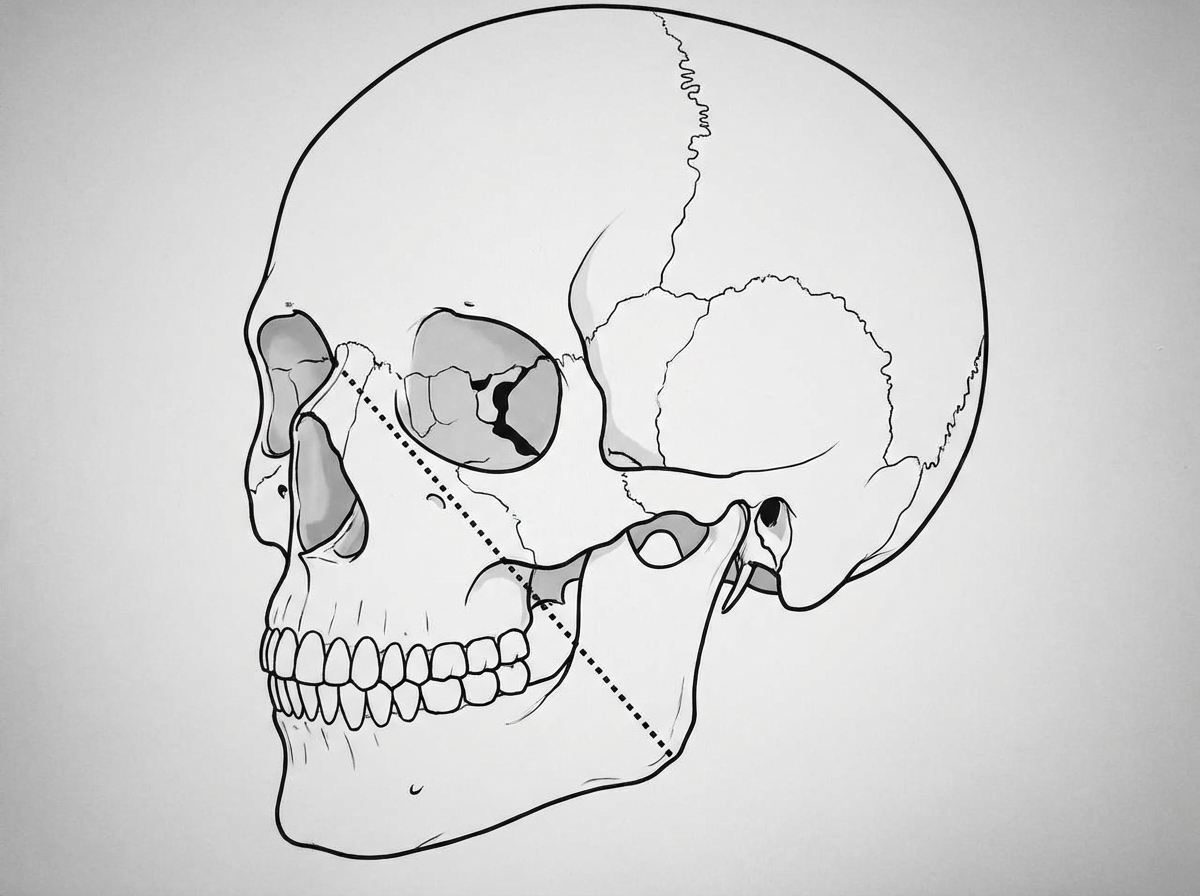
A 35-year-old male presented with nasal discharge, facial pain, and fever, which subsided with a course of antibiotics and antihistamines but recurred again after 2 months. On examination, there was mucopurulent discharge from the middle meatus and inflamed sinus openings. What is the investigation of choice?
A patient presented with the following symptoms. What is the etiopathogenesis of the disease process?

What is the most common intracranial complication of chronic sinusitis?
Which of the following are complications of acute sinusitis?
Howah operation is done for which condition?
Which of the following conditions does not lead to septal perforation?
Nasal septum perforation occurs in all of the following except?
What is the most common cause of epistaxis in children?
The Killian term is used for which of the following polyps?
Maxillary sinusitis due to viral etiology is:
Explanation: **Explanation:** The clinical presentation of recurrent nasal discharge, facial pain, and fever, coupled with mucopurulent discharge from the middle meatus, is diagnostic of **Chronic Rhinosinusitis (CRS)** or recurrent acute rhinosinusitis. **Why NCCT PNS is the Correct Answer:** Non-Contrast Computed Tomography (NCCT) of the Paranasal Sinuses (PNS) is the **gold standard investigation** for evaluating chronic or recurrent sinusitis. It provides excellent bony detail, delineates the complex anatomy of the **Osteomeatal Complex (OMC)**, and identifies anatomical variations (like Deviated Nasal Septum or Concha Bullosa) that predispose a patient to recurrence. It is also an essential "road map" for surgeons planning Functional Endoscopic Sinus Surgery (FESS). **Why Other Options are Incorrect:** * **X-ray PNS (Water’s View):** Once the standard, it is now considered obsolete for chronic cases as it lacks sensitivity, cannot visualize the ethmoid air cells clearly, and fails to show the OMC. * **MRI of the Face:** While superior for evaluating soft tissue extensions (e.g., fungal masses, tumors, or intracranial complications), it is not the first-line investigation for routine sinusitis because it overestimates mucosal thickening and provides poor bony detail. * **Inferior Meatal Puncture (Antral Wash):** This is a therapeutic or diagnostic procedure for Maxillary Sinusitis but does not provide a comprehensive diagnostic evaluation of all the sinuses. **Clinical Pearls for NEET-PG:** * **Investigation of choice for Acute Sinusitis:** Clinical diagnosis (imaging is usually not required unless complications are suspected). * **Investigation of choice for Chronic Sinusitis:** NCCT PNS (Coronal plane is preferred). * **Most common sinus involved in adults:** Maxillary sinus. * **Most common sinus involved in children:** Ethmoid sinus. * **The "Key" to Sinusitis:** Obstruction of the **Osteomeatal Complex** is the primary pathological event in the development of chronic sinusitis.
Explanation: ***Sebaceous gland hypertrophy*** - **Rhinophyma** is a subtype of **rosacea** characterized by progressive **sebaceous gland hypertrophy** in the nasal region, leading to the characteristic bulbous appearance. - Results in a **lobulated, reddish nasal appearance** with prominent pores and thickened skin, commonly called "**potato nose**." *Septal deviation of the nose* - This is a **structural abnormality** of the nasal septum that causes **nasal obstruction** and breathing difficulties. - Does not cause the characteristic **bulbous, lobulated external nasal appearance** seen in rhinophyma. *Sweat gland hypertrophy* - **Eccrine** or **apocrine sweat gland** enlargement typically affects areas like **axillae** and **groin**, not the nose. - Would not produce the **reddish, bulbous nasal deformity** with prominent pores characteristic of rhinophyma. *Mucous gland hypertrophy* - **Mucous glands** are primarily located in the **nasal cavity** and **paranasal sinuses**, not in the external nasal skin. - Hypertrophy would cause **nasal congestion** and **rhinorrhea**, not the external **lobulated nasal appearance**.
Explanation: **Explanation:** The correct answer is **Subdural abscess**. **Why Subdural Abscess is Correct:** In the context of **chronic sinusitis** (particularly involving the frontal sinus), a subdural abscess is the most frequently encountered intracranial complication. The infection typically spreads via **retrograde thrombophlebitis** through the valveless diploic veins of Breschet. Because the subdural space is a large, potential space with little resistance, pus can spread rapidly over the cerebral hemispheres. Clinically, it is a neurosurgical emergency characterized by rapid neurological deterioration, seizures, and signs of increased intracranial pressure. **Analysis of Incorrect Options:** * **Meningitis:** While meningitis is the most common intracranial complication of **acute** sinusitis (and the most common complication of ear infections), it is less frequent than subdural abscess in chronic sinus disease. * **Brain Abscess:** This is the second most common intracranial complication of chronic sinusitis. It usually occurs in the frontal lobe and develops more slowly than a subdural abscess. * **Cavernous Sinus Thrombosis:** This is a rare but life-threatening complication, most commonly arising from infections of the "danger area of the face" or the sphenoid and ethmoid sinuses. **NEET-PG High-Yield Pearls:** * **Most common overall complication of sinusitis:** Orbital complications (specifically Preseptal/Orbital cellulitis). * **Most common intracranial complication of ACUTE sinusitis:** Meningitis. * **Most common intracranial complication of CHRONIC sinusitis:** Subdural abscess. * **Pott’s Puffy Tumor:** This is osteomyelitis of the frontal bone with a subperiosteal abscess, often seen as a precursor or accompaniment to intracranial spread. * **Imaging Gold Standard:** Contrast-enhanced CT or MRI (MRI is superior for intracranial soft tissue detail).
Explanation: **Explanation:** Complications of acute sinusitis are broadly classified into **Orbital, Intracranial, and Bony** categories. While all options listed can occur as a result of sinusitis, the question asks to identify the specific complication among the choices provided that aligns with standard NEET-PG high-yield patterns. **1. Why Subdural Abscess is the Correct Answer:** Intracranial complications occur due to the spread of infection via retrograde thrombophlebitis of the valveless diploic veins or direct extension through the posterior wall of the frontal sinus. **Subdural abscess** is a life-threatening intracranial complication characterized by rapid neurological deterioration, seizures, and signs of increased intracranial pressure. It is a classic "deep" complication of frontal or ethmoid sinusitis. **2. Analysis of Other Options:** * **Orbital Cellulitis & Conjunctival Chemosis:** These are **Orbital complications** (Chandler’s Classification). While they are common, in many MCQ formats, if a single "most severe" or "specific" complication is sought, intracranial spread is prioritized. However, in a "multiple correct" context, these are also complications. * **Pott’s Puffy Tumour:** This is a **Bony complication** specifically involving osteomyelitis of the frontal bone, presenting as a doughy swelling on the forehead. **Clinical Pearls for NEET-PG:** * **Most common complication of sinusitis:** Orbital complications (specifically Pre-septal cellulitis). * **Most common sinus causing orbital complications:** Ethmoid sinus (due to the thin *lamina papyracea*). * **Most common sinus causing intracranial complications:** Frontal sinus. * **Chandler’s Classification:** Essential to remember for orbital spread (I: Pre-septal, II: Orbital cellulitis, III: Subperiosteal abscess, IV: Orbital abscess, V: Cavernous sinus thrombosis). * **Gold Standard Investigation:** Contrast-Enhanced CT (CECT) scan of the paranasal sinuses and brain.
Explanation: **Explanation:** The **Howarth’s operation** (also known as the Howarth-Lynch operation) is a classic external surgical procedure performed for the management of **chronic frontal sinusitis**. **1. Why Frontal Sinusitis is Correct:** The procedure involves a Lynch’s incision (medial to the inner canthus of the eye). The surgeon enters the frontal sinus through its floor, removes the diseased mucosa, and ensures adequate drainage by enlarging the frontonasal duct. It is typically indicated when endoscopic approaches (FESS) are not feasible or have failed, particularly in cases of frontal sinus mucocele or osteomyelitis. **2. Analysis of Incorrect Options:** * **Achalasia Cardia:** Managed by **Heller’s Myotomy** (surgical) or pneumatic dilatation. * **Pyloric Stenosis:** The gold standard surgical treatment is **Ramstedt’s Pyloromyotomy**. * **Extradural Hematoma (EDH):** Managed via **Burr hole evacuation** or a craniotomy to evacuate the clot and ligate the bleeding vessel (usually the middle meningeal artery). **3. High-Yield Clinical Pearls for NEET-PG:** * **Other Frontal Sinus Surgeries:** * **Trephination:** For acute frontal sinusitis not responding to medical management. * **Osteoplastic Flap:** For complete obliteration of the sinus. * **Key Anatomy:** The floor of the frontal sinus is the thinnest wall, which is why it is the site of entry in Howarth’s operation and the most common site for external rupture (leading to orbital cellulitis). * **Pott’s Puffy Tumor:** A high-yield complication of frontal sinusitis characterized by osteomyelitis of the frontal bone and subperiosteal abscess.
Explanation: **Explanation:** The correct answer is **Rhinosporidiosis** because it is a chronic granulomatous disease caused by *Rhinosporidium seeberi* that typically presents as a **friable, leafy, strawberry-like polypoid mass** arising from the nasal septum or turbinates. Crucially, Rhinosporidiosis is characterized by tissue proliferation rather than destruction; it does not cause necrosis or perforation of the septal cartilage. **Analysis of other options:** * **Syphilis:** Tertiary syphilis is a classic cause of septal perforation. It typically involves the **bony part** of the septum (unlike tuberculosis, which affects the cartilaginous part). * **Trauma:** This is the most common cause of septal perforation. It includes surgical trauma (post-SMR or Septoplasty), digital trauma (nose picking leading to "ulcer-perforation" cycle), or accidental injury. * **Septal Abscess:** An abscess leads to the collection of pus between the perichondrium and cartilage. This cuts off the blood supply to the avascular septal cartilage, leading to rapid **necrosis** and subsequent perforation. **Clinical Pearls for NEET-PG:** * **Most common site of perforation:** Anterior cartilaginous septum (Little’s area). * **Wegener’s Granulomatosis:** A high-yield systemic cause of "saddle nose" deformity and septal perforation. * **Cocaine Abuse:** Causes chronic vasoconstriction leading to ischemic necrosis of the septal cartilage. * **Occupational exposure:** Chrome workers (chromic acid fumes) are at high risk for painless septal perforations.
Explanation: **Explanation:** Nasal septal perforation occurs when there is a full-thickness defect in the cartilaginous or bony septum, leading to communication between the two nasal cavities. **Why Rhinosporidiosis is the correct answer:** Rhinosporidiosis, caused by *Rhinosporidium seeberi*, typically presents as a **friable, leafy, strawberry-like polypoid mass** that is highly vascular and bleeds on touch. It primarily affects the mucous membrane of the septum or lateral wall but is characterized by **exophytic growth** rather than tissue destruction or necrosis. Therefore, it does **not** cause septal perforation. **Analysis of other options:** * **Tuberculosis:** Chronic granulomatous infections like TB cause "cold" necrosis of the tissue. It typically involves the **cartilaginous part** of the septum, leading to perforation. * **Nasal Surgery:** This is the **most common cause** of septal perforation (iatrogenic). It occurs during procedures like SMR (Submucous Resection) or Septoplasty if bilateral mucosal flaps are torn at corresponding points. * **Syphilis:** Tertiary syphilis (gumma) is a classic cause of septal perforation. Unlike TB, it characteristically involves the **bony septum** (vomer). **High-Yield Clinical Pearls for NEET-PG:** * **Most common site of perforation:** Anterior cartilaginous septum (Kiesselbach’s area). * **Syphilis vs. TB:** Syphilis affects the **bone**; Tuberculosis affects the **cartilage**. * **Wegener’s Granulomatosis:** Another high-yield cause of septal perforation and "saddle nose" deformity. * **Occupational causes:** Chronic exposure to chromium salts, arsenic, and cocaine snorting. * **Symptoms:** Small perforations often cause **whistling sounds** during breathing, while large ones cause crusting and epistaxis.
Explanation: **Explanation:** **Correct Answer: D. Habitual nose picking** **Why it is correct:** The most common cause of epistaxis in children is **habitual nose picking** (digital trauma). The anatomical site involved is almost always **Little’s Area** (Kiesselbach’s plexus) located on the anteroinferior part of the nasal septum. This area is a highly vascular watershed zone where four arteries (Sphenopalatine, Greater Palatine, Superior Labial, and Anterior Ethmoidal) anastomose. In children, the overlying mucous membrane is thin, making the fragile superficial vessels prone to trauma from fingernails, leading to "Epistaxis Digitarum." **Why the other options are incorrect:** * **A. Common cold:** While viral rhinitis causes mucosal congestion and can lead to minor spotting, it is a secondary factor that often triggers the urge to pick the nose rather than being the primary cause of frank epistaxis. * **B. Nasal allergy:** Allergic rhinitis causes itching and inflammation. While it predisposes a child to epistaxis due to mucosal friability and frequent rubbing (the "allergic salute"), it is considered a predisposing factor rather than the most common direct cause. * **C. Polyp:** Nasal polyps (like Ethmoidal or Antrochoanal polyps) typically present with nasal obstruction and watery discharge. They are relatively uncommon in young children (unless associated with Cystic Fibrosis) and rarely present with epistaxis as the primary symptom. **NEET-PG High-Yield Pearls:** * **Most common site of epistaxis:** Little’s Area (Anterior epistaxis - 90% of cases). * **Most common cause of epistaxis in adults:** Hypertension or Trauma. * **Woodruff’s Plexus:** The site of posterior epistaxis, located venous plexus below the posterior end of the inferior turbinate. * **First-aid management:** **Trotter’s Method** (Patient sits up, leans forward, and pinches the soft part of the nose for 10 minutes). * **Juvenile Nasopharyngeal Angiofibroma (JNA):** Always suspect this in an adolescent male with recurrent, profuse spontaneous epistaxis.
Explanation: **Explanation:** The correct answer is **Antrochoanal polyp**. **Why it is correct:** An Antrochoanal polyp (ACP) is also known as **Killian’s polyp**. It originates from the mucosa of the maxillary antrum (near the accessory ostium), passes through the natural or accessory ostium into the middle meatus, and extends posteriorly into the choana and nasopharynx. It is typically unilateral and seen more commonly in children and young adults. The term "Killian" is associated with this polyp because it traverses the ostium described by Gustav Killian. **Why the other options are wrong:** * **Ethmoidal polyp:** These are usually bilateral, multiple, and associated with allergies or chronic rhinosinusitis. They arise from the ethmoidal air cells and are not referred to as Killian polyps. * **Tonsillar cyst/Tonsillolith:** These are conditions of the oropharynx. A tonsillar cyst is a retention cyst of the tonsillar mucosa, and a tonsillolith is a calcareous concretion (stone) within a tonsillar crypt. Neither is related to nasal polyposis or the term Killian. **High-Yield Clinical Pearls for NEET-PG:** * **Components of ACP:** It has three parts—Antral (cystic), Nasal (soft), and Choanal (bulbous). * **Radiology:** On a CT scan, it shows an opaque maxillary sinus with a soft tissue mass extending into the choana. * **Management:** The treatment of choice is **FESS (Functional Endoscopic Sinus Surgery)** to remove the polyp and its antral attachment to prevent recurrence. * **Differential Diagnosis:** In a young male with a nasopharyngeal mass, always rule out Juvenile Nasopharyngeal Angiofibroma (JNA). * **Killian’s Dehiscence:** Do not confuse Killian’s polyp with Killian’s dehiscence, which is a weak area in the Pharyngeal Constrictor muscle (between thyropharyngeus and cricopharyngeus) where Zenker’s diverticulum occurs.
Explanation: **Explanation:** **1. Why "Self-limiting" is correct:** Most cases of acute rhinosinusitis are viral in origin (commonly caused by Rhinoviruses, Influenza, or Parainfluenza). Viral maxillary sinusitis is a **self-limiting** condition, meaning it typically resolves on its own within 7 to 10 days without the need for antibiotic intervention. Management is primarily supportive, focusing on symptomatic relief through hydration, analgesics, and topical decongestants. **2. Why other options are incorrect:** * **Option A:** Bacterial sinusitis is suspected only if symptoms persist beyond 10 days, are severe (high fever >39°C), or show "double worsening" (getting better then suddenly worse). Treating viral cases as bacterial leads to unnecessary antibiotic resistance. * **Option C:** Viral sinusitis is generally **milder** than bacterial sinusitis. Bacterial infections (often *S. pneumoniae* or *H. influenzae*) are associated with more intense localized pain, purulent nasal discharge, and higher systemic toxicity. * **Option D:** Since A and C are incorrect, "All of the above" is invalid. **High-Yield Clinical Pearls for NEET-PG:** * **Most common sinus involved:** Maxillary sinus (in adults); Ethmoid sinus (in children). * **First-line treatment for Acute Bacterial Sinusitis:** Amoxicillin-Clavulanate (Augmentin). * **Radiology of choice:** CT Scan of Paranasal Sinuses (PNS) is the gold standard, though often not required for simple viral cases. * **Waters' View (X-ray):** Best for visualizing the maxillary sinus; look for an air-fluid level or opacification. * **Pott’s Puffy Tumor:** A rare but high-yield complication involving frontal bone osteomyelitis and forehead swelling.
Rhinitis
Practice Questions
Acute Rhinosinusitis
Practice Questions
Chronic Rhinosinusitis
Practice Questions
Nasal Polyposis
Practice Questions
Allergic Fungal Sinusitis
Practice Questions
Deviated Nasal Septum
Practice Questions
Epistaxis
Practice Questions
Nasal Trauma
Practice Questions
Choanal Atresia
Practice Questions
CSF Rhinorrhea
Practice Questions
Tumors of the Nose and Paranasal Sinuses
Practice Questions
Complications of Sinusitis
Practice Questions
Get full access to all questions, explanations, and performance tracking.
Start For Free