All are true about epistaxis except:
Samter's triad is related to which of the following conditions?
In case of uncontrolled epistaxis, ligation of the internal maxillary artery is to be performed in which location?
Which of the following is NOT a component of an alkaline nasal douch solution?
Optic nerve injury following sinus surgery is most commonly due to injury of which ethmoidal cells?
Which of the following is a specific risk factor for the development of adenocarcinoma of the ethmoid sinus?
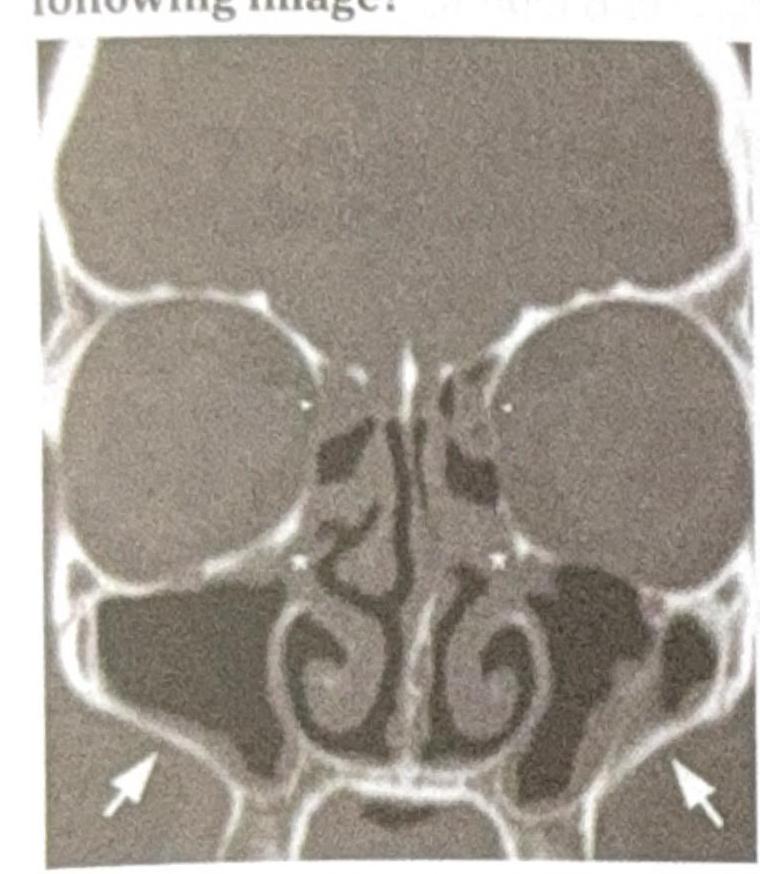
Surgical ciliated cyst is often associated with surgeries of which structure or procedure?
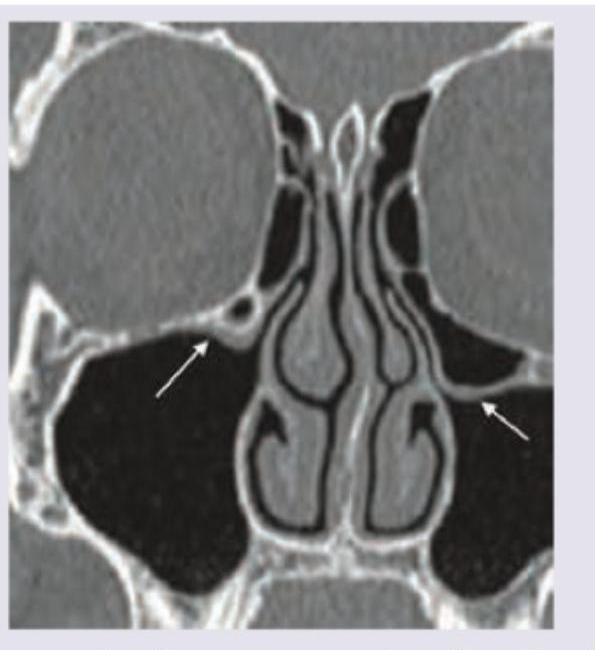
Which wall is the ethmoid sinus located in?
Walsham's forceps are used to:
Little's area is situated in the nasal cavity in which region?
Explanation: ### Explanation **Why Option C is the correct answer (The False Statement):** While anterior nasal packing (ANP) is a standard procedure, it is generally **more traumatic** and technically more difficult to insert correctly compared to balloon tamponade. Balloon catheters (like the Foley or Brighton catheter) are designed for rapid insertion and atraumatic inflation, making them the preferred choice in emergency settings where skill levels vary. ANP requires precise layering of ribbon gauze to provide uniform pressure, which can cause significant mucosal abrasion and discomfort. **Analysis of Incorrect Options (True Statements):** * **Option A:** **Kiesselbach’s Plexus** (Little’s Area) is located on the anteroinferior part of the nasal septum. It is the site of anastomosis for four arteries (Sphenopalatine, Greater Palatine, Superior Labial, and Anterior Ethmoidal) and is indeed the source of epistaxis in approximately **90% of cases**. * **Option B:** Nasal packs act as a foreign body and can obstruct sinus drainage, increasing the risk of **Toxic Shock Syndrome (TSS)** and secondary infections. If a pack remains for >48 hours, systemic antibiotics are mandatory to prevent these complications. * **Option C:** **Trotter’s Method** (Pinching the "little" nose) is the gold-standard first-aid maneuver. The patient sits up, leans forward (to avoid swallowing blood), and pinches the soft part of the nose for 10–15 minutes. **High-Yield Clinical Pearls for NEET-PG:** * **Woodruff’s Plexus:** Located over the posterior end of the middle turbinate; it is the most common site for **posterior epistaxis** (primarily involving the Sphenopalatine artery). * **First-line treatment** for active anterior epistaxis: Chemical cautery (Silver Nitrate) or Electrocautery if the bleeding point is visible. * **Most common cause** of epistaxis in children: Finger-nail trauma (Nose picking). * **Most common systemic cause:** Hypertension (though it usually exacerbates rather than initiates the bleed).
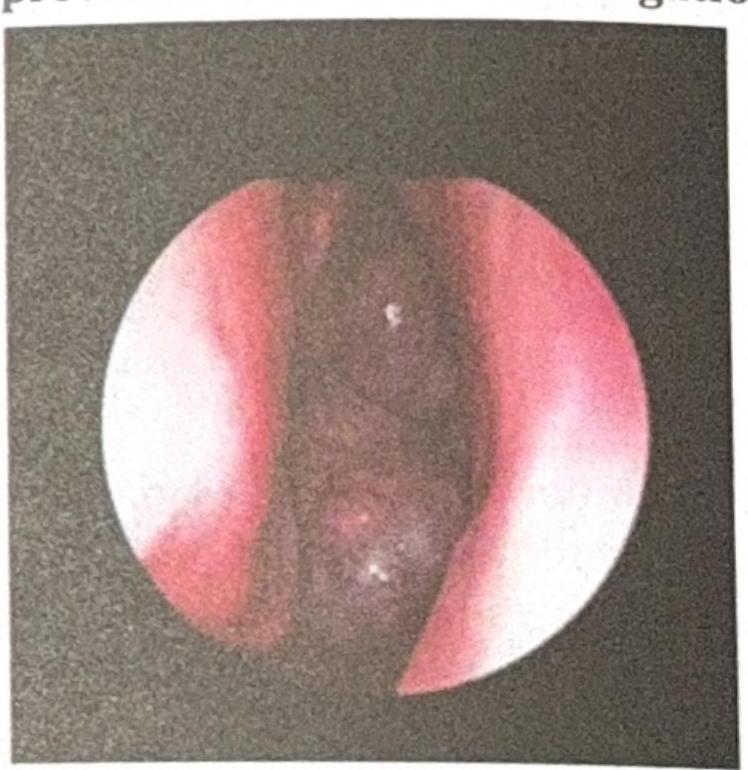
Explanation: **Explanation:** **Samter’s Triad** (also known as ASA Triad or Widal’s Triad) is a clinical condition characterized by the coexistence of three specific pathologies: 1. **Asthma** 2. **Recurrent Nasal Polyposis** (typically ethmoidal) 3. **Aspirin Sensitivity** (NSAID intolerance) **Why Option A is Correct:** The term **Aspirin-exacerbated respiratory disease (AERD)** is the modern clinical diagnosis that encompasses all three components of Samter’s Triad. It is caused by an abnormality in the arachidonic acid metabolism pathway, leading to an overproduction of pro-inflammatory leukotrienes and a decrease in anti-inflammatory prostaglandins (PGE2) when COX-1 inhibitors (like Aspirin) are ingested. **Why Other Options are Incorrect:** * **Options B, C, and D:** While nasal polyposis, chronic sinusitis, and asthma are individual *components* or clinical features of the syndrome, they do not represent the complete clinical entity. Samter’s Triad specifically refers to the **syndrome** (AERD) rather than just one of its symptoms. **High-Yield Clinical Pearls for NEET-PG:** * **Pathophysiology:** Look for "Leukotriene excess" in questions. Treatment often involves **Leukotriene receptor antagonists** (e.g., Montelukast). * **Aspirin Desensitization:** This is a definitive management strategy for patients with AERD who require aspirin for cardiovascular health or to control polyp recurrence. * **Surgical Note:** Nasal polyps in Samter’s Triad have a notoriously **high recurrence rate** even after meticulous Functional Endoscopic Sinus Surgery (FESS). * **Avoidance:** Patients must avoid all COX-1 inhibitors; however, highly selective COX-2 inhibitors are generally tolerated.
Explanation: ### **Explanation** The **Internal Maxillary Artery (IMA)** is the primary source of blood supply to the nasal cavity via its terminal branch, the sphenopalatine artery. In cases of posterior epistaxis that cannot be controlled by packing, surgical ligation of the IMA is indicated. **Why Option B is Correct:** The internal maxillary artery enters the **pterygopalatine fossa** through the pterygomaxillary fissure. This is the most effective site for ligation because it is where the artery divides into its terminal branches (sphenopalatine, greater palatine, and infraorbital). Accessing the artery here allows for precise control of the blood supply to the posterior nasal cavity. This is typically performed via a **Caldwell-Luc approach**, where the posterior wall of the maxillary sinus is removed to enter the fossa. **Why Other Options are Incorrect:** * **Option A (Maxillary antrum):** The artery does not reside within the antrum itself; it lies posterior to the posterior wall of the sinus. The antrum is merely the surgical route used to reach the pterygopalatine fossa. * **Option C (At the neck):** Ligation in the neck usually refers to the **External Carotid Artery (ECA)**. While the IMA is a branch of the ECA, ligating the ECA is less effective due to extensive collateral circulation from the opposite side and the internal carotid system. * **Option D (Medial wall of the orbit):** This is the site for ligating the **Anterior and Posterior Ethmoidal arteries** (branches of the Ophthalmic artery/Internal Carotid system), not the internal maxillary artery. ### **High-Yield Clinical Pearls for NEET-PG:** * **Woodruff’s Plexus:** Located in the posterior part of the lateral nasal wall; the most common site for posterior epistaxis. * **Sphenopalatine Artery:** Known as the **"Artery of Epistaxis."** * **Surgical Trend:** Transantral IMA ligation is now largely replaced by **Endoscopic Sphenopalatine Artery Ligation (ESPAL)**, which is less invasive and has fewer complications (like infraorbital nerve numbness). * **Order of Ligation:** If ESPAL fails, IMA ligation is considered; if that fails, ECA ligation is the last resort.
Explanation: **Explanation:** Alkaline nasal douching is a therapeutic procedure primarily used to maintain nasal hygiene in conditions characterized by excessive crusting, such as **Atrophic Rhinitis** (Ozaena) or post-sinus surgery. The goal is to dissolve thick, tenacious secretions and crusts while inhibiting the growth of anaerobic organisms. **Why Glucose is the Correct Answer:** Glucose is **not** a component of the standard alkaline douching solution. While glucose (specifically 25% glucose in glycerin) is used topically in Atrophic Rhinitis, it is applied as **nasal drops** to inhibit the growth of proteolytic organisms (like *Klebsiella ozaenae*) and reduce the foul smell (foetor). It is not part of the irrigation/douche powder. **Analysis of Other Options:** The standard alkaline douche powder (often referred to as "Birmingham Nasal Douche" or similar formulations) consists of: * **Sodium chloride (NaCl):** Used to make the solution isotonic or slightly hypertonic, helping to draw out fluid and soften crusts. * **Sodium bicarbonate (NaHCO3):** Helps in dissolving the thick mucus (mucolytic action) by increasing the pH. * **Sodium biborate (Borax):** Acts as a mild antiseptic and helps in maintaining the alkaline medium. **NEET-PG High-Yield Pearls:** * **Mixing Ratio:** The standard ratio for these three salts is **1:1:2** (Sodium chloride : Sodium bicarbonate : Sodium biborate). * **Administration:** One teaspoon of this powder is dissolved in approximately 250–300 ml of lukewarm water. * **Clinical Indication:** Atrophic Rhinitis is the classic indication. Look for the triad of **foul smell (foetor), crusting, and roominess** in the nasal cavity. * **Contraindication:** Patients should be advised not to swallow the solution or perform forceful blowing immediately after douching to prevent Eustachian tube contamination.
Explanation: **Explanation:** The correct answer is **Onodi cells** (also known as sphenoethmoidal cells). **1. Why Onodi cells are correct:** Onodi cells are the most posterior ethmoid air cells that pneumatize laterally and superiorly into the sphenoid sinus. Their clinical significance lies in their intimate anatomical relationship with the **optic nerve** and the **internal carotid artery**. During Functional Endoscopic Sinus Surgery (FESS), if a surgeon mistakes an Onodi cell for the sphenoid sinus, they may inadvertently injure the optic nerve which often runs along the lateral wall of this cell, sometimes with a dehiscent bony covering. This makes it the most common site for iatrogenic optic nerve injury. **2. Why other options are incorrect:** * **Haller cells (Infraorbital ethmoid cells):** These are ethmoid cells that pneumatize into the floor of the orbit/maxillary sinus roof. They are associated with narrowing of the maxillary ostium and sinusitis, but not typically optic nerve injury. * **Agger nasi cells:** These are the most anterior ethmoid cells, located anterior to the attachment of the middle turbinate. They are landmarks for reaching the frontal recess. * **Ethmoidal bullae:** This is the largest and most constant cell of the anterior ethmoid system. It forms the posterior boundary of the hiatus semilunaris but is far removed from the optic nerve. **Clinical Pearls for NEET-PG:** * **Onodi Cell:** Key landmark for the Optic Nerve. * **Haller Cell:** Key landmark for the Maxillary Sinus/Orbital floor. * **Agger Nasi:** Key landmark for the Frontal Sinus. * **Mnemonic:** **O**nodi = **O**ptic Nerve. * Pre-operative CT scans are mandatory in FESS to identify these anatomical variants and prevent "blindness" as a surgical complication.
Explanation: **Explanation:** The correct answer is **D. Wood workers**. **Why Wood Workers?** Adenocarcinoma of the ethmoid sinus is a rare malignancy with a strong occupational association. Exposure to **hardwood dust** (such as beech and oak) is the most significant risk factor. The fine dust particles are inhaled and tend to deposit in the narrow ethmoid air cells. Over a long latent period (often 20–40 years), these particles induce chronic inflammation and metaplastic changes, specifically leading to the **intestinal type of adenocarcinoma**. **Analysis of Incorrect Options:** * **A. Smoking:** While smoking is a major risk factor for squamous cell carcinoma of the upper aerodigestive tract (larynx, oral cavity), it is not specifically linked to ethmoid adenocarcinoma. * **B. Nickel industry worker:** Nickel exposure is a well-known risk factor for **Squamous Cell Carcinoma** of the nasal cavity and sinuses, rather than adenocarcinoma. * **C. Mustard gas exposure:** This is historically associated with an increased risk of **Squamous Cell Carcinoma** of the larynx and respiratory tract, but not specifically ethmoid adenocarcinoma. **High-Yield Clinical Pearls for NEET-PG:** * **Wood dust = Adenocarcinoma** (specifically the Ethmoid sinus). * **Nickel/Leather/Isopropyl alcohol = Squamous Cell Carcinoma** (specifically the Maxillary sinus). * **Most common site** for Sinonasal Malignancy: Maxillary Sinus (80%), followed by Ethmoid Sinus. * **Most common histological type** of Sinonasal Malignancy: Squamous Cell Carcinoma. * **Inverting Papilloma:** Often associated with HPV; has a high recurrence rate and a 10% risk of malignant transformation into SCC.
Explanation: **Explanation:** The **Surgical Ciliated Cyst** (also known as a Postoperative Maxillary Cyst) is a delayed complication occurring years after surgery involving the maxillary sinus. **1. Why Caldwell-Luc is correct:** The Caldwell-Luc procedure involves creating an opening in the canine fossa to access the maxillary sinus. During this process, or during the subsequent curettage of the sinus mucosa, fragments of the **ciliated columnar epithelium** can become trapped or implanted within the surgical closure site or the maxillary bone. Over time (often 10–20 years later), these trapped epithelial remnants proliferate and undergo cystic expansion, leading to a mucus-filled cyst lined with respiratory epithelium. **2. Why other options are incorrect:** * **Maxillary impaction / Mandibular set back:** These are orthognathic surgical procedures. While they involve the facial skeleton, they do not typically involve the intentional entry and mucosal manipulation of the maxillary sinus required to transplant respiratory epithelium into the bone. * **Mucocele:** A mucocele is a clinical entity itself (a mucus-filled sac caused by ductal obstruction), not a surgical procedure. While a surgical ciliated cyst is technically a type of "iatrogenic mucocele," it is specifically the *result* of the Caldwell-Luc procedure. **High-Yield Clinical Pearls for NEET-PG:** * **Latency:** It typically presents **10 to 20 years** after the initial surgery. * **Radiology:** Appears as a well-defined, unilocular radiolucency in the maxilla, often mistaken for a radicular cyst or odontogenic lesion. * **Histology:** Characteristically lined by **pseudostratified ciliated columnar epithelium** (respiratory lining) with goblet cells. * **Treatment:** Complete surgical enucleation.
Explanation: ### Explanation The question refers to the anatomical location of the **Vomeronasal Organ (Organ of Jacobson)**, which is often described as a rudimentary "sinus-like" structure or pouch in humans. **1. Why the Correct Answer is Right:** The **anteroinferior part of the nasal septum** is the specific site where the vomeronasal organ is located. It is a small, blind-ending pouch situated just above the incisive canal, approximately 2 cm from the nostril. While the ethmoid sinus itself is located within the ethmoid bone (lateral to the septum), this specific question likely refers to the developmental or vestigial structures found on the septal wall, where the "vomeronasal sinus" or pouch resides. **2. Why the Other Options are Wrong:** * **Anteroinferior lateral wall (A):** This area contains the opening of the nasolacrimal duct (in the inferior meatus) and the anterior end of the inferior turbinate, not the vomeronasal structure. * **Posteroinferior lateral wall (C):** This region is associated with the sphenopalatine foramen and the posterior ends of the middle and inferior turbinates. * **Posteroinferior nasal septum (D):** This area is formed by the vomer bone and leads toward the choana; it does not house the Jacobson’s organ. **3. Clinical Pearls for NEET-PG:** * **Jacobson’s Organ:** In macrosmatic animals, it is used for pheromone detection. In humans, it is vestigial but remains a high-yield anatomical landmark. * **Little’s Area (Kiesselbach's Plexus):** Also located on the **anteroinferior nasal septum**. It is the most common site for epistaxis and is formed by the anastomosis of five arteries (Greater palatine, Sphenopalatine, Superior labial, Anterior ethmoidal, and Posterior ethmoidal). * **Ethmoid Sinus Anatomy:** The actual ethmoid air cells are located between the orbit and the nasal cavity, divided into anterior and posterior groups by the **basal lamella** of the middle turbinate.
Explanation: **Explanation:** **Walsham’s Forceps** are specialized instruments used in the management of **nasal bone fractures**. The primary objective of using these forceps is to manipulate and realign the fractured nasal bones (reduction). The instrument features two blades: one is covered with a rubber sleeve to protect the skin (external), while the other is curved and thin to be inserted into the nasal cavity (internal). Unlike Asch’s forceps, the blades of Walsham’s forceps do not meet when the handles are closed, allowing them to grasp the nasal bone without crushing it. This allows the surgeon to "disimpact" and reposition the fractured fragments into their anatomical alignment. **Analysis of Incorrect Options:** * **A & B (Remove teeth/root):** Dental extraction requires forceps with specific beaks designed to grip the crown or root of a tooth (e.g., Upper Universal or Lower Molar forceps). Walsham’s forceps are too long and lack the necessary grip for dental procedures. * **C (Clamp blood vessels):** Hemostasis is achieved using hemostatic forceps (Artery forceps/Mosquito forceps), which have serrated jaws and a ratcheted locking mechanism to occlude vessels. Walsham’s forceps are non-ratcheted and too bulky for this purpose. **High-Yield Clinical Pearls for NEET-PG:** * **Walsham’s vs. Asch’s Forceps:** Walsham’s is used to reduce **nasal bone** fractures (lateral displacement), while **Asch’s forceps** are primarily used to straighten a deviated or fractured **nasal septum**. * **Timing of Reduction:** In adults, nasal fractures should be reduced within 7–14 days before malunion occurs. In children, this should be done within 5–7 days due to rapid healing. * **Protection:** Always remember that the **padded/rubber-covered blade** of Walsham’s forceps goes on the **outside** to prevent skin necrosis or bruising.
Explanation: **Explanation:** **Little’s Area** (also known as Kiesselbach's plexus) is a highly vascularized region located in the **anteroinferior** part of the nasal septum. It is the most common site for epistaxis (nosebleeds), accounting for approximately 90% of cases. 1. **Why Anteroinferior is Correct:** This region sits just inside the nasal vestibule on the septal cartilage. It is the site of an arterial anastomosis involving four (sometimes five) arteries: the **Greater Palatine**, **Sphenopalatine**, **Superior Labial**, and **Anterior Ethmoidal** arteries. Its superficial location and exposure to inspired air make it prone to drying and trauma (e.g., nose picking). 2. **Why Other Options are Incorrect:** * **Anterosuperior:** This area is primarily supplied by the ethmoidal arteries but does not contain the confluence of vessels known as Little's area. * **Posterosuperior/Posteroinferior:** These regions correspond to the territory of **Woodruff’s Plexus**, located over the posterior end of the middle turbinate. Bleeding from here is "Posterior Epistaxis," which is more common in elderly or hypertensive patients and is harder to control. **High-Yield Clinical Pearls for NEET-PG:** * **Vessels of Kiesselbach’s Plexus:** Remember the mnemonic **"G-S-S-A"** (Greater palatine, Sphenopalatine, Superior labial, Anterior ethmoidal). Note: The *Posterior Ethmoidal* artery is generally **not** part of this plexus. * **Woodruff’s Plexus:** Located posteriorly; the main vessel involved is the **Sphenopalatine artery** (the "Artery of Epistaxis"). * **Management:** Most bleeding from Little’s area can be controlled by **Trott’s method** (pinching the soft part of the nose) or chemical cautery (Silver Nitrate).
Rhinitis
Practice Questions
Acute Rhinosinusitis
Practice Questions
Chronic Rhinosinusitis
Practice Questions
Nasal Polyposis
Practice Questions
Allergic Fungal Sinusitis
Practice Questions
Deviated Nasal Septum
Practice Questions
Epistaxis
Practice Questions
Nasal Trauma
Practice Questions
Choanal Atresia
Practice Questions
CSF Rhinorrhea
Practice Questions
Tumors of the Nose and Paranasal Sinuses
Practice Questions
Complications of Sinusitis
Practice Questions
Get full access to all questions, explanations, and performance tracking.
Start For Free