An X-ray shows an air column between a soft tissue mass and the posterior wall of the nasopharynx. This finding is suggestive of which of the following conditions?
Which of the following is a common site of bleeding in the nasal cavity?
What is the anatomical approach for a Caldwell-Luc operation?
What is the most common cause of obstruction in atrophic rhinitis?
For a deviated nasal septum, surgery is indicated for:
Which of the following is a key area of the nasal septum?
Which of the following arteries is not involved in the formation of Kiesselbach's plexus?
Adenocarcinoma of the ethmoid sinus occurs commonly in which occupational group?
All are systemic causes of epistaxis except:
Septal perforation is not seen in which of the following conditions?
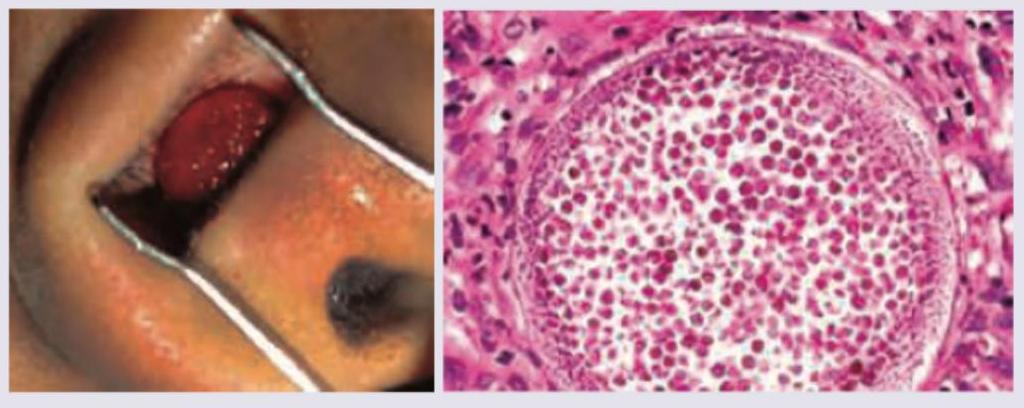
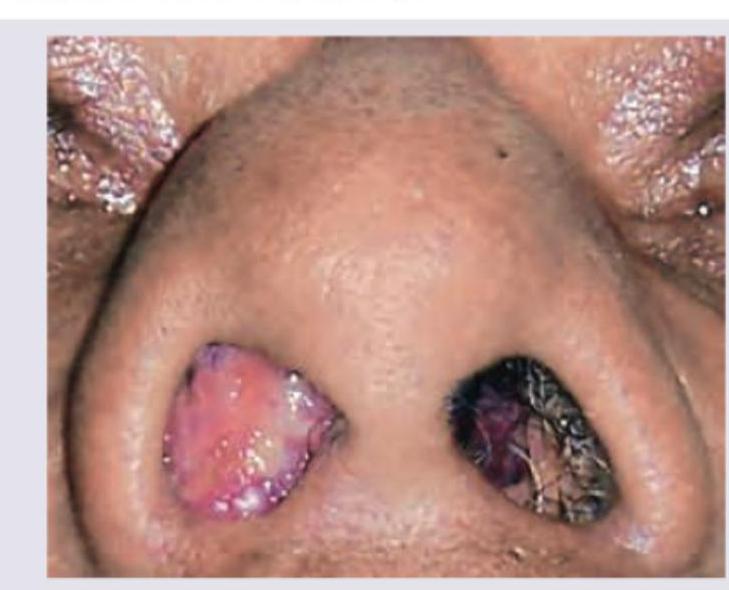
Explanation: ### Explanation **Correct Option: B. Antrochoanal polyp** The presence of an **air column** between a soft tissue mass and the posterior wall of the nasopharynx is a classic radiological sign of an **Antrochoanal (AC) polyp**. * **Pathophysiology:** An AC polyp originates from the maxillary sinus mucosa, exits through the accessory ostium, and grows backward into the choana and nasopharynx. * **The "Air Column" Sign:** Because the polyp is pedunculated and hangs down from the choana into the oropharynx, it does not typically adhere to the posterior pharyngeal wall. On a lateral view X-ray of the nasopharynx, air is trapped between the posterior surface of the polyp and the pharyngeal wall, creating a visible translucent strip. This distinguishes it from sessile masses like Angiofibroma, which usually involve or press firmly against the posterior boundaries. **Why other options are incorrect:** * **A. Ethmoidal polyp:** These are typically multiple, bilateral, and remain confined to the nasal cavity. They rarely reach the nasopharynx to produce this specific radiological sign. * **C. Nasal myiasis:** This is a parasitic infestation (maggots) characterized by foul-smelling discharge and tissue destruction, not a discrete soft tissue mass presenting with an air column sign. --- ### High-Yield Clinical Pearls for NEET-PG * **Origin:** AC polyps most commonly arise from the **maxillary sinus** (specifically the lateral wall or floor). * **Clinical Presentation:** Usually **unilateral** nasal obstruction in children and young adults. * **Radiology:** On a Water’s view, you will see opacification of the involved maxillary sinus. * **Treatment of Choice:** Functional Endoscopic Sinus Surgery (**FESS**) to remove the polyp and its base to prevent recurrence. * **Differential Diagnosis:** Must be differentiated from **Juvenile Nasopharyngeal Angiofibroma (JNA)**. Unlike AC polyps, JNA is highly vascular, occurs in adolescent males, and shows the **Holman-Miller sign** (anterior bowing of the posterior wall of the maxillary sinus) on CT.
Explanation: **Explanation:** **Little’s Area** is the most common site for epistaxis (nasal bleeding), particularly in children and young adults. It is located in the anteroinferior part of the nasal septum, just above the vestibule. This area is clinically significant because it contains **Kiesselbach’s Plexus**, a highly vascularized region where four (or five) arteries anastomose: 1. **Anterior Ethmoidal artery** (from Internal Carotid) 2. **Sphenopalatine artery** (from External Carotid) 3. **Greater Palatine artery** (from External Carotid) 4. **Superior Labial artery** (from External Carotid) Because this area is superficial and located at the entrance of the airway, it is prone to drying, crusting, and digital trauma (nose picking), leading to **anterior epistaxis**. **Analysis of Incorrect Options:** * **Woodruff Plexus:** Located in the posterior part of the nasal cavity (lateral wall, posterior to the inferior turbinate). It is the most common site for **posterior epistaxis**, usually seen in elderly patients with hypertension. * **Brown’s Area:** This is a distractor; there is no recognized anatomical region by this name in the nasal cavity relevant to epistaxis. * **Vestibular Area:** This is the skin-lined entry of the nose containing vibrissae (hairs). While it can suffer from furunculosis or vestibulitis, it is not the primary site for spontaneous epistaxis. **High-Yield Clinical Pearls for NEET-PG:** * **Trotted’s Method:** The first-aid management for bleeding from Little’s area (pinching the nose and leaning forward). * **Artery of Epistaxis:** The Sphenopalatine artery. * **Woodruff’s Plexus** is primarily formed by the Sphenopalatine and Pharyngeal arteries. * **Most common cause of epistaxis in children:** Finger nail trauma (nose picking).
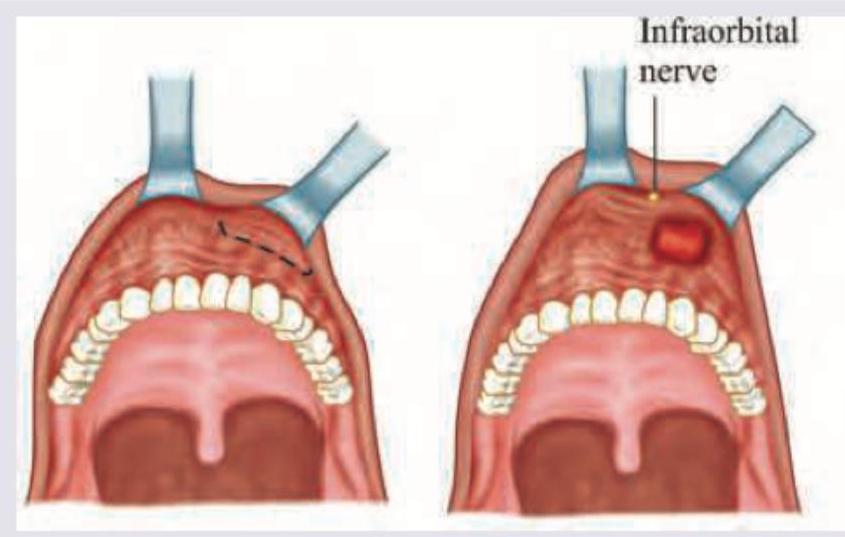
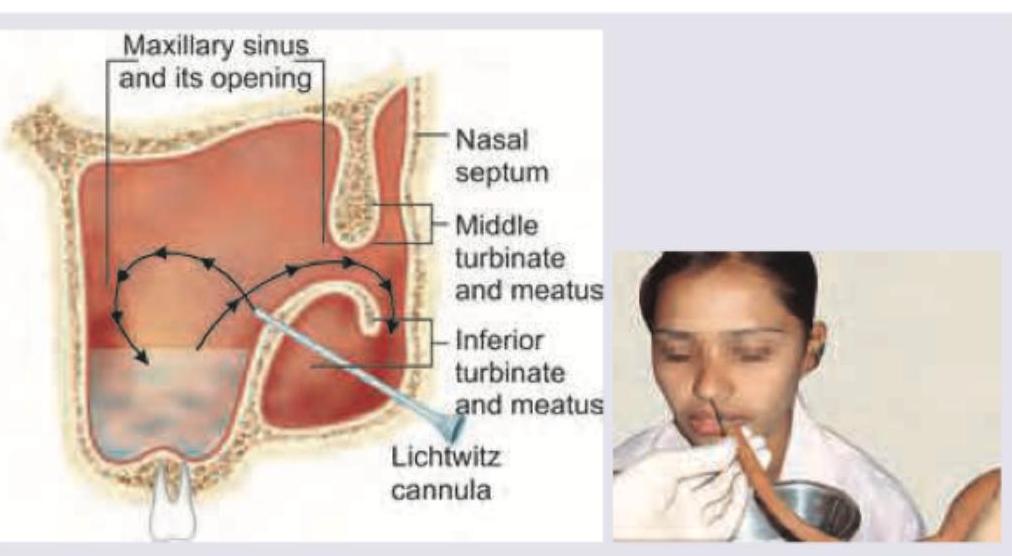
Explanation: **Explanation:** The **Caldwell-Luc operation** (also known as Radical Antrostomy) is a surgical procedure designed to access the **maxillary sinus** through the canine fossa. **1. Why Sublabial Sulcus is Correct:** The anatomical approach involves a horizontal incision made in the **sublabial sulcus** (the groove between the upper lip and the gingiva), specifically above the roots of the premolar teeth. After elevating the periosteum, a hole is drilled into the anterior wall of the maxilla at the **canine fossa**. This provides direct visualization and wide access to the maxillary sinus for removing diseased mucosa, polyps, or foreign bodies. **2. Why Other Options are Incorrect:** * **Hard Palate:** This approach is used for palatal surgeries or accessing the floor of the nasal cavity, but it does not provide direct access to the maxillary antrum. * **Inferior Meatus:** While a "naso-antral window" is often created in the inferior meatus *during* a Caldwell-Luc procedure to ensure permanent drainage, it is not the primary anatomical approach for the surgery itself. * **Superior Meatus:** This area is located high in the nasal cavity and is related to the posterior ethmoid cells and sphenoid sinus, not the maxillary sinus. **Clinical Pearls for NEET-PG:** * **Indications:** Chronic maxillary sinusitis (not responding to FESS), removal of antrochoanal polyps, retrieval of a displaced tooth root, and as a precursor to the Denker’s operation. * **Complication:** The most common complication is **cheek swelling and numbness** due to injury to the **infraorbital nerve**. * **Current Status:** Largely replaced by Functional Endoscopic Sinus Surgery (FESS), but remains high-yield for exams.
Explanation: **Explanation:** **Atrophic Rhinitis (Ozena)** is a chronic inflammatory condition characterized by the atrophy of the nasal mucosa and the underlying turbinate bones. **Why Option A is Correct:** The hallmark of atrophic rhinitis is the replacement of normal ciliated columnar epithelium with squamous epithelium (squamous metaplasia). This leads to a loss of goblet cells and mucociliary clearance. Consequently, the nasal secretions become thick, viscid, and dry up rapidly, forming **large, foul-smelling greenish-black crusts**. Despite the nasal cavity being pathologically roomy (due to turbinate atrophy), these extensive crusts physically block the airway, making **excessive crust formation** the most common cause of nasal obstruction in these patients. **Why the Other Options are Incorrect:** * **B. Polyp:** Nasal polyps are associated with chronic rhinosinusitis or aspirin sensitivity, not the atrophic processes of Ozena. * **C. Synechiae:** These are adhesions between the septum and turbinates, usually occurring post-surgically. While they cause obstruction, they are not a primary feature of atrophic rhinitis. * **D. Hypertrophy of turbinate:** This is the physiological opposite of atrophic rhinitis. In this disease, the turbinates undergo **atrophy**, leading to a "roomy" nose. **High-Yield Clinical Pearls for NEET-PG:** * **Paradoxical Nasal Obstruction:** Patients complain of a blocked nose despite a wide nasal cavity because the sensory nerve endings atrophy, leading to a loss of the sensation of airflow. * **Merciful Anosmia:** The patient cannot smell their own foul odor (due to atrophy of the olfactory epithelium), though it is offensive to others. * **Organism:** *Klebsiella ozaenae* (Abel’s bacillus) is frequently isolated. * **Surgery:** **Young’s operation** (or Modified Young’s) involves closing the nostrils to allow the mucosa to heal.
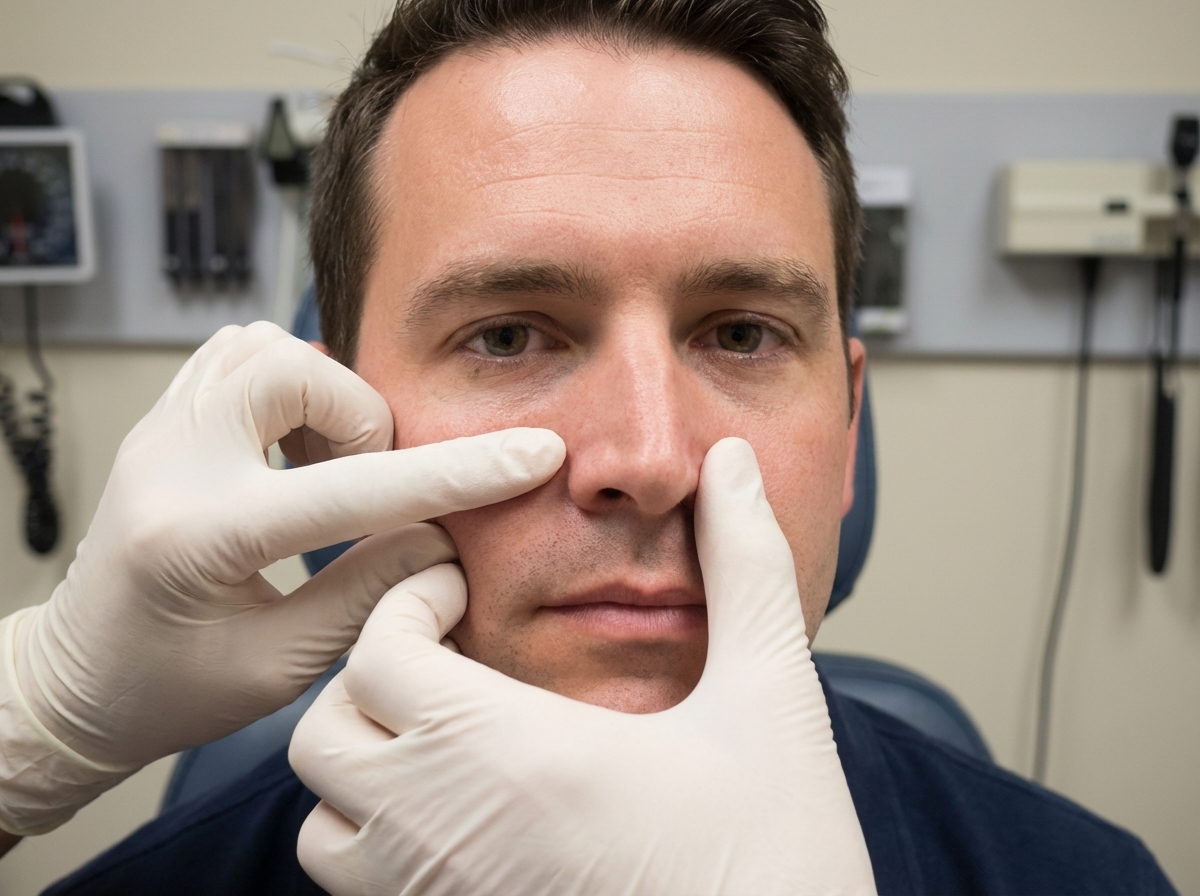
Explanation: **Explanation:** A Deviated Nasal Septum (DNS) is a physical deformity that requires surgical intervention (Septoplasty or SMR) only when it becomes symptomatic or interferes with sinus drainage. **Why "All of the above" is correct:** * **Septal spur with epistaxis:** A sharp bony projection (spur) can stretch the overlying mucosa, making it thin and prone to drying. This leads to crusting and recurrent bleeding (epistaxis) from the vessels of the septum. Surgery is required to remove the spur and stop the bleeding. * **Marked septal deviation:** Severe deviation causes mechanical nasal obstruction, leading to mouth breathing, snoring, and compensatory hypertrophy of the opposite inferior turbinate. * **Persistent rhinorrhea:** DNS can cause chronic irritation of the nasal mucosa or obstruct the natural ostia of the paranasal sinuses. This leads to stasis of secretions, chronic sinusitis, and persistent post-nasal drip or rhinorrhea. **Analysis of Options:** While "Marked deviation" is the most common reason for surgery, the presence of complications like epistaxis and chronic discharge (rhinorrhea) are definitive clinical indications. Therefore, all listed conditions warrant surgical correction. **High-Yield Clinical Pearls for NEET-PG:** * **Choice of Surgery:** **Septoplasty** is the treatment of choice (conservative, preserves flap). **SMR (Submucous Resection)** is generally avoided in patients below 17 years to prevent saddle nose deformity. * **Cottle’s Test:** Used to clinicaly confirm if the nasal obstruction is due to a septal/valve issue (positive if breathing improves when the cheek is pulled laterally). * **Sluder’s Neuralgia:** A DNS hitting the lateral nasal wall can cause referred facial pain/headache due to pressure on the anterior ethmoidal nerve.
Explanation: The **anteroinferior part of the nasal septum** is considered a "key area" because it houses **Little’s area**, the most common site for epistaxis (nosebleeds). ### Why Option B is Correct: Little’s area (also known as Kiesselbach's plexus) is located in the anteroinferior part of the septum, just above the vestibule. This area is highly vascular because it is the site of an anastomosis between four major arteries: 1. **Anterior Ethmoidal Artery** (from Internal Carotid) 2. **Sphenopalatine Artery** (from External Carotid) 3. **Greater Palatine Artery** (from External Carotid) 4. **Septal branch of Superior Labial Artery** (from Facial artery/External Carotid) Due to its anterior position, this area is easily exposed to drying effects of inspired air and finger-nail trauma, making it the source of 90% of all epistaxis cases. ### Why Other Options are Incorrect: * **Option A (Anterosuperior):** This area is primarily supplied by the ethmoidal arteries but does not contain the major Kiesselbach's plexus. * **Option C & D (Posterior parts):** While posterior bleeds can occur (usually from **Woodruff’s plexus** located on the lateral wall/posterior septum), they are less common than anterior bleeds. Posterior bleeds are typically associated with hypertension and are more difficult to control. ### NEET-PG High-Yield Pearls: * **Woodruff’s Plexus:** Located in the posterior part of the nasal cavity (confluence of sphenopalatine and pharyngeal arteries). It is the most common site for **posterior epistaxis**. * **Trottter’s Triad:** Associated with Nasopharyngeal Carcinoma (not the septum), but often confused in ENT exams. * **First-line treatment for Little’s area bleed:** Pinching the nose (Trotter’s method) or anterior nasal packing.
Explanation: **Explanation:** Kiesselbach’s plexus (also known as Little’s area) is a highly vascularized region located on the **anteroinferior part of the nasal septum**. It is the most common site for epistaxis (90% of cases). The plexus is formed by the anastomosis of four (sometimes cited as five) major arteries derived from both the Internal Carotid Artery (ICA) and External Carotid Artery (ECA) systems: 1. **Anterior Ethmoidal Artery** (Branch of Ophthalmic artery ← ICA) 2. **Sphenopalatine Artery** (Terminal branch of Maxillary artery ← ECA) 3. **Greater Palatine Artery** (Branch of Maxillary artery ← ECA) 4. **Septal branch of the Superior Labial Artery** (Branch of Facial artery ← ECA) **Why Option B is correct:** The **Posterior Ethmoidal Artery** does not contribute to Kiesselbach’s plexus. It supplies the superior turbinate and the posterior part of the nasal septum. While it is a branch of the ICA system, its anatomical course remains posterior to Little’s area. **Why other options are incorrect:** * **Option A:** The Anterior Ethmoidal artery provides the ICA contribution to the plexus. * **Option C & D:** The Greater Palatine and Sphenopalatine arteries provide the major ECA contributions. **High-Yield Clinical Pearls for NEET-PG:** * **Woodruff’s Plexus:** Located over the posterior end of the middle turbinate; it is the most common site for **posterior epistaxis**, primarily involving the sphenopalatine artery. * **Little’s Area:** The most common site for **anterior epistaxis**, often caused by finger picking (digiti minax). * **Artery of Epistaxis:** The Sphenopalatine artery is clinically referred to as the "Artery of Epistaxis."
Explanation: **Explanation:** **Adenocarcinoma of the ethmoid sinus** is a well-documented occupational hazard primarily associated with **wood workers**, particularly those exposed to hardwood dust (e.g., beech and oak). The underlying mechanism involves chronic irritation and the presence of carcinogenic compounds in wood dust that impair mucociliary clearance, leading to metaplastic changes in the ethmoid air cells. * **Wood workers (Correct):** Long-term inhalation of fine hardwood dust is the strongest risk factor for the **intestinal type** of adenocarcinoma. It has a long latency period (often 20–40 years). * **Fire workers:** While they are exposed to various combustion products, they are more commonly associated with general respiratory irritations or risks of lung malignancies rather than specific ethmoid adenocarcinoma. * **Chimney workers:** Classically associated with **Squamous Cell Carcinoma of the scrotum** (Pott’s cancer) due to soot exposure, not ethmoid sinus tumors. * **Watch makers:** This group is historically linked to **Radium jaw** (osteosarcoma) due to the use of luminous paints, but they have no specific correlation with ethmoid adenocarcinoma. **Clinical Pearls for NEET-PG:** 1. **Nickel workers:** Associated with **Squamous Cell Carcinoma** of the nasal cavity and sinuses. 2. **Leather/Boot industry:** Also carries an increased risk for nasal adenocarcinoma (similar to wood dust). 3. **Most common site:** The ethmoid sinus is the most common site for adenocarcinoma, whereas the **maxillary sinus** is the most common site for Squamous Cell Carcinoma of the paranasal sinuses. 4. **Presentation:** Often presents with unilateral nasal obstruction and epistaxis.
Explanation: **Explanation:** The question asks for the exception among systemic causes of epistaxis. While all options listed are systemic conditions, the distinction lies in the **clinical presentation and frequency** of epistaxis as a primary symptom. **Why Hemophilia is the correct answer:** In **Hemophilia** (a clotting factor deficiency), spontaneous epistaxis is surprisingly **uncommon**. Hemophilia typically presents with deep tissue bleeding, such as hemarthrosis (joint bleeds) or muscle hematomas, rather than mucosal membrane bleeding. While a hemophiliac *can* bleed from the nose following trauma, it is not considered a classic or common systemic cause of spontaneous epistaxis compared to the other options. **Analysis of Incorrect Options:** * **Hypertension:** Historically debated, but clinically accepted as a major systemic cause. It causes vascular changes (arteriosclerosis) in older patients, leading to persistent bleeding, especially from the posterior Woodruff’s plexus. * **Anticoagulant treatment:** Drugs like Warfarin or Heparin systemicially impair the coagulation cascade, making patients highly prone to spontaneous mucosal bleeds, including epistaxis. * **Hereditary Hemorrhagic Telangiectasia (Osler-Weber-Rendu Syndrome):** This is a classic systemic cause. It involves multiple telangiectasias on the nasal mucosa that bleed easily with minimal trauma. **NEET-PG High-Yield Pearls:** * **Most common cause of epistaxis overall:** Trauma (Finger-nail trauma/nose picking). * **Most common site:** Little’s area (Kiesselbach's plexus) on the anterior septum. * **Most common site for posterior epistaxis:** Woodruff’s plexus. * **Systemic vs. Local:** If a patient has bilateral epistaxis or bleeding from other sites (purpura/gum bleeds), always suspect a systemic cause like blood dyscrasias or liver disease.
Explanation: **Explanation:** Septal perforation occurs when there is a full-thickness defect in the nasal septum, involving the cartilage/bone and the overlying mucoperichondrium/mucoperiosteum. **Why Rhinophyma is the correct answer:** Rhinophyma is a benign, hypertrophic skin condition representing the end-stage of **Acne Rosacea**. It is characterized by hyperplasia of the sebaceous glands and connective tissue of the **external nasal skin**, typically affecting the lower half of the nose. Because it is a superficial dermatological condition, it does not involve the internal nasal septum and, therefore, does **not** cause septal perforation. **Analysis of Incorrect Options:** * **Septal Abscess:** This is a common cause of perforation. Pus accumulation between the mucoperichondrium and cartilage leads to pressure necrosis and ischemia of the avascular septal cartilage, resulting in a permanent hole. * **Leprosy:** Lepromatous leprosy specifically targets the cartilaginous part of the nasal septum. Chronic granulomatous inflammation leads to ulceration and subsequent perforation. * **Trauma:** This is the most common cause of septal perforation. It includes surgical trauma (e.g., complications of SMR or Septoplasty), digital trauma (nose picking), or accidental injury. **High-Yield Clinical Pearls for NEET-PG:** * **Most common site:** The anterior cartilaginous part (Kiesselbach’s area). * **Most common cause:** Post-operative trauma (Submucous Resection). * **Occupational causes:** Exposure to Chromium salts, arsenic, and soda ash. * **Systemic causes:** Wegener’s Granulomatosis (Granulomatosis with polyangiitis), Syphilis (usually affects the bony septum), and Tuberculosis. * **Clinical sign:** Small anterior perforations often produce a characteristic **whistling sound** during respiration.
Rhinitis
Practice Questions
Acute Rhinosinusitis
Practice Questions
Chronic Rhinosinusitis
Practice Questions
Nasal Polyposis
Practice Questions
Allergic Fungal Sinusitis
Practice Questions
Deviated Nasal Septum
Practice Questions
Epistaxis
Practice Questions
Nasal Trauma
Practice Questions
Choanal Atresia
Practice Questions
CSF Rhinorrhea
Practice Questions
Tumors of the Nose and Paranasal Sinuses
Practice Questions
Complications of Sinusitis
Practice Questions
Get full access to all questions, explanations, and performance tracking.
Start For Free