A 24-year-old male came to OPD with brownish itchy patches in axilla, Wood's lamp examination shows "coral red" fluorescence. Most likely diagnosis is:
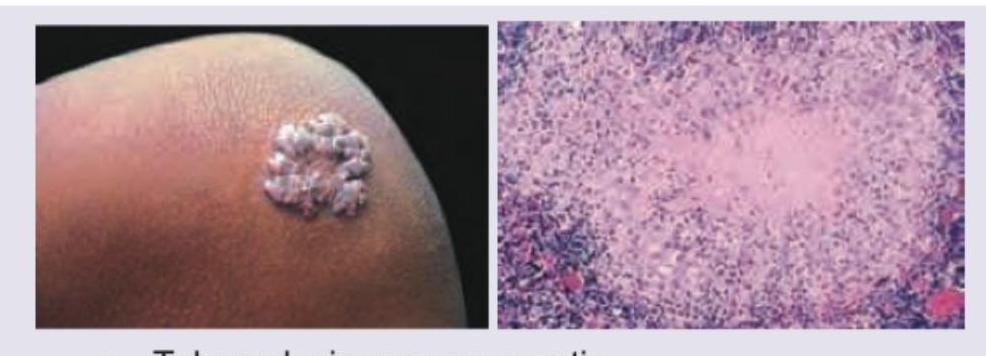
Lupus vulgaris is:
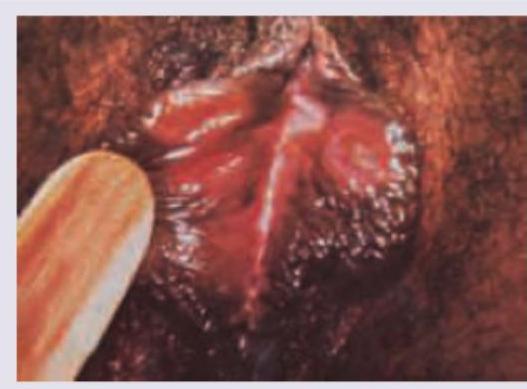
Characteristic of primary chancre:
Skin TB which involves skin after involving lymph nodes –
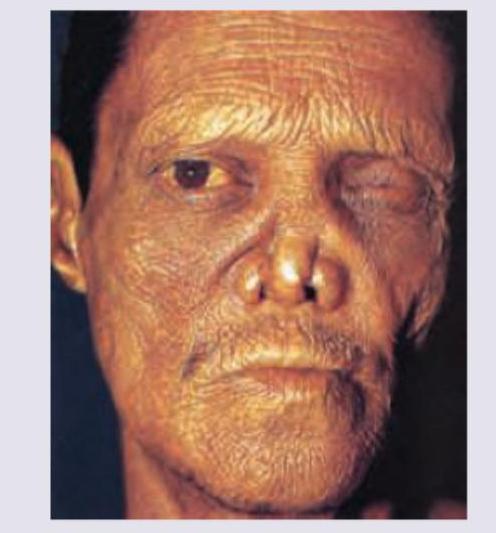
Ridley-Jopling classification includes all except:
Which bacterial infection typically presents with honey-colored crusts?
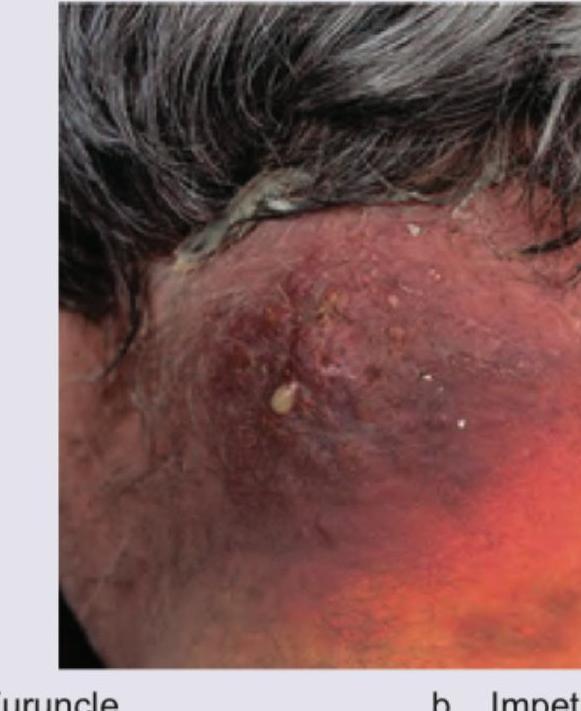
Which feature best differentiates folliculitis from furuncle?
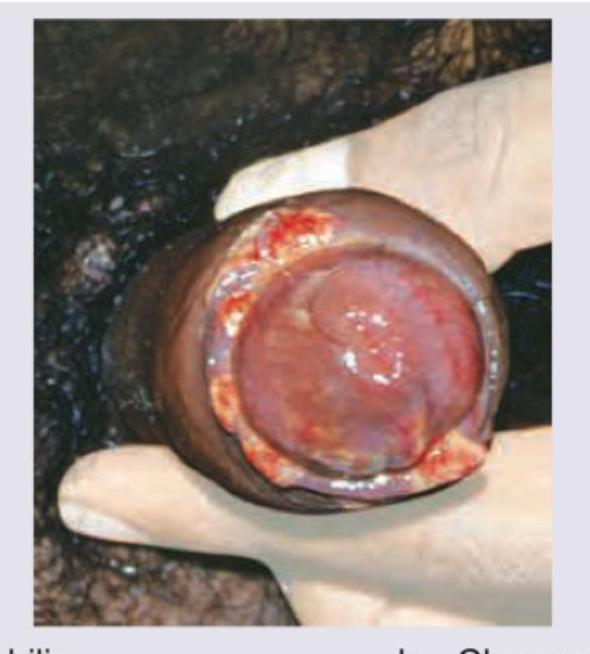
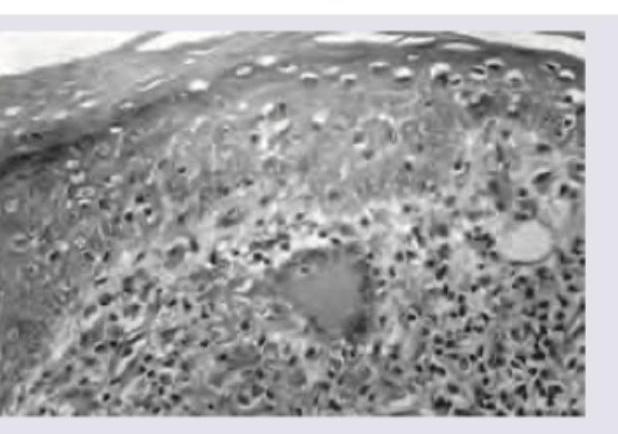
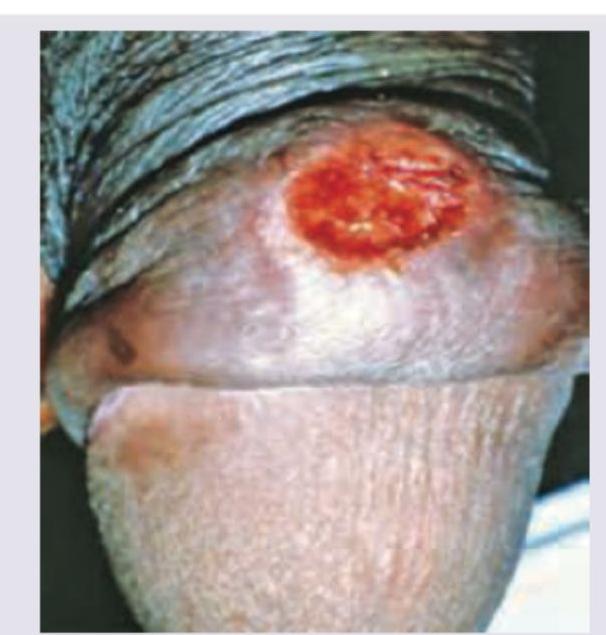
A young man presents with asymptomatic macules and erythematous lesions on the glans, accompanied by generalized lymphadenopathy. What condition is being described?
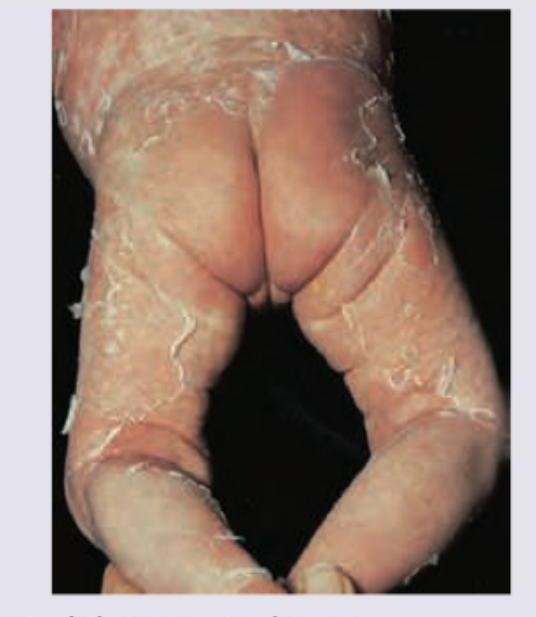
A newborn presents with large areas of denuded skin, blisters, and a positive Nikolsky's sign. What is the most likely diagnosis?
A patient presents with lesions on the face covered with honey-colored crusts, accompanied by pruritus. What is the most likely cause?
Explanation: ***Erythrasma*** - Erythrasma is a superficial bacterial infection caused by *Corynebacterium minutissimum*, presenting as **brownish, itchy patches** in intertriginous areas like the **axilla**. - The pathognomonic finding is a characteristic **"coral red" fluorescence** under Wood's lamp due to the production of porphyrin. *Tinea corporis* - This is a fungal infection (ringworm) of the body, characterized by **annular lesions** with raised, erythematous borders and central clearing. - While it can be itchy, it typically does not produce **coral red fluorescence** under Wood's lamp; instead, a fungal infection might show no fluorescence or a dull green-yellow hue in some cases. *Tinea cruris* - This is a fungal infection of the groin, commonly known as "jock itch," presenting as an **erythematous, scaling rash** with well-demarcated borders. - Similar to tinea corporis, it is caused by dermatophytes and does not exhibit **coral red fluorescence** under Wood's lamp. *Hidradenitis suppurativa* - This is a chronic inflammatory skin condition characterized by **recurrent abscesses, nodules, and sinus tracts** in areas with apocrine sweat glands, such as the axilla and groin. - While it affects the axilla, its presentation with painful nodules and scarring is distinct from the described brownish patches, and it does not demonstrate **coral red fluorescence**.
Explanation: ***Tuberculosis of skin*** - **Lupus vulgaris** is the most common form of **cutaneous tuberculosis** in developed countries, characterized by chronic, progressive skin lesions. - It results from **hematogenous** or **lymphatic spread** of *Mycobacterium tuberculosis* to the skin, often in individuals with good immunity. *Squamous cell carcinoma* - This is a type of **skin cancer** originating from the **keratinocytes**, usually presenting as a scaly, red patch or nodule. - While chronic skin lesions can sometimes predispose to SCC, lupus vulgaris itself is an infection, not a primary neoplastic process. *Basal cell carcinoma* - This is the most common form of **skin cancer**, typically appearing as a **pearly nodule** with telangiectasias, often on sun-exposed areas. - It is distinct from lupus vulgaris, which is an infectious disease of the skin with characteristic *apple-jelly* nodules on diascopy. *Lupus erythematosus* - This is a **systemic autoimmune disease** that can affect the skin in various ways, such as a **malar rash** or discoid lesions. - Although it shares the "lupus" name, it is fundamentally different from lupus vulgaris, which is a specific infectious condition caused by tuberculosis.
Explanation: ***Painless punched out ulcer*** - A primary chancre of **syphilis** typically presents as a **painless ulcer**. - Its appearance is often described as **punched out**, with sharp, raised borders and a clean base. *Painful ulcer with undermined edges* - This description is more characteristic of a **chancroid**, caused by *Haemophilus ducreyi*. - Chancroids are typically **painful** and often have **undermined edges** with a grey or necrotic base. *Painless ulcer with rolled edges* - While a primary chancre is painless, it does not typically have **rolled edges**. - **Rolled edges** are more often associated with **basal cell carcinoma**, a cancerous lesion. *Painful punched out ulcer* - The combination of a **painful** ulcer that is **punched out** is not characteristic of a primary chancre due to syphilis. - Primary chancres are classically **painless**.
Explanation: ***Scrofuloderma*** - This form of **cutaneous tuberculosis** results from the direct extension of underlying **tuberculosis** affecting structures such as **lymph nodes**, bones, or joints to the overlying skin. - The skin lesion often appears as an **ulcer** or **sinus tract** with **purulent discharge**, reflecting the underlying infection communicating with the surface. *Lupus erythematosus* - Lupus erythematosus is a systemic autoimmune disease that can affect the skin, but it is not a form of **tuberculosis**. - Skin manifestations range from acute malar rashes to chronic discoid lesions, which are distinct from **tuberculous ulcers**. *Lupus pernio* - This is a cutaneous manifestation of **sarcoidosis**, characterized by **violaceous plaques** and nodules typically on the face (nose, cheeks), ears, and fingers. - It is not a form of **tuberculosis** and does not result from the direct extension of an underlying local infection. *Lupus vulgaris* - This is a chronic and progressive form of **cutaneous tuberculosis** that directly affects the skin in individuals with high immunity to the **tubercle bacillus**. - It presents as **reddish-brown plaques** with an **apple-jelly** nodule appearance on diascopy, and does not typically arise from an underlying lymph node infection extending to the skin.
Explanation: ***Neuritic*** - The Ridley-Jopling classification focuses on the **polar spectrum** of immune response in leprosy and doesn't include "neuritic" as a distinct classification type within this framework. - While nerve involvement is a hallmark of leprosy, the classification system categorizes patients based on their **clinical and histopathological features** reflecting the host's immune response to *Mycobacterium leprae*. *Tuberculoid* - This is one of the **five main classifications** in the Ridley-Jopling spectrum, representing the pole with a strong cell-mediated immune response. - Characterized by **few lesions**, well-demarcated, and often associated with significant **nerve damage**. *Borderline borderline* - This represents the **mid-spectrum** between tuberculoid and lepromatous poles, indicating an unstable immune response. - Patients in this category often show features of both more resistant and more susceptible forms of the disease, with **moderately numerous lesions** and variable nerve involvement. *Lepromatous leprosy* - This is the other **polar extreme** of the Ridley-Jopling classification, characterized by a weak or absent cell-mediated immune response. - Patients have **numerous, diffuse lesions** with high bacterial loads and widespread nerve damage, though less severe clinically than tuberculoid leprosy initially.
Explanation: ***Impetigo*** - **Impetigo** is a superficial bacterial skin infection characterized by vesicles that rapidly rupture, forming **honey-colored crusts**. - It is most commonly caused by **Staphylococcus aureus** or **Streptococcus pyogenes** and is highly contagious. *Folliculitis* - **Folliculitis** is an inflammation of the **hair follicles**, presenting as small, red bumps or pustules centered around hair follicles. - It does not typically form widespread **honey-colored crusts**. *Erysipelas* - **Erysipelas** is a more superficial form of **cellulitis** that involves the upper dermis and superficial lymphatics. - It presents as a well-demarcated, raised, red, warm, and tender plaque, often with a **peau d'orange** (orange peel) texture. *Cellulitis* - **Cellulitis** is a deeper bacterial infection of the dermis and subcutaneous tissue. - It is characterized by a poorly demarcated, red, warm, swollen, and tender area, without the typical **honey-colored crusts**.
Explanation: ***Depth of involvement*** - **Folliculitis** is a superficial infection involving only the **hair follicle ostium**. - A **furuncle** (boil) is a deeper infection that extends into the **dermis** and subcutaneous tissue, often originating from a hair follicle. *Age of presentation* - Both conditions can occur at **any age**, although certain types of folliculitis (e.g., hot tub folliculitis) might be more common in specific age groups due to exposure. - Age itself is **not a distinguishing factor** in terms of disease pathology or differentiation. *Causative organism* - Both folliculitis and furuncles are **most commonly caused by *Staphylococcus aureus***. - While other organisms can sometimes cause folliculitis (e.g., *Pseudomonas* for hot tub folliculitis), the primary causative agent is similar for both. *Site of occurrence* - Both folliculitis and furuncles typically occur in **hair-bearing areas** of the body. - The site of occurrence does not inherently differentiate between a superficial infection of the follicle and a deeper, more extensive infection.
Explanation: ***Secondary Syphilis*** - **Asymptomatic macules** and **erythematous lesions** on the glans, along with **generalized lymphadenopathy**, are classic manifestations of secondary syphilis. - The rash can be highly variable and may affect palms and soles, often described as a **coppery or ham-colored macular rash**. *Herpes Simplex* - Characterized by painful **vesicles** and **ulcers**, not asymptomatic macules and erythematous lesions. - While it can cause local lymphadenopathy, it typically does not lead to **generalized lymphadenopathy**. *Candidiasis* - Presents as **pruritic (itchy)** red patches, sometimes with **satellite lesions** and a **white discharge**, primarily associated with fungal infection. - It does not typically cause generalized lymphadenopathy. *Gonorrhea* - Primarily causes **urethritis** with **purulent discharge** in men. - **Skin lesions** are rare and usually manifest as pustules or hemorrhagic lesions in cases of disseminated infection, not asymptomatic macules on the glans.
Explanation: ***Staphylococcal scalded skin syndrome*** - This condition is characterized by **large areas of denuded skin**, **fragile blisters**, and a **positive Nikolsky's sign**, which are all classic presentations in neonates. - It is caused by **exfoliative toxins** produced by *Staphylococcus aureus* that cleave desmoglein-1 in the epidermis. *Bullous impetigo* - While it presents with **blisters**, they are typically **localized**, smaller, and less extensive than in SSSS. - It does not usually cause such widespread **denudation** or a generalized positive Nikolsky's sign. *Toxic epidermal necrolysis* - This is a severe drug-induced reaction typically seen in **older children or adults**, not in newborns. - It involves extensive epidermal detachment similar to a **severe burn**, but the etiology and age of onset differ significantly. *Congenital epidermolysis bullosa* - This is a group of **genetic disorders** characterized by extremely fragile skin and blister formation, often present at birth. - While it can cause extensive blistering and denudation, the key differentiating factor is its **congenital nature** and underlying genetic defect, rather than a bacterial toxin.
Explanation: ***Impetigo*** - The classic presentation of **honey-colored crusts** on the face, along with **pruritus**, is highly indicative of impetigo. - Impetigo is a superficial bacterial skin infection, most commonly caused by *Staphylococcus aureus* or *Streptococcus pyogenes*. *Herpes* - Herpes lesions are typically characterized by **vesicles** (small fluid-filled blisters) on an erythematous base, often progressing to ulcers, rather than honey-colored crusts. - While pruritus can occur, the hallmark is often pain or burning sensations before eruption. *Chickenpox* - Chickenpox (varicella) lesions present as **generalized, pruritic vesicular rash** that progresses through macules, papules, vesicles, and scabs, without the characteristic honey-colored crusts. - The rash typically starts on the trunk and spreads centrifugally. *Molluscum contagiosum* - Molluscum contagiosum presents as **small, flesh-colored, dome-shaped papules with a central umbilication**. - These lesions are typically asymptomatic, though they can be mildly itchy, and do not form honey-colored crusts.
Impetigo
Practice Questions
Folliculitis, Furuncles, and Carbuncles
Practice Questions
Ecthyma
Practice Questions
Erysipelas and Cellulitis
Practice Questions
Staphylococcal Scalded Skin Syndrome
Practice Questions
Necrotizing Fasciitis
Practice Questions
Cutaneous Tuberculosis
Practice Questions
Leprosy
Practice Questions
Lyme Disease
Practice Questions
Syphilis
Practice Questions
Antibiotic Resistance in Dermatology
Practice Questions
Prophylaxis and Management
Practice Questions
Get full access to all questions, explanations, and performance tracking.
Start For Free