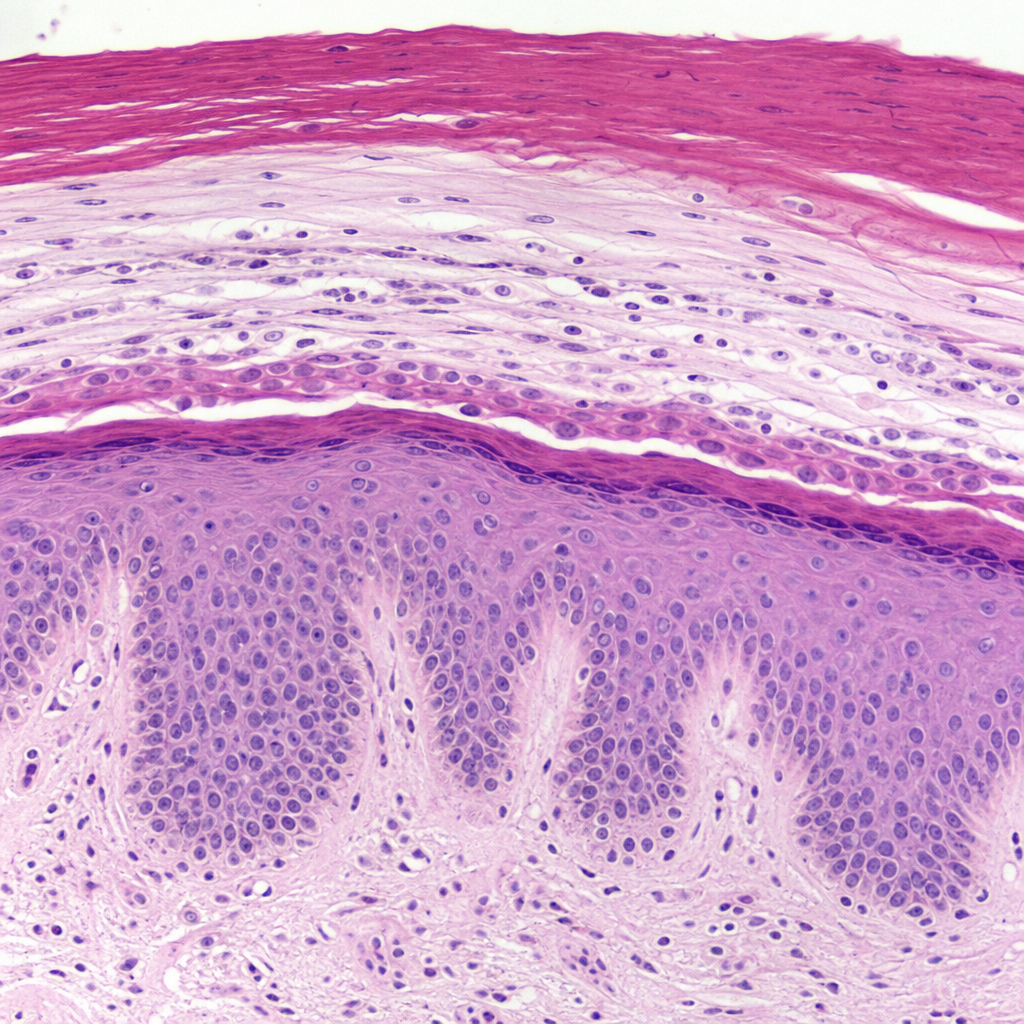
A patient presents with multiple hypopigmented and hypesthetic patches on the lateral aspect of the forearm, with abundant acid-fast bacilli (AFB) and granulomatous inflammation on histology. What is the most likely diagnosis?
Erysipelas is caused by which bacterium?
Which subtype of leprosy has the maximum number of TH1 cells?
A young boy has a single scaly, hypoanaesthetic patch over the hand plus thickened ulnar nerve. What is the diagnosis?
Which is the most commonly affected nerve in leprosy?
Leprosy involves all of the following except?
What is most important in establishing the diagnosis of leprosy?
Milian's ear sign is seen in which of the following conditions?
Which of the following is known to cause pedal botryomycosis?
Which of the following is true of lepromatous leprosy?
Explanation: ### Explanation The correct answer is **Borderline leprosy (C)**. #### 1. Why Borderline Leprosy is Correct The diagnosis of leprosy is based on the Ridley-Jopling classification, which correlates clinical features with the host's immune response. * **Clinical Presentation:** The presence of multiple hypopigmented and **hypesthetic** (reduced sensation) patches is characteristic of the borderline spectrum. * **Histopathology:** The mention of **abundant acid-fast bacilli (AFB)** alongside **granulomatous inflammation** is the key differentiator. In the borderline spectrum (specifically Borderline Lepromatous - BL), the cell-mediated immunity is low enough to allow significant bacillary multiplication (high Bacterial Index), yet high enough to still form organized granulomas. #### 2. Why Other Options are Incorrect * **A. Tuberculoid leprosy (TT):** Characterized by high immunity. Clinically, there are very few lesions (1-3) with complete anesthesia. Histologically, granulomas are well-formed, but **AFB are absent** (paucibacillary). * **B. Intermediate leprosy:** This is an early, transitory stage. It usually presents as a single, ill-defined macule with vague sensory loss. It does not show abundant AFB or well-developed granulomatous inflammation. * **D. Lepromatous leprosy (LL):** Characterized by negligible immunity. While AFB are extremely abundant (globi), the histology shows **diffuse histiocytic infiltration** (Virchow cells/foam cells) rather than organized granulomatous inflammation. #### 3. NEET-PG High-Yield Pearls * **Pathognomonic sign:** Asymmetrical nerve enlargement is typical of Borderline Leprosy. * **Bacterial Index (BI):** TT (0), BT (0-1+), BB (3-4+), BL (4-5+), LL (5-6+). * **Lepromin Test:** Strongly positive in TT, negative in LL. It measures delayed-type hypersensitivity (prognostic, not diagnostic). * **Treatment:** WHO MDT for Multibacillary (MB) leprosy (including Borderline and LL) lasts 12 months, whereas Paucibacillary (PB) lasts 6 months.
Explanation: ### Explanation **Correct Answer: C. Streptococcus pyogenes** **Medical Concept:** Erysipelas is a distinct clinical variant of superficial cellulitis. It is primarily caused by **Group A Beta-hemolytic Streptococci (GABHS)**, most commonly ***Streptococcus pyogenes***. The infection involves the upper dermis and superficial lymphatics. Characteristically, it presents as a well-demarcated, fiery-red, edematous, and tender plaque. The "sharp borders" are a hallmark feature because the infection is superficial, allowing for a clear distinction between involved and uninvolved skin. **Analysis of Incorrect Options:** * **A. *Staphylococcus aureus*:** While *S. aureus* is the most common cause of **Cellulitis** (which involves the deeper dermis and subcutaneous fat), it is rarely the primary cause of classic Erysipelas. *S. aureus* is more associated with purulent infections like furuncles and abscesses. * **B. *Staphylococcus albus*:** Now known as *Staphylococcus epidermidis*, this is a commensal organism of the skin flora and is generally non-pathogenic unless it involves prosthetic implants or biofilms. * **C. *Haemophilus*:** *Haemophilus influenzae* was historically a common cause of facial cellulitis in children, but its incidence has significantly decreased due to the Hib vaccine. It does not typically cause the classic clinical picture of erysipelas. **High-Yield Clinical Pearls for NEET-PG:** * **Milian’s Ear Sign:** Erysipelas can involve the pinna (ear) because the skin is tightly adherent to the cartilage with no subcutaneous fat. Cellulitis cannot involve the pinna. * **Clinical Distinction:** Unlike cellulitis, erysipelas has **raised, sharply defined borders**. * **Common Site:** The lower limbs are the most frequent site, followed by the face (butterfly distribution). * **Treatment of Choice:** Penicillin is the first-line treatment for *Streptococcus pyogenes*.
Explanation: In leprosy, the clinical presentation is determined by the host's **Cell-Mediated Immunity (CMI)** against *Mycobacterium leprae*. This response is governed by the balance between **Th1** and **Th2** helper T-cells. ### Why Tuberculoid (TT) is Correct: **Tuberculoid Leprosy (TT)** represents the high-resistance end of the Ridley-Jopling spectrum. In these patients, the body mounts a vigorous **Th1-mediated immune response**. Th1 cells secrete pro-inflammatory cytokines like **IL-2 and IFN-γ**, which activate macrophages to kill the bacilli. Because the Th1 response is at its peak, the bacterial load is very low (paucibacillary), and the Mitsuda skin test is strongly positive. ### Why the Other Options are Incorrect: * **Lepromatous (LL):** This is the opposite end of the spectrum. Here, the immune response is dominated by **Th2 cells**, which secrete cytokines like **IL-4, IL-5, and IL-10**. This suppresses CMI and promotes antibody production, which is ineffective against intracellular *M. leprae*, leading to high bacterial loads (multibacillary). * **Borderline (BB) and Borderline Leprosy:** These represent the immunologically unstable middle of the spectrum. They have a mixture of Th1 and Th2 responses but never reach the maximal Th1 levels seen in polar Tuberculoid leprosy. ### High-Yield Clinical Pearls for NEET-PG: * **Th1 Response (TT):** High CMI, low bacilli, positive Lepromin test, cytokines: **IL-2, IFN-γ, IL-12**. * **Th2 Response (LL):** Low CMI, high bacilli, negative Lepromin test, cytokines: **IL-4, IL-5, IL-10**. * **Histology:** TT shows well-formed granulomas with epithelioid cells and many lymphocytes; LL shows "foamy macrophages" (Virchow cells) packed with bacilli (globi). * **Mnemonic:** **T**uberculoid = **T**h1 = **T**ight (strong) immunity.
Explanation: ### Explanation The clinical presentation of a **single, well-defined, hypoanaesthetic patch** associated with a **thickened peripheral nerve** is the classic hallmark of **Tuberculoid Leprosy (TT)**. #### Why Tuberculoid Leprosy is Correct: In the Ridley-Jopling classification, Tuberculoid Leprosy represents the pole with **high cell-mediated immunity (CMI)**. The body’s strong immune response limits the disease to a few lesions (usually 1–3). * **Skin Lesion:** Typically a single, large, erythematous or hypopigmented patch with well-defined borders and a scaly surface. * **Sensory Loss:** Due to intense inflammation within the dermal nerves, anesthesia (loss of sensation) is early and profound. * **Nerve Involvement:** Asymmetric, early, and severe nerve thickening is characteristic. #### Why Other Options are Incorrect: * **Lepromatous Leprosy (LL):** Represents the low CMI pole. It presents with **multiple, symmetrical** macules, papules, or nodules. Sensory loss and nerve thickening occur very late in the disease. * **Indeterminate Leprosy:** This is the earliest stage. It usually presents as a single, vaguely defined hypopigmented macule with **no or minimal sensory loss** and no nerve thickening. * **Borderline Leprosy (BT/BB/BL):** These cases show more numerous lesions (usually 3–10) than TT. While BT (Borderline Tuberculoid) is similar to TT, the presence of a single lesion and profound anesthesia strongly points toward the polar Tuberculoid end. #### NEET-PG High-Yield Pearls: * **Cardinal Signs of Leprosy (WHO):** 1. Hypopigmented/erythematous patch with loss of sensation; 2. Thickened peripheral nerves; 3. Positive skin smear for Acid Fast Bacilli. * **Lepromin Test:** Strongly **positive** in Tuberculoid (TT) and **negative** in Lepromatous (LL). * **First Sensation Lost:** Temperature (cold followed by hot), followed by touch, pain, and deep pressure. * **Most Common Nerve Involved:** Ulnar nerve.
Explanation: **Explanation:** Leprosy (*Hansen’s Disease*), caused by *Mycobacterium leprae*, has a unique predilection for peripheral nerves. The bacteria thrive at temperatures slightly lower than the core body temperature (around 30-33°C). Consequently, nerves that are located superficially—where the temperature is cooler—are most frequently affected. **1. Why Ulnar Nerve is Correct:** The **ulnar nerve** is the most commonly involved nerve in leprosy worldwide. It is particularly vulnerable at the elbow, where it passes superficially through the ulnar groove (retro-epicondylar). Involvement typically leads to "claw hand" (ape-like deformity of the medial two fingers) and sensory loss over the ulnar distribution. **2. Analysis of Incorrect Options:** * **Median Nerve:** While frequently involved (leading to "ape thumb" deformity), it is generally the second most common nerve affected in the upper limb, not the first. * **Radial Nerve:** This nerve is less commonly involved than the ulnar or median nerves. When affected, it typically occurs late in the disease, resulting in wrist drop. * **Sciatic Nerve:** This is a deep-seated nerve. Because of its deep location and higher surrounding temperature, it is almost never involved in leprosy. **Clinical Pearls for NEET-PG:** * **Most common nerve in the Lower Limb:** Common Peroneal Nerve (leads to foot drop). * **Most common Cranial Nerve:** Facial Nerve (leads to lagophthalmos). * **Great Auricular Nerve:** Often cited as the most common nerve to be *visibly* enlarged or palpated in the neck. * **Nerve Abscess:** Most commonly seen in the ulnar nerve in paucibacillary cases. * **Cardinal Sign:** Thickened, tender nerves associated with sensory loss or muscle weakness is a diagnostic hallmark of leprosy.
Explanation: **Explanation:** Leprosy, caused by *Mycobacterium leprae*, is a chronic granulomatous disease that primarily affects cooler tissues of the body because the organism thrives at temperatures slightly below the core body temperature (around 30–33°C). **Why Uterus is the Correct Answer:** The **uterus** is a deep-seated internal organ maintained at the core body temperature (37°C). *M. leprae* cannot survive or replicate at this temperature, making the uterus (along with the lungs, CNS, and ovaries—though see below) immune to involvement. **Analysis of Other Options:** * **Nerves (Option C):** This is the hallmark of leprosy. The bacteria have a unique tropism for Schwann cells, leading to peripheral nerve thickening and sensory/motor loss. * **Eye (Option D):** The anterior segment of the eye is cooler than the core body. Leprosy frequently involves the eyes (lagophthalmos, iridocyclitis, corneal anesthesia), which is a major cause of morbidity. * **Ovary (Option B):** While internal organs are generally spared, the **testes** are frequently involved because they are located outside the abdominal cavity at a lower temperature. Interestingly, in advanced lepromatous leprosy, the **ovaries** can occasionally be involved (though much rarer than testes), making the **uterus** the most definitive "except" choice in standard medical literature and exams. **NEET-PG Clinical Pearls:** * **Organs Spared in Leprosy:** "LUNGS" (Lungs, Uterus, CNS, Gastrointestinal tract). * **Temperature Sensitivity:** The preference for cooler areas explains why lesions are prominent on the nose, ears, and extensor surfaces, while the "warm zones" (axilla, groin, perineum, and midline of the back) are often spared (Immune zones of Cochrane). * **Most common nerve involved:** Ulnar nerve. * **Most common cranial nerve involved:** Facial nerve (CN VII).
Explanation: **Explanation:** The diagnosis of leprosy (Hansen’s disease) is primarily clinical, but the gold standard for **definitive confirmation** and classification is the demonstration of *Mycobacterium leprae*. **Why Slit Skin Smear (SSS) is the correct answer:** While leprosy is often diagnosed based on clinical signs, the **Slit Skin Smear for Acid-Fast Bacilli (AFB)** provides objective bacteriological evidence. It is essential for calculating the Bacteriological Index (BI) and Morphological Index (MI), which help distinguish between Paucibacillary (PB) and Multibacillary (MB) cases, thereby guiding the duration of Multi-Drug Therapy (MDT). **Analysis of Incorrect Options:** * **Evidence of neural involvement:** While thickened nerves and sensory loss are cardinal signs of leprosy, they can also occur in other neuropathies (e.g., diabetes, amyloidosis). It is a diagnostic criterion but less definitive than visualizing the bacilli. * **Hypopigmented patches:** This is a common presenting feature but is non-specific. Differential diagnoses include Pityriasis alba, Vitiligo, and Tinea versicolor. * **Positive Lepromin Test:** This is **not a diagnostic test**. It is used to measure the patient's cell-mediated immunity (CMI) against *M. leprae* to classify the type of leprosy (positive in Tuberculoid, negative in Lepromatous) and determine prognosis. **High-Yield Clinical Pearls for NEET-PG:** * **WHO Cardinal Signs:** (1) Hypopigmented/reddish patches with loss of sensation, (2) Thickened peripheral nerves, (3) Positive SSS for AFB. Presence of any **one** is diagnostic. * **Most common nerve involved:** Ulnar nerve. * **Biopsy Gold Standard:** Nerve biopsy is the most definitive for Pure Neuritic Leprosy. * **Staining:** Modified Ziehl-Neelsen stain (using 5% $H_2SO_4$ instead of 20% as *M. leprae* is less acid-fast than *M. tuberculosis*).
Explanation: **Explanation:** **Milian’s Ear Sign** is a classic clinical diagnostic feature used to differentiate between **Erysipelas** and **Cellulitis**. 1. **Why Erysipelas is correct:** Erysipelas is a superficial bacterial infection (most commonly caused by Group A *Streptococcus*) involving the upper dermis and superficial lymphatics. Because the pinna of the ear consists of skin tightly bound to cartilage with **no subcutaneous fat**, it can only be involved by superficial infections like erysipelas. When the ear is involved, it is called Milian’s Ear Sign. 2. **Why other options are incorrect:** * **Cellulitis:** This is a deeper infection involving the deep dermis and **subcutaneous fat**. Since the pinna lacks subcutaneous fat, cellulitis cannot involve the earlobe or pinna. This distinction is the primary utility of Milian’s sign. * **Lymphangitis:** This refers to the inflammation of lymphatic channels, typically presenting as red, tender streaks extending proximally from a site of infection. * **Abscess:** This is a localized collection of pus within the dermis or deeper tissues, characterized by fluctuance, rather than the well-demarcated, "butterfly" distribution seen in facial erysipelas. **High-Yield Clinical Pearls for NEET-PG:** * **Erysipelas:** Characterized by a "Step-ladder" rise in temperature, a "Peau d'orange" appearance, and **sharply demarcated borders**. * **Common Site:** Lower limbs are most common; the face is the second most common. * **Treatment of Choice:** Penicillin (as it is primarily Streptococcal). * **Differential Diagnosis:** In Cellulitis, the borders are **ill-defined** and not raised, as the infection is deeper.
Explanation: **Explanation:** **Botryomycosis** is a rare, chronic granulomatous bacterial infection that clinically mimics actinomycetoma (Madura foot). Despite its fungal-sounding name, it is caused by **non-filamentous bacteria**. 1. **Why Staphylococcus aureus is correct:** * *Staphylococcus aureus* is the most common causative agent (found in ~40% of cases), followed by *Pseudomonas aeruginosa*. * The underlying pathophysiology involves a **Splendore-Hoeppli phenomenon**, where an intense host immune response surrounds the bacteria, leading to the formation of "grains" or "sulfur granules" in the tissue. These granules are actually clusters of bacteria embedded in a hyaline matrix. 2. **Why the other options are incorrect:** * **Actinomyces somaliensis:** This is a filamentous bacterium that causes **Actinomycetoma** (a type of Madura foot). While it also produces grains, the organism itself is filamentous, whereas botryomycosis is strictly caused by non-filamentous bacteria. * **Nocardia asteroides:** This is an aerobic, acid-fast filamentous bacterium that causes **Nocardiosis** or actinomycetoma. It is not a cause of botryomycosis. **Clinical Pearls for NEET-PG:** * **Key Clinical Triad:** Tumefaction (swelling), draining sinuses, and the presence of grains. * **Histology:** Look for the **Splendore-Hoeppli phenomenon** (eosinophilic material surrounding bacterial colonies). * **Differential Diagnosis:** Must be distinguished from Mycetoma. In Botryomycosis, the grains contain **cocci or bacilli**, whereas in Mycetoma, they contain **fungal hyphae** (Eumycetoma) or **filamentous bacteria** (Actinomycetoma). * **Predisposing Factor:** Often associated with impaired T-cell immunity or trauma.
Explanation: **Explanation:** Lepromatous Leprosy (LL) represents the polar end of the Ridley-Jopling scale where the host’s cell-mediated immunity (CMI) is virtually absent. This leads to uncontrolled multiplication of *Mycobacterium leprae*. **1. Why the Correct Answer is Right:** * **Involvement of Earlobes:** In LL, bacilli prefer cooler areas of the body. The earlobes are a classic site for infiltration, leading to characteristic thickening and pendulous earlobes. This is a hallmark clinical sign that eventually contributes to the "Leonine facies" (lion-like appearance) seen in advanced cases. **2. Analysis of Incorrect Options:** * **Option A (Bacterial Index + to ++):** This is incorrect. LL is **multibacillary**. The Bacterial Index (BI) is typically high, ranging from **4+ to 6+**. Lower BI values (+ to ++) are seen in the borderline spectrum (BT/BB). * **Option C (Symmetrical Involvement):** While LL is characterized by **bilateral symmetrical** skin lesions (macules, papules, or nodules), the question asks for the "most true" or specific clinical feature provided. However, in many NEET-PG contexts, if multiple options seem correct, "Involvement of earlobes" is considered a pathognomonic clinical descriptor for LL. *(Note: If this were a "Multiple Correct" type, C would also be true; however, in single-best-answer formats, earlobe infiltration is the classic exam focus).* * **Option D (Only a few bacilli):** This describes **Tuberculoid Leprosy (TT)**, which is paucibacillary due to strong CMI. LL is "multibacillary," containing millions of organisms. **High-Yield Clinical Pearls for NEET-PG:** * **Histology:** Look for **Grenz Zone** (a clear subepidermal band) and **Virchow cells** (foamy macrophages loaded with bacilli). * **Lepromin Test:** Consistently **negative** in LL (due to absent CMI). * **Nerve Involvement:** Occurs late but is symmetrical and extensive. * **Mnemonic:** LL = **L**ots of bacilli, **L**eonine facies, **L**ow immunity.
Explanation: **Explanation:** **Botryomycosis** (also known as bacterial pseudomycosis) is a rare, chronic granulomatous bacterial infection that clinically mimics fungal infections like actinomycetoma. Despite its fungal-sounding name, it is caused by non-filamentous bacteria. 1. **Why Staphylococcus aureus is correct:** * **Staphylococcus aureus** is the most common causative agent (found in ~40% of cases). * The pathogenesis involves a low-virulence bacterial strain and an altered host immune response. This leads to the formation of characteristic **"grains" or granules** (Splendore-Hoeppli phenomenon), which are eosinophilic deposits surrounding bacterial colonies. 2. **Why the other options are incorrect:** * **Streptococcus pyogenes:** While it causes many skin infections (impetigo, cellulitis), it is a rare cause of botryomycosis compared to Staph. * **Clostridium species:** These are anaerobic bacteria typically associated with gas gangrene or tetanus, not chronic granulomatous botryomycosis. * **Bacillus cereus:** This is primarily associated with food poisoning or endophthalmitis; it does not typically cause this specific clinical entity. **High-Yield Clinical Pearls for NEET-PG:** * **Clinical Presentation:** Presents as nodules, abscesses, and multiple draining sinuses, most commonly on the extremities (integumentary type) or internal organs (visceral type). * **Diagnosis:** Histopathology shows the **Splendore-Hoeppli phenomenon** (intense eosinophilic material surrounding the bacteria). * **Key Distinction:** Unlike Actinomycosis (caused by filamentous bacteria), Botryomycosis is caused by **non-filamentous** bacteria (Staph, Pseudomonas, E. coli). * **Stain:** Granules are **PAS-positive** (due to the matrix) and **Gram-positive** (if caused by S. aureus).
Explanation: **Explanation:** **Bullous Impetigo** is a localized form of impetigo caused exclusively by **Staphylococcus aureus** (specifically phage group II, types 71 and 55). The underlying mechanism involves the production of **Exfoliative Toxin A (ETA)** by the bacteria. This toxin targets and cleaves **Desmoglein-1**, a cell-adhesion molecule in the stratum granulosum. This leads to subcorneal splitting, resulting in the characteristic thin-walled, flaccid bullae that rupture to leave behind a "collarette of scale" rather than the thick honey-colored crusts seen in non-bullous impetigo. **Analysis of Incorrect Options:** * **A. Erythrasma:** Caused by *Corynebacterium minutissimum*. It presents as coral-red fluorescence under Wood’s lamp due to porphyrin production. * **B. Chancroid:** A sexually transmitted infection caused by the Gram-negative coccobacillus *Haemophilus ducreyi*, characterized by painful genital ulcers and "school of fish" appearance on microscopy. * **C. Acne vulgaris:** While *S. aureus* can cause secondary infections, the primary causative organism is *Cutibacterium acnes* (formerly *Propionibacterium acnes*). **High-Yield Clinical Pearls for NEET-PG:** * **Staphylococcal Scalded Skin Syndrome (SSSS):** A systemic manifestation of the same exfoliative toxin; however, in SSSS, the site of infection is distant, and the bullae are sterile. In bullous impetigo, the bullae contain the bacteria. * **Nikolsky Sign:** Positive in SSSS but typically negative/localized in bullous impetigo. * **Drug of Choice:** For localized bullous impetigo, topical **Mupirocin** is preferred. For systemic involvement, penicillinase-resistant penicillins (e.g., Cloxacillin) are used.
Explanation: **Explanation:** **Ecthyma gangrenosum (EG)** is a pathognomonic cutaneous manifestation of severe, invasive septicemia, most commonly caused by **Pseudomonas aeruginosa**. **Why Pseudomonas aeruginosa is correct:** In immunocompromised or neutropenic patients, *Pseudomonas* can invade the walls of small arteries and veins in the dermis and subcutaneous tissue (perivascular invasion). This leads to bacterial vasculitis, subsequent thrombosis, and ischemic necrosis of the overlying skin. Clinically, it presents as a painless, erythematous macule that rapidly evolves into a hemorrhagic bulla and eventually transforms into a characteristic **punched-out ulcer with a black necrotic eschar** surrounded by an erythematous halo. **Why other options are incorrect:** * **Fungal infection:** While certain fungi (like *Aspergillus* or *Mucor*) can cause similar angioinvasive necrotic lesions, the term "Ecthyma gangrenosum" specifically refers to the classic *Pseudomonas* presentation. * **Staphylococcus & Streptococcus:** These are the primary causes of **Ecthyma** (a deep form of impetigo), but they do not typically cause the gangrenous, vasculitic lesions seen in EG. *Staphylococcus aureus* is more commonly associated with bullous impetigo or SSSS. **High-Yield Clinical Pearls for NEET-PG:** * **Commonest Site:** Anogenital and axillary regions (intertriginous areas). * **Risk Factor:** Profound neutropenia (Absolute Neutrophil Count <500/mm³). * **Diagnosis:** Confirmed by skin biopsy (showing gram-negative bacilli in perivascular spaces) and blood cultures. * **Management:** This is a medical emergency requiring intravenous antipseudomonal antibiotics (e.g., Ceftazidime, Piperacillin-Tazobactam, or Aminoglycosides).
Explanation: **Explanation:** The correct answer is **Ovary**. **1. Why Ovary is Correct:** Leprosy, caused by *Mycobacterium leprae*, is a chronic granulomatous disease with a strong predilection for **cooler areas** of the human body. The bacterium thrives at temperatures slightly below the core body temperature (around 30–33°C). Internal organs like the **ovary**, uterus, and lungs are generally spared because they are deep-seated and maintain a higher core body temperature, which inhibits the growth of *M. leprae*. **2. Why Other Options are Incorrect:** * **Skin:** This is the most common site of involvement. Lesions range from hypopigmented patches (Tuberculoid) to diffuse infiltration (Lepromatous). * **Nerves:** *M. leprae* is the only bacterium known to invade peripheral nerves (Schwann cells), leading to anesthesia and deformities. * **Eye:** The eye is frequently involved due to its exposed surface and lower temperature. Complications include lagophthalmos, corneal ulcers, and iridocyclitis. **3. Clinical Pearls for NEET-PG:** * **Organs Spared in Leprosy:** Ovary, Uterus, Lungs, CNS (Brain/Spinal Cord), and warm areas of the skin (axilla, groin, perineum, and the "midline of the back"). * **Organs Involved (besides Skin/Nerves):** Testis (leads to gynecomastia/sterility), Upper Respiratory Tract (nasal cartilage collapse), and Reticuloendothelial system (Liver, Spleen, Bone Marrow). * **High-Yield Fact:** The **Testis** is the only internal organ commonly involved in Lepromatous Leprosy because it is located outside the body cavity and is cooler than the core temperature.
Explanation: **Explanation:** **Erythrasma** is a superficial bacterial infection caused by ***Corynebacterium minutissimum***, a Gram-positive, catalase-positive bacillus. It typically presents as well-demarcated, reddish-brown, wrinkled, scaly patches in intertriginous areas (axilla, groin, and toe webs). **Why Wood’s Lamp is the correct answer:** The hallmark of Erythrasma is its characteristic appearance under a **Wood’s lamp (365 nm)**. The bacteria produce **coproporphyrin III**, which fluoresces a brilliant **coral-red** when exposed to ultraviolet light. This provides an immediate, bedside, and non-invasive diagnosis. **Why other options are incorrect:** * **Biopsy (A):** While a biopsy would show bacteria in the stratum corneum (using PAS or Gram stain), it is invasive, time-consuming, and unnecessary for such a distinct clinical presentation. * **KOH Examination (B):** This is used to diagnose fungal infections (Dermatophytosis or Candidiasis). While Erythrasma often mimics Tinea cruris, a KOH mount in Erythrasma will be negative for hyphae/spores. * **Culture and Sensitivity (C):** *C. minutissimum* is difficult to grow and requires specialized media (e.g., bovine serum agar). It is not a "quick" diagnostic method and is rarely used in clinical practice. **High-Yield Clinical Pearls for NEET-PG:** * **Clinical Presentation:** Often asymptomatic but can be mildly pruritic. The "toe-web" space is the most common site. * **Differential Diagnosis:** Tinea cruris (has active borders), Intertrigo, and Inverse Psoriasis. * **Treatment of Choice:** Topical **Clindamycin** or **Erythromycin**. For extensive cases, oral Macrolides (Erythromycin or Clarithromycin) are used. * **Wood's Lamp Tip:** Patients should be advised not to wash the area before the examination, as the water-soluble porphyrins can be washed away, leading to a false-negative result.
Explanation: **Explanation:** **Understanding the Correct Option:** While Lepromatous Leprosy (LL) is significantly more infectious due to a high bacillary load, **Tuberculoid Leprosy (TT)** can still transmit the disease through prolonged, close contact. Transmission occurs primarily via respiratory droplets or direct skin contact. In the context of this question, it highlights the infectious nature of the disease across the spectrum, provided there is long-term exposure. **Analysis of Incorrect Options:** * **Option A:** *Mycobacterium leprae* is an **obligate intracellular organism** that has never been grown on artificial culture media (like Lowenstein-Jensen/LJ media). It can only be cultured in live models like the nine-banded armadillo or the mouse footpad (Shepard's technique). * **Option C:** In **Lepromatous Leprosy (LL)**, there is a specific **absence of Cell-Mediated Immunity (CMI)** against *M. leprae*, leading to uncontrolled bacillary multiplication. High CMI is characteristic of the Tuberculoid (TT) pole. * **Option D:** While some early "Indeterminate" lesions may resolve, leprosy is a progressive chronic infectious disease. Characteristic lesions (especially in the TT/LL spectrum) do not spontaneously heal; they require Multi-Drug Therapy (MDT) to prevent nerve damage and deformity. **High-Yield Clinical Pearls for NEET-PG:** * **Generation Time:** *M. leprae* is the slowest-growing human bacterial pathogen (doubling time ~12-14 days). * **Lepromin Test:** Measures CMI. It is **strongly positive in TT** (good prognosis) and **negative in LL** (poor prognosis). It is used for classification, not diagnosis. * **Cardinal Signs:** Hypopigmented patches with loss of sensation, thickened nerves, and presence of acid-fast bacilli on slit-skin smear.
Explanation: **Explanation:** **Lichen scrofulosorum** is the correct answer because it is a classic example of a **Tuberculid**. Tuberculids are hypersensitivity reactions in the skin to an internal focus of *Mycobacterium tuberculosis*. Unlike true cutaneous tuberculosis, tuberculids are characterized by a **negative culture** (paucibacillary) and the absence of bacilli on histopathology, but a strongly positive Mantoux test. Clinical presentation involves asymptomatic, grouped, lichenoid (follicular), skin-colored to reddish-brown papules, typically found on the trunk of children or young adults with systemic TB (often lymph node or skeletal TB). **Analysis of Incorrect Options:** * **Lupus vulgaris (A):** This is the most common form of **chronic, progressive secondary cutaneous TB** in sensitized individuals. It is characterized by "apple-jelly" nodules on diascopy, not a lichenoid tuberculid eruption. * **Scrofuloderma (B):** This is a **contiguous spread** of TB to the skin from an underlying infected structure (like a lymph node or bone). It presents with cold abscesses and sinus tracts. * **Tuberculosis Cutis Orificialis (D):** This is a rare form of TB occurring at mucosal orifices (mouth, anus) due to **autoinoculation** from advanced internal organ TB (e.g., pulmonary or intestinal TB). **High-Yield Clinical Pearls for NEET-PG:** * **Tuberculids Trio:** 1. Lichen scrofulosorum (Lichenoid), 2. Papulonecrotic tuberculid (Necrotic papules on extensors), 3. Erythema induratum of Bazin (Nodules on calves). * **Lichen scrofulosorum** is the most common tuberculid in children. * **Histology:** Shows non-caseating granulomas around hair follicles and sweat glands. * **Treatment:** It responds rapidly to standard Anti-Tubercular Therapy (ATT).
Explanation: **Explanation:** The management of Lepra reactions is a high-yield topic in NEET-PG. To answer this correctly, one must distinguish between Type 1 and Type 2 reactions. **Why Thalidomide is the Correct Answer:** **Thalidomide** is the drug of choice for **Type 2 Lepra Reaction** (Erythema Nodosum Leprosum/ENL). It acts by inhibiting TNF-alpha. However, it has **no role in Type 1 reactions**, which are delayed-type hypersensitivity (Type IV) reactions involving a change in cell-mediated immunity. Using Thalidomide in Type 1 reactions is ineffective and clinically inappropriate. **Analysis of Incorrect Options:** * **Antileprotics (A):** In Type 1 reactions, Multi-Drug Therapy (MDT) should **never be stopped**. If the reaction occurs during treatment, MDT is continued; if it occurs after completion, it is not restarted unless a relapse is suspected. * **Analgesics (B):** These are used for symptomatic relief of nerve pain and joint aches associated with the inflammation in Type 1 reactions. * **Corticosteroids (C):** Systemic steroids (like Prednisolone) are the **mainstay of treatment** for Type 1 reactions. they are essential to prevent permanent nerve damage and manage acute neuritis. **High-Yield Clinical Pearls for NEET-PG:** * **Type 1 Reaction (Reversal Reaction):** Seen in Borderline cases (BT, BB, BL). Characterized by "upgrading" or "downgrading" of lesions (erythema, edema) and **neuritis**. * **Type 2 Reaction (ENL):** Seen in Multibacillary cases (BL, LL). Characterized by tender evanescent nodules, fever, and systemic involvement. * **Drug of Choice Summary:** * Type 1: **Corticosteroids**. * Type 2: **Thalidomide** (except in women of childbearing age due to teratogenicity/Phocomelia) or **Clofazimine**.
Explanation: **Explanation:** **Erysipelas** is a specific clinical variant of superficial cellulitis characterized by prominent lymphatic involvement. The correct answer is **Streptococcus pyogenes** (Group A Beta-hemolytic Streptococcus), which is the causative agent in the vast majority of cases. **Why Streptococcus pyogenes is correct:** Erysipelas involves the upper dermis and superficial lymphatics. *S. pyogenes* produces extracellular toxins and enzymes (like hyaluronidase) that allow it to spread rapidly through these superficial layers. Clinically, this manifests as a well-demarcated, raised, "fiery red" erythematous plaque, most commonly on the lower limbs or face (the "butterfly" distribution). **Analysis of Incorrect Options:** * **Staphylococcus aureus:** While it is the most common cause of *cellulitis* (which involves the deeper dermis and subcutaneous fat), it rarely causes classic erysipelas. *S. aureus* is more typically associated with localized, purulent infections like furuncles or impetigo. * **Staphylococcus albus:** Now known as *Staphylococcus epidermidis*, this is a commensal organism of the skin and rarely acts as a primary pathogen in healthy skin; it is more associated with prosthetic valve endocarditis or catheter infections. * **Haemophilus:** *Haemophilus influenzae* type B was historically a cause of facial cellulitis in children, but its incidence has plummeted due to the HiB vaccine. It does not cause classic erysipelas. **High-Yield Clinical Pearls for NEET-PG:** * **Milian’s Ear Sign:** Since the pinna lacks subcutaneous tissue, involvement of the ear indicates erysipelas (superficial) rather than cellulitis (deep). * **Distinguishing Feature:** The "sharp, well-demarcated border" is the hallmark of erysipelas, distinguishing it from the ill-defined borders of cellulitis. * **Treatment of Choice:** Penicillin remains the drug of choice due to the high sensitivity of *S. pyogenes*.
Explanation: **Explanation:** **Erysipelas** is the correct answer because it is defined as a superficial form of cellulitis that specifically involves the **superficial lymphatics** and the upper dermis. It is characterized by a sharp, well-demarcated, raised border and a bright red "St. Anthony’s Fire" appearance. It is most commonly caused by **Group A Beta-hemolytic Streptococci (GABHS)**. **Analysis of Incorrect Options:** * **Furuncle (Boil):** This is a deep-seated infection of a single **hair follicle**, usually caused by *Staphylococcus aureus*. It involves the follicle and the surrounding subcutaneous tissue, not the lymphatics. * **Carbuncle:** This is a cluster of interconnected furuncles (multiple infected hair follicles) that drain through several openings. It typically occurs in areas with thick skin, like the nape of the neck. * **Cellulitis:** While similar to erysipelas, cellulitis involves the **deeper dermis and subcutaneous fat**. Unlike erysipelas, its borders are ill-defined and not raised, and it does not primarily target the superficial lymphatics. **High-Yield Clinical Pearls for NEET-PG:** * **Milian’s Ear Sign:** Erysipelas can involve the pinna (ear) because it lacks subcutaneous tissue, whereas cellulitis cannot. * **Common Site:** The lower limbs are the most frequent site, followed by the face (malar area). * **Predisposing Factor:** Tinea pedis (fungal infection) often acts as a portal of entry for the bacteria. * **Treatment:** Penicillin is the drug of choice for Erysipelas due to the high sensitivity of Streptococci.
Explanation: ### Explanation **Why Option B is the Correct Answer (The Incorrect Statement):** Impetigo is a **neutrophilic** dermatosis, not lymphocytic. The hallmark microscopic feature of impetigo (specifically bullous impetigo and subcorneal pustular dermatoses) is the accumulation of **neutrophils** beneath the stratum corneum, forming a subcorneal pustule. Lymphocytic infiltrates are more characteristic of viral infections or chronic inflammatory conditions like lichen planus. **Analysis of Incorrect Options (Correct Statements):** * **Option A:** Impetigo is a highly contagious superficial infection. While *Streptococcus pyogenes* was historically common, **Staphylococcus aureus** is now the most frequent causative agent for both bullous and non-bullous forms. * **Option C:** In bullous impetigo, *S. aureus* (Phage group II) produces **Exfoliative Toxin A**. This toxin specifically targets and cleaves **Desmoglein 1** (a cell adhesion molecule), leading to acantholysis and blister formation in the granular layer. This is the same mechanism seen in Staphylococcal Scalded Skin Syndrome (SSSS). * **Option D:** Impetigo typically affects children and occurs on **exposed areas** such as the face (perioral and perinasal) and extremities, as these are most prone to minor trauma or insect bites. **High-Yield NEET-PG Pearls:** * **Non-bullous Impetigo:** Most common type; characterized by "honey-colored" (amber) crusts. * **Bullous Impetigo:** Characterized by flaccid bullae; always caused by *S. aureus*. * **Depth of Infection:** Impetigo is limited to the epidermis. If the infection extends deeper into the dermis, it is termed **Ecthyma** (punched-out ulcers). * **Complication:** While Impetigo can lead to **Post-Streptococcal Glomerulonephritis (PSGN)**, it does *not* cause Rheumatic Fever.
Explanation: The **Lepromin test** is a skin test used to determine the cell-mediated immunity (CMI) of a patient against *Mycobacterium leprae*. It is not a diagnostic test for leprosy but is used for classification and prognosis. ### **Explanation of the Correct Answer** The Lepromin test consists of two distinct phases of reaction: 1. **Fernandez Reaction:** An early, non-specific delayed-type hypersensitivity reaction read at **48–72 hours**. 2. **Mitsuda Reaction:** A late, specific reaction read at **3 to 4 weeks (typically 21 days)**. The Mitsuda reaction is the clinically significant component used to classify leprosy. A positive Mitsuda reaction (induration >3mm) indicates strong CMI, typical of **Tuberculoid (TT)** leprosy, while a negative reaction indicates poor CMI, typical of **Lepromatous (LL)** leprosy. Therefore, the definitive reading is taken in the **4th week**. ### **Why Other Options are Incorrect** * **A (3rd day):** This corresponds to the **Fernandez reaction**. While it indicates previous exposure, it is often false-positive due to cross-reactivity with other mycobacteria and is not the primary reading for classification. * **B & C (7th day / 2nd week):** No significant clinical readings are standardized during these intervals for the Lepromin test. ### **High-Yield Clinical Pearls for NEET-PG** * **Antigen used:** Dharmendra lepromin (chloroform-extracted) or Mitsuda lepromin (autoclaved infected tissue). * **Diagnostic Value:** It is **NOT** used to diagnose leprosy (as healthy individuals in endemic areas can be positive). * **Prognostic Value:** It helps predict the stability of the disease; a positive test in a treated patient suggests a lower risk of relapse. * **Rule of Thumb:** TT is Lepromin (+), LL is Lepromin (-).
Explanation: **Explanation:** **Erythrasma** is a superficial bacterial infection caused by ***Corynebacterium minutissimum***, a Gram-positive rod. It typically presents as well-demarcated, reddish-brown, macerated plaques in intertriginous areas (axilla, groin, and toe webs). 1. **Why Clarithromycin is correct:** While topical therapy (like Fusidic acid or Clindamycin) is effective for localized disease, **oral Clarithromycin (1g single dose)** or Erythromycin is considered the systemic treatment of choice. Macrolides effectively target the protein synthesis of *C. minutissimum*. Clarithromycin is often preferred over Erythromycin due to better patient compliance and fewer gastrointestinal side effects. 2. **Why other options are incorrect:** * **Doxycycline:** While it has activity against some Gram-positive bacteria, it is not the first-line agent for Erythrasma. It is more commonly used for acne, rosacea, or rickettsial infections. * **Gentamicin:** This is an aminoglycoside primarily used for Gram-negative aerobic infections. It is not effective against the causative agent of erythrasma. * **Moxifloxacin:** This is a broad-spectrum fluoroquinolone. While it might show efficacy, it is "overkill" and not the standard of care, reserved for more complex respiratory or skin/soft tissue infections. **High-Yield Clinical Pearls for NEET-PG:** * **Wood’s Lamp Examination:** The most characteristic diagnostic feature is **Coral-red fluorescence**, caused by the production of **Coproporphyrin III** by the bacteria. * **Differential Diagnosis:** Often confused with Tinea cruris (which has a central clearing and active border) or Intertrigo. * **KOH Mount:** Will be negative for fungal hyphae, helping rule out dermatophytosis.
Explanation: ### Explanation **Correct Answer: C. Vacuolated Histiocytes** In Leprosy (Hansen’s Disease), particularly in the **lepromatous (LL) pole**, there is a deficient cell-mediated immune (CMI) response. This allows *Mycobacterium leprae* to multiply uncontrollably within macrophages. These macrophages ingest the bacilli but are unable to digest them. As the bacilli multiply and undergo fatty degeneration, the cytoplasm of the macrophage becomes filled with lipids and clusters of bacilli (globi), giving it a characteristic **foamy or vacuolated appearance**. These modified macrophages are specifically termed **Lepra cells** or **Virchow cells**. **Analysis of Incorrect Options:** * **A. Lymphocytes:** While present in the granulomas of Tuberculoid Leprosy (TT) due to a strong CMI, they do not transform into the characteristic foamy Lepra cells. * **B. Plasma cells:** These are part of the chronic inflammatory infiltrate but are not the primary host cells for *M. leprae*. * **D. Neutrophils:** These are cells of acute inflammation. While they may be seen in Type 2 Lepra Reactions (Erythema Nodosum Leprosum), they are not the defining cellular feature of the disease pathology. **High-Yield Clinical Pearls for NEET-PG:** * **Grenz Zone:** A clear subepidermal zone of uninvolved dermis seen in Lepromatous Leprosy, separating the epidermis from the dermal infiltrate (Lepra cells). * **Globi:** Large clumps of acid-fast bacilli (AFB) found inside Lepra cells, often visualized using the **Fite-Faraco stain** (a modified Ziehl-Neelsen stain). * **Ridley-Jopling Classification:** Lepra cells are the hallmark of the Lepromatous (LL) end of the spectrum, where the Bacterial Index (BI) is highest. * **Histoid Leprosy:** A variant of LL characterized by spindle-shaped histiocytes resembling a dermatofibroma.
Explanation: **Explanation:** **Lucio reaction** (also known as *phenomenon of Lucio*) is a rare, severe, and life-threatening type of reactional state specifically seen in patients with **Diffuse Lepromatous Leprosy (DLL)**. It is most commonly associated with the non-nodular, "pure and primitive" diffuse form of leprosy (Lucio-Latapi leprosy), particularly in patients from Mexico and Central America. **Why Leprosy is correct:** The underlying mechanism is a **necrotizing vasculitis** caused by direct invasion of the endothelial cells of blood vessels by *Mycobacterium leprae*. This leads to vascular occlusion, tissue infarction, and subsequent large, jagged, "punched-out" necrotic ulcers. Unlike Type 2 Lepra reactions (Erythema Nodosum Leprosum), Lucio reaction does not typically present with systemic fever or constitutional symptoms initially, but focuses on cutaneous infarcts. **Why other options are incorrect:** * **Tuberculosis:** While TB can cause various skin manifestations (like Lupus Vulgaris or Scrofuloderma), it does not manifest as Lucio reaction. * **Syphilis:** Secondary syphilis presents with a generalized maculopapular rash (including palms and soles) or Condyloma lata, but not necrotizing vasculitis of this type. * **Lymphogranuloma venereum (LGV):** Caused by *Chlamydia trachomatis*, it primarily affects the lymphatics (buboes) and anogenital area, not the systemic vascular system. **High-Yield Clinical Pearls for NEET-PG:** * **Drug of Choice:** Standard WHO MDT for Leprosy; however, systemic corticosteroids and wound care are vital. Thalidomide is generally **not** effective for Lucio reaction (unlike ENL). * **Histopathology:** Shows massive infiltration of the dermis and blood vessel walls by Acid-Fast Bacilli (AFB). * **Triad of Lucio Leprosy:** Diffuse skin infiltration, alopecia of eyebrows/eyelashes, and the Lucio phenomenon.
Explanation: ### Explanation **Erythrasma** is a superficial bacterial infection caused by ***Corynebacterium minutissimum***, a Gram-positive bacterium. It typically presents as well-demarcated, reddish-brown, macerated, or scaly plaques in intertriginous areas (axilla, groin, and inframammary folds). **Why Wood’s Lamp is the Correct Answer:** The hallmark for a quick, bedside diagnosis of Erythrasma is **Wood’s lamp examination**. Under ultraviolet light (365 nm), the lesions exhibit a characteristic **coral-red fluorescence**. This occurs because *C. minutissimum* produces **coproporphyrin III**, which fluoresces when exposed to the Wood's lamp. This test is non-invasive, immediate, and highly specific. **Analysis of Incorrect Options:** * **A. Biopsy:** While histopathology would show bacteria in the stratum corneum, it is invasive, time-consuming, and unnecessary for such a distinct clinical presentation. * **B. KOH Examination:** This is used to diagnose fungal infections (Dermatophytosis or Candidiasis). While Erythrasma is a common differential for fungal intertrigo, KOH would be negative for hyphae/spores in Erythrasma. * **C. Culture and Sensitivity:** *C. minutissimum* requires special media (e.g., tissue culture medium with fetal bovine serum) and takes days to grow. It is not a "quick" diagnostic method. **High-Yield Clinical Pearls for NEET-PG:** * **Clinical Presentation:** Often confused with Tinea Cruris; however, Erythrasma lacks a central clearing and an active scaling border. * **Treatment of Choice:** Topical **Clindamycin** or **Fusidic acid** for localized cases; Oral **Erythromycin** or **Clarithromycin** for extensive involvement. * **Wood’s Lamp Summary:** * **Erythrasma:** Coral-red * **Tinea Versicolor:** Yellowish-white/Copper-orange * **Tinea Capitis (Microsporum):** Bright Green * **Pseudomonas:** Yellow-green (Pyoverdin) * **Vitiligo:** Milky-white (Depigmentation)
Explanation: ### Explanation **Erysipelas** is a superficial variant of cellulitis characterized by prominent lymphatic involvement. **Why Option B is the correct answer (The False Statement):** While erysipelas is an **infectious** condition (caused by a pathogen), it is **not considered contagious** in the clinical sense. It involves the deep epidermis and underlying dermis; the bacteria are not typically present on the skin surface in sufficient quantities to spread through casual contact. Unlike impetigo, which is highly contagious due to superficial crusts, erysipelas does not pose a significant risk of transmission to others. **Analysis of other options:** * **Option A (True):** The most common causative organism is **Group A Beta-hemolytic Streptococci** (*Streptococcus pyogenes*). While *Staph. aureus* can occasionally be involved, Streptococci remain the primary etiology. * **Option C (True):** This is the classic clinical hallmark. Because the infection is superficial, the edema creates **sharply demarcated, raised, and indurated borders** (Milian’s ear sign is a classic example, as the ear lacks deep subcutaneous tissue, making erysipelas more likely than cellulitis). **NEET-PG High-Yield Pearls:** * **Anatomical Level:** Erysipelas affects the **upper dermis** and superficial lymphatics, whereas cellulitis affects the deep dermis and subcutaneous fat. * **Clinical Appearance:** Characterized by a "shiny, orange-peel" texture (**Peau d'orange**) due to lymphatic obstruction. * **Common Site:** Historically the face (butterfly distribution), but currently, the **lower limbs** are the most frequent site. * **Treatment of Choice:** Systemic antibiotics, typically **Penicillin**, as it remains highly effective against Streptococci.
Explanation: **Explanation:** The clinical presentation of a **hypopigmented (white) lesion** with **hypoesthesia** (loss of sensation) in a young patient is a classic hallmark of **Indeterminate Leprosy**. 1. **Why Indeterminate Leprosy is correct:** This is the earliest clinical stage of leprosy. It typically presents as a single, ill-defined, hypopigmented macule. The crucial diagnostic feature is the **impairment of sensation** (temperature or touch) and/or decreased sweating within the patch, caused by early nerve involvement. In children, the face is a common site. Histopathology usually shows a non-specific lymphocytic infiltration around nerves and appendages. 2. **Why other options are incorrect:** * **Lepromatous Leprosy (LL):** This is the multibacillary, polar end of the spectrum. It presents with multiple, symmetrical, shiny nodules or plaques and widespread infiltration (Leonine facies). Sensation is usually preserved in early LL lesions. * **Pityriasis Alba:** A common pediatric condition (often associated with atopy) presenting as ill-defined hypopigmented patches with fine scaling. Crucially, there is **no sensory loss**. * **Asbestosis:** This is a restrictive lung disease caused by asbestos fiber inhalation; it has no relevance to hypopigmented skin lesions. **NEET-PG High-Yield Pearls:** * **Cardinal Signs of Leprosy (WHO):** 1. Hypopigmented/reddish patch with definite loss of sensation. 2. Thickened peripheral nerves. 3. Positive skin smear for Acid Fast Bacilli. * **Indeterminate Leprosy** often heals spontaneously or evolves into other types (Tuberculoid or Lepromatous) depending on the host's cell-mediated immunity (CMI). * **Differential for Hypopigmented patches:** If sensation is lost, think Leprosy. If sensation is intact, consider Pityriasis alba, Vitiligo, or Tinea versicolor.
Explanation: **Explanation:** **Scrofuloderma (Tuberculosis Colliquativa Cutis)** is the correct answer. It represents a **pericontiguous spread** of tuberculosis to the overlying skin from an underlying infected focus, most commonly a **tuberculous lymph node** (especially cervical), but also from infected bones or joints. It typically presents as firm, painless subcutaneous nodules that eventually break down to form ulcers and sinus tracts with a characteristic "watery" or "cheesy" discharge. **Analysis of Incorrect Options:** * **Lupus Vulgaris:** This is the most common chronic form of cutaneous TB in adults. It occurs via hematogenous, lymphatic, or contiguous spread in individuals with high immunity. The hallmark clinical sign is the **"Apple-jelly nodule"** seen on diascopy. * **Spina Ventosa:** This refers to **tuberculous dactylitis**, involving the short bones of the hands or feet. While it can lead to scrofuloderma of the overlying skin, the term itself refers to the bone pathology, not the cutaneous manifestation. * **Tuberculous Verrucosa Cutis (TVC):** Also known as "Prosector’s wart," this is a form of **exogenous inoculation** TB occurring in previously sensitized individuals with high immunity. It presents as a solitary, warty (verrucous) plaque, usually on the hands. **High-Yield Clinical Pearls for NEET-PG:** * **Classification:** Cutaneous TB is classified based on the bacterial load (**Multibacillary** vs. **Paucibacillary**) and the route of infection. * **Paucibacillary forms:** Lupus Vulgaris, TVC, and Tuberculids. * **Multibacillary forms:** Scrofuloderma, Orificial TB, and Miliary TB. * **Most common type in India:** Lupus Vulgaris (overall), though Scrofuloderma is very common in children.
Explanation: **Explanation:** **Lupus Vulgaris (Correct Answer):** Lupus vulgaris is the most common form of **cutaneous tuberculosis** in adults, occurring in individuals with high immunity against *Mycobacterium tuberculosis*. The characteristic clinical finding is a plaque composed of "tubercles." When a glass slide is pressed against the lesion (**Diascopy**), the background erythema blanches, revealing yellowish-brown, translucent, granulomatous foci that resemble **apple jelly**. This is a classic diagnostic sign for Lupus vulgaris. **Why other options are incorrect:** * **Ichthyosis vulgaris:** A genetic disorder of keratinization characterized by dry, fish-like scales, particularly on the extensors. It does not involve granulomatous inflammation or apple jelly nodules. * **Lichen planus:** An inflammatory condition characterized by the "6 Ps" (Planar, Purple, Polygonal, Pruritic, Papules, and Plaques). A key diagnostic feature here is **Wickham striae** (whitish reticular lines), not apple jelly nodules. * **Lupus erythematosus (LE):** While Systemic LE or Discoid LE can present with various skin rashes (like the malar rash or scarred plaques), they are autoimmune in nature. Diascopy in LE does not reveal apple jelly nodules. **NEET-PG High-Yield Pearls:** * **Diascopy:** Used to differentiate purpura (does not blanch) from erythematous lesions (blanch). In Lupus vulgaris and Sarcoidosis, it reveals the "apple jelly" appearance. * **Most common site:** Face and neck (earlobes are a classic site). * **Complication:** Long-standing Lupus vulgaris carries a risk of developing **Squamous Cell Carcinoma** (Marjolin’s ulcer). * **Histopathology:** Shows well-formed non-caseating granulomas with peripheral lymphocytes.
Explanation: **Explanation:** **Leonine facies** (lion-like appearance) is a classic clinical hallmark of **Lepromatous Leprosy (LL)**. It occurs due to the diffuse, symmetrical infiltration of the facial skin by lepromatous granulation tissue. This leads to the thickening of the skin, deepening of facial furrows (especially on the forehead), broadening of the nose, and pendulous earlobes. In LL, the cell-mediated immunity (CMI) is virtually absent, allowing *Mycobacterium leprae* to multiply unchecked, resulting in high bacterial loads (multibacillary) and widespread skin involvement. **Analysis of Options:** * **Tuberculoid (TT):** Characterized by high CMI and low bacterial load. Lesions are few, well-defined, and anesthetic. It does not involve diffuse infiltration, so leonine facies is never seen. * **Borderline Tuberculoid (BT):** Similar to TT but with more lesions and satellite spots. The immune response is still strong enough to prevent diffuse facial infiltration. * **Borderline (BB/BL):** While Borderline Lepromatous (BL) can show significant infiltration, the classic, fully developed "lion-like" appearance is the defining feature of the polar Lepromatous (LL) pole. **High-Yield Clinical Pearls for NEET-PG:** * **Components of Leonine Facies:** Thickened skin, loss of eyebrows (**Madarosis**—specifically the lateral one-third), and a "saddle nose" deformity due to nasal cartilage destruction. * **Grenz Zone:** A characteristic histological feature of LL where a thin layer of normal dermis separates the epidermis from the underlying lepromatous infiltrate. * **Other conditions with Leonine Facies:** Cutaneous T-cell Lymphoma (Mycosis Fungoides/Sezary Syndrome), Sarcoidosis, and Paget’s disease of the bone.
Explanation: **Explanation:** **1. Why Droplets is Correct:** The primary mode of transmission for *Mycobacterium leprae* is via **respiratory droplets** (aerosolized secretions) from the nasal mucosa of untreated patients with lepromatous leprosy. The nasal mucosa is a major reservoir, shedding millions of bacilli daily. Infection occurs when a susceptible individual inhales these droplets during prolonged, close contact. **2. Why Other Options are Incorrect:** * **Skin Contact:** While historically believed to be the main route, skin-to-skin contact is now considered an **inefficient** mode of transmission. Intact skin is an effective barrier; transmission only occurs if there is contact between broken skin and a high load of bacilli, which is rare compared to the respiratory route. * **Stool and Urine:** *M. leprae* is not an enteric or urinary pathogen. There is no evidence of fecal-oral or urogenital transmission in humans. **3. Clinical Pearls for NEET-PG:** * **Incubation Period:** Leprosy has a very long incubation period, averaging **3 to 5 years** (can range from 6 months to 20 years). * **Target Cells:** The bacilli have a predilection for **Schwann cells** (leading to nerve damage) and **macrophages**. * **Temperature Sensitivity:** *M. leprae* grows best at **30°C**, which explains its preference for cooler body parts like the nose, ears, and peripheral nerves. * **Infectivity vs. Pathogenicity:** Leprosy has **high infectivity but low pathogenicity**; most people (approx. 95%) have natural immunity and do not develop the disease even after exposure. * **Armadillos:** In certain regions (like the Southern US), the nine-banded armadillo is a known zoonotic reservoir.
Explanation: **Explanation:** Tuberculoid Leprosy (TT) represents the high-resistance end of the Ridley-Jopling scale, where a robust **Type 1 (Th1) cell-mediated immunity** effectively contains the infection. **1. Why Option A is Correct:** In Tuberculoid leprosy, the immune response is so vigorous that it forms well-defined **epithelioid cell granulomas**. These granulomas characteristically extend along the neurovascular bundles and invade the dermal nerves. The hallmark of TT is the destruction of these nerves by **non-caseating granulomas**, leading to early, profound anesthesia and nerve thickening. **2. Why the other options are incorrect:** * **Option B (Subepidermal clear zone):** Also known as the **Grenz zone**, this is a feature of **Lepromatous Leprosy (LL)**. In LL, the granuloma does not reach the epidermis, leaving a clear band of collagen. In TT, the granuloma often "erodes" or touches the basal layer of the epidermis. * **Option C (Numerous bacilli):** TT is **paucibacillary**. Due to high immunity, Acid-Fast Bacilli (AFB) are rarely, if ever, found in skin smears or biopsies (Bacteriological Index = 0). Numerous bacilli are seen in LL (multibacillary). * **Option D (Caseation in the skin):** While caseation can occasionally occur within the *nerves* (nerve abscess) in TT, it is **not** a feature of the skin lesions themselves. **High-Yield Clinical Pearls for NEET-PG:** * **Lepromin Test:** Strongly positive in TT (indicates high CMI); negative in LL. * **Clinical Presentation:** Usually a single or few (1-3) well-defined, anesthetic, hypo-pigmented patches with hair loss. * **Nerve Involvement:** Early, asymmetrical, and severe. * **Cytokine Profile:** Th1 response (IL-2, IFN-γ, IL-12).
Explanation: **Explanation:** **Scrofuloderma** (Tuberculosis colliquativa cutis) is a common form of **cutaneous tuberculosis** seen in individuals with moderate immunity. It occurs due to the **contiguous spread** of infection to the overlying skin from an underlying tuberculous focus, most commonly a cervical lymph node, bone, or joint. Clinically, it presents as painless, firm subcutaneous nodules that eventually break down to form ulcers and sinus tracts discharging caseous material. **Analysis of Incorrect Options:** * **Pemphigus vulgaris (A):** This is an **autoimmune** intraepidermal blistering disorder caused by IgG antibodies against desmoglein 3 (and sometimes 1), not an infection. * **Lupus pernio (C):** This is a pathognomonic cutaneous manifestation of **Sarcoidosis**. It presents as violaceous, indurated plaques on the nose, cheeks, and ears. (Note: Do not confuse this with *Lupus vulgaris*, which is a form of cutaneous TB). * **Lupus panniculitis (D):** Also known as Lupus erythematosus profundus, this is a variant of **Lupus Erythematosus** involving the subcutaneous fat. **High-Yield Clinical Pearls for NEET-PG:** * **Lupus Vulgaris:** The most common form of cutaneous TB in adults; shows "apple-jelly nodules" on diascopy. * **Tuberculosis Verrucosa Cutis (TVC):** Known as "Prosector’s wart," it occurs due to exogenous inoculation in a previously sensitized individual. * **Tuberculids:** These are hypersensitivity reactions to internal TB (e.g., Erythema induratum of Bazin, Lichen scrofulosorum). * **Diagnosis:** Histopathology typically shows granulomatous inflammation with caseous necrosis.
Explanation: **Lucio’s Phenomenon** is a rare, severe variant of a Type 2 lepra reaction, specifically seen in patients with **Diffuse Lepromatous Leprosy (Lucio Leprosy)**. ### **Explanation of the Correct Answer** The hallmark of Lucio’s phenomenon is **ischemic necrosis**. The underlying pathophysiology involves a massive invasion of the endothelial cells of dermal blood vessels by *Mycobacterium leprae*. This leads to: 1. **Endothelial proliferation and vasculitis.** 2. **Thrombosis** of the small and medium-sized vessels. 3. Subsequent **infarction** of the overlying skin, leading to characteristic jagged, purpuric macules that evolve into necrotic ulcers. ### **Why Other Options are Incorrect** * **Option A:** It is associated exclusively with **lepromatous leprosy** (specifically the non-nodular, diffuse form), not tuberculoid leprosy. * **Option B:** Unlike Erythema Nodosum Leprosum (ENL), which is often triggered by MDT, Lucio’s phenomenon typically occurs in **untreated patients**. * **Option C:** While it is a variant of a Type 2 reaction, it is distinct from the classic **Erythema Nodosum Leprosum (ENL)**. ENL is characterized by painful evanescent nodules, whereas Lucio’s is characterized by necrotic ulcers. ### **High-Yield Clinical Pearls for NEET-PG** * **Geographic Distribution:** Most commonly reported in Mexico and Central America. * **Clinical Presentation:** "Punched-out" necrotic ulcers, usually on the extremities. * **Histopathology:** Shows acid-fast bacilli (AFB) within the endothelial cells and thrombus formation. * **Treatment:** Intensive Multi-Drug Therapy (MDT) and systemic corticosteroids; however, the prognosis is often poor due to secondary sepsis.
Explanation: **Explanation:** **Leonine facies** (lion-like appearance) is a classic clinical hallmark of **Lepromatous Leprosy (LL)**. This occurs due to the hematogenous spread of *Mycobacterium leprae* in a host with low cell-mediated immunity (CMI). The high bacterial load leads to diffuse infiltration of the facial skin, resulting in: * Thickening and furrowing of the forehead and cheeks. * Widening of the nose. * Pendulous earlobes. * Loss of eyebrows (Madarosis), particularly the lateral one-third. **Analysis of Options:** * **Tuberculoid (TT):** Characterized by high CMI and few lesions (paucibacillary). Lesions are well-defined, anesthetic, and do not cause diffuse facial infiltration. * **Borderline Tuberculoid (BT):** Similar to TT but with more lesions and more nerve involvement; it does not present with the massive infiltration seen in LL. * **Borderline (BB):** An unstable form of leprosy that acts as a transition point. While it has more lesions than TT, it lacks the characteristic diffuse infiltration required to produce leonine facies. **High-Yield Clinical Pearls for NEET-PG:** * **Grenz Zone:** A clear sub-epidermal zone seen on histopathology in Lepromatous Leprosy (absent in TT). * **Globi:** Large clusters of acid-fast bacilli (AFB) found within **Virchow cells** (foamy macrophages) in LL. * **Bacteriological Index (BI):** Highest in LL (4+ to 6+), whereas it is 0 in TT. * **Differential Diagnosis:** Leonine facies can also be seen in **Post-Kala-azar Dermal Leishmaniasis (PKDL)**, Mycosis Fungoides (Cutaneous T-cell Lymphoma), and Sarcoidosis.
Explanation: **Explanation:** **Lucio phenomenon** is a rare, life-threatening variant of Type 2 Lepra reaction (ENL) seen exclusively in patients with diffuse lepromatous leprosy (Lucio leprosy). It is characterized by widespread necrotizing vasculitis, leading to hemorrhagic infarcts and large, jagged ulcerations. **Why Exchange Transfusion is the Correct Answer:** The pathogenesis involves a severe hypercoagulable state and massive immune complex deposition leading to vascular occlusion. **Exchange transfusion** is considered the treatment of choice in severe cases as it rapidly removes circulating immune complexes, inflammatory cytokines, and improves the rheological properties of blood, thereby preventing further tissue necrosis and multi-organ failure. **Analysis of Incorrect Options:** * **A. Steroids:** While steroids are the mainstay for Type 1 and standard Type 2 (ENL) reactions, they are often ineffective in Lucio phenomenon and may worsen the risk of secondary sepsis from large ulcers. * **B. Lenalidomide:** This is not a standard treatment for Lepra reactions. Thalidomide (the parent drug) is the drug of choice for ENL but is notably **ineffective** in Lucio phenomenon. * **C. Clofazimine:** While used in the management of ENL due to its anti-inflammatory properties, it acts too slowly to manage the acute, necrotizing crisis of Lucio phenomenon. **High-Yield Clinical Pearls for NEET-PG:** * **Geographic association:** Most commonly reported in Mexico and Central America. * **Clinical triad:** Diffuse non-nodular infiltration of skin, alopecia of eyebrows/eyelashes, and necrotizing skin lesions. * **Histopathology:** Characterized by ischemic necrosis of the epidermis and superficial dermis, with massive invasion of blood vessel walls by *M. lepromatosis* or *M. leprae*. * **Key distinction:** Unlike ENL, Lucio phenomenon typically lacks systemic symptoms like high fever in the early stages, focusing primarily on cutaneous infarcts.
Explanation: ### Explanation The correct diagnosis is **Carbuncle**. **1. Why Carbuncle is correct:** A carbuncle is a deep-seated, inflammatory mass formed by a cluster of interconnecting furuncles. The hallmark clinical feature described—**multiple discharging points** (often likened to a "sieve-like" appearance)—is pathognomonic. It typically occurs in areas with thick skin like the nape of the neck or buttocks. The patient’s profile (diabetic male) is a classic risk factor, as immunocompromised states predispose individuals to deeper, more severe staphylococcal infections. The presence of systemic symptoms like high-grade fever and malaise further points toward this deeper, more extensive infection compared to localized folliculitis. **2. Why other options are incorrect:** * **Folliculitis:** This is a superficial inflammation of the hair follicle. It presents as small, itchy pustules without significant induration or systemic symptoms. * **Furuncle (Boil):** This is a deep-seated infection of a *single* hair follicle. While painful and tender, it presents with a single pointing head, not multiple discharging sinuses. * **Impetigo:** A superficial bacterial infection (usually *S. aureus* or *S. pyogenes*). It presents as honey-colored crusts (non-bullous) or fragile blisters (bullous), typically in children, and lacks deep induration or multiple drainage points. **3. Clinical Pearls for NEET-PG:** * **Etiology:** Most common causative organism is *Staphylococcus aureus*. * **Classic Sign:** The **"Sieve-like" appearance** due to multiple follicular openings discharging pus. * **Predisposing Factors:** Diabetes Mellitus (most common), malnutrition, and immunosuppression. * **Treatment:** Requires systemic antibiotics (e.g., Cloxacillin or Cephalosporins) and often surgical incision and drainage. * **Differential:** Always rule out Hidradenitis Suppurativa if lesions are recurrent in axillary or inguinal regions.
Explanation: **Explanation:** **Bullous Impetigo** is a localized form of impetigo caused exclusively by **Staphylococcus aureus** (specifically phage group II, types 71 and 55). The underlying medical concept involves the production of **Exfoliative Toxins (ETA and ETB)** by the bacteria. These toxins act as "molecular scissors" that specifically target and cleave **Desmoglein-1**, a cell-adhesion molecule located in the *Stratum Granulosum* of the epidermis. This leads to acantholysis (loss of cell-to-cell adhesion) and the formation of large, flaccid, fluid-filled bullae. **Analysis of Options:** * **Option A (Streptococcus):** While *Streptococcus pyogenes* is the most common cause of **Non-bullous impetigo** (crusted impetigo), it does not produce exfoliative toxins and therefore does not cause the bullous variant. * **Option C (Pseudomonas):** This organism is typically associated with "Hot tub folliculitis" or Ecthyma gangrenosum in immunocompromised patients, not impetigo. * **Option D (Yersinia pestis):** This is the causative agent of the Plague (Bubonic/Pneumonic), which presents with painful lymphadenopathy (buboes), not superficial bullous skin lesions. **Clinical Pearls for NEET-PG:** * **Nikolsky Sign:** Usually negative in bullous impetigo (unlike Pemphigus Vulgaris or SJS/TEN). * **Staphylococcal Scalded Skin Syndrome (SSSS):** This is the systemic version of the same toxin-mediated process. In SSSS, the toxin spreads hematogenously, leading to widespread skin peeling, whereas in bullous impetigo, the toxin remains localized to the site of infection. * **Treatment:** Topical Mupirocin is the first-line for localized lesions; oral Cloxacillin or Cephalexin is used for extensive cases.
Explanation: **Explanation:** **Lupus Vulgaris (LV)** is the most common clinical variant of cutaneous tuberculosis, occurring in individuals with high immunity against *Mycobacterium tuberculosis*. The characteristic clinical finding is the **"Apple Jelly Nodule."** 1. **Why it is correct:** When a glass slide is pressed against the lesion (a technique called **diascopy**), the background erythema/vascularity blanches, revealing small, yellowish-brown, translucent foci. These resemble apple jelly. Histologically, these represent dermal granulomas. LV typically presents as a slowly progressive, plaque-like lesion that can lead to significant scarring and destruction (mutilation) of the nose or ears. 2. **Why other options are incorrect:** * **Syphilis:** Primary syphilis presents with a painless chancre; secondary syphilis shows "raw ham" colored papulosquamous lesions. It does not show apple jelly nodules. * **Scleroma (Rhinoscleroma):** Caused by *Klebsiella rhinoscleromatis*, it presents with woody hard swelling of the nose. Histology shows Mikulicz cells and Russell bodies. * **Leprosy:** Presents with hypopigmented patches, nerve thickening, and sensory loss. While granulomatous, it does not exhibit the apple jelly sign on diascopy. **High-Yield Clinical Pearls for NEET-PG:** * **Diascopy:** The diagnostic bedside test used to elicit apple jelly nodules. * **Common Site:** The face (especially the nose and cheeks) is the most common site for Lupus Vulgaris. * **Complication:** Long-standing Lupus Vulgaris carries a risk of developing **Squamous Cell Carcinoma** (Marjolin’s ulcer). * **Other "Apple Jelly" associations:** While classic for Lupus Vulgaris, similar nodules can occasionally be seen in **Sarcoidosis** and **Leishmaniasis**.
Explanation: **Explanation:** **Lupus Vulgaris (LV)** is the most common form of cutaneous tuberculosis in adults. It occurs in individuals with a high degree of cell-mediated immunity (CMI) and high tuberculin sensitivity. Histologically, it is characterized by well-formed **tuberculoid granulomas** located in the upper dermis. While caseation necrosis is often minimal or absent in many paucibacillary forms, among the options provided, **Lupus Vulgaris** classically demonstrates focal areas of **caseation necrosis** within the center of the granulomas. **Analysis of Incorrect Options:** * **Papulonecrotic Tuberculid:** This is a "tuberculid" reaction (a hypersensitivity response). While it shows wedge-shaped necrosis, it is typically characterized by vasculitis rather than classic caseating granulomas. * **Scrofuloderma:** This results from the direct extension of TB from an underlying structure (like a lymph node). While it involves massive necrosis and abscess formation, the histological hallmark is more focused on the cold abscess and sinus tracts rather than the discrete caseating granulomas seen in LV. * **Erythema Nodosum:** This is a non-specific septal panniculitis. It is a hypersensitivity reaction and does **not** show granulomas or caseation. **High-Yield Clinical Pearls for NEET-PG:** * **Clinical Sign:** The classic "Apple-jelly nodules" seen on diascopy are pathognomonic for Lupus Vulgaris. * **Risk of Malignancy:** Long-standing Lupus Vulgaris carries a risk of developing **Squamous Cell Carcinoma** (Marjolin’s ulcer). * **Classification:** LV is a **paucibacillary** form (difficult to find AFB on staining), whereas Scrofuloderma is **multibacillary**.
Explanation: **Explanation:** Pyodermas are bacterial skin infections (primarily caused by *Staphylococcus aureus* or *Streptococcus pyogenes*) classified into two categories: **Primary** and **Secondary**. **Primary Pyodermas** occur on previously healthy skin, have a characteristic morphology, and are usually caused by a single organism. * **Impetigo contagiosa:** A superficial infection (subcorneal) characterized by "honey-colored" crusts. It is the most common primary pyoderma in children. * **Ecthyma:** A deeper form of impetigo that extends into the dermis, resulting in "punched-out" ulcers covered with thick crusts. It often heals with scarring. * **Furuncle (Boil):** A deep-seated infection of the hair follicle (folliculitis) that leads to abscess formation. Multiple coalescing furuncles form a **Carbuncle**. Since all three conditions listed are classic examples of infections arising *de novo* on intact skin, **Option D (All of the above)** is the correct answer. **Why other options are not "incorrect" but incomplete:** Options A, B, and C are all primary pyodermas, but selecting any single one would be incomplete as the question asks for "which of the following" and all listed entities fit the definition. **High-Yield Clinical Pearls for NEET-PG:** * **Secondary Pyodermas (Infective Dermatitis):** These occur on pre-existing skin lesions (e.g., infected scabies, infected eczema, or pediculosis). * **Impetigo Neonatorum:** A bullous variant of impetigo in newborns; it is a medical emergency due to the risk of Staphylococcal Scalded Skin Syndrome (SSSS). * **Causative Organism:** *S. aureus* is the most common cause of bullous impetigo and furuncles, while *S. pyogenes* is frequently associated with non-bullous impetigo and ecthyma. * **Treatment:** Topical Mupirocin is the drug of choice for localized lesions.
Explanation: **Explanation:** **Erysipelas** is the correct answer. It is a superficial variant of cellulitis, primarily caused by **Group A Beta-hemolytic Streptococci (GABHS)**. It involves the upper dermis and superficial lymphatics. The term **"Saint Anthony’s Fire"** was historically attributed to this condition due to the characteristic bright red, fiery appearance of the skin and the intense burning sensation experienced by patients. **Why the other options are incorrect:** * **Impetigo:** This is a highly contagious superficial pyoderma (subcorneal) characterized by "honey-colored crusts." It does not present with the deep, fiery erythema seen in Erysipelas. * **Scarlet Fever:** While also caused by GABHS, it is a systemic toxemia characterized by a "sandpaper-like" punctate rash and a "strawberry tongue," rather than localized dermal inflammation. * **Streptococcal Tonsillitis:** This is an infection of the pharynx and tonsils. While it can precede skin manifestations (like Scarlet Fever), it is not associated with the "Saint Anthony’s Fire" eponym. **High-Yield Clinical Pearls for NEET-PG:** 1. **Clinical Hallmark:** Erysipelas is distinguished from cellulitis by its **sharply demarcated, raised borders** and a "peau d'orange" appearance. 2. **Common Site:** The lower limbs are most common, followed by the face (often in a butterfly distribution). 3. **Milian’s Ear Sign:** Since the ear lacks deep dermis, involvement of the pinna suggests Erysipelas rather than deeper cellulitis. 4. **Treatment of Choice:** Penicillin remains the mainstay of treatment.
Explanation: **Explanation:** **Ritter’s disease**, also known as **Staphylococcal Scalded Skin Syndrome (SSSS)**, is caused by **Staphylococcus aureus** (specifically Phage Group II, types 71 and 55). The pathophysiology involves the release of **exfoliative toxins (A and B)**, which act as serine proteases. These toxins specifically target and cleave **Desmoglein-1**, a cell-adhesion molecule in the desmosomes of the stratum granulosum. This leads to widespread intraepidermal blistering and denudation of the skin, typically in neonates and young children. **Analysis of Options:** * **Option A (Bacillus anthracis):** Causes Anthrax, characterized by a painless "malignant pustule" or black eschar, not generalized skin peeling. * **Option B (Streptococcus pneumoniae):** Primarily causes respiratory infections (pneumonia), meningitis, and otitis media; it does not produce exfoliative toxins. * **Option C (Correct):** Staphylococcus aureus produces the epidermolytic toxins responsible for the clinical presentation of Ritter’s disease. * **Option D (Pseudomonas aeruginosa):** Associated with Ecthyma gangrenosum in immunocompromised patients, characterized by necrotic ulcers. **High-Yield Clinical Pearls for NEET-PG:** * **Nikolsky Sign:** Positive (the superficial layer of skin slips away from the lower layers with slight pressure). * **Cleavage Level:** High in the epidermis (Stratum granulosum). * **Mucosal Involvement:** Characteristically **absent** in SSSS (unlike Stevens-Johnson Syndrome/TEN, where mucosa is severely affected). * **Diagnosis:** Clinical diagnosis; however, the site of infection is often distant (e.g., conjunctiva, umbilicus), and the bullae themselves are usually **sterile** because the damage is toxin-mediated, not due to local bacterial seeding.
Explanation: **Explanation:** **Lupus vulgaris** is the most common clinical variant of **Cutaneous Tuberculosis** in adults. It is a chronic, progressive form of the disease that occurs in individuals with a high degree of cell-mediated immunity (tuberculin sensitivity) against *Mycobacterium tuberculosis*. **Why the correct answer is right:** Lupus vulgaris typically presents as reddish-brown "apple-jelly" nodules, most commonly on the **face and neck** (though it can occur elsewhere). It spreads peripherally while causing central scarring and atrophy. It is classified as a **secondary** form of cutaneous TB, usually arising from endogenous spread (via blood, lymph, or direct extension) from an underlying internal focus. **Why the other options are wrong:** * **Options A & B:** Despite the name "Lupus" (which means 'wolf' in Latin, referring to the destructive nature of the lesions), it is **not** a collagen vascular disease like Systemic Lupus Erythematosus (SLE). It is an infectious granulomatous disease, not a primary disorder of collagen. * **Option C:** Syphilis is caused by *Treponema pallidum*. While tertiary syphilis can cause destructive skin lesions (gummas), Lupus vulgaris is specifically caused by the tubercle bacillus. **NEET-PG High-Yield Pearls:** * **Clinical Sign:** The pathognomonic sign is the **"Apple-jelly nodule"** seen on **diascopy** (blanching the lesion with a glass slide). * **Histopathology:** Shows well-formed **tuberculoid granulomas** with minimal caseation necrosis. * **Complication:** The most dreaded long-term complication is the development of **Squamous Cell Carcinoma (Marjolin’s ulcer)** within the chronic scar. * **Treatment:** Standard Anti-Tubercular Therapy (ATT) for 6 months.
Explanation: **Explanation:** **Bacillary Angiomatosis (BA)** is a vascular proliferative disease caused by Gram-negative opportunistic bacteria of the genus *Bartonella*. It primarily affects immunocompromised individuals, particularly those with advanced HIV/AIDS (CD4 count <200 cells/mm³). 1. **Why Option A is Correct:** The two primary causative agents of BA are ***Bartonella henselae*** (transmitted via cat scratches/fleas) and ***Bartonella quintana*** (transmitted via human body lice). These organisms induce the proliferation of small blood vessels, leading to characteristic red-to-purple papules or nodules that can mimic Kaposi Sarcoma. Histologically, it is characterized by lobular vascular proliferation with neutrophilic infiltrate and the presence of bacteria on **Warthin-Starry silver stain**. 2. **Why the other options are incorrect:** * **B. Bordetella pertussis:** The causative agent of Whooping Cough; it does not cause cutaneous vascular lesions. * **C. Rickettsia conorii:** Causes Boutonneuse fever (Mediterranean spotted fever), characterized by a "tache noire" (black eschar) at the bite site and a maculopapular rash, not angiomatous proliferation. * **D. Aggregatibacter actinomycetemcomitans:** A member of the HACEK group associated with aggressive periodontitis and infective endocarditis. **High-Yield Clinical Pearls for NEET-PG:** * **Differential Diagnosis:** Must be clinically distinguished from **Kaposi Sarcoma** (caused by HHV-8). While BA has a neutrophilic infiltrate, Kaposi Sarcoma shows a lymphocytic infiltrate and "slit-like" vascular spaces. * **Treatment of Choice:** **Erythromycin** or Doxycycline (unlike Kaposi Sarcoma, which requires ART and chemotherapy). * **Other Bartonella diseases:** *B. henselae* also causes Cat Scratch Disease (lymphadenopathy in immunocompetent hosts), while *B. quintana* causes Trench Fever.
Explanation: **Explanation:** The clinical presentation of a **single hypopigmented, anesthetic patch** associated with **satellite lesions** is a classic hallmark of **Tuberculoid Leprosy (TT)**. In Tuberculoid Leprosy, the host possesses high cell-mediated immunity (CMI). This strong immune response localizes the infection to a single or very few lesions (usually 1–3). The hallmark features include well-defined margins, complete loss of sensation (anesthesia) due to nerve damage within the patch, and hair loss (alopecia). **Satellite lesions** (smaller macules or papules near the periphery of the main patch) are characteristic of the polar tuberculoid spectrum. **Analysis of Incorrect Options:** * **Indeterminate Leprosy:** This is the earliest stage. It typically presents as a single hypopigmented macule with *vague* margins and *partial* (not complete) sensory loss. Satellite lesions are not seen here. * **Neuritic Leprosy:** This form involves purely neurological symptoms (nerve thickening, pain, and sensory loss) in the distribution of a nerve, but it is characterized by the **absence** of any visible skin patches. * **Lupus Vulgaris:** This is a form of cutaneous tuberculosis. While it presents as a plaque, it is typically reddish-brown ("apple-jelly" nodules on diascopy) and is **not anesthetic**. **High-Yield Clinical Pearls for NEET-PG:** * **Ridley-Jopling Classification:** TT is the most stable form with the highest CMI. * **Nerve Involvement:** In TT, nerves are often thickened asymmetrically (e.g., ulnar or greater auricular nerve). * **Lepromin Test:** Strongly **positive** in Tuberculoid Leprosy (reflecting high CMI) and negative in Lepromatous Leprosy. * **Histopathology:** Shows well-formed non-caseating granulomas with rare or absent Acid-Fast Bacilli (paucibacillary).
Explanation: **Explanation:** Bullous impetigo is a localized form of staphylococcal scalded skin syndrome (SSSS). The hallmark of this condition is the formation of large, flaccid bullae due to the action of **Exfoliative Toxin A** produced by *Staphylococcus aureus*. **Why Option D is the Correct Answer (The Exception):** Unlike non-bullous impetigo, the bullae in bullous impetigo typically arise on **normal-appearing skin** and lack a surrounding halo of erythema. When these bullae rupture, they leave behind a moist, red, "varnish-like" erosive surface, but the base is generally **not erythematous** in the initial stages. **Analysis of Other Options:** * **Option A:** It is caused exclusively by *Staphylococcus aureus* (Phage group II, type 71). This differs from non-bullous impetigo, which can be caused by both *S. aureus* and *S. pyogenes*. * **Option B:** It is most common in neonates (where it is known as Pemphigus neonatorum) and young children due to lack of immunity against the toxin and immature renal clearance. * **Option C:** While it can occur anywhere, the face is a very common site, along with intertriginous areas like the axilla and groin. **NEET-PG High-Yield Pearls:** * **Target Protein:** The exfoliative toxin cleaves **Desmoglein-1** (found in the upper epidermis), leading to subcorneal splitting. * **Nikolsky Sign:** Usually negative in bullous impetigo (localized), but positive in SSSS (generalized). * **Treatment:** Topical Mupirocin for localized lesions; oral anti-staphylococcal antibiotics (e.g., Dicloxacillin or Cephalexin) for extensive cases.
Explanation: **Explanation:** The primary distinction in bacterial skin infections lies in the causative organism and the depth of involvement. **1. Why Erysipelas is the correct answer:** Erysipelas is a superficial form of cellulitis characterized by sharp, well-demarcated borders and prominent lymphatic involvement. It is classically caused by **Group A Beta-hemolytic Streptococci (Streptococcus pyogenes)**, not *Staphylococcus aureus*. It typically affects the upper dermis and superficial lymphatics. **2. Why the other options are incorrect:** * **Folliculitis:** This is a superficial infection of the hair follicle. **Staphylococcus aureus** is the most common causative agent. * **Furuncle (Boil):** This is a deeper, necrotizing infection of the hair follicle and surrounding tissue, forming an abscess. It is almost exclusively caused by **Staphylococcus aureus**. * **Cellulitis:** While both *Streptococcus* and *Staphylococcus* can cause cellulitis, **Staphylococcus aureus** is a major cause, especially when associated with an open wound, trauma, or abscess. **3. Clinical Pearls for NEET-PG:** * **Erysipelas vs. Cellulitis:** Erysipelas has **raised, sharply defined edges** (superficial), whereas Cellulitis has **indistinct, flat borders** (deep dermis/subcutaneous fat). * **Staphylococcal Scalded Skin Syndrome (SSSS):** Caused by exfoliative toxins (A and B) from *S. aureus*; targets Desmoglein-1. * **Impetigo:** *S. aureus* is the most common cause of both bullous and non-bullous impetigo (though *S. pyogenes* also causes non-bullous). * **Ecthyma:** A deeper form of impetigo extending into the dermis, often caused by *Streptococcus*.
Explanation: **Explanation:** The core concept in this question is differentiating between infections caused by **Staphylococcus aureus** and **Streptococcus pyogenes** (Group A Streptococcus). **Why Erysipelas is the correct answer:** Erysipelas is a superficial form of cellulitis characterized by sharp, well-demarcated borders and intense erythema. It is classically caused by **Group A Beta-hemolytic Streptococci**. Unlike Staphylococcal infections, which tend to be localized and abscess-forming, Streptococcal infections often spread through tissue planes via enzymes like hyaluronidase. **Analysis of incorrect options:** * **Impetigo:** Can be caused by both *S. aureus* and *S. pyogenes*. However, **Bullous Impetigo** is exclusively caused by *S. aureus* (due to exfoliative toxins). * **Ecthyma:** This is a deeper, "punched-out" ulcerative form of impetigo. While it can be caused by Streptococcus, *S. aureus* is frequently isolated as a primary or co-infecting pathogen. * **Scalded Skin Syndrome (SSSS):** This is caused specifically by **Staphylococcal exfoliative toxins** (ETA and ETB) which target Desmoglein-1 in the stratum granulosum. **High-Yield Clinical Pearls for NEET-PG:** 1. **Golden Crust:** Pathognomonic for non-bullous impetigo (Staph or Strep). 2. **Nikolsky Sign:** Positive in Staphylococcal Scalded Skin Syndrome (SSSS) but negative in Bullous Impetigo. 3. **Depth of Infection:** Erysipelas involves the upper dermis and superficial lymphatics, whereas Cellulitis (often Staph) involves the deep dermis and subcutaneous fat. 4. **Toxin-Mediated Staph Diseases:** SSSS, Toxic Shock Syndrome (TSS), and Bullous Impetigo.
Explanation: **Explanation:** **Erythrasma** is a common, chronic, superficial bacterial infection of the skin folds (intertriginous areas). 1. **Why Option A is Correct:** The causative agent is **Corynebacterium minutissimum**, a Gram-positive, non-spore-forming, aerobic/facultative anaerobic bacillus. It thrives in warm, humid environments and colonizes the stratum corneum. The hallmark of this infection is the production of **porphyrins** by the bacteria, which results in a characteristic **coral-red fluorescence** under Wood’s lamp examination. 2. **Why Other Options are Incorrect:** * **B. Staphylococcus:** Typically causes pyogenic infections like folliculitis, furuncles, or bullous impetigo. * **C. Streptococcus:** Commonly associated with cellulitis, erysipelas, and non-bullous impetigo. * **D. Herpes Virus:** A viral pathogen causing vesicular lesions (e.g., Herpes Simplex or Varicella-Zoster), not bacterial skin fold infections. **High-Yield Clinical Pearls for NEET-PG:** * **Clinical Presentation:** Well-demarcated, reddish-brown, "velvety" or "wrinkled" patches, most commonly in the **toe webs** (most common site), axilla, and groin. * **Diagnosis:** The gold standard for rapid bedside diagnosis is **Wood’s Lamp** (Coral-red fluorescence). * **Differential Diagnosis:** Often confused with Tinea cruris (fungal) or Intertrigo (inflammatory/candidal). Unlike Tinea, Erythrasma lacks a raised border or central clearing. * **Treatment of Choice:** Topical **Clindamycin** or Erythromycin. For extensive cases, oral **Erythromycin** or Clarithromycin is used.
Explanation: **Explanation:** **Ecthyma gangrenosum (EG)** is a classic cutaneous manifestation of severe, invasive septicemia, most commonly caused by **Pseudomonas aeruginosa** (a Gram-negative rod). **Why Pseudomonas aeruginosa is correct:** The pathogenesis involves direct bacterial invasion of the media and adventitia of small blood vessels (perivascular invasion), leading to **necrotizing vasculitis**. This causes local infarction and ischemic necrosis of the skin. Clinically, it presents as a painless, erythematous macule that rapidly evolves into a hemorrhagic bulla and eventually transforms into a characteristic **punched-out ulcer with a central black necrotic eschar** surrounded by an erythematous halo. It typically occurs in immunocompromised patients (e.g., neutropenia, malignancy, or severe burns). **Why other options are incorrect:** * **Fungal infection:** While some fungi (like *Aspergillus* or *Mucor*) can cause similar angioinvasive necrotic lesions, the term "Ecthyma gangrenosum" is pathognomonic for Pseudomonas. * **Staphylococcus & Streptococcus:** These are the primary causes of **Ecthyma** (a deep form of impetigo). Unlike Ecthyma gangrenosum, common Ecthyma is a localized infection not usually associated with sepsis or necrotizing vasculitis. **High-Yield Clinical Pearls for NEET-PG:** * **Commonest Site:** Anogenital area and axilla. * **Patient Profile:** Classically seen in patients with **febrile neutropenia**. * **Diagnosis:** Confirmed by skin biopsy (showing vasculitis with bacteria) and blood cultures. * **Management:** Medical emergency requiring intravenous antipseudomonal antibiotics (e.g., Piperacillin-Tazobactam, Ceftazidime, or Aminoglycosides).
Explanation: **Explanation:** The presence of **draining sinuses** (chronic tracks connecting deep-seated infections to the skin surface) is a hallmark of specific chronic granulomatous and suppurative conditions. **1. Why the Correct Answer is Right:** * **Mycetoma (Madura Foot):** This is a chronic granulomatous infection (fungal or bacterial) characterized by a clinical triad of **localized swelling, painless subcutaneous nodules, and multiple discharging sinuses** that extrude characteristic "grains." * **Scrofula (Scrofuloderma):** This is a form of cutaneous tuberculosis resulting from the breakdown of skin over an underlying tuberculous focus (usually a lymph node or bone). It presents as firm, painless nodules that ulcerate and form **chronic discharging sinus tracks** with watery or caseous discharge. **2. Why Other Options are Wrong:** * **Lupus Vulgaris:** This is the most common chronic form of cutaneous TB in previously sensitized individuals. It typically presents as "apple-jelly" nodules on diascopy and plaques, but it **does not** typically form draining sinuses. * **Pediculosis:** This is a superficial infestation by lice (head, body, or pubic). It presents with pruritus and excoriations, not deep-seated sinus formation. **Clinical Pearls for NEET-PG:** * **Actinomycetoma vs. Eumycetoma:** Actinomycetoma (bacterial) usually progresses faster and has more numerous sinuses compared to Eumycetoma (fungal). * **Other conditions with sinuses:** Actinomycosis (lumpy jaw with sulfur granules) and Hidradenitis Suppurativa (intertriginous areas). * **Scrofuloderma** is the most common cause of cold abscesses in the neck leading to sinus formation.
Explanation: **Explanation:** **Erysipeloid** is an occupational zoonotic infection caused by the Gram-positive bacillus ***Erysipelothrix rhusiopathiae***. **Why Option D is Correct:** The infection is primarily transmitted through **direct contact with infected animals** or their products. The bacteria enter the skin through minor abrasions or puncture wounds, typically on the hands. It is most commonly seen in individuals handling raw meat, poultry, or fish (e.g., butchers, fishermen, and veterinarians), earning it the nickname "Whale finger" or "Seal finger." **Why Other Options are Incorrect:** * **A. Droplet:** This is the mode of transmission for respiratory infections (e.g., Tuberculosis, Meningitis). Erysipeloid does not involve the respiratory tract. * **B. Feco-oral:** This route is typical for enteric pathogens (e.g., Typhoid, Hepatitis A). *E. rhusiopathiae* is not transmitted via contaminated food or water ingestion in humans. * **C. Mosquito bite:** Vector-borne transmission is characteristic of diseases like Malaria or Dengue. Erysipeloid requires direct cutaneous inoculation. **High-Yield Clinical Pearls for NEET-PG:** * **Clinical Presentation:** Presents as a well-demarcated, **violaceous (purplish)**, painful, non-pitting inflammatory plaque, usually on the fingers or hands. * **Distinctive Feature:** Unlike Erysipelas (caused by *S. pyogenes*), Erysipeloid typically lacks fever and systemic symptoms. * **Cultural Characteristic:** On culture, it may show a characteristic "test-tube brush" appearance in gelatin stabs. * **Treatment of Choice:** **Penicillin** is the first-line treatment. Note that the organism is intrinsically resistant to Vancomycin (a common trap in exams).
Explanation: **Explanation:** The presence of **Virchow’s cells** (also known as Lepra cells) is the hallmark histopathological feature of **Lepromatous Leprosy (LL)**. 1. **Why Lepromatous Leprosy is correct:** In LL, the patient has low cell-mediated immunity (CMI). This allows *Mycobacterium leprae* to multiply unchecked within macrophages. These macrophages become heavily laden with bacilli and undergo fatty degeneration, resulting in a "foamy" or vacuolated appearance. These foamy macrophages are called Virchow’s cells. Under Fite-Faraco staining, they reveal numerous acid-fast bacilli arranged in clumps called **globi**. 2. **Why other options are incorrect:** * **Tuberculoid Leprosy (TT):** Characterized by high CMI. Histology shows well-formed granulomas with epithelioid cells and Langhans giant cells, but bacilli are rare or absent (paucibacillary). * **Borderline Lepromatous (BL):** While some foamy macrophages may be present, the classic, ubiquitous "Virchow cell" description specifically defines the polar LL end of the spectrum. * **Indeterminate Leprosy:** This is the early stage where specific features haven't developed; histology usually shows only non-specific lymphocytic infiltration around dermal appendages. **NEET-PG High-Yield Pearls:** * **Grenz Zone:** A clear subepidermal band of normal collagen found in LL (absent in TT). * **Leonine Facies:** The characteristic facial appearance in LL due to diffuse infiltration and nodule formation. * **Bacteriological Index (BI):** Highest in LL (4+ to 6+), reflecting the high bacterial load (multibacillary). * **Lepromin Test:** Strongly negative in LL (due to lack of CMI) and positive in TT.
Explanation: **Explanation:** **Scrofuloderma** (also known as Tuberculosis Colliquativa Cutis) is a form of secondary cutaneous tuberculosis. It occurs due to the **direct extension** of an underlying tuberculous focus into the overlying skin. 1. **Why Lymph Node is Correct:** The most common underlying focus for scrofuloderma is a **tuberculous lymph node**, particularly the **cervical lymph nodes** (scrofula). The infection spreads by contiguity from the infected node to the skin, leading to the formation of painless, cold abscesses, which eventually rupture to form undermined ulcers and sinus tracts that heal with characteristic **puckered (bridged) scars**. 2. **Why other options are incorrect:** * **Lung:** While the lungs are the primary site for systemic TB, scrofuloderma specifically requires a focus immediately beneath the skin. Lung involvement leads to hematogenous spread (e.g., Lupus Vulgaris or Miliary TB) rather than direct extension. * **Larynx:** Laryngeal TB is a rare site and does not typically involve the skin via direct extension. * **Skin:** Scrofuloderma is by definition a secondary infection; the primary focus is almost always an underlying structure like a lymph node, bone, or joint, not the skin itself. **Clinical Pearls for NEET-PG:** * **Commonest site:** Cervical region (neck), followed by axillary and inguinal regions. * **Pathogenesis:** Direct extension (Contiguity). * **Clinical Feature:** Painless "cold abscess," sinus tracts, and **bridged scars**. * **Mantoux Test:** Usually strongly positive. * **Differential Diagnosis:** Actinomycosis (which also presents with multiple discharging sinuses but usually involves the jaw).
Explanation: **Explanation:** **Lichen Scrofulosum (LS)** is a rare, paucibacillary form of cutaneous tuberculosis, categorized as a **tuberculid**—a hypersensitivity reaction to *Mycobacterium tuberculosis* in an individual with high cell-mediated immunity. 1. **Why Option A is correct:** The hallmark histopathology of LS is the presence of **non-caseating epithelioid cell granulomas** specifically localized around **dermal appendages** (eccrine sweat glands) and **hair follicles**. This perifollicular and periappendageal distribution is the defining microscopic feature that correlates with its clinical presentation of tiny, skin-colored or reddish-brown follicular papules, usually on the trunk of children. 2. **Why other options are incorrect:** * **Miliary TB:** Characterized by hematogenous spread resulting in non-specific inflammatory infiltrates or small areas of necrosis with numerous acid-fast bacilli (AFB), rather than organized follicular granulomas. * **Papulonecrotic Tuberculid:** Features prominent **wedge-shaped necrosis** and vasculitis in the dermis. While it is a tuberculid, the pathology is centered on blood vessels rather than skin appendages. * **Lupus Vulgaris:** Shows classic "apple-jelly" nodules clinically. Histologically, it features well-formed granulomas in the **upper dermis** with significant epidermal changes (atrophy or pseudoepitheliomatous hyperplasia), but it is not specifically localized to the appendages. **NEET-PG High-Yield Pearls:** * **Clinical Presentation:** Asymptomatic, grouped, lichenoid follicular papules in children/young adults with systemic TB (often lymph node or skeletal). * **Mantoux Test:** Usually **strongly positive** (due to high immunity). * **AFB/Culture:** Almost always **negative** (paucibacillary). * **Treatment:** Responds rapidly to standard Anti-Tubercular Therapy (ATT).
Explanation: ### Explanation **Chancroid** is a sexually transmitted infection caused by the Gram-negative coccobacillus ***Haemophilus ducreyi***. **Why Gram-stained smear is the correct answer:** The diagnosis of chancroid is primarily clinical, but among the laboratory investigations provided, the **Gram-stained smear** is the most reliable and rapid bedside test. When a smear is taken from the base of the ulcer, it reveals small, Gram-negative bacilli arranged in parallel rows or chains. This characteristic morphology is classically described as the **"School of Fish"** or **"Railroad Track"** appearance. While culture is the definitive gold standard, it is technically difficult and requires enriched media (like Nairobi medium); thus, the Gram stain remains the most high-yield diagnostic tool in an exam context. **Analysis of Incorrect Options:** * **A. Skin Test:** The Ito-Reenstierna test (a delayed hypersensitivity reaction) was used historically but is no longer used due to low sensitivity and the fact that it remains positive for years after infection. * **B. Biopsy:** While a biopsy shows three distinct zones of inflammation, it is invasive and rarely necessary for a diagnosis of chancroid. It is usually reserved to rule out malignancy or Donavanosis. * **D. Clinical Examination:** Although chancroid has a classic presentation (painful, soft, "dirty" ulcers with undermined edges), clinical diagnosis alone is often inaccurate as it mimics other genital ulcer diseases like Syphilis or Herpes. **NEET-PG High-Yield Pearls:** * **Clinical Triad:** Painful ulcer + Painful inguinal lymphadenopathy (Bubo) + Suppuration. * **Key Mnemonic:** "Ducreyi makes you cry" (because the ulcer is painful, unlike the painless chancre of Syphilis). * **Treatment of Choice:** A single dose of **Azithromycin (1g orally)** or Ceftriaxone (250mg IM). * **Differential:** Unlike Syphilis (indurated/hard), Chancroid is non-indurated (soft chancre).
Explanation: **Explanation:** The clinical presentation of a long-standing, slowly progressive, annular plaque with peripheral induration and central scarring is a classic description of **Lupus Vulgaris (LV)**. **1. Why Lupus Vulgaris is correct:** Lupus vulgaris is the most common form of **cutaneous tuberculosis** in adults and children, occurring in individuals with high immunity against *Mycobacterium tuberculosis*. It typically presents as a solitary plaque that spreads peripherally while healing with central scarring (atrophic scarring). The "apple-jelly" appearance on diascopy is a pathognomonic sign. The buttocks and lower extremities are common sites in the Indian subcontinent. **2. Why other options are incorrect:** * **Tinea corporis:** While it presents with annular lesions and peripheral scaling, it is an acute/subacute fungal infection. It would not persist for 3 years without significant inflammation or resolution and does not typically cause induration or scarring. * **Granuloma annulare:** This is a necrobiotic disorder presenting as asymptomatic annular plaques. However, it lacks the crusting, induration, and significant scarring seen in this case. * **Borderline leprosy:** While it presents with annular plaques, these are typically anesthetic or hypoesthetic. While central clearing occurs, the characteristic "crusting" and "induration" of LV are not features of leprosy. **Clinical Pearls for NEET-PG:** * **Most common site (Global):** Face (nose and cheeks). * **Most common site (India):** Buttocks and lower limbs. * **Diascopy:** Shows "Apple-jelly nodules." * **Complication:** Long-standing LV can lead to **Squamous Cell Carcinoma** (Marjolin’s ulcer). * **Histopathology:** Shows well-formed tuberculoid granulomas with minimal caseation necrosis.
Explanation: **Explanation:** The clinical presentation of a young child with **golden-yellow (honey-colored) crusts** on the face and neck is the classic hallmark of **Impetigo**, specifically the non-bullous variety. This is a highly contagious superficial bacterial infection of the epidermis, most commonly caused by *Staphylococcus aureus* or *Streptococcus pyogenes*. The "weeping" and small blisters (vesicles) represent the early stage before the exudate dries into the characteristic crust. **Why other options are incorrect:** * **Aphthous ulcers:** These are painful, shallow ulcers found on the **oral mucosa** (inside the mouth), not on the external skin of the face with crusting. * **Erysipelas:** This is a deeper infection (upper dermis) characterized by a **sharply demarcated**, bright red, edematous, and painful plaque, often accompanied by fever. It does not typically present with isolated honey-colored crusts. * **Herpes simplex I:** While it can cause vesicles on the face, they are usually **grouped (herpetiform)** on an erythematous base and are often associated with tingling or burning pain. While they can crust, the classic "golden crust" of impetigo is distinct. **High-Yield Clinical Pearls for NEET-PG:** * **Etiology:** *S. aureus* is now the most common cause of both bullous and non-bullous impetigo. * **Bullous Impetigo:** Caused by Staphylococcal **exfoliative toxins (ETA, ETB)** targeting Desmoglein 1. * **Complication:** Non-bullous impetigo (Streptococcal) can lead to **Post-Streptococcal Glomerulonephritis (PSGN)**, but notably, it does *not* lead to Rheumatic Fever. * **Treatment:** Topical **Mupirocin** is the drug of choice for localized lesions. For systemic involvement, use oral Cloxacillin or Amoxicillin-Clavulanate.
Explanation: **Erysipelas** is a distinct clinical variant of cellulitis characterized by its superficial nature and sharp demarcation. ### **Explanation of Options** * **Why D is the correct answer (The False Statement):** The most common site for erysipelas is the **lower limbs** (approx. 80%), followed by the **face** (butterfly distribution). The scrotum and hands are rarely involved. In contrast, Fournier’s gangrene is the necrotizing infection typically associated with the scrotum. * **Option A:** This is true. Erysipelas is an acute inflammatory condition specifically involving the **upper/outer dermis**. This superficial location results in the characteristic "raised" edge and "orange-peel" (peau d'orange) texture. * **Option B:** This is true. The infection characteristically involves the **superficial lymphatics**, leading to prominent lymphatic obstruction and regional lymphadenopathy. * **Option C:** This is true. The primary causative agent is **Group A Beta-hemolytic Streptococci (Streptococcus pyogenes)**. The rapid spread and systemic symptoms (fever, chills) are mediated by bacterial **exotoxins**. ### **High-Yield Clinical Pearls for NEET-PG** * **Milian’s Ear Sign:** A classic clinical sign where erysipelas involves the pinna (ear). Since the pinna lacks deep dermis/subcutaneous tissue, true cellulitis cannot occur there, making erysipelas the definitive diagnosis. * **Clinical Appearance:** Characterized by a "shiny, red, edematous, and tender plaque" with **sharply defined borders** (unlike cellulitis, which has diffuse borders). * **Drug of Choice:** Oral or IV **Penicillin** remains the treatment of choice due to the high sensitivity of *S. pyogenes*. * **Predisposing Factors:** Lymphedema, tinea pedis (serving as a portal of entry), and venous insufficiency.
Explanation: **Explanation:** The clinical presentation of a painful, red, and warm nail fold of short duration (7 days) is classic for **Acute Paronychia**. This is a localized inflammatory process of the proximal or lateral nail folds, most commonly caused by bacterial infection (predominantly *Staphylococcus aureus*). It often follows minor trauma, such as nail-biting, aggressive manicuring, or hangnails, which breaches the protective barrier between the nail plate and the fold. **Analysis of Options:** * **Acute Paronychia (Correct):** Characterized by rapid onset (<6 weeks), intense pain, erythema, and edema. It is typically bacterial and may progress to abscess formation. * **Chronic Paronychia:** This is an irritant/allergic inflammatory condition (often involving *Candida*) lasting >6 weeks. It presents with boggy swelling, loss of the cuticle, and "bolster-like" hypertrophy of the nail fold, usually without the acute, throbbing pain seen here. * **Ingrowing fingernail:** While common in toes (Onychocryptosis), it is rare in fingernails. It involves the nail plate piercing the lateral fold, leading to granulation tissue rather than generalized fold inflammation. * **Onychomycosis:** This is a fungal infection of the nail plate itself, presenting with discoloration, thickening (subungual hyperkeratosis), and onycholysis, rather than acute inflammation of the surrounding skin. **High-Yield Clinical Pearls for NEET-PG:** * **Most common organism:** *Staphylococcus aureus* (Acute); *Candida albicans* (Chronic). * **Management:** Warm compresses and topical/oral antibiotics for early cases; **Incision and Drainage (I&D)** if an abscess (fluctuance) is present. * **Differential:** Herpetic Whitlow (caused by HSV) can mimic paronychia but presents with grouped vesicles and should *not* be incised.
Explanation: **Explanation:** In **Tuberculoid Leprosy (TT)**, the host exhibits high cell-mediated immunity (CMI). This intense immune response can lead to the formation of a **nerve abscess**, most commonly involving the ulnar or common peroneal nerves. 1. **Why Incision and Drainage (I&D) is correct:** A nerve abscess is a localized collection of caseous material within the nerve sheath. Because the abscess is an anatomical collection under pressure, medical management alone is insufficient. **Longitudinal incision and drainage** (neurolysis) is the treatment of choice to instantly relieve intraneural pressure, preventing irreversible ischemic damage and permanent nerve palsy. 2. **Why other options are incorrect:** * **Steroids:** While systemic steroids are the mainstay for Lepra reactions and "silent" neuritis, they cannot drain a physical collection of caseous pus. They may be used as an adjunct post-surgery to reduce inflammation. * **High dose Clofazimine:** This is used primarily for Type 2 Lepra Reactions (ENL) due to its anti-inflammatory properties; it has no role in treating a localized abscess. * **Thalidomide:** This is the drug of choice for severe **Type 2 Lepra Reactions (ENL)**, which occurs in lepromatous poles, not tuberculoid leprosy. **High-Yield Clinical Pearls for NEET-PG:** * **Most common nerve involved in Leprosy:** Ulnar nerve. * **Most common nerve involved in Nerve Abscess:** Ulnar nerve. * **Pure Neuritic Leprosy:** Presents with nerve involvement without skin lesions; diagnosis is confirmed by nerve biopsy or FNAC from the nerve. * **Silent Neuritis:** Sudden motor or sensory loss without clinical signs of inflammation; treated with a standard course of tapering Prednisolone.
Explanation: **Explanation:** **Impetigo contagiosa** (also known as non-bullous impetigo) is the most common bacterial skin infection in children. It is primarily caused by **Group A beta-hemolytic streptococci (GABHS)**, specifically *Streptococcus pyogenes*. While *Staphylococcus aureus* is now frequently isolated from these lesions (often as a co-infection), GABHS remains the classic and historically definitive cause of the non-bullous variety characterized by "honey-colored" crusts. **Analysis of Options:** * **Option A (Correct):** GABHS is the primary pathogen for non-bullous impetigo. It typically starts as a vesicle or pustule that ruptures to form the pathognomonic golden-yellow crust. * **Option B (Incorrect):** While *Staphylococcus aureus* is the **sole** cause of **Bullous Impetigo** (mediated by exfoliative toxins), it is considered a secondary or co-infective agent in the classic contagiosa form in many textbooks, though modern epidemiology shows its rising prevalence. * **Option C (Incorrect):** *Haemophilus influenzae* is associated with cellulitis (specifically periorbital) in children, but not impetigo. * **Option D (Incorrect):** *Pseudomonas* is associated with "hot tub folliculitis" and ecthyma gangrenosum, not impetigo. **High-Yield Clinical Pearls for NEET-PG:** 1. **Pathognomonic Sign:** "Honey-colored" or "Golden-yellow" crusts on an erythematous base. 2. **Bullous vs. Non-bullous:** Bullous impetigo is always *S. aureus*; Non-bullous is *S. pyogenes* (GABHS) or *S. aureus*. 3. **Complication:** The most serious complication of Impetigo contagiosa is **Post-Streptococcal Glomerulonephritis (PSGN)**. Note that treating the skin infection does *not* necessarily prevent PSGN (unlike Rheumatic Fever). 4. **Treatment:** Topical Mupirocin is the drug of choice for localized lesions. Systemic antibiotics (e.g., Amoxicillin-Clavulanate) are used for widespread cases.
Explanation: **Explanation:** The clinical presentation of erythematous, well-demarcated patches in intertriginous areas (like the axilla) showing **coral red fluorescence** under a Wood’s lamp is pathognomonic for **Erythrasma**. **1. Why Erythrasma is correct:** Erythrasma is a superficial bacterial infection caused by ***Corynebacterium minutissimum***. This organism produces **porphyrins** (specifically Coproporphyrin III) as a metabolic byproduct. When exposed to ultraviolet light (Wood’s lamp), these porphyrins emit a characteristic coral red glow. **2. Why other options are incorrect:** * **Tinea (Dermatophytosis):** While it presents with erythematous patches, it typically shows central clearing (annular) and active borders. Under Wood's lamp, most Tinea corporis/cruris do not fluoresce; only specific species like *Microsporum* (Tinea capitis) show bright green fluorescence. * **Lichen Planus:** This is an inflammatory condition characterized by the "6 Ps" (Planar, Purple, Polygonal, Pruritic, Papules, and Plaques). It does not show specific fluorescence. * **Vitiligo:** This is a depigmenting disorder. Under Wood’s lamp, it shows **milky-white** fluorescence due to the complete loss of melanin, which enhances the reflection of light. **High-Yield Clinical Pearls for NEET-PG:** * **Treatment of Choice:** Topical or oral **Erythromycin** (or Clindamycin). * **Common Sites:** Axilla, groin (most common), and toe webs (4th-5th space). * **Differential Diagnosis:** Often confused with Tinea cruris or Intertrigo; Wood's lamp is the gold standard for rapid bedside differentiation. * **Microscopy:** KOH mount will be negative for fungi, but Gram stain shows Gram-positive filamentous bacilli.
Explanation: **Explanation:** The presence of **satellite lesions** is a hallmark clinical feature of **Borderline Tuberculoid (BT) Leprosy**. In the Ridley-Jopling classification, BT leprosy represents a stage where the host's cell-mediated immunity (CMI) is significant but not as robust as in polar Tuberculoid leprosy. 1. **Why Borderline Tuberculoid (BT) is correct:** Satellite lesions are smaller, clinically similar lesions (macules or plaques) found in the immediate vicinity of a larger primary lesion. They indicate a degree of immunological instability and the beginning of hematogenous spread that the body is attempting to contain. 2. **Why other options are incorrect:** * **Tuberculoid Leprosy (TT):** Characterized by a single or very few (1–3) well-defined, anesthetic, hairless plaques. The CMI is very high, keeping the infection strictly localized; thus, satellite lesions are absent. * **Lepromatous Leprosy (LL):** Characterized by widespread, symmetrical, bilateral nodules or macules due to negligible CMI. The lesions are too numerous and generalized for "satellite" terminology to apply. * **Histoid Leprosy:** A variant of LL (often due to dapsone resistance) characterized by firm, shiny, hemispherical cutaneous nodules on normal-looking skin. It does not feature satellite lesions. **High-Yield Clinical Pearls for NEET-PG:** * **BT Leprosy** is the most common clinical type of leprosy seen in India. * **Nerve Involvement:** In BT, nerve involvement is asymmetrical and more extensive than in TT. * **Inverted Saucer Appearance:** Characteristic of **Borderline Borderline (BB)** leprosy. * **Swiss Cheese Appearance:** Histopathological feature of **Borderline Lepromatous (BL)** leprosy. * **Face:** If a lesion is on the face with satellite lesions, it is a strong indicator of BT leprosy.
Explanation: **Explanation:** **Impetigo** is the correct answer. It is a highly contagious, superficial bacterial skin infection most commonly caused by *Staphylococcus aureus* or *Streptococcus pyogenes*. The hallmark clinical feature of **Non-bullous Impetigo** (the most common form) is the formation of thin-walled vesicles or pustules that rupture to release an exudate, which dries into characteristic **"honey-colored" (golden) crusts**. These are typically found on the face, particularly around the nose and mouth. **Why the other options are incorrect:** * **Nummular eczema:** Characterized by coin-shaped, itchy, erythematous plaques. While they can ooze, they do not typically form the classic golden crusts seen in impetigo. * **Herpes zoster:** Presents as painful, dermatomal, grouped vesicles on an erythematous base. The crusts formed after vesicles rupture are usually hemorrhagic or dark, not honey-colored. * **Cutaneous diphtheria:** Caused by *Corynebacterium diphtheriae*, it typically presents as a "punched-out" ulcer with a greyish-white **pseudomembrane**, rather than superficial golden crusting. **High-Yield Clinical Pearls for NEET-PG:** * **Bullous Impetigo:** Always caused by *S. aureus* producing exfoliative toxins (ETA, ETB) that target **Desmoglein 1**. * **Ecthyma:** A deeper form of impetigo that extends into the dermis, resulting in "punched-out" ulcers covered with thick crusts. * **Treatment:** Topical **Mupirocin** or Retapamulin is the first-line treatment for localized lesions. * **Complication:** While impetigo can lead to Post-Streptococcal Glomerulonephritis (PSGN), it does *not* lead to Rheumatic Fever.
Explanation: **Explanation:** Cutaneous tuberculosis is classified based on the patient's immune status and the mode of infection (exogenous vs. endogenous). **Lupus Vulgaris (LV)** is the most common form of cutaneous tuberculosis worldwide. It is a chronic, progressive form occurring in individuals with a high degree of cell-mediated immunity. * **Lupus Vulgaris (Correct):** It typically presents as reddish-brown "apple-jelly" nodules on diascopy, most commonly on the face. It spreads by hematogenous, lymphatic, or contiguous routes from an internal focus. * **Scrofuloderma (Option B):** While common in India, it is the second most frequent type. It occurs due to direct extension from an underlying infected structure, such as a lymph node (most common) or bone. * **Tuberculous Verrucosa Cutis (Option C):** This is an exogenous reinfection form occurring in previously sensitized individuals with high immunity. It is often seen in pathologists or butchers ("prosector’s wart"). * **Erythema Induratum (Option D):** Also known as Bazin disease, this is a **tuberculid**—a hypersensitivity reaction to *M. tuberculosis* elsewhere in the body—rather than a direct infection of the skin. **High-Yield Clinical Pearls for NEET-PG:** * **Most common type (Global/India):** Lupus Vulgaris. * **Apple-jelly nodules:** Pathognomonic for Lupus Vulgaris (seen on diascopy). * **Most common site for Scrofuloderma:** Cervical lymph nodes. * **Lupus Vulgaris Risk:** Long-standing cases carry a risk of developing **Squamous Cell Carcinoma** (Marjolin’s ulcer). * **Diagnosis:** Histopathology shows well-formed epithelioid granulomas; however, AFB is often difficult to find (paucibacillary).
Explanation: **Explanation:** **Erythrasma** is a superficial bacterial infection caused by ***Corynebacterium minutissimum***, a Gram-positive, catalase-positive rod. The characteristic **coral-red fluorescence** under Wood’s lamp (UV light) occurs because the bacteria produce **coproporphyrin III**, which accumulates in the stratum corneum. Clinically, it presents as well-demarcated, reddish-brown, macerated plaques, typically in intertriginous areas like the axilla, groin, and toe webs. **Analysis of Incorrect Options:** * **Tinea versicolor:** Caused by *Malassezia furfur*, it typically shows a **pale yellow or golden-yellow** fluorescence under Wood’s lamp. * **Amyloidosis:** This is a metabolic disorder involving protein deposition; it does not exhibit specific fluorescence under Wood’s lamp (though Congo Red stain shows apple-green birefringence under polarized microscopy). * **Melasma:** Wood’s lamp is used here to determine the depth of pigment. **Epidermal** melasma becomes more prominent/enhanced, while **dermal** melasma becomes less apparent. It does not produce a specific colored fluorescence. **High-Yield Clinical Pearls for NEET-PG:** * **Treatment of Choice:** Topical or oral **Erythromycin** (or Clindamycin). * **Differential Diagnosis:** Often confused with Tinea cruris (fungal) or Intertrigo (inflammatory). The absence of a raised border and the presence of coral-red fluorescence confirm Erythrasma. * **Other Wood's Lamp Findings:** * *Pseudomonas*: Blue-green (Pyoverdin). * *Microsporum* (Tinea capitis): Bright green. * *Vitiligo*: Milky white (due to total loss of pigment).
Explanation: **Explanation:** **Erythrasma** is the correct answer. It is a superficial bacterial infection caused by *Corynebacterium minutissimum*. The hallmark diagnostic feature under **Wood’s lamp examination** is a characteristic **coral-red fluorescence**. This occurs because the bacteria produce **coproporphyrin III**, which fluoresces when exposed to ultraviolet light (365 nm). Clinically, it presents as well-demarcated, reddish-brown, macerated plaques in intertriginous areas (axilla, groin, or toe webs). **Analysis of Incorrect Options:** * **Porphyria Cutanea Tarda (PCT):** While PCT involves porphyrins, Wood’s lamp examination of the **urine** (not the skin) typically shows a pink-orange or coral-red fluorescence. Skin lesions themselves do not typically show this fluorescence. * **Livedo Reticularis:** This is a vascular condition characterized by a reticulated (net-like) cyanotic pattern due to altered blood flow. It does not exhibit fluorescence under Wood’s lamp. * **Hypomelanosis (e.g., Vitiligo):** Wood’s lamp is used here to detect pigment loss. Depigmented areas (Vitiligo) appear **milky-white** and accentuated, while hypopigmented areas (Pityriasis versicolor) may show a pale yellow/gold fluorescence. **High-Yield Clinical Pearls for NEET-PG:** * **Tinea Versicolor:** Shows **yellowish-gold** fluorescence (due to *Malassezia*). * **Tinea Capitis (Microsporum):** Shows **bright greenish** fluorescence. * **Pseudomonas (Burn infections):** Shows **apple-green** fluorescence (due to pyoverdin). * **Treatment of Erythrasma:** Topical fusidic acid or clindamycin; oral Erythromycin for extensive cases.
Explanation: **Explanation:** **Scrofuloderma** (also known as Tuberculosis Colliquativa Cutis) is the correct answer. It represents a **secondary form of cutaneous tuberculosis** that occurs due to the direct extension of an underlying tuberculous focus—most commonly a **tuberculous lymph node** (lymphadenitis), but occasionally an infected bone or joint—into the overlying skin. The pathogenesis involves the formation of a cold abscess that eventually breaks through the skin surface, leading to characteristic undermined ulcers and sinus tracts that heal with puckered (bridged) scarring. It is common in children and adolescents and is usually associated with a high degree of cell-mediated immunity (positive Mantoux test). **Analysis of Incorrect Options:** * **Lupus Erythematosus:** This is an autoimmune connective tissue disease (e.g., SLE or DLE), not an infectious process caused by *Mycobacterium tuberculosis*. * **Lupus Pernio:** This is a pathognomonic skin manifestation of **Sarcoidosis**, characterized by violaceous, indurated plaques on the nose, cheeks, and ears. It is not related to tuberculosis. **High-Yield Clinical Pearls for NEET-PG:** * **Lupus Vulgaris:** The most common clinical variant of cutaneous TB; characterized by "apple-jelly nodules" on diascopy. * **Tuberculosis Verrucosa Cutis (TVC):** Also known as "Prosector’s wart"; occurs due to exogenous inoculation in a previously sensitized individual. * **Erythema Induratum (Bazin’s Disease):** A form of tuberculid (hypersensitivity reaction) presenting as nodules on the posterior calves. * **Most common site for Scrofuloderma:** Cervical lymph nodes (neck).
Explanation: **Explanation:** **Staphylococcal Scalded Skin Syndrome (SSSS)**, also known as Ritter’s disease, is caused by **Staphylococcus aureus** (specifically phage group II, types 71 and 55). The underlying mechanism involves the release of **exfoliative toxins (ET-A and ET-B)**. These toxins act as "molecular scissors" that specifically target and cleave **Desmoglein-1**, a cell-adhesion molecule found in the desmosomes of the stratum granulosum. This leads to intraepidermal blistering and widespread denudation of the skin, mimicking a scald. **Analysis of Options:** * **A. Staphylococci (Correct):** As described, S. aureus produces the epidermolytic toxins responsible for the characteristic superficial skin cleavage. * **B. Pneumococci:** These primarily cause respiratory infections (pneumonia), meningitis, and otitis media; they do not produce exfoliative toxins. * **C. Streptococci:** While Group A Streptococcus (S. pyogenes) causes many skin infections (Impetigo, Erysipelas, Cellulitis), it does not cause SSSS. However, it is the primary cause of Scarlet Fever and Streptococcal Toxic Shock Syndrome. * **D. Meningococci:** These are associated with meningitis and meningococcemia, characterized by a petechial or purpuric rash (purpura fulminans), not skin scalding. **High-Yield Clinical Pearls for NEET-PG:** * **Nikolsky Sign:** Positive (gentle pressure on the skin causes the epidermis to shear off). * **Level of Cleavage:** Sub-corneal/Stratum granulosum (very superficial). * **Mucous Membranes:** Characteristically **spared** in SSSS (unlike Stevens-Johnson Syndrome/TEN, where they are severely involved). * **Diagnosis:** Usually clinical; however, the blister fluid in SSSS is typically **sterile** because the damage is toxin-mediated from a distant site (e.g., nasopharynx or conjunctiva). * **Treatment:** Intravenous antibiotics (e.g., Cloxacillin or Nafcillin) and supportive fluid care.
Explanation: **Explanation:** Type II Lepra Reaction (Erythema Nodosum Leprosum - ENL) is a **Type III hypersensitivity reaction** (immune-complex mediated) occurring primarily in lepromatous (LL) and borderline lepromatous (BL) leprosy. It is characterized by tender, evanescent subcutaneous nodules, fever, and systemic involvement (neuritis, arthritis, or orchitis). **Why Option C is Correct:** The management of ENL requires controlling the acute inflammation while preventing recurrences. 1. **Systemic Steroids (Prednisolone):** These are the first-line agents to rapidly suppress the acute inflammatory response and prevent nerve damage. 2. **Clofazimine:** This drug has both anti-mycobacterial and **anti-inflammatory** properties. In ENL, it is used in higher doses (up to 300 mg/day) to allow for the tapering of steroids and to prevent future episodes of ENL. **Why Other Options are Wrong:** * **Option A:** Multidrug Therapy (MDT) should **never** be stopped during a lepra reaction. Stopping MDT leads to drug resistance and disease progression. * **Option B:** While steroids are essential, using them alone (without clofazimine) often leads to "steroid dependence" or frequent relapses once the dose is tapered. **High-Yield Clinical Pearls for NEET-PG:** * **Drug of Choice:** For severe/recurrent ENL, **Thalidomide** is the most effective drug (though contraindicated in pregnancy due to phocomelia). * **Type I vs. Type II:** Type I is a Type IV hypersensitivity (Delayed) occurring in borderline cases; Type II is a Type III hypersensitivity (Immune-complex) occurring in multibacillary cases. * **MDT Protocol:** Always continue WHO-MDT during both Type I and Type II reactions.
Explanation: **Explanation:** **Botryomycosis** is a rare, chronic granulomatous bacterial infection that clinically mimics deep fungal infections (mycetomas). Despite its name (which implies a fungal origin), it is a **bacterial infection** characterized by the formation of "grains" or "sulfur granules" within the tissues. 1. **Why Staphylococcus aureus is correct:** * **Staphylococcus aureus** is the most common causative agent of Botryomycosis (responsible for ~40% of cases). Other common bacteria include *Pseudomonas aeruginosa* and *E. coli*. * The pathogenesis involves a low-virulence strain of bacteria or a compromised host immune response, leading to a "Splendore-Hoeppli phenomenon"—an eosinophilic material surrounding the bacterial colonies, forming the characteristic grains. * **Pedal Botryomycosis** specifically refers to involvement of the foot, presenting with nodules, sinuses, and discharge containing grains, resembling a Madura foot. 2. **Analysis of Incorrect Options:** * **A & B (Actinomyces & Nocardia):** These are causes of **Actinomycetoma**. While they also produce grains and sinus tracts, they are filamentous bacteria (higher bacteria) and are distinct from the true bacterial botryomycosis. * **D (Candida glabrata):** This is a yeast. Botryomycosis is strictly a bacterial process; fungal causes of similar lesions are classified as **Eumycetoma**. **High-Yield Clinical Pearls for NEET-PG:** * **Key Histology:** Look for the **Splendore-Hoeppli phenomenon** (intense eosinophilic material around bacterial clusters). * **Differential Diagnosis:** Always differentiate from **Mycetoma**. In Botryomycosis, grains contain **cocci or bacilli**, whereas in Mycetoma, grains contain **fungal hyphae or filamentous bacteria**. * **Treatment:** Long-term antibiotics based on culture (usually targeting *S. aureus*).
Explanation: **Explanation:** The **Slit Skin Smear (SSS)** is a fundamental diagnostic tool in Leprosy (Hansen’s disease) used to detect *Mycobacterium leprae*. The correct answer is **10⁴ bacilli/gram of tissue** because this represents the threshold of sensitivity for the microscopic examination of a Ziehl-Neelsen stained smear. * **Why 10⁴ is correct:** *M. leprae* are acid-fast bacilli (AFB). For a pathologist to reliably visualize at least one bacillus under an oil-immersion lens during a routine examination, there must be a minimum concentration of approximately **10,000 (10⁴) organisms per gram** of skin tissue. If the bacterial load is lower than this, the smear will likely be reported as negative (Bacteriological Index 0), even if the patient has paucibacillary disease. * **Why other options are incorrect:** Options **A (10¹)**, **B (10²)**, and **C (10³)** represent bacterial loads that are too low for detection via standard light microscopy. At these concentrations, the probability of a bacillus appearing in the small sample of serum and tissue pulp collected during a slit-skin procedure is statistically negligible. **High-Yield Clinical Pearls for NEET-PG:** * **Bacteriological Index (BI):** Measured on Ridley’s Logarithmic Scale (1+ to 6+). A BI of 1+ corresponds to 1–10 bacilli per 100 oil-immersion fields. * **Morphological Index (MI):** Represents the percentage of **solidly stained** (viable) bacilli. It is used to assess the efficacy of Multi-Drug Therapy (MDT). * **Sites for SSS:** Usually taken from 4–6 sites, including both earlobes and active skin lesions. * **Classification:** SSS is negative in Tuberculoid (TT) leprosy and strongly positive in Lepromatous (LL) leprosy.
Explanation: **Explanation:** **Lupus Vulgaris (LV)** is the most common clinical variant of **cutaneous (skin) tuberculosis**. It occurs in individuals with a high degree of cell-mediated immunity who have been previously sensitized to *Mycobacterium tuberculosis*. The infection typically spreads to the skin via the hematogenous, lymphatic, or contiguous route from an underlying internal focus. * **Why Option A is correct:** Lupus vulgaris is specifically defined as a chronic, progressive form of **Skin Tuberculosis**. It is characterized by the classic "apple-jelly" nodules seen on diascopy. * **Why Options B, C, and D are incorrect:** While tuberculosis can affect the lungs (Pulmonary), lymph nodes (Scrofuloderma/Lymphadenitis), and kidneys (Renal), the term "Lupus Vulgaris" refers exclusively to the dermatological manifestation. **High-Yield Clinical Pearls for NEET-PG:** * **Morphology:** It presents as reddish-brown plaques, most commonly on the **face** (nose and cheeks) in a "butterfly" distribution. * **Diascopy:** A diagnostic bedside test where pressing a glass slide against the lesion reveals **"Apple-jelly nodules"** (pale brownish-yellow spots). * **Complication:** The most dreaded long-term complication of chronic Lupus Vulgaris is the development of **Squamous Cell Carcinoma** (Marjolin’s ulcer) within the scar. * **Histopathology:** Shows well-formed tuberculoid granulomas with central caseation necrosis (though caseation may be minimal due to high immunity).
Explanation: **Explanation:** **Erythema Nodosum Leprosum (ENL)**, also known as a **Type 2 Lepra Reaction**, is a systemic immune-complex-mediated (Type III hypersensitivity) reaction occurring primarily in patients with lepromatous (LL) or borderline lepromatous (BL) leprosy. It is characterized by the deposition of immune complexes in various tissues, leading to widespread inflammatory manifestations. 1. **Why Pancreatitis is the correct answer:** While ENL is a multisystem disorder, **pancreatitis is not a recognized manifestation**. The inflammation typically targets the skin, nerves, eyes, joints, and certain internal organs like the liver, kidneys, and testes. Pancreatitis is not part of the clinical spectrum of Type 2 reactions. 2. **Analysis of incorrect options:** * **Fever:** ENL is a systemic illness. High-grade fever, malaise, and constitutional symptoms are hallmark features of the reaction. * **Hepatitis:** The immune complex deposition can involve internal organs. Hepatosplenomegaly and transient hepatitis (elevated liver enzymes) are documented systemic features of severe ENL. 3. **High-Yield Clinical Pearls for NEET-PG:** * **Clinical Triad:** Tender, evanescent (short-lived) erythematous nodules + Fever + Systemic involvement. * **Common Sites:** Extensor surfaces of limbs and the face. * **Other Systemic Features:** Iridocyclitis (eye), Orchitis (testes—can lead to sterility), Glomerulonephritis (kidney), Arthritis, and Lymphadenopathy. * **Drug of Choice:** **Thalidomide** is the most effective treatment for severe ENL. Prednisolone and Clofazimine are also used. * **Trigger:** Often triggered by the initiation of MDT (due to rapid antigen release), pregnancy, or stress.
Explanation: **Explanation:** A **Globi** is a characteristic histopathological feature found in **Lepromatous Leprosy (LL)**. It refers to a large, foamy macrophage (histiocyte) that is packed with numerous *Mycobacterium leprae* bacilli. These bacilli are often arranged in parallel bundles, resembling "cigars in a box." **Why the correct answer is right:** * **Option A:** In Lepromatous Leprosy, the host's cell-mediated immunity (CMI) is severely depressed. This allows *M. leprae* to multiply uncontrollably within **histiocytes** (macrophages). As the bacilli multiply, they form dense clusters or "globi" within the cytoplasm of these cells, which often take on a foamy appearance due to lipid accumulation (Virchow cells). **Why the incorrect options are wrong:** * **Options B, C, and D:** While lymphocytes and neutrophils are part of the inflammatory infiltrate in various stages of leprosy, they do not function as the primary host cells for the intracellular replication of *M. leprae*. The hallmark of the disease is the involvement of the mononuclear phagocyte system (histiocytes). **High-Yield NEET-PG Pearls:** * **Virchow’s Cells (Lepracytes):** These are the foamy histiocytes that contain the globi. * **Fite-Faraco Stain:** This is the preferred modified acid-fast stain used to visualize *M. leprae* in tissue sections, as the bacilli are less acid-fast than *M. tuberculosis*. * **Bacteriological Index (BI):** Globi are typically seen in patients with a high BI (4+ to 6+), signifying a high bacterial load. * **Grenz Zone:** In Lepromatous Leprosy, a clear band of uninvolved dermis (Grenz zone) is usually seen between the epidermis and the dermal infiltrate of foamy histiocytes.
Explanation: **Explanation:** **Bacillary Angiomatosis (BA)** is a vascular proliferative disease caused by Gram-negative rickettsial organisms of the genus *Bartonella*. It primarily affects immunocompromised individuals, particularly those with HIV/AIDS (CD4 count <200 cells/mm³). 1. **Why Option A is correct:** The primary causative agents are **Bartonella henselae** (transmitted via cat scratches/bites) and **Bartonella quintana** (transmitted via the human body louse). These bacteria induce endothelial cell proliferation, leading to the characteristic "mulberry-like" friable, red-to-purple vascular papules and nodules that can mimic Kaposi Sarcoma. 2. **Why other options are incorrect:** * **Option B (Hansen’s bacillus):** This refers to *Mycobacterium leprae*, the causative agent of Leprosy, characterized by hypopigmented patches and nerve thickening. * **Option C (Koch’s bacillus):** This refers to *Mycobacterium tuberculosis*, which causes Tuberculosis (e.g., Lupus vulgaris or Scrofuloderma in the skin). * **Option D (Haemophilus ducreyi):** This is the causative agent of **Chancroid**, characterized by painful genital ulcers and inguinal lymphadenopathy (buboes). **High-Yield Clinical Pearls for NEET-PG:** * **Histopathology:** Shows lobular proliferation of capillaries with **neutrophilic infiltrate** and "amphophilic granular clumps" (which are the bacteria). * **Special Stain:** **Warthin-Starry silver stain** is used to visualize the bacilli. * **Differential Diagnosis:** Must be distinguished from **Kaposi Sarcoma** (which shows a lymphocytic infiltrate and spindle cells). * **Treatment of Choice:** **Erythromycin** or Doxycycline.
Explanation: **Explanation:** The correct answer is **Syphilis (Option A)**. Palatal perforation is a classic manifestation of **Tertiary Syphilis**, specifically due to the formation of a **Gumma**. A gumma is a localized, chronic granulomatous lesion characterized by a "rubbery" consistency. When it involves the hard palate, it leads to endarteritis obliterans, resulting in tissue necrosis and eventual painless perforation. In the context of NEET-PG, any painless, destructive midline granuloma of the palate should first raise suspicion of Syphilis or Wegener’s Granulomatosis. **Analysis of Incorrect Options:** * **Histoplasmosis (Option B):** While it can cause oral ulcers (often painful) in immunocompromised patients, it typically presents as a proliferative or vegetative growth rather than a clean palatal perforation. * **Scrofuloderma (Option C):** This is a form of cutaneous tuberculosis resulting from the breakdown of skin over an underlying infected lymph node or bone. It typically involves the neck (cervical lymph nodes) and presents with "string of beads" ulcers and sinus tracts, not palatal perforation. * **Actinomycosis (Option D):** Known for "lumpy jaw," it presents with multiple draining sinuses and "sulfur granules" in the pus. It involves the mandible more commonly than the palate and is usually associated with painful swelling. **High-Yield Clinical Pearls for NEET-PG:** * **Gumma:** The hallmark of late benign syphilis; most common sites are the skin, bone (tibia/palate), and liver. * **Differential Diagnosis of Palatal Perforation:** Syphilis (Gumma), Wegener’s Granulomatosis (GPA), NK/T-cell lymphoma (Lethal Midline Granuloma), and chronic cocaine abuse. * **Treatment of Choice:** For Tertiary Syphilis (without neurosyphilis), the treatment is Benzathine Penicillin G, 2.4 million units IM weekly for 3 weeks.
Explanation: **Explanation:** **Erythrasma** is a common, chronic, superficial bacterial infection of the intertriginous areas (skin folds). 1. **Why Option A is Correct:** The causative agent is **_Corynebacterium minutissimum_**, a Gram-positive, non-spore-forming, aerobic/facultative anaerobic bacillus. It is part of the normal skin flora but proliferates under warm, humid conditions. The bacteria produce **porphyrins** (specifically Coproporphyrin III), which is the physiological basis for its characteristic clinical diagnosis. 2. **Why the Other Options are Incorrect:** * **B. _C. diphtheriae_:** The primary agent of respiratory diphtheria; it can cause cutaneous diphtheria (punched-out ulcers with a gray membrane), but not erythrasma. * **C. _C. ulcerans_:** Primarily a zoonotic pathogen causing diphtheria-like symptoms or skin ulcers. * **D. _C. vaginale_:** Now reclassified as **_Gardnerella vaginalis_**, it is the primary organism associated with Bacterial Vaginosis (BV). **High-Yield Clinical Pearls for NEET-PG:** * **Clinical Presentation:** Well-demarcated, reddish-brown, "velvety" or "creased" patches. Most common site is the **toe webs** (4th interdigital space), followed by the groin and axilla. * **Gold Standard Diagnosis:** **Wood’s Lamp examination**, which reveals a pathognomonic **Coral-Red fluorescence** due to porphyrin production. * **Differential Diagnosis:** Tinea cruris (distinguished by the absence of a central clearing and negative KOH mount). * **Treatment of Choice:** Topical **Clindamycin** or Erythromycin. For extensive cases, oral Macrolides (Erythromycin or Azithromycin) are used.
Explanation: The **Ridley-Jopling classification** is the gold standard for classifying leprosy (Hansen’s disease) because it reflects the dynamic relationship between the host’s cell-mediated immunity (CMI) and the *Mycobacterium leprae* bacilli. ### Why Option C is Correct The Ridley-Jopling system is a **five-group classification** (TT, BT, BB, BL, LL) based on four specific parameters: 1. **Clinical:** Number and morphology of skin lesions and nerve involvement. 2. **Bacteriological:** The Bacterial Index (BI) observed on slit-skin smears. 3. **Immunological:** The status of the patient’s CMI (measured by the Lepromin test). 4. **Histological:** Specific pathological findings on skin biopsy (e.g., well-formed granulomas in TT vs. foamy macrophages/Virchow cells in LL). ### Why Other Options are Incorrect * **Option A & B:** While epidemiology and therapy are crucial for public health, they are **not** criteria used to define the Ridley-Jopling scales. Therapy is a *consequence* of the classification, not a defining feature. * **Option D:** The **Operational Classification** is the WHO system (Paucibacillary vs. Multibacillary), which is used primarily for treatment allocation in the field based on the number of lesions, without requiring biopsy or smears. ### High-Yield Clinical Pearls for NEET-PG * **Stable Poles:** Tuberculoid (TT) and Lepromatous (LL) are the stable polar forms. * **Unstable Form:** Mid-borderline (BB) is the most unstable form and can shift toward either pole (upgrading/downgrading reactions). * **Lepromin Test:** Strongly positive in TT (high CMI) and negative in LL (low CMI). It is used for **prognosis and classification**, not for diagnosis. * **Indeterminate Leprosy:** This is the earliest stage and is not included in the five-tier Ridley-Jopling scale.
Explanation: **Explanation:** **Lupus Vulgaris (Correct Answer):** Lupus vulgaris is the most common form of chronic, progressive cutaneous tuberculosis. It occurs in individuals with a high degree of cell-mediated immunity. The characteristic lesion is a reddish-brown plaque that expands peripherally. When a glass slide is pressed against the lesion (**diascopy**), the vascular congestion is blanched, revealing yellowish-brown, translucent foci known as **"apple jelly nodules."** These nodules represent the underlying granulomatous pathology (tubercles) in the dermis. **Incorrect Options:** * **Tinea versicolor:** A fungal infection caused by *Malassezia furfur*. It presents as hypo- or hyperpigmented scaly macules. Diagnosis is confirmed by a "spaghetti and meatballs" appearance on KOH mount or yellow-orange fluorescence under Wood’s lamp. * **Erythrasma:** A bacterial infection caused by *Corynebacterium minutissimum*. It typically involves intertriginous areas and shows a characteristic **coral-red fluorescence** under Wood’s lamp due to porphyrin production. * **Vitiligo:** An autoimmune condition causing depigmentation. Diascopy is not diagnostic; however, Wood’s lamp examination shows a bright "milk-white" fluorescence. **High-Yield Clinical Pearls for NEET-PG:** * **Diascopy:** Used to differentiate between purpura (extravasated blood, does not blanch) and erythema (dilated capillaries, blanches). * **Lupus Vulgaris Complication:** The most serious long-term complication is the development of **Squamous Cell Carcinoma** (Marjolin’s ulcer) within the scar. * **Other "Apple Jelly" associations:** While classic for Lupus Vulgaris, apple jelly nodules can also be seen in **Sarcoidosis** and **Leishmaniasis**.
Explanation: ### Explanation The key to differentiating genital ulcers in NEET-PG is identifying the presence or absence of pain and the characteristics of the ulcer base. **1. Why Chancroid is Correct:** Chancroid, caused by **_Haemophilus ducreyi_**, is classically characterized by a **painful**, soft ulcer (Soft Chancre). The ulcers are often multiple, have ragged/undermined edges, and a necrotic purulent base. The pain is a hallmark feature that distinguishes it from most other sexually transmitted infections (STIs). **2. Why the Other Options are Incorrect:** * **Syphilis (Option A):** Caused by *Treponema pallidum*, the primary chancre is characteristically **painless**, indurated (hard), and clean-based. * **Lymphogranuloma venereum (Option B):** Caused by *Chlamydia trachomatis* (L1-L3), the initial primary lesion is a **painless** transient papule or ulcer that often heals before the patient seeks medical attention. The clinical focus is usually the painful "Groove sign" in the lymph nodes. * **Donovanosis (Option C):** Also known as Granuloma Inguinale (caused by *Klebsiella granulomatis*), it presents as **painless**, beefy-red, velvety ulcers that bleed easily on touch. **3. High-Yield Clinical Pearls for NEET-PG:** * **Mnemonic for Painful Ulcers:** "**H**elp **H**im" → **H**erpes and **H**aemophilus (*H. ducreyi* / Chancroid) are the painful ones. * **School of Fish Appearance:** Characteristic Gram stain finding for *H. ducreyi*. * **Donovan Bodies:** Safety-pin appearance within macrophages seen in Donovanosis (Wright-Giemsa stain). * **Treatment of Choice:** For Chancroid, the first-line treatment is **Azithromycin (1g orally, single dose)** or Ceftriaxone.
Explanation: **Explanation:** **Anthrax (Option D)** is the correct answer. The term **"Malignant Pustule"** is a clinical misnomer used to describe the cutaneous manifestation of infection by *Bacillus anthracis*. Despite the name, it is neither malignant (cancerous) nor a true pustule (as it lacks pus). It typically begins as a painless, pruritic papule that evolves into a vesicle and eventually forms a characteristic **painless, black necrotic eschar** surrounded by significant non-pitting edema. The lesion is "malignant" only in its historical potential to cause fatal septicemia if untreated. **Incorrect Options:** * **Melanoma (Option A):** While melanoma is a malignant skin cancer that can present as a dark or black lesion, it does not present as an acute "pustule" or eschar and follows different clinical progression (ABCDE criteria). * **Gas Gangrene (Option B):** Caused by *Clostridium perfringens*, this presents with crepitus (gas in tissues), foul-smelling discharge, and rapid muscle necrosis, rather than a localized black eschar. * **Ovarian Tumor (Option C):** This is a systemic malignancy and has no clinical association with the term "malignant pustule." **High-Yield Clinical Pearls for NEET-PG:** * **Causative Agent:** *Bacillus anthracis* (Gram-positive, spore-forming, aerobic rod). * **Pathogenesis:** Mediated by toxins—**Edema Factor** (increases cAMP) and **Lethal Factor** (zinc metalloprotease). * **Microscopy:** Large "box-car" shaped bacilli; colonies on agar show a **"Medusa head" appearance**. * **Occupational Hazard:** Also known as **Hide-porter’s disease** or **Wool-sorter’s disease** due to exposure to infected animal products. * **Drug of Choice:** Ciprofloxacin or Doxycycline.
Explanation: **Explanation:** **Ritter’s disease**, also known as **Staphylococcal Scalded Skin Syndrome (SSSS)**, is caused by **Staphylococcus aureus**. The pathogenesis involves the production of **exfoliative toxins (ET-A and ET-B)** by specific phage group II strains of the bacteria. These toxins act as serine proteases that target and cleave **Desmoglein-1**, a cell-adhesion molecule located in the *stratum granulosum* of the epidermis. This leads to widespread blistering and denudation of the skin, typically in neonates and young children. **Analysis of Options:** * **Staphylococcus aureus (Correct):** The primary causative agent. It produces the epidermolytic toxins responsible for the characteristic "scalded" appearance. * **Staphylococcus epidermidis:** A common skin commensal. While it can cause infections related to prosthetic devices or catheters, it does not produce exfoliative toxins. * **Staphylococcus albus:** An older nomenclature for *S. epidermidis*; it is non-pathogenic in the context of Ritter’s disease. * **Staphylococcus saprophyticus:** Primarily associated with urinary tract infections (UTIs) in young, sexually active females ("honeymoon cystitis") and does not cause skin exfoliation. **High-Yield Clinical Pearls for NEET-PG:** * **Nikolsky Sign:** Positive (gentle pressure on the skin causes exfoliation). * **Site of Cleavage:** Subcorneal/Granular layer (unlike Pemphigus Vulgaris, which is suprabasal). * **Culture:** In SSSS, skin blisters are typically **sterile** because the damage is toxin-mediated from a distant site (e.g., nasopharynx or conjunctiva). * **Bullous Impetigo:** A localized form of SSSS where the bacteria are present in the blister fluid. * **Treatment:** Intravenous antibiotics (e.g., Cloxacillin/Nafcillin) and supportive fluid care.
Explanation: The WHO Multidrug Therapy (MDT) regimen for leprosy is a cornerstone of NEET-PG dermatology. The classification into Paucibacillary (PB) and Multibacillary (MB) determines the duration of treatment. **Why 12 months is correct:** According to the current WHO guidelines (standardized since 1998), **Multibacillary Leprosy (MB)** requires treatment for **12 months**. The MB regimen consists of Rifampicin (600 mg once monthly, supervised), Clofazimine (300 mg once monthly supervised + 50 mg daily self-administered), and Dapsone (100 mg daily self-administered). This duration is sufficient to reduce the bacterial load and prevent relapse in patients with >5 skin lesions or a positive slit-skin smear. **Explanation of incorrect options:** * **A. 6 months:** This is the standard treatment duration for **Paucibacillary (PB) leprosy** (1-5 skin lesions, smear negative). * **C. 2 years:** Prior to 1998, the WHO recommended MB treatment for 24 months or until smear negativity. This was shortened to 12 months to improve compliance. * **D. 5 years:** This duration is not part of standard WHO MDT. Historically, dapsone monotherapy was given for extended periods, but this is obsolete due to resistance. **High-Yield Clinical Pearls for NEET-PG:** * **MB Criteria:** >5 lesions, or >1 nerve involvement, or any positive slit-skin smear. * **Accompanied MDT (A-MDT):** Providing the full course of treatment at the first visit to ensure completion. * **Rifampicin:** The most bactericidal component; it is given only once a month because of its long post-antibiotic effect. * **Clofazimine side effect:** Brownish-black skin discoloration and ichthyosis (important for image-based questions). * **Lepra Reactions:** Type 1 (Reversal) is a Type IV hypersensitivity; Type 2 (ENL) is a Type III hypersensitivity. Treatment continues during reactions.
Explanation: **Explanation:** The treatment of Leprosy follows the World Health Organization (WHO) Multi-Drug Therapy (MDT) guidelines. The correct duration for **Multibacillary (MB) Leprosy** is **12 months**. **1. Why 12 months is correct:** In 1998, the WHO shortened the treatment duration for MB leprosy from 24 months to 12 months. This change was based on clinical trials showing that a 12-month regimen of Rifampicin, Clofazimine, and Dapsone was sufficient to achieve a cure and prevent relapse, while significantly improving patient compliance. **2. Analysis of Incorrect Options:** * **24 months (Option A):** This was the standard duration for MB leprosy prior to 1998. While some clinicians still consider it for patients with a very high Bacterial Index (BI >4+), it is no longer the standard WHO recommendation. * **18 months (Option B):** There is no standard WHO regimen for leprosy that lasts 18 months; this is a distractor. * **6 months (Option D):** This is the standard duration for **Paucibacillary (PB) Leprosy**, which involves fewer lesions and a lower bacterial load. **High-Yield Clinical Pearls for NEET-PG:** * **MB MDT Regimen:** Rifampicin (600mg once monthly, supervised), Clofazimine (300mg once monthly supervised + 50mg daily), and Dapsone (100mg daily). * **PB MDT Regimen:** Rifampicin (600mg once monthly) and Dapsone (100mg daily) for 6 months. * **Classification:** MB is defined by >5 skin lesions, >1 nerve involvement, or a positive skin smear. PB is 1–5 lesions and only 1 nerve involved. * **Accompanied MDT (A-MDT):** Providing the full course of treatment at the first visit to ensure completion in mobile populations.
Explanation: **Explanation:** **Hot tub folliculitis** (also known as *Pseudomonas* folliculitis) is a skin infection of the hair follicles caused by **Pseudomonas aeruginosa**. This Gram-negative bacterium thrives in warm, alkaline environments, such as inadequately chlorinated hot tubs, whirlpools, or heated swimming pools. The organism penetrates the hair follicles, leading to an itchy, papulopustular eruption that typically appears 8 to 48 hours after exposure. The rash is most prominent in areas covered by swimwear, which traps the contaminated water against the skin. **Analysis of Incorrect Options:** * **B. Pityrosporum ovale (Malassezia):** This is a yeast that causes **Pityrosporum folliculitis**, characterized by monomorphic, itchy papulopustules on the back, chest, and shoulders. It is not associated with hot tubs. * **C. Aeromonas hydrophila:** This organism is typically associated with skin infections (like cellulitis or necrotizing fasciitis) following exposure to **freshwater** (lakes or rivers) or medicinal leeches. * **D. Vibrio vulnificans:** This is a halophilic (salt-loving) bacterium found in **marine environments**. It causes severe wound infections or septicemia, often following exposure to seawater or consumption of raw seafood. **Clinical Pearls for NEET-PG:** * **Self-limiting:** Most cases of hot tub folliculitis resolve spontaneously within 7–10 days without treatment. * **Treatment:** If severe or persistent, oral **Ciprofloxacin** (an anti-pseudomonal fluoroquinolone) is the drug of choice. * **Green Nail Syndrome:** Another dermatological manifestation of *Pseudomonas* is chloronychia (greenish discoloration of the nail plate). * **Ecthyma Gangrenosum:** A life-threatening *Pseudomonas* infection seen in immunocompromised/neutropenic patients, presenting as necrotic ulcers with a central black eschar.
Explanation: ### Explanation **Correct Answer: D. Erythrasma** **Medical Concept:** Erythrasma is a superficial bacterial infection caused by **_Corynebacterium minutissimum_**. This organism produces **coproporphyrin III**, which accumulates in the stratum corneum. When exposed to **Wood’s light (365 nm)**, this porphyrin emits a pathognomonic **coral-red fluorescence**. Clinically, it presents as well-demarcated, reddish-brown, macerated plaques, typically in intertriginous areas like the axilla or groin. **Analysis of Incorrect Options:** * **A. Ash leaf macules:** These are hypopigmented macules seen in Tuberous Sclerosis. Under Wood’s light, they show **accentuation** (becoming more visible due to loss of melanin) but do not fluoresce. * **B. Acanthosis nigricans:** This is a metabolic/paraneoplastic marker characterized by velvety hyperpigmentation. It does not involve porphyrin-producing bacteria and shows no specific fluorescence. * **C. Erysipeloid:** Caused by *Erysipelothrix rhusiopathiae*, this is a deep-seated cellulitis-like infection (usually occupational). It does not produce surface porphyrins and is negative under Wood’s light. **High-Yield Clinical Pearls for NEET-PG:** * **Treatment of Choice:** Topical or oral **Erythromycin** (Clarithromycin is also highly effective). * **Wood’s Light Summary:** * **Golden Yellow:** Tinea versicolor (*Malassezia*). * **Bright Green:** Tinea capitis (*Microsporum*). * **Aqua Blue/White:** Pseudomonas (Pyoverdin). * **Pale White:** Vitiligo (shows total depigmentation). * **Differential Diagnosis:** Often confused with Tinea cruris; however, Erythrasma lacks a raised border and central clearing.
Explanation: **Explanation:** **1. Why Corynebacterium is Correct:** Erythrasma is a superficial bacterial infection caused specifically by ***Corynebacterium minutissimum***, a Gram-positive, non-spore-forming bacillus. It thrives in warm, moist areas (intertriginous sites) like the axilla, groin, and toe webs. The hallmark of this condition is the production of **porphyrins** by the bacteria. When examined under **Wood’s lamp**, these porphyrins emit a characteristic **coral-red fluorescence**, which is a classic NEET-PG clinical finding. **2. Why Incorrect Options are Wrong:** * **Staphylococcus:** While *S. aureus* is the most common cause of pyodermas like impetigo, folliculitis, and furuncles, it does not cause the macular, reddish-brown lesions seen in erythrasma. * **Streptococci:** Group A Streptococci typically cause deeper or more inflammatory infections such as cellulitis, erysipelas, or ecthyma. * **Viruses:** Viral skin infections usually present as vesicles (Herpes), warts (HPV), or umbilicated papules (Molluscum), which are clinically distinct from the dry, scaly plaques of erythrasma. **3. Clinical Pearls for NEET-PG:** * **Clinical Presentation:** Well-demarcated, reddish-brown, "cigarette-paper" wrinkled skin in intertriginous areas. * **Diagnostic Gold Standard:** Wood’s lamp examination (Coral-red fluorescence). * **Microscopy:** KOH mount is used to rule out Tinea cruris (Erythrasma will show no hyphae). * **Treatment of Choice:** Topical **Erythromycin** or Clindamycin. For extensive cases, oral Erythromycin or Clarithromycin is used. * **Differential Diagnosis:** Tinea cruris, Candidiasis, and Seborrheic dermatitis.
Explanation: **Explanation:** The clinical scenario describes **Erythema Nodosum Leprosum (ENL)**, also known as a **Type 2 Lepra Reaction**. This typically occurs in patients with Lepromatous Leprosy (LL) or Borderline Lepromatous (BL) leprosy, often triggered by the initiation of multidrug therapy (MDT). **Why Type 3 Hypersensitivity is Correct:** ENL is a classic example of a **Type 3 (Immune-complex mediated) hypersensitivity reaction**. The rapid killing of a high load of *Mycobacterium leprae* bacilli by drugs releases a large amount of bacterial antigens into the circulation. these antigens combine with circulating antibodies to form **immune complexes**, which deposit in blood vessel walls, activating the complement system and leading to systemic vasculitis. This manifests clinically as painful erythematous nodules, high-grade fever, malaise, and occasionally organ involvement (neuritis, arthritis, or iridocyclitis). **Why Incorrect Options are Wrong:** * **Type 4 (Delayed-type):** This is the mechanism behind **Type 1 Lepra Reactions (Reversal Reactions)**, seen in borderline cases. It involves a cell-mediated immune response, not immune complexes. * **Type 2 (Antibody-dependent):** This involves antibodies directed against antigens on specific cell surfaces (e.g., hemolytic anemia), which is not the pathology of ENL. * **Type 1 (Immediate):** This is IgE-mediated (e.g., anaphylaxis/urticaria) and is not associated with lepra reactions. **High-Yield Clinical Pearls for NEET-PG:** * **Drug of Choice for ENL:** **Thalidomide** is the most effective treatment. Oral corticosteroids are used for milder cases or when thalidomide is contraindicated. * **Type 1 Reaction vs. Type 2 Reaction:** Type 1 occurs in paucibacillary/borderline cases (Type 4 hypersensitivity); Type 2 occurs in multibacillary cases (Type 3 hypersensitivity). * **Clofazimine:** This component of MDT has anti-inflammatory properties that help prevent and treat ENL.
Explanation: **Explanation:** **Ecthyma gangrenosum (EG)** is a pathognomonic cutaneous manifestation of severe, invasive **Pseudomonas aeruginosa** septicemia. The correct answer is **B**. The underlying medical concept involves the bacteria invading the media and adventitia of dermal blood vessels (perivascular invasion). This leads to secondary ischemic necrosis of the skin. Clinically, it presents as a painless, erythematous macule that rapidly evolves into a hemorrhagic bulla and eventually transforms into a necrotic ulcer with a central black eschar and a surrounding erythematous halo. It is most commonly seen in immunocompromised patients, particularly those with profound neutropenia. **Analysis of Incorrect Options:** * **A. Fungal infection:** While some fungi (like *Aspergillus* or *Mucor*) can cause similar angioinvasive necrotic lesions, the specific term "Ecthyma gangrenosum" is classically reserved for Pseudomonas. * **C & D. Staphylococcus and Streptococcus:** These are the primary causes of **Ecthyma** (a deeper form of impetigo). While they cause crusting ulcers, they do not typically cause the rapid, systemic, angioinvasive gangrenous lesions characteristic of EG. **NEET-PG High-Yield Pearls:** * **Common Site:** Anogenital and axillary regions are most frequently involved. * **Risk Factor:** Neutropenia (absolute neutrophil count <500/mm³) is the strongest predictor. * **Diagnosis:** Diagnosis is confirmed via skin biopsy (showing vasculitis without intraluminal thrombi) and cultures from the lesion or blood. * **Management:** This is a medical emergency requiring intravenous antipseudomonal antibiotics (e.g., Ceftazidime, Piperacillin-Tazobactam).
Explanation: **Explanation:** **Type 2 Lepra Reaction**, also known as **Erythema Nodosum Leprosum (ENL)**, is a Type III hypersensitivity reaction (immune-complex mediated). It occurs due to the deposition of antigen-antibody complexes in tissues, leading to systemic inflammatory symptoms. **Why Option B is correct:** Type 2 reactions occur exclusively in patients with a high bacterial load, specifically those on the lepromatous end of the spectrum (**Lepromatous Leprosy (LL)** and **Borderline Lepromatous (BL)**). These forms are classified as **Multibacillary (MB) leprosy**. The high density of *Mycobacterium leprae* antigens reacts with circulating antibodies to form the immune complexes that trigger the reaction. **Why other options are incorrect:** * **Option A (Paucibacillary):** Paucibacillary leprosy (TT and BT) is characterized by high cell-mediated immunity and a very low bacterial load. Since there are insufficient antigens to form significant immune complexes, Type 2 reactions do not occur here. Instead, these patients are prone to **Type 1 reactions** (Type IV hypersensitivity). * **Option C & D:** These are incorrect as the reaction is specific to the bacterial load status of the patient. **NEET-PG High-Yield Pearls:** * **Clinical Presentation:** Characterized by tender, evanescent, erythematous nodules, high-grade fever, malaise, and systemic involvement (iridocyclitis, neuritis, arthritis, and orchitis). * **Timing:** Usually occurs during or after the initiation of Multi-Drug Therapy (MDT), as killing the bacilli releases massive amounts of antigen. * **Drug of Choice:** **Thalidomide** is the most effective treatment for Type 2 reactions. Oral corticosteroids and Clofazimine are also used. * **Key Distinction:** Type 1 reaction = Delayed Hypersensitivity (Type IV); Type 2 reaction = Immune Complex Mediated (Type III).
Explanation: **Explanation:** **Pitted keratolysis** is a superficial bacterial infection of the stratum corneum, primarily caused by **Kytococcus sedentarius** (formerly *Micrococcus*), *Corynebacterium* species, or *Actinomyces*. 1. **Why Option A is correct:** The bacteria produce **extracellular serine proteases** that digest the keratin of the stratum corneum. This process requires a moist, occlusive environment, which is why it characteristically involves the **weight-bearing areas of the soles** (and occasionally the palms). The digestion of keratin results in the pathognomonic "punched-out" pits (1–7 mm) seen clinically. 2. **Why Options B and C are incorrect:** * **Face:** The facial skin is thinner and lacks the thick stratum corneum required for these specific bacteria to thrive and create deep pits. * **Nails:** This is an infection of the keratinized skin (stratum corneum), not the nail plate (onycho-). 3. **High-Yield Clinical Pearls for NEET-PG:** * **Triad of Presentation:** Hyperhidrosis (excessive sweating), Bromhidrosis (foul odor due to sulfur compounds), and non-inflammatory punched-out pits. * **Risk Factors:** Occlusive footwear (boots), tropical climates, and prolonged immersion in water. * **Diagnosis:** Primarily clinical; Wood’s lamp may occasionally show coral-red fluorescence (if *Corynebacterium* is involved). * **Treatment:** Topical antibiotics like **Clindamycin, Erythromycin, or Mupirocin**, combined with measures to keep the feet dry (e.g., aluminum chloride hexahydrate).
Explanation: **Explanation:** **Blistering Dactylitis** is a localized superficial infection characterized by tense, fluid-filled blisters (bullae) over the volar fat pads of the distal phalanx of the fingers or toes. 1. **Why Option A is Correct:** The most common causative organism is **Group A Beta-hemolytic Streptococcus (Streptococcus pyogenes)**. Occasionally, *Staphylococcus aureus* may be co-isolated, but classic blistering dactylitis is traditionally associated with Streptococcus. The infection typically follows minor trauma or autoinoculation from the nasopharynx, leading to the formation of a characteristic oval bulla on an erythematous base. 2. **Why Other Options are Incorrect:** * **Option B (Staphylococcus):** While *S. aureus* can cause bullous impetigo, it is less frequently the primary isolate in the specific clinical presentation of volar dactylitis compared to Streptococcus. * **Option C (Tuberculosis):** Cutaneous TB (like Lupus Vulgaris) or TB of the bone (Spina Ventosa) can affect the digits, but they present as chronic nodules, ulcers, or "bottleneck" swelling, not acute superficial blisters. * **Option D (Sickle cell anaemia):** This is associated with **Hand-Foot Syndrome** (dactylitis) in infants, which is caused by microinfarction of the small bones, leading to painful, non-blistering inflammatory swelling. **Clinical Pearls for NEET-PG:** * **Target Population:** Most commonly seen in children (2–16 years). * **Clinical Feature:** Tense bullae containing seropurulent fluid over the **volar** aspect of the distal digit. * **Treatment:** Incision and drainage of the bulla followed by a course of oral antibiotics (e.g., Penicillinase-resistant penicillins or Cephalosporins). * **Differential Diagnosis:** Must be distinguished from herpetic whitlow (which presents with grouped vesicles and significant pain) and friction blisters.
Explanation: **Explanation:** Cellulitis is an acute, spreading inflammation of the deep dermis and subcutaneous tissues. The correct answer is **Streptococcus** because Gram-positive cocci are responsible for the vast majority of skin and soft tissue infections in immunocompetent individuals. * **Why Streptococcus is correct:** **Group A Beta-hemolytic Streptococcus (Streptococcus pyogenes)** is the most common cause of cellulitis. It produces enzymes (like hyaluronidase and streptokinase) that break down cellular components, allowing the infection to spread rapidly through tissue planes. While *Staphylococcus aureus* is also a common cause (especially if an abscess or trauma is present), *Streptococcus* remains the leading pathogen for non-purulent spreading cellulitis. * **Why other options are incorrect:** * **Proteus & Klebsiella:** These are Gram-negative bacilli typically associated with urinary tract infections or hospital-acquired pneumonia. They rarely cause cellulitis unless the patient is severely immunocompromised or has a chronic diabetic foot ulcer. * **Pseudomonas:** This is a Gram-negative aerobe usually associated with specific exposures, such as "hot tub folliculitis," ecthyma gangrenosum in neutropenic patients, or puncture wounds through the sole of a shoe. It is not the most common cause in the general population. **High-Yield Clinical Pearls for NEET-PG:** * **Erysipelas vs. Cellulitis:** Erysipelas is a superficial form of cellulitis with well-defined, raised borders, almost exclusively caused by *Streptococcus*. * **Orbital Cellulitis:** In children, *Haemophilus influenzae* was historically common, but post-vaccination, *Staphylococcus* and *Streptococcus* species are now more prevalent. * **Specific Exposures:** * Dog/Cat bites: *Pasteurella multocida*. * Saltwater exposure: *Vibrio vulnificus*. * Freshwater exposure: *Aeromonas hydrophila*.
Explanation: **Explanation:** The causative organism of Leprosy, ***Mycobacterium leprae***, is an obligate intracellular bacterium with a unique temperature sensitivity. It thrives optimally at temperatures slightly lower than the core body temperature, specifically between **30°C and 33°C**. **1. Why Option A is correct:** The axilla, groin, and scalp are considered "warm zones" of the body because they are either well-insulated by skin folds (intertriginous areas) or have high vascularity and hair cover, maintaining a temperature close to the core body temperature (37°C). Because *M. leprae* cannot replicate efficiently at these higher temperatures, these areas are typically spared from clinical lesions. Conversely, the bacteria preferentially affect cooler areas like the nose, ears, and extensor surfaces of the limbs. **2. Why other options are incorrect:** * **Option B:** These areas are physiologically warmer, not colder. Colder regions (like the pinna of the ear) are actually the most common sites for finding the bacilli. * **Option C:** The scalp and groin are actually highly vascular areas. Blood supply does not dictate the distribution of leprosy; temperature does. * **Option D:** These regions have a rich sensory nerve supply. While leprosy is a disease of the nerves, the distribution of lesions is determined by the thermal requirements of the bacteria, not the density of the nerves. **NEET-PG High-Yield Pearls:** * **"Immune Privileged" Sites in Leprosy:** The midline of the back, axilla, groin, and scalp are often referred to as "spared areas." * **Diagnosis:** The **Ear lobe snip** is a classic site for Slit Skin Smear (SSS) because it is one of the coolest peripheral parts of the body. * **Target Organs:** *M. leprae* has a predilection for **peripheral nerves** (Schwann cells) and the **skin**.
Explanation: **Explanation:** The clinical presentation of **honey-colored crusts** (or pustules that rupture to form them) is the classic hallmark of **Impetigo**, specifically the non-bullous variant. 1. **Why Impetigo is correct:** Impetigo is a highly contagious superficial bacterial infection primarily caused by *Staphylococcus aureus* or *Streptococcus pyogenes*. The "honey-colored" appearance occurs when serous fluid from ruptured vesicles or pustules dries on the skin surface. It typically affects the face (perioral and perinasal areas) and extremities. 2. **Why other options are incorrect:** * **Staphylococcal Scalded Skin Syndrome (SSSS):** This is a systemic toxin-mediated condition characterized by widespread erythema and large, flaccid bullae that lead to skin peeling (positive Nikolsky sign), rather than localized honey-colored crusts. * **Carbuncle:** This is a deeper infection involving a cluster of interconnected furuncles (boils) that extend into the subcutaneous fat, presenting as a painful, swollen, and discharging inflammatory mass. * **Sycosis barbae:** This is a deep folliculitis of the beard area. While it involves pustules, it is specifically localized to hair follicles and does not typically present with the characteristic honey-colored crusting seen in impetigo. **High-Yield Clinical Pearls for NEET-PG:** * **Non-bullous Impetigo:** Most common form; caused by both *S. aureus* and *S. pyogenes*. * **Bullous Impetigo:** Always caused by *S. aureus* (phage group II) producing **exfoliative toxin A**, which targets **Desmoglein-1**. * **Treatment:** Topical **Mupirocin** is the drug of choice for localized lesions. Systemic antibiotics (e.g., Amoxicillin-Clavulanate) are used for extensive cases. * **Complication:** Post-streptococcal glomerulonephritis (PSGN) can follow impetigo, but Rheumatic Fever does not.
Explanation: **Explanation:** **Mycobacterium marinum** is the correct answer because it is a photochromogenic atypical mycobacterium that grows optimally at **30–32°C**. This lower temperature requirement prevents it from causing systemic infections in the warmer internal organs of the human body (37°C), thus restricting its clinical manifestation **exclusively to the skin** and subcutaneous tissues. It typically causes "Fish Tank Granuloma" or "Swimming Pool Granuloma," often presenting as a sporotrichoid spread (linear nodules along lymphatics) following trauma in aquatic environments. **Analysis of Incorrect Options:** * **Mycobacterium fortuitum & Mycobacterium chelonae:** These are Rapidly Growing Mycobacteria (RGM). While they frequently cause skin and soft tissue infections (especially post-surgical or post-injection abscesses), they are also known to cause systemic diseases, including osteomyelitis, endocarditis, and disseminated infections in immunocompromised hosts. * **Mycobacterium xenopi:** This is a slow-growing mycobacterium primarily associated with **pulmonary infections**, often mimicking tuberculosis, especially in patients with pre-existing lung disease. It is not restricted to the skin. **High-Yield Clinical Pearls for NEET-PG:** * **Temperature Sensitivity:** *M. marinum* and *M. ulcerans* (which causes Buruli ulcer) both prefer cooler temperatures, explaining their predilection for the skin. * **Sporotrichoid Spread:** Differential diagnoses include *Sporothrix schenckii*, *M. marinum*, *Nocardia*, and *Leishmania*. * **Treatment:** *M. marinum* is typically treated with Clarithromycin, Rifampicin, or Ethambutol for 3–6 months. * **Culture:** It grows on Lowenstein-Jensen (L-J) medium but requires a lower incubation temperature (30°C) to thrive.
Explanation: **Explanation:** The correct answer is **Palm**. **1. Underlying Medical Concept:** A **boil (furuncle)** is defined as a deep-seated infection of the **hair follicle**, most commonly caused by *Staphylococcus aureus*. By definition, a furuncle can only occur in areas where hair follicles are present. The **palms and soles** are characterized by **glabrous skin**, which is unique because it lacks hair follicles and sebaceous glands. Therefore, it is anatomically impossible for a boil to develop on the palm. **2. Analysis of Other Options:** * **Pinna:** The skin covering the cartilaginous part of the ear contains fine vellus hair follicles. Furuncles in the external auditory canal are common and extremely painful due to the tight adherence of the skin to the perichondrium. * **Skin:** This is a general term, but most body skin (except palms/soles) contains hair follicles and is a potential site for boils. * **Scalp:** The scalp has the highest density of terminal hair follicles in the body, making it a very common site for furunculosis. **3. NEET-PG High-Yield Clinical Pearls:** * **Definition Hierarchy:** * **Folliculitis:** Superficial infection of the hair follicle. * **Furuncle (Boil):** Deep-seated infection of a single hair follicle. * **Carbuncle:** A cluster of interconnected furuncles (multiple heads) involving the subcutaneous tissue, most common on the nape of the neck. * **Commonest Organism:** *Staphylococcus aureus* is the most frequent causative agent for all the above. * **Predisposing Factors:** Diabetes mellitus (always screen for DM in recurrent furunculosis), friction, and nasal carriage of Staph. * **Treatment:** Incision and drainage (I&D) is the primary treatment for fluctuant lesions; systemic antibiotics are used if cellulitis or systemic symptoms are present.
Explanation: **Explanation:** The correct answer is **A. Inverted Saucer appearance**. In leprosy, the clinical presentation depends on the host's cell-mediated immunity (CMI). **Borderline Leprosy (BB)** is the most unstable form, sitting exactly in the middle of the Ridley-Jopling scale. The characteristic lesion is a large, erythematous plaque with a punched-out, clear center and sloping outer edges, resembling an **"inverted saucer"** or "Swiss cheese" appearance. These lesions are often asymmetrical and have dry surfaces with variable sensory loss. **Analysis of Incorrect Options:** * **B. Erythema Nodosum Leprosum (ENL):** This is a Type 2 Lepra Reaction, typically seen in **Lepromatous (LL)** or **Borderline Lepromatous (BL)** leprosy due to immune complex deposition. It presents as tender, evanescent nodules. * **C. Hypopigmented macules/plaques all over the body:** While hypopigmented lesions occur in many types, "all over the body" (generalized, symmetrical distribution) is a hallmark of **Lepromatous Leprosy (LL)**. * **D. Glove and Stocking Anesthesia:** This is a classic feature of **Lepromatous Leprosy (LL)**, resulting from symmetrical, distal polyneuropathy. In Borderline types, nerve involvement is usually asymmetrical. **High-Yield Clinical Pearls for NEET-PG:** * **BB Leprosy:** Most unstable form; can upgrade toward Tuberculoid (BT) or downgrade toward Lepromatous (BL). * **Satellite lesions:** Small lesions near a larger plaque, characteristic of **BT (Borderline Tuberculoid)** leprosy. * **Leonine Facies:** Advanced **LL** leprosy due to diffuse infiltration of the face. * **Bacteriological Index (BI):** Usually 0 in TT, but strongly positive (4+ to 6+) in LL. BB usually has a BI of 3+ to 4+.
Explanation: **Explanation:** **Botryomycosis** is a rare, chronic granulomatous bacterial infection that clinically mimics fungal infections like actinomycosis or eumycetoma. Despite its name (derived from the Greek *botrys* meaning "bunch of grapes"), it is caused by bacteria, not fungi. 1. **Why Staphylococcus aureus is correct:** * **Staphylococcus aureus** is the most common causative agent, isolated in approximately 40% of cases. * The pathogenesis involves a low-virulence bacterial strain and an altered host immune response, leading to the formation of characteristic **"grains" or granules** (Splendore-Hoeppli phenomenon) within the tissue. These granules contain clusters of bacteria embedded in a hyaline matrix. 2. **Why the other options are incorrect:** * **Staphylococcus albus (S. epidermidis):** While a common skin commensal, it is rarely a primary pathogen in botryomycosis. * **Pseudomonas aeruginosa:** Though it can occasionally cause botryomycosis (especially in visceral forms), it is far less common than *S. aureus*. * **Streptococcus pneumoniae:** This organism typically causes respiratory infections or meningitis and is not a recognized cause of botryomycosis. **Clinical Pearls for NEET-PG:** * **Two Forms:** Cutaneous (more common, often following trauma) and Visceral (usually involving lungs, associated with immunosuppression). * **The "Grains":** Unlike Actinomycosis (which has filamentous bacteria), the grains in Botryomycosis contain **coccobacillary forms**. * **Splendore-Hoeppli Phenomenon:** An antigen-antibody complex appearing as eosinophilic material surrounding the bacteria on histology. * **Treatment:** Long-term antibiotics based on culture sensitivity (often directed at *S. aureus*) and surgical debridement.
Explanation: **Explanation:** **Hansen’s disease** is the eponym for **Leprosy**, a chronic infectious disease caused by the acid-fast bacillus *Mycobacterium leprae*. It is named after the Norwegian physician Gerhard Armauer Hansen, who identified the bacterium in 1873. The disease primarily affects the skin, peripheral nerves, mucosa of the upper respiratory tract, and the eyes. **Analysis of Options:** * **Leprosy (Correct):** It is characterized by a spectrum of clinical presentations (Tuberculoid to Lepromatous) depending on the host's cell-mediated immunity. * **Tuberculosis:** Caused by *Mycobacterium tuberculosis*. While related to the leprosy bacillus, it is not referred to as Hansen’s disease. Cutaneous TB includes conditions like Lupus vulgaris and Scrofuloderma. * **Diabetes:** A metabolic disorder of glucose metabolism. While it can cause skin manifestations (e.g., Acanthosis nigricans, Necrobiosis lipoidica), it is unrelated to Hansen’s disease. * **Lichen planus:** An idiopathic inflammatory condition affecting the skin and mucous membranes, characterized by the "6 Ps" (Planar, Purple, Polygonal, Pruritic, Papules, and Plaques). **High-Yield Clinical Pearls for NEET-PG:** * **Cardinal Signs:** Hypopigmented/erythematous patches with loss of sensation, thickened peripheral nerves, and a positive skin smear for AFB. * **Nerve Involvement:** The **Ulnar nerve** is the most commonly involved nerve in the upper limb; the **Common Peroneal nerve** in the lower limb. * **Drug of Choice:** Dapsone, Rifampicin, and Clofazimine (MDT - Multidrug Therapy). * **World Leprosy Day:** Observed on the last Sunday of January (in India, Jan 30th).
Explanation: The clinical presentation described—**vesicular eruptions** progressing to **'honey-colored' crusts**—is the classic hallmark of **Impetigo Contagiosa** (Non-bullous impetigo). ### 1. Why Option B is Correct **Staphylococcus aureus** is currently the most common cause of non-bullous impetigo worldwide, followed by *Streptococcus pyogenes* (Group A Beta-hemolytic Strep). The pathogenesis involves the bacteria invading the superficial epidermis (subcorneal layer), leading to fragile vesicles that rupture easily. The dried exudate results in the characteristic "stuck-on" golden-yellow or honey-colored crusts, typically found on the face around the nose and mouth. ### 2. Why Other Options are Incorrect * **A. TB bacilli:** Cutaneous tuberculosis (e.g., Lupus vulgaris or Scrofuloderma) typically presents as chronic plaques, nodules, or cold abscesses, not acute vesicular eruptions with honey-colored crusts. * **C. Hansen's bacilli:** *Mycobacterium leprae* causes Leprosy, characterized by hypopigmented patches with loss of sensation or thickened nerves, rather than superficial crusting infections. * **D. Herpes zoster:** While it presents with vesicles, they are typically **grouped**, painful, and follow a **dermatomal distribution**. The crusts are usually hemorrhagic or serous, not classically "honey-colored." ### 3. NEET-PG High-Yield Pearls * **Bullous Impetigo:** Always caused by *S. aureus* (Phage group II). It is mediated by **Exfoliative Toxin A**, which targets **Desmoglein-1**. * **Ecthyma:** A deeper form of impetigo (extending into the dermis) that results in "punched-out" ulcers; often caused by *Streptococcus*. * **Complication:** While non-bullous impetigo can lead to **Post-Streptococcal Glomerulonephritis (PSGN)**, it does *not* lead to Rheumatic Fever. * **Treatment:** Topical **Mupirocin** is the drug of choice for localized lesions. For systemic involvement, use Cloxacillin or Amoxicillin-Clavulanate.
Explanation: **Explanation:** **Impetigo contagiosa** is a highly contagious, superficial bacterial infection of the skin, primarily caused by **Staphylococcus aureus** and occasionally by **Streptococcus pyogenes** (Group A Beta-hemolytic Strep). It typically presents as thin-walled vesicles or pustules that rupture to form characteristic **"honey-colored" crusts**. It is most common in children and is a classic example of a primary pyoderma. **Analysis of Incorrect Options:** * **Pyoderma gangrenosum:** Despite the name, this is **not** an infectious condition. It is a sterile, inflammatory neutrophilic dermatosis often associated with systemic diseases like Inflammatory Bowel Disease (IBD) or Rheumatoid Arthritis. It presents as painful, rapidly expanding ulcers with undermined violaceous borders. * **Piedra:** This is a **fungal infection** of the hair shaft. White piedra is caused by *Trichosporon* species, while black piedra is caused by *Piedraia hortae*. * **Impetigo herpetiformis:** This is a misnomer. It is actually a rare, severe variant of **pustular psoriasis** occurring during pregnancy. It is not bacterial and is characterized by systemic symptoms like fever and hypocalcemia. **High-Yield Clinical Pearls for NEET-PG:** * **Bullous Impetigo:** Always caused by *S. aureus* producing exfoliative toxins (targeting Desmoglein 1). * **Ecthyma:** A deeper, "punched-out" ulcerative form of impetigo that heals with scarring. * **Post-Streptococcal Glomerulonephritis (PSGN):** Can follow impetigo caused by nephritogenic strains of Streptococcus, but Rheumatic Fever does **not** follow skin infections.
Explanation: ### Explanation The **'inverted saucer'** appearance is a classic morphological description of the skin lesions found in **Lepromatous Leprosy (LL)**. **1. Why Lepromatous Leprosy (LL) is correct:** In LL, the cell-mediated immunity (CMI) is severely depressed or absent. This leads to an uncontrolled proliferation of *Mycobacterium leprae*. The skin lesions are typically numerous, small, bilateral, and symmetrical. As the disease progresses, these macules evolve into papules and nodules (lepromas). The "inverted saucer" appearance refers to these **nodular lesions or plaques** that are characteristically elevated in the center and slope down towards the periphery, resembling a saucer turned upside down. **2. Analysis of Incorrect Options:** * **Borderline Tuberculoid (BT):** Characterized by fewer, asymmetrical lesions with well-defined borders. A high-yield feature here is "satellite lesions" around a larger plaque. * **Borderline Borderline (BB):** This is the most unstable form. The characteristic lesion is the **"punched-out"** or **"Swiss cheese"** appearance (annular plaques with a clear, well-defined inner edge and a hazy outer edge). * **Tuberculoid Tuberculoid (TT):** Features a single or very few, large, anesthetic, hairless, hypopigmented plaques with sharply defined, raised borders. **3. NEET-PG Clinical Pearls:** * **Leonine Facies:** Advanced LL with diffuse infiltration of the face, loss of eyebrows (madarosis), and thickening of the nose/ears. * **Grenz Zone:** A clear sub-epidermal zone seen on histology in LL, where the dermis is separated from the epidermis by a band of normal collagen. * **Bacteriological Index (BI):** Highest in LL (4+ to 6+), as the body cannot contain the bacilli. * **Globi:** Large clusters of bacilli found within **Virchow cells** (foamy macrophages) in LL.
Explanation: **Explanation:** The presence of **Lepra cells** (also known as **Virchow cells**) is a hallmark of **Lepromatous Leprosy (LL)**. These are large, foamy macrophages that have ingested a high number of *Mycobacterium leprae*. In LL, the patient exhibits a deficient Cell-Mediated Immunity (CMI), allowing the bacilli to multiply unchecked. The macrophages become "stuffed" with bacilli, which are often arranged in parallel clusters called **globi**. **Analysis of Options:** * **Lepromatous Leprosy (Correct):** Due to the Th2-dominant cytokine profile and poor CMI, there is a high bacillary load (multibacillary). Macrophages fail to kill the bacteria, leading to the formation of foamy Lepra cells. * **Tuberculoid Leprosy (Incorrect):** This pole is characterized by strong CMI (Th1 response). Bacilli are very rare (paucibacillary), and the histology shows well-formed granulomas with epithelioid cells and Langhans giant cells, rather than foamy Lepra cells. * **Histoid Leprosy (Incorrect):** A variant of LL characterized by spindle-shaped histiocytes arranged in a storiform pattern. While it has a high bacillary load, the characteristic cell is the spindle cell, not the classic foamy Lepra cell. * **Indeterminate Leprosy (Incorrect):** This is an early stage where the immune response hasn't polarized. Histology usually shows only non-specific perineural inflammation. **NEET-PG High-Yield Pearls:** * **Grenz Zone:** A clear subepidermal zone of uninvolved dermis seen in Lepromatous and Histoid leprosy (absent in Tuberculoid). * **Fite-Faraco Stain:** A modified acid-fast stain used to visualize *M. leprae* in tissue sections. * **Globi:** Masses of acid-fast bacilli held together by a mucoid material called **glis**. * **Ridley-Jopling Classification:** The standard 5-group classification based on the immunological spectrum of the disease.
Explanation: **Explanation:** **Botryomycosis** (also known as bacterial pseudomycosis) is a rare, chronic granulomatous bacterial infection that clinically mimics fungal infections like actinomycosis or eumycetoma. It is characterized by the formation of deep-seated nodules, abscesses, and draining sinuses that discharge **granules** (grains). 1. **Why Staphylococcus aureus is correct:** * *Staphylococcus aureus* is the most common causative agent (implicated in ~40% of cases). * The pathogenesis involves a low-virulence strain of bacteria or a compromised host immune response, leading to the formation of "Splendore-Hoeppli phenomenon"—an eosinophilic material surrounding bacterial colonies within the tissue granules. 2. **Why the other options are incorrect:** * **Staphylococcus albus (S. epidermidis):** While a common skin commensal, it is rarely a primary pathogen in botryomycosis unless there is significant immunosuppression or foreign body presence. * **Pseudomonas aeruginosa:** Though it is the second most common cause of botryomycosis (especially in visceral forms), *S. aureus* remains the classic and most frequent answer for cutaneous presentations in exams. * **Streptococcus pneumoniae:** This organism typically causes respiratory infections or meningitis and is not a recognized cause of the granulomatous reaction seen in botryomycosis. **High-Yield Clinical Pearls for NEET-PG:** * **Clinical Presentation:** Most commonly affects the skin (Cutaneous) but can involve internal organs (Visceral), especially the lungs. * **Histology:** Look for the **Splendore-Hoeppli phenomenon** (intense eosinophilic material around bacterial clusters). * **Diagnosis:** Unlike Actinomycosis (which is caused by filamentous bacteria), Botryomycosis is caused by **true non-filamentous bacteria** (cocci or bacilli). * **Treatment:** Long-term antibiotics based on culture and sensitivity; surgical debridement may be required.
Explanation: ### **Explanation: Botryomycosis** Botryomycosis is a rare, chronic, granulomatous bacterial infection that clinically mimics fungal infections (like actinomycosis or eumycetoma) but is caused by non-filamentous bacteria. **1. Why Option B is the Correct Answer (The False Statement):** Botryomycosis primarily affects the **integumentary system (skin and subcutaneous tissue)** in approximately 75% of cases. While a visceral form exists (affecting lungs, liver, or brain), it is much less common and typically occurs in severely immunocompromised patients. Therefore, stating that it "mainly" affects the viscera is incorrect. **2. Analysis of Other Options:** * **Option A (Chronic granulomatous disease):** This is **true**. Histologically, it is characterized by a granulomatous inflammatory response surrounding bacterial grains (Splendore-Hoeppli phenomenon). * **Option C (Staphylococcus aureus):** This is **true**. *Staphylococcus aureus* is the most common causative agent (40% of cases), followed by *Pseudomonas aeruginosa*, *E. coli*, and *Proteus*. * **Option D (Sinuses and purulent discharge):** This is **true**. The clinical hallmark is the presence of nodules, abscesses, and multiple draining sinuses that discharge pus containing "grains" (clusters of bacteria). **3. NEET-PG Clinical Pearls:** * **The "Grains":** Unlike Actinomycosis (which has sulfur granules), Botryomycosis grains are composed of masses of **true bacteria** held together by a polysaccharide matrix. * **Splendore-Hoeppli Phenomenon:** An eosinophilic, glassy material surrounding the bacterial colonies seen on H&E stain; it represents an antigen-antibody complex. * **Predisposing Factors:** Often linked to trauma, foreign bodies, or altered host immunity (e.g., Diabetes, HIV). * **Treatment:** Long-term culture-specific antibiotics and occasionally surgical debridement.
Explanation: **Explanation:** The classification of leprosy is crucial for determining the duration and regimen of Multi-Drug Therapy (MDT). The WHO classifies leprosy based on clinical features and the **Bacterial Index (BI)**, which is calculated using the Ridley Logarithmic Scale. **1. Why Option B is Correct:** According to the WHO classification, **Paucibacillary (PB) leprosy** is defined as having a Bacterial Index of **less than 2** at all sites. Conversely, Multibacillary (MB) leprosy is defined by a BI of 2 or more. Clinically, PB leprosy usually presents with 1–5 skin lesions and involvement of only one nerve trunk, while MB leprosy involves >5 lesions or multiple nerves. **2. Why the Other Options are Incorrect:** * **Option A:** A Bacterial Index of **2+** does not refer to the number of sites. It means that, on average, **1 to 10 bacilli** are seen per high-power field (100x oil immersion) across the examined slides. * **Option C & D:** For routine classification and slit-skin smears (SSS), the standard practice involves taking samples from **four sites**: both earlobes and two active lesions. Seven sites were historically used in research settings but are not the standard for routine WHO classification. **High-Yield Clinical Pearls for NEET-PG:** * **Bacterial Index (BI):** Measures the density of bacilli (live + dead). A BI of 6+ is the maximum (1000+ bacilli/field). * **Morphological Index (MI):** Measures the percentage of **solidly staining (viable)** bacilli. It is a sensitive indicator of treatment response. * **MDT Duration:** PB leprosy is treated for **6 months**, while MB leprosy is treated for **12 months**. * **Drug of Choice:** Dapsone, Rifampicin, and Clofazimine are the cornerstones of MB treatment.
Explanation: **Explanation:** **Erysipelas** is a distinct superficial form of cellulitis with prominent lymphatic involvement. 1. **Why Option D is the Correct Answer:** Erysipelas is **not** more common in the tropics; it is actually more prevalent in **temperate climates**. In contrast, other pyodermas like impetigo are more frequently seen in tropical, humid environments. This makes Option D the false statement and thus the correct answer. 2. **Analysis of Other Options:** * **Option A (Streptococcal infection):** This is true. The primary causative agent is **Group A Beta-hemolytic Streptococci** (*Streptococcus pyogenes*). Unlike cellulitis, *Staphylococcus aureus* is a rare cause of erysipelas. * **Option B (Contagious and infectious):** This is true. It is an acute infectious process that can spread through autoinoculation or direct contact, especially if there is a break in the skin barrier (e.g., tinea pedis, fissures). * **Option C (Margins are raised):** This is a hallmark feature. Because the infection is superficial (upper dermis), it presents with a **sharply demarcated, raised, and indurated border** (Milian’s ear sign). This distinguishes it from cellulitis, which has ill-defined, non-raised borders. **Clinical Pearls for NEET-PG:** * **Classic Appearance:** "St. Anthony’s Fire" – characterized by a fiery red, painful, shiny, and edematous plaque. * **Milian’s Ear Sign:** Involvement of the pinna (ear) suggests erysipelas because the ear lacks deep subcutaneous tissue, making cellulitis impossible at that site. * **Treatment of Choice:** Parenteral or oral **Penicillin** remains the gold standard. * **Predisposing Factor:** Chronic lymphedema is the most significant risk factor for recurrent erysipelas.
Explanation: **Explanation:** The clinical presentation of multiple, painful, shiny white discharging lesions in the perianal region of a child is highly suggestive of **Condyloma Lata**, a hallmark of **Secondary Syphilis**. **Why Syphilitic Condyloma is correct:** Condyloma lata are hypertrophic, papular lesions found in moist intertriginous areas (like the anus or axilla). They are characterized by a "flat-topped," "moist," or "shiny white" appearance due to maceration and are highly infectious, teeming with *Treponema pallidum*. In a child with intellectual disability, this presentation should raise immediate suspicion of sexual abuse leading to an acquired sexually transmitted infection. **Why other options are incorrect:** * **Lupus Vulgaris:** This is a chronic form of cutaneous tuberculosis characterized by "apple-jelly nodules" on diascopy. It typically presents on the face and neck, not as acute discharging perianal lesions. * **Carcinoma:** Squamous cell carcinoma of the anus usually presents as a hard, indurated, non-healing ulcer or mass in older adults, rather than multiple moist lesions in a child. * **Hemorrhoids:** These are vascular cushions. While they can cause pain and bleeding, they do not present as "shiny white discharging" infectious papules. **NEET-PG High-Yield Pearls:** * **Condyloma Lata vs. Condyloma Acuminata:** Lata is flat-topped and moist (Secondary Syphilis); Acuminata is cauliflower-like and warty (HPV 6, 11). * **Dark-field Microscopy:** The gold standard for immediate diagnosis of Condyloma Lata, showing motile spirochetes. * **Screening:** Always perform a VDRL/RPR test. In pediatric cases, a thorough social evaluation for potential abuse is mandatory.
Explanation: ### Explanation **Correct Answer: D. Tuberculoid leprosy** The diagnosis is based on the clinical triad of **slow-growing erythematous nodules**, **significant sensory loss**, and specific histopathological findings. In **Tuberculoid Leprosy (TT)**, the host's cell-mediated immunity (CMI) is high. This strong immune response results in well-formed **dermal granulomas** with giant cells that effectively clear the bacilli. Consequently, Acid-Fast Bacilli (AFB) are typically absent on skin smears or biopsies (paucibacillary). *Mycobacterium leprae* is an obligate intracellular organism that **cannot be cultured** on artificial media like Blood agar or Lowenstein-Jensen (LJ) medium, which aligns with the negative culture results. **Why other options are incorrect:** * **Cutaneous leishmaniasis:** While it presents with nodules/ulcers, it does not typically cause sensory loss. Diagnosis is confirmed by finding LD bodies on a smear. * **Onchocerciasis:** Presents with subcutaneous nodules (onchocercomata) and "hanging groin," but is not associated with localized sensory loss or the specific granulomatous pattern of leprosy. * **Rhinoscleroma:** Caused by *Klebsiella rhinoscleromatis*, it involves the nose but presents with "Mikulicz cells" and can be grown on standard culture media. It does not cause sensory loss. **High-Yield Clinical Pearls for NEET-PG:** * **Culture:** *M. leprae* is the only human bacterial pathogen that has never been cultured in vitro. It is grown in the **footpads of mice** or **nine-banded armadillos**. * **Lepromin Test:** Strongly positive in Tuberculoid (TT) leprosy (high CMI) and negative in Lepromatous (LL) leprosy (low CMI). * **Histology:** TT shows granulomas following the neurovascular bundles; LL shows "Grenz zone" (a clear subepidermal band) and Macrophages filled with bacilli (Virchow cells). * **Nerve Involvement:** Sensory loss is a hallmark of Leprosy; the **Greater Auricular Nerve** is often palpated when ear lesions are present.
Explanation: **Explanation:** **Tuberculides** are a group of skin eruptions that represent a hypersensitivity reaction to an internal focus of *Mycobacterium tuberculosis*. Unlike cutaneous tuberculosis, the lesions themselves are "paucibacillary" (acid-fast bacilli are absent) and occur in individuals with high immunity. **Why Lichen scrofulosorum is correct:** Lichen scrofulosorum is a classic tuberculid. It presents as asymptomatic, skin-colored to reddish-brown, follicular papules, typically on the trunk of children or young adults with systemic tuberculosis (often nodal or skeletal). It shows a strong positive Mantoux test and responds well to anti-tubercular therapy (ATT). **Analysis of Incorrect Options:** * **Lichen aureus:** A subtype of Pigmented Purpuric Dermatosis (PPD) characterized by golden-yellow "cayenne pepper" spots. It is not related to tuberculosis. * **Erythema nodosum:** While it can be associated with TB, it is a non-specific reactive panniculitis seen in various conditions (sarcoidosis, leprosy, drugs, infections). It is **not** classified as a true tuberculid. Note: *Erythema Induratum of Bazin* is the tuberculid variant of panniculitis. * **Lichen nitidus:** Characterized by tiny, shiny, flat-topped, flesh-colored papules. Histology shows a "claw clutching a ball" appearance. It is an idiopathic condition, not a tuberculid. **High-Yield Clinical Pearls for NEET-PG:** * **True Tuberculides include:** Lichen scrofulosorum, Papulonecrotic tuberculid (PNT), and Erythema Induratum of Bazin. * **Lichen scrofulosorum** is the most common tuberculid in children. * **Lupus Vulgaris** is the most common form of *cutaneous* TB (not a tuberculid) and shows "apple-jelly nodules" on diascopy. * **Scrofuloderma** is TB of the skin resulting from direct extension from an underlying infected lymph node or bone.
Explanation: **Explanation** **Lichen Scrofulosorum** is a rare, asymptomatic **tuberculid**—a hypersensitivity reaction to *Mycobacterium tuberculosis* in an individual with high cell-mediated immunity. The hallmark of this condition is the presence of tiny, skin-colored to reddish-brown, follicular papules. Histologically, it is characterized by **non-caseating epithelioid granulomas** specifically located around **hair follicles and sweat glands** (perifollicular and periadnexal distribution). Since it is a reactive phenomenon, bacilli are not found in the lesions (culture negative), but the Mantoux test is usually strongly positive. **Analysis of Incorrect Options:** * **Lupus Vulgaris:** The most common form of secondary cutaneous TB. It presents with "apple-jelly" nodules on diascopy. Histology shows **caseating** granulomas, and it is not primarily a follicular/sweat gland infection. * **Papulonecrotic Tuberculid:** Another tuberculid, but it presents as dusky red papules with **central necrosis** and scarring, typically on extensor surfaces. Histology shows wedge-shaped necrosis and vasculitis, not periadnexal granulomas. * **Miliary Tuberculosis:** A fulminant, hematogenous spread of TB (acute skin TB). It presents with widespread macules and papules in a severely ill patient. Histology shows numerous acid-fast bacilli (AFB), unlike the paucibacillary nature of tuberculids. **High-Yield Clinical Pearls for NEET-PG:** * **Tuberculids** (Lichen scrofulosorum, Papulonecrotic tuberculid, Erythema induratum) are hypersensitivity reactions where **AFB are absent**. * **Lichen Scrofulosorum** is most common in children and adolescents with systemic TB (often nodal or skeletal). * **Treatment:** It responds rapidly to standard Anti-Tubercular Therapy (ATT).
Explanation: **Explanation:** **Erythrasma** is a common, chronic, superficial bacterial infection of the skin folds (intertriginous areas). 1. **Why Option A is correct:** The causative agent is **Corynebacterium minutissimum**, a Gram-positive, non-spore-forming, aerobic/facultative anaerobic bacillus. It thrives in warm, humid environments and invades the upper third of the stratum corneum. The characteristic clinical feature is a well-demarcated, reddish-brown, scaly patch, typically found in the axillae, groin, or toe webs. 2. **Why the other options are incorrect:** * **B. C. diphtheriae:** The primary agent of respiratory diphtheria; it can cause cutaneous diphtheria (punched-out ulcers), but not erythrasma. * **C. C. ulcerans:** Primarily causes skin ulcers and pharyngitis; it is a zoonotic pathogen often transmitted via raw milk or infected animals. * **D. C. vaginale:** Now reclassified as *Gardnerella vaginalis*, it is the primary organism associated with bacterial vaginosis, not skin fold infections. **High-Yield Clinical Pearls for NEET-PG:** * **Wood’s Lamp Examination:** This is the gold standard for bedside diagnosis. Erythrasma shows a characteristic **Coral-red fluorescence** due to the production of **Coproporphyrin III** by the bacteria. * **Differential Diagnosis:** Often confused with Tinea cruris (which has central clearing and active borders) or Intertrigo. * **Treatment of Choice:** Topical **Clindamycin** or Erythromycin is preferred. For extensive cases, oral Macrolides (Erythromycin or Clarithromycin) are effective.
Explanation: ### Explanation **1. Why Option C is the Correct (False) Statement:** Impetigo is a **superficial** bacterial infection of the skin, specifically involving the **epidermis** (subcorneal layer). Because the infection does not penetrate the basement membrane or involve the dermis, it **heals without scarring**. Any residual changes are usually limited to temporary post-inflammatory hyperpigmentation. If an infection deepens to involve the dermis (becoming Ecthyma), it will result in scarring. **2. Analysis of Incorrect Options:** * **Option A:** This is **True**. *Staphylococcus aureus* is currently the most common cause of both bullous and non-bullous impetigo worldwide. *Streptococcus pyogenes* (Group A Beta-hemolytic Strep) is the second most common cause, often seen in non-bullous cases. * **Option B:** This is **True**. Non-bullous impetigo caused by "nephritogenic" strains of *S. pyogenes* can lead to **Post-Streptococcal Glomerulonephritis (PSGN)**. Notably, unlike pharyngitis, skin infections do **not** predispose to Rheumatic Fever. * **Option D:** This is incorrect because Option C is a false statement. **3. High-Yield Clinical Pearls for NEET-PG:** * **Non-bullous Impetigo (Impetigo Contagiosa):** Characterized by "honey-colored crusts." Most common form. * **Bullous Impetigo:** Always caused by *S. aureus*. It is mediated by **Exfoliative Toxin A**, which targets **Desmoglein-1** (similar to Pemphigus Foliaceus). * **Ecthyma:** Often described as a "deep form of impetigo" that produces "punched-out ulcers" and **does** result in scarring. * **Treatment:** Topical Mupirocin is the drug of choice for localized lesions. Systemic antibiotics (e.g., Cloxacillin or Amoxicillin-Clavulanate) are used for extensive cases.
Explanation: **Explanation:** **Erythrasma** is a superficial bacterial infection caused by **Corynebacterium minutissimum**, a Gram-positive, non-spore-forming bacillus. It typically presents as well-demarcated, reddish-brown, scaly patches in intertriginous areas (axilla, groin, and toe webs). The hallmark of this condition is the production of **coproporphyrin III** by the bacteria, which results in a characteristic **coral-red fluorescence** under Wood’s lamp examination. **Analysis of Incorrect Options:** * **A. Erysipelas:** A superficial cutaneous cellulitis with prominent lymphatic involvement, primarily caused by **Group A Beta-hemolytic Streptococci** (*S. pyogenes*). It presents as a bright red, edematous, "orange-peel" (peau d'orange) plaque with sharply defined borders. * **C. Erysipeloid disease:** An occupational zoonotic infection (common in fishermen and butchers) caused by **Erysipelothrix rhusiopathiae**. It typically presents as a violaceous, painful lesion on the hands. * **D. Scrum pox:** A form of **Herpes Simplex Virus (HSV-1)** infection spread through skin-to-skin contact, commonly seen among rugby players (also known as Herpes gladiatorum). **High-Yield Clinical Pearls for NEET-PG:** * **Wood’s Lamp:** Coral-red fluorescence is the pathognomonic diagnostic feature for Erythrasma. * **Treatment of Choice:** Topical Fusidic acid or Clindamycin for localized cases; Oral **Erythromycin** or Clarithromycin for extensive involvement. * **Differential Diagnosis:** Often confused with Tinea cruris (which has a central clearing and active border) or Intertrigo (candidal). Erythrasma lacks the satellite lesions seen in Candidiasis.
Explanation: **Explanation:** The distribution and number of lesions in leprosy are determined by the host's **Cell-Mediated Immunity (CMI)**. 1. **Why Lepromatous (LL) is correct:** In Lepromatous Leprosy, the host has **minimal or absent CMI** against *Mycobacterium leprae*. This allows for uncontrolled hematogenous spread of the bacilli, resulting in **numerous, small, and symmetrically distributed** lesions. These lesions are typically macules, papules, or nodules (lepromas) with ill-defined borders and a shiny surface. 2. **Why other options are incorrect:** * **Tubercular (TT):** Characterized by **strong CMI**, which limits the disease. Lesions are typically **solitary or very few (1-3)** and are **asymmetrical** with well-defined margins and complete anesthesia. * **Borderline (BT/BB/BL):** These represent the unstable middle of the spectrum. While Borderline Lepromatous (BL) can show many lesions, they are usually **asymmetrical** compared to the "mirror-image" symmetry seen in polar LL. * **Neuritic:** This is a pure neural form involving peripheral nerves without any visible skin lesions. **High-Yield Clinical Pearls for NEET-PG:** * **Symmetry Rule:** The closer a patient is to the Lepromatous pole (LL), the more symmetrical and numerous the lesions become. * **Leonine Facies:** Seen in LL due to diffuse infiltration of the face and loss of eyebrows (**Madarosis**). * **Grenz Zone:** A characteristic histological feature of LL where a clear band of dermis separates the epidermis from the underlying lepromatous infiltrate. * **Bacteriological Index (BI):** Highest in LL (strongly positive), while TT is typically paucibacillary (BI = 0).
Explanation: **Explanation:** **Follman’s Balanitis** (also known as *Balanitis Syphilitica Follman*) is a rare, primary manifestation of **Syphilis**, caused by the spirochete ***Treponema pallidum***. Unlike the classic hard chancre, this condition presents as a diffuse, indurated, and painless inflammation of the glans penis. Because the correct causative agent (*T. pallidum*) is not listed among the options, **Option D (None of the above)** is the correct choice. **Analysis of Options:** * **Trichomonas (A):** *Trichomonas vaginalis* typically causes a frothy, malodorous discharge and "strawberry cervix" in females. In males, it may cause non-gonococcal urethritis or mild balanoposthitis, but it is not the cause of Follman’s balanitis. * **Candida (B):** *Candida albicans* is the most common cause of fungal balanitis, characterized by pruritus, erythematous satellite lesions, and a curd-like white discharge. * **Haemophilus ducreyi (C):** This is the causative agent of **Chancroid**, which presents as painful, soft ulcers with ragged edges and associated painful inguinal lymphadenopathy (buboes). **High-Yield Clinical Pearls for NEET-PG:** * **Clinical Presentation:** Follman’s balanitis is a "chancre redux" variant where the glans appears red, swollen, and "meaty" without a focal ulcer. * **Diagnosis:** Dark-field microscopy of serous exudate from the glans will reveal motile spirochetes. * **Other Balanitis Types to Remember:** * **Zoon’s Balanitis:** Plasma cell infiltration; presents as "cayenne pepper" spots. * **Circinate Balanitis:** Associated with Reactive Arthritis (Reiter’s Syndrome). * **Balanitis Xerotica Obliterans (BXO):** A form of Lichen Sclerosus; presents as white, atrophic patches and can lead to phimosis.
Explanation: **Explanation:** **Erysipeloid**, caused by the Gram-positive rod ***Erysipelothrix rhusiopathiae***, is a zoonotic occupational disease. It is commonly referred to as **"Red man syndrome"** (not to be confused with the vancomycin-induced infusion reaction) because it presents as a characteristic well-demarcated, violaceous, or purplish-red plaque, typically on the hands. **Analysis of Options:** * **Option C (Correct):** Erysipeloid is historically termed "Red man syndrome of Rosenbach." It occurs in individuals handling contaminated animal products (meat, poultry, or fish) where the bacteria enter through skin abrasions. * **Option B (Incorrect):** While Erysipeloid is often called **"Fish-handler’s disease"** in clinical practice, in the context of this specific nomenclature question, "Red man syndrome" is the classic synonym used in dermatological texts for Erysipeloid. (Note: *Mycobacterium marinum* is also associated with fish handling but causes Fish tank granuloma). * **Option A & D (Incorrect):** **St. Anthony’s Fire** and **Holy Fire** are synonyms for **Erysipelas**, which is a superficial cutaneous infection caused by *Streptococcus pyogenes* (Group A Strep). Erysipelas is characterized by a bright red, edematous, warm plaque with a "raised border," distinct from the violaceous hue of Erysipeloid. **High-Yield Clinical Pearls for NEET-PG:** * **Causative Agent:** *Erysipelothrix rhusiopathiae* (Gram-positive, non-spore-forming, catalase-negative rod). * **Occupational Risk:** Butchers, fishermen, and veterinarians. * **Clinical Feature:** Painful, pruritic, violaceous lesion with central clearing; usually lacks systemic symptoms (unlike Erysipelas). * **Treatment of Choice:** **Penicillin** is the first-line treatment. Note that the organism is intrinsically **resistant to Vancomycin**.
Explanation: **Explanation:** The classification of leprosy follows the **Ridley-Jopling scale**, which is based on the host’s cell-mediated immunity (CMI). **Borderline Borderline (BB) leprosy** is considered the most unstable form because it represents a precarious midpoint on the immunological spectrum. Patients with BB leprosy do not stay in this stage for long; they almost always shift (downgrade) toward the lepromatous pole (BL/LL) if untreated, or shift (upgrade/reverse) toward the tuberculoid pole (BT) during a type 1 lepra reaction. **Analysis of Options:** * **Borderline Borderline (BB):** Correct. It is immunologically "on a knife-edge." It is characterized by "punched-out" or Swiss-cheese appearance lesions and is rarely seen in clinical practice because of its rapid transition to other forms. * **Borderline Tuberculoid (BT) & Borderline Lepromatous (BL):** While these are also "borderline" and can undergo reactions, they possess a more defined immunological stance than BB and are relatively more stable. * **Tuberculoid (TT) & Lepromatous (LL):** These are the **stable poles** of the spectrum. TT represents high CMI (localized disease), while LL represents low/absent CMI (generalized disease). They do not shift across the spectrum. **NEET-PG High-Yield Pearls:** * **Most common type in India:** Borderline Tuberculoid (BT). * **Stable poles:** TT and LL. * **Punched-out/Swiss-cheese lesions:** Pathognomonic for BB leprosy. * **Lepra Reactions:** Type 1 (Reversal) reactions are most common in borderline forms (BT, BB, BL), while Type 2 (ENL) is seen in BL and LL. * **Face sparing:** Typically seen in TT; the "immune-privileged" sites (axilla, groin, midline of back) are spared in LL.
Explanation: **Explanation:** The correct answer is **Lepromatous Leprosy (LL)**. **Why it is correct:** In Lepromatous Leprosy, there is a deficient cell-mediated immunity (CMI) against *Mycobacterium leprae*. This allows the bacilli to multiply uncontrollably within macrophages. When these macrophages (known as **Virchow cells** or Lepra cells) become packed with large numbers of acid-fast bacilli (AFB), the bacilli clump together. These dense, cigar-shaped clusters held together by a lipid-like gluey substance called **glarea** are termed **Globi**. They are a hallmark of a high bacterial index (multibacillary disease). **Why other options are incorrect:** * **Tuberculoid Leprosy (TT):** Here, the patient has strong CMI. This results in very few or no bacilli (paucibacillary) and the formation of well-defined granulomas. Globi are absent because the immune system effectively limits bacterial replication. * **Borderline Leprosy:** While some globi may be seen in Borderline Lepromatous (BL), they are most characteristic and numerous in the polar Lepromatous (LL) form. In Borderline Tuberculoid (BT), they are typically absent. * **Leprosy (General):** This is too broad. Globi are a specific histopathological feature of the lepromatous end of the spectrum, not all types. **High-Yield Clinical Pearls for NEET-PG:** * **Fite-Faraco Stain:** The preferred modification of the Ziehl-Neelsen stain used to detect *M. leprae* in tissue sections. * **Grenz Zone:** A clear subepidermal zone of uninvolved dermis seen in LL (absent in TT). * **Bacterial Index (BI):** Calculated using the Ridley Logarithmic Scale; a high BI is associated with the presence of globi. * **Ridley-Jopling Classification:** The 5-group system used to categorize leprosy based on immunity and clinical features.
Explanation: **Explanation:** Cutaneous tuberculosis is classified based on the mode of infection (exogenous vs. endogenous) and the host's immune status. **Tuberculosis Verrucosa Cutis (TVC)**, also known as "Prosector’s wart," occurs due to **exogenous inoculation** of *Mycobacterium tuberculosis* into the skin of a person who has **previously been infected** and has developed **strong cell-mediated immunity (CMI)**. Because the host has high resistance, the lesion remains localized, and the bacterial load is low (paucibacillary). **Analysis of Options:** * **Option C (Correct):** TVC is a **postprimary** infection because it occurs in sensitized individuals. The "good resistance" (high CMI) prevents systemic spread and results in the characteristic hyperkeratotic, verrucous (wart-like) plaque. * **Option A:** **Tuberculids** (e.g., Erythema induratum, Papulonecrotic tuberculid) are hypersensitivity reactions to internal TB; the organism cannot be cultured from the skin lesions. * **Option B:** **Primary tuberculosis** (e.g., Tuberculous Chancre) occurs in a non-sensitized individual with no prior immunity. * **Option C:** **Postprimary with poor resistance** describes conditions like **Scrofuloderma** or **Lupus Vulgaris** (moderate-to-good) or **Miliary TB** (very poor), where the body cannot effectively contain the spread. **High-Yield Clinical Pearls for NEET-PG:** * **Most common type** of cutaneous TB in India: **Lupus Vulgaris** (overall) or **Scrofuloderma** (in children). * **TVC Clinical Presentation:** Warty plaque, usually on the hands, knees, or buttocks. * **Diagnosis:** Mantoux test is strongly positive; Histopathology shows pseudoepitheliomatous hyperplasia and granulomas. * **Key Distinction:** Unlike Lupus Vulgaris, TVC **does not** show "apple-jelly nodules" on diascopy.
Explanation: **Explanation:** Cellulitis is an acute, spreading inflammation of the deep dermis and subcutaneous tissues. **1. Why Streptococci is correct:** The most common causative organism for cellulitis is **Group A Beta-hemolytic Streptococcus (Streptococcus pyogenes)**. Streptococci produce specific enzymes such as **hyaluronidase** (the "spreading factor") and **streptokinase**, which break down cellular components and fibrin. This allows the infection to spread rapidly and diffusely through tissue planes without forming a localized abscess, which is the hallmark of cellulitis. **2. Why the other options are incorrect:** * **Staphylococci:** While *Staphylococcus aureus* is a common cause of skin infections, it typically produces **coagulase**, which leads to fibrin deposition and localized, walled-off infections like **abscesses, furuncles, or carbuncles**. It is the second most common cause of cellulitis, often associated with open wounds or trauma. * **Clostridia:** These are anaerobic organisms associated with **gas gangrene** (Clostridial myonecrosis) and are characterized by crepitus and profound systemic toxicity, rather than simple cellulitis. * **H. Influenzae:** This was historically a common cause of facial/periorbital cellulitis in **children** (often presenting with a characteristic violaceous/bluish hue), but its incidence has significantly decreased due to the Hib vaccine. **Clinical Pearls for NEET-PG:** * **Erysipelas vs. Cellulitis:** Erysipelas is a superficial form of cellulitis with **well-defined, raised borders**, almost exclusively caused by *S. pyogenes*. * **Portal of Entry:** The most common predisposing factor for lower limb cellulitis is **Tinea pedis** (fissures between toes). * **Specific Exposures:** *Pasteurella multocida* (cat/dog bites), *Erysipelothrix rhusiopathiae* (fish handlers), and *Vibrio vulnificus* (saltwater exposure).
Explanation: **Explanation:** In the Ridley-Jopling classification of Leprosy, the disease is viewed as a spectrum based on the host's cell-mediated immunity (CMI). **Why Borderline Tuberculoid (BT) is correct:** **Borderline Tuberculoid (BT)** is the most common clinical presentation of leprosy worldwide, particularly in India. It represents a state where the CMI is present but not strong enough to localize the infection completely (unlike TT). Patients typically present with a few asymmetrical, hypopigmented patches with satellite lesions and peripheral nerve involvement. Because the majority of patients fall into the "borderline" categories rather than the polar ends, BT emerges as the most frequent subtype encountered in clinical practice. **Analysis of Incorrect Options:** * **Tuberculoid (TT):** This is the stable polar form with high CMI. While common, it is less frequent than BT. It is characterized by a single, well-defined, anesthetic hairless patch. * **Mid-Borderline (BB):** This is the most unstable form of leprosy. It is clinically rare because patients rapidly shift (upgrade or downgrade) toward the BT or BL poles. * **Lepromatous (LL):** This is the stable polar form with minimal CMI and high bacterial load (multibacillary). While it has the most severe systemic involvement, its prevalence is lower than the BT subtype. **NEET-PG High-Yield Pearls:** * **Most common type in India:** Borderline Tuberculoid (BT). * **Most unstable type:** Mid-Borderline (BB). * **Type most prone to Type 1 Reaction:** BT and BL (Borderline spectrum). * **Type most prone to Type 2 Reaction (ENL):** BL and LL. * **Lepromin Test:** Strongly positive in TT, negative in LL. (Note: It is a prognostic test, not a diagnostic one).
Explanation: **Explanation:** Type-II Lepra Reaction, also known as **Erythema Nodosum Leprosum (ENL)**, is a Type-III hypersensitivity reaction (immune-complex mediated). It occurs exclusively in patients with a high bacillary load and low cell-mediated immunity (CMI). **Why Lepromatous (LL) is correct:** In the Ridley-Jopling classification, **Lepromatous (LL)** and **Borderline Lepromatous (BL)** leprosy are characterized by an abundance of *Mycobacterium leprae* (high Bacteriological Index). When treatment begins or during physiological stress, there is a massive release of antigens. These antigens combine with circulating antibodies to form immune complexes that deposit in tissues, leading to the systemic inflammatory features of ENL. **Why the other options are incorrect:** * **Tuberculoid (TT) and Borderline Tuberculoid (BT):** These poles have high CMI and very few bacilli (paucibacillary). Because there is an insufficient antigenic load to form significant immune complexes, Type-II reactions do not occur. Instead, these types are prone to **Type-I (Reversal) Reactions**, which are Type-IV hypersensitivity reactions. * **Borderline (BB):** While BB can occasionally transition toward the lepromatous pole, it is most classically associated with severe Type-I reactions due to its immunological instability. **High-Yield Clinical Pearls for NEET-PG:** * **Clinical Features:** Characterized by tender, evanescent, erythematous nodules, fever, lymphadenopathy, arthritis, and iridocyclitis. * **Drug of Choice:** **Thalidomide** is the gold standard for Type-II reactions. Steroids and Clofazimine are also used. * **Timing:** Unlike Type-I reactions (which often occur shortly after starting MDT), Type-II reactions can occur before, during, or even years after completing treatment. * **Key Lab Finding:** Neutrophilic leukocytosis and increased ESR/CRP.
Explanation: **Explanation:** **Type I Lepra Reaction (Reversal Reaction)** is a Delayed Type Hypersensitivity (Type IV) reaction occurring in borderline cases of leprosy. It is characterized by acute inflammation of existing skin lesions and, more critically, **acute neuritis** (nerve pain, tenderness, and loss of function). **Why Systemic Steroids are the Correct Choice:** The primary goal in managing Type I reactions, especially with **severe neuritis**, is to rapidly suppress cell-mediated inflammation to prevent permanent nerve damage and physical disability. **Systemic Corticosteroids (e.g., Prednisolone)** are the gold standard because they provide rapid anti-inflammatory and immunosuppressive action. The standard regimen usually starts at 40–60 mg/day, tapered over several months. **Analysis of Incorrect Options:** * **B. Clofazimine:** While it has anti-inflammatory properties and is used in Type II reactions (ENL) to help taper steroids, it is too slow-acting for the acute management of severe neuritis in Type I reactions. * **C. Thalidomide:** This is the **drug of choice for Type II Lepra Reaction (ENL)**. It is ineffective in Type I reactions because it does not address the Type IV hypersensitivity mechanism. * **D. Chloroquine:** This is a third-line agent occasionally used for mild Type II reactions (ENL) but has no role in managing Type I reactions or acute neuritis. **High-Yield Clinical Pearls for NEET-PG:** * **Type I Reaction:** Type IV Hypersensitivity; occurs in BT, BB, BL; key feature is **Neuritis**; DOC: **Steroids**. * **Type II Reaction (ENL):** Type III Hypersensitivity; occurs in BL, LL; key feature is **Erythema Nodosum** (tender nodules); DOC: **Thalidomide** (Steroids are also used, but Thalidomide is specific). * **Nerve Involvement:** If a patient on MDT develops new sensory/motor loss without skin changes, suspect "Silent Neuritis"—this also requires urgent systemic steroids.
Explanation: **Explanation:** The **Slit Skin Smear (SSS)** is a diagnostic tool used to detect Acid-Fast Bacilli (*Mycobacterium leprae*). The presence or absence of bacilli depends on the host’s cell-mediated immunity (CMI). **Why Neuritic Leprosy is the correct answer:** In **Pure Neuritic Leprosy**, the pathology is strictly confined to the peripheral nerves. Since there are no visible skin lesions (patches or nodules), a skin smear will naturally be negative for bacilli. Diagnosis in these cases usually requires a nerve biopsy or clinical evidence of nerve thickening and sensory loss. **Analysis of Incorrect Options:** * **Indeterminate Leprosy:** This is the earliest stage. While bacilli are very sparse and often difficult to find, the smear is not *categorically* negative by definition; however, it is usually paucibacillary. * **Lepromatous Leprosy (LL):** This represents the polar end with low CMI. It is **multibacillary**, meaning the skin smear is strongly positive with a high Bacteriological Index (BI) and presence of globi. * **Borderline Leprosy:** This spectrum (BT, BB, BL) shows varying degrees of positivity. While Borderline Tuberculoid (BT) is often smear-negative, the "Borderline" category as a whole includes types (like BL) that are smear-positive. **High-Yield Clinical Pearls for NEET-PG:** * **Bacteriological Index (BI):** Measures the density of bacilli (0 to 6+). * **Morphological Index (MI):** Measures the percentage of solid-staining (viable) bacilli; useful for monitoring treatment response. * **Sites for SSS:** Usually taken from 4–6 sites, including both earlobes and active lesions. * **Ridley-Jopling Classification:** Pure Neuritic leprosy is not formally part of this 5-group scale but is a recognized clinical entity in the Indian classification.
Explanation: **Explanation:** The correct answer is **M. intracellulare**. While many mycobacteria are known to cause skin manifestations, *Mycobacterium intracellulare* (part of the *Mycobacterium avium* complex or MAC) primarily causes pulmonary disease, especially in immunocompromised patients or those with underlying lung pathology. It is rarely associated with primary cutaneous lesions. **Analysis of Options:** * **M. Leprae (Option B):** This is the causative agent of **Leprosy (Hansen’s Disease)**. It is a classic dermatological pathogen that presents with a spectrum of skin lesions ranging from hypopigmented patches (Tuberculoid) to diffuse nodules and infiltration (Lepromatous). * **M. marinum (Option C):** Known as the cause of **"Swimming Pool Granuloma"** or "Fish Tank Granuloma." It typically enters through abrasions and presents as a localized nodule or a series of nodules following a sporotrichoid distribution (along lymphatics). * **M. tuberculosis (Option D):** Cutaneous tuberculosis is well-documented. It presents in various forms depending on the host's immunity and mode of infection, such as **Lupus Vulgaris** (most common chronic form), **Scrofuloderma** (extension from underlying nodes), and **Warty Tuberculosis (Tuberculosis Verrucosa Cutis)**. **High-Yield Clinical Pearls for NEET-PG:** * **Most common cutaneous TB in India:** Lupus Vulgaris. * **Apple-jelly nodules:** Pathognomonic sign seen on diascopy in Lupus Vulgaris. * **Buruli Ulcer:** Caused by *M. ulcerans*. * **Sporotrichoid spread:** Besides *M. marinum*, it is also seen in Sporotrichosis, Nocardiosis, and Leishmaniasis. * **MAC (M. avium-intracellulare):** Most common systemic opportunistic bacterial infection in AIDS patients (CD4 <50), usually presenting with fever and weight loss rather than skin lesions.
Explanation: **Explanation:** **Bullous Impetigo** is a localized form of impetigo caused exclusively by **Staphylococcus aureus** (specifically Phage Group II, types 71 and 55). The underlying medical concept involves the production of **Exfoliative Toxins (ETA and ETB)** by the bacteria. These toxins act as "molecular scissors" that target and cleave **Desmoglein-1**, a cell-adhesion molecule in the desmosomes of the upper epidermis (stratum granulosum). This leads to acantholysis (loss of cell-to-cell adhesion), resulting in the formation of thin-walled, flaccid bullae that rupture easily. **Analysis of Incorrect Options:** * **B. Pseudomonas:** Typically associated with "Hot tub folliculitis" or Ecthyma gangrenosum in immunocompromised patients; it does not produce exfoliative toxins. * **C. Haemophilus influenzae:** More commonly associated with pediatric cellulitis (often with a violaceous/blue hue) or epiglottitis. * **D. Clostridium perfringens:** The primary causative agent of Gas Gangrene (clostridial myonecrosis), characterized by crepitus and profound systemic toxicity. **High-Yield Clinical Pearls for NEET-PG:** * **Non-bullous Impetigo:** The most common form; caused by *S. aureus* (most common) or *Streptococcus pyogenes*. It presents with characteristic **"honey-colored crusts."** * **Staphylococcal Scalded Skin Syndrome (SSSS):** A systemic manifestation of the same exfoliative toxins. Unlike bullous impetigo, the site of infection is distant, and the **Nikolsky sign is positive**. * **Histopathology:** Shows a subcorneal blister containing neutrophils and acantholytic cells. * **Treatment:** Topical Mupirocin is the first-line treatment for localized lesions. Systemic antibiotics (e.g., Cloxacillin or Cephalexin) are required for extensive cases.
Explanation: **Explanation:** **Green Nail Syndrome (Chloronychia)** is a clinical condition characterized by a distinct greenish discoloration of the nail plate. 1. **Why Pseudomonas aeruginosa is correct:** The characteristic green color is caused by the production of water-soluble pigments, primarily **pyocyanin** and **pyoverdin**, by the bacterium *Pseudomonas aeruginosa*. This organism thrives in moist environments. The infection typically occurs in nails already affected by onycholysis (separation of the nail from the bed) or chronic paronychia, where moisture becomes trapped, creating a niche for the bacteria to colonize. 2. **Why the other options are incorrect:** * **Pleisomonas & Aeromonas:** These are Gram-negative bacilli often associated with water-borne gastroenteritis or wound infections following exposure to fresh water, but they do not produce the pigments necessary to cause green nail syndrome. * **Burkholderia:** While *Burkholderia cepacia* can cause skin infections in specific settings (like "foot rot" in soldiers), it is not the causative agent of classic chloronychia. **High-Yield Clinical Pearls for NEET-PG:** * **Triad of Risk:** Onycholysis, chronic immersion in water (e.g., homemakers, bartenders), and exposure to detergents. * **Clinical Feature:** The green pigment does not involve the nail bed; it is deposited on the underside of the nail plate. * **Diagnosis:** Usually clinical; can be confirmed by culture or by the "white paper test" (pigment turns the paper green). * **Treatment:** Keeping the nail dry, topical antibiotics (e.g., Polymyxin B or Ciprofloxacin drops), or dilute acetic acid (vinegar) soaks to lower the pH.
Explanation: **Explanation:** **Cellulitis** is an acute, spreading inflammation of the deep dermis and subcutaneous tissues. **Why Streptococcus is Correct:** The most common causative organism for cellulitis is **Group A Beta-hemolytic Streptococcus (Streptococcus pyogenes)**. Streptococci produce enzymes like hyaluronidase and streptokinase, which break down cellular components and allow the infection to spread rapidly through tissue planes. In children, *Streptococcus pneumoniae* may also be implicated. **Analysis of Incorrect Options:** * **Staphylococcus aureus (Option A):** While a common cause of skin infections, it is more typically associated with **localized, purulent** infections like abscesses, furuncles, and carbuncles. It is the most common cause of cellulitis only when there is an associated open wound, penetrating trauma, or abscess. * **E. coli (Option B):** This is a gram-negative organism. It is an uncommon cause of cellulitis, usually seen only in immunocompromised patients or those with specific exposures (e.g., surgical sites in the perineal area). * **Hemophilus influenzae (Option D):** Historically a common cause of facial and periorbital cellulitis in children, its incidence has significantly decreased due to the **HiB vaccine**. **High-Yield Clinical Pearls for NEET-PG:** 1. **Erysipelas vs. Cellulitis:** Erysipelas is a superficial form of cellulitis (upper dermis) with **sharply demarcated borders**, almost always caused by *Streptococcus*. 2. **Risk Factor:** Tinea pedis (fungal infection between toes) is the most common "portal of entry" for lower limb cellulitis. 3. **Special Scenarios:** * *Pasteurella multocida*: Cellulitis after dog/cat bites. * *Erysipelothrix rhusiopathiae*: "Erysipeloid" in butchers/fishermen. * *Vibrio vulnificus*: Cellulitis following exposure to salt water.
Explanation: **Explanation:** Cellulitis is an acute, spreading inflammation of the deep dermis and subcutaneous tissues. While most cases of cellulitis on the limbs are caused by group A *Streptococcus* or *Staphylococcus aureus* following skin trauma, **facial cellulitis** often has a distinct odontogenic (dental) origin. **Why Pericoronitis is the correct answer:** Pericoronitis is the inflammation of the soft tissues surrounding the crown of a partially erupted tooth, most commonly the mandibular third molar (wisdom tooth). This localized infection can easily breach anatomical barriers and spread into the submandibular, buccal, or facial spaces, leading to facial cellulitis. In clinical practice and exams, dental infections (including pericoronitis and periapical abscesses) are recognized as the leading cause of cellulitis involving the lower half of the face. **Analysis of Incorrect Options:** * **Trauma (A):** While trauma is the most common cause of cellulitis on the **extremities**, it is less frequent than dental causes for facial involvement. * **Abscess (B):** A skin abscess is a localized collection of pus. While it can lead to surrounding cellulitis, it is a secondary feature rather than the primary underlying "cause" or trigger in the context of facial anatomy. * **Bacterial Infection (D):** This is a general category rather than a specific cause. While cellulitis *is* a bacterial infection, the question asks for the specific clinical trigger or source. **High-Yield Clinical Pearls for NEET-PG:** * **Ludwig’s Angina:** A life-threatening, bilateral cellulitis of the submandibular, sublingual, and submental spaces, usually arising from the 2nd or 3rd mandibular molars. * **Orbital Cellulitis:** Most commonly caused by **ethmoid sinusitis**. * **Erysipelas vs. Cellulitis:** Erysipelas is more superficial, has sharply demarcated borders, and is almost always caused by *Streptococcus pyogenes*. Cellulitis is deeper with ill-defined borders.
Explanation: **Explanation:** **Bullous Impetigo** is the correct answer because it is a localized form of staphylococcal scalded skin syndrome. It is caused specifically by **Staphylococcus aureus** (Phage group II, type 71). The pathogenesis involves the production of **Exfoliative Toxin A**, which targets **Desmoglein-1**, a cell-adhesion molecule in the granular layer of the epidermis. This leads to subcorneal cleavage, resulting in large, flaccid, thin-walled bullae that rupture to leave behind a "collarette" of scale. **Analysis of Incorrect Options:** * **A. Erythrasma:** Caused by *Corynebacterium minutissimum*. It presents as well-demarcated, reddish-brown plaques in intertriginous areas and shows a characteristic **coral-red fluorescence** under Wood’s lamp. * **B. Chancroid:** A sexually transmitted infection caused by the Gram-negative coccobacillus ***Haemophilus ducreyi***. It is characterized by painful genital ulcers and "school of fish" appearance on microscopy. * **C. Acne vulgaris:** A multifactorial disease where the primary bacterium involved is ***Cutibacterium acnes*** (formerly *Propionibacterium acnes*), an anaerobe found in the sebaceous follicles. **High-Yield Clinical Pearls for NEET-PG:** 1. **Non-bullous Impetigo:** The most common form of impetigo; caused by *Staphylococcus aureus* (most common) or *Streptococcus pyogenes*. Characterized by **"honey-colored" crusts**. 2. **Staphylococcal Scalded Skin Syndrome (SSSS):** A systemic manifestation of the same exfoliative toxin; unlike bullous impetigo, the blisters in SSSS are sterile because the toxin spreads hematogenously from a distant site. 3. **Nikolsky Sign:** Usually positive in SSSS but negative in localized bullous impetigo.
Explanation: **Explanation:** A **furuncle** (commonly known as a boil) is a deep-seated, painful, inflammatory nodule that develops from a preceding folliculitis. It is almost always caused by *Staphylococcus aureus*. **Why the Sebaceous Gland is correct:** The pathophysiology of a furuncle involves the **pilosebaceous unit**. It starts as an infection of the hair follicle that extends deep into the dermis and involves the associated **sebaceous gland**. The infection leads to follicular abscess formation and perifollicular necrosis. Since the sebaceous gland is an integral anatomical component of the pilosebaceous unit, it is the primary structure affected during the development of the lesion. **Analysis of Incorrect Options:** * **A. Sweat gland:** Infections of the eccrine sweat glands are rare. Infection of the apocrine sweat glands (found in axillae/groin) is characteristic of *Hidradenitis suppurativa*, not a simple furuncle. * **C. Holocrine gland:** While a sebaceous gland *is* a type of holocrine gland (based on its method of secretion), in clinical dermatology and NEET-PG exams, the anatomical term **"Sebaceous gland"** is the specific and preferred answer for the site of a furuncle. **High-Yield Clinical Pearls for NEET-PG:** * **Carbuncle:** A cluster of interconnected furuncles that drain through multiple follicular openings. It most commonly occurs on the nape of the neck or back. * **Predisposing Factors:** Diabetes mellitus, obesity, and immunocompromised states. * **Danger Triangle of the Face:** Furuncles in this area (nose/upper lip) can lead to **Cavernous Sinus Thrombosis** via the facial and ophthalmic veins. * **Treatment:** Incision and drainage (I&D) is the mainstay for fluctuant lesions; systemic antibiotics (e.g., Cloxacillin) are used for associated cellulitis or systemic symptoms.
Explanation: ### Explanation The clinical presentation of a **well-demarcated, tan-brown, scaling lesion** in the inguinal area of a young male is highly suggestive of a superficial fungal infection, most commonly **Tinea cruris** (jock itch). **1. Why KOH Preparation is the Correct Answer:** The initial diagnostic step for any scaling skin lesion suspected of being fungal is a **Potassium Hydroxide (KOH) preparation**. KOH dissolves the keratinocytes, allowing for the clear visualization of fungal elements (septate hyphae and spores) under a microscope. It is a rapid, bedside, and cost-effective test that confirms the diagnosis before starting antifungal therapy. **2. Analysis of Incorrect Options:** * **Punch biopsy (A):** This is an invasive procedure reserved for atypical presentations, suspected malignancies, or inflammatory dermatoses that do not respond to treatment. It is not an initial test for a scaling groin rash. * **Tzanck smear (B):** This is used for the diagnosis of **herpetic infections** (HSV/VZV) to look for multinucleated giant cells. It is not used for fungal infections. * **Blood culture (D):** This is used for systemic or disseminated fungal infections (e.g., Candidemia). Superficial dermatophyte infections are localized to the stratum corneum and do not cause fungemia. **3. NEET-PG High-Yield Pearls:** * **Differential Diagnosis:** A major differential for this presentation is **Erythrasma** (caused by *Corynebacterium minutissimum*). While both appear brown and scaly, Erythrasma shows a characteristic **coral-red fluorescence** under a **Wood’s lamp**. * **Tinea Cruris vs. Candidiasis:** Tinea cruris typically **spares the scrotum**, whereas Inguinal Candidiasis often involves the scrotum and presents with **satellite lesions**. * **Clinical Sign:** The "scaling when brushed" mentioned in the prompt refers to the **"accentuation of scales"** seen in fungal infections.
Explanation: ### Explanation **Correct Answer: B. Lepromatous** **Why it is correct:** In **Lepromatous Leprosy (LL)**, the patient exhibits a deficient cell-mediated immunity (CMI) against *Mycobacterium leprae*. This allows for the uncontrolled multiplication of bacilli within macrophages. These macrophages, heavily laden with bacilli and lipids, are termed **Virchow cells** (or foam cells). When these bacilli aggregate into dense, cigar-shaped bundles or large spherical masses held together by a waxy matrix (glis), they are called **Globi**. Globi are a hallmark of high bacterial load (multibacillary status) and are characteristically seen in LL and Borderline Lepromatous (BL) cases. **Why other options are incorrect:** * **A. Tuberculoid (TT):** In TT, the patient has strong CMI. This results in well-formed granulomas that effectively contain or eliminate the bacilli. Consequently, bacilli are rare or absent (paucibacillary), and Globi are never seen. * **D. Borderline Tuberculoid (BT):** Similar to TT, the CMI is relatively strong. While a few bacilli may be found, they do not aggregate into Globi. * **C. Borderline (BB):** While BB has more bacilli than the tuberculoid end, the classic formation of massive Globi is specifically the defining feature of the lepromatous pole (LL) where the Bacteriological Index (BI) is highest (5+ to 6+). **High-Yield Clinical Pearls for NEET-PG:** * **Fite-Faraco Stain:** The specific modification of the Ziehl-Neelsen stain used to identify *M. leprae* (which is less acid-fast than *M. tuberculosis*). * **Bacteriological Index (BI):** A logarithmic scale (0 to 6+) used to quantify density; Globi are typically seen when the BI is >4+. * **Grenz Zone:** A clear subepidermal band of uninvolved dermis seen in LL, separating the epidermis from the underlying lepromatous infiltrate. * **Lepromin Test:** Strongly positive in TT (strong CMI) and negative in LL (absent CMI).
Explanation: The **Ridley-Jopling classification** is the most widely accepted system for classifying leprosy (Hansen’s Disease) because it reflects the dynamic spectrum of the disease based on the host's immune response. ### Why Option A is Correct The classification is based on a tripartite correlation of: 1. **Clinical Features:** Number of lesions, distribution, and nerve involvement. 2. **Bacteriological Index (BI):** The density of *Mycobacterium leprae* seen on slit-skin smears. 3. **Immunological Status:** Specifically the Cell-Mediated Immunity (CMI) of the host against the bacilli (often tested via the Lepromin test). While **Histopathology** is also a core component of this classification (often referred to as the "Clinical-Histopathological" spectrum), Option A is the most accurate among the choices because it captures the biological essence of the spectrum—ranging from high CMI/low bacteria (Tuberculoid) to low CMI/high bacteria (Lepromatous). ### Why Other Options are Incorrect * **Options B & C:** **Therapeutic** response is not a parameter for classification; rather, the classification determines the therapy (MDT). * **Options C & D:** **Epidemiological** data (incidence/prevalence) is used for public health planning but plays no role in the clinical or pathological categorization of an individual patient’s disease. ### High-Yield Clinical Pearls for NEET-PG * **The Spectrum:** TT (Tuberculoid) → BT → BB (Mid-borderline) → BL → LL (Lepromatous). * **Stability:** TT and LL are "stable" poles. BB is the most unstable type and is most prone to Type 1 reactions. * **WHO Classification:** Unlike Ridley-Jopling, the WHO uses a simplified **paucibacillary (PB)** vs. **multibacillary (MB)** system based solely on the number of skin lesions (PB: 1–5; MB: >5) for field-level treatment. * **Lepromin Test:** Strongly positive in TT (strong CMI) and negative in LL (absent CMI).
Explanation: **Bacillary Angiomatosis (BA)** is a vascular proliferative disease caused by Gram-negative rickettsial organisms of the genus *Bartonella*, primarily occurring in immunocompromised individuals (especially those with advanced HIV/AIDS). ### **Explanation of Options:** * **Option C (Correct Answer):** Aminoglycosides are **not** the first-line treatment for BA. The drugs of choice are **Erythromycin** (Macrolides) or **Doxycycline** (Tetracyclines). Treatment is usually prolonged (3–4 months) to prevent relapse. * **Option A:** BA is caused by **Bartonella henselae** (transmitted via cat scratches/fleas) and **Bartonella quintana** (transmitted via human body lice). * **Option B:** *Bartonella* species can cause **Peliosis hepatis**, characterized by blood-filled cystic spaces in the liver, often presenting with hepatomegaly and elevated alkaline phosphatase. * **Option D:** In AIDS patients, systemic involvement is common. Beyond the skin and liver, it can involve the **brain** (causing encephalopathy), bones (osteolytic lesions), and lymph nodes. ### **High-Yield Clinical Pearls for NEET-PG:** * **Histopathology:** Shows lobular proliferation of capillaries with **plump "epithelioid" endothelial cells** and a neutrophilic infiltrate. * **Warthin-Starry Stain:** This silver stain is used to visualize the causative bacilli in tissue sections. * **Differential Diagnosis:** Clinically, BA closely resembles **Kaposi Sarcoma**. However, BA is characterized by a neutrophilic infiltrate, whereas Kaposi Sarcoma shows a lymphocytic infiltrate and spindle cells. * **Key Association:** *B. henselae* is also the causative agent of **Cat Scratch Disease** in immunocompetent hosts.
Explanation: In leprosy (*Hansen’s disease*), nerve involvement follows a specific pattern based on the temperature sensitivity of *Mycobacterium leprae* and the anatomical vulnerability of certain nerves. ### **Explanation of the Correct Answer** The correct answer is **High ulnar, low median**. * **High Ulnar Nerve:** The ulnar nerve is the most commonly involved nerve in leprosy. It is typically affected at the **elbow** (above the ulnar groove), which is considered a "high" lesion. This leads to the characteristic "claw hand" (predominantly involving the ring and little fingers). * **Low Median Nerve:** The median nerve is usually involved at the **wrist** (within or just above the carpal tunnel), which is a "low" lesion. This results in "ape thumb" deformity due to thenar muscle atrophy. ### **Analysis of Incorrect Options** * **B & D:** These are incorrect because the median nerve is rarely involved at the elbow (high) in leprosy, and the radial nerve (while often involved at the spiral groove—a high lesion) is less frequently affected than the ulnar or median nerves. * **C (Triple Nerve Palsy):** While leprosy can cause multiple nerve palsies (ulnar, median, and radial), it is not the "most common" pattern. Triple nerve palsy usually occurs in advanced, neglected cases of Borderline Tuberculoid (BT) or Lepromatous (LL) leprosy. ### **Clinical Pearls for NEET-PG** * **Most common nerve involved:** Ulnar nerve. * **Most common cranial nerve involved:** Facial nerve (leading to lagophthalmos). * **Nerve Thickening:** This is a hallmark of leprosy. Always palpate the **Greater Auricular Nerve** (over the sternocleidomastoid), which is the most common sensory nerve to thicken. * **Temperature Preference:** *M. leprae* prefers cooler temperatures (30-33°C), which is why nerves located superficially (elbow, wrist, ankle) are preferentially damaged. * **Foot Drop:** Caused by involvement of the **Common Peroneal Nerve** (at the neck of the fibula).
Explanation: The management of leprosy in HIV-positive patients follows the same principles as in HIV-negative patients. According to WHO guidelines and the National Leprosy Eradication Programme (NLEP), the presence of HIV co-infection does not alter the standard Multi-Drug Therapy (MDT) regimen. **Explanation of the Correct Answer:** * **Option B (Rifampicin, dapsone, and clofazimine):** This is the standard WHO MDT regimen for **Multibacillary (MB) leprosy**. It consists of Rifampicin (600 mg once monthly), Clofazimine (300 mg once monthly + 50 mg daily), and Dapsone (100 mg daily) for a duration of 12 months. HIV-infected individuals respond well to this standard therapy, and there is no evidence to suggest that the regimen should be modified or simplified. **Why Other Options are Incorrect:** * **Option A:** Withholding treatment is incorrect as leprosy is a progressive infectious disease that can lead to permanent nerve damage and disability, regardless of HIV status. * **Option C:** This is the regimen for **Paucibacillary (PB) leprosy**. Since the question specifies "multibacillary," clofazimine must be included to prevent drug resistance and ensure efficacy. * **Option D:** Monotherapy with Rifampicin is never recommended for leprosy due to the high risk of developing drug-resistant *Mycobacterium leprae*. **High-Yield Clinical Pearls for NEET-PG:** * **Immune Reconstitution Inflammatory Syndrome (IRIS):** In HIV patients, starting Antiretroviral Therapy (ART) may trigger "Leprosy-IRIS," often presenting as a sudden Type 1 (Reversal) Reaction. * **Drug Interactions:** Be cautious with **Rifampicin** as it is a potent enzyme inducer and can decrease the plasma levels of certain Protease Inhibitors (PIs) and NNRTIs used in HIV treatment. * **MB Leprosy Criteria:** Presence of >5 skin lesions, or >1 nerve involvement, or a positive skin smear at any site.
Explanation: **Explanation:** **Lucio’s phenomenon** is a rare, severe necrotizing variant of Type 2 Lepra reaction. It occurs almost exclusively in patients with **Diffuse Non-nodular Lepromatous Leprosy** (also known as Lucio’s Leprosy), which is a subtype of **Lepromatous Leprosy (LL)**. 1. **Why Lepromatous Leprosy is correct:** The underlying mechanism involves a massive bacterial load (high Bacillary Index) leading to direct invasion of the vascular endothelium by *Mycobacterium leprae*. This causes an immune-complex mediated vasculitis, resulting in vascular occlusion, extensive skin infarction, and large, jagged, "punched-out" necrotic ulcers. It is most commonly seen in patients from Mexico and Central America. 2. **Why other options are incorrect:** * **Tuberculoid (TT) and Borderline Tuberculoid (BT):** These poles have high cell-mediated immunity and very low bacterial loads. They are associated with Type 1 reactions (reversal reactions), not necrotizing vasculitis. * **Borderline Leprosy (BB/BL):** While BL can present with Erythema Nodosum Leprosum (ENL), the specific clinical entity of Lucio’s phenomenon is restricted to the diffuse lepromatous form. **High-Yield Clinical Pearls for NEET-PG:** * **Clinical Triad:** Diffuse infiltration of skin (Madarosis/Lion-like face), lack of nodules, and painful necrotic ulcers. * **Histopathology:** Shows ischemic necrosis of the epidermis and dermis with heavy colonization of blood vessel walls by Acid-Fast Bacilli (AFB). * **Treatment:** Standard MDT (Multidrug Therapy) for Leprosy; unlike ENL, steroids are less effective, and the primary focus is wound care and systemic antibiotics.
Explanation: **Explanation:** **Methicillin-resistant Staphylococcus aureus (MRSA)** is a major cause of skin and soft tissue infections (SSTIs). It is characterized by the presence of the **mecA gene**, which alters penicillin-binding proteins (PBP2a), rendering all beta-lactams (except 5th generation cephalosporins) ineffective. **Why Vancomycin is the Correct Answer:** **Vancomycin** (a glycopeptide) remains the traditional **Drug of Choice (DOC)** for serious systemic MRSA infections and complicated SSTIs. It works by inhibiting bacterial cell wall synthesis at the D-Ala-D-Ala terminus. In the context of NEET-PG, unless "oral" or "minor infection" is specified, Vancomycin is the gold standard for MRSA. **Analysis of Incorrect Options:** * **Linezolid (Option D):** While highly effective against MRSA and often used for skin infections due to its excellent tissue penetration, it is generally reserved as a second-line agent or for cases where IV access is difficult (due to 100% oral bioavailability). * **Quinupristin/Dalfopristin (Option C):** These are **Streptogramins (Option A)**. While they cover MRSA, they are primarily reserved for Vancomycin-resistant strains (VRSA) or Vancomycin-resistant Enterococcus (VRE) due to their significant side effect profile (e.g., infusion-site reactions, arthralgia). **High-Yield Clinical Pearls for NEET-PG:** * **Oral DOC for MRSA (Minor infections):** Cotrimoxazole, Clindamycin, or Doxycycline. * **Newer agents for MRSA:** Daptomycin (not used in pneumonia), Telavancin, and Ceftaroline (5th gen Cephalosporin). * **Mupirocin:** Topical drug of choice for MRSA colonization (nasal) and Impetigo. * **Red Man Syndrome:** A common side effect of Vancomycin due to histamine release (managed by slowing the infusion rate).
Explanation: ### **Explanation** **Correct Answer: A. Scrofuloderma** **Scrofuloderma** (Tuberculosis colliquativa cutis) is a form of cutaneous tuberculosis that occurs due to the **contiguous spread** of infection from an underlying tuberculous focus, most commonly a **lymph node** (especially cervical or supraclavicular) or a bone/joint. * **Clinical Presentation:** It typically begins as a firm, painless, subcutaneous nodule that gradually softens (liquefaction) and breaks down to form an **undermined ulcer** or a **discharging sinus**. * **Key Feature:** The classic presentation is a painless neck swelling in a child or young adult that eventually discharges pus or caseous material, often healing with characteristic **puckered (bridged) scars**. --- ### **Why Other Options are Incorrect:** * **B. Actinomycosis:** While it presents with discharging sinuses, it typically involves the **cervicofacial region (mandible)**, is associated with "lumpy jaw," and the discharge contains characteristic **sulfur granules**. * **C. Botryomycosis:** This is a chronic granulomatous bacterial infection (usually *S. aureus*) that mimics fungal infections. It presents with nodules and sinuses, usually on the **extremities** following trauma, rather than isolated supraclavicular nodes. * **D. Fungal Mycetoma:** This presents as a triad of tumefaction (swelling), sinuses, and **grain discharge**, usually on the **foot** (Madura foot). It is rare in the supraclavicular region. --- ### **High-Yield Clinical Pearls for NEET-PG:** * **Most common site for Scrofuloderma:** Cervical/Supraclavicular lymph nodes. * **Lupus Vulgaris:** The most common clinical variant of cutaneous TB overall (presents with "apple-jelly nodules" on diascopy). * **Tuberculosis Verrucosa Cutis (TVC):** Known as "Prosector’s wart," it occurs due to exogenous inoculation in a previously sensitized individual. * **Puckered Scars:** A pathognomonic sign of healed scrofuloderma.
Explanation: ### Explanation The clinical presentation described—numerous, symmetrically distributed, shiny, erythematous, or copper-colored lesions—is a hallmark of **Lepromatous Leprosy (LL)**. #### Why Lepromatous Leprosy (LL) is Correct: In LL, the patient has a **deficient cell-mediated immunity (CMI)** against *Mycobacterium leprae*. This allows for uncontrolled bacillary multiplication and hematogenous spread. Because the spread is systemic, the lesions are: * **Numerous and Symmetrical:** Distributed equally on both sides of the body. * **Morphology:** Macules or papules that are typically small, shiny (due to atrophy/stretching of the skin), and have a characteristic **copper-red or erythematous hue**. * **Sensation:** Unlike other forms, sensation is often **preserved** in early LL lesions because nerve damage occurs much later and is more diffuse. #### Why Other Options are Incorrect: * **Tuberculoid Leprosy (TT):** Characterized by high CMI. Lesions are **few (usually single)**, asymmetrical, well-defined, and **anesthetic** (complete loss of sensation). * **Borderline Tuberculoid (BT):** Lesions are few, asymmetrical, and show significant sensory loss. They often have "satellite lesions" near the main patch. * **Borderline Borderline (BB):** This is the most unstable form. Lesions are moderate in number and show characteristic **"punched-out" or "Swiss-cheese" appearance** with sloping inner borders and well-defined outer borders. #### NEET-PG High-Yield Pearls: * **Leonine Facies:** Advanced LL feature due to diffuse infiltration of the face, loss of eyebrows (**Madarosis**), and thickening of the nose/ears. * **Grenz Zone:** A clear sub-epidermal band seen on histology in LL, separating the epidermis from the dermal leproma. * **Bacteriological Index (BI):** Highest in LL (4+ to 6+), as the lesions are "Multibacillary." * **Lepromin Test:** Strongly **negative** in LL (due to lack of CMI) and positive in TT.
Explanation: **Explanation:** **Mycobacterium ulcerans** is the causative agent of **Buruli ulcer**, the third most common mycobacterial disease in humans (after tuberculosis and leprosy). The pathogenesis is unique because *M. ulcerans* produces a potent necrotizing toxin called **Mycolactone**. This lipid toxin has immunosuppressive and analgesic properties, which explains why the resulting deep, undermined ulcers are characteristically **painless** despite extensive tissue destruction. **Analysis of Incorrect Options:** * **Mycobacterium marinum:** Causes **Fish Tank Granuloma** or Swimming Pool Granuloma. It typically presents as a localized granulomatous lesion or a sporotrichoid spread (nodules along lymphatic drainage) after exposure to contaminated water or fish tanks. * **Mycobacterium kansasii:** Primarily causes a **pulmonary disease** resembling tuberculosis. Cutaneous involvement is rare and usually occurs in immunocompromised patients. * **Mycobacterium fortuitum:** A member of the **Rapidly Growing Mycobacteria (RGM)** group. It is commonly associated with post-surgical infections, trauma, or contaminated cosmetic procedures (e.g., pedicures), leading to skin abscesses or chronic discharging sinuses. **High-Yield Clinical Pearls for NEET-PG:** * **Toxin:** Mycolactone (essential for virulence; causes cell death without an inflammatory response). * **Clinical Feature:** Starts as a painless nodule or plaque that breaks down into a large ulcer with **deeply undermined edges**. * **Epidemiology:** Most common in West and Central Africa, often near slow-moving water. * **Treatment:** WHO recommends a combination of **Rifampicin and Clarithromycin** (or Streptomycin) for 8 weeks.
Explanation: **Explanation:** Leprosy, caused by *Mycobacterium leprae*, is a chronic granulomatous disease that primarily targets cooler areas of the body. The fundamental principle governing its distribution is the **temperature sensitivity** of the organism; *M. leprae* thrives best at temperatures between **27°C and 30°C**. **Why Uterus is the Correct Answer:** The **Uterus** is located deep within the pelvic cavity, maintaining a core body temperature of approximately **37°C**. This high temperature is inhibitory to the growth and survival of *M. leprae*. Consequently, the uterus (along with the lungs, CNS, and pancreas) is classically considered "immune" or resistant to leprosy. **Analysis of Incorrect Options:** * **Eyes (A):** The anterior segment of the eye is cooler than the core body temperature. Leprosy frequently involves the eyes, leading to lagophthalmos, corneal ulcers, and iridocyclitis. * **Nerves (B):** Peripheral nerves are a primary target. The bacteria have a unique tropism for **Schwann cells**, leading to neuropathy and characteristic nerve thickening. * **Ovary (D):** While internal, the ovaries can occasionally be involved in lepromatous leprosy (LL) due to hematogenous spread, leading to oophoritis, though this is less common than testicular involvement. **NEET-PG High-Yield Pearls:** * **Organs Spared in Leprosy:** CNS (Brain and Spinal Cord), Lungs, Uterus, Pancreas, and the "Warm areas" of the skin (axilla, groin, midline of the back). * **Most Common Nerve Involved:** Ulnar nerve. * **Testicular Involvement:** Very common in LL; can lead to sterility and gynecomastia due to low scrotal temperature. * **Cardinal Signs:** Hypopigmented patches with sensory loss, thickened nerves, and positive skin smears for Acid-Fast Bacilli.
Explanation: **Explanation:** **Botryomycosis** is a rare, chronic granulomatous bacterial infection that clinically mimics fungal infections (like actinomycosis or eumycetoma). Despite the fungal-sounding name (*botrys* meaning bunch of grapes), it is caused by **true bacteria**. 1. **Why Staphylococcus aureus is correct:** * **Staphylococcus aureus** is the most common causative organism (implicated in ~40% of cases). * The pathogenesis involves a low-virulence bacterial strain and a host with an altered immune response. This leads to the formation of characteristic **"grains" or "sulfur granules"** in the tissue, which are actually bacterial colonies surrounded by an eosinophilic Splendore-Hoeppli material (an antigen-antibody complex). 2. **Why the other options are incorrect:** * **Staphylococcus albus (S. epidermidis):** While a common skin commensal, it is rarely a primary pathogen in botryomycosis unless there is significant immunosuppression or foreign body involvement. * **Pseudomonas aeruginosa:** Although Gram-negative bacteria (like *Pseudomonas* or *E. coli*) can occasionally cause botryomycosis, they are much less frequent than *S. aureus*. * **Streptococcus pneumoniae:** This organism typically causes respiratory infections or meningitis and is not a recognized cause of the chronic cutaneous granulomatous lesions seen in botryomycosis. **High-Yield Clinical Pearls for NEET-PG:** * **Clinical Presentation:** Presents as nodules, abscesses, and multiple discharging sinuses, usually on the extremities (Cutaneous) or lungs (Visceral). * **Histology:** Look for the **Splendore-Hoeppli phenomenon** (intense eosinophilic material surrounding the bacterial colonies). * **Diagnosis:** Unlike actinomycosis (which is caused by anaerobic/microaerophilic filamentous bacteria), botryomycosis is caused by **common non-filamentous bacteria**. * **Treatment:** Long-term antibiotics based on culture sensitivity and surgical debridement.
Explanation: ### Explanation Leprosy, caused by *Mycobacterium leprae*, is a chronic infectious disease primarily affecting the skin and peripheral nerves. Understanding its transmission is crucial for NEET-PG, as it often involves distinguishing between proven routes and theoretical possibilities. **Why Transplacental Spread is the Correct Answer:** Congenital leprosy (transplacental transmission) is **not** a recognized mode of transmission. Studies have shown that even children born to mothers with highly infectious lepromatous leprosy are born free of the disease. The placenta acts as an effective barrier against *M. leprae*. Infection in infants usually occurs postnatally through close prolonged contact with the mother. **Analysis of Other Options:** * **Droplet Infection (Option D):** This is the **most common** and primary mode of transmission. Large numbers of bacilli are shed from the nasal mucosa of untreated multibacillary (MB) patients during sneezing or coughing. * **Breast Milk (Option A):** *M. leprae* has been identified in the breast milk of lactating mothers with lepromatous leprosy. While not the primary route, it is a documented potential mode of transmission. * **Insect Bites (Option B):** Mechanical transmission via arthropod vectors (like flies or mosquitoes) has been demonstrated in experimental settings, though its epidemiological significance in humans remains minor. **High-Yield Clinical Pearls for NEET-PG:** * **Incubation Period:** Average 3–5 years (longest among bacterial infections). * **Primary Site of Entry:** Respiratory tract (nasal mucosa) is the most common; skin-to-skin contact is secondary. * **Reservoirs:** Humans are the main reservoir, but **Nine-banded armadillos** are a known zoonotic source. * **Infectivity:** Leprosy is highly infectious but has low pathogenicity (most people have natural immunity).
Explanation: **Explanation:** **Lichen scrofulosorum** is the correct answer because it is a classic example of a **tuberculide**. Tuberculides are a group of skin eruptions representing a hypersensitivity reaction to *Mycobacterium tuberculosis* in an individual with high immunity. Unlike primary cutaneous tuberculosis, tuberculides do not contain the bacilli (paucibacillary) and are characterized by a positive Mantoux test and a rapid response to anti-tubercular therapy (ATT). **Why the other options are incorrect:** * **Lichen nitidus:** This is a chronic inflammatory condition of unknown etiology characterized by tiny, skin-colored, flat-topped papules. It is not related to tuberculosis. * **Lichen aureus:** This is a subtype of Pigmented Purpuric Dermatosis (PPD) characterized by golden-yellow or rust-colored macules/papules, typically due to hemosiderin deposition. It is a vascular/inflammatory condition, not an infectious hypersensitivity. **High-Yield Clinical Pearls for NEET-PG:** * **Lichen scrofulosorum:** Presents as asymptomatic, follicular, skin-colored to yellowish-brown papules, usually on the trunk of children or young adults with systemic TB (often lymph node or bone TB). * **Other Tuberculides to remember:** 1. **Erythema Induratum (Bazin’s disease):** Most common tuberculide; presents as tender nodules on the calves (posterior leg) that may ulcerate. 2. **Papulonecrotic Tuberculide:** Symmetrical dusky-red papules on extensors that heal with "varioliform" (pitted) scarring. * **Key Distinction:** In tuberculides, the PCR for TB DNA may be positive, but cultures are almost always negative.
Explanation: ### Explanation The diagnosis is **Borderline Leprosy** (specifically Borderline Tuberculoid or BT), based on the clinical and histopathological findings. **1. Why Borderline Leprosy is correct:** * **Clinical Presentation:** The presence of **multiple** lesions (more than 5) and **sloping edges** (a characteristic feature of borderline leprosy) points away from the polar forms. While Tuberculoid leprosy (TT) has well-defined punched-out edges, Borderline lesions often show "satellite lesions" or "sloping edges" as they transition toward the lepromatous end. * **Histopathology:** The presence of **numerous bacilli** (multibacillary) alongside **granulomatous infiltration** is the clincher. In pure Tuberculoid leprosy, bacilli are almost never found (paucibacillary), whereas in Lepromatous leprosy, there is no organized granuloma (only Macrophage/Virchow cells). Borderline leprosy represents the unstable immunological middle ground where both features can coexist. **2. Why other options are incorrect:** * **Tuberculoid Leprosy (TT):** Characterized by a single or very few (1–3) lesions with sharply defined edges and **absent bacilli** on microscopy due to high cell-mediated immunity (CMI). * **Lepromatous Leprosy (LL):** Presents with numerous symmetrical nodules or macules with **ill-defined edges**. Histology shows "Grenz zone" and "Gloe" (clumps of bacilli), but **not** well-formed granulomas. * **Indeterminate Leprosy:** This is the earliest stage. It presents as a single hypopigmented macule with vague sensory loss and **non-specific histology** (no granulomas). **3. NEET-PG High-Yield Pearls:** * **Sloping edges/Satellite lesions:** Pathognomonic for Borderline Tuberculoid (BT) leprosy. * **Punched-out/Clear-cut edges:** Characteristic of Tuberculoid (TT) leprosy. * **Inverted Saucer appearance:** Seen in Borderline Lepromatous (BL) leprosy. * **Swiss-cheese appearance:** Histological feature of Mid-borderline (BB) leprosy due to punched-out clear areas within the granuloma.
Explanation: **Explanation:** *Mycoplasma pneumoniae* is the most common infectious trigger for **Erythema Multiforme (EM)**, particularly the **EM Major** subtype. While Herpes Simplex Virus (HSV) is the overall most common cause of EM Minor, *Mycoplasma* is classically associated with more severe presentations involving extensive mucosal involvement (oral, ocular, or genital) alongside characteristic target lesions. **Why the correct answer is right:** *Mycoplasma* induces an immune-mediated hypersensitivity reaction. In EM Major, patients present with the classic "triad" of targetoid skin lesions, systemic symptoms (fever, malaise), and involvement of at least two mucosal surfaces. Recently, a distinct entity called **MIRA** (*Mycoplasma pneumoniae*-induced rash and mucositis) has been described, which often presents with prominent mucositis and minimal or absent skin lesions. **Analysis of incorrect options:** * **B. Bullous eruptions:** While EM Major can have vesicles or bullae in the center of target lesions, "bullous eruptions" is a non-specific term covering many primary blistering diseases (like Pemphigus). * **C. Toxic Epidermal Necrolysis (TEN):** TEN is almost exclusively drug-induced (e.g., sulfonamides, NSAIDs). While *Mycoplasma* can rarely mimic SJS/TEN, EM Major remains the classic and most significant association. * **D. Pyostomatitis vegetans:** This is a rare cutaneous marker specifically associated with **Inflammatory Bowel Disease (IBD)**, particularly Ulcerative Colitis, characterized by "snail-track" pustules in the mouth. **High-Yield Clinical Pearls for NEET-PG:** * **Target Lesion (Iris lesion):** Pathognomonic for EM; consists of three zones (central dusky/blister, edematous pale ring, and outer erythematous halo). * **MIRA:** Suspect this in a pediatric/young adult patient with severe stomatitis and a history of atypical pneumonia. * **Treatment:** Addressing the underlying *Mycoplasma* infection with macrolides (Azithromycin) is essential alongside supportive care.
Explanation: **Explanation:** Cellulitis is an acute inflammatory condition of the **deep dermis and subcutaneous tissue**, most commonly caused by *Streptococcus pyogenes* or *Staphylococcus aureus*. **Why Option D is the "Correct" Answer (Contextual Analysis):** In the context of clinical examinations like NEET-PG, the presence of a **portal of entry** (external wound, fissure, or tinea pedis) is considered a hallmark of cellulitis. While "always" is a strong word in medicine, the pathogenesis typically requires a breach in the skin barrier to allow bacteria to invade the deeper layers. **Analysis of Other Options:** * **Option A (Infection of skin and subcutaneous tissue):** This is a **true** statement. Cellulitis involves the deep dermis and subcutaneous fat. (Note: In many standard textbooks, A and B are also technically correct; however, if the question asks for the most definitive clinical requirement for its onset, the portal of entry is emphasized). * **Option B (Fever and malaise are common):** This is **true**. Systemic symptoms are frequent due to the inflammatory nature of the infection. * **Option C (Margins are distinct):** This is **false**. Cellulitis is characterized by **ill-defined, diffuse margins**. Distinct, well-demarcated, and raised margins are the classic feature of **Erysipelas** (a more superficial infection). **High-Yield Clinical Pearls for NEET-PG:** 1. **Erysipelas vs. Cellulitis:** Erysipelas involves the upper dermis and superficial lymphatics (distinct borders); Cellulitis involves deeper layers (indistinct borders). 2. **Commonest Site:** Lower limbs. 3. **Risk Factors:** Lymphedema (most common), obesity, and tinea pedis (athlete's foot). 4. **Milian’s Ear Sign:** Erysipelas can involve the pinna (which lacks subcutaneous tissue), whereas cellulitis cannot. 5. **Treatment:** Systemic antibiotics (e.g., Cloxacillin or Cephalosporins).
Explanation: **Explanation:** The clinical presentation of ulcers associated with **underlying sinus tracts and discharge** is the hallmark of **Scrofuloderma** (Colliquative Tuberculosis). **1. Why Scrofuloderma is correct:** Scrofuloderma occurs due to the **direct extension** of tuberculosis from an underlying infected structure, most commonly a lymph node (cervical or axillary) or a bone/joint. It begins as a painless, firm subcutaneous nodule that eventually breaks down to form an ulcer with undermined edges, connected by discharging sinus tracts. The chest wall and axilla are classic sites due to the proximity of lymph node chains. **2. Why other options are incorrect:** * **Lupus Vulgaris:** This is the most common form of cutaneous TB in adults. It typically presents as an **"apple-jelly" nodule** on diascopy. It is characterized by plaques that show peripheral expansion and central scarring, not sinus tracts. * **Lichen Scrofulosorum:** This is a **tuberculid** (hypersensitivity) reaction. It presents as asymptomatic, skin-colored, follicular papules, usually on the trunk of children. It does not ulcerate or form sinuses. * **Tuberculosis Verrucosa Cutis (TVC):** Also known as "Prosector’s wart," this occurs due to **exogenous inoculation** in a previously sensitized individual. It presents as a solitary, warty (verrucous) plaque, typically on the hands or feet. **Clinical Pearls for NEET-PG:** * **Most common cutaneous TB in India:** Lupus Vulgaris. * **Most common cutaneous TB in children:** Scrofuloderma. * **Multibacillary forms:** Scrofuloderma and TB Cutis Orificialis (high bacterial load). * **Paucibacillary forms:** Lupus Vulgaris and TVC (low bacterial load). * **Key Histology:** Tuberculoid granulomas with or without caseation necrosis.
Explanation: **Explanation:** **Lupus Vulgaris (Correct Answer):** Lupus vulgaris is the most common form of chronic, progressive **paucibacillary cutaneous tuberculosis**. It occurs in individuals with a high degree of cell-mediated immunity. The characteristic clinical finding is a plaque composed of soft, reddish-brown papules. When **diascopy** (pressing a glass slide against the lesion) is performed, the vascular blanching reveals yellowish-brown, translucent spots resembling **"apple jelly nodules."** This appearance is due to the underlying granulomatous infiltrate in the dermis. **Analysis of Incorrect Options:** * **Cutaneous Anaphylaxis:** This refers to immediate hypersensitivity reactions (Type I) characterized by wheals, flare, and edema (urticaria), not granulomatous nodules. * **Erythroderma:** Also known as "Exfoliative Dermatitis," this is a clinical state where >90% of the body surface is erythematous and scaling. It is a reaction pattern, not a specific nodular infection. * **Erysipelas:** This is a superficial bacterial infection (usually *S. pyogenes*) characterized by a well-demarcated, "fiery red" erythematous plaque with a raised border. It lacks the granulomatous "apple jelly" feature. **High-Yield Clinical Pearls for NEET-PG:** * **Diascopy:** Used to differentiate purpura (non-blanching) from erythema (blanching) and to reveal apple jelly nodules in granulomatous diseases. * **Other conditions with Apple Jelly Nodules:** While classic for Lupus Vulgaris, they can also be seen in **Sarcoidosis** and **Leishmaniasis**. * **Lupus Vulgaris Complication:** The most dreaded long-term complication is the development of **Squamous Cell Carcinoma (Marjolin’s ulcer)** within the scar.
Explanation: **Explanation:** Leprosy (Hansen’s Disease), caused by *Mycobacterium leprae*, primarily affects the skin and peripheral nerves. The hallmark of the disease is the presence of skin lesions associated with **sensory loss** and **nerve thickening**. **Why Vesicles are NOT seen:** Vesicles (small fluid-filled blisters) are characteristic of acute inflammatory conditions, viral infections (like Herpes), or allergic contact dermatitis. Leprosy is a **chronic granulomatous inflammation**. The pathology involves the infiltration of the dermis by lymphocytes and histiocytes (forming granulomas), which leads to solid elevations or pigmentary changes, but **never** to the intraepidermal or subepidermal fluid accumulation required to form vesicles. **Analysis of other options:** * **Erythematous macules:** Commonly seen in Tuberculoid (TT) and Borderline Tuberculoid (BT) leprosy due to the host's immune response. * **Hypopigmented patches:** The most common presentation in early (Indeterminate) leprosy and Tuberculoid types. The loss of pigment occurs due to the destruction of melanocytes or interference with melanin transfer. * **Flat and raised patches:** Leprosy presents a wide spectrum of morphology; flat patches are seen in early stages, while raised patches (plaques) with well-defined borders are classic features of Tuberculoid leprosy. **High-Yield Clinical Pearls for NEET-PG:** * **Cardinal Signs:** Hypopigmented/erythematous patches with loss of sensation, thickened nerves, and a positive slit-skin smear. * **The "Immune" Zones:** Leprosy typically spares the warmer areas of the body, such as the axilla, groin, and the midline of the back (due to *M. leprae's* preference for cooler temperatures). * **Lucio Phenomenon:** A rare, severe necrotizing vasculitis seen in diffuse lepromatous leprosy where **bullae and ulcers** may occur, but these are secondary to infarcts, not a primary feature of leprosy itself.
Explanation: **Explanation:** Leprosy (*Hansen’s Disease*), caused by *Mycobacterium leprae*, is characterized by its unique tropism for peripheral nerves and skin appendages. The histopathology of leprosy varies across the spectrum (from Tuberculoid to Lepromatous), but certain hallmark features are consistent across various types. 1. **Periappendageal and Perivascular Lymphocytosis:** In almost all forms of leprosy, particularly the paucibacillary (Tuberculoid) end, there is a prominent inflammatory infiltrate consisting primarily of lymphocytes. This infiltrate characteristically aggregates around **blood vessels** (perivascular) and **skin appendages** like hair follicles, sebaceous glands, and sweat glands (periappendageal). 2. **Periappendageal Bacilli:** In multibacillary (Lepromatous) leprosy, the *M. leprae* bacilli are found in abundance. These acid-fast bacilli (AFB) show a specific affinity for the **arrector pili muscles** and the nerves supplying the skin appendages. **Why "All of the above" is correct:** The histopathological diagnosis of leprosy relies on identifying the distribution of the inflammatory infiltrate. The involvement of the "neurovascular bundle" and the destruction of skin appendages (leading to clinical signs like anhidrosis and alopecia) make all three features characteristic of the disease. **High-Yield Clinical Pearls for NEET-PG:** * **Pathognomonic Feature:** The presence of acid-fast bacilli within **dermal nerves** is the most specific histological sign of leprosy. * **Grenz Zone:** A clear subepidermal zone of uninvolved dermis seen specifically in **Lepromatous Leprosy (LL)**. * **Fite-Faraco Stain:** The preferred modification of the Ziehl-Neelsen stain used to detect *M. leprae* in tissue sections (as they are less acid-fast than *M. tuberculosis*). * **Tuberculoid (TT) vs. Lepromatous (LL):** TT shows well-formed granulomas extending into the epidermis; LL shows foamy macrophages (Virchow cells) and numerous bacilli (globi).
Explanation: **Explanation:** **Correct Answer: D. Impetigo contagiosa** Impetigo contagiosa (non-bullous impetigo) is the most common bacterial skin infection in children. While it was historically associated primarily with *Streptococcus pyogenes*, current epidemiological data shows that **Staphylococcus aureus** is now the most common causative organism worldwide (either alone or in combination with Streptococcus). It presents clinically as "honey-colored" crusts on an erythematous base, typically around the nose and mouth. **Analysis of Incorrect Options:** * **A. Ecthyma:** This is a deep, ulcerative form of impetigo that extends into the dermis. It is classically caused by **Group A Beta-hemolytic Streptococcus** (*S. pyogenes*), though *S. aureus* can occasionally be a co-isolate. * **B. Erythrasma:** This is a superficial bacterial infection occurring in intertriginous areas (like the axilla or groin). It is caused by **Corynebacterium minutissimum**. It is characterized by coral-red fluorescence under Wood’s lamp. * **C. Furuncle:** While a furuncle (boil) is indeed caused by *Staphylococcus aureus*, in the context of standard NEET-PG questioning and textbook hierarchies, **Impetigo contagiosa** is the classic answer for "Staphylococcal/Streptococcal" superficial pyodermas. (Note: If this were a multiple-choice "select all" question, C would also be correct; however, in single-best-response formats, Impetigo contagiosa is the high-yield association for superficial pyoderma). **High-Yield Clinical Pearls for NEET-PG:** * **Bullous Impetigo:** Always caused by *S. aureus* (Phage group II, types 71/55) which produces **exfoliative toxin A**, targeting Desmoglein-1. * **Staphylococcal Scalded Skin Syndrome (SSSS):** A systemic manifestation of the same exfoliative toxin; unlike Bullous Impetigo, the blisters in SSSS are sterile. * **Treatment:** Topical Mupirocin is the drug of choice for localized impetigo. For systemic involvement, Cloxacillin or Cephalosporins are used.
Explanation: **Explanation:** The correct answer is **Clutton’s joint** because it is a manifestation of **Late Congenital Syphilis**, not Leprosy. It is characterized by symmetrical, painless hydrarthrosis (swelling) of the knees, typically occurring between the ages of 8 and 15 years. **Why the other options are associated with Leprosy:** Leprosy (Hansen’s disease) is a chronic infectious disease that primarily affects the peripheral nerves, leading to characteristic motor deformities: * **Claw hand:** Caused by involvement of the **Ulnar nerve** (most common) and sometimes the Median nerve, leading to paralysis of the intrinsic muscles of the hand. * **Lagophthalmos:** Results from damage to the **Zygomatic branch of the Facial nerve**, leading to the inability to close the eyelid completely, which risks corneal ulceration. * **Foot drop:** Caused by involvement of the **Common Peroneal nerve**, leading to paralysis of the dorsiflexors of the foot. **High-Yield Clinical Pearls for NEET-PG:** * **Most common nerve involved in Leprosy:** Ulnar nerve. * **Most common nerve involved in the lower limb:** Common Peroneal nerve. * **Hutchinson’s Triad (Congenital Syphilis):** Interstitial keratitis, Hutchinson’s teeth (notched incisors), and Sensorineural deafness. * **Face of Leprosy:** "Leonine facies" (due to infiltration of skin) and "Madarosis" (loss of lateral eyebrows). * **Treatment:** WHO MDT (Rifampicin, Dapsone, and Clofazimine).
Explanation: **Explanation:** **Granuloma Inguinale (Donovanosis)** is a chronic, progressive bacterial infection caused by the Gram-negative intracellular bacterium ***Klebsiella granulomatis***. It is characterized by painless, beefy-red, velvety ulcerative lesions that bleed easily on touch. **1. Why Tetracycline is Correct:** The drug of choice for Granuloma Inguinale according to traditional textbooks and standard treatment protocols is **Tetracycline** (or its derivative, **Doxycycline**). The CDC currently recommends Doxycycline 100 mg twice daily for at least 3 weeks or until lesions have completely healed. Tetracyclines are effective because they inhibit protein synthesis in the intracellular pathogen, leading to the resolution of the characteristic "Donovan bodies." **2. Why Other Options are Incorrect:** * **B. Sulphanomide:** While historically used, they are no longer the primary treatment due to high resistance rates and lower efficacy compared to Macrolides or Tetracyclines. * **C. Streptomycin:** This is an aminoglycoside that may be used as an adjunct in resistant cases, but it is not the first-line treatment due to its potential for ototoxicity and nephrotoxicity. * **D. Penicillin:** *Klebsiella granulomatis* is a Gram-negative organism; Penicillin is primarily effective against Gram-positive organisms and *Treponema pallidum* (Syphilis), making it ineffective for Donovanosis. **3. High-Yield Clinical Pearls for NEET-PG:** * **Pathognomonic Feature:** Presence of **Donovan Bodies** (safety-pin appearance) seen on Wright-Giemsa or Leishman stain. * **Clinical Presentation:** "Beefy red" ulcers with "pseudobubo" formation (swelling in the groin due to granulation tissue, not true lymphadenopathy). * **Alternative First-line:** **Azithromycin** (1g weekly for 3 weeks) is now frequently cited as a preferred first-line agent due to better compliance. * **Differential Diagnosis:** Must be distinguished from Syphilis (painless but indurated) and Chancroid (painful).
Explanation: **Explanation:** Cellulitis is an acute inflammatory condition of the **deep dermis and subcutaneous tissue**, most commonly caused by *Streptococcus pyogenes* (Group A Strep) or *Staphylococcus aureus*. **Why "Well circumscribed" is the correct answer:** Unlike Erysipelas, which involves the superficial dermis and lymphatics and presents with sharply demarcated borders, **Cellulitis has ill-defined, diffuse, and non-palpable borders.** This is because the infection occurs deeper in the tissue, allowing the inflammation to spread laterally without a clear anatomical barrier. **Analysis of other options:** * **Acute onset:** Cellulitis typically presents rapidly with the "cardinal signs of inflammation": rubor (redness), calor (warmth), dolor (pain), and tumor (swelling). * **Doughy to indurated consistency:** The affected area feels firm (indurated) or "doughy" due to significant inflammatory edema within the subcutaneous layers. * **Caused by aerobic bacteria:** The majority of cases are caused by aerobic Gram-positive cocci (*S. pyogenes* and *S. aureus*). Anaerobic bacteria are usually only implicated in specific scenarios like diabetic foot ulcers or human bites. **NEET-PG High-Yield Pearls:** 1. **Erysipelas vs. Cellulitis:** Erysipelas is superficial, has **raised, well-defined borders**, and often involves the "Milian’s ear sign" (as the ear lacks subcutaneous tissue, only erysipelas can affect it). 2. **Portal of entry:** Always look for a break in the skin (tinea pedis, trauma, or ulcer) as the inciting factor. 3. **Treatment:** Systemic antibiotics (e.g., Cloxacillin or Cephalexin) are the mainstay. If MRSA is suspected, Vancomycin or Linezolid is used.
Explanation: The **Ridley-Jopling classification** is the most widely used system for classifying leprosy (Hansen’s disease) in clinical research and academic dermatology. It is based on the concept of a **spectral disease**, where the clinical presentation depends on the host's cell-mediated immunity (CMI). ### Why Option A is Correct The classification utilizes three specific parameters to place a patient on the spectrum: 1. **Clinical:** The number and appearance of skin lesions and nerve involvement. 2. **Bacteriological:** The Bacterial Index (BI) observed on slit-skin smears. 3. **Immunological:** The host's specific immune response to *Mycobacterium leprae* (often measured by the Lepromin test). *Note: While histopathology is a core component of the Ridley-Jopling system, it is often grouped under the broader "pathological" or "immunological" assessment of the tissue.* ### Why Other Options are Incorrect * **Options B, C, and D:** These include parameters like **Therapeutic** (response to treatment) and **Epidemiological** (spread in a population). While these factors are important for public health management (like the WHO classification into Paucibacillary and Multibacillary), they are **not** criteria used to define the Ridley-Jopling scales (TT, BT, BB, BL, LL). ### High-Yield Clinical Pearls for NEET-PG * **The Five Groups:** Tuberculoid (TT), Borderline Tuberculoid (BT), Mid-borderline (BB), Borderline Lepromatous (BL), and Lepromatous (LL). * **Stability:** TT and LL are the "stable" polar ends. The borderline groups (BT, BB, BL) are unstable and prone to **Lepra reactions**. * **Indeterminate Leprosy:** This is the earliest stage and is not included in the five-group Ridley-Jopling spectrum as it hasn't yet evolved into a specific polar type. * **WHO Classification:** Unlike Ridley-Jopling, the WHO classification is purely **clinical** (based on the number of lesions) to simplify treatment in the field: * **PB (Paucibacillary):** 1–5 lesions. * **MB (Multibacillary):** >5 lesions.
Explanation: In **Lepromatous Leprosy (LL)**, there is a high bacterial load (multibacillary) due to a deficient cell-mediated immune response (Th2 response). This leads to hematogenous spread and extensive tissue infiltration by *Mycobacterium leprae*. **Explanation of Features:** * **Leonine Facies (Option A):** This "lion-like" appearance is a hallmark of LL. it results from diffuse infiltration of the facial skin, leading to thickening of the forehead, malar areas, and earlobes, along with the loss of eyebrows (**madarosis**). * **Loss of Libido and Impotence (Option B):** *M. leprae* has a predilection for cooler areas of the body, including the testes. Infiltration leads to **interstitial orchitis**, testicular atrophy, and subsequent primary hypogonadism, causing impotence and gynecomastia. * **Saddle Nose (Option C):** Chronic lepromatous rhinitis leads to infiltration and destruction of the nasal cartilage and the anterior nasal spine. This causes the bridge of the nose to collapse, resulting in a "saddle nose" deformity. Since all three features are characteristic of the systemic involvement seen in the lepromatous pole of the disease, **Option D** is the correct answer. **High-Yield Clinical Pearls for NEET-PG:** * **Glove and Stocking Anesthesia:** Unlike the asymmetrical patches in Tuberculoid Leprosy, LL presents with symmetrical sensory loss in distal extremities. * **Bacteriological Index (BI):** Usually high (4+ to 6+) in LL. * **Lepromin Test:** Consistently **negative** in LL (indicates poor cell-mediated immunity). * **Eye Involvement:** LL frequently involves the anterior segment, leading to iridocyclitis and secondary glaucoma.
Explanation: **Explanation:** **Lichen scrofulosorum** is a rare, asymptomatic, "id" reaction (tuberculide) occurring in individuals with high immunity against *Mycobacterium tuberculosis*. It typically presents as clusters of tiny, lichenoid, skin-colored to reddish-brown papules on the trunk. * **Histopathology:** The hallmark is the presence of **non-caseating epithelioid cell granulomas** specifically localized around **adnexal structures**, such as hair follicles and sweat glands (perifollicular or periadnexal distribution). This anatomical localization is the key diagnostic feature. **Analysis of Incorrect Options:** * **Miliary Tuberculosis:** This is a form of primary cutaneous TB (not a tuberculide) resulting from hematogenous spread. Histology shows multiple small areas of necrosis and numerous acid-fast bacilli (AFB), unlike the paucibacillary nature of tuberculides. * **Papulonecrotic Tuberculide:** Characterized by dusky red papules that undergo central **necrosis** and heal with varioliform scarring. Histology shows wedge-shaped necrosis and vasculitis, not periadnexal non-caseating granulomas. * **Lupus Vulgaris:** The most common form of chronic cutaneous TB. Histology shows typical **tubercles** (caseating granulomas) in the upper dermis with marked epidermal changes (atrophy or pseudoepitheliomatous hyperplasia). It is not specifically associated with sweat gland involvement. **High-Yield Clinical Pearls for NEET-PG:** * **Tuberculides** (Lichen scrofulosorum, Papulonecrotic tuberculide, Erythema induratum) are hypersensitivity reactions where AFB are **absent** in lesions, but the Mantoux test is strongly positive. * Lichen scrofulosorum is most commonly seen in **children and adolescents** with systemic TB (usually nodal or skeletal). * **Treatment:** It responds rapidly to standard Anti-Tubercular Therapy (ATT).
Explanation: In leprosy (Hansen’s disease), the degree of nerve involvement is dictated by the host's cell-mediated immunity (CMI). **Why Indeterminate Leprosy is the correct answer:** Indeterminate leprosy is the **earliest clinical stage** of the disease. It typically presents as a single, ill-defined, hypopigmented macule with preserved or only slightly impaired sensation. At this stage, the disease has not yet polarized into the Ridley-Jopling spectrum. Crucially, there is **no peripheral nerve trunk enlargement or damage** at this stage. It may either resolve spontaneously or progress to other forms depending on the patient's immune response. **Why the other options are incorrect:** * **Tuberculoid Leprosy (TT):** Characterized by a strong CMI response. This leads to intense inflammation and granuloma formation within nerves, causing **early, severe, and asymmetrical** nerve damage and enlargement. * **Lepromatous Leprosy (LL):** Characterized by low CMI and high bacillary load. Nerve involvement is **late, symmetrical, and progressive**, involving small dermal nerve twigs first and then major trunks. * **Borderline Tuberculoid (BT):** This is the most common clinical presentation. It involves significant nerve damage, often presenting with multiple enlarged nerves and a high risk of "reversal reactions" which further exacerbate nerve palsy. **High-Yield Clinical Pearls for NEET-PG:** * **Earliest sensation lost:** Temperature (Cold followed by Hot), then Touch, then Pain, and lastly Deep Pressure. * **Most commonly involved nerve:** Ulnar nerve (leads to claw hand). * **Cardinal signs of Leprosy:** Hypopigmented patches with loss of sensation, thickened peripheral nerves, and a positive skin smear for *M. leprae*. * **Indeterminate Leprosy Histology:** Shows non-specific lymphocytic infiltration around skin appendages and neurovascular bundles; Acid-Fast Bacilli (AFB) are usually very difficult to find.
Explanation: **Explanation:** **1. Why Dicloxacillin is correct:** Impetigo is a highly contagious superficial bacterial skin infection primarily caused by **Staphylococcus aureus** (most common) and **Streptococcus pyogenes** (Group A Beta-hemolytic Strep). Since most *S. aureus* strains produce penicillinase (beta-lactamase), they are resistant to standard penicillin. **Dicloxacillin** is a penicillinase-resistant penicillin, making it an ideal first-line oral agent for localized or moderate impetigo. It effectively covers both *S. aureus* and *S. pyogenes*. **2. Analysis of Incorrect Options:** * **B. Ciprofloxacin:** This is a fluoroquinolone. While it has Gram-negative coverage, it is not the drug of choice for Gram-positive skin infections and is generally avoided in children (the primary demographic for impetigo) due to potential cartilage damage. * **C. Gentamicin:** This aminoglycoside is primarily effective against aerobic Gram-negative bacilli. It lacks sufficient efficacy against *Streptococcus* and is not used as monotherapy for impetigo. * **D. Amoxicillin and clavulanic acid:** While this combination is effective against beta-lactamase-producing bacteria, in the context of standard NEET-PG protocols, a narrow-spectrum penicillinase-resistant penicillin like **Dicloxacillin** or **Cephalexin** is traditionally preferred as the specific answer for non-MRSA staphylococcal skin infections. **3. High-Yield Clinical Pearls for NEET-PG:** * **Clinical Features:** Look for "honey-colored crusts" (Non-bullous) or thin-walled flaccid bullae (Bullous impetigo). * **Topical Treatment:** For very localized lesions, **Mupirocin** or **Retapamulin** ointment is the treatment of choice. * **Complications:** While impetigo can lead to **Post-Streptococcal Glomerulonephritis (PSGN)**, it does *not* cause Rheumatic Fever. * **Etiology:** Bullous impetigo is specifically caused by *S. aureus* producing exfoliative toxins (targeting Desmoglein 1).
Explanation: **Explanation:** **Lucio’s Phenomenon** is a rare, severe variant of Type 2 Lepra reaction specifically associated with **Diffuse Lepromatous Leprosy (of Lucio and Latapi)**. **Why Option C is Correct:** The underlying pathophysiology involves a massive invasion of the vascular endothelium by *Mycobacterium leprae*. This leads to **endothelial proliferation, necrotizing vasculitis, and thrombo-occlusion** of the dermal vessels. The resulting lack of blood supply causes **ischemic necrosis** of the skin, clinically manifesting as painful, jagged, purpuric macules that progress to necrotic ulcers (predominantly on the extremities). **Analysis of Incorrect Options:** * **Option A:** It is never seen in tuberculoid leprosy; it occurs exclusively in untreated, non-nodular diffuse lepromatous leprosy. * **Option B:** Unlike Erythema Nodosum Leprosum (ENL), which often occurs *after* starting Multi-Drug Therapy (MDT), Lucio’s phenomenon typically occurs in **untreated patients**. * **Option D:** While some classifications consider it a variant of Type 2 reaction, it is distinct from the classic Type 2 reaction (ENL). ENL is a Type III hypersensitivity (immune-complex mediated), whereas Lucio’s phenomenon is primarily a **thrombotic vasculopathy**. **High-Yield Clinical Pearls for NEET-PG:** * **Geographic distribution:** Most common in Mexico and Central America. * **Clinical sign:** Characterized by "Lucio’s leprosy" (diffuse infiltration of skin, loss of eyebrows/eyelashes, but no nodules). * **Histopathology:** Shows acid-fast bacilli (AFB) within the endothelial cells and thrombus formation. * **Treatment:** Standard MDT for Leprosy; systemic steroids have limited efficacy compared to their role in ENL.
Explanation: **Explanation:** **Tuberculides** are a group of skin eruptions that represent a hypersensitivity reaction to a distant, often occult, focus of *Mycobacterium tuberculosis* in a patient with high immunity. Unlike true cutaneous tuberculosis, tuberculides are characterized by the **absence** of bacilli in the skin lesions (paucibacillary/sterile) and a strongly positive Mantoux test. **Why Option C is Correct:** **Lichen scrofulosorum** is a classic example of a tuberculide. It typically presents in children and young adults as asymptomatic, skin-colored to reddish-brown, follicular papules grouped in discoid patterns on the trunk. It occurs in individuals with high cell-mediated immunity and usually responds rapidly to anti-tubercular therapy (ATT). **Analysis of Incorrect Options:** * **Lupus vulgaris (A) and Scrofuloderma (B):** These are forms of **True Cutaneous Tuberculosis**. In these conditions, the bacteria are physically present in the skin lesions (though they may be paucibacillary in Lupus Vulgaris). * **Erythema nodosum (D):** While it can be a manifestation of tuberculosis, it is a non-specific reactive septal panniculitis seen in various conditions (Sarcoidosis, Leprosy, Streptococcal infections). It is not classified as a "tuberculide" in the strict dermatological sense. **High-Yield Clinical Pearls for NEET-PG:** * **Classification of Tuberculides:** 1. **Lichen scrofulosorum:** Follicular papules (most common in children). 2. **Papulonecrotic tuberculide:** Symmetrical dusky-red papules with central necrosis, usually on extensors. 3. **Erythema induratum of Bazin:** Nodular lesions on the calves (posterior leg), often ulcerating. * **Key Differentiator:** True cutaneous TB (e.g., Lupus Vulgaris) has a positive culture/PCR from the lesion; Tuberculides have a negative culture but a strongly positive Mantoux test.
Explanation: **Explanation:** **Jacuzzi syndrome**, also known as **Hot Tub Folliculitis**, is a skin condition caused by the bacterium ***Pseudomonas aeruginosa***. This organism thrives in warm, alkaline water environments like hot tubs, whirlpools, and poorly maintained swimming pools. 1. **Why Option B is correct:** The term "Jacuzzi syndrome" is a direct synonym for hot tub folliculitis. The infection occurs when *Pseudomonas* invades the hair follicles, typically under areas covered by tight-fitting swimwear, which traps the contaminated water against the skin. 2. **Why other options are incorrect:** * **Option A:** It is caused by *Pseudomonas aeruginosa* (a Gram-negative rod), not *Pneumococcus* (a Gram-positive coccus). * **Option C:** It is generally a **self-limiting** illness. In most healthy individuals, the rash resolves spontaneously within 7 to 10 days without specific antibiotic treatment. * **Option D:** The lesions are typically **pruritic (itchy)** and can be **tender or painful**. They present as erythematous papules and pustules, often accompanied by malaise or low-grade fever. **High-Yield Clinical Pearls for NEET-PG:** * **Pathogen:** *Pseudomonas aeruginosa* (most common cause of Gram-negative folliculitis). * **Clinical Presentation:** "Diving suit distribution"—lesions are most concentrated in areas covered by bathing suits. * **Diagnosis:** Usually clinical; however, culture of the pus will grow *Pseudomonas*. * **Management:** Observation is key as it is self-limiting. For severe or persistent cases, oral **Ciprofloxacin** (anti-pseudomonal activity) may be used. * **Differential Diagnosis:** Should be distinguished from *Staphylococcal folliculitis*, which is not typically associated with hot tub use.
Explanation: **Explanation:** **Multidrug Therapy (MDT)** is the cornerstone of treatment for **Leprosy** (Hansen’s Disease). The primary medical rationale for using MDT is to **prevent the emergence of drug resistance** in *Mycobacterium leprae*, particularly against Rifampicin. MDT also ensures a rapid clinical cure and reduces the duration of treatment. According to WHO guidelines, the regimen typically includes a combination of **Rifampicin, Dapsone, and Clofazimine** (for Multibacillary cases). **Analysis of Incorrect Options:** * **Syphilis:** Caused by *Treponema pallidum*, it is treated with **monotherapy**, specifically Benzathine Penicillin G (the drug of choice). Resistance to penicillin has not yet been documented in syphilis. * **Dermatitis Herpetiformis:** This is an autoimmune blistering disorder associated with gluten-sensitive enteropathy. The primary treatment is a **Gluten-Free Diet** and **Dapsone** (monotherapy) to control skin lesions. * **Ichthyosis Vulgaris:** This is a genetic keratinization disorder (Filaggrin mutation). It is managed with **topical emollients** and keratolytics (e.g., urea, lactic acid), not systemic antimicrobial therapy. **High-Yield Clinical Pearls for NEET-PG:** * **Paucibacillary (PB) Leprosy:** Treated for 6 months with Rifampicin and Dapsone. * **Multibacillary (MB) Leprosy:** Treated for 12 months with Rifampicin, Dapsone, and Clofazimine. * **Rifampicin** is the most bactericidal drug in the regimen and is administered once monthly under supervision. * **Clofazimine** is known for causing brownish-black skin discoloration and ichthyosis as side effects.
Explanation: **Explanation:** The correct answer is **Lepromatous Leprosy (LL)**. This clinical presentation is characteristic of the multibacillary end of the leprosy spectrum, where there is a high bacterial load due to deficient cell-mediated immunity (CMI). 1. **Why Lepromatous Leprosy is correct:** * **Infiltration of Ear Lobules:** In LL, *M. leprae* proliferates extensively in cooler areas of the body. Diffuse infiltration leads to thickening of the ear lobules (a classic early sign) and may eventually progress to "Leonine facies." * **Resorption of Distal Phalanges:** This occurs due to a combination of specific lepromatous osteitis, secondary pyogenic osteomyelitis (from neglected trauma to anesthetic limbs), and neurotrophic changes. * **Loss of Nails:** Chronic trophic changes and destruction of the nail matrix due to vascular compromise and repeated trauma lead to onychoatrophy or total nail loss. 2. **Why other options are incorrect:** * **Tuberculoid Leprosy (TT):** Characterized by strong CMI, few lesions (1-3), and early, severe nerve involvement. While it causes localized anesthesia, it does not typically present with diffuse infiltration of ear lobules or generalized resorption of phalanges. * **Indeterminate Leprosy:** This is the early, transitory stage of the disease. It presents as a single, ill-defined macule with slight sensory loss and never exhibits the chronic destructive features mentioned. **High-Yield Clinical Pearls for NEET-PG:** * **Ear Lobule:** The ear lobule is the site of choice for a slit-skin smear (SSS) because of its high bacterial density. * **Leonine Facies:** Caused by diffuse infiltration of the forehead, cheeks, and nose, along with **Madarosis** (loss of lateral 1/3rd of eyebrows). * **Internal Involvement:** LL is a systemic disease; it can involve the testes (leading to gynecomastia/sterility), the nasal septum (leading to saddle nose deformity), and the eyes.
Explanation: **Explanation:** **Bullous Impetigo** is a localized form of impetigo characterized by large, fragile, flaccid bullae. The correct answer is **Staphylococcus aureus** (specifically Phage Group II, types 71 and 55). **1. Why Staphylococcus is Correct:** The pathogenesis involves the production of **Exfoliative Toxins (ETA and ETB)** by *S. aureus*. These toxins act as "molecular scissors" that specifically target and cleave **Desmoglein-1**, a cell-adhesion molecule found in the desmosomes of the upper epidermis (stratum granulosum). This leads to acantholysis (loss of cell-to-cell adhesion), resulting in the formation of subcorneal blisters. **2. Why Other Options are Incorrect:** * **Streptococcus:** While *Streptococcus pyogenes* (Group A Strep) is the most common cause of **Non-bullous impetigo** (honey-colored crusts), it does not produce exfoliative toxins and therefore does not cause the bullous variant. * **Yersinia pestis:** This is the causative agent of the Plague. While it can cause cutaneous necrosis or "buboes," it is not associated with the superficial blistering seen in impetigo. **3. Clinical Pearls for NEET-PG:** * **Target Molecule:** Desmoglein-1 (Same target as Pemphigus Foliaceus). * **Nikolsky Sign:** Usually negative in bullous impetigo (unlike Staphylococcal Scalded Skin Syndrome, where it is positive). * **Staphylococcal Scalded Skin Syndrome (SSSS):** This is the systemic version of the same toxin-mediated process; however, in SSSS, the toxin spreads hematogenously, and cultures from the blisters are typically sterile. In bullous impetigo, the toxin acts locally, and cultures from the blister fluid will grow *S. aureus*. * **Treatment:** Topical Mupirocin for localized lesions; oral Dicloxacillin or Cephalexin for widespread cases.
Explanation: ### Explanation The clinical presentation and laboratory findings point directly to **Neisseria gonorrhoeae**. **Why Option A is Correct:** * **Microscopy:** *Neisseria gonorrhoeae* is a classic **Gram-negative diplococcus** (kidney-bean shaped) often found within polymorphonuclear leukocytes. * **Culture:** **Modified Thayer-Martin (MTM) media** is a selective medium (containing vancomycin, colistin, nystatin, and trimethoprim) specifically designed to inhibit normal flora and allow the growth of *Neisseria* species. * **Clinical Context:** In females (especially high-risk groups like sex workers), gonorrhea often presents as cervicitis with purulent discharge, which can lead to skin ulcers or disseminated gonococcal infection (DGI). **Why Other Options are Incorrect:** * **B. Syphilis:** Caused by *Treponema pallidum* (a spirochete). It cannot be seen on Gram stain or grown on Thayer-Martin media; it requires dark-field microscopy or serology (VDRL/RPR). * **C. Lymphogranuloma venereum (LGV):** Caused by *Chlamydia trachomatis* (L1-L3). Chlamydia is an obligate intracellular bacterium that does not show up as Gram-negative diplococci and requires cell culture or NAAT for diagnosis. * **D. Chancroid:** Caused by *Haemophilus ducreyi*. While it is a Gram-negative rod, it typically presents as a "school of fish" or "railroad track" appearance on microscopy and requires specialized media (like Mueller-Hinton agar), not MTM. **High-Yield NEET-PG Pearls:** * **Gold Standard Diagnosis:** Nucleic Acid Amplification Test (NAAT) is now the gold standard for gonorrhea. * **Treatment:** Due to increasing resistance, the current CDC/WHO recommendation is usually a single dose of **IM Ceftriaxone**. * **Fitz-Hugh-Curtis Syndrome:** A complication of gonococcal (or chlamydial) PID involving peri-hepatitis ("violin-string" adhesions). * **Culture Media:** Remember **Chocolate Agar** is non-selective, while **Thayer-Martin** is selective for *Neisseria*.
Explanation: ### Explanation The clinical presentation of **painless erythematous lesions (chancres)** on the glans penis accompanied by **generalized lymphadenopathy** is classic for **Primary Syphilis**. Syphilis is caused by the spirochete *Treponema pallidum*. **1. Why Benzathine Penicillin is Correct:** Benzathine Penicillin G is the gold standard and treatment of choice for Syphilis. *Treponema pallidum* is highly sensitive to penicillin, and because the organism divides slowly, a long-acting repository formulation like Benzathine Penicillin (administered intramuscularly) ensures sustained treponemicidal levels in the blood. For primary, secondary, or early latent syphilis, a **single dose of 2.4 million units IM** is sufficient. **2. Why the Other Options are Incorrect:** * **Ceftriaxone (Option A):** While it has anti-treponemal activity and can be used as an alternative in penicillin-allergic patients, it is not the first-line "treatment of choice." * **Acyclovir (Option C):** This is an antiviral used for Herpes Simplex Virus (HSV). Genital herpes typically presents with **painful** vesicles or ulcers, unlike the painless lesions described here. * **Fluconazole (Option D):** This is an antifungal used for conditions like Candidal balanitis, which usually presents with itchy, white patches rather than painless indurated ulcers and generalized lymphadenopathy. **3. NEET-PG High-Yield Pearls:** * **The "P" Rule:** Syphilitic chancres are **P**ainless, **P**uriform (clean base), and **P**alpable (indurated). * **Diagnosis:** Dark-ground microscopy is the gold standard for early lesions; VDRL/RPR are used for screening (non-specific), and TPHA/FTA-ABS are confirmatory (specific). * **Jarisch-Herxheimer Reaction:** A common febrile reaction occurring within 24 hours of starting penicillin treatment due to the release of endotoxins from dying spirochetes. * **Drug of Choice in Pregnancy:** Penicillin remains the only recommended treatment; patients with allergies must undergo desensitization.
Explanation: ***Type 4 & greater auricular nerve*** - Borderline tuberculoid leprosy is characterized by a strong **cell-mediated immune response** against *Mycobacterium leprae*, which manifests as a **Type 4 (delayed-type) hypersensitivity** reaction leading to granuloma formation. - The image shows a thickened, cord-like structure in the neck, which is characteristic of an enlarged **greater auricular nerve**, the most commonly involved cutaneous nerve of the head and neck in leprosy. *Type 1 & greater auricular nerve* - **Type 1 hypersensitivity** is an immediate, **IgE-mediated** reaction (e.g., anaphylaxis) and is not the immunological basis for nerve damage or skin lesions in tuberculoid leprosy. - The pathogenesis of tuberculoid leprosy involves a **delayed-type** T-cell response, which takes days to develop, unlike the rapid onset of Type 1 reactions. *Type 2 & greater auricular nerve* - **Type 2 hypersensitivity** is an **antibody-dependent cytotoxic** reaction, which is not the primary mechanism in tuberculoid leprosy's pathology. - While immune reactions occur in leprosy, Type 2 is not the correct classification for the T-cell-mediated granulomatous inflammation seen in the tuberculoid form. *Type 3 & anterior auricular nerve* - **Type 3 hypersensitivity** involves **immune-complex deposition** and is characteristic of **Erythema Nodosum Leprosum (ENL)**, a complication typically seen in lepromatous leprosy, not borderline tuberculoid. - The enlarged nerve shown is clearly the **greater auricular nerve** due to its location crossing the sternocleidomastoid muscle; the **anterior auricular nerve** is located more anteriorly and is not typically affected this prominently.
Explanation: ***Staphylococcal scalded skin syndrome with Inj cephalexin*** - This is a serious skin infection caused by **exfoliative toxins** produced by *Staphylococcus aureus*, leading to widespread erythema and desquamation. The image may represent the initial focus of infection. - Treatment involves systemic **anti-staphylococcal antibiotics**, such as cephalexin or nafcillin, to eliminate the toxin-producing bacteria, along with supportive care for the skin. *Epidermolysis bullosa with bandaging* - This is a group of inherited **genetic disorders** causing extreme skin fragility and blistering in response to minimal trauma, not an infection. - The clinical presentation involves **mechanically-induced bullae** and erosions, rather than the infectious pustules seen here. *Impetigo bullosa with antibiotics* - Bullous impetigo is a **localized skin infection** with flaccid bullae caused by *S. aureus* exotoxins, confined to the area of infection. - Staphylococcal scalded skin syndrome is a **systemic illness** where toxins circulate, causing widespread skin sloughing far from the initial infection site, and often presents with fever and irritability. *Erythema multiforme with steroids* - This is an immune-mediated **hypersensitivity reaction**, most commonly triggered by infections like **Herpes simplex virus** or medications. - The characteristic skin lesions are **targetoid papules** and plaques, which are morphologically distinct from the pustules shown in the image.
Explanation: ***Chancroid*** - Caused by the bacterium **_Haemophilus ducreyi_**, it classically presents with one or more deep, painful genital ulcers that have ragged, undermined borders and a purulent base. - It is characteristically associated with tender, suppurative inguinal lymphadenopathy, often unilateral, which is consistent with the patient's presentation. *Gonorrhoea* - Caused by **_Neisseria gonorrhoeae_**, it typically presents as **purulent urethritis** or cervicitis with discharge and dysuria. - While it can cause systemic infection, painful genital ulcers are not a characteristic feature of a primary gonococcal infection. *Chlamydia* - Caused by **_Chlamydia trachomatis_** (serovars D-K), it is a leading cause of nongonococcal urethritis and is frequently asymptomatic, especially in women. - This infection does not typically cause painful genital ulcers; its presentation is more commonly urethritis, cervicitis, or pelvic inflammatory disease. *LGV* - Lymphogranuloma venereum (LGV) is caused by invasive serovars (L1, L2, L3) of **_Chlamydia trachomatis_**. - It typically begins with a small, transient, **painless** papule or ulcer, followed by the development of painful inguinal lymphadenopathy (buboes), which differentiates it from the painful ulcers of chancroid.
Explanation: ***Secondary syphilis*** - The image shows a classic **maculopapular rash** involving the **palms**, a hallmark feature of secondary syphilis, which is caused by the spirochete **Treponema pallidum**. - The patient's history of **multiple sex partners** is a significant risk factor, and other associated findings can include generalized lymphadenopathy, fever, and **condylomata lata**. *Lichen planus* - Characterized by the "6 P's": **pruritic, polygonal, planar, purple papules and plaques**, often with fine white lines on the surface known as **Wickham's striae**. - The lesions in the image lack these classic features and are not typically pruritic, distinguishing it from the presented case. *Scabies* - This is an intensely **pruritic** infestation caused by the mite **Sarcoptes scabiei**, which creates linear **burrows**, especially in the **interdigital web spaces**, wrists, and axillae. - The rash in secondary syphilis is classically non-pruritic, and the morphology is maculopapular rather than burrow-like. *Psoriasis* - Typically presents as **well-demarcated erythematous plaques** with a **silvery scale** on extensor surfaces like the elbows and knees. - While palmoplantar psoriasis occurs, it usually manifests as hyperkeratotic plaques or pustules, not the diffuse maculopapular rash seen here.
Explanation: ***Superficial lymphatics*** (Assuming the image shows signs of **lymphangitis** or **cellulitis**, characterized by **red streaks** spreading from an infected site.)- The classic presentation of **acute lymphangitis** involves **erythematous streaks** extending peripherally from a site of infection (often a wound or cellulitis), which are typically visible superficial structures.- This pattern suggests inflammation and infection tracking along the **superficial lymphatic vessels** which drain the peripheral skin and subcutaneous tissues.*Deep lymphatics*- Involvement of the **deep lymphatics** (e.g., those alongside major blood vessels) typically leads to **lymphedema** (swelling) of the entire limb, rather than the visible **red streaking** seen in acute superficial lymphangitis.- They are located deeper and their inflammation is less likely to produce the superficial, linear rash visible on the skin.*Superficial veins*- Inflammation and thrombosis of superficial veins (**superficial thrombophlebitis**) typically presents as a localized, **palpable, tender cord** rather than multiple linear streaks that spread over distance, which are characteristic of lymphatic tracing.- This condition would primarily involve blood flow obstruction, not the characteristic infection tracking seen in lymphangitis.*Skin*- Although the signs are *visible* on the skin, the primary pathological process causing the streaks is the infection spreading *within* the **lymphatic vessels** beneath the skin surface, not solely a primary skin disease (like **erysipelas** or **cellulitis** alone).- Cellulitis is often the source, but the visible tracking (streaks) follows the path of the **superficial lymphatics**.
Explanation: ***Secondary syphilis*** - The classic rash of secondary syphilis is a diffuse, maculopapular eruption that characteristically involves the **palms and soles**, as seen in the image. A history of multiple sexual partners is a major risk factor. - **Epitrochlear lymphadenopathy** is a highly suggestive, though not pathognomonic, sign of secondary syphilis. Other systemic symptoms may include fever, malaise, and **condylomata lata**. *Psoriasis* - While psoriasis can affect the palms and soles (**palmoplantar psoriasis**), it typically presents as well-demarcated, erythematous plaques with a silvery scale, which differs from the rash shown. - Psoriasis is an autoimmune condition and is not associated with **epitrochlear lymphadenopathy** or risk factors like multiple sexual partners. *Meningococcemia* - This is an acute, life-threatening infection that presents with a **petechial or purpuric rash** that can become necrotic, not a papular rash on the palms and soles. - Patients with **meningococcemia** are typically systemically unwell with high fever, hypotension, and signs of meningitis, which are absent in this presentation. *Steven Johnson syndrome* - SJS is a severe mucocutaneous reaction characterized by **targetoid lesions**, bullae, and epidermal detachment, which are not features of the rash shown. - A key feature of SJS is severe involvement of at least two **mucous membranes** (e.g., oral, ocular, genital), which is not mentioned in this case.
Explanation: ***PCR*** - The clinical picture of an indurated plaque (often exhibiting **apple-jelly nodules** on diascopy) with central atrophy, coupled with radiological evidence of old pulmonary TB (apical calcification), strongly suggests **Lupus Vulgaris** (cutaneous tuberculosis). - **PCR (Polymerase Chain Reaction)** is the most sensitive and specific method for confirming the diagnosis by detecting *Mycobacterium tuberculosis* DNA, which is essential as Lupus Vulgaris is typically a **paucibacillary** condition where AFB staining and culture often fail. *Mantoux test* - The **Mantoux test** assesses delayed-type hypersensitivity (Type IV reaction) to tuberculin antigens and indicates prior exposure to TB or BCG vaccination. - It is useful for screening but **does not confirm active disease** (Lupus Vulgaris) and can be negative in immunocompromised patients or anergic forms. *Slit skin smear* - **Slit skin smear** is the diagnostic method primarily used to detect **acid-fast bacilli** (*M. leprae*) and classify **Leprosy** (Hansen's disease). - It is **not the investigation of choice** for diagnosing tuberculosis. *Probe test* - Nucleic acid **probe tests** (hybridization) are molecular techniques used to identify *M. tuberculosis* but are generally less sensitive than modern **PCR** assays, especially when dealing with limited tissue samples or low bacterial load. - **PCR** is the superior and more widely employed molecular diagnostic standard for confirming paucibacillary TB.
Explanation: ***Serology*** - The clinical presentation (diffuse body rash, often involving the palms and soles, following recent unprotected sexual exposure) is highly suggestive of **Secondary Syphilis**. - **Serological tests** (Non-treponemal tests like RPR/VDRL and specific Treponemal tests like TPPA/FTA-ABS) are the definitive and most appropriate confirmatory investigation for syphilis. *Tzanck smear* - This test is used primarily for the rapid diagnosis of vesicular lesions caused by herpes viruses, such as **Herpes Simplex Virus (HSV)** or **Varicella-Zoster Virus (VZV)**. - It is not indicated for the diagnosis of the typical maculopapular rash seen in secondary syphilis. *KOH* - **Potassium hydroxide (KOH) preparation** is a direct microscopy test specifically used to identify structures like hyphae and spores in the diagnosis of **superficial fungal infections**. - The patient's presentation with a rash secondary to sexually transmitted infection is not typically investigated using KOH. *Biopsy* - While a skin biopsy might confirm the diagnosis histologically (showing characteristic perivascular infiltrate), it is **invasive** and generally reserved for cases where serology is equivocal or the presentation is atypical. - **Serology** provides a systemic assessment and is the standard initial confirmatory test for syphilis.
Explanation: ***Staphylococcal scalded skin syndrome*** - This image clearly depicts **widespread superficial blistering and peeling of the skin**, characteristic of Staphylococcal scalded skin syndrome (SSSS). - SSSS is caused by **exfoliative toxins** produced by *Staphylococcus aureus* that cleave desmoglein-1, leading to **intraepidermal cleavage** and skin sloughing, particularly prevalent in infants and young children due to immature renal clearance of toxins and lack of protective antibodies. *Stevens-Johnson syndrome* - Stevens-Johnson syndrome (SJS) is a severe **mucocutaneous reaction** typically triggered by medications, involving **less than 10% total body surface area (TBSA)** with targetoid lesions and significant mucous membrane involvement. - While it involves blistering, the **peeling in SJS is not as widespread or superficial** as depicted in the image, and mucous membrane involvement (e.g., eyes, mouth, genitals) is a prominent feature absent in the visual context provided. *Reiter syndrome* - Reiter syndrome, now known as **reactive arthritis**, is a seronegative spondyloarthropathy characterized by the triad of **arthritis, urethritis, and conjunctivitis**, often following a genitourinary or gastrointestinal infection. - It does **not involve diffuse skin blistering or exfoliation** as shown in the image; skin manifestations, if present, tend to be specific mucocutaneous lesions like circinate balanitis or keratoderma blennorrhagicum. *Toxic epidermal necrolysis* - Toxic epidermal necrolysis (TEN) is a severe, life-threatening immunological reaction, primarily drug-induced, characterized by **extensive epidermal necrosis and detachment** affecting **over 30% TBSA**. - While TEN involves widespread epidermal sloughing, it typically involves **full-thickness epidermal necrosis**, leading to a positive Nikolsky sign with large flaccid bullae and sheets of skin detachment, which is typically deeper and more severe than the superficial exfoliation seen in SSSS.
Explanation: ***Furuncle*** - The image displays a **solitary, painful, pus-filled nodule** surrounded by an area of erythema, which is characteristic of a furuncle, originating from a **hair follicle infection**. - Furuncles typically present as a **deep, tender inflammatory nodule** that eventually points and may drain pus. *Impetigo* - Impetigo typically presents as **superficial, crusty lesions**, often with a characteristic **honey-colored crust**, which is not the primary feature shown here. - It usually involves the **epidermis** and is less deep than the lesion pictured. *Carbuncle* - A carbuncle is a **collection of coalescing furuncles**, forming a deeper and broader infection with multiple draining heads, which is not depicted in this image. - It is typically **larger** and causes more systemic symptoms than a single furuncle. *Erysipelas* - Erysipelas is a **superficial cellulitis** characterized by a well-demarcated, raised, red, warm, and painful rash, often involving the face. - It typically does not involve a central **pustule or abscess formation** as clearly seen in the image.
Explanation: ***Tuberculosis verrucosa cutis*** - The patient's occupation as a **cattle-herd** implies exposure to *Mycobacterium bovis* or *M. tuberculosis*. The verrucous, painful lesion with purulent discharge, in context of a **positive Mantoux test** and absence of systemic disease, points to cutaneous tuberculosis, specifically *Tuberculosis verrucosa cutis*. - The biopsy showing **granulomatous inflammation with giant cells** and likely **acid-fast bacilli** (though not explicitly stated, this is characteristic for this condition) confirms the diagnosis. *Verruca vulgaris* - This is a common **viral wart** caused by Human Papillomavirus (HPV), typically presenting as a hyperkeratotic papule or nodule, but rarely with purulent discharge or significant pain, and is not associated with a strong Mantoux reaction. - Histologically, verruca vulgaris would show **koilocytic atypia**, hyperkeratosis, and acanthosis, not granulomatous inflammation. *Epidermodysplasia verruciformis* - This is a rare, lifelong genetic disorder characterized by **widespread skin lesions** ranging from flat, reddish-brown macules to verrucous plaques, often aggravated by sun exposure and associated with specific HPV types. - It would not typically present as a single, painful, purulent lesion with a positive Mantoux test, and its histology also differs significantly from granuloma formation. *Madura foot* - **Madura foot (mycetoma)** is a chronic granulomatous infection of the skin and subcutaneous tissue, typically affecting the feet, caused by certain fungi or bacteria. It is characterized by extensive swelling, multiple sinuses, and grain discharge. - Though it can present with verrucous lesions and purulent discharge, the negative potassium hydroxide (KOH) smear for fungus in this case makes it less likely, and the strong Mantoux reaction points away from a fungal etiology.
Explanation: ***Type 1 lepra reaction (CORRECT - NOT present in image)*** - The image depicts **lepromatous leprosy** with features such as **leonine facies**, loss of eyebrows, and damage to the nasal cartilage, which are chronic manifestations of the disease. - A Type 1 lepra reaction, or **reversal reaction**, is an acute immunological reaction characterized by inflammation of existing skin lesions and nerves, and does not present as the chronic, diffuse facial changes shown. - This is the **EXCEPT answer** because Type 1 lepra reaction is **NOT demonstrated** in this image. *Convoluted folds of facial skin (Present in image)* - The image clearly shows **thickened**, **furrowed facial skin** with prominent **nodules** (leproma), characteristic of advanced lepromatous leprosy. - These deep folds and nodular infiltrations contribute to the appearance of **leonine facies**, a classic sign of this condition. *Loss of eyebrows (Present in image)* - The patient exhibits a visible **loss of the lateral portions of the eyebrows**, known as **madarosis**, which is a common finding in lepromatous leprosy due to infiltration of hair follicles by *Mycobacterium leprae*. - This **alopecia** affects both eyebrows, and can also extend to eyelashes and other facial hair. *Keratitis (Present in image)* - The patient's left eye appears **closed** or severely affected, and there are signs suggestive of chronic ocular involvement, consistent with **keratitis** often seen in advanced leprosy. - **Lagophthalmos** (inability to close the eyelids completely) due to facial nerve damage can lead to corneal exposure and subsequent keratitis, which is a frequent complication in leprosy.
Explanation: ***ETA and ETB*** - The image shows a child with widespread **blistering and epidermal exfoliation**, characteristic of **Staphylococcal Scalded Skin Syndrome (SSSS)**. - SSSS is caused by **exfoliative toxins A (ETA)** and **exfoliative toxins B (ETB)** produced by *Staphylococcus aureus*, which target **desmoglein-1** in the stratum granulosum, leading to intraepidermal cleavage and skin peeling. *Leukocidin* - **Leukocidin** is a cytotoxin produced by *Staphylococcus aureus* that targets and destroys **leukocytes**, particularly neutrophils and macrophages. - It does not directly cause the widespread epidermal blistering and exfoliation seen in the image. *TSST-1* - **Toxic Shock Syndrome Toxin-1 (TSST-1)** is a superantigen produced by *Staphylococcus aureus* that causes **Toxic Shock Syndrome**, characterized by fever, rash, hypotension, and multi-organ failure. - While it can manifest with a diffuse erythematous rash followed by desquamation, it does not typically cause the prominent blistering and extensive epidermal peeling seen in the image. *Serum opacity factor* - **Serum opacity factor** is an enzyme produced by some strains of **Group A Streptococcus** (not *Staphylococcus aureus*) that degrades serum lipoproteins. - It is associated with **rheumatic fever** and **acute glomerulonephritis** but plays no direct role in skin blistering or exfoliation.
Explanation: ***A single dose of 2.4 million units of benzathine penicillin IM is the treatment*** - The image depicts a **painless genital ulcer**, which is characteristic of a **chancre** in **primary syphilis**. The patient's history of extramarital sexual contact one month prior and the absence of pain further support this diagnosis. - The standard treatment for primary syphilis is a **single intramuscular dose of 2.4 million units of benzathine penicillin G**. *It is caused by Haemophilus ducreyi* - **Haemophilus ducreyi** causes **chancroid**, which presents as a **painful genital ulcer** with a ragged, undermined border. - The patient in the question specifically states he has **no pain**, making chancroid an unlikely diagnosis. *He is likely to develop arthritis of the knee* - Arthritis of the knee is **not a typical presentation nor a common complication** of primary syphilis. - While syphilis can cause various systemic manifestations in its later stages (secondary or tertiary), including arthralgias or synovitis in some cases, **primary syphilis is characterized by the chancre itself**, not arthritis. *Examination of the groin will reveal a characteristic groove sign* - The **groove sign** (Rollet's sign) is a characteristic clinical finding in **lymphogranuloma venereum (LGV)**, which involves inguinal lymphadenopathy that is separated by the inguinal ligament, forming a visible "groove". - This sign is **not associated with primary syphilis**, which typically causes firm, non-tender inguinal lymphadenopathy but not the groove sign.
Explanation: ***Necrotising Fasciitis*** - The image shows widespread superficial blistering and peeling of the skin, resembling a burn, which is characteristic of **Staphylococcal Scalded Skin Syndrome (SSSS)**, not necrotizing fasciitis. - **Necrotizing fasciitis** is a deeper, rapidly spreading infection of the subcutaneous tissue and fascia, characterized by severe pain, dusky skin, bullae, and crepitus, which is not depicted here. *Epidermolysin mediated* - **Staphylococcal Scalded Skin Syndrome (SSSS)** is indeed caused by **exotoxins (epidermolysins A and B)** produced by *Staphylococcus aureus* strains, which target desmoglein 1, leading to widespread epidermal detachment. - These epidermolysins act as **superantigens**, causing a systemic toxic effect without direct bacterial invasion of the skin at affected sites. *Staphyloccocal scalded skin syndrome* - The image is pathognomonic for **Staphylococcal Scalded Skin Syndrome (SSSS)**, characterized by generalized erythema, flaccid blisters, and epidermal exfoliation, particularly in infants and young children. - The peeling skin suggests a **positive Nikolsky sign**, where slight rubbing of the skin causes the epidermis to separate from the dermis, a hallmark of SSSS. *Caused by gram positive cocci in clusters* - **Staphylococcal Scalded Skin Syndrome (SSSS)** is caused by specific strains of **Gram-positive cocci in clusters**, namely *Staphylococcus aureus*, which produce exfoliative toxins. - These bacteria are commonly found on the skin and mucous membranes and are responsible for a variety of skin and soft tissue infections.
Explanation: ***Impetigo contagiosa*** - The image on the left shows clustered **vesicles and pustules** that have ruptured, leaving honey-colored crusts, which are characteristic of non-bullous impetigo, also known as impetigo contagiosa. - The image on the right displays a Gram stain with numerous Gram-positive **cocci in chains** (streptococci) and possibly in clusters (staphylococci), consistent with the bacterial etiologies of impetigo. *Ecthyma* - Ecthyma is a more severe form of impetigo, characterized by **ulcerative lesions** that extend into the dermis, often with a "punched-out" appearance and a violaceous border. - While it can start as vesicles or pustules, the distinguishing feature is the presence of deep ulceration, which is not clearly depicted as the primary lesion type here. *Erythrasma* - Erythrasma is a superficial skin infection caused by *Corynebacterium minutissimum*, typically presenting as **reddish-brown patches** with fine scales in intertriginous areas. - It shows **coral-red fluorescence** under Wood's lamp, and microscopic examination would reveal Gram-positive rods, not cocci. *Bullous impetigo* - Bullous impetigo is characterized by **flaccid bullae** (large blisters) that may rupture to form erosions, caused by *Staphylococcus aureus* producing exfoliative toxins. - The image primarily shows smaller vesicles and pustules with crusting, rather than the large, prominent bullae distinct to bullous impetigo.
Explanation: ***Erythrasma*** - Erythrasma is a superficial bacterial infection caused by **Corynebacterium minutissimum**, which commonly presents as red-brown patches in intertriginous areas like the axilla, especially in obese individuals and warm, humid conditions (summer season). - The distinctive **coral-red fluorescence under Wood's lamp** is due to porphyrin production by the bacteria, which is a classic diagnostic feature of erythrasma, as shown in the image. *Ecthyma* - Ecthyma is a deeper form of impetigo characterized by **ulcerative lesions with a thick, adherent crust** that extend into the dermis. - It is typically caused by *Streptococcus pyogenes* and sometimes *Staphylococcus aureus*, and would not exhibit coral-red fluorescence under Wood's lamp. *Impetigo contagiosa* - Impetigo contagiosa (non-bullous impetigo) presents with **honey-colored crusted lesions**, usually on the face and extremities. - While also a bacterial skin infection, it is typically caused by *Staphylococcus aureus* or *Streptococcus pyogenes* and does not show coral-red fluorescence under Wood's lamp. *Bullous impetigo* - Bullous impetigo is characterized by **flaccid bullae** (blisters) that rupture to form thin, varnish-like crusts, primarily caused by *Staphylococcus aureus* producing exfoliative toxins. - Similar to other forms of impetigo, it does not produce the coral-red fluorescence under Wood's lamp.
Explanation: ***LGV*** - The image shows significant **inguinal lymphadenopathy** and **swelling** in the groin region, suggestive of buboes commonly seen in Lymphogranuloma Venereum (LGV). - LGV, caused by *Chlamydia trachomatis* serovars L1, L2, or L3, characteristically presents with unilateral or bilateral painful **inguinal lymph nodes** (buboes) that can rupture to form fistulas. *Herpes simplex* - Herpes simplex typically presents with painful **vesicles** or **ulcers** on erythematous bases, which often recur. - While it can cause inguinal lymphadenopathy, the prominent, large, fluctuant swelling visible in the image is not typical of primary herpes infection. *Chancroid* - Chancroid presents as one or more **painful, soft chancres** with irregular, undermined borders and a purulent base. - It also causes painful inguinal lymphadenopathy, but the primary lesion (soft chancre) is usually more prominent than the diffuse swelling seen here. *Donovanosis* - Donovanosis (granuloma inguinale) is characterized by **painless, beefy red, friable ulcerative lesions** that tend to bleed easily and slowly enlarge. - While it can cause pseudobuboes due to subcutaneous granulomas, the image does not show the typical ulcerative lesions associated with Donovanosis.
Explanation: ***Granulomatous lesion associated with endarteritis*** - This histopathological description is characteristic of **syphilitic chancre** (primary syphilis) or **gumma** (tertiary syphilis), NOT chancroid - Syphilis shows **granulomatous inflammation** with **obliterative endarteritis** (inflammation and narrowing of blood vessels) - **Chancroid** lesions are **non-granulomatous**, showing acute inflammatory infiltrate with lymphocytes, plasma cells, and neutrophils - This is the feature that is **NOT true** about chancroid, making it the correct answer to this "except" question *Phagedenic ulcer* - TRUE for chancroid - refers to rapidly destructive and spreading ulcers - Severe chancroid can present with extensive tissue destruction and sloughing - The aggressive nature of *Haemophilus ducreyi* infection can lead to phagedenic (rapidly spreading) ulceration *Autoinoculation* - TRUE for chancroid - the infection commonly spreads from existing lesions to other parts of the patient's body through direct contact - Results in multiple or satellite lesions around the primary ulcer - This is a well-recognized feature of *H. ducreyi* infection *Azithromycin single dose treatment* - TRUE for chancroid - **Azithromycin 1g orally as a single dose** is a **recommended first-line treatment** for chancroid - CDC and WHO guidelines support single-dose azithromycin as effective therapy - Other treatment options include ceftriaxone 250mg IM single dose, ciprofloxacin 500mg BD for 3 days, or erythromycin 500mg TDS for 7 days
Explanation: ***Donovanosis*** - The image displays genital lesions characterized by **slowly progressive, painless, nodular, ulcerative lesions** which bleed easily on contact, typical of Donovanosis. - This condition is caused by *Klebsiella granulomatis* and often presents with **beefy-red, friable granulation tissue** on the genitals or perineum. *Syphilis* - Primary syphilis typically presents as a **single, painless ulcer (chancre)** with a clean base and sharply demarcated, indurated borders. - While an ulcer is present in the image, its **granulomatous and friable appearance** does not align with a syphilitic chancre. *Chancroid* - Chancroid is characterized by **multiple, painful, soft ulcers** with ragged, undermined edges and a grayish, purulent base. - The lesion in the image appears to be a **painless, proliferative, and highly vascular** type, which is not characteristic of chancroid. *Lymphogranuloma Venereum* - LGV usually begins as a **small, transient, painless papule or vesicle** that often goes unnoticed, followed by painful inguinal lymphadenopathy (buboes). - The prominent **granulomatous ulceration** seen in the image is not the primary presentation of LGV, which is more focused on lymphatic involvement and systemic symptoms.
Explanation: ***Vernix caseosa*** - The image shows a **thick, whitish, cheese-like substance** covering the scalp, which is characteristic of **vernix caseosa** on a neonate. - **Vernix caseosa** is a natural protective waxy or cheese-like white substance found on the skin of newborn human babies. *Atopic dermatitis* - **Atopic dermatitis** typically presents with **eczematous, itchy, red, and inflamed skin lesions**, often in flexural areas, which is not consistent with the image. - It usually involves **dry skin, lichenification, and excoriations**, not the thick, cheese-like coating seen here. *Seborrheic dermatitis* - While seborrheic dermatitis can involve the scalp, it typically appears as **greasy, yellowish scales** on an erythematous base, often referred to as "cradle cap" in infants. - The texture and widespread, thick white appearance in the image are less consistent with typical seborrheic dermatitis. *Urticarial dermatitis* - **Urticarial dermatitis** is characterized by the presence of **wheals (hives)**, which are transient, itchy, raised erythematous lesions with well-defined borders. - The image does not show classic **urticarial wheals**; instead, it depicts a continuous, thick, protective layer.
Explanation: ***Diascopy*** - The image shows a glass slide or a transparent object being pressed against a skin lesion to observe changes in color and **vascular blanching**, which is characteristic of diascopy. - This diagnostic technique helps differentiate between **erythema caused by vasodilation** (which blanches) and **erythema caused by extravasated red blood cells,** such as in purpura (which does not blanch). *Pathergy Test* - The pathergy test involves **pricking the skin with a sterile needle** and observing the development of a papule or pustule at the site after 24-48 hours. - This test is primarily used to diagnose **Behçet's disease** and is not represented by the action shown in the image. *Patch test* - A patch test is used to diagnose **allergic contact dermatitis** by applying specific allergens to the skin under patches for 48 hours and then observing the reaction. - It does not involve pressing a glass slide against a lesion as depicted in the image. *Dermoscopy* - Dermoscopy is a non-invasive technique that uses a handheld device with magnification and a light source to examine skin lesions, particularly moles, for patterns indicative of **melanoma** or other skin cancers. - It involves direct visualization through a dermoscope, not simple pressure with a glass slide.
Explanation: ***Lupus vulgaris*** - The presence of **apple-jelly nodules** on diascopy is a classic and highly characteristic feature of **lupus vulgaris**, a type of cutaneous tuberculosis. - The lesion's location on the **supra-orbital margin** is a common site for this chronic, progressive skin infection. *Lupus pernio* - **Lupus pernio** is typically associated with **sarcoidosis**, presenting as violaceous plaques on the nose, cheeks, ears, and fingers. - It does not show **apple-jelly nodules** on diascopy. *Erythema marginatum* - **Erythema marginatum** is a transient, non-pruritic rash with red margins and clear centers, classically associated with **acute rheumatic fever**. - It does not manifest as nodular lesions or show translucency on diascopy. *Leprosy* - **Leprosy** can cause various skin lesions, but **apple-jelly nodules** on diascopy are not typical of its presentation; instead, thickened nerves and sensory loss are key features. - While it can affect the face, the specific description of diascopy findings points away from leprosy.
Explanation: ***Impetigo contagiosa*** - The image shows **honey-colored crusted lesions** around the mouth, which are highly characteristic of **impetigo contagiosa (non-bullous impetigo)**. - This form of impetigo is typically caused by *Staphylococcus aureus* or *Streptococcus pyogenes* and primarily affects superficial layers of the epidermis. *Bullous impetigo* - Characterized by **flaccid bullae** (blisters) that rupture to leave a thin, varnish-like crust, rather than the thick honey-colored crusts seen here. - It is exclusively caused by **Staphylococcus aureus** strains producing exfoliative toxins. *Ritter disease* - Also known as **Staphylococcal Scalded Skin Syndrome (SSSS)**, this condition involves widespread **erythema and exfoliation** resembling a burn. - It is a severe, systemic illness with widespread skin involvement, not localized crusted lesions like those pictured. *Ecthyma* - This is a more **deep-seated skin infection** that penetrates into the dermis, characterized by **"punched-out" ulcers** with thick, adherent crusts and often leaves scars. - While also caused by *Staphylococcus aureus* and/or *Streptococcus pyogenes*, its lesions are typically more severe and destructive than what is depicted.
Explanation: ***Tacrolimus*** - The image depicts a diffuse eczematous rash, which is a common presentation of **atopic dermatitis**. - **Tacrolimus** is a topical calcineurin inhibitor, indicated for treating moderate to severe atopic dermatitis by suppressing the local immune response. *Terbinafine* - **Terbinafine** is an antifungal medication primarily used to treat fungal infections of the skin (e.g., tinea corporis) and nails (onychomycosis). - The rash in the image does not show typical features of a fungal infection, such as annular lesions with central clearing or scaling consistent with dermatophytosis. *Erythromycin* - **Erythromycin** is an antibiotic used to treat bacterial infections; it is not a primary treatment for eczematous rashes. - While secondary bacterial infections can occur in eczema, erythromycin would be used in addition to managing the underlying inflammatory process, not as a standalone treatment for the rash itself. *Selenium sulphide* - **Selenium sulfide** is an antifungal agent primarily used for conditions like seborrheic dermatitis and tinea versicolor. - The diffuse eczematous rash shown in the image is not characteristic of these conditions.
Explanation: ***Acantholytic cell*** - The image displays characteristics of an **acantholytic cell**, particularly with its **rounder shape** and visible nucleus, surrounded by a distinct halo or separated from adjacent cells. - These cells result from the loss of cohesion between **keratinocytes** due to the breakdown of desmosomes, a hallmark feature in conditions like **Pemphigus vulgaris**. *Acanthocyte* - An **acanthocyte** is a red blood cell with **spiculated projections** (thorn-like processes) on its surface, often seen in liver disease or abetalipoproteinemia. - The cell in the image does not resemble a red blood cell and lacks the characteristic spiky projections. *Acanthosis* - **Acanthosis** refers to the **thickening of the stratum spinosum** (prickle cell layer) in the epidermis. - This is a **histopathological finding** visible at a tissue level, not a characteristic of an individual cell. *Anaplastic cell* - An **anaplastic cell** is typically a **highly undifferentiated malignant cell** with features like pleomorphism, prominent nucleoli, and abnormal mitotic figures. - While these cells can be irregular, the cell in the image specifically points to loss of intercellular adhesion rather than general cellular malignancy and dedifferentiation.
Explanation: **Erythrasma** - The image shows a **reddish-brown, finely wrinkled lesion** in an intertriginous area (neck folds), consistent with erythrasma. - The gram stain reveals **long, filamentous Gram-positive bacilli**, characteristic of *Corynebacterium minutissimum*, the causative agent of erythrasma. *Impetigo contagiosa* - This typically presents as **honey-colored crusted lesions** or vesicles, often caused by *Staphylococcus aureus* or *Streptococcus pyogenes*. - Gram stain would show **Gram-positive cocci** (clusters for staph, chains for strep), not filamentous bacilli. *Scrofuloderma* - This is a form of **cutaneous tuberculosis**, typically presenting as **nontender subcutaneous nodules** that eventually ulcerate and discharge caseous material. - Diagnosis is confirmed by identifying acid-fast bacilli or histology showing granulomas; the gram stain and lesion appearance are not consistent. *Scrum pox* - This is a **viral skin infection** (often herpes simplex virus) seen in wrestlers, presenting as **vesicular or ulcerative lesions**. - It would not show filamentous Gram-positive bacilli on a bacterial gram stain.
Explanation: ***Aspergillus*** - **Aspergillus** is a **mold (filamentous fungus)**, NOT a dermatophyte, and therefore **cannot cause tinea cruris** (jock itch). - Dermatophytes (Trichophyton, Microsporum, Epidermophyton) are specialized fungi that digest keratin and cause superficial skin infections with characteristic ringworm patterns. - Aspergillus typically causes invasive infections in immunocompromised patients (invasive aspergillosis), allergic bronchopulmonary aspergillosis (ABPA), or rarely deep cutaneous infections in severely immunocompromised individuals—not superficial groin rashes. - **Key distinction:** Tinea cruris = dermatophyte infection; Aspergillus = opportunistic mold *Microsporum* - **Microsporum** species are dermatophytes that CAN cause tinea cruris, though less commonly than Trichophyton and Epidermophyton. - *M. canis* is the most common species, typically causing **tinea capitis** (scalp) and **tinea corporis** (body), but can extend to the groin area. - While not the most frequent cause, it remains a possible etiology and should not be excluded. *Epidermophyton* - **Epidermophyton floccosum** is one of the **most common causes** of tinea cruris. - Presents with itchy, erythematous, scaling patches with well-defined, elevated borders in the inguinal folds. - Thrives in warm, moist environments, making the groin an ideal location. - **Classic presentation:** bilateral involvement with central clearing and advancing scaly borders. *Trichophyton* - **Trichophyton rubrum** is the **MOST common** cause of tinea cruris worldwide, followed by **T. mentagrophytes**. - Causes characteristic pruritic, erythematous, annular or serpiginous lesions with raised, scaly borders. - T. rubrum accounts for the majority of dermatophyte infections in the groin, feet, and nails.
Explanation: ***Type 2 Leprosy Reaction is an immune complex mediated syndrome also known as erythema nodosum leprosum*** - **Type 2 Leprosy Reaction (ENL)** is indeed an **immune complex-mediated hypersensitivity reaction** seen in cases of **multibacillary leprosy**, primarily **lepromatous leprosy** patients undergoing treatment. - It presents with painful, tender, red subcutaneous nodules, often associated with fever, malaise, arthralgia, and neuritis due to the deposition of **antigen-antibody complexes**. *Nose is the last site of involvement in lepromatous leprosy* - The **nose** is actually one of the **earliest sites of involvement** in **lepromatous leprosy** due to the preference of *Mycobacterium leprae* for cooler tissues. - Initial nasal involvement can lead to nasal stuffiness, epistaxis, and, in advanced stages, destruction of cartilage leading to a **saddle nose deformity**. *Type 1 Leprosy Reaction is also called erythema nodosum leprosum* - **Erythema Nodosum Leprosum (ENL)** is **Type 2 Leprosy Reaction**, not Type 1. - **Type 1 Leprosy Reaction** (also known as **reversal reaction**) is a **delayed-type hypersensitivity reaction** that typically occurs in borderline forms of leprosy, characterized by inflammation of existing skin lesions and nerves. *'Lion face' appearance is seen in tuberculoid leprosy* - The **"lion face" appearance (leontiasis)** is a characteristic feature of **advanced lepromatous leprosy**, not tuberculoid leprosy. - It results from diffuse skin infiltration, thickening of facial skin, and nodule formation, leading to coarse, pendulous folds and a distorted facial appearance.
Explanation: ***Lepromin test is strongly positive in tuberculoid leprosy*** - In **tuberculoid leprosy**, the immune system mounts a strong cell-mediated response against *Mycobacterium leprae*, leading to a strongly positive lepromin reaction. - A positive lepromin test indicates a good host immune response and is associated with the **paucibacillary** forms of the disease. *It can be used as a diagnostic test* - The lepromin test is not a diagnostic tool for leprosy; it primarily assesses the host's **cell-mediated immunity** to *Mycobacterium leprae* antigens. - Diagnosis of leprosy relies on **clinical signs**, **skin smears** for acid-fast bacilli, and histopathological examination, not the lepromin test. *Its interpretation is done within 24 hours* - The lepromin test interpretation involves two phases: the **Fernandez reaction** (early reaction at 24-48 hours) and the **Mitsuda reaction** (late reaction at 3-4 weeks). - The most significant and commonly referred result, the **Mitsuda reaction**, is read at **3 to 4 weeks** after injection. *It is not affected by BCG vaccine* - The **BCG vaccine**, which is used to prevent tuberculosis, can induce some cross-reactivity and lead to a positive lepromin test in individuals who have received it. - This cross-reactivity can sometimes confound the interpretation of the lepromin test, as both mycobacteria share common antigens.
Explanation: ***Granuloma inguinale*** - This infection, caused by *Klebsiella granulomatis* (formerly *Calymmatobacterium granulomatis*), typically presents as **painless, progressive ulcerative lesions** that bleed easily on contact. - The ulcers have a characteristic **beefy-red, granulomatous appearance** with rolled edges and are often found in the genital or perianal regions. - Unlike syphilitic chancre (not listed in options), these ulcers are **progressive and do not heal spontaneously**. - Diagnosis is confirmed by demonstrating Donovan bodies on tissue smears. *Chancroid* - Chancroid, caused by *Haemophilus ducreyi*, is characterized by **painful, soft chancres** with irregular, ragged, undermined borders. - The ulcers are purulent and extremely tender, often described as "painful kissing ulcers." - Patients often present with tender inguinal lymphadenopathy that may suppurate. *Lymphogranuloma venereum* - This infection, caused by serovars L1, L2, and L3 of *Chlamydia trachomatis*, initially presents with a small, **transient, painless ulcer or papule** that often goes unnoticed. - However, the primary lesion is typically overshadowed by the most prominent feature: **painful, suppurative regional lymphadenopathy** (buboes) that develop 2-6 weeks later. - The question asks for painless ulcer as the characteristic finding, which does not best describe LGV where lymphadenopathy is the defining feature. *Herpes simplex* - Genital herpes, caused by herpes simplex virus (HSV-1 or HSV-2), typically presents as clusters of **painful vesicles** on an erythematous base that ulcerate, crust, and heal. - Pain, burning, and tingling are characteristic features. - Recurrent outbreaks are common and often preceded by prodromal symptoms. **Note:** Primary syphilis (painless chancre) is the classic cause of painless genital ulcer but is not included in the options for this question.
Explanation: ***Granuloma inguinale*** - Presents as a **painless, slowly progressive ulcerative lesion** that bleeds easily. - Caused by *Klebsiella granulomatis*, it starts as a papule and then becomes a **beefy red, granulation tissue-like ulcer**. *Lymphogranuloma venerum* - Initially presents with a **small, painless papule or vesicle** that often goes unnoticed. - The most prominent clinical feature is **regional lymphadenopathy (buboes)**, which can be painful and suppurate. *Chancroid* - Characterized by **painful, deep, irregular ulcers** with ragged undermined borders. - These ulcers are typically **soft** and can be accompanied by painful inguinal lymphadenopathy. *Herpes simplex* - Causes **multiple, painful vesicular lesions** that quickly erode into ulcers. - These lesions often recur and are associated with **burning or itching sensations** before eruption.
Explanation: ***Granuloma inguinale (Donovanosis)*** - The presence of **painless, progressive ulcerative lesions** on the genitalia, coupled with **pseudoepitheliomatous hyperplasia** and intracellular organisms (Donovan bodies) within macrophages on biopsy, is highly characteristic of Granuloma inguinale. - The negative results for HIV, VDRL/TPHA, and HSV PCR rule out other common causes of genital ulcers, reinforcing this diagnosis. *Lymphogranuloma venereum* - Typically presents with a **transient, painless papule or ulcer**, followed by painful inguinal lymphadenopathy and **bubo formation**. This patient has progressive, painless ulcers without prominent lymphadenopathy. - Histology would show **stellate abscesses** and granulomas with a mixed inflammatory infiltrate, not pseudoepitheliomatous hyperplasia with intracellular organisms. *Tertiary syphilis* - Characterized by **gummas**, which are granulomatous lesions that can ulcerate, but these usually develop years after primary infection and are typically associated with positive VDRL/TPHA tests. - The **negative VDRL and TPHA** in this case effectively rule out active syphilis at any stage. *Squamous cell carcinoma* - While it can present as a progressive ulcerative lesion, **pseudoepitheliomatous hyperplasia** is a reactive process, not true malignancy; the presence of **intracytoplasmic organisms** on biopsy points away from a neoplastic process. - A biopsy for squamous cell carcinoma would show malignant epithelial cells with invasive growth, not macrophages with intracellular bacteria.
Explanation: ***Groove sign*** - The **groove sign** is a classic but rare complication seen in **lymphogranuloma venereum (LGV)**, characterized by separation of enlarged inguinal and femoral lymph node groups by the **inguinal ligament (Poupart's ligament)**. - This pathognomonic sign occurs when matted lymph nodes both above and below the inguinal ligament create a groove-like depression, forming the characteristic "groove of Poupart." - Seen in approximately 10-20% of LGV cases with inguinal syndrome. *Bubo* - A **bubo** is a swollen, inflamed lymph node commonly seen in **lymphogranuloma venereum** during the secondary (inguinal) stage. - While LGV causes buboes, the groove sign specifically refers to the anatomical pattern of lymphadenopathy separated by the inguinal ligament, not just any bubo. *Pseudobuboes* - **Pseudobuboes** are subcutaneous granulomatous lesions that mimic lymph node swelling but are not true lymphadenopathy. - These can occur in LGV but represent extension of infection into subcutaneous tissue rather than the specific pattern of inguinal-femoral node separation. *Phagedenic ulceration* - **Phagedenic ulceration** refers to rapidly spreading, destructive ulceration that can occur as a complication of genital ulcer diseases. - While this can occur in severe LGV, it describes the primary lesion progression, not the characteristic lymphadenopathy pattern of the groove sign.
Explanation: ***Painless, clean-based ulcer with indurated edges*** - A **syphilitic chancre** is typically a **painless ulcer**, which is a key diagnostic feature distinguishing it from other genital lesions. - It has a characteristic **clean base** and **firm, raised (indurated) edges** due to the inflammatory infiltrate. *Painful, purulent ulcer with ragged edges* - This description is more indicative of a **chancroid**, caused by *Haemophilus ducreyi*, which presents with **painful, ragged-edged ulcers** that often have a purulent base. - Chancroids typically cause **tender inguinal lymphadenopathy**, unlike the firm, non-tender lymphadenopathy associated with primary syphilis. *Vesicular lesions in clusters* - This appearance is characteristic of **genital herpes**, caused by the **herpes simplex virus (HSV)**. - Herpes lesions begin as painful vesicles that rupture to form ulcers, often recurring in the same area. *Papular lesions with central umbilication* - These lesions are typical of **molluscum contagiosum**, a viral infection. - Molluscum lesions are flesh-colored, dome-shaped papules with a distinctive **central umbilication** or dimple.
Explanation: ***Secondary syphilis*** - The rash presenting on the **palms and soles** is highly characteristic of **secondary syphilis**, which helps differentiate it from many other dermatological conditions. - The lack of improvement with antifungal (Lotrimin) and corticosteroid (hydrocortisone) treatments further supports a diagnosis other than a fungal infection or inflammatory dermatitis. *Tinea corporis* - This fungal infection typically presents as an **annular (ring-shaped) rash** with central clearing and well-demarcated borders, often on the trunk or limbs. - It would likely show some improvement, even if partial, with **Lotrimin (an antifungal medication)**, which is not the case here. *Pityriasis rosea* - This condition is characterized by an initial **"herald patch"** followed by smaller, oval, pinkish-red patches that often align along skin cleavage lines in a **"Christmas tree" pattern** on the trunk. - It typically spares the palms and soles, which are involved in this patient's presentation. *Contact dermatitis* - This is an inflammatory skin reaction due to contact with an allergen or irritant, presenting as **pruritic (itchy) erythematous (red) patches, possibly with vesicles or bullae**, limited to exposed areas. - While hydrocortisone might offer some relief, the presentation on palms and soles without clear exposure and the lack of response to treatment make it less likely.
Explanation: ***Erythema migrans*** - This **bullseye-shaped rash** is the hallmark cutaneous manifestation of **Lyme disease**, caused by *Borrelia burgdorferi*, not tuberculosis. - Its presence indicates exposure to **ticks** carrying the spirochete and is a distinct entity from mycobacterial infections. *Exanthematous lesion* - While not a specific term for TB, some forms of tuberculosis can present with a morbilliform or **exanthematous rash**, especially during disseminating or paradoxical reactions. - These are non-specific skin rashes that can occur in response to various infections, including but not exclusively tuberculosis. *Scrofuloderma* - This is a direct extension of tuberculosis from an underlying infected structure, such as a **lymph node (scrofula)** or bone, to the overlying skin. - It presents as **ulcers** or sinuses with undermining edges discharging pus, and is a definitive cutaneous manifestation of localized TB. *Lupus vulgaris* - This is a **chronic, progressive form of cutaneous tuberculosis** characterized by reddish-brown plaques with an "apple-jelly" color on diascopy. - It typically affects the face and neck and is caused by **hematogenous or lymphatic spread** from an internal TB focus in a patient with moderate to high immunity.
Explanation: ***Lupus vulgaris*** - An **apple jelly nodule** on diascopy is a classic clinical sign of **lupus vulgaris**, a severe form of cutaneous tuberculosis. - Diascopy reveals the characteristic yellowish-brown discoloration due to **tuberculous granulomas** in the dermis. *Aspergillosis* - This is a fungal infection that typically affects the **respiratory tract** and less commonly the skin, especially in immunocompromised individuals. - Skin lesions in aspergillosis are usually **necrotic ulcers** or plaques, not apple jelly nodules on diascopy. *Erysipelas* - This is a **superficial bacterial infection** of the skin and subcutaneous tissue, typically caused by *Streptococcus pyogenes*. - It presents as a bright red, swollen, raised lesion with a **distinct border**, and does not produce apple jelly nodules. *Rhinoscleroma* - This is a chronic, progressive granulomatous disease affecting the **upper respiratory tract**, caused by *Klebsiella rhinoscleromatis*. - It leads to **hard, nodular masses** in the nose and pharynx, often described as ligneous, but does not present as apple jelly nodules on diascopy.
Explanation: ***(Rifampicin + Dapsone) for 6 months*** - This regimen is the standard **Multi-Drug Therapy (MDT)** for **paucibacillary (PB) leprosy**, which is characterized by a **single skin lesion** and **negative acid-fast bacilli (AFB)** on scrapings. - The 6-month duration is effective in eradicating the infection with high cure rates and low relapse rates. * (Rifampicin + Dapsone) for 12 months* - This 12-month regimen is unnecessarily prolonged for paucibacillary leprosy, increasing the risk of side effects and reducing patient adherence without additional clinical benefit compared to the 6-month regimen. - While Rifampicin and Dapsone are correct drugs for PB leprosy, the duration is not aligned with current WHO guidelines for this specific presentation. * (Rifampicin + Dapsone + Clofazamine) for 6 months* - The addition of **Clofazamine** makes this the regimen for **multibacillary (MB) leprosy**, which presents with multiple skin lesions or positive AFB smears. - This patient's presentation of a **single lesion** and **negative AFB** clearly indicates paucibacillary leprosy, for which Clofazamine is not typically included. * (Rifampicin + Dapsone + Clofazamine) for 12 months* - This is the standard regimen for **multibacillary (MB) leprosy**, due to the presence of Clofazamine and the 12-month duration. - It is not appropriate for a patient with a **single, AFB-negative lesion**, as this presentation denotes paucibacillary leprosy requiring a shorter, two-drug treatment.
Explanation: ***Lepromatous*** - **Lepromatous leprosy** is characterized by a high bacterial load, leading to **innumerable, symmetrical, and poorly defined skin lesions** distributed bilaterally. - In **early lepromatous disease**, lesions may be **normoesthetic** (normal sensation) or only mildly hypesthetic before significant nerve damage develops. However, as the disease progresses, sensory loss becomes more apparent due to diffuse nerve involvement. - The combination of **innumerable + symmetrical + normoesthetic** lesions is most characteristic of **early lepromatous leprosy**. *Tuberculoid* - **Tuberculoid leprosy** typically presents with **few (1-5), well-demarcated, and often asymmetric** skin lesions. - These lesions show **marked sensory loss early** (anesthetic from onset) due to intense localized immune response and nerve damage. - Does not fit the description of innumerable, normoesthetic lesions. *Borderline tuberculoid* - **Borderline tuberculoid leprosy** features a **moderate number of lesions** (more than tuberculoid but not innumerable), which are usually well-defined. - Lesions show **noticeable sensory impairment** relatively early in the disease course. - Does not present with innumerable lesions. *Borderline lepromatous* - **Borderline lepromatous leprosy** has numerous lesions with varied morphology (macules, papules, plaques). - While extensive, sensory loss is usually **more pronounced** than in pure lepromatous leprosy due to more active nerve inflammation. - The combination of normoesthetic + innumerable + symmetrical is more specific to lepromatous rather than borderline lepromatous.
Explanation: ***Lupus pernio*** - **Lupus pernio** is characteristic of **sarcoidosis**, not tuberculosis. It typically presents as violaceous, indurated plaques on the face, especially the nose, cheeks, and ears. - Its presence usually indicates chronic and systemic sarcoidosis, differentiating it from tubercular skin manifestations. *Erythema nodosum* - **Erythema nodosum** can be a cutaneous manifestation of tuberculosis, often indicating an underlying immune response to the infection. - It presents as tender, red nodules, typically on the shins, reflecting a delayed hypersensitivity reaction. *Scrofuloderma* - **Scrofuloderma** is a direct cutaneous manifestation of tuberculosis, resulting from the extension of an underlying tuberculous infection (e.g., lymph nodes, bones) to the skin. - It involves painless, purplish nodules or plaques that ulcerate and discharge pus. *Lupus vulgaris* - **Lupus vulgaris** is a chronic and progressive form of cutaneous tuberculosis, characterized by reddish-brown plaques with an "apple-jelly" appearance on diascopy. - This manifestation occurs due to hematogenous or lymphatic spread of **Mycobacterium tuberculosis** to the skin in individuals with moderate immunity.
Explanation: ***Syphilis*** - **Moth-eaten alopecia** is a characteristic but non-specific finding in **secondary syphilis**, occurring due to immune-mediated inflammation targeting hair follicles. - It presents as patchy, non-scarring hair loss, predominantly on the scalp, eyebrows, and beard area. *Cylindroma* - **Cylindroma** is a benign adnexal tumor of the skin, typically presenting as multiple fleshy nodules on the scalp and face. - It is not associated with hair loss patterns like moth-eaten alopecia; rather, large lesions can cause pressure atrophy of hair follicles leading to localized hair loss. *Fungal infection* - **Fungal infections** of the scalp, such as tinea capitis, typically cause patches of **scaling, erythema, and broken hairs**, sometimes leading to **black dot tinea**. - While they can cause patchy hair loss, the description of "moth-eaten" is not the characteristic presentation for fungal infections. *Leprosy* - **Leprosy** can cause hair loss, particularly loss of the **lateral eyebrows** (madarosis) and body hair. - This hair loss is typically due to nerve damage leading to atrophy of hair follicles or direct granulomatous infiltration, not diffuse patchy "moth-eaten" alopecia.
Explanation: ***Proctocolitis in 2nd stage*** - **Proctocolitis** can occur during the **secondary stage** of LGV, particularly in cases involving receptive anal intercourse where the primary inoculation occurs in the rectal mucosa. - Patients present with **bloody rectal discharge, pain, tenesmus, and diarrhea** due to lymphatic spread. - While chronic proctocolitis with strictures occurs in late-stage disease, acute proctocolitis is a manifestation of the secondary stage. *Groove's sign in 3rd stage* - **Groove sign** is actually characteristic of the **second stage**, not the third stage of LGV. - It represents the depression created when enlarged inguinal lymph nodes are separated by the inguinal ligament during the acute lymphadenopathy phase. - The third stage involves chronic complications like strictures and elephantiasis, not acute groove sign. *Bubos in 1st stage* - **Bubos** (painful, swollen regional lymph nodes) are characteristic of the **second stage** of LGV, not the first. - The first stage typically features a transient, small, painless papule or ulcer that often goes unnoticed. *Bleeding ulcer in 1st stage* - The primary lesion of LGV (first stage) is usually a **small, painless papule, vesicle, or ulceration** that is typically non-bleeding. - The primary lesion is often transient and may go unnoticed before lymphadenopathy develops.
Explanation: ***Borderline tuberculoid (BT)*** - This stage is characterized by **prominent asymmetrical nerve thickening**, which is a hallmark feature distinguishing it from other borderline forms. - Patients typically present with **several (5-10 or more) asymmetrically distributed hypoesthetic macules or plaques** with well-defined borders, reflecting a strong but not complete cell-mediated immune response. - The combination of asymmetrical nerve involvement with multiple skin lesions is **classic for BT leprosy**, making it more stable than BB and with more lesions than pure TT. *Tuberculoid leprosy (TT)* - Characterized by **very few skin lesions (1-5)**, typically solitary or up to 5 well-demarcated hypopigmented or erythematous macules with complete anesthesia. - While asymmetrical nerve thickening occurs, the key differentiator is the **fewer number of lesions** - "several" macules suggests more than the typical TT presentation. *Borderline borderline (BB)* - Represents the **most unstable form** in the borderline spectrum, with numerous (often 10-30) moderately defined lesions. - Nerve involvement is present but **less prominently asymmetrical** than in BT, with features intermediate between tuberculoid and lepromatous poles. - The emphasis on "asymmetrical nerve thickening" in the question stem points away from BB toward the tuberculoid end of the spectrum. *Borderline lepromatous (BL)* - Marked by **many poorly defined lesions (often >30)** that are becoming more **symmetrically distributed**. - Nerve thickening is less prominent and **more symmetrical** than in BT or BB, reflecting a weaker cell-mediated immune response. - The asymmetrical pattern described in the question is not characteristic of BL.
Explanation: ***Syphilis*** - The **hard chancre** is the characteristic lesion of **primary syphilis**, appearing at the site of infection. - It is typically a **painless, indurated ulcer with raised borders and a clean base**, which often heals spontaneously even without treatment. - Associated with **non-tender regional lymphadenopathy**, distinguishing it from the painful ulcers of chancroid. *Chancroid* - Chancroid is caused by *Haemophilus ducreyi* and presents with **soft, painful ulcers** (soft chancre) that bleed easily. - Unlike the hard chancre of syphilis, these lesions are multiple and often associated with **tender, suppurative lymphadenopathy**. *Granuloma inguinale* - This condition, caused by *Klebsiella granulomatis*, is characterized by **beefy-red, granulomatous lesions** that are typically painless and highly vascular. - It does not present with a chancre, but rather with progressive ulcerative lesions that can be destructive if untreated. *LGV* - **Lymphogranuloma venereum** (LGV) is caused by specific serovars of *Chlamydia trachomatis* and initially presents as a **transient, small, often unnoticed papule or ulcer**. - The most prominent feature of LGV is later development of significant **inguinal lymphadenopathy** (buboes) rather than a firm chancre.
Explanation: ***MBL recommended treatment for 12 months duration*** - **Multibacillary leprosy (MBL)** requires a longer treatment regimen to effectively eradicate the higher bacterial load and prevent relapse. - The standard **WHO multidrug therapy (MDT)** for MBL involves **Rifampicin, Dapsone**, and **Clofazimine** for **12 months**. *All deformity cases are MBL* - Deformities can occur in both **Paucibacillary (PB)** and **Multibacillary (MBL)** leprosy, particularly due to **nerve damage** from inflammation or reactions. - The presence of deformity alone does not automatically classify a case as MBL; the **bacteriological index (BI)** and clinical presentation are crucial for classification. *Grenz zone is absent in Lepromatous leprosy* - The **Grenz zone** is a clear, uninvolved band of dermis separating the epidermis from the granulomatous infiltrates, and it is a characteristic histological feature often seen in **lepromatous leprosy**. - Its presence helps distinguish lepromatous leprosy from other dermal inflammatory conditions, as it indicates the spared superficial dermis. *Any positive smear 1+ is MBL* - While a positive smear indicates the presence of *Mycobacterium leprae*, the classification as **MBL** or **PB** depends on the **Bacteriological Index (BI)**. - A **BI of 2+ or more** at any site is typically used to classify a case as MBL, along with the number of skin lesions.
Explanation: ***Anthrax*** - Cutaneous anthrax, caused by *Bacillus anthracis*, presents with a characteristic **painless ulcer with a black eschar** (malignant pustule) and surrounding edema. - This lesion evolves from a papule to a vesicle, then to a necrotic ulcer or "malignant pustule." *Pemphigus* - Pemphigus is an **autoimmune blistering disease** characterized by fragile blisters and erosions on the skin and mucous membranes. - It does not involve "malignant pustules" but rather flaccid bullae due to acantholysis. *Tularemia* - Tularemia, caused by *Francisella tularensis*, can present with an **ulceroglandular lesion** at the site of inoculation, but this is typically a single, painful ulcer with regional lymphadenopathy, not a "malignant pustule." - The ulcer is often clean-based and lacks the characteristic black eschar seen in anthrax. *Actinomycosis* - Actinomycosis is a bacterial infection caused by *Actinomyces species*, commonly presenting as **chronic, suppurative abscesses** that form sinus tracts. - The lesions are characterized by granulomas and "sulfur granules" in the pus, not "malignant pustules."
Explanation: ***Erysipelas*** - The presentation of **fiery red swelling** with well-demarcated, raised borders, rapidly extending from a small abrasion, especially on the face and involving the ear, is classic for erysipelas. - It also includes systemic symptoms like **fever and chills** and **induration**, which are characteristic of this superficial skin infection usually caused by **Streptococcus pyogenes**. *Anthrax* - Cutaneous anthrax typically presents with a papule that develops into a **vesicle**, then a painless ulcer with a distinctive **black eschar**, which is not described here. - While it can cause fever, the characteristic skin lesion is distinct from the red, spreading swelling seen in this case. *Carbuncle* - A carbuncle is a deep infection involving multiple hair follicles, presenting as a painful, interconnected lesion with **multiple draining sinuses**. - It is typically more localized, deeper, and pus-filled than the superficial, rapidly spreading, fiery red swelling described. *Cellulitis* - Cellulitis is a deeper infection of the dermis and subcutaneous fat, presenting with redness, warmth, and tenderness, but its borders are typically **less well-demarcated** and not as raised as in erysipelas. - While it can also occur on the face and cause systemic symptoms, the description of "fiery red" and "extending to the ear" with sharp borders makes erysipelas a more precise diagnosis.
Explanation: ***Erythrasma*** - Erythrasma, caused by *Corynebacterium minutissimum*, produces characteristic **porphyrins** that fluoresce **coral red** under Wood's lamp. - This specific fluorescence pattern is a key diagnostic feature for distinguishing erythrasma from other intertriginous dermatoses. *Pityriasis rosea* - This condition presents with a characteristic **herald patch** followed by smaller, oval, salmon-colored lesions in a "Christmas tree" pattern, without any specific fluorescence under Wood's lamp. - Its etiology is thought to be viral, and it does not involve the bacterial production of porphyrins. *Tinea corporis* - Also known as ringworm, tinea corporis is a dermatophyte infection that typically shows **no fluorescence** or sometimes a dull green fluorescence with some species (e.g., *Microsporum canis*), but never coral red. - Diagnosis is usually made by KOH direct microscopy of skin scrapings showing **hyphae and spores**. *Tuberous sclerosis* - This is a neurocutaneous disorder characterized by **ash-leaf spots** (hypopigmented macules) that may enhance as bright white under Wood's lamp due to loss of melanin. - It does not produce a coral red fluorescence and is a genetic condition, not an infection.
Explanation: ***Erythrasma*** - Erythrasma is a superficial bacterial infection caused by *Corynebacterium minutissimum*, presenting as **brownish, itchy patches** in intertriginous areas like the **axilla**. - The pathognomonic finding is a characteristic **"coral red" fluorescence** under Wood's lamp due to the production of porphyrin. *Tinea corporis* - This is a fungal infection (ringworm) of the body, characterized by **annular lesions** with raised, erythematous borders and central clearing. - While it can be itchy, it typically does not produce **coral red fluorescence** under Wood's lamp; instead, a fungal infection might show no fluorescence or a dull green-yellow hue in some cases. *Tinea cruris* - This is a fungal infection of the groin, commonly known as "jock itch," presenting as an **erythematous, scaling rash** with well-demarcated borders. - Similar to tinea corporis, it is caused by dermatophytes and does not exhibit **coral red fluorescence** under Wood's lamp. *Hidradenitis suppurativa* - This is a chronic inflammatory skin condition characterized by **recurrent abscesses, nodules, and sinus tracts** in areas with apocrine sweat glands, such as the axilla and groin. - While it affects the axilla, its presentation with painful nodules and scarring is distinct from the described brownish patches, and it does not demonstrate **coral red fluorescence**.
Explanation: ***Tuberculosis of skin*** - **Lupus vulgaris** is the most common form of **cutaneous tuberculosis** in developed countries, characterized by chronic, progressive skin lesions. - It results from **hematogenous** or **lymphatic spread** of *Mycobacterium tuberculosis* to the skin, often in individuals with good immunity. *Squamous cell carcinoma* - This is a type of **skin cancer** originating from the **keratinocytes**, usually presenting as a scaly, red patch or nodule. - While chronic skin lesions can sometimes predispose to SCC, lupus vulgaris itself is an infection, not a primary neoplastic process. *Basal cell carcinoma* - This is the most common form of **skin cancer**, typically appearing as a **pearly nodule** with telangiectasias, often on sun-exposed areas. - It is distinct from lupus vulgaris, which is an infectious disease of the skin with characteristic *apple-jelly* nodules on diascopy. *Lupus erythematosus* - This is a **systemic autoimmune disease** that can affect the skin in various ways, such as a **malar rash** or discoid lesions. - Although it shares the "lupus" name, it is fundamentally different from lupus vulgaris, which is a specific infectious condition caused by tuberculosis.
Explanation: ***Painless punched out ulcer*** - A primary chancre of **syphilis** typically presents as a **painless ulcer**. - Its appearance is often described as **punched out**, with sharp, raised borders and a clean base. *Painful ulcer with undermined edges* - This description is more characteristic of a **chancroid**, caused by *Haemophilus ducreyi*. - Chancroids are typically **painful** and often have **undermined edges** with a grey or necrotic base. *Painless ulcer with rolled edges* - While a primary chancre is painless, it does not typically have **rolled edges**. - **Rolled edges** are more often associated with **basal cell carcinoma**, a cancerous lesion. *Painful punched out ulcer* - The combination of a **painful** ulcer that is **punched out** is not characteristic of a primary chancre due to syphilis. - Primary chancres are classically **painless**.
Explanation: ***Scrofuloderma*** - This form of **cutaneous tuberculosis** results from the direct extension of underlying **tuberculosis** affecting structures such as **lymph nodes**, bones, or joints to the overlying skin. - The skin lesion often appears as an **ulcer** or **sinus tract** with **purulent discharge**, reflecting the underlying infection communicating with the surface. *Lupus erythematosus* - Lupus erythematosus is a systemic autoimmune disease that can affect the skin, but it is not a form of **tuberculosis**. - Skin manifestations range from acute malar rashes to chronic discoid lesions, which are distinct from **tuberculous ulcers**. *Lupus pernio* - This is a cutaneous manifestation of **sarcoidosis**, characterized by **violaceous plaques** and nodules typically on the face (nose, cheeks), ears, and fingers. - It is not a form of **tuberculosis** and does not result from the direct extension of an underlying local infection. *Lupus vulgaris* - This is a chronic and progressive form of **cutaneous tuberculosis** that directly affects the skin in individuals with high immunity to the **tubercle bacillus**. - It presents as **reddish-brown plaques** with an **apple-jelly** nodule appearance on diascopy, and does not typically arise from an underlying lymph node infection extending to the skin.
Explanation: ***Neuritic*** - The Ridley-Jopling classification focuses on the **polar spectrum** of immune response in leprosy and doesn't include "neuritic" as a distinct classification type within this framework. - While nerve involvement is a hallmark of leprosy, the classification system categorizes patients based on their **clinical and histopathological features** reflecting the host's immune response to *Mycobacterium leprae*. *Tuberculoid* - This is one of the **five main classifications** in the Ridley-Jopling spectrum, representing the pole with a strong cell-mediated immune response. - Characterized by **few lesions**, well-demarcated, and often associated with significant **nerve damage**. *Borderline borderline* - This represents the **mid-spectrum** between tuberculoid and lepromatous poles, indicating an unstable immune response. - Patients in this category often show features of both more resistant and more susceptible forms of the disease, with **moderately numerous lesions** and variable nerve involvement. *Lepromatous leprosy* - This is the other **polar extreme** of the Ridley-Jopling classification, characterized by a weak or absent cell-mediated immune response. - Patients have **numerous, diffuse lesions** with high bacterial loads and widespread nerve damage, though less severe clinically than tuberculoid leprosy initially.
Explanation: ***Impetigo*** - **Impetigo** is a superficial bacterial skin infection characterized by vesicles that rapidly rupture, forming **honey-colored crusts**. - It is most commonly caused by **Staphylococcus aureus** or **Streptococcus pyogenes** and is highly contagious. *Folliculitis* - **Folliculitis** is an inflammation of the **hair follicles**, presenting as small, red bumps or pustules centered around hair follicles. - It does not typically form widespread **honey-colored crusts**. *Erysipelas* - **Erysipelas** is a more superficial form of **cellulitis** that involves the upper dermis and superficial lymphatics. - It presents as a well-demarcated, raised, red, warm, and tender plaque, often with a **peau d'orange** (orange peel) texture. *Cellulitis* - **Cellulitis** is a deeper bacterial infection of the dermis and subcutaneous tissue. - It is characterized by a poorly demarcated, red, warm, swollen, and tender area, without the typical **honey-colored crusts**.
Explanation: ***Depth of involvement*** - **Folliculitis** is a superficial infection involving only the **hair follicle ostium**. - A **furuncle** (boil) is a deeper infection that extends into the **dermis** and subcutaneous tissue, often originating from a hair follicle. *Age of presentation* - Both conditions can occur at **any age**, although certain types of folliculitis (e.g., hot tub folliculitis) might be more common in specific age groups due to exposure. - Age itself is **not a distinguishing factor** in terms of disease pathology or differentiation. *Causative organism* - Both folliculitis and furuncles are **most commonly caused by *Staphylococcus aureus***. - While other organisms can sometimes cause folliculitis (e.g., *Pseudomonas* for hot tub folliculitis), the primary causative agent is similar for both. *Site of occurrence* - Both folliculitis and furuncles typically occur in **hair-bearing areas** of the body. - The site of occurrence does not inherently differentiate between a superficial infection of the follicle and a deeper, more extensive infection.
Explanation: ***Lupus vulgaris*** - **Lupus vulgaris** is a chronic and progressive form of cutaneous tuberculosis characterized by the presence of characteristic **apple jelly nodules** on diascopy. - These nodules are a key clinical feature, appearing as yellowish-brown lesions when compressed with a glass slide, revealing the underlying granulomatous inflammation. *Rhinoscleroma* - **Rhinoscleroma** is a chronic granulomatous disease primarily affecting the upper respiratory tract, not typically presenting with cutaneous apple jelly nodules. - It is characterized by extensive **fibrosis** and **Mikulicz cells**, leading to woody induration and destructive lesions in the nose and pharynx. *Tuberculosis verrucosa cutis* - **Tuberculosis verrucosa cutis** is a localized cutaneous tuberculosis occurring in individuals with high immunity, presenting as a **warty, hyperkeratotic plaque**. - While it is a form of cutaneous tuberculosis, it does not typically manifest as apple jelly nodules but rather as a verrucous or warty lesion. *Syphilis* - **Syphilis** is a sexually transmitted infection with various cutaneous manifestations depending on the stage, but it does not produce apple jelly nodules. - Lesions can include **chancres** in primary syphilis, **maculopapular rashes** in secondary syphilis, and **gummas** in tertiary syphilis.
Explanation: ***Secondary Syphilis*** - **Asymptomatic macules** and **erythematous lesions** on the glans, along with **generalized lymphadenopathy**, are classic manifestations of secondary syphilis. - The rash can be highly variable and may affect palms and soles, often described as a **coppery or ham-colored macular rash**. *Herpes Simplex* - Characterized by painful **vesicles** and **ulcers**, not asymptomatic macules and erythematous lesions. - While it can cause local lymphadenopathy, it typically does not lead to **generalized lymphadenopathy**. *Candidiasis* - Presents as **pruritic (itchy)** red patches, sometimes with **satellite lesions** and a **white discharge**, primarily associated with fungal infection. - It does not typically cause generalized lymphadenopathy. *Gonorrhea* - Primarily causes **urethritis** with **purulent discharge** in men. - **Skin lesions** are rare and usually manifest as pustules or hemorrhagic lesions in cases of disseminated infection, not asymptomatic macules on the glans.
Explanation: ***Staphylococcal scalded skin syndrome*** - This condition is characterized by **large areas of denuded skin**, **fragile blisters**, and a **positive Nikolsky's sign**, which are all classic presentations in neonates. - It is caused by **exfoliative toxins** produced by *Staphylococcus aureus* that cleave desmoglein-1 in the epidermis. *Bullous impetigo* - While it presents with **blisters**, they are typically **localized**, smaller, and less extensive than in SSSS. - It does not usually cause such widespread **denudation** or a generalized positive Nikolsky's sign. *Toxic epidermal necrolysis* - This is a severe drug-induced reaction typically seen in **older children or adults**, not in newborns. - It involves extensive epidermal detachment similar to a **severe burn**, but the etiology and age of onset differ significantly. *Congenital epidermolysis bullosa* - This is a group of **genetic disorders** characterized by extremely fragile skin and blister formation, often present at birth. - While it can cause extensive blistering and denudation, the key differentiating factor is its **congenital nature** and underlying genetic defect, rather than a bacterial toxin.
Explanation: ***Impetigo*** - The classic presentation of **honey-colored crusts** on the face, along with **pruritus**, is highly indicative of impetigo. - Impetigo is a superficial bacterial skin infection, most commonly caused by *Staphylococcus aureus* or *Streptococcus pyogenes*. *Herpes* - Herpes lesions are typically characterized by **vesicles** (small fluid-filled blisters) on an erythematous base, often progressing to ulcers, rather than honey-colored crusts. - While pruritus can occur, the hallmark is often pain or burning sensations before eruption. *Chickenpox* - Chickenpox (varicella) lesions present as **generalized, pruritic vesicular rash** that progresses through macules, papules, vesicles, and scabs, without the characteristic honey-colored crusts. - The rash typically starts on the trunk and spreads centrifugally. *Molluscum contagiosum* - Molluscum contagiosum presents as **small, flesh-colored, dome-shaped papules with a central umbilication**. - These lesions are typically asymptomatic, though they can be mildly itchy, and do not form honey-colored crusts.
Explanation: ***Indeterminate leprosy*** - This is the earliest stage of leprosy, characterized by **hypopigmented or erythematous patches** with **diminished or absent sensation** (hypesthesia or anesthesia). - The lesions are typically **few in number** (1-5), ill-defined, and may show subtle **atrophy** due to involvement of dermal nerves and adnexal structures. - **Loss of sensation** is the key diagnostic feature that distinguishes leprosy from other hypopigmentary disorders. In early cases, sensory loss may be subtle and require careful examination. - The face is a common site for leprosy lesions due to the cooler temperature preferred by *Mycobacterium leprae*. *Pityriasis alba* - Presents with **hypopigmented patches with fine scales**, commonly seen in children and adolescents on the face. - Lesions have **normal sensation** (not anesthetic) and are **not atrophic**. - Generally resolves spontaneously without treatment. *Pityriasis versicolor* - Caused by **Malassezia yeast**, presenting as hypo- or hyperpigmented patches with fine scales. - Lesions have **normal sensation** and are typically found on the **trunk and proximal extremities**. - Not atrophic and can be confirmed with KOH examination showing "spaghetti and meatballs" appearance. *Borderline leprosy* - Represents mid-spectrum disease with **multiple, well-defined plaques** showing clear asymmetry. - Shows **definite anesthesia** with demonstrable nerve thickening. - Lesions are more numerous and polymorphic compared to indeterminate leprosy, with clearer immunological classification.
Explanation: ***Topical gentamicin*** - **Gentamicin** is an **aminoglycoside** with a broad spectrum of activity, and it is usually reserved for serious infections due to its potential for **ototoxicity** and **nephrotoxicity**. - While it has antibacterial properties, it is not a first-line treatment for impetigo due to the availability of safer and equally effective topical antibiotics. *Topical mupirocin* - **Mupirocin** is a highly effective topical antibiotic for **impetigo**, particularly against **Staphylococcus aureus** and **Streptococcus pyogenes**. - It is often considered a **first-line therapy** for localized impetigo due to its low systemic absorption and favorable safety profile. *Systemic erythromycin* - **Erythromycin** is a **macrolide antibiotic** that can be used for impetigo, especially in cases of extensive involvement or when topical treatments are insufficient. - It was once a common choice, but its use has decreased due to increasing **bacterial resistance** and the emergence of other effective systemic options. *Systemic cephalosporins* - **Systemic cephalosporins**, such as **cephalexin**, are effective oral antibiotics for impetigo, particularly in cases of widespread disease or when topical therapy fails. - They are generally well-tolerated and provide good coverage against the typical causative organisms of impetigo.
Explanation: ***Mupirocin*** - **Topical mupirocin** is the recommended **first-line treatment** for **localized impetigo**, particularly when only a few lesions are present. - It is effective against **Staphylococcus aureus** and **Streptococcus pyogenes**, the most common causative organisms. - Applied 2-3 times daily for 5-7 days. *Cefalexin* - **Cefalexin** is an **oral antibiotic** used for impetigo that is widespread or unresponsive to topical therapy, not for localized cases. - It is a **first-generation cephalosporin** effective against gram-positive bacteria. - Reserved for extensive disease or when topical therapy is impractical. *Erythromycin* - **Erythromycin** is an **oral antibiotic** but is generally reserved for penicillin-allergic patients or more extensive impetigo. - Due to increasing microbial resistance, it is often not the preferred first-line systemic agent. - Resistance rates vary geographically and can limit effectiveness. *Clindamycin* - **Clindamycin** is an **oral or topical antibiotic** primarily used for impetigo when there is concern for **MRSA (methicillin-resistant S. aureus)**. - May be used in cases of penicillin allergy or suspected resistant organisms. - Not the first-line choice for typical localized impetigo due to its broader spectrum and potential for side effects.
Explanation: ***Staphylococcus aureus*** - **Bullous impetigo** is a distinct form of impetigo characterized by **blisters or bullae**, caused by specific strains of *Staphylococcus aureus* that produce **exfoliative toxins**. - These toxins target **desmoglein 1**, an adhesion protein, leading to epidermal cleavage and the formation of superficial blisters. *Streptococcus pyogenes* - This bacterium is the primary cause of **non-bullous impetigo** (impetigo contagiosa), which presents as small vesicles that rupture and form honey-colored crusts. - While it can cause other skin infections, it does not typically produce the exfoliative toxins responsible for bullous impetigo. *Escherichia coli* - **Escherichia coli** is a common inhabitant of the **gastrointestinal tract** and a frequent cause of urinary tract infections, sepsis, and diarrheal diseases. - It is not associated with impetigo or other primary skin infections in immunocompetent individuals. *Yersinia pestis* - **Yersinia pestis** is the causative agent of **plague**, a severe infectious disease that manifests as bubonic, pneumonic, or septicemic forms. - This bacterium is transmitted by **fleas** and is not implicated in causing impetigo.
Explanation: ***Azithromycin*** - **Azithromycin** is the recommended first-line treatment for **granuloma inguinale** (donovanosis) caused by *Klebsiella granulomatis*. - Current recommended regimens: **Azithromycin 1g orally once weekly** OR **500mg daily for at least 3 weeks** (until all lesions have completely healed). - Preferred due to excellent tissue penetration, good efficacy, and convenient dosing that improves patient compliance. *Tetracycline* - **Tetracycline** (500mg four times daily) was historically used but has been largely replaced by **doxycycline** (100mg twice daily) as the preferred tetracycline-class antibiotic. - While effective against *Klebsiella granulomatis*, it requires frequent dosing leading to poor adherence. - **Doxycycline** (not listed here) is actually considered a co-first-line option alongside azithromycin in current CDC guidelines. *Clarithromycin* - **Clarithromycin** is a macrolide antibiotic but is not a recommended first-line agent for granuloma inguinale. - Limited clinical data supports its use for this condition, and it is not included in standard treatment guidelines. - Azithromycin from the same macrolide class is preferred due to better-established efficacy. *Streptomycin* - **Streptomycin** is an aminoglycoside antibiotic primarily used for mycobacterial infections (e.g., tuberculosis, plague). - Not indicated for granuloma inguinale as *Klebsiella granulomatis* responds well to macrolides (azithromycin) and tetracyclines (doxycycline). - Requires parenteral administration and has significant toxicity concerns (ototoxicity, nephrotoxicity).
Explanation: ***Painless ulcerative lesions are characteristic of donovanosis*** - Donovanosis, also known as granuloma inguinale, is characterized by **painless, progressive ulcerative lesions** that can bleed easily. - The lesions typically start as papules or nodules and then erode to form **granulomatous ulcers** with a beefy red appearance. - This is a key distinguishing feature from chancroid (painful ulcers) and primary syphilis. *Pseudolymphadenopathy is characteristic* - While donovanosis can lead to swelling in the inguinal region, it's typically **pseudobuboes** (subcutaneous granulomas) rather than true lymphadenopathy. - However, this is not a defining characteristic, as pseudobuboes are less common and occur in advanced cases. - The primary feature remains the **painless ulcerative lesions**. *Penicillin is used for treatment* - **Penicillin** is not the standard treatment for donovanosis; it is ineffective against *Klebsiella granulomatis*. - The recommended treatment involves **macrolides** (e.g., azithromycin) or **tetracyclines** (e.g., doxycycline) for at least 3 weeks or until lesions heal. - Alternative regimens include **cotrimoxazole** or **fluoroquinolones**. *Painful ulcer is characteristic* - Donovanosis ulcers are typically **painless**, which distinguishes them from other genital ulcers like those seen in herpes or chancroid. - The **lack of pain** often contributes to delayed presentation and progression of the disease.
Explanation: ***Hair follicle*** - A **boil**, also known as a **furuncle**, is a **deep bacterial infection** of a **hair follicle** and the surrounding tissue. - It is most commonly caused by **Staphylococcus aureus**. *Sweat gland* - While sebaceous glands and apocrine sweat glands can be involved in other skin abscesses (e.g., **hidradenitis suppurativa**), a classic boil originates from a hair follicle. - Infections of sweat glands alone are not typically classified as boils. *Subcutaneous tissue* - An infection primarily in the **subcutaneous tissue** is more characteristic of **cellulitis** or a **cutaneous abscess**, which is a broader term for a collection of pus. - A boil starts specifically at a hair follicle and then extends into deeper tissues. *Epidermis* - The **epidermis** is the outermost layer of the skin, and infections limited to this layer are usually superficial, such as **impetigo**. - A boil is a much deeper infection, involving structures beneath the epidermis.
Explanation: ***Primarily caused by a viral infection*** - Impetigo is a **bacterial skin infection**, not viral, primarily caused by *Staphylococcus aureus* or *Streptococcus pyogenes*. - This statement is **false** because viruses are not the causative agents of impetigo. *Commonly presents with honey-colored crusts* - The characteristic clinical sign of impetigo, especially non-bullous impetigo, is the presence of **vesicles** and **pustules** that rupture and form **honey-colored crusts**. - This is a true and common presentation of impetigo, making the statement correct. *Can be caused by Staphylococcus aureus* - *Staphylococcus aureus* is indeed one of the **primary bacterial pathogens** responsible for causing impetigo, particularly bullous impetigo. - This statement is true, as *S. aureus* infection is a well-established cause of impetigo. *It predisposes to glomerulonephritis* - Impetigo caused by certain strains of *Streptococcus pyogenes* can lead to **post-streptococcal glomerulonephritis** (PSGN), a serious renal complication. - This statement is true, highlighting a significant potential complication of impetigo.
Explanation: ***Lues maligna*** - This is an **aggressive, ulcerative, and widespread** form of secondary syphilis that typically occurs in **immunocompromised individuals**, such as those with HIV. - It presents with **necrotic lesions** that have a characteristic punched-out or crater-like appearance. *Condylomata lata* - These are **moist, flat-topped, wart-like lesions** that appear in the anogenital region and other moist intertriginous areas. - While a manifestation of secondary syphilis, they are not typically described as "explosive and widespread" in the same ulcerative way as lues maligna. *Mucous patches* - These are **painless, gray-white lesions** found on the mucous membranes of the mouth, pharynx, genitals, and rectum during secondary syphilis. - They are highly infectious but do not represent the aggressive, widespread, and ulcerative form seen in immunocompromised individuals. *Lupus vulgaris* - This is a form of **cutaneous tuberculosis**, not syphilis, caused by Mycobacterium tuberculosis. - It presents as chronic, progressive nodules and plaques that can lead to significant tissue destruction, but it is entirely unrelated to syphilis.
Explanation: ***Impetigo*** - **Impetigo** is a common bacterial skin infection, particularly in children, characterized by the classic **honey-colored crusts** and **pruritus (itching)**. - It is typically caused by *Staphylococcus aureus* or *Streptococcus pyogenes* and often affects the face, especially around the nose and mouth. *Herpes* - Herpes simplex virus (HSV) infections manifest as **vesicles (blisters) on an erythematous base** that can rupture and form shallow ulcers, but typically do not present with honey-colored crusts. - Herpes lesions are often painful and can recur in the same location. *Chickenpox* - Chickenpox (varicella) is a viral infection characterized by a **pruritic rash of macules, papules, vesicles, and crusts** appearing in various stages across the body, not primarily honey-colored crusts on the face. - Lesions typically resolve within 1-2 weeks, leaving no scarring unless scratched and secondarily infected. *Molluscum contagiosum* - Molluscum contagiosum presents as **small, flesh-colored, dome-shaped papules with a central umbilication**, caused by a poxvirus. - These lesions are usually asymptomatic or mildly itchy and do not typically form honey-colored crusts.
Explanation: ***Lepromin test*** - The **lepromin test** is a measure of cell-mediated immunity to *Mycobacterium leprae* antigens, specifically used for classification of leprosy type and prognosis NOT for diagnosing the disease. - A positive lepromin test indicates a strong cell-mediated immune response, typical of **tuberculoid leprosy**, while a negative test is seen in **lepromatous leprosy**. *Sensation testing* - **Sensory loss** (hypoesthesia or anesthesia) within the hypopigmented lesions is a key diagnostic feature of leprosy due to nerve involvement. - This test is a crucial clinical tool to differentiate leprosy from other causes of hypopigmentation. *Slit smears* - **Slit skin smears** are used to detect and quantify acid-fast bacilli in skin lesions, providing a bacterial index for diagnosis and classification. - The presence of **acid-fast bacilli** confirms the diagnosis of leprosy and helps categorize it into paucibacillary or multibacillary forms. *Skin biopsy* - A **skin biopsy** of a suspected lesion can reveal characteristic histological changes, such as granuloma formation or nerve damage, confirming leprosy. - It aids in differentiating leprosy from other **granulomatous diseases** and is essential for definitive diagnosis when clinical features are ambiguous.
Explanation: ***Lyme disease*** - **Erythema chronicum migrans** (ECM) is the characteristic expanding annular rash seen in the early localized stage of **Lyme disease**. - It results from infection with **Borrelia burgdorferi**, transmitted by **Ixodes ticks**. *Glucagonoma* - This is a pancreatic neuroendocrine tumor that secretes **glucagon**. - It is classically associated with **necrolytic migratory erythema**, a distinct rash, not erythema chronicum migrans. *Gastrinoma* - A gastrinoma is a tumor that secretes **gastrin**, leading to **Zollinger-Ellison syndrome**, characterized by severe peptic ulcer disease. - It is not associated with skin rashes like erythema chronicum migrans. *Phaeochromocytoma* - This is a tumor of the adrenal medulla that secretes **catecholamines**, causing symptoms like hypertension, palpitations, and headaches. - It does not present with erythema chronicum migrans or other characteristic skin rashes.
Explanation: ***Klebsiella granulomatis*** - This organism causes **donovanosis (granuloma inguinale)**, characterized by exuberant, beefy-red **granulation tissue** and ulcers, often on the genitalia. - The absence of **lymphadenopathy** is a key feature differentiating it from other venereal ulcers, as the infection remains largely localized. - Previously known as *Calymmatobacterium granulomatis*, the organism was reclassified as Klebsiella granulomatis in 1999. *Treponema pallidum* - Causes **syphilis**, which typically presents as a **chancre**—a firm, painless ulcer with an indurated base and clean borders, often accompanied by regional **lymphadenopathy**. - The ulcer in this case is described as large, spreading, and exuberant with bright red granulation tissue, which is not characteristic of a syphilitic chancre. *Herpes simplex virus type 1* - HSV-1 can cause genital herpes, but it typically presents as **multiple, painful vesicular lesions** that may progress to shallow ulcers. - The description of a single, large, spreading, and exuberant ulcer with bright red granulation tissue does not fit the typical presentation of herpetic lesions. *Herpes simplex virus type 2* - HSV-2 is the most common cause of **genital herpes**, manifesting as **painful vesicles** and subsequent shallow ulcers, often recurrent. - This presentation would involve vesicular lesions and pain, which are not described, and the ulcer type is inconsistent with classic HSV-2 lesions.
Explanation: ***Correct: Lupus vulgaris*** **Apple-jelly nodules** are the pathognomonic sign of lupus vulgaris, a form of cutaneous tuberculosis. This characteristic appearance is revealed when suspected lesions are compressed with a **diascope (glass slide)**, demonstrating the underlying **granulomatous inflammation** with tuberculoid histology. *Incorrect: Cutaneous anaphylaxis* Cutaneous anaphylaxis presents with **rapid-onset urticaria (hives)** and angioedema, often with systemic symptoms like bronchospasm and hypotension. It does not produce slow-growing, persistent nodules or demonstrate the apple-jelly phenomenon on diascopy. *Incorrect: Erythroderma* Erythroderma is characterized by **diffuse erythema and scaling** affecting more than 90% of the body surface area. This widespread inflammatory condition does not form localized nodular lesions or exhibit the apple-jelly sign on diascopy. *Incorrect: Erythema nodosum* Erythema nodosum presents as **tender, erythematous, subcutaneous nodules**, typically on the lower extremities, representing panniculitis (inflammation of subcutaneous fat). These nodules are deep, painful, and do not blanch to reveal an apple-jelly appearance on diascopy.
Explanation: ***Lupus vulgaris*** - This is the most common and persistent form of **cutaneous tuberculosis** in developed countries. - It often presents as **reddish-brown plaques** that expand peripherally, commonly affecting the head and neck. *Scrofuloderma* - This form typically arises from direct extension of tuberculosis from an underlying **lymph node** or bone abscess to the skin. - It presents as **cold abscesses** or ulcers with undermined edges and draining sinuses. *T.B. verruca cutis* - This is a **hyperkeratotic, warty lesion** that results from exogenous inoculation of *Mycobacterium tuberculosis* into the skin of an individual with high immunity. - It is often seen in pathologists or veterinarians who come into contact with infected tissues. *Erythema induratum* - Also known as **Bazin's disease**, it presents as recurrent, tender, **subcutaneous nodules** and plaques, typically on the calves. - It is usually associated with a systemic tuberculous focus and is considered a form of **panniculitis**.
Explanation: ***All of the options*** - This is the correct answer because **all three statements accurately describe the primary chancre of syphilis**. - The primary chancre is characteristically a **painless, indurated ulcer** with a clean base, appearing at the site of *Treponema pallidum* inoculation (typically 10-90 days after exposure). - It is accompanied by **painless, bilateral regional lymphadenopathy** developing 1-2 weeks after the chancre appears - the nodes are firm, discrete, and non-tender. - The chancre may have a **serous exudate** on its surface and is highly infectious, containing numerous spirochetes. - The combination of all these features is pathognomonic for **primary syphilis** and helps differentiate it from other genital ulcers (e.g., painful ulcers in herpes, tender adenopathy in chancroid). **Why not the individual options?** - While each statement is medically accurate, selecting only one option would be incomplete. - The question asks which statement is "true" - since all three are true, the most complete answer is "All of the options." - In clinical practice, recognizing the full constellation of features (painless ulcer + painless adenopathy + potential exudate) is essential for accurate diagnosis.
Explanation: ***Leprosy*** - The presence of **hypopigmented and anesthetic patches** is pathognomonic for leprosy, indicating nerve involvement - A **positive skin smear for acid-fast bacilli** directly confirms the presence of *Mycobacterium leprae*, the causative agent - This combination of anesthesia with skin lesions and AFB positivity is diagnostic *Psoriasis* - Psoriasis presents with **red, scaly plaques** with well-demarcated borders, typically on extensor surfaces - Does not cause **anesthesia** and is not associated with acid-fast bacilli - Auspitz sign may be present (pinpoint bleeding on scale removal) *Vitiligo* - Causes **complete depigmentation (white patches)** due to melanocyte destruction, not hypopigmentation - Patches are **not anesthetic** - sensation remains intact - An **autoimmune condition** with no involvement of acid-fast bacilli *Pityriasis versicolor* - A **superficial fungal infection** (Malassezia species) causing hypo- or hyperpigmented patches with fine scaling - Patches are **not anesthetic** and maintain normal sensation - **Skin smear shows yeast and hyphae** ("spaghetti and meatballs" appearance), not acid-fast bacilli
Impetigo
Practice Questions
Folliculitis, Furuncles, and Carbuncles
Practice Questions
Ecthyma
Practice Questions
Erysipelas and Cellulitis
Practice Questions
Staphylococcal Scalded Skin Syndrome
Practice Questions
Necrotizing Fasciitis
Practice Questions
Cutaneous Tuberculosis
Practice Questions
Leprosy
Practice Questions
Lyme Disease
Practice Questions
Syphilis
Practice Questions
Antibiotic Resistance in Dermatology
Practice Questions
Prophylaxis and Management
Practice Questions
Get full access to all questions, explanations, and performance tracking.
Start For Free