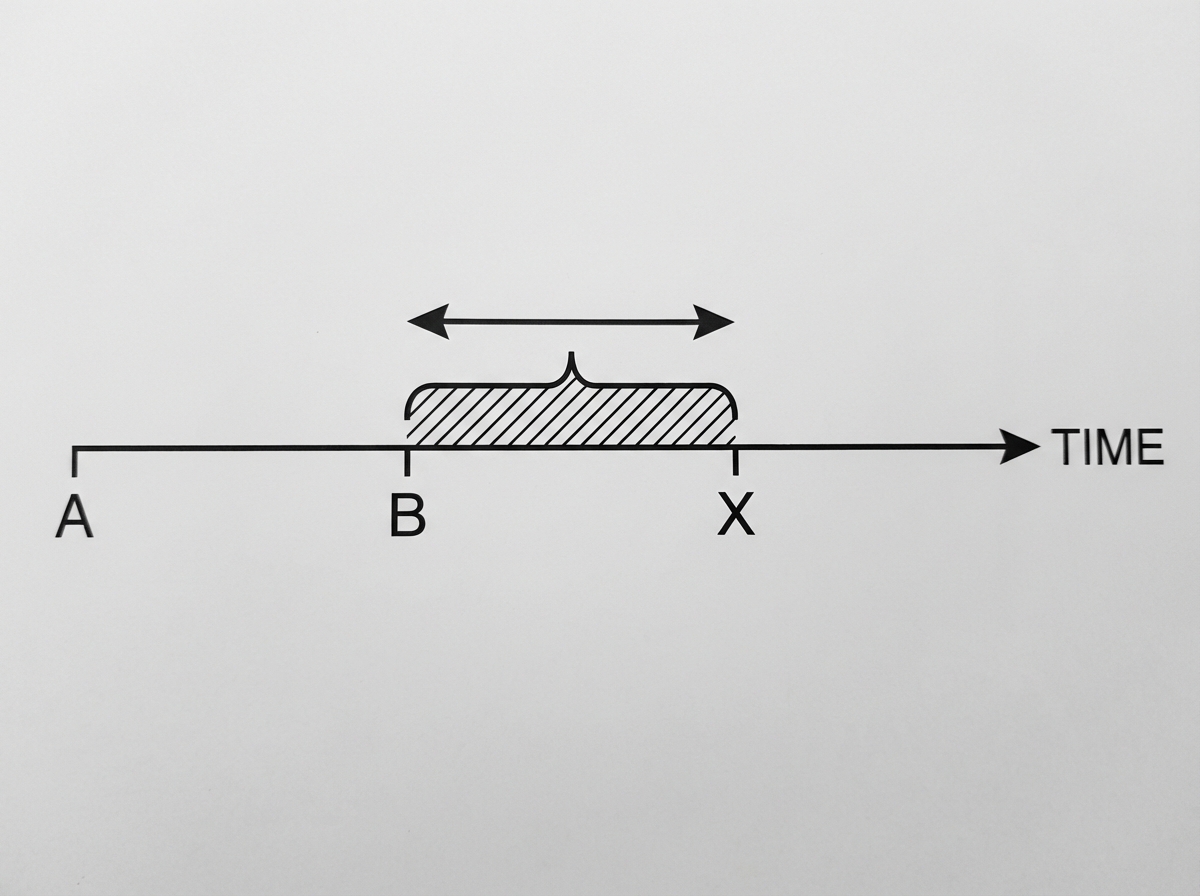
In network analysis, what does the 'critical path' refer to?
Lifestyle modification, specifically discouraging children from adopting harmful lifestyles, is considered which level of prevention?
All of the following are true of the standardized mortality ratio except:
In a surveillance center for Hepatitis in a low prevalence area, the initial method for testing Hepatitis B was single ELISA. This policy was changed to double testing in series. Which of the following parameters of the test would be affected?
Who is credited with classifying the epidemiology of cholera in England?
Confounding factors can be eliminated by:
Population growth is said to be explosive when the growth rate is:
In which type of study is the 'group' considered the unit of study?
Epidemics of typhus fever have been associated with war and famine for several centuries. What factor was most important in the control of such epidemics following the end of World War II?
Surveillance every fortnight is according to which malaria programme?
Explanation: In health management and epidemiology, **Network Analysis** (specifically PERT and CPM) is a systematic approach used to plan and schedule complex health programs, such as immunization drives or hospital construction. ### 1. Why Option A is Correct The **Critical Path** is defined as the sequence of connected activities that takes the **longest time** to complete. It represents the minimum time required to finish the entire project. Any delay in an activity on this path will directly delay the completion of the whole project. Therefore, these activities are "critical" and require the most managerial attention. ### 2. Why Other Options are Incorrect * **Option B:** The path with the shortest duration is not the limiting factor for project completion; the project cannot finish until the longest path is completed. * **Option C & D:** **Slack** (or Float) refers to the amount of time an activity can be delayed without affecting the project deadline. The critical path actually has **zero slack** (the least amount of slack possible). While Option C is technically true in terms of value (zero), the standard definition of the critical path in management textbooks and NEET-PG patterns is "the path with the longest duration." ### 3. High-Yield Pearls for NEET-PG * **PERT (Program Evaluation and Review Technique):** Used for research and development where time is uncertain (Event-oriented). * **CPM (Critical Path Method):** Used for routine, repetitive projects like building a health center (Activity-oriented). * **The "Zero Slack" Rule:** On the critical path, the Earliest Start Time (EST) and Latest Finish Time (LFT) are identical. * **Application:** In public health, network analysis helps in the efficient allocation of scarce resources by identifying which tasks must be prioritized to avoid program failure.
Explanation: ### Explanation The correct answer is **D. Primordial prevention**. #### Why Primordial Prevention is Correct Primordial prevention is defined as the prevention of the **emergence or development of risk factors** in population groups where they have not yet appeared. In this scenario, discouraging children from adopting harmful lifestyles (such as smoking, sedentary habits, or unhealthy eating) aims to ensure that the risk factors for chronic diseases (like obesity, hypertension, or lung cancer) never develop in the first place. It focuses on social, economic, and environmental patterns of living. #### Why Other Options are Incorrect * **A. Primary Prevention:** This involves action taken **prior to the onset of disease**, which removes the possibility that a disease will ever occur. However, it targets individuals who **already have risk factors** (e.g., using a condom when a risk of STI exists or immunization). Primordial prevention is a sub-type of primary prevention but is the more specific and correct term when the goal is to prevent the *risk factor itself*. * **B. Secondary Prevention:** This focuses on **early diagnosis and prompt treatment**. It aims to halt disease progression and prevent complications (e.g., Pap smears for cervical cancer or screening for hypertension). * **C. Tertiary Prevention:** This occurs when the disease has already caused clinical damage. It focuses on **rehabilitation** and reducing disability (e.g., physiotherapy after a stroke). #### NEET-PG High-Yield Pearls * **Target Audience:** Primordial prevention is most effective when targeted at **children and adolescents** to shape lifelong healthy habits. * **Key Phrase:** If the question mentions "prevention of risk factors," think **Primordial**. If it mentions "action taken in the presence of risk factors to prevent disease," think **Primary**. * **Modes of Intervention:** Primordial prevention is achieved through individual and mass education. * **Example:** National policies to increase taxes on tobacco to prevent youth from starting to smoke is a classic example of primordial prevention.
Explanation: **Standardized Mortality Ratio (SMR)** is a key tool in epidemiology used for **indirect standardization**. It is primarily used when age-specific death rates for the study population are unknown or the population size is too small to provide stable rates. ### Why Option A is the Correct Answer (The Exception) The SMR is a **ratio**, not a rate. It is expressed as a **percentage** (or a decimal), calculated by dividing the observed deaths by the expected deaths. A "rate" typically has a time dimension and a multiplier (like per 1,000), whereas SMR compares two quantities to see if the observed count deviates from the norm. Therefore, saying it is a "rate per rate" is mathematically incorrect. ### Explanation of Other Options * **Option B (Can be adjusted for age):** This is true. SMR is the hallmark of indirect standardization, used specifically to account for (adjust) age distribution differences between a study group (e.g., miners) and the general population. * **Option C (Can be used for events other than death):** This is true. The same mathematical principle can be applied to calculate the **Standardized Incidence Ratio (SIR)** for diseases or hospital admissions. * **Option D (Ratio of observed deaths to expected deaths):** This is the fundamental definition of SMR. * *Formula:* $\text{SMR} = \frac{\text{Observed Deaths}}{\text{Expected Deaths}} \times 100$ ### High-Yield NEET-PG Pearls * **Interpretation:** An SMR of **100** means observed deaths equal expected deaths. An SMR of **150** means mortality is 50% higher than expected. * **Direct vs. Indirect:** Use **Direct Standardization** if age-specific death rates of the study population are *known*. Use **Indirect (SMR)** if they are *unknown*. * **Standard Population:** In SMR, the "Expected Deaths" are calculated by applying the age-specific death rates of a **standard population** to the age structure of the **study population**.
Explanation: ### Explanation The core concept here is the difference between **Testing in Series** and **Testing in Parallel**. **1. Why the Correct Answer (C) is Right:** When tests are performed in **series** (sequential testing), a person is considered "positive" only if **both** tests are positive. This approach is designed to be highly conservative to avoid false positives. * **Sensitivity decreases:** Since a patient must pass two "hurdles" to be labeled positive, some true cases will be missed if they test negative on either the first or second test. * **Negative Predictive Value (NPV) decreases:** Because sensitivity drops and more false negatives occur, our confidence that a "negative" result truly means the person is healthy decreases. * **Specificity and PPV increase:** This is the primary goal of serial testing—to eliminate false positives and ensure that those labeled positive truly have the disease. **2. Why the Other Options are Wrong:** * **Options A & D (Specificity):** In serial testing, **Specificity increases**. The question asks what is *affected* (usually implying what is sacrificed or changed significantly in the context of diagnostic trade-offs). While specificity changes, it improves. However, the combination in Option C represents the classic "loss" in serial testing. * **Option B (PPV):** In serial testing, **Positive Predictive Value (PPV) increases**. This is why we use it in low-prevalence areas—to confirm a diagnosis and avoid unnecessary treatment. **3. High-Yield Clinical Pearls for NEET-PG:** * **Serial Testing (Sequential):** Increases Specificity and PPV; Decreases Sensitivity and NPV. (Used for *confirmation*, e.g., HIV ELISA followed by Western Blot). * **Parallel Testing (Simultaneous):** Increases Sensitivity and NPV; Decreases Specificity and PPV. (Used for *screening* or emergency triage where you don't want to miss a single case). * **Prevalence Factor:** In low-prevalence areas (as mentioned in the stem), the risk of False Positives is high; therefore, serial testing is preferred to boost PPV.
Explanation: **Explanation:** **1. Why John Snow is the Correct Answer:** John Snow (1813–1858) is widely regarded as the **"Father of Modern Epidemiology."** He is credited with classifying the epidemiology of cholera during the 1854 Broad Street outbreak in London. By using meticulous mapping (Spot Maps) and statistical analysis, he demonstrated that cholera was a water-borne disease transmitted via contaminated water from the Broad Street pump. His work predated the "Germ Theory" and successfully challenged the prevailing "Miasma Theory" (the belief that diseases were caused by "bad air"). **2. Analysis of Incorrect Options:** * **Winslow (C.E.A. Winslow):** Known for providing the most widely accepted definition of **Public Health** in 1920. * **Chadwick (Edwin Chadwick):** A leader of the "Sanitary Idea" in England. He highlighted the link between poverty and disease, leading to the **Public Health Act of 1848**, but he did not classify cholera's epidemiology. * **Howard Huger:** Not a recognized figure in classical epidemiology; likely a distractor. (Note: John Graunt is often confused with Snow, but Graunt is the "Father of Vital Statistics"). **3. NEET-PG High-Yield Pearls:** * **John Snow’s Method:** Used the **"Spot Map"** technique (an example of Descriptive Epidemiology). * **Grand Experiment:** Snow’s comparison of cholera mortality between two water companies (Lambeth vs. Southwark & Vauxhall) is a classic example of a **Natural Experiment**. * **Key Distinction:** While Snow is the Father of Modern Epidemiology, **Hippocrates** is considered the First Epidemiologist. * **Cholera Fact:** The causative agent, *Vibrio cholerae*, was later isolated by Robert Koch in 1883.
Explanation: ### Explanation **Correct Answer: D. Matching** **Why Matching is Correct:** Matching is a key technique used during the **design phase** of a study (primarily Case-Control studies) to eliminate confounding. It involves selecting controls who possess the same characteristics (e.g., age, sex, occupation) as the cases. By ensuring that the potential confounding variable is distributed equally between the two groups, its influence on the outcome is neutralized, allowing the researcher to isolate the effect of the study variable. **Analysis of Incorrect Options:** * **A. Correlation:** This is a statistical method used to measure the strength and direction of a linear relationship between two quantitative variables. It does not control or eliminate confounders. * **B. Standardization:** This is a method used during the **analysis phase** to compare mortality or morbidity rates between populations with different age/sex structures (e.g., Age-standardized death rates). While it adjusts for these variables, "Matching" is the classic design-phase method for elimination. * **C. Randomization:** While randomization is the "gold standard" for controlling confounders in **Experimental studies (RCTs)**, it is not used in observational studies. In the context of general epidemiological methods, Matching is the specific answer often sought for eliminating known confounders in observational designs. **NEET-PG High-Yield Pearls:** * **Methods to control confounding at the Design Stage:** Randomization (best for unknown confounders), Restriction, and Matching. * **Methods to control confounding at the Analysis Stage:** Stratification and Statistical Modeling (e.g., Multivariate analysis, Standardization). * **The "Confounder" Definition:** A variable associated with both the exposure and the disease, but is not an intermediate step in the causal pathway. * **Over-matching:** A pitfall where you match for a factor closely related to the exposure, which can lead to a loss of statistical power and inability to study the matched variable.
Explanation: **Explanation** In demography and epidemiology, population growth rates are categorized based on their impact on a country's socio-economic structure. The term **"Population Explosion"** refers to a situation where the growth rate is so rapid that the existing resources and infrastructure cannot keep pace with the increasing number of people. **1. Why Option D is Correct:** According to standard demographic classifications (often cited in Park’s Textbook of Preventive and Social Medicine), a growth rate **greater than 2%** is defined as **Explosive**. At this rate, the population doubles in approximately 35 years (using the "Rule of 70": 70/2 = 35). This rapid increase typically occurs during the "Early Expanding" or "Late Expanding" stages of the Demographic Cycle, where the death rate falls sharply while the birth rate remains high. **2. Analysis of Incorrect Options:** * **Option A (< 0.5%):** This represents **Stationary** or very slow growth, typical of developed nations in the final stage of the demographic cycle. * **Option B (0.5% - 1%):** This is considered **Slow** growth. * **Option C (1% - 1.5%):** This is categorized as **Moderate** growth. (Note: 1.5% to 2% is often classified as "High" growth). **3. High-Yield Facts for NEET-PG:** * **Demographic Gap:** The difference between the birth rate and death rate. A widening gap leads to population explosion. * **Rule of 70:** To calculate the **doubling time** of a population, divide 70 by the annual growth rate (e.g., if growth is 2%, doubling time is 35 years). * **India’s Status:** India is currently in the **Late Expanding stage** (Stage 3) of the demographic cycle, with a declining growth rate (currently around 1.0% to 1.2%), having moved past the "explosive" phase of the 1970s-80s. * **Net Reproduction Rate (NRR):** The goal of the National Health Policy is to achieve NRR = 1 (Replacement level fertility).
Explanation: ### Explanation The core concept in this question is the **unit of study**, which refers to the smallest entity on which observations are made or interventions are applied. **Why Option D is Correct:** In a **Cluster Randomized Controlled Trial (cRCT)**, the unit of randomization and study is a **group or "cluster"** of individuals (e.g., a village, a school, or a hospital ward) rather than the individual person. This design is used when an intervention is naturally applied at a group level (like water fluoridation) or to prevent "contamination" where individuals in the control group might inadvertently adopt the intervention of the study group. **Analysis of Incorrect Options:** * **A. Ecological Study:** While ecological studies use **populations** as the unit of observation (e.g., comparing cancer rates between countries), they are observational and descriptive. In the context of experimental or analytical hierarchy, cRCTs are the definitive answer when discussing "groups" as the primary unit of intervention. (Note: Some examiners consider both Ecological and Cluster trials to have group units; however, in the context of trials, Cluster is the specific term). * **B. Cross-sectional Study:** The unit of study is the **individual**. It measures prevalence by collecting data from individuals at a single point in time. * **C. Randomized Controlled Trial (Standard):** The unit of study is the **individual**. Participants are randomly assigned to either the intervention or control group one by one. **High-Yield Clinical Pearls for NEET-PG:** * **Unit of Study Summary:** * **Individual:** Case-control, Cohort, Cross-sectional, Standard RCT. * **Group/Population:** Ecological study, Cluster RCT. * **Ecological Fallacy:** An error in inference where results found at the group level are incorrectly applied to individuals. * **Contamination:** The primary reason to choose a Cluster RCT over a standard RCT (e.g., a vaccine trial where herd immunity might affect the control group).
Explanation: ### Explanation **Epidemic Typhus** is caused by *Rickettsia prowazekii* and is transmitted to humans by the **human body louse** (*Pediculus humanus corporis*). Historically, it has been a scourge during wars and famines due to overcrowding and lack of hygiene, which facilitate louse infestation. **Why Option D is Correct:** The most significant factor in controlling typhus epidemics post-WWII was the introduction of **DDT (Dichlorodiphenyltrichloroethane)**. DDT was used for mass **disinfestation** (delousing) of civilian and military populations. By applying DDT powder directly to clothing and bodies, the vector (the body louse) was eliminated, effectively breaking the chain of transmission. This was famously demonstrated in the 1843-44 Naples epidemic, where DDT halted the outbreak for the first time in history. **Why Other Options are Incorrect:** * **Option A:** *Anopheles* mosquitoes are vectors for Malaria, not Typhus. While DDT was also used for malaria control, it is irrelevant to typhus transmission. * **Option B & C:** While improved sanitation and food handling are vital for controlling enteric diseases (like Cholera or Typhoid), they do not directly target the body louse, which lives in the seams of clothing. **Clinical Pearls for NEET-PG:** * **Vector:** Human Body Louse (Note: Head lice and pubic lice are *not* significant vectors for typhus). * **Transmission:** Occurs via the **posterior station** (rubbing infected louse feces into the bite wound or mucous membranes), not the bite itself. * **Brill-Zinsser Disease:** A recrudescent (latent) form of epidemic typhus that occurs years after the primary attack. * **Drug of Choice:** Tetracyclines (Doxycycline) are the mainstay of treatment.
Explanation: ### Explanation The correct answer is **Modified Plan of Operation (MPO)**. **1. Why MPO is correct:** The Modified Plan of Operation (MPO) was launched in **1977** after the National Malaria Eradication Programme (NMEP) faced a massive resurgence of cases. The core strategy of MPO shifted from "eradication" to "effective control." A key feature of this plan was the strengthening of **Active Case Detection (ACD)**. Under MPO, surveillance workers are required to visit every house **once every fortnight (14 days)** to identify fever cases, collect blood smears, and provide presumptive treatment. **2. Why the other options are incorrect:** * **Urban Malaria Scheme (UMS):** Launched in 1971, this scheme focuses primarily on **larval control** (anti-larval measures) in urban areas rather than the specific 14-day domiciliary surveillance cycle characteristic of the MPO. * **National Malaria Control Programme (NMCP):** Launched in 1953, its primary focus was on **Indoor Residual Spraying (IRS)** with DDT to reduce the mosquito population, not on systematic active surveillance. * **National Malaria Eradication Programme (NMEP):** Launched in 1958, it aimed for total elimination. While it introduced surveillance, the specific "fortnightly" mandate is the hallmark of the 1977 MPO restructuring. **3. High-Yield Clinical Pearls for NEET-PG:** * **Active Case Detection (ACD):** Done by health workers (fortnightly). * **Passive Case Detection (PCD):** Done by hospitals/clinics (continuous). * **Annual Parasite Incidence (API):** The most sensitive index to differentiate between the "Attack phase" and "Consolidation phase" of malaria programs. * **ABER (Annual Blood Examination Rate):** Should be at least **10%** to ensure adequate surveillance. * **Current Strategy:** Malaria is now managed under the **National Center for Vector Borne Diseases Control (NCVBDC)**, formerly NVBDCP.
Principles of Epidemiology
Practice Questions
Measures of Disease Frequency
Practice Questions
Epidemiological Study Designs
Practice Questions
Descriptive Epidemiology
Practice Questions
Analytical Epidemiology
Practice Questions
Experimental Epidemiology
Practice Questions
Screening for Disease
Practice Questions
Surveillance Systems
Practice Questions
Investigation of an Epidemic
Practice Questions
Association and Causation
Practice Questions
Modern Epidemiological Methods
Practice Questions
Critical Appraisal of Epidemiological Studies
Practice Questions
Get full access to all questions, explanations, and performance tracking.
Start For Free