What does a relative risk of 1 indicate?
In a case-control study, the association between a disease and a risk factor is studied by which measure?
Which of the following infections is not documented to be spread by sexual contact?
What is the most common carcinoma in females worldwide?
Transmission of hepatitis A virus occurs:
Intraspecies competition refers to competition among what?
What is the denominator of the crude death rate?
Which one of the following is not associated with an increased risk of cancer?
Which of the following statements about DOTS is INCORRECT?
What is the study design of choice for determining the diurnal variation of fat content in expressed breast milk for preterm babies?
Explanation: ### Explanation **Why Option A is Correct:** Relative Risk (RR) is the ratio of the incidence of a disease among an exposed group to the incidence among an unexposed group ($RR = \frac{I_e}{I_u}$). * When **RR = 1**, the numerator (incidence in exposed) and denominator (incidence in unexposed) are equal. * This signifies that the risk of the outcome is identical in both groups, indicating **no association** between the exposure and the disease. The exposure is neither harmful nor protective. **Why Other Options are Incorrect:** * **Option B & D:** Type I ($\alpha$) and Type II ($\beta$) errors refer to the probability of rejecting or failing to reject a null hypothesis due to chance or sample size issues. While a p-value or confidence interval helps determine if an RR of 1 is statistically significant, the value of 1 itself specifically defines the "null" point of association, not the error type. * **Option C:** A strong correlation would be indicated by an RR significantly greater than 1 (positive association/risk factor) or significantly less than 1 (negative association/protective factor). **NEET-PG High-Yield Pearls:** * **RR > 1:** Positive association (Exposure is a risk factor). * **RR < 1:** Negative association (Exposure is a protective factor, e.g., vaccines). * **Study Design:** RR is primarily calculated in **Cohort Studies** (prospective), whereas Odds Ratio (OR) is used for Case-Control studies. * **Attributable Risk (AR):** If RR = 1, then AR is 0, meaning zero percent of the disease is attributed to the exposure. * **Confidence Interval (CI):** If the 95% CI for RR includes the value **1** (e.g., 0.8 to 1.5), the results are not statistically significant.
Explanation: In a **Case-Control Study**, we start with the outcome (disease) and look backward in time to determine exposure. Because the researcher determines the number of cases and controls, the true **Incidence** of the disease cannot be calculated. Since Relative Risk requires incidence data, it cannot be used here. Instead, we use the **Odds Ratio (OR)**, which estimates the strength of association by comparing the odds of exposure among cases to the odds of exposure among controls. ### Why the other options are incorrect: * **A. Relative Risk (RR):** This is the ratio of incidence among the exposed to incidence among the unexposed. It is the hallmark measure for **Cohort Studies**, where we follow a group forward in time to observe new cases. * **B. Attributable Risk (AR):** This measures the amount of disease incidence that can be attributed to a specific exposure (Incidence in exposed - Incidence in unexposed). Like RR, it requires incidence data from **Cohort Studies**. * **C. Population Attributable Risk (PAR):** This indicates how much the disease incidence in the total population would decrease if the exposure were eliminated. It also requires incidence data. ### High-Yield Clinical Pearls for NEET-PG: * **Odds Ratio** is also known as the **Cross-product ratio**. * If a disease is rare (Incidence < 5%), the Odds Ratio becomes a very good approximation of the Relative Risk. * **Case-Control Studies** are the design of choice for **rare diseases** or diseases with long latency periods. * **Recall Bias** is the most common systematic error encountered in Case-Control studies.
Explanation: ### Explanation The correct answer is **Hepatitis E Virus (HEV)**. **1. Why Hepatitis E (HEV) is the correct answer:** Hepatitis E is primarily transmitted via the **fecal-oral route**, most commonly through contaminated drinking water. Unlike other hepatitis viruses, there is currently **no documented evidence** of HEV transmission through sexual contact. It is characterized by epidemic outbreaks in developing countries and carries a high mortality rate (up to 20%) specifically in pregnant women. **2. Why the other options are incorrect:** * **Hepatitis B (HBV):** This is a classic sexually transmitted infection (STI). It is found in high concentrations in blood, semen, and vaginal secretions. Sexual contact is a major route of transmission globally. * **Hepatitis C (HCV):** While primarily blood-borne (parenteral), sexual transmission of HCV is documented, particularly among men who have sex with men (MSM) and individuals with multiple sexual partners or co-infection with HIV. * **Hepatitis A (HAV):** Although primarily fecal-oral, HAV is well-documented to spread via **sexual contact**, specifically through oral-anal contact (anilingus). Outbreaks are frequently reported in the MSM community. **3. NEET-PG High-Yield Pearls:** * **Vowels (A & E):** Transmitted by the **Enteric** route (Fecal-oral). * **Consonants (B, C, D):** Transmitted by **Blood** and Body fluids (Parenteral/Sexual). * **Exception to remember:** While both A and E are enteric, **only A** is significantly associated with sexual transmission (oral-anal). * **Pregnancy & HEV:** Always remember the association of HEV with **Fulminant Hepatic Failure** in the third trimester of pregnancy. * **HCV:** Has the highest risk of progressing to **chronic** hepatitis and cirrhosis.
Explanation: **Explanation:** The correct answer is **Breast Cancer**. According to the latest **GLOBOCAN** data (World Health Organization), breast cancer has overtaken lung cancer to become the most commonly diagnosed cancer globally, regardless of gender, and remains the **most common carcinoma in females worldwide**. **Why Breast Cancer is Correct:** Breast cancer accounts for approximately 1 in 4 cancer cases among women globally. Its high incidence is attributed to changing reproductive patterns (late age at first childbirth, fewer children), sedentary lifestyles, and increased screening/early detection in developed nations. **Analysis of Incorrect Options:** * **Cervix:** While cervical cancer remains a leading cause of cancer death in low-income countries and was historically the most common in India, it has been surpassed by breast cancer in most urban Indian registries and globally due to improved screening (Pap smears) and HPV vaccination. * **Lung:** Lung cancer is the leading cause of cancer-related *mortality* worldwide (both sexes combined) and the second most common cancer in women globally, but it ranks below breast cancer in terms of incidence. * **Kidney:** Renal cell carcinoma is significantly less common than breast, lung, or colorectal cancers in females. **High-Yield Clinical Pearls for NEET-PG:** * **Most common cancer (Worldwide):** Breast Cancer (Incidence); Lung Cancer (Mortality). * **Most common cancer (India - Females):** Breast Cancer (followed by Cervix). * **Most common cancer (India - Males):** Lip/Oral Cavity (followed by Lung). * **Most common cancer (India - Both sexes):** Breast Cancer. * **Screening:** Mammography is the gold standard for breast cancer screening (starting age 40–50 years).
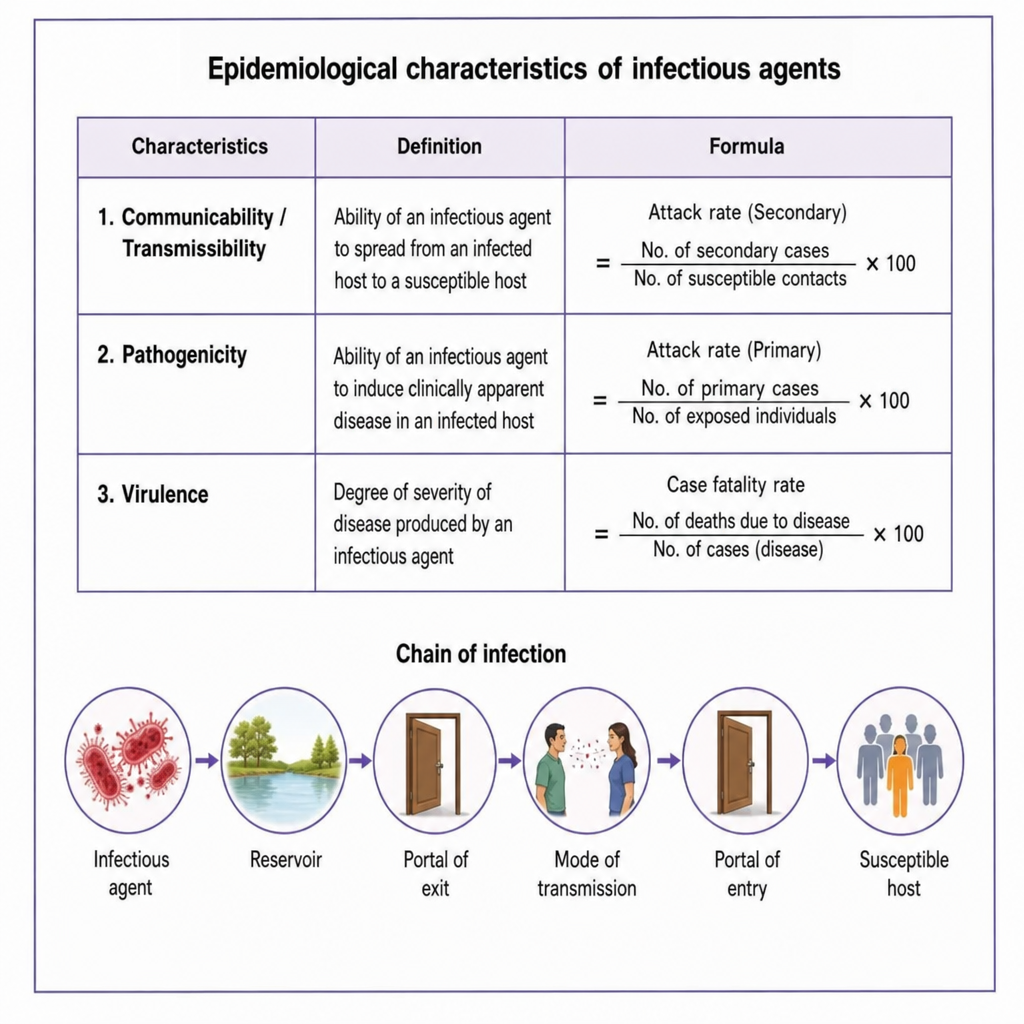
Explanation: **Explanation:** The transmission of Hepatitis A Virus (HAV) is primarily through the **fecal-oral route**. The period of maximum infectivity occurs during the late incubation period and the prodromal phase, when viral shedding in the feces is at its peak. **Why Option C is correct:** According to standard epidemiological data (and Park’s Textbook of Preventive and Social Medicine), the period of communicability for Hepatitis A is defined as **two weeks before the onset of jaundice to two weeks after the onset of symptoms**. While viral shedding decreases significantly once jaundice appears, the virus can still be detected in stools for up to two weeks, making this the clinically accepted window for transmission risk. **Analysis of Incorrect Options:** * **Option A & D:** These are partially correct but incomplete. While shedding occurs one week after symptoms, the risk persists for a full two weeks. * **Option B:** This only accounts for the pre-icteric phase. While this is the period of *maximum* infectivity, it does not cover the entire duration of transmission. **High-Yield Clinical Pearls for NEET-PG:** * **Incubation Period:** 10–50 days (Average: 28 days). * **Maximum Infectivity:** Occurs **before** the onset of jaundice (during the late incubation period). By the time jaundice is clinically evident, the risk of transmission actually begins to decline. * **Secondary Attack Rate (SAR):** High among household contacts. * **Control:** Handwashing and the HAV vaccine are the mainstays. The vaccine is an inactivated (killed) vaccine given in two doses. * **Diagnosis:** Acute infection is confirmed by **Anti-HAV IgM**. Anti-HAV IgG indicates past infection or immunity.
Explanation: ### Explanation **1. Why the Correct Answer is Right:** In epidemiology and ecology, **Intraspecies competition** (also known as intraspecific competition) occurs when members of the **same species** compete for limited resources such as food, water, territory, or mates. Since a **population** is defined as a group of individuals belonging to the same species living in a specific area, the competition occurs among **individuals of a population**. This process is a key regulator of population density; as the population grows, competition increases, leading to a decrease in the growth rate (density-dependent regulation). **2. Why the Incorrect Options are Wrong:** * **Option A (Species):** This is too vague. Competition between different species is termed *interspecific* competition, not intraspecific. * **Option C (Individuals of a community):** A community consists of populations of *different* species living together. Competition at this level involves multiple species (interspecific), whereas "intra" specifically denotes "within" a single species. * **Option D (Populations and their regulatory factors):** This describes the broader study of population dynamics and ecosystem interactions, rather than the specific mechanism of competition between individuals. **3. NEET-PG Clinical Pearls & High-Yield Facts:** * **Intra-specific vs. Inter-specific:** Remember the prefix: **Intra** = Within (same species); **Inter** = Between (different species). * **Density-Dependent Factors:** Intraspecies competition is a classic density-dependent factor that leads to the "S-shaped" or **Sigmoid growth curve** (Logistic growth). * **Survival of the Fittest:** This competition is the primary driver of natural selection, as individuals with superior traits are more likely to secure resources and reproduce. * **Resource Partitioning:** To avoid intense competition, individuals may develop different niches or behaviors, a concept often tested in environmental health and ecology sections of PSM.
Explanation: **Explanation:** The **Crude Death Rate (CDR)** is the simplest and most common measure of mortality in a population. It is defined as the number of deaths per 1,000 population in a given year. **1. Why Mid-year population is correct:** The denominator for CDR is the **Mid-year population** (the population as of July 1st of that year). This is used because the population size changes throughout the year due to births, deaths, and migration. The mid-year population serves as an estimate of the "average" population at risk during that period. * **Formula:** $\frac{\text{Total deaths during the year}}{\text{Mid-year population}} \times 1000$ **2. Why other options are incorrect:** * **Option A (1000 live births):** This is the denominator for the **Infant Mortality Rate (IMR)** and Maternal Mortality Ratio (MMR), not the general death rate. * **Option C (Total number of deaths):** This is the numerator of the CDR, not the denominator. * **Option D (Total number of cases):** This is typically the denominator for **Case Fatality Rate (CFR)**, which measures the killing power of a specific disease. **3. High-Yield Pearls for NEET-PG:** * **"Crude"** means the rate is not adjusted for factors like age or sex distribution. Therefore, it cannot be used for direct comparison between two different populations with different age structures. * For comparing mortality between two countries, **Age-Standardized Death Rates** are the preferred indicator. * The Mid-year population is also the denominator for the **Crude Birth Rate (CBR)**. * In India, the Sample Registration System (SRS) is the primary source for CDR data.
Explanation: ### Explanation The correct answer is **D. Excess fibre**. **1. Why Excess Fibre is the Correct Answer:** Dietary fibre is considered a **protective factor** against several types of cancer, most notably **colorectal cancer**. High fibre intake increases fecal bulk, dilutes potential carcinogens in the colon, and decreases transit time, thereby reducing the exposure of the intestinal mucosa to harmful substances. Additionally, the fermentation of fibre by gut bacteria produces short-chain fatty acids (like butyrate), which have anti-inflammatory and anti-neoplastic properties. Therefore, excess fibre is associated with a *decreased* risk, not an increased risk, of cancer. **2. Why the Other Options are Incorrect:** * **A. Smoking:** This is the single most significant avoidable risk factor for cancer globally. It is strongly associated with cancers of the lung, oral cavity, larynx, esophagus, pancreas, and urinary bladder due to the presence of potent carcinogens like polycyclic aromatic hydrocarbons and nitrosamines. * **B. Alcohol:** Ethanol is a known Group 1 carcinogen. Its metabolism produces acetaldehyde, which damages DNA. Chronic consumption is linked to cancers of the liver, breast, esophagus, and upper aerodigestive tract. * **C. Chewing Betel:** Common in South Asia, betel quid (with or without tobacco) is a major risk factor for **oral squamous cell carcinoma**. It causes chronic irritation and contains alkaloids that lead to oral submucous fibrosis (OSMF), a premalignant condition. **3. High-Yield Clinical Pearls for NEET-PG:** * **Dietary Factors:** High fat and low fibre diets are specifically linked to **Colon and Breast cancers**. * **Aflatoxin:** Produced by *Aspergillus flavus* (found in stored grains/peanuts), it is a major risk factor for **Hepatocellular Carcinoma**. * **Obesity:** Now recognized as a major risk factor for multiple cancers, including endometrial, post-menopausal breast, and renal cell carcinoma. * **Secondary Prevention:** Screening (e.g., Pap smear for cervical cancer, Mammography for breast cancer) is the mainstay for early detection in high-risk populations.
Explanation: This question tests your knowledge of the **Directly Observed Treatment Short-course (DOTS)** strategy, the cornerstone of the National Tuberculosis Elimination Program (NTEP). ### **Explanation of the Correct Answer** The correct answer is **D (None of the above)** because all the statements provided (A, B, and C) are technically correct within the historical and structural framework of the DOTS program as defined by the WHO and the traditional Indian RNTCP guidelines. 1. **Statement A is Correct:** To ensure compliance and simplify logistics, drugs for both the Intensive Phase (IP) and Continuation Phase (CP) are provided in **multi-blister combipacks (Patient Wise Boxes)**. This prevents drug stock-outs for individual patients. 2. **Statement B is Correct:** The "DO" in DOTS stands for **Direct Observation**. A trained health worker or a designated DOT provider must watch the patient swallow the medication to ensure adherence and prevent drug resistance. 3. **Statement C is Correct (Contextually):** Under the classic DOTS strategy in India, treatment was traditionally administered as a **thrice-weekly (alternate days)** intermittent regimen. While India has transitioned toward a *daily* regimen recently, in the context of standard MCQ patterns for DOTS fundamentals, this statement is considered a core characteristic of the original strategy. ### **High-Yield Clinical Pearls for NEET-PG** * **The 5 Pillars of DOTS:** 1. Political commitment, 2. Good quality microscopy (Sputum), 3. Uninterrupted supply of quality drugs, 4. Recording and reporting system, 5. Direct observation of treatment. * **Recent Update:** India has moved from intermittent (thrice-weekly) to **Daily DOTS** using Fixed-Dose Combinations (FDCs) to reduce pill burden and prevent the "rhytmicity" of drug resistance. * **DOTS-Plus:** Specifically designed for Multi-Drug Resistant TB (MDR-TB). * **NTEP Goal:** India aims to achieve the Sustainable Development Goal of ending TB by **2025**, five years ahead of the global target of 2030.
Explanation: ### Explanation **Why Cross-sectional Study is Correct:** A cross-sectional study (also known as a **prevalence study**) is designed to examine the relationship between variables at a **single point in time** or over a short, defined interval. In this scenario, the objective is to measure the fat content in breast milk at specific times of the day (diurnal variation). Since the researchers are "taking a snapshot" of the milk composition at various points (e.g., morning vs. evening) without following the subjects over a long period to see an outcome, it fits the definition of a cross-sectional design. It is the most efficient way to determine the **prevalence or status** of a physiological parameter at a specific moment. **Analysis of Incorrect Options:** * **Prospective Cohort Study:** This involves following a group of exposed and unexposed individuals over time to see who develops a disease. It is used to determine **incidence and relative risk**, which is not the goal here. * **Ambispective Cohort Study:** This combines retrospective (past records) and prospective (future follow-up) data. It is unnecessarily complex for measuring a physiological baseline like milk fat. * **Case-Control Study:** This is a retrospective study that starts with an outcome (disease) and looks back for exposures. Since there is no "disease" or "control" group being compared for risk factors, this design is inapplicable. **High-Yield Pearls for NEET-PG:** * **Snapshot Rule:** If the study measures "What is happening right now?" it is Cross-sectional. * **Sequence:** Cross-sectional studies are often the first step in exploring a hypothesis before committing to a longitudinal cohort. * **Breast Milk Fact:** Fat is the most variable macronutrient in breast milk; it typically increases as the breast is emptied (hindmilk > foremilk) and often shows a diurnal peak in the evening.
Principles of Epidemiology
Practice Questions
Measures of Disease Frequency
Practice Questions
Epidemiological Study Designs
Practice Questions
Descriptive Epidemiology
Practice Questions
Analytical Epidemiology
Practice Questions
Experimental Epidemiology
Practice Questions
Screening for Disease
Practice Questions
Surveillance Systems
Practice Questions
Investigation of an Epidemic
Practice Questions
Association and Causation
Practice Questions
Modern Epidemiological Methods
Practice Questions
Critical Appraisal of Epidemiological Studies
Practice Questions
Get full access to all questions, explanations, and performance tracking.
Start For Free