A diabetic patient with COVID-19 dies in the hospital. Which type of surveillance does this death report fall under?
In a village of 100 children, 10 children have a past history of measles (i.e., they are not at risk now), 20 new cases of measles were reported this year. What is the incidence of measles in this population for the year?
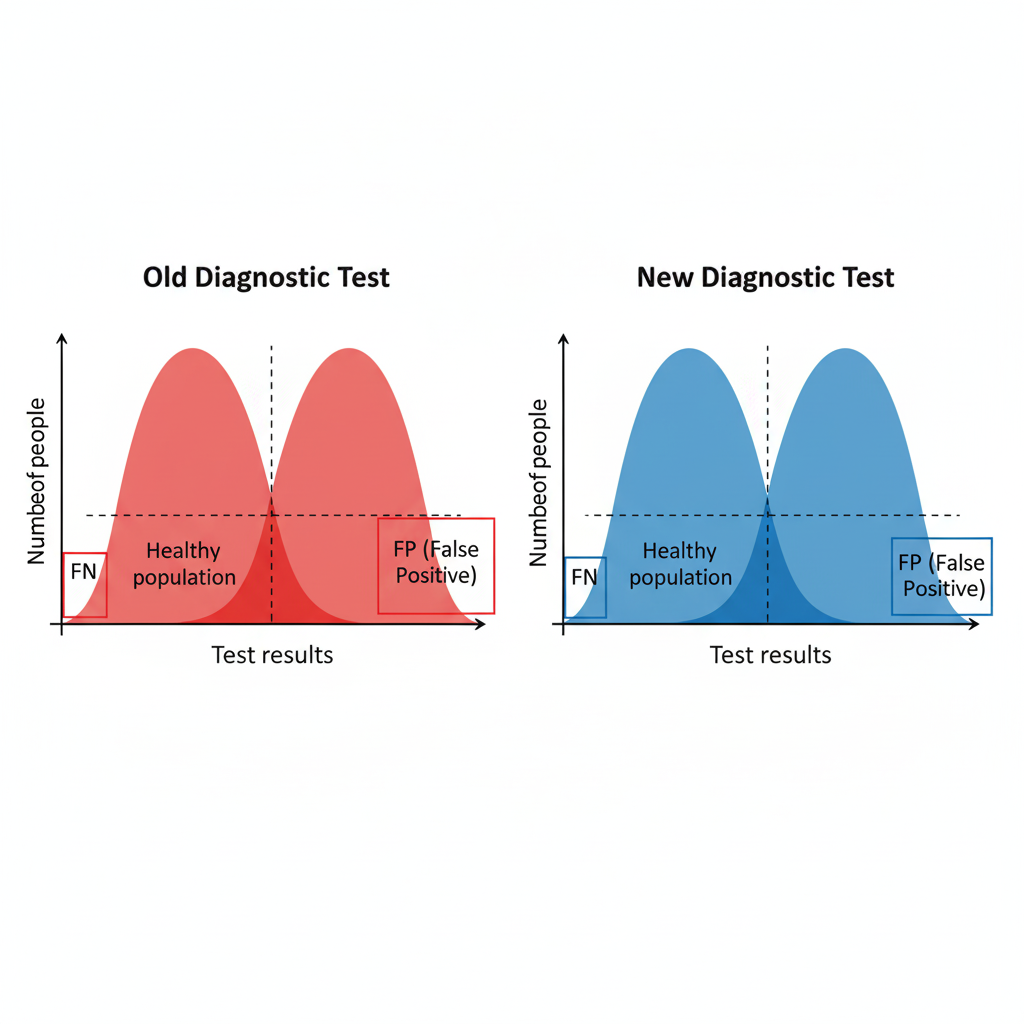
A new diagnostic test is introduced. Based on the provided images, what characteristics would be expected of this new test compared to the old one?
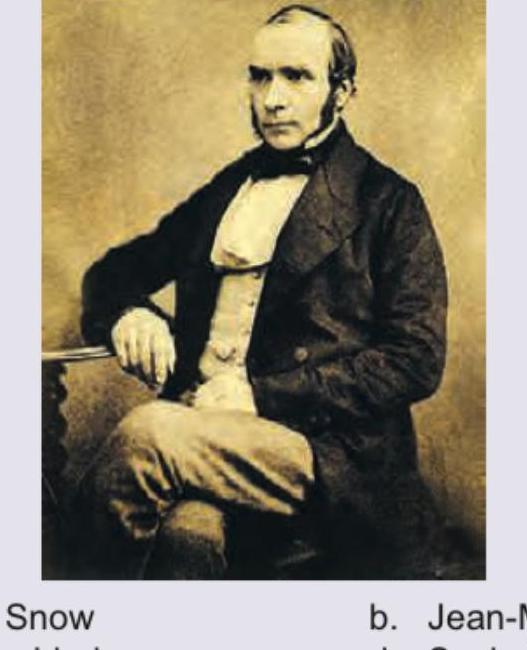
Identify the scientist shown in the image below:
Identify the scientist shown in the image below:

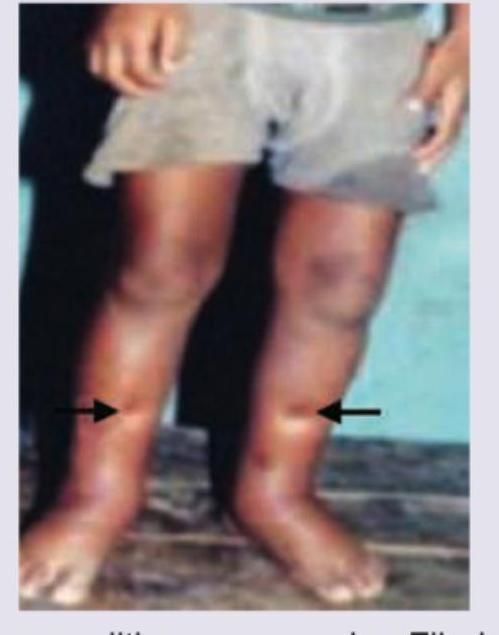
The medical officer at a PHC has seen a large number of cases with the following presentation in the last 6 months. Which illness should he be concerned about? (Recent NEET Pattern 2016-17)
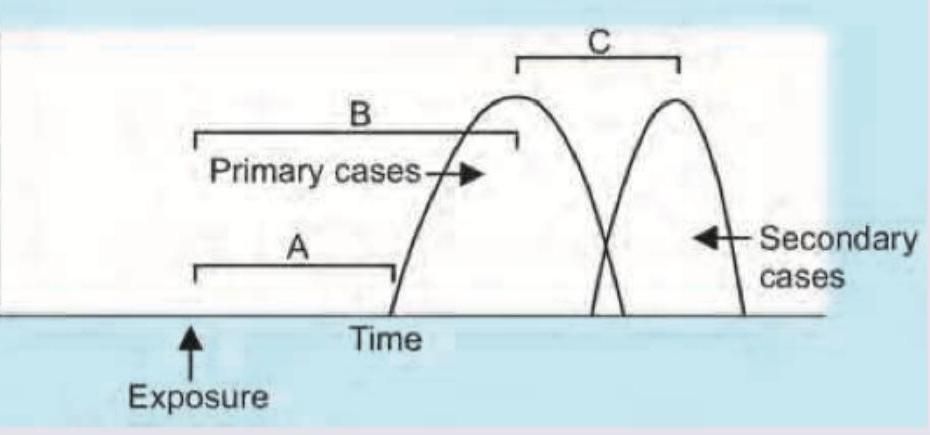
What does C in the given image denote?
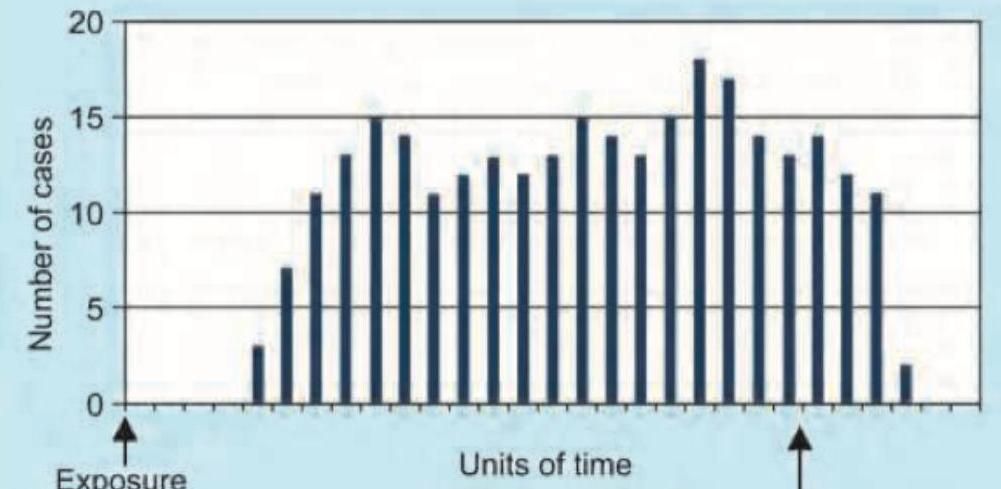
The epidemic curve shown in the image represents which type of outbreak pattern?
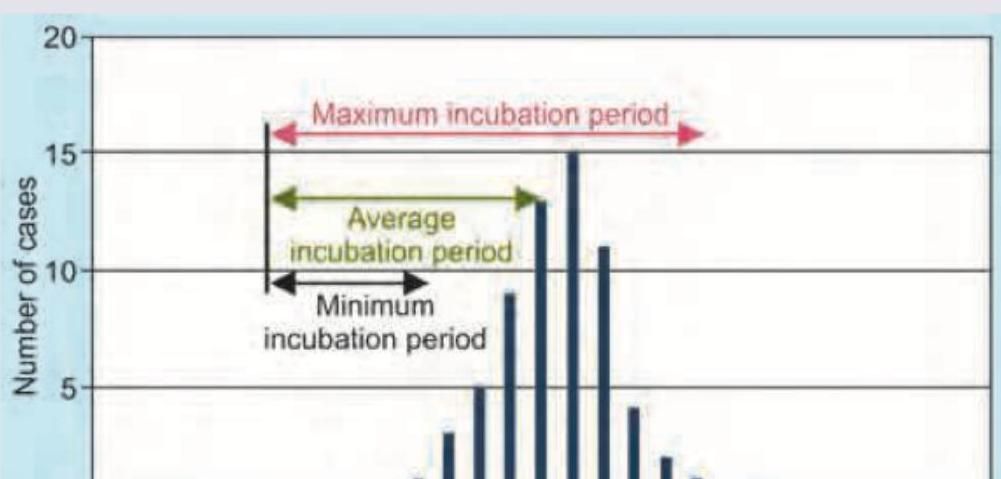
What does the given image show?
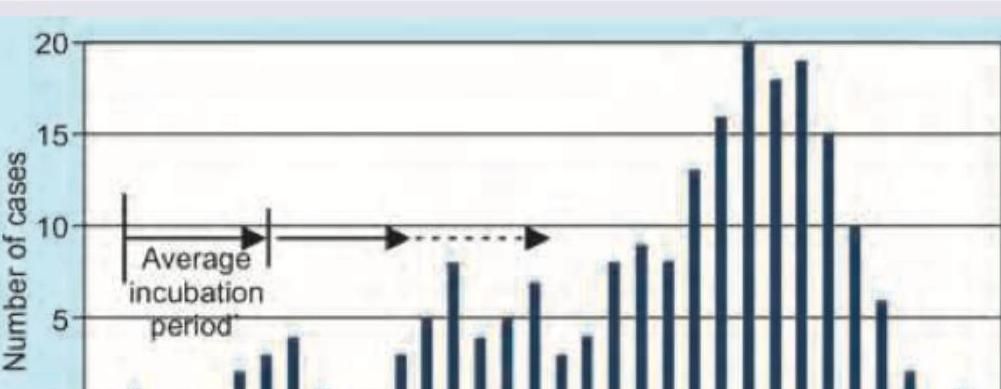
The given image shows which kind of epidemic?
Explanation: ***Passive surveillance*** - This type involves health facilities (like hospitals) routinely sending reports of diseases or deaths to public health authorities without active prompting or investigation from the authorities. - The hospital staff, having recorded the death, is responsible for initiating the report, making this a classic example of **passive case reporting**. *Active surveillance* - This requires public health staff to **actively seek out cases**, often by visiting healthcare facilities, reviewing records, or interviewing healthcare providers and patients. - It is typically more resource-intensive and used for specific **outbreak investigations** or diseases targeted for elimination. *Sentinel surveillance* - This system relies on a **pre-selected, limited network** of reporting sites (e.g., specific hospitals or clinics) to collect high-quality data on specific diseases or conditions. - It is used to monitor trends when comprehensive reporting across all facilities is impractical, often used for conditions like **Influenza-like Illness (ILI)**. *Syndromic surveillance* - This involves the early detection of potential outbreaks by collecting and analyzing pre-diagnostic health data based on **clusters of symptoms (syndromes)**—like chief complaints in the Emergency Department. - It focuses on nonspecific indicators (e.g., fever and cough) for timely detection, primarily used for **bioterrorism preparedness** or rapid onset epidemics.
Explanation: ***22.22 %*** - Incidence is calculated as the ratio of **new cases** (20) to the **population at risk** (susceptible population) over the specified period. - The **population at risk** is the total population (100) minus those who are already immune (10), making the denominator 90. Incidence = (20/90) × 100 = **22.22 %**. *20 %* - This result is obtained by incorrectly using the **total population** (100) as the denominator (20/100 × 100), ignoring the already immune group. - Using the total population in the denominator leads to an underestimate of the true **attack rate** or incidence among the susceptible group. *10 %* - This figure represents the proportion of children who had suffered from measles in the past (10/100), reflecting a form of **past prevalence**, not incidence. - Incidence focuses exclusively on the **new cases** that developed within the year. *30 %* - This percentage represents the **cumulative prevalence** at the end of the year, including both old (10) and new (20) cases, divided by the total population (30/100). - Incidence requires the denominator to be the **population at risk** (those who could develop the disease), not the total population.
Explanation: ***Correct Option: Higher sensitivity and higher specificity*** The blue curves (representing the new test) show **better separation between 'healthy' and 'diseased' populations** compared to the red curves (old test). This indicates improved discriminatory power. - The **reduced overlap** between the blue curves means fewer cases fall into the ambiguous zone - **Smaller FN (False Negative) region** → Higher sensitivity (better detection of diseased individuals) - **Smaller FP (False Positive) region** → Higher specificity (better identification of healthy individuals) - The **higher peak and clearer separation** demonstrate that the new test performs better in both correctly identifying disease when present AND correctly ruling out disease when absent *Incorrect: Higher sensitivity and lower specificity* - This would occur if the cutoff point was shifted to reduce false negatives at the cost of increasing false positives - The image shows BOTH FN and FP regions are smaller, not a trade-off *Incorrect: Lower sensitivity and higher specificity* - This would occur if the cutoff point was shifted to reduce false positives at the cost of increasing false negatives - Again, the image shows improvement in both parameters simultaneously *Incorrect: Lower sensitivity and lower specificity* - This represents a worse test with more overlap and larger FN/FP regions - The blue curves clearly show IMPROVEMENT, not deterioration, compared to the red curves
Explanation: ***John Snow*** - This image is a well-known portrait of **John Snow**, a famous physician and **pioneer in epidemiology**. - He is best known for his work in tracing the source of the **Broad Street cholera outbreak** in 1854. *Jean-Martin Charcot* - **Jean-Martin Charcot** was a French neurologist and professor of anatomical pathology. - He is known for his work on **neurological diseases**, especially his studies on **multiple sclerosis** and **hysteria**. *James Lind* - **James Lind** was a Scottish surgeon in the Royal Navy. - He is famous for conducting one of the first **controlled clinical trials** to investigate treatments for **scurvy**. *Sackett* - **David Sackett** was a Canadian physician and medical scientist. - He is widely regarded as a founding father of **evidence-based medicine**.
Explanation: ***James Lind*** - This is a well-known portrait of **James Lind**, a Scottish physician who is considered the founder of **naval hygiene** and a pioneer in the study of **scurvy**. - His famous 1747 experiment on scurvy among sailors established that **citrus fruits** could prevent and cure the disease, leading to a significant improvement in naval health. *John Snow* - **John Snow** was an English physician and a leader in the adoption of anesthesia and medical hygiene. He is considered one of the fathers of **modern epidemiology** for his work in identifying the cause of the 1854 Broad Street cholera outbreak in London. - His research involved **mapping disease cases** and identifying a contaminated water pump as the source, which is distinct from the individual pictured. *Alexander Fleming* - **Alexander Fleming** was a Scottish physician and microbiologist best known for his accidental discovery of the antibiotic substance **penicillin** in 1928, for which he shared the Nobel Prize in Medicine in 1945. - His work revolutionized the treatment of bacterial infections, but he is known from photographs and his appearance is recognizably different from the painted portrait. *William Harvey* - **William Harvey** was an English physician who was the first to describe completely and in detail the **systemic circulation** and properties of blood being pumped to the brain and body by the heart. - His historical contributions predate the era suggested by the clothing and artistic style in the portrait, and his known images differ.
Explanation: ***Skeletal fluorosis*** - The image shows **bowed legs**, indicating bone deformity. The arrows point to thickened periosteum or bony outgrowths, characteristic of chronic skeletal involvement. - **Skeletal fluorosis** results from excessive fluoride intake, leading to **bone deformities, sclerosis, and periosteal thickening**, consistent with the visible signs. *Viral myocarditis* - This condition primarily affects the **heart muscle**, causing symptoms like shortness of breath, chest pain, and fatigue. - It does not typically manifest with visible **bowed legs** or **bony deformities** as seen in the image. *Filariasis* - **Filariasis** (elephantiasis) is characterized by severe **lymphedema**, leading to massive swelling and thickening of the skin and subcutaneous tissue, typically in the limbs. - While it causes limb enlargement, the image shows distinct **bone deformities** rather than typical diffuse soft tissue swelling associated with filariasis. *Epidemic dropsy* - **Epidemic dropsy** results from contamination of edible oils with **sanguinarine**, causing generalized edema, skin lesions, and cardiac issues. - Although it causes edema, it doesn't primarily present with **bowed legs** or **skeletal deformities** as the prominent feature.
Explanation: ***Average incubation period*** - C graphically represents the **average incubation period** between the average onset of primary cases and the average onset of secondary cases in the context of an epidemic curve. - This value is crucial for understanding the **typical time frame** for disease development after exposure and transmission within a population. *Minimum incubation period* - The minimum incubation period (represented by **A** in the diagram) is the shortest time from exposure to the onset of symptoms, typically found at the *beginning* of the primary case curve. - C spans a broader range, indicating a measure beyond just the earliest symptom onset. *Median incubation period* - While related to central tendency, the median incubation period would be the point where **50% of cases have developed symptoms**, which is not explicitly denoted by C in this image. - C is shown as a range, representing the average spread of incubation rather than a single midpoint. *Latent period* - The latent period refers to the time from infection until an individual becomes **infectious to others**, not necessarily when symptoms appear. - The diagram illustrates the time from exposure to disease onset (incubation periods) and case waves, not the infectiousness period.
Explanation: ***Single exposure, point source*** - This graph shows a **single, sharp epidemic peak** followed by a rapid decline in cases, which is characteristic of an epidemic resulting from a **single exposure** or **point source**. - The cases are clustered within one incubation period, indicating a common, brief exposure to the etiological agent. *Multiple exposure, continuous epidemic* - This type of epidemic would show a **prolonged, irregular pattern** of cases or multiple peaks, reflecting varied or repeated exposures over time, which is not seen here. - The curve would typically not fall as abruptly after a single peak, as new exposures would continue to generate cases. *Propagated epidemic* - A propagated epidemic is characterized by **successive waves of cases**, as the infection spreads from person to person, often with increasing peak heights over time. - This pattern would show multiple, distinct peaks separated by approximately one incubation period, which is absent in the given graph. *Cyclodevelopmental epidemic* - This term is not a standard epidemiological classification for epidemic types based on exposure patterns. - Epidemiological classifications usually focus on the source and mode of transmission (e.g., common source, propagated).
Explanation: ***Propagated epidemic*** (Correct) - This image depicts a **propagated epidemic** (also known as a **person-to-person epidemic** or **secondary spread**) due to its characteristic **multiple waves** of increasing and decreasing cases - The pattern shows initial cases, followed by subsequent generations of cases separated by an **average incubation period**, indicating transmission from infected individuals to susceptible contacts - Each wave represents a new generation of transmission, with the time interval between peaks corresponding to the incubation period of the disease *Single exposure, point source* (Incorrect) - A **single exposure, point source epidemic** typically has a **sharp increase** in cases followed by a rapid decline, with all cases occurring within one incubation period of the exposure - This creates a classic bell-shaped curve with a single peak - The image clearly shows **multiple peaks** and a prolonged period of new cases, inconsistent with a single, common exposure *Multiple exposure, continuous epidemic* (Incorrect) - A **multiple exposure, continuous common-source epidemic** would show a plateau or sustained high level of cases over time, reflecting ongoing exposure to a **common source** - This pattern typically shows an irregular elevation without distinct periodic waves - While cases are continuous, the **distinct peaks and troughs** in the graph indicate sequential transmission rather than constant, continuous exposure *Cyclodevelopmental epidemic* (Incorrect) - **Cyclodevelopmental epidemic** is not a standard epidemiological term for epidemic patterns - Epidemics are categorized by transmission mode as either **common-source** (point source or continuous) or **propagated** (person-to-person) - This term is a distractor and does not describe a recognized epidemic curve shape in standard epidemiology texts
Explanation: ***Point source epidemic*** - The graph shows a sharp increase in cases following a single exposure event, and then a gradual decline. This pattern is characteristic of a **point source epidemic**, where individuals are exposed to the same source over a relatively brief period. - The exposure arrow at the beginning indicates a specific point in time when exposure started, leading to a rapid rise in cases within an incubation period for most affected individuals. *Continuous epidemic* - A **continuous epidemic** would show sustained high levels of cases over a prolonged period, rather than a distinct peak followed by a decline, suggesting ongoing exposure or transmission. - The graph clearly shows a single peak and then a decline in incidence, which is not typical of a continuous epidemic where the source remains active over time. *Propagative epidemic* - A **propagative epidemic** is characterized by person-to-person transmission, resulting in successive waves of infection and a more prolonged epidemic curve with multiple peaks or a broad, attenuated curve. - The image depicts a single, relatively rapid rise and fall of cases, not the multiple generations of infection seen in a propagative spread. *Mixed epidemic* - A **mixed epidemic** combines characteristics of both common source and propagated transmission, typically showing an initial sharp rise from common source exposure followed by secondary cases from person-to-person transmission. - The graph shows a classic point source pattern with a single sharp peak and decline, without the secondary waves that would indicate subsequent person-to-person transmission characteristic of a mixed epidemic.
Principles of Epidemiology
Practice Questions
Measures of Disease Frequency
Practice Questions
Epidemiological Study Designs
Practice Questions
Descriptive Epidemiology
Practice Questions
Analytical Epidemiology
Practice Questions
Experimental Epidemiology
Practice Questions
Screening for Disease
Practice Questions
Surveillance Systems
Practice Questions
Investigation of an Epidemic
Practice Questions
Association and Causation
Practice Questions
Modern Epidemiological Methods
Practice Questions
Critical Appraisal of Epidemiological Studies
Practice Questions
Get full access to all questions, explanations, and performance tracking.
Start For Free