Recombinant human insulin is made by -
DNA fingerprinting was discovered by:
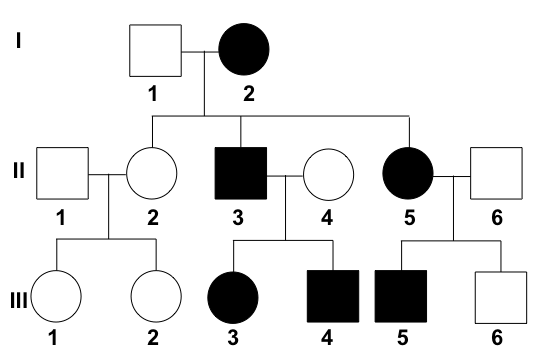
Examine this pedigree chart carefully. What type of transmission does it depict?
The term restriction map primarily refers to the mapping of sites of
In CRISPR-Cas9 system, which repair mechanism is predominantly used for genome editing?
Which of the following doesn't occur in 5' to 3' direction?
Assertion: DNA methylation leads to gene silencing. Reason: Methylation prevents binding of transcription factors to promoter regions.
Which type of mutation can act as a suppressor to restore the wild-type phenotype in organisms carrying a mutant gene?
What are the potential implications of using CRISPR-Cas9 technology to correct mutations in the CFTR gene for the treatment of cystic fibrosis?
How does a defect in the nucleotide excision repair (NER) pathway contribute to the development of xeroderma pigmentosum?
Explanation: ***CDNA of pancreatic cell*** - **Recombinant human insulin** is produced using **cDNA** (complementary DNA) synthesized from the **mRNA** of human pancreatic cells, as these cells naturally produce insulin. - This cDNA ensures that only the **coding sequences** for insulin are used, without introns, making it suitable for expression in prokaryotic hosts like *E. coli*. *CDNA from any eukaryote cell* - While insulin is a eukaryotic protein, using cDNA from "any eukaryote cell" would not be specific enough, as only **pancreatic islet beta cells** produce insulin. - Other eukaryotic cells do not express the insulin gene, so their cDNA would not contain the necessary genetic information. *Genome of pancreatic cell* - Although the **genome of a pancreatic cell** contains the insulin gene, it also includes **introns** (non-coding regions) that must be removed through splicing in eukaryotic cells. - If directly used in prokaryotic systems (like *E. coli*), which lack the machinery to remove introns, it would lead to an incorrect or non-functional protein. *Genome of any eukaryote* - Similar to "genome of pancreatic cell," using the **genome of any eukaryote** would be problematic due to the presence of introns and the general lack of the insulin gene in most eukaryotic cells. - This option combines the disadvantages of non-specificity and the presence of introns that are incompatible with prokaryotic expression systems.
Explanation: ***Jeffreys*** - **Alec Jeffreys** developed the technique of **DNA fingerprinting** (also known as DNA profiling) in 1984. - This method utilizes the repetitive sequences of **DNA** (minisatellites) to create a unique genetic profile for individuals. *Galton* - **Francis Galton** was a pioneer in **eugenics** and developed the concept of **fingerprint classification** for identification, but not DNA fingerprinting. - His work was primarily focused on human heredity and **statistics** in the late 19th century. *Crick* - **Francis Crick**, along with James Watson, discovered the **double helix structure of DNA**. - His contributions were fundamental to understanding genetics but he did not discover DNA fingerprinting. *Southern* - **Edwin Southern** developed the **Southern blot technique**, which is used to detect specific **DNA sequences** in a sample. - While related to DNA analysis, the Southern blot is a method for detecting sequences, not the overall concept of DNA fingerprinting for identification.
Explanation: ***Holandric Inheritance*** - **Holandric inheritance** (Y-linked) shows the trait appearing only in **males** and being transmitted from **father to all his sons**. - The pedigree demonstrates classic **father-to-son transmission** pattern where affected fathers (I-1 and II-3) pass the trait to all their male offspring. *AR Inheritance* - **Autosomal recessive** traits typically **skip generations** and affect both males and females equally. - Affected individuals usually have **unaffected carrier parents**, which is not consistently observed in this pedigree. *AD Inheritance* - **Autosomal dominant** traits affect both sexes equally and show **vertical transmission** through generations. - An affected father would pass the trait to approximately **50% of all children** regardless of sex, not exclusively to sons. *X-Linked Recessive* - **X-linked recessive** inheritance affects males predominantly, but **affected fathers cannot pass** the trait to their sons. - Sons receive the **Y chromosome from father** and X chromosome from mother, making father-to-son transmission impossible.
Explanation: ***Correct Option: Cleavage of restriction enzymes*** - A **restriction map** is a diagram showing the positions of **restriction enzyme recognition and cleavage sites** along a DNA molecule - These maps are fundamental tools in **molecular biology** for DNA manipulation, gene cloning, and genetic engineering - The map indicates where specific restriction endonucleases cut the DNA sequence *Incorrect: DNA fingerprinting* - **DNA fingerprinting** utilizes restriction enzymes in the RFLP (restriction fragment length polymorphism) technique, but a restriction map itself is not a DNA fingerprint - DNA fingerprinting analyzes **variable number tandem repeats (VNTRs)** for identification purposes - A restriction map is a tool that may be used in fingerprinting, but the map specifically refers to enzyme cleavage sites *Incorrect: Mutational hotspot* - A **mutational hotspot** is a genomic region with high mutation frequency - While mutations can alter restriction sites, the primary purpose of a restriction map is to identify enzyme cleavage sites, not mutation hotspots - These are distinct concepts in molecular genetics *Incorrect: Action of bacteriophages* - **Bacteriophages** are viruses that infect bacteria - Restriction enzymes evolved as a bacterial defense mechanism against phage DNA - However, a "restriction map" specifically refers to the location of enzyme cleavage sites on DNA, not the action of bacteriophages themselves
Explanation: ***Non-Homologous End Joining (NHEJ)*** - **NHEJ** is the most common and error-prone repair pathway in mammalian cells, directly ligating the broken DNA ends created by **Cas9**. - This pathway often results in **insertions** or **deletions (indels)** at the cut site, leading to gene knockout by causing frameshifts. *Nucleotide excision repair* - **Nucleotide excision repair (NER)** is primarily involved in removing bulky DNA adducts and pyrimidine dimers caused by UV radiation. - It involves excising a segment of DNA around the damage, not repairing double-strand breaks induced by CRISPR-Cas9. *Homology-Directed Repair (HDR)* - **HDR** is a precise repair mechanism that uses a homologous DNA template to repair double-strand breaks, allowing for precise gene editing (e.g., specific base changes, gene insertion). - While it can be leveraged in **CRISPR-Cas9**, it is less efficient and less common than **NHEJ** in most mammalian cells, especially when no exogenous template is provided. *Mismatch repair* - **Mismatch repair (MMR)** systems correct base-pair mismatches and small insertion/deletion loops that arise during DNA replication. - This mechanism is not involved in repairing the double-strand breaks generated by the **CRISPR-Cas9** system.
Explanation: ***RNA editing*** - **RNA editing** involves modifications to **RNA molecules** after transcription, such as base insertions, deletions, or substitutions. - This process does not follow a 5' to 3' synthesis direction, unlike DNA or RNA synthesis. *DNA repair* - **DNA repair mechanisms**, such as **excision repair**, involve synthesizing new DNA to replace damaged sections. - This synthesis occurs in the **5' to 3' direction** by **DNA polymerases**. *Transcription* - **Transcription** is the process where **RNA polymerase** synthesizes an **RNA molecule** from a **DNA template**. - This synthesis always occurs in the **5' to 3' direction**, adding nucleotides to the 3' end of the growing RNA strand. *DNA replication* - **DNA replication** involves the synthesis of new **DNA strands** from a **template strand**. - **DNA polymerase** adds nucleotides exclusively in the **5' to 3' direction**, requiring a primer for initiation.
Explanation: ***Both assertion and reason are true and reason is the correct explanation.*** - **DNA methylation** at **CpG islands** in promoter regions is a well-established **epigenetic mechanism for gene silencing** - The reason directly explains HOW methylation causes silencing: **methylation prevents transcription factor binding** to promoter regions, blocking transcriptional machinery - Both statements are factually correct AND the reason provides the mechanistic explanation for the assertion *Assertion is true but reason is false.* - While the assertion is correct (DNA methylation does lead to gene silencing), the reason is also TRUE, not false - Methylation preventing transcription factor binding is indeed a **primary mechanism** of gene silencing - This option would only be correct if the reason statement were factually incorrect *Both assertion and reason are true but reason is not the correct explanation.* - Both statements are individually true, but this option is incorrect because the reason IS the correct explanation - The prevention of transcription factor binding **directly explains** how methylation silences genes - If this were correct, the reason would describe an unrelated consequence of methylation, not the causal mechanism *Both assertion and reason are false.* - Both statements are well-established biological facts - DNA methylation-mediated gene silencing is a fundamental epigenetic mechanism - Prevention of transcription factor binding is a validated mechanism of this silencing
Explanation: ***Mutation of tRNA*** - A **tRNA suppressor mutation** can alter its anticodon, allowing it to recognize a **stop codon** (nonsense suppressor) or a missense codon, and insert an amino acid, thereby suppressing the original mutation. - This is a classic example of an **intergenic suppressor mutation** that acts at a different genetic locus from the original mutation. - These suppressors are particularly effective for **nonsense mutations** (premature stop codons) and certain missense mutations by correcting the decoding error during translation. *Frameshift mutation of coding gene* - A single frameshift mutation causes a shift in the **reading frame**, leading to a completely different protein sequence downstream and often a premature stop codon, which would worsen the phenotype. - While a **second compensating frameshift** mutation in the same gene could theoretically restore the reading frame (acting as an intragenic suppressor), this is context-dependent and less reliable than tRNA suppressors. - The question asks for mutations that "can act as a suppressor," and **tRNA mutations are the more universally recognized and reliable suppressor mechanism** in classical genetics. *Deletion of mutant gene* - **Deleting the mutant gene** removes the genetic information entirely but does not restore wild-type function; instead, it typically results in **loss of function** or complete absence of the protein. - This would lead to a **null phenotype** rather than restoration of wild-type phenotype, especially if the gene is essential. *Addition of another normal gene* - The **addition of another normal (wild-type) gene copy** provides a functional protein that can compensate for the mutant gene's deficiency. - While this can restore a wild-type phenotype, it represents **gene complementation** or gene therapy, not a true suppressor mutation that modifies the interpretation or expression of the existing mutant allele.
Explanation: ***Ability to provide a permanent correction of CFTR mutations*** - CRISPR-Cas9 directly edits the patient's own DNA, offering the potential for a **one-time, permanent genetic correction** of the underlying CFTR defect. - This contrasts with traditional therapies that only manage symptoms, as it targets the **root cause of cystic fibrosis**. *Possibility of off-target effects during gene editing* - **Off-target edits** occur when CRISPR-Cas9 cuts DNA at unintended sites, potentially leading to harmful mutations or cellular dysfunction. - These unintended edits are a significant safety concern and a major focus of ongoing research to improve the **specificity of gene editing tools**. *Limited effectiveness in reaching lung tissue* - Delivering CRISPR-Cas9 components effectively and safely to a sufficient number of cells in the **lung tissue**, particularly in the presence of mucus characteristic of CF, remains a significant challenge. - The mode of delivery (e.g., viral vectors, nanoparticles) needs to overcome these barriers to ensure the therapeutic agent reaches its target without triggering an excessive immune response. *Elimination of all risks associated with viral vector delivery* - This is **incorrect** as CRISPR-Cas9 therapy often utilizes viral vectors (AAV) for delivery, which carry inherent risks including **immunogenicity, limited cargo capacity, and potential insertional mutagenesis**. - While some non-viral delivery methods are being explored, the technology does **not eliminate delivery-associated risks**, making this statement false.
Explanation: ***Failure to repair UV-induced DNA damage*** - Xeroderma pigmentosum (XP) is characterized by a hereditary defect in the **nucleotide excision repair (NER)** pathway, which is crucial for removing **pyrimidine dimers** caused by **ultraviolet (UV) radiation**. - Without functional NER, DNA damage from UV exposure accumulates, leading to **mutations**, increased **carcinogenesis**, and the clinical manifestations of XP. *Increased oxidative stress* - While oxidative stress can cause DNA damage, it is primarily repaired by **base excision repair (BER)**, not NER. - Increased oxidative stress is not the primary defect underlying xeroderma pigmentosum. *Reduced telomere length* - **Telomere length** is maintained by **telomerase** and is involved in cellular aging and genomic stability, but its reduction is not directly linked to a primary defect in the NER pathway. - Conditions like **dyskeratosis congenita** are associated with significantly reduced telomere length. *Impaired mismatch repair* - **Mismatch repair (MMR)** is responsible for correcting errors that occur during DNA replication and recombination, particularly base-base mismatches and small insertions/deletions. - Defects in MMR are associated with conditions like **hereditary nonpolyposis colorectal cancer (Lynch syndrome)**, not xeroderma pigmentosum.
DNA Replication and Repair Mechanisms
Practice Questions
Transcription Factors and Gene Regulation
Practice Questions
Epigenetics and DNA Methylation
Practice Questions
RNA Processing and Splicing
Practice Questions
miRNA and RNA Interference
Practice Questions
Protein Synthesis and Post-Translational Modifications
Practice Questions
Genomics and Human Genome Project
Practice Questions
Single Nucleotide Polymorphisms
Practice Questions
Gene Therapy Approaches
Practice Questions
CRISPR-Cas9 and Genome Editing
Practice Questions
DNA Fingerprinting and Forensics
Practice Questions
Molecular Basis of Genetic Diseases
Practice Questions
Get full access to all questions, explanations, and performance tracking.
Start For Free