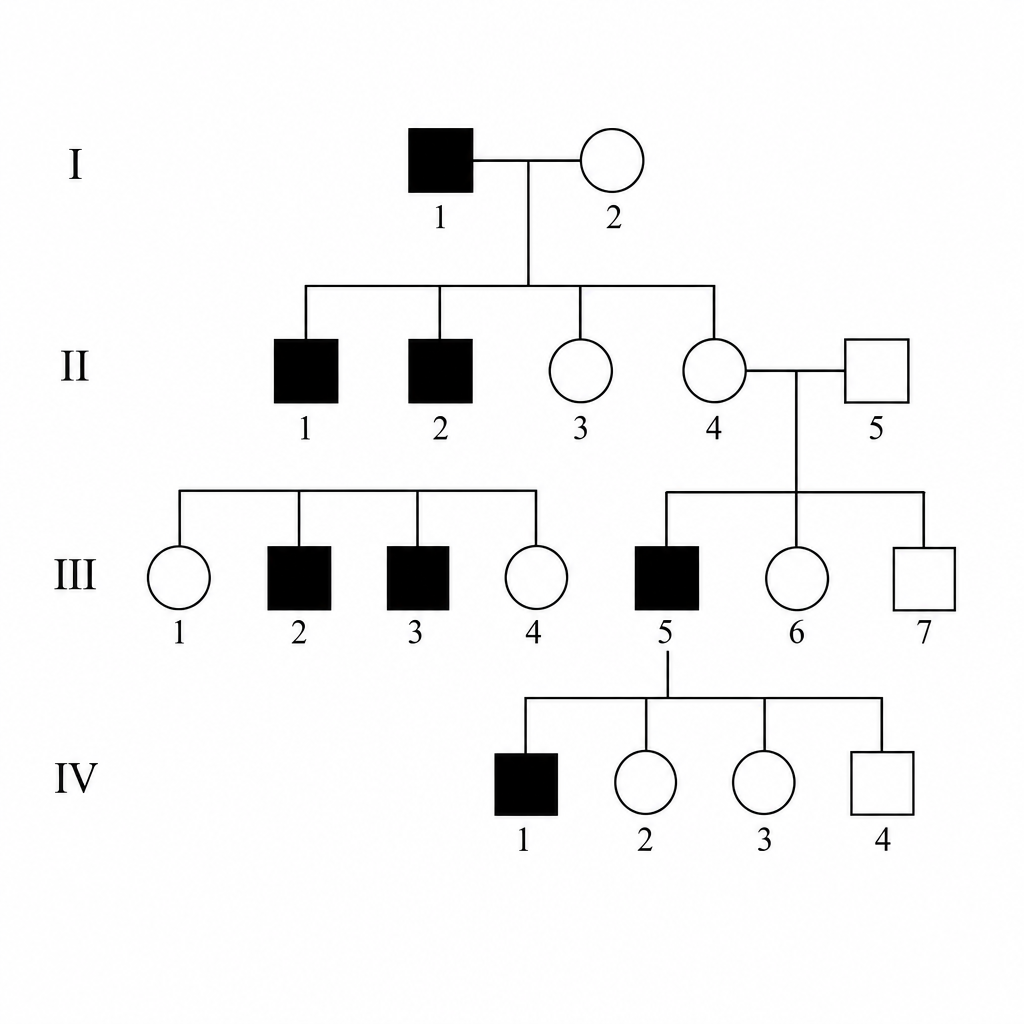
Which of the following statements is true about linkage analysis?
Which antibiotic inhibits protein synthesis by causing premature chain termination and structurally resembles an aminoacyl tRNA?
Topoisomers are DNA forms that differ in which of the following?
What types of enzymatic activity does DNA polymerase possess?
In DNA, adenine always pairs with which of the following?
The position where RNA polymerase binds to initiate transcription is called:
Silent mutations occur because the genetic code is:
The RB gene is located on which chromosomal band?
Transketolase mRNA is complementary to which of the following?
All of the following are ways of regulation of gene expression in eukaryotes, except?
Explanation: **Explanation:** **Linkage analysis** is a gene-mapping technique based on the principle that genes or genetic markers located close to each other on the same chromosome tend to be inherited together during meiosis. 1. **Why Option A is correct:** Linkage analysis involves identifying a **DNA polymorphism** (a genetic marker like an RFLP, SNP, or microsatellite) that is consistently co-inherited with a disease-causing gene within a specific family. If a specific marker is always present in affected individuals but absent in healthy ones, it indicates that the marker is "linked" to the disease locus. This is an **indirect method** of genetic diagnosis, useful when the exact mutation is unknown. 2. **Why the other options are incorrect:** * **Option B:** While a pedigree chart is a *prerequisite* for performing linkage analysis, the analysis itself is a molecular technique to find genetic associations, not just a tool for drawing family trees. * **Option C:** Paternity testing typically uses DNA profiling (DNA fingerprinting) via STR analysis, not linkage analysis of disease-associated traits. * **Option D:** Linkage analysis is, by definition, a **gene mapping method**. It is used to determine the relative position of genes on a chromosome. **High-Yield Clinical Pearls for NEET-PG:** * **Recombination Frequency:** The closer two loci are, the lower the chance of a crossover between them. A recombination frequency of **<50%** indicates linkage. * **LOD Score (Logarithm of Odds):** Used to determine the statistical significance of linkage. A **LOD score of +3 or higher** is considered definitive evidence that two loci are linked. * **Application:** It is particularly useful for **positional cloning** and diagnosing single-gene disorders (e.g., Cystic Fibrosis, Huntington’s) in families where the specific mutation is heterogeneous.
Explanation: **Explanation** **Correct Answer: C. Puromycin** **Mechanism of Action:** Puromycin is a unique antibiotic because it acts as a **structural analog of the 3' end of aminoacyl-tRNA** (specifically tyrosinyl-tRNA). Due to this structural mimicry, it enters the **A-site** of the ribosome and participates in peptide bond formation. The peptidyl transferase enzyme attaches the growing polypeptide chain to the puromycin molecule. However, because puromycin lacks the rest of the tRNA structure required to remain bound to the ribosome, the "peptidyl-puromycin" complex dissociates, leading to **premature chain termination**. Notably, puromycin inhibits protein synthesis in both **prokaryotes and eukaryotes**, making it a valuable tool in laboratory research but unsuitable for clinical use in humans. **Why other options are incorrect:** * **A. Tetracycline:** Binds to the 30S ribosomal subunit and physically blocks the attachment of aminoacyl-tRNA to the A-site. It does not mimic tRNA or cause premature termination. * **B. Chloramphenicol:** Binds to the 50S subunit and inhibits the enzyme **peptidyl transferase**, preventing the formation of the peptide bond. * **D. Erythromycin (Macrolide):** Binds to the 50S subunit and inhibits **translocation**, preventing the ribosome from moving along the mRNA. **High-Yield NEET-PG Pearls:** * **Puromycin** is the only antibiotic that acts on both prokaryotic and eukaryotic ribosomes. * **Diphtheria toxin** and **Pseudomonas Exotoxin A** inhibit protein synthesis by inactivating Elongation Factor-2 (eEF-2) via ADP-ribosylation. * **Riccin** (from castor beans) inactivates the 60S subunit by removing an adenine residue from rRNA.
Explanation: ### Explanation **Linking Number (Lk)** is the fundamental topological property that defines topoisomers. It represents the number of times one strand of DNA winds around the other in a closed-circular molecule. Since DNA in a cell is often supercoiled to fit within the nucleus, topoisomers are molecules that have the same sequence and length but differ in their degree of supercoiling (their "topology"). #### Why the Correct Answer is Right: * **Linking Number (Lk):** This is an invariant topological property of covalently closed circular DNA (cccDNA). It can only be changed by breaking and rejoining the DNA backbone, a process catalyzed by **Topoisomerases**. If two DNA molecules are identical in every way except for their Lk, they are called topoisomers. #### Why Other Options are Wrong: * **GC Content:** This refers to the percentage of Guanine and Cytosine bases. Topoisomers are identical in sequence; therefore, their GC content is exactly the same. * **Melting Temperature (Tm):** Tm depends on the DNA length and GC content. Since topoisomers have the same sequence and length, their theoretical Tm remains the same (though supercoiling can slightly influence strand separation kinetics, it does not define the isomer). * **Coding Region:** Topoisomers are structural variants of the same DNA molecule; they do not differ in their genetic information or coding sequences. #### High-Yield Clinical Pearls for NEET-PG: * **Topoisomerase I:** Cuts a single strand, changes Lk by steps of 1, and does not require ATP. * **Topoisomerase II (DNA Gyrase in bacteria):** Cuts both strands, changes Lk by steps of 2, and requires ATP. * **Pharmacology Link:** * **Quinolones (Ciprofloxacin):** Inhibit bacterial DNA Gyrase (Topo II) and Topo IV. * **Etoposide/Teniposide:** Inhibit human Topoisomerase II (Anticancer drugs). * **Irinotecan/Topotecan:** Inhibit human Topoisomerase I. * **Ethidium Bromide:** An intercalating agent that decreases the Lk of DNA and is used to visualize DNA in gel electrophoresis.
Explanation: DNA polymerases are multifunctional enzymes essential for DNA replication and repair. The correct answer is **All of the above** because different DNA polymerases (specifically DNA Polymerase I in prokaryotes) utilize these three distinct activities to ensure genomic integrity. ### **Explanation of Enzymatic Activities:** 1. **5' to 3' Polymerase Activity:** This is the primary function of all DNA polymerases. It allows the enzyme to add nucleotides to the 3' hydroxyl (-OH) end of a growing DNA strand, synthesizing DNA in the 5' to 3' direction. 2. **3' to 5' Exonuclease Activity (Proofreading):** This activity allows the enzyme to "backspace" and remove mismatched nucleotides immediately after they are incorporated. This high-fidelity mechanism significantly reduces the mutation rate. 3. **5' to 3' Exonuclease Activity:** Unique to **DNA Polymerase I**, this activity is used to remove RNA primers (and damaged DNA) ahead of the advancing enzyme and replace them with DNA (Nick Translation). ### **Why other options are incomplete:** While options A, B, and C are individual functions of the enzyme, they do not represent the full repertoire of DNA Polymerase I. In the context of NEET-PG, when "DNA Polymerase" is mentioned generally, it refers to the collective capabilities found within the enzyme family. ### **High-Yield Clinical Pearls for NEET-PG:** * **DNA Polymerase III:** The main enzyme for elongation in prokaryotes; it lacks 5' to 3' exonuclease activity. * **Klenow Fragment:** A proteolytic product of DNA Pol I that retains polymerase and 3' to 5' exonuclease activity but **loses** 5' to 3' exonuclease activity. * **Eukaryotic Counterparts:** * **Pol $\alpha$:** Initiates replication (primase). * **Pol $\delta$:** Lagging strand synthesis. * **Pol $\epsilon$:** Leading strand synthesis. * **Pol $\gamma$:** Mitochondrial DNA replication.
Explanation: ### Explanation The structure of DNA is governed by **Chargaff’s Rules** and the **Watson-Crick model** of base pairing. In the DNA double helix, nitrogenous bases pair specifically via hydrogen bonds to maintain a uniform distance between the two sugar-phosphate backbones. **Why Thymine is Correct:** Adenine (a purine) always pairs with **Thymine** (a pyrimidine) in DNA through **two hydrogen bonds**. This specific pairing ensures that a large double-ring purine always matches with a smaller single-ring pyrimidine, keeping the DNA width constant at 2 nm. **Analysis of Incorrect Options:** * **Guanine:** This is a purine. Purine-purine pairing (A-G) would cause a "bulge" in the DNA helix due to size constraints. Guanine specifically pairs with Cytosine via three hydrogen bonds. * **Cytosine:** This is a pyrimidine that pairs exclusively with Guanine. Adenine and Cytosine do not pair because their hydrogen bond donor/acceptor patterns are incompatible. * **Uracil:** While Uracil is the correct partner for Adenine, it is found **only in RNA**. In DNA, thymine (5-methyluracil) is used instead to provide greater genetic stability and allow for the detection of cytosine deamination. **High-Yield Clinical Pearls for NEET-PG:** * **Chargaff’s Rule:** States that in double-stranded DNA, the amount of A = T and G = C; therefore, Purines (A+G) = Pyrimidines (C+T). * **Bond Strength:** G-C pairs have three hydrogen bonds, making them more stable than A-T pairs (two bonds). DNA with high G-C content has a higher **Melting Temperature (Tm)**. * **T vs. U:** Thymine is essentially Uracil with a methyl group at the C5 position. This "tag" allows DNA repair enzymes to distinguish between natural Thymine and Uracil formed by the accidental deamination of Cytosine.
Explanation: **Explanation:** **1. Why the Correct Answer is Right:** The **Promoter region** is a specific DNA sequence located upstream (5') of the gene. It serves as the recognition and binding site for **RNA polymerase** (and transcription factors in eukaryotes) to initiate transcription. In prokaryotes, this involves the **Pribnow box** (-10 sequence), while in eukaryotes, the **TATA box** (Hogness box) is the classic promoter element. The binding of RNA polymerase to the promoter ensures that transcription begins at the correct start site and in the correct orientation. **2. Why the Other Options are Wrong:** * **Terminator:** This is a DNA sequence at the end of a gene or operon that signals RNA polymerase to stop transcription and release the newly synthesized RNA transcript. * **Anti-terminator:** These are proteins or RNA elements that allow RNA polymerase to ignore termination signals and continue transcription past the normal stop site (common in bacteriophage regulation). * **Operator:** This is a DNA segment (typically found in prokaryotic operons) where a **repressor protein** binds. It acts as a "switch" to regulate whether RNA polymerase can proceed from the promoter to the structural genes. **3. Clinical Pearls & High-Yield Facts for NEET-PG:** * **TATA Box:** Located at -25 to -35 bp upstream in eukaryotes; it is essential for positioning RNA Polymerase II. * **CAAT Box:** Located at -70 to -80 bp; it regulates the *frequency* of transcription. * **Enhancers:** These are DNA sequences that can be located far from the promoter but increase the rate of transcription by looping the DNA. * **Rifampicin:** A key antitubercular drug that acts by inhibiting the **beta-subunit of bacterial DNA-dependent RNA polymerase**, preventing transcription initiation. * **Alpha-amanitin:** Found in *Amanita phalloides* (death cap mushroom), it specifically inhibits **RNA Polymerase II**, leading to severe liver failure.
Explanation: **Explanation:** **1. Why "Degenerate" is Correct:** The genetic code is described as **degenerate (or redundant)** because a single amino acid can be coded by multiple different codons. Most of this redundancy occurs at the **3rd position of the codon** (the "Wobble position"). A **silent mutation** is a point mutation where a base change occurs, but the resulting codon still codes for the same amino acid. For example, if the codon GAA (Glutamic acid) mutates to GAG, it still codes for Glutamic acid. Therefore, the primary structure of the protein remains unchanged despite the DNA sequence alteration. **2. Why Other Options are Incorrect:** * **Non-overlapping:** This means each nucleotide is part of only one codon and is read sequentially. It explains the reading frame but not why mutations can be silent. * **Commaless:** This implies there are no "punctuations" or spacers between codons; the code is read continuously. * **Universal:** This means the same genetic code is used by almost all organisms (from bacteria to humans). While a fundamental property, it does not relate to the phenotypic expression of mutations. **3. NEET-PG High-Yield Pearls:** * **Wobble Hypothesis:** Proposed by Francis Crick; explains how the 5' anticodon base can pair with multiple 3' codon bases, allowing fewer tRNAs to recognize multiple codons. * **Exceptions to Universality:** Human mitochondrial DNA (e.g., UGA codes for Tryptophan instead of a Stop codon). * **Non-degenerate Amino Acids:** Only **Methionine (AUG)** and **Tryptophan (UGG)** are coded by a single codon. * **Clinical Significance:** Silent mutations are not always "neutral"; they can sometimes affect mRNA stability or splicing, leading to disease (e.g., certain cases of Cystic Fibrosis).
Explanation: **Explanation:** The **RB1 gene** is a critical tumor suppressor gene located on the **long arm (q) of chromosome 13 at band 14 (13q14)**. It encodes the pRb protein, which acts as a "molecular brake" on the cell cycle by binding to the E2F transcription factor, preventing the transition from the G1 to the S phase. **Analysis of Options:** * **13q14 (Correct):** This is the precise locus of the RB1 gene. Deletions or mutations at this site are associated with both hereditary and sporadic forms of Retinoblastoma and Osteosarcoma. * **14q13:** This locus is associated with genes like *NKX2-1* (involved in thyroid and lung development), not the RB gene. * **13p14 & 14p13:** These options refer to the **short arms (p)** of acrocentric chromosomes. In humans, the short arms of chromosomes 13, 14, 15, 21, and 22 contain ribosomal RNA (rRNA) genes and satellite DNA, not major tumor suppressor genes like RB. **High-Yield Clinical Pearls for NEET-PG:** * **Knudson’s Two-Hit Hypothesis:** Retinoblastoma was the first cancer used to describe this model. In familial cases, the first "hit" (mutation) is inherited (germline), and the second is acquired (somatic). In sporadic cases, both hits are somatic. * **Cell Cycle Control:** pRb is **active when hypophosphorylated** (binds E2F) and **inactive when hyperphosphorylated** by Cyclin D-CDK4/6 complexes. * **Associated Tumors:** Patients with germline RB1 mutations have a high risk of developing **Osteosarcoma** later in life. * **Microscopy:** Look for **Flexner-Wintersteiner rosettes** in histopathology of Retinoblastoma.
Explanation: **Explanation:** In molecular biology, transcription is the process where a DNA sequence is copied into mRNA. To understand this relationship, we must distinguish between the two strands of the DNA double helix: 1. **The Template (Non-coding/Antisense) Strand:** This is the strand that RNA polymerase actually "reads" to synthesize mRNA. Because the mRNA is synthesized using base-pairing rules (A-U, G-C), the **mRNA is complementary to the template strand**. Therefore, the mRNA for Transketolase is complementary to the **Non-coding strand**. 2. **The Coding (Non-template/Sense) Strand:** This strand has the same sequence as the mRNA (except T instead of U). The mRNA is *not* complementary to this strand; it is a replica of it. **Analysis of Options:** * **Option C (Correct):** The Non-coding strand acts as the template for transcription. By definition, the resulting mRNA transcript is complementary to its template. * **Option A & B (Incorrect):** The "Coding" and "Non-template" strands are synonyms. The mRNA sequence matches these strands (with U replacing T) rather than being complementary to them. * **Option D (Incorrect):** The "Sense" strand is another name for the coding strand. mRNA is identical in "sense" to this strand, not complementary. **NEET-PG High-Yield Pearls:** * **Transketolase Clinical Link:** This enzyme is part of the Pentose Phosphate Pathway (HMP Shunt) and requires **Thiamine (Vitamin B1)** as a cofactor. In clinical practice, measuring erythrocyte transketolase activity is the gold standard for diagnosing Thiamine deficiency (Wernicke-Korsakoff syndrome). * **Directionality:** RNA polymerase reads the template strand in the **3' → 5'** direction to synthesize mRNA in the **5' → 3'** direction. * **Mnemonic:** **"CO-SE-NO"** (Coding = Sense = Non-template). If the mRNA is complementary to one, it must be the opposite (Non-coding/Antisense/Template).
Explanation: ### Explanation **1. Why "Attenuation by operon" is the correct answer:** Attenuation is a mechanism of gene regulation that relies on the **coupling of transcription and translation**. In this process, the speed of a ribosome moving along a leader sequence determines whether transcription continues or terminates prematurely. This mechanism is **exclusive to prokaryotes** because they lack a nuclear membrane, allowing ribosomes to attach to mRNA while it is still being synthesized. In eukaryotes, transcription occurs in the nucleus and translation in the cytoplasm; this spatial separation makes attenuation impossible. Furthermore, eukaryotes do not organize genes into **operons** (polycistronic units); they typically use monocistronic mRNA. **2. Why the other options are incorrect:** * **Gene amplification:** This occurs in eukaryotes to increase the dosage of specific genes. A classic example is the amplification of the **Dihydrofolate Reductase (DHFR) gene** in cancer cells, leading to methotrexate resistance. * **Gene rearrangement:** This is a vital eukaryotic process, specifically in the immune system. **V(D)J recombination** in B-cells and T-cells allows for the generation of vast antibody and T-cell receptor diversity. * **Regulation of mRNA stability:** Eukaryotes regulate gene expression post-transcriptionally by altering the half-life of mRNA. For example, the **Iron Response Element (IRE)** system regulates the stability of Transferrin receptor mRNA based on cellular iron levels. ### High-Yield Clinical Pearls for NEET-PG * **Trp Operon:** The most famous example of attenuation is the Tryptophan operon in *E. coli*. * **Hormone Response Elements (HREs):** These are the primary sites for transcriptional regulation in eukaryotes by steroid hormones. * **Epigenetics:** Eukaryotic regulation often involves **Histone Acetylation** (activates transcription) and **DNA Methylation** (silences transcription, usually at CpG islands). * **RNA Interference (RNAi):** A key eukaryotic mechanism where miRNA or siRNA leads to mRNA degradation or translational silencing.
DNA Replication and Repair Mechanisms
Practice Questions
Transcription Factors and Gene Regulation
Practice Questions
Epigenetics and DNA Methylation
Practice Questions
RNA Processing and Splicing
Practice Questions
miRNA and RNA Interference
Practice Questions
Protein Synthesis and Post-Translational Modifications
Practice Questions
Genomics and Human Genome Project
Practice Questions
Single Nucleotide Polymorphisms
Practice Questions
Gene Therapy Approaches
Practice Questions
CRISPR-Cas9 and Genome Editing
Practice Questions
DNA Fingerprinting and Forensics
Practice Questions
Molecular Basis of Genetic Diseases
Practice Questions
Get full access to all questions, explanations, and performance tracking.
Start For Free