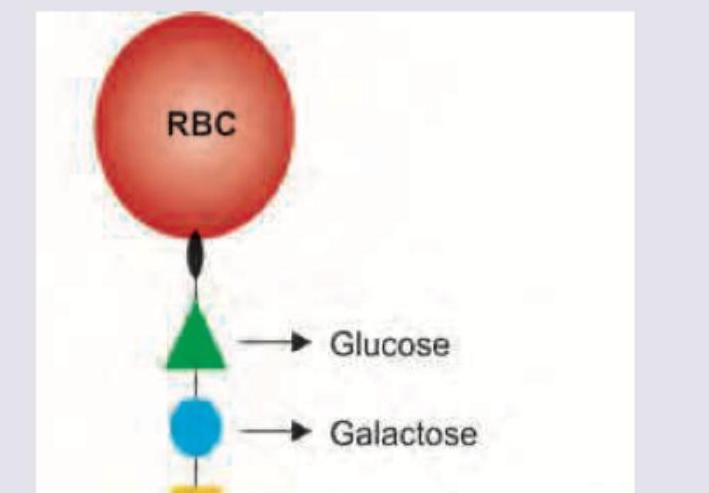
What is the primary carbohydrate component of ABO blood group antigens?
What are the final products of the Hexose Monophosphate Pathway?
During gluconeogenesis, how are reducing equivalents transported from mitochondria to the cytosol?
Glucokinase is inhibited by which of the following?
All of the following are enzymes of the TCA cycle, EXCEPT?
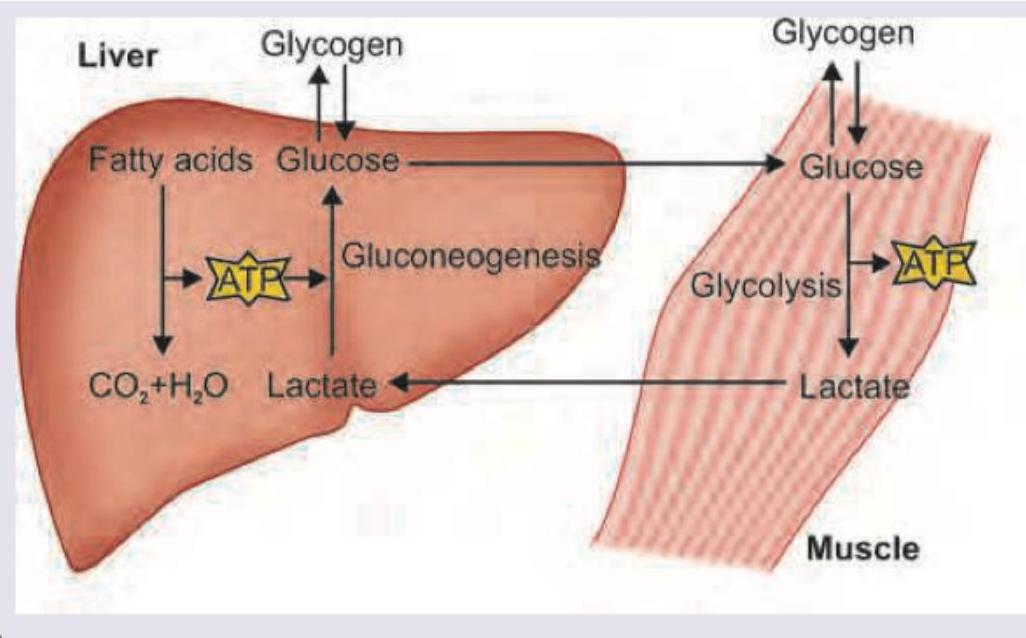
A 15-year-old type I diabetic patient faints after injecting himself with insulin. He is administered Glucagon and rapidly recovers consciousness. Glucagon induces activity of which enzyme?
Essential fructosuria is due to deficiency of which enzyme?
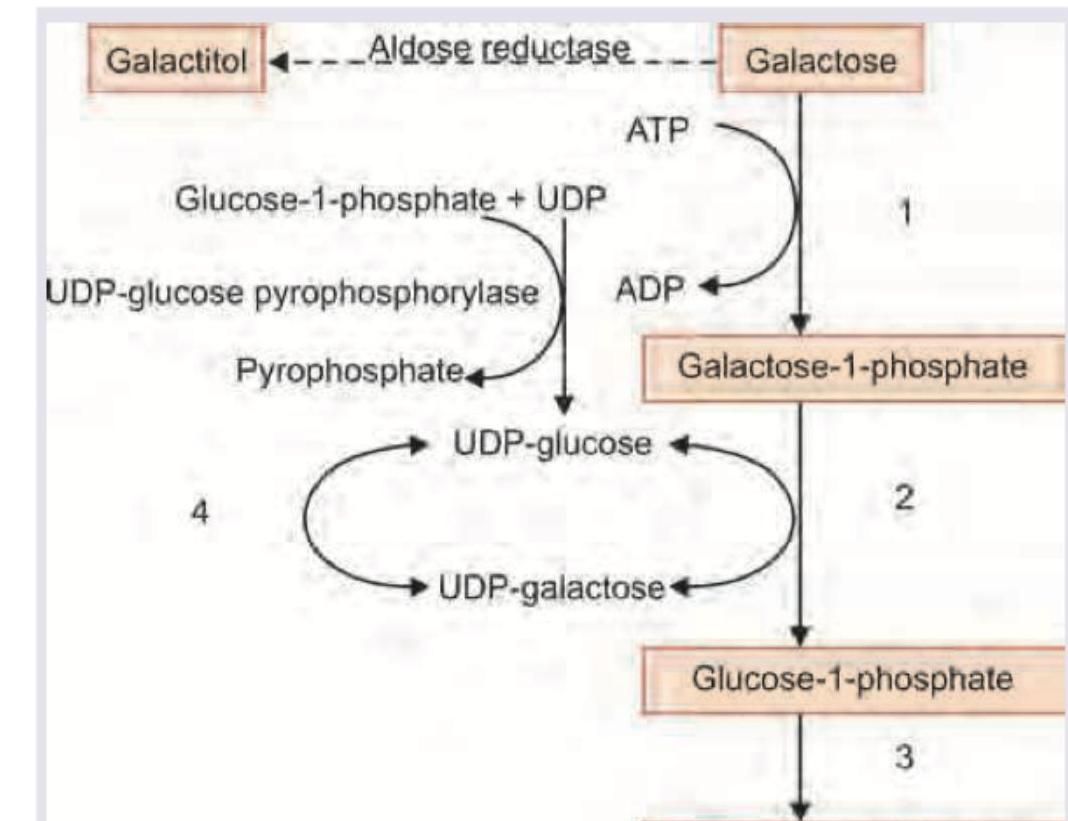
A 3-year-old boy presented with several episodes of vomiting and lethargy, accompanied by hypoglycemia. His pediatrician suspected possible hepatic failure given the recurrent vomiting and lethargy. It was noted that these episodes occur after the ingestion of sweets or fruits. What is the most likely diagnosis?
Structurally, what type of polysaccharide is heparin?
The activity of pyruvate carboxylase is dependent upon which positive allosteric effector?
Explanation: **Explanation:** The ABO blood group system is based on specific carbohydrate sequences (oligosaccharides) attached to glycoproteins or glycolipids on the red blood cell membrane. **Why Fructose (L-Fucose) is the correct answer:** The biochemical precursor for ABO antigens is the **H substance**. The defining sugar that confers H-antigen specificity is **L-Fucose** (a deoxy sugar derived from fructose). * **H-antigen:** Formed by the addition of L-Fucose to the precursor chain by *fucosyltransferase*. * **A-antigen:** Formed by adding *N-acetylgalactosamine* to the H-substance. * **B-antigen:** Formed by adding *D-galactose* to the H-substance. Since L-Fucose is the essential "foundation" sugar for all ABO antigens, it is the primary carbohydrate component identified in this context. **Analysis of Incorrect Options:** * **A. Glucose:** While glucose is a fundamental energy source, it is not the specific immunodominant sugar that determines ABO blood group specificity. * **C. Inulin:** This is a polymer of fructose used clinically to measure Glomerular Filtration Rate (GFR); it is not found in human cell membranes. * **D. Maltose:** A disaccharide composed of two glucose units; it is an intermediate in starch digestion and plays no role in blood group antigenicity. **High-Yield Clinical Pearls for NEET-PG:** 1. **Bombay Phenotype (hh):** Individuals lack the *H gene*, meaning they cannot produce L-Fucose linkage. They lack A, B, and H antigens and produce potent anti-H antibodies. 2. **Immunodominant Sugars:** * **Group A:** N-acetylgalactosamine. * **Group B:** D-galactose. * **Group O:** L-Fucose (H-substance only). 3. **Secretors:** 80% of the population secrete these ABO antigens in saliva and body fluids, governed by the *Se gene*.
Explanation: **Explanation:** The **Hexose Monophosphate (HMP) Shunt**, also known as the Pentose Phosphate Pathway, is a unique alternative pathway for glucose oxidation that occurs in the cytosol. Unlike glycolysis, its primary purpose is not the generation of ATP, but the production of **NADPH** and **Ribose-5-phosphate**. **Why 6 NADPH is the correct answer:** The stoichiometry of the HMP shunt is calculated based on the complete oxidation of **one molecule of Glucose-6-Phosphate**. In the oxidative phase, for every one molecule of glucose entering the cycle, 2 molecules of NADPH are produced. However, to achieve the complete oxidation of glucose to $CO_2$, the cycle must run multiple times. Specifically, for every **3 molecules of Glucose-6-Phosphate** that enter the pathway, **6 molecules of NADPH** are generated (2 per glucose unit) along with 3 molecules of $CO_2$ and 3 pentose phosphates. In many standardized NEET-PG contexts, "6 NADPH" is the classic textbook figure associated with the balanced equation of the oxidative phase. **Analysis of Incorrect Options:** * **B & C (2 and 3 NADPH):** These represent incomplete cycles. While 2 NADPH are produced per single molecule of glucose in the initial oxidative steps, they do not represent the total yield of the pathway's balanced metabolic flux. * **D (Variable):** While the non-oxidative phase is reversible and can vary based on cellular needs (e.g., more ribose vs. more NADPH), the stoichiometry of the oxidative phase is fixed. **Clinical Pearls for NEET-PG:** * **Rate-limiting enzyme:** Glucose-6-Phosphate Dehydrogenase (G6PD). * **G6PD Deficiency:** Leads to hemolytic anemia due to the inability to regenerate reduced glutathione, making RBCs susceptible to oxidative stress (Heinz bodies). * **Key Functions of NADPH:** Required for fatty acid synthesis, steroid synthesis, and keeping glutathione in a reduced state to neutralize free radicals. * **Tissue Distribution:** Highly active in the adrenal cortex, liver, mammary glands, and RBCs.
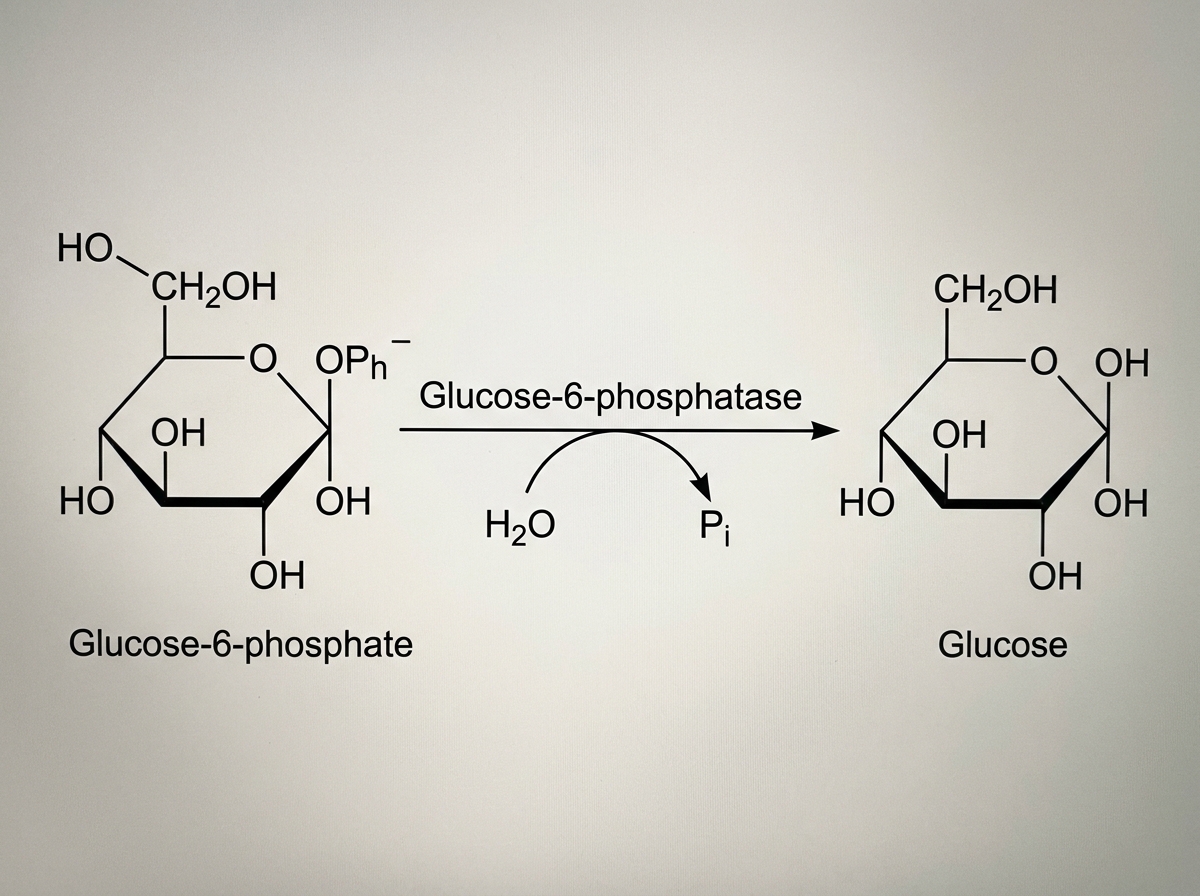
Explanation: **Explanation:** In gluconeogenesis, the conversion of pyruvate to phosphoenolpyruvate (PEP) requires the transport of **Oxaloacetate (OAA)** out of the mitochondria. However, the inner mitochondrial membrane is impermeable to OAA. To bypass this, OAA is converted into **Malate** by mitochondrial Malate Dehydrogenase. **Why Malate is the correct answer:** Malate can freely cross the mitochondrial membrane via the malate-aspartate shuttle. Once in the cytosol, Malate is re-oxidized to OAA by cytosolic Malate Dehydrogenase. This process is crucial because it simultaneously transports **reducing equivalents (NADH)** from the mitochondria to the cytosol. Since the subsequent step of gluconeogenesis (catalyzed by Glyceraldehyde-3-phosphate dehydrogenase) requires NADH, the "Malate Path" is the preferred route when pyruvate is the precursor. **Analysis of Incorrect Options:** * **B. Aspartate:** While OAA can be converted to Aspartate to leave the mitochondria, this pathway **does not** transport reducing equivalents (NADH). It is primarily used when the precursor is Lactate, as Lactate oxidation already provides cytosolic NADH. * **C. Glutamate:** Glutamate participates in the malate-aspartate shuttle as an amino group donor/receiver but does not serve as the primary carrier for reducing equivalents in gluconeogenesis. * **D. Oxaloacetate:** Direct transport is impossible because the inner mitochondrial membrane lacks a specific transporter for OAA. **High-Yield NEET-PG Pearls:** * **Rate-limiting step of Gluconeogenesis:** Pyruvate Carboxylase (requires **Biotin** and is activated by **Acetyl-CoA**). * **Location:** Gluconeogenesis occurs in the Liver (major) and Kidney (minor). * **Subcellular Location:** It is a "bisubcellular" process (Mitochondria and Cytosol). * **Key Difference:** If **Lactate** is the substrate, OAA is converted to **PEP** directly inside the mitochondria or exits via **Aspartate**, because NADH is already available in the cytosol from the LDH reaction.
Explanation: **Explanation:** The regulation of glycolysis involves two key enzymes that catalyze the phosphorylation of glucose: **Hexokinase** and **Glucokinase**. While they perform the same reaction, their regulatory mechanisms differ significantly. **Why Glucose-6-Phosphate (G6P) is the correct answer:** Glucokinase (Hexokinase IV) is primarily found in the liver and pancreatic beta cells. Unlike Hexokinase (found in extrahepatic tissues), Glucokinase is **not** inhibited by its product, Glucose-6-phosphate, under physiological conditions. However, in the context of standard biochemical classification and competitive inhibition studies, G6P is the classic feedback inhibitor for the Hexokinase family. *Note for NEET-PG:* There is a common examiner nuance here. While Glucokinase is famously "insensitive" to G6P compared to Hexokinase, it is inhibited by **Fructose-6-phosphate** via the **Glucokinase Regulatory Protein (GKRP)** in the liver. If "Fructose-6-phosphate" is not an option, G6P is the designated answer as it represents the feedback inhibition mechanism of the enzyme class. **Why other options are incorrect:** * **ATP & ADP:** While ATP is a substrate for the reaction, it does not act as an allosteric inhibitor for Glucokinase. In glycolysis, ATP typically inhibits **Phosphofructokinase-1 (PFK-1)**, the rate-limiting enzyme, but not the initial phosphorylation step by Glucokinase. **High-Yield Clinical Pearls for NEET-PG:** 1. **Km and Affinity:** Glucokinase has a **high Km** (low affinity) for glucose, meaning it only functions when blood glucose levels are high (post-prandial). 2. **Vmax:** It has a **high Vmax**, allowing the liver to rapidly clear glucose from portal blood to prevent hyperglycemia. 3. **Localization:** Glucokinase is sequestered in the nucleus by GKRP when glucose levels are low and released into the cytoplasm when glucose levels rise. 4. **Clinical Correlation:** Mutations in the Glucokinase gene are associated with **MODY type 2** (Maturity-Onset Diabetes of the Young).
Explanation: ### Explanation The **TCA cycle (Krebs cycle)** occurs in the mitochondrial matrix and consists of eight primary enzymatic steps. **Why Malic Enzyme is the correct answer:** **Malic enzyme** is not a component of the TCA cycle. It is an enzyme that catalyzes the oxidative decarboxylation of **Malate to Pyruvate**, simultaneously reducing NADP⁺ to **NADPH**. This reaction occurs in the cytosol and is considered an **anaplerotic** or shunt reaction. Its primary roles are providing NADPH for fatty acid synthesis and participating in the pyruvate-malate shuttle. It should not be confused with *Malate Dehydrogenase*, which converts Malate to Oxaloacetate within the TCA cycle. **Analysis of Incorrect Options:** * **A. Aconitase:** Catalyzes the isomerization of Citrate to Isocitrate via the intermediate *cis*-aconitate. It requires $Fe^{2+}$ as a cofactor. * **B. Fumarase (Fumarate Hydratase):** Catalyzes the hydration of Fumarate to L-Malate. * **D. Citrate Synthase:** The "pacemaker" or rate-limiting enzyme that condenses Acetyl-CoA and Oxaloacetate to form Citrate. **High-Yield Clinical Pearls for NEET-PG:** * **Location:** All TCA enzymes are in the mitochondrial matrix except **Succinate Dehydrogenase**, which is located on the inner mitochondrial membrane (also acts as Complex II of the ETC). * **Energy Yield:** One turn of the TCA cycle produces **10 ATP** (3 NADH = 7.5, 1 $FADH_2$ = 1.5, 1 GTP = 1). * **Inhibitors:** Fluoroacetate inhibits Aconitase; Arsenite inhibits $\alpha$-Ketoglutarate Dehydrogenase. * **Malic Enzyme vs. Malate Dehydrogenase:** Remember, Malic enzyme produces **NADPH**, while Malate Dehydrogenase produces **NADH**.
Explanation: ### Explanation **1. Why Glycogen Phosphorylase is Correct:** The patient is experiencing **hypoglycemia** due to insulin overdose. Glucagon is the counter-regulatory hormone secreted in response to low blood glucose. It acts primarily on the liver by binding to G-protein coupled receptors (GPCR), increasing intracellular **cAMP**, and activating **Protein Kinase A (PKA)**. PKA phosphorylates **Phosphorylase Kinase**, which in turn phosphorylates and activates **Glycogen Phosphorylase** (converting it from the inactive 'b' form to the active 'a' form). This triggers **glycogenolysis**, rapidly releasing glucose into the bloodstream to restore consciousness. **2. Why the Other Options are Incorrect:** * **A. Glycogen Synthase:** This enzyme is responsible for glycogenesis (glycogen synthesis). Glucagon-induced phosphorylation **inactivates** glycogen synthase to prevent a futile cycle during hypoglycemia. * **C & D. Glucokinase/Hexokinase:** These enzymes catalyze the first step of glycolysis (glucose to glucose-6-phosphate). Glucagon inhibits glycolysis in the liver (via inhibition of PFK-1 and Pyruvate Kinase) to conserve glucose for systemic circulation. Glucokinase expression is actually induced by insulin, not glucagon. **3. High-Yield Clinical Pearls for NEET-PG:** * **Mechanism of Action:** Glucagon $\rightarrow$ cAMP $\uparrow$ $\rightarrow$ PKA $\rightarrow$ Phosphorylase Kinase $\rightarrow$ Glycogen Phosphorylase. * **Key Regulatory Step:** Glycogen phosphorylase is the **rate-limiting enzyme** of glycogenolysis. * **Tissue Specificity:** Glucagon acts on the **liver** but has **no effect on muscle glycogen**, as muscle cells lack glucagon receptors. Muscle glycogen is used only for local energy during contraction. * **Clinical Use:** Glucagon is the emergency treatment of choice for severe hypoglycemia in diabetics when intravenous glucose access is unavailable.
Explanation: **Explanation:** **Essential Fructosuria** is a benign, autosomal recessive metabolic disorder caused by a deficiency of the enzyme **Fructokinase** (also known as Ketohexokinase). 1. **Why Fructokinase is correct:** In the normal metabolic pathway, fructokinase converts fructose into fructose-1-phosphate in the liver. When this enzyme is deficient, fructose cannot be trapped inside the cell. Instead, it accumulates in the blood (fructosemia) and is excreted in the urine (fructosuria). Because fructose is a reducing sugar, it will give a positive result on a Benedict’s test but a negative result on a glucose oxidase dipstick. 2. **Why other options are incorrect:** * **Aldolase B:** Deficiency leads to **Hereditary Fructose Intolerance (HFI)**. This is a severe condition where fructose-1-phosphate accumulates, depleting intracellular phosphate and causing hypoglycemia and liver failure. * **Beta-galactosidase:** Deficiency is associated with **GM1 gangliosidosis** or Morquio syndrome Type B, involving the breakdown of keratan sulfate and gangliosides, not fructose. * **Aldose reductase:** This enzyme converts glucose to sorbitol. It is implicated in diabetic complications (cataracts, neuropathy) but its deficiency does not cause fructosuria. **High-Yield Clinical Pearls for NEET-PG:** * **Clinical Presentation:** Essential fructosuria is **asymptomatic**. It is often discovered incidentally during routine urine screening for reducing sugars. * **Alternative Pathway:** In the absence of fructokinase, **hexokinase** becomes the primary enzyme for fructose metabolism, converting it to fructose-6-phosphate (though this is a slow, minor pathway). * **Mnemonic:** "Fructokinase deficiency is **Friendly** (asymptomatic), Aldolase B deficiency is **Bad** (symptomatic/HFI)."
Explanation: **Explanation:** The clinical presentation of vomiting, lethargy, and hypoglycemia triggered specifically by the ingestion of **fruits or sweets** is a classic hallmark of **Hereditary Fructose Intolerance (HFI)**. **1. Why Option A is Correct:** HFI is caused by a deficiency of **Aldolase B**. When fructose is ingested (found in fruits, honey, and sucrose/sweets), it is phosphorylated to **Fructose-1-Phosphate (F1P)** by fructokinase. Due to the absence of Aldolase B, F1P accumulates in the hepatocytes. This "trapping" of inorganic phosphate leads to: * **Inhibition of Glycogenolysis:** Phosphorylase enzyme is inhibited. * **Inhibition of Gluconeogenesis:** Due to lack of ATP and substrate availability. The result is profound **postprandial hypoglycemia** and liver dysfunction (vomiting/jaundice). **2. Why Other Options are Incorrect:** * **B. Glucose Homeostasis:** This is a physiological process, not a disease entity. * **C. Glycogen Storage Disease Type III (Cori Disease):** While it causes hypoglycemia and hepatomegaly, symptoms are typically triggered by fasting, not specifically by fructose/fruit ingestion. It is a deficiency of the debranching enzyme. * **D. Galactosemia:** Symptoms (cataracts, hepatomegaly, sepsis) usually appear in the neonatal period upon starting **milk** (lactose), not later with fruits/sweets. **NEET-PG High-Yield Pearls:** * **Enzyme Deficient:** Aldolase B (Chromosome 9). * **Key Trigger:** Introduction of weaning (fruit juices/sucrose). * **Biochemical Hallmark:** Intracellular depletion of inorganic phosphate ($P_i$) and ATP. * **Essential Fructosuria:** A benign condition caused by **Fructokinase** deficiency; unlike HFI, it does not cause hypoglycemia or liver damage as F1P does not accumulate.
Explanation: ### Explanation **1. Why Heteropolysaccharide is Correct:** Heparin belongs to the family of **Glycosaminoglycans (GAGs)**, also known as mucopolysaccharides. By definition, a **heteropolysaccharide** is a polymer composed of more than one type of monosaccharide unit. Heparin consists of repeating disaccharide units made of: * **Glucosamine** (specifically N-sulfated glucosamine) * **Uronic acid** (either D-glucuronic acid or L-iduronic acid) These units are highly sulfated, making heparin the **most acidic (most negatively charged) molecule** in the human body. **2. Why Other Options are Incorrect:** * **Homopolysaccharide:** These consist of only one type of monosaccharide unit (e.g., Starch, Glycogen, Cellulose, Inulin, and Dextrin). Heparin contains two different types of sugars in its backbone. * **Glycoprotein:** These are proteins containing short, branched oligosaccharide chains. While heparin can be part of a proteoglycan, the question asks for its structural classification as a polysaccharide. * **Mucoprotein:** This is an older term for glycoproteins. While GAGs are "mucoid" in nature, the specific structural category for the carbohydrate chain itself is a heteropolysaccharide. **3. High-Yield Clinical Pearls for NEET-PG:** * **Location:** Heparin is produced by **Mast cells** and is found intracellularly (unlike other GAGs which are extracellular). * **Mechanism:** It acts as an anticoagulant by activating **Antithrombin III**, which inhibits Thrombin (IIa) and Factor Xa. * **Antidote:** Due to its high negative charge, its effects are neutralized by **Protamine Sulfate** (which is strongly basic/positive). * **Key Distinction:** Heparin is the only GAG that is **not** found in the extracellular matrix (ECM) but is stored in secretory granules.
Explanation: **Explanation:** **Pyruvate carboxylase** is a key regulatory enzyme in **gluconeogenesis** that converts pyruvate into oxaloacetate (OAA) within the mitochondria. This reaction requires ATP, Biotin (as a cofactor), and CO₂. **1. Why Acetyl-CoA is the correct answer:** Acetyl-CoA acts as a mandatory **positive allosteric effector** for pyruvate carboxylase. When Acetyl-CoA levels are high (signaling an energy-rich state or high fatty acid oxidation), it signals that the TCA cycle is saturated. Acetyl-CoA binds to pyruvate carboxylase, activating it to produce more oxaloacetate. This OAA can then be diverted toward gluconeogenesis to maintain blood glucose levels or used to replenish the TCA cycle (anaplerosis). Without Acetyl-CoA, the enzyme is virtually inactive. **2. Why the other options are incorrect:** * **Succinate & Isocitrate:** These are intermediates of the TCA cycle. While they reflect the energy status of the cell, they do not directly regulate pyruvate carboxylase. * **AMP:** This is a signal of low energy. AMP typically inhibits gluconeogenic enzymes (like Fructose-1,6-bisphosphatase) and activates glycolytic enzymes (like PFK-1). It does not activate pyruvate carboxylase. **Clinical Pearls & High-Yield Facts for NEET-PG:** * **Cofactor Requirement:** Remember the mnemonic **ABC** for carboxylases: **A**TP, **B**iotin, and **C**O₂. * **Localization:** Pyruvate carboxylase is located exclusively in the **mitochondria**. * **Biotin Deficiency:** Can lead to lactic acidosis because pyruvate cannot be converted to OAA and is instead shunted to lactate. * **Reciprocal Regulation:** High Acetyl-CoA simultaneously **inhibits Pyruvate Dehydrogenase (PDH)** while activating Pyruvate Carboxylase, shifting the metabolic flux from glucose oxidation to glucose synthesis.
Carbohydrate Chemistry and Classification
Practice Questions
Glycolysis: Reactions and Regulation
Practice Questions
Gluconeogenesis: Reactions and Regulation
Practice Questions
Glycogen Metabolism: Synthesis and Breakdown
Practice Questions
Glycogen Storage Diseases
Practice Questions
Pentose Phosphate Pathway
Practice Questions
Metabolism of Fructose and Galactose
Practice Questions
Disorders of Fructose and Galactose Metabolism
Practice Questions
Blood Glucose Regulation
Practice Questions
Diabetes Mellitus: Biochemical Aspects
Practice Questions
Glycosylation and Glycoproteins
Practice Questions
Lactose Intolerance and Galactosemia
Practice Questions
Get full access to all questions, explanations, and performance tracking.
Start For Free