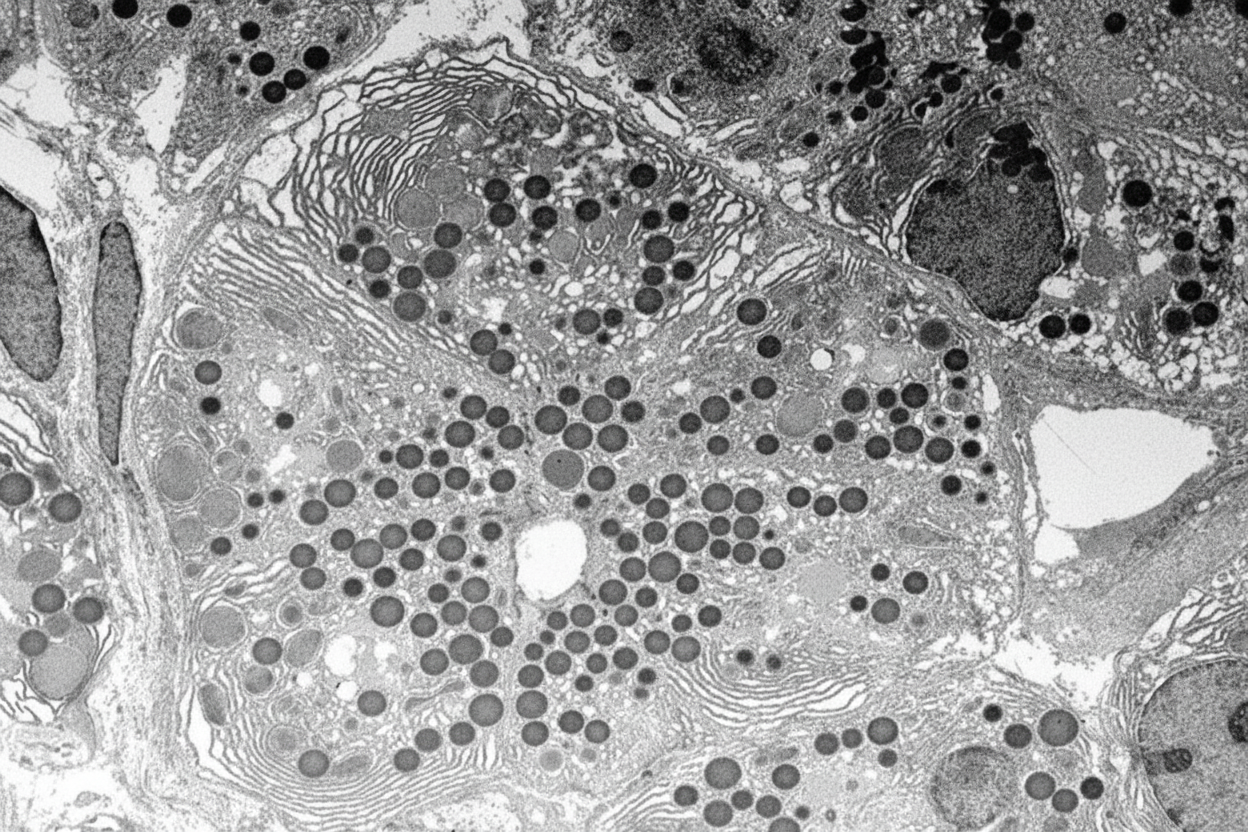
An infant presents with hepatosplenomegaly, hypoglycemia, hyperlipidemia, acidosis, and normally structured glycogen deposition in the liver. What is the diagnosis?
Which of the following inhibitors in the TCA cycle acts by blocking citrate?
How many molecules of ATP are produced by substrate-level phosphorylation during glycolysis?
What is the major source of NADPH for fatty acid synthesis?
A patient presents with an inability to digest carbohydrates. Which enzyme is likely deficient?
In glycogen, what is the type of linkage at branch points?
Which one of the following metabolites is used by all cells for glycolysis, glycogen synthesis, and the hexose monophosphate shunt pathway?
What is the major metabolic pathway in erythrocytes?
Which of the following is used for the assessment of carbohydrate malabsorption?
A four-year-old child presents with exercise intolerance. Investigations reveal blood pH 7.3, fasting blood sugar 60 mg%, hypertriglyceridemia, ketosis, and lactic acidosis. The child also has hepatomegaly and renomegaly. Biopsy of the liver and kidney shows increased glycogen content. What is the diagnosis?
Explanation: **Explanation:** The clinical presentation of hepatosplenomegaly, severe fasting hypoglycemia, hyperlipidemia, and lactic acidosis, combined with the deposition of **normally structured glycogen**, is the classic triad for **Von Gierke’s Disease (GSD Type I)**. **1. Why Von Gierke’s Disease is correct:** This condition is caused by a deficiency of **Glucose-6-Phosphatase**. This enzyme is the final step in both glycogenolysis and gluconeogenesis. Because the liver cannot convert Glucose-6-Phosphate into free glucose, patients suffer from profound fasting hypoglycemia. The accumulation of G-6-P shunts into alternative pathways, leading to: * **Hyperlipidemia:** Increased VLDL and triglycerides. * **Acidosis:** Specifically lactic acidosis (due to impaired gluconeogenesis) and hyperuricemia (Gout). * **Normal Glycogen Structure:** Unlike debranching enzyme defects, the glycogen molecule itself is synthesized normally but cannot be broken down into glucose. **2. Why other options are incorrect:** * **Her’s Disease (Type VI):** Deficiency of liver phosphorylase. It presents similarly but is much milder; lactic acid and uric acid levels are typically normal. * **Cori’s Disease (Type III):** Deficiency of Debranching enzyme. While it causes hypoglycemia, the glycogen deposited has **abnormal structure** (short outer chains/limit dextrins). * **Andersen’s Disease (Type IV):** Deficiency of Branching enzyme. It presents with liver cirrhosis and failure in early infancy, and the glycogen has **abnormally long, unbranched chains** (amylopectin-like). **NEET-PG High-Yield Pearls:** * **Von Gierke’s** is associated with "doll-like facies" and xanthomas. * **Key Lab Finding:** Hyperuricemia (due to increased PPP shunt and decreased renal clearance of urate). * **Treatment:** Frequent cornstarch feeds to maintain glucose levels.
Explanation: **Explanation:** **1. Why Fluoroacetate is Correct:** Fluoroacetate is a potent inhibitor of the TCA cycle, often referred to as a "suicide inhibitor." It does not inhibit the cycle directly in its original form. Instead, it is converted into **Fluorocitrate** by the enzyme Citrate Synthase. Fluorocitrate then competitively inhibits the enzyme **Aconitase**. This blockage prevents the conversion of Citrate to Isocitrate, leading to a toxic accumulation of **Citrate** in the mitochondria and a complete halt of the cycle. **2. Why Other Options are Incorrect:** * **Arsenite (B):** This inhibits the **Pyruvate Dehydrogenase (PDH) complex** and the **$\alpha$-Ketoglutarate Dehydrogenase** complex. It acts by binding to the -SH groups of Lipoic acid (a required co-factor), not by blocking citrate. * **Malonate (C):** This is a classic example of a competitive inhibitor that acts on **Succinate Dehydrogenase**. It competes with the substrate Succinate due to structural similarity. **3. NEET-PG High-Yield Pearls:** * **Suicide Inhibition:** Fluoroacetate is the most common example of suicide inhibition (where the enzyme converts a non-toxic substrate into a toxic inhibitor) asked in exams. * **Aconitase:** This enzyme contains an **Iron-Sulfur (Fe-S) cluster**, making it sensitive to oxidative stress. * **Arsenic Poisoning:** Clinically presents with "garlic breath" and rice-water stools; it inhibits enzymes requiring Lipoic acid. * **Inhibitor Summary:** * Fluoroacetate $\rightarrow$ Aconitase * Arsenite $\rightarrow$ $\alpha$-Ketoglutarate Dehydrogenase * Malonate $\rightarrow$ Succinate Dehydrogenase
Explanation: **Explanation:** In biochemistry, **substrate-level phosphorylation (SLP)** refers to the direct synthesis of ATP from ADP (or GTP from GDP) using the energy released from a high-energy intermediate, without the involvement of the electron transport chain or oxygen. In the payoff phase of glycolysis, SLP occurs at two specific enzymatic steps for every molecule of glucose: 1. **Phosphoglycerate Kinase:** Conversion of 1,3-bisphosphoglycerate to 3-phosphoglycerate (produces 1 ATP). 2. **Pyruvate Kinase:** Conversion of phosphoenolpyruvate (PEP) to pyruvate (produces 1 ATP). Since one glucose molecule splits into two triose phosphates (Glyceraldehyde-3-phosphate), these steps occur twice per glucose molecule. Therefore, **2 + 2 = 4 ATP** molecules are produced via SLP. **Analysis of Options:** * **Option A (5) & B (6):** These numbers do not correspond to any standard ATP yield in glycolysis. * **Option D (3):** This is incorrect. While the *net* gain of ATP in anaerobic glycolysis is 2 (4 produced minus 2 consumed in the preparatory phase), the question specifically asks for the total produced by SLP. **High-Yield Clinical Pearls for NEET-PG:** * **Net ATP Yield:** In aerobic glycolysis, the net yield is 7 or 8 ATP (depending on the shuttle used). In anaerobic glycolysis, the net yield is always 2 ATP. * **Arsenate Poisoning:** Arsenate competes with inorganic phosphate in the GAPDH reaction, bypassing the first SLP step. This results in **zero net ATP** production, though glycolysis continues. * **Rapoport-Luebering Cycle:** In RBCs, 1,3-BPG can be converted to 2,3-BPG. This bypasses the first SLP step, sacrificing ATP production to facilitate oxygen delivery to tissues.
Explanation: ### Explanation **Correct Answer: A. Pentose Phosphate Pathway (PPP)** The **Pentose Phosphate Pathway (PPP)**, also known as the Hexose Monophosphate (HMP) Shunt, is the primary metabolic source of **NADPH** in the body. This occurs specifically in the oxidative phase of the pathway, catalyzed by the rate-limiting enzyme **Glucose-6-Phosphate Dehydrogenase (G6PD)**. NADPH is essential for reductive biosynthesis, such as fatty acid synthesis, steroid synthesis, and maintaining reduced glutathione to protect cells against oxidative stress. Tissues active in lipogenesis (liver, adipose tissue, mammary glands) exhibit high PPP activity. **Why the other options are incorrect:** * **B. TCA Cycle:** The TCA cycle primarily generates **NADH** and **FADH₂**, which are used in the electron transport chain for ATP production. While the Malic enzyme (which converts Malate to Pyruvate) provides some NADPH, the TCA cycle itself is not the major source. * **C. Glycolysis:** This pathway converts glucose to pyruvate to generate **ATP** and **NADH**. It does not produce NADPH. * **D. Glycogenolysis:** This is the breakdown of glycogen into Glucose-1-Phosphate. Its primary role is to maintain blood glucose levels during fasting, not to generate reducing equivalents. **High-Yield Clinical Pearls for NEET-PG:** * **Rate-limiting enzyme of PPP:** Glucose-6-Phosphate Dehydrogenase (G6PD). * **G6PD Deficiency:** The most common enzymopathy worldwide; it leads to hemolytic anemia because RBCs lack mitochondria and depend solely on the PPP for NADPH to neutralize free radicals. * **Alternative NADPH source:** The **Malic Enzyme** is the second most important source of NADPH, particularly during fatty acid synthesis when citrate is transported out of the mitochondria. * **Non-oxidative phase:** This phase of PPP produces **Ribose-5-phosphate** for nucleotide synthesis and uses the enzyme **Transketolase** (which requires Thiamine/B1 as a cofactor).
Explanation: **Explanation:** **Correct Answer: B. Amylase** The digestion of carbohydrates begins in the mouth and continues in the small intestine. **Amylase** is the primary enzyme responsible for breaking down complex carbohydrates (starches and glycogen) into simpler sugars like maltose and maltotriose by cleaving $\alpha$-1,4-glycosidic bonds. There are two main types: **Salivary amylase (Ptyalin)** and **Pancreatic amylase**. A deficiency in amylase directly results in the inability to hydrolyze polysaccharides, leading to carbohydrate malabsorption. **Why the other options are incorrect:** * **A. Lipase:** This enzyme is responsible for the hydrolysis of **lipids** (fats) into fatty acids and glycerol. Deficiency leads to steatorrhea (fatty stools). * **C. Pepsin:** Secreted by the gastric chief cells as pepsinogen, this enzyme initiates the digestion of **proteins** in the stomach. * **D. Trypsin:** A pancreatic protease that breaks down **proteins** into smaller peptides in the small intestine. It also plays a crucial role in activating other pancreatic zymogens. **High-Yield Clinical Pearls for NEET-PG:** * **Site of Action:** Carbohydrate digestion is unique because it occurs in the mouth and intestine but **halts in the stomach** due to the inactivation of salivary amylase by low gastric pH. * **Diagnostic Marker:** Serum amylase levels are a classic (though non-specific) marker for **Acute Pancreatitis**. * **End Products:** Amylase cannot break $\alpha$-1,6-glycosidic bonds (branch points); therefore, the digestion of amylopectin results in **$\alpha$-limit dextrins**, which require isomaltase for further breakdown. * **Disaccharidases:** Final carbohydrate digestion occurs at the **brush border** of the small intestine via enzymes like sucrase, lactase, and maltase.
Explanation: **Explanation:** Glycogen is a highly branched homopolysaccharide of D-glucose. To understand its structure, one must distinguish between the linear chain and the branching points: 1. **Alpha-1,6 Linkage (Correct):** This linkage occurs at the **branch points** of glycogen. It is formed by the enzyme **Branching Enzyme** (Amylo-1,4 $\rightarrow$ 1,6 transglucosidase). Branching increases the solubility of glycogen and creates multiple non-reducing ends, allowing for rapid mobilization of glucose during glycogenolysis. 2. **Alpha-1,4 Linkage (Incorrect):** This is the primary linkage found in the **linear (straight) chains** of glycogen. It is formed by Glycogen Synthase and broken down by Glycogen Phosphorylase. 3. **Alpha-2,3 Linkage (Incorrect):** This type of linkage is not found in human carbohydrate metabolism; it is more characteristic of certain bacterial cell wall components or sialic acid attachments. 4. **Beta-1,4 Linkage (Incorrect):** This linkage is found in **Cellulose**. Humans lack the enzyme (cellulase) to break beta-1,4 bonds, which is why cellulose serves as dietary fiber rather than an energy source. **High-Yield NEET-PG Pearls:** * **Branching Frequency:** In glycogen, branches occur approximately every **8 to 12 glucose residues**. * **Debranching Enzyme:** This is a bifunctional enzyme. While it has transferase activity, it specifically uses **$\alpha$-1,6-glucosidase** activity to break the bond at the branch point, releasing one free glucose molecule. * **Clinical Correlation:** **Andersen Disease (GSD Type IV)** is caused by a deficiency in the branching enzyme, leading to the formation of long, unbranched glycogen chains (polyglucosan bodies) which trigger an immune response (cirrhosis).
Explanation: **Explanation:** **Glucose-6-phosphate (G6P)** is the central hub of carbohydrate metabolism. Once glucose enters a cell, it is immediately phosphorylated by Hexokinase (or Glucokinase in the liver) to G6P. This "traps" the glucose inside the cell and serves as the common starting point for multiple metabolic fates: 1. **Glycolysis:** G6P is isomerized to Fructose-6-phosphate to proceed toward ATP production. 2. **Glycogenesis:** G6P is converted to Glucose-1-phosphate (by phosphoglucomutase) to initiate glycogen synthesis. 3. **HMP Shunt (Pentose Phosphate Pathway):** G6P is the substrate for G6P Dehydrogenase (G6PD), the rate-limiting enzyme of this pathway, which produces NADPH and ribose-5-phosphate. **Analysis of Incorrect Options:** * **A. Glucose-1-phosphate:** This is an intermediate primarily involved in glycogen synthesis and breakdown. It is not a direct substrate for glycolysis or the HMP shunt. * **C. UDP-glucose:** This is the "activated" form of glucose used specifically for glycogen synthesis and galactose metabolism; it does not enter glycolysis or the HMP shunt directly. * **D. Fructose-6-phosphate:** While an intermediate in glycolysis, it is downstream of the branch points for the HMP shunt and glycogen synthesis. **NEET-PG High-Yield Pearls:** * **G6P Dehydrogenase Deficiency:** The most common enzyme deficiency worldwide, leading to hemolytic anemia due to the inability of the HMP shunt to maintain reduced glutathione in RBCs. * **Von Gierke Disease (GSD Type I):** Caused by a deficiency of **Glucose-6-phosphatase**. This prevents the conversion of G6P back to free glucose, leading to severe fasting hypoglycemia and hepatomegaly. * **The "Trapping" Step:** Phosphorylation of glucose to G6P is irreversible in most peripheral tissues, ensuring a concentration gradient for continued glucose uptake.
Explanation: **Explanation:** The correct answer is **D. Pentose Phosphate Pathway (PPP)**, also known as the Hexose Monophosphate (HMP) Shunt. **Why it is correct:** Mature erythrocytes (RBCs) lack mitochondria. Therefore, they rely entirely on anaerobic glycolysis for energy (ATP) and the PPP for generating **NADPH**. In RBCs, NADPH is critical because it acts as a co-factor for the enzyme **Glutathione Reductase**. This enzyme maintains a pool of reduced glutathione, which neutralizes reactive oxygen species (ROS) like hydrogen peroxide. Without the PPP, oxidative stress would lead to hemoglobin denaturation (Heinz bodies) and hemolysis. Approximately 10% of glucose in RBCs is metabolized via this pathway. **Why incorrect options are wrong:** * **A. Beta-oxidation:** This process occurs in the **mitochondria**. Since RBCs lack mitochondria, they cannot oxidize fatty acids for energy. * **B. Citric acid cycle (TCA):** Like beta-oxidation, the TCA cycle occurs within the **mitochondrial matrix**. RBCs cannot perform aerobic respiration. * **C. Gluconeogenesis:** This is the synthesis of glucose from non-carbohydrate precursors, occurring primarily in the **liver and kidneys**. RBCs are consumers of glucose, not producers. **High-Yield Clinical Pearls for NEET-PG:** * **G6PD Deficiency:** The most common enzyme deficiency in the PPP. It leads to episodic hemolytic anemia when RBCs are exposed to oxidative stress (e.g., Fava beans, Primaquine, or infections). * **Rapoport-Luebering Shunt:** Another unique RBC pathway that produces **2,3-BPG**, which decreases hemoglobin's affinity for oxygen, facilitating oxygen delivery to tissues. * **Key Enzyme:** Glucose-6-Phosphate Dehydrogenase (G6PD) is the rate-limiting enzyme of the PPP.
Explanation: ### Explanation **Correct Answer: C. D-xylose test** **Why it is correct:** D-xylose is a pentose sugar that is absorbed via passive diffusion in the proximal small intestine. Unlike glucose, it does not require pancreatic enzymes for digestion or active transport for absorption, and it is not significantly metabolized by the liver. In a healthy individual, an oral dose of D-xylose is absorbed and excreted in the urine. * **Clinical Significance:** Low urinary excretion or low blood levels of D-xylose indicate **mucosal malabsorption** (e.g., Celiac disease, Tropical sprue). It helps differentiate mucosal disease from pancreatic insufficiency (where D-xylose absorption remains normal). **Why the other options are incorrect:** * **A. Schilling test:** Used to determine the cause of **Vitamin B12 deficiency** (e.g., Pernicious anemia vs. malabsorption). It does not assess carbohydrate metabolism. * **B. Steatorrhoea:** Refers to the presence of excess fat in stools. It is a hallmark of **fat malabsorption**, not specifically carbohydrate malabsorption. * **D. Glucose tolerance test (GTT):** Primarily used to diagnose **Diabetes Mellitus** or Gestational Diabetes. While it measures glucose levels, it is not a reliable test for malabsorption because glucose levels are heavily influenced by insulin, liver function, and hormonal counter-regulation. **High-Yield NEET-PG Pearls:** * **D-xylose Test Requirements:** Requires normal renal function for accurate urinary results. If a patient has renal failure, blood levels are measured instead. * **False Positives:** Small Intestinal Bacterial Overgrowth (SIBO) can cause a false positive (low D-xylose) because bacteria metabolize the sugar before it can be absorbed. * **Hydrogen Breath Test:** This is the gold standard for diagnosing specific carbohydrate intolerances (like **Lactose Intolerance**). * **D-xylose vs. Pancreatic Insufficiency:** D-xylose absorption is **normal** in Chronic Pancreatitis because it doesn't require lipase or amylase.
Explanation: **Explanation:** The clinical presentation of **fasting hypoglycemia, lactic acidosis, hypertriglyceridemia, and hepatorenal enlargement** is classic for **Von Gierke’s Disease (GSD Type I)**. **1. Why Von Gierke’s Disease is Correct:** This condition is caused by a deficiency of **Glucose-6-Phosphatase**. This enzyme is essential for the final step of both glycogenolysis and gluconeogenesis. Its absence leads to: * **Hypoglycemia:** Inability to release glucose into the blood during fasting. * **Lactic Acidosis:** Excess Glucose-6-Phosphate is diverted into the glycolytic pathway, producing lactate. * **Hepatomegaly & Renomegaly:** Massive accumulation of glycogen (normal structure) in the liver and kidneys. * **Hyperlipidemia & Ketosis:** Impaired glucose metabolism shifts the body toward fat mobilization. **2. Why Other Options are Incorrect:** * **McArdle’s Disease (Type V):** Muscle phosphorylase deficiency. It presents with muscle cramps and myoglobinuria after exercise, but **no hypoglycemia or hepatomegaly**, as the liver enzyme is normal. * **Cori’s Disease (Type III):** Debranching enzyme deficiency. While it presents with hepatomegaly and hypoglycemia, **lactic acid levels are typically normal**, and there is no renomegaly. * **Pompe’s Disease (Type II):** Lysosomal acid maltase deficiency. It primarily affects the heart (**cardiomegaly**) and muscles. Blood glucose levels are usually normal. **High-Yield Clinical Pearls for NEET-PG:** * **"Doll-like facies"** (fatty cheeks) is a characteristic physical feature of Von Gierke’s. * **Hyperuricemia** is a common finding (due to increased PPP pathway activity leading to purine synthesis). * **Treatment:** Frequent oral cornstarch (slow-release glucose) and avoidance of fructose/galactose.
Carbohydrate Chemistry and Classification
Practice Questions
Glycolysis: Reactions and Regulation
Practice Questions
Gluconeogenesis: Reactions and Regulation
Practice Questions
Glycogen Metabolism: Synthesis and Breakdown
Practice Questions
Glycogen Storage Diseases
Practice Questions
Pentose Phosphate Pathway
Practice Questions
Metabolism of Fructose and Galactose
Practice Questions
Disorders of Fructose and Galactose Metabolism
Practice Questions
Blood Glucose Regulation
Practice Questions
Diabetes Mellitus: Biochemical Aspects
Practice Questions
Glycosylation and Glycoproteins
Practice Questions
Lactose Intolerance and Galactosemia
Practice Questions
Get full access to all questions, explanations, and performance tracking.
Start For Free