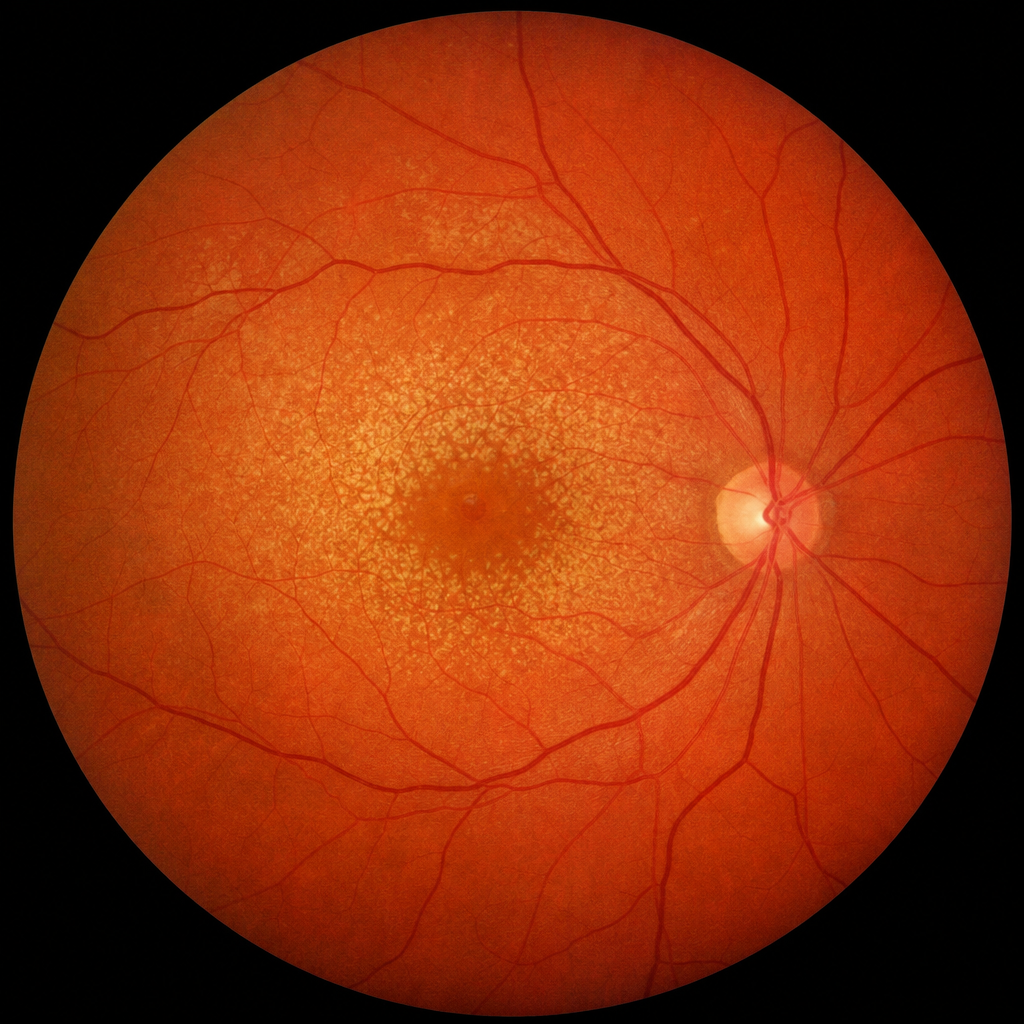
After overnight fasting, in which of the following cells are glucose transporter levels reduced?
McArdle's disease is due to deficiency of which enzyme?
Which GLUT transporter is responsible for the secretion of insulin from beta cells of the pancreas?
Which enzyme catalyzes a reversible step in glycolysis?
A boy presents with vomiting, a bloated abdomen, and abdominal pain. He attended an ice-cream eating competition last night and has a past history of similar episodes following the ingestion of milk and milk products. What is the likely cause?
All of the following are features of glycoproteins, except?
Which of the following metabolic pathways does not produce any ATP?
Which enzymes regulate glycolysis?
Which enzyme catalyzes the rate-limiting step in gluconeogenesis?
Glycemic index is calculated with respect to which of the following reference foods?
Explanation: **Explanation:** The regulation of glucose uptake depends on the specific type of glucose transporter (GLUT) expressed on the cell membrane. **1. Why Adipocytes are correct:** Adipocytes (and skeletal muscle) primarily express **GLUT-4**, which is the only **insulin-dependent** glucose transporter. In a fasting state, insulin levels are low. This causes GLUT-4 transporters to be sequestered from the cell surface and internalized into intracellular vesicles, significantly reducing their levels on the plasma membrane. This mechanism conserves glucose for glucose-dependent tissues like the brain. **2. Why the other options are incorrect:** * **Brain cells (A):** Express **GLUT-1 and GLUT-3**. These are insulin-independent and have a low Km (high affinity), ensuring constant glucose uptake even during hypoglycemia. * **Hepatocytes (B):** Express **GLUT-2**. This is an insulin-independent, high-capacity transporter that allows bidirectional glucose flux. Its presence on the membrane does not decrease during fasting; rather, it facilitates glycogenolysis and gluconeogenesis to release glucose into the blood. * **RBCs (D):** Express **GLUT-1**. RBCs lack mitochondria and rely solely on anaerobic glycolysis; therefore, they require constant, insulin-independent glucose access. **High-Yield Clinical Pearls for NEET-PG:** * **GLUT-4** is the "Insulin-Responsive" transporter found in **Adipose tissue and Striated muscle** (Skeletal & Cardiac). * **Exercise** can trigger GLUT-4 translocation to the membrane in muscles independent of insulin (important for managing Diabetes). * **GLUT-2** acts as a "Glucose Sensor" in Pancreatic Beta-cells. * **GLUT-5** is unique as it primarily transports **Fructose** (found in the small intestine and spermatozoa).
Explanation: **Explanation:** **McArdle’s disease (GSD Type V)** is a glycogen storage disease caused by a deficiency of **Muscle Phosphorylase** (also known as myophosphorylase). This enzyme is responsible for the rate-limiting step of glycogenolysis in skeletal muscle: breaking down glycogen into glucose-1-phosphate. Without it, muscles cannot mobilize glucose during exercise, leading to energy failure. **Analysis of Options:** * **Option B (Muscle Phosphorylase):** This is the correct answer. The deficiency is tissue-specific to skeletal muscle. * **Option A (Liver Phosphorylase):** Deficiency of the hepatic isoform of phosphorylase leads to **Hers disease (GSD Type VI)**, characterized by hepatomegaly and mild hypoglycemia, rather than muscle symptoms. * **Option C (Glycogen Phosphorylase):** While technically correct in a general sense, it is less specific than "Muscle Phosphorylase." In NEET-PG, always choose the most specific anatomical site if provided. * **Option D (Galactase):** This is unrelated to glycogen metabolism; it pertains to galactose metabolism (e.g., Galactosemia). **High-Yield Clinical Pearls for NEET-PG:** 1. **Clinical Presentation:** Patients present with exercise intolerance, muscle cramps, and fatigue. 2. **Second Wind Phenomenon:** A classic hallmark where symptoms improve after a few minutes of exercise as the body switches to using free fatty acids and blood glucose. 3. **Burgundy-colored urine:** Strenuous exercise can lead to rhabdomyolysis and **myoglobinuria**, which may cause acute renal failure. 4. **Ischemic Forearm Exercise Test:** Characterized by a **failure of blood lactate to rise** (since glycogen cannot be converted to lactate) while ammonia levels rise significantly.
Explanation: **Explanation:** The correct answer is **GLUT2**. In pancreatic beta cells, GLUT2 acts as a "glucose sensor." It is a high-capacity, high-Km (low affinity) transporter, meaning its rate of glucose transport is proportional to blood glucose levels. When blood glucose rises after a meal, GLUT2 facilitates the rapid entry of glucose into the beta cells. This glucose is then phosphorylated by **Glucokinase**, leading to ATP production, closure of ATP-sensitive K+ channels, depolarization, and the subsequent release of insulin. **Analysis of Incorrect Options:** * **GLUT1:** Found in most tissues, including RBCs and the blood-brain barrier. It provides basal glucose uptake but is not the primary trigger for insulin secretion. * **GLUT3:** Primarily found in neurons. It has a very low Km (high affinity), ensuring the brain receives glucose even during hypoglycemia. * **GLUT4:** The only **insulin-dependent** glucose transporter. It is sequestered in intracellular vesicles and translocates to the cell membrane of skeletal muscle and adipose tissue only in the presence of insulin. * **Note:** While humans primarily use GLUT1/3 for beta-cell sensing, GLUT2 remains the classic textbook and exam answer for the "glucose sensor" mechanism in medical boards. **High-Yield Clinical Pearls for NEET-PG:** * **Bidirectional Transport:** GLUT2 is unique because it allows bidirectional transport, crucial for glucose release from the liver during gluconeogenesis. * **Fanconi-Bickel Syndrome:** A rare glycogen storage disease caused by a mutation in the GLUT2 gene. * **SGLT vs. GLUT:** Remember that SGLTs (Sodium-Glucose Linked Transporters) use active transport (secondary), while GLUTs use **facilitated diffusion**.
Explanation: **Explanation:** In glycolysis, the metabolic pathway is governed by both **reversible** and **irreversible** steps. Most steps in glycolysis are reversible, meaning the same enzyme catalyzes the reaction in both glycolysis and gluconeogenesis. **Why Enolase is correct:** **Enolase** catalyzes the conversion of 2-phosphoglycerate (2-PG) to phosphoenolpyruvate (PEP). This is a dehydration reaction that is fully reversible. During gluconeogenesis, the same enzyme catalyzes the hydration of PEP back to 2-PG. *Note on Option D:* While **Phosphoglyceromutase** is also a reversible enzyme in glycolysis, in the context of standard NEET-PG questions where Enolase is the marked key, Enolase is often highlighted due to its clinical significance regarding fluoride inhibition. **Why other options are incorrect:** The "Three Irreversible Steps" of glycolysis are the primary regulatory checkpoints. These reactions have a large negative Gibbs free energy ($\Delta G$), making them one-way valves: * **A. Phosphofructokinase-1 (PFK-1):** The rate-limiting enzyme of glycolysis. It converts Fructose-6-P to Fructose-1,6-bisphosphate. * **C. Pyruvate Kinase:** Catalyzes the final step (PEP to Pyruvate). * *Hexokinase/Glucokinase (not listed):* Catalyzes the first step (Glucose to G6P). **High-Yield Clinical Pearls for NEET-PG:** 1. **Fluoride Inhibition:** Enolase is inhibited by **Fluoride**. This is why fluoride is added to blood collection tubes (Grey top) to prevent glycolysis when measuring blood glucose levels. 2. **Magnesium Dependency:** Enolase requires $Mg^{2+}$ as a cofactor; fluoride removes $Mg^{2+}$ as magnesium fluorophosphate, thereby halting the enzyme. 3. **Irreversible Enzymes:** Remember the mnemonic **"High Prices Pay"** (Hexokinase, PFK-1, Pyruvate Kinase) for the three irreversible steps.
Explanation: **Explanation:** The clinical presentation of abdominal bloating, pain, and vomiting following the ingestion of milk products (ice cream) is a classic manifestation of **Lactose Intolerance**, caused by **Lactase deficiency**. **Why the correct answer is right:** Lactase is a brush-border enzyme in the small intestine that hydrolyzes lactose into glucose and galactose. In its absence, undigested lactose passes into the colon. Here, it acts osmotically, drawing water into the lumen (causing diarrhea and bloating), and is fermented by colonic bacteria into hydrogen gas, methane, and lactic acid. This fermentation leads to flatulence, abdominal distension, and pain. **Why incorrect options are wrong:** * **Pancreatic/Salivary Amylase deficiency:** Amylase breaks down complex starches (polysaccharides) into maltose. Deficiency would lead to malabsorption of starches, not specifically milk-based sugars. * **Food poisoning:** While it causes vomiting and pain, the recurrent history ("past history of similar episodes") specifically linked to milk products points toward a metabolic/enzymatic defect rather than an acute infection. **High-Yield Clinical Pearls for NEET-PG:** * **Diagnosis:** The **Hydrogen Breath Test** is the gold standard (increased H₂ due to bacterial fermentation). Stool analysis shows **low pH** (acidic) and the presence of **reducing sugars**. * **Types:** Primary (age-related decline), Secondary (due to mucosal damage like Celiac or Rotavirus), and Congenital (rare). * **Biochemical Note:** Lactose is a disaccharide with a **β-1,4 glycosidic linkage**.
Explanation: ### Explanation The question tests the fundamental structural differences between **Glycoproteins** and **Proteoglycans** (Glycosaminoglycans/GAGs). **Why Option D is the Correct Answer:** The presence of a **disaccharide repeat unit** is the hallmark feature of **Proteoglycans** (e.g., Heparin, Chondroitin sulfate), not glycoproteins. In proteoglycans, long, linear carbohydrate chains (GAGs) are made of repeating units (usually an amino sugar + uronic acid). In contrast, glycoproteins contain relatively short, often branched oligosaccharide chains that **do not** have a repeating serial pattern. **Analysis of Incorrect Options:** * **A. Highly-branched oligosaccharide:** This is a characteristic feature of glycoproteins. Unlike the linear chains of GAGs, the carbohydrate side chains in glycoproteins (like N-linked or O-linked glycans) are frequently branched. * **B. Presence of amino sugar:** Glycoproteins commonly contain amino sugars like N-acetylglucosamine (GlcNAc) and N-acetylgalactosamine (GalNAc). This is a shared feature with proteoglycans. * **C. Absence of glucuronic acid:** Glucuronic acid (and other uronic acids) is a signature component of **Proteoglycans**. Glycoproteins typically lack uronic acids; instead, they contain neutral sugars (mannose, galactose) and sialic acid (NANA). **High-Yield Clinical Pearls for NEET-PG:** * **Carbohydrate Content:** In glycoproteins, the protein content usually exceeds the carbohydrate content. In proteoglycans, carbohydrates can make up to 95% of the weight. * **Sialic Acid (NANA):** Often found at the terminal ends of glycoprotein chains, giving them a negative charge. * **I-Cell Disease:** A high-yield clinical correlation involving glycoproteins where a defect in phosphotransferase prevents the "tagging" of enzymes with Mannose-6-Phosphate, leading to lysosomal storage issues. * **Key Distinction:** If the chain is **linear with repeats**, think Proteoglycan. If the chain is **branched without repeats**, think Glycoprotein.
Explanation: **Explanation:** In carbohydrate metabolism, while glycolysis and the TCA cycle are primarily focused on ATP production, several alternative pathways exist to provide specific metabolic intermediates or antioxidant capacity without generating energy. 1. **Uronic Acid Pathway:** This pathway is essential for the synthesis of **Glucuronic acid** (used for conjugation/detoxification) and Pentoses. It utilizes UTP but does **not produce any ATP**. 2. **Hexose Monophosphate (HMP) Shunt:** Also known as the Pentose Phosphate Pathway, its primary goals are to generate **NADPH** (for reductive biosynthesis and maintaining reduced glutathione) and **Ribose-5-phosphate** (for nucleotide synthesis). It is an alternative oxidative pathway that **does not generate any ATP**. 3. **Rapoport-Luebering Shunt:** This is a supplementary pathway in mature erythrocytes where 1,3-bisphosphoglycerate is converted to **2,3-bisphosphoglycerate (2,3-BPG)**. By bypassing the phosphoglycerate kinase step of glycolysis, the cell **forfeits the production of one ATP molecule**. Therefore, this shunt itself produces no ATP; it serves only to regulate oxygen hemoglobin affinity. Since none of these pathways result in the net production of ATP, **Option D** is the correct answer. **High-Yield Clinical Pearls for NEET-PG:** * **HMP Shunt:** The rate-limiting enzyme is **G6PD**. Deficiency leads to hemolytic anemia due to the inability to regenerate reduced glutathione. * **Uronic Acid Pathway:** Essential for the synthesis of **Vitamin C** in most animals, but not in humans due to the absence of the enzyme *L-gulonolactone oxidase*. * **2,3-BPG:** An increase in 2,3-BPG (e.g., at high altitudes) shifts the Oxygen-Dissociation Curve to the **right**, facilitating oxygen unloading to tissues.
Explanation: ### Explanation Glycolysis is regulated primarily at three **irreversible** steps. These reactions have a large negative free energy change ($\Delta G$), making them the "committed" steps of the pathway. **1. Hexokinase/Glucokinase (Step 1):** This enzyme catalyzes the phosphorylation of glucose to glucose-6-phosphate. It is the first regulatory step, preventing glucose from leaving the cell. Hexokinase is inhibited by its product, glucose-6-phosphate (feedback inhibition). **2. Phosphofructokinase-1 (PFK-1) (Step 3):** This is the **rate-limiting** and most important regulatory enzyme of glycolysis. It converts fructose-6-phosphate to fructose-1,6-bisphosphate. It is allosterically inhibited by ATP and citrate, and activated by AMP and **Fructose-2,6-bisphosphate** (the most potent activator). **3. Pyruvate Kinase (Step 10):** This enzyme catalyzes the final step, converting phosphoenolpyruvate (PEP) to pyruvate. It is regulated by covalent modification (phosphorylation/dephosphorylation) and allosteric activation by fructose-1,6-bisphosphate (feed-forward activation). #### Why "All of these" is correct: Since all three enzymes (Hexokinase, PFK-1, and Pyruvate Kinase) catalyze irreversible reactions and serve as control points to increase or decrease glycolytic flux based on the cell's energy status, they are all regulatory enzymes. #### High-Yield Clinical Pearls for NEET-PG: * **Rate-limiting enzyme:** PFK-1. * **Glucokinase vs. Hexokinase:** Glucokinase (found in liver/pancreas) has a **high $K_m$** and **high $V_{max}$**, allowing the liver to process large glucose loads post-prandially. * **Arsenic Poisoning:** Inhibits glycolysis at the glyceraldehyde-3-phosphate dehydrogenase step by competing with inorganic phosphate, resulting in zero net ATP production. * **Pyruvate Kinase Deficiency:** The second most common cause of enzyme-deficient **hemolytic anemia** (after G6PD deficiency).
Explanation: **Explanation:** Gluconeogenesis is the metabolic pathway that generates glucose from non-carbohydrate precursors. It essentially reverses glycolysis but must bypass three irreversible steps. The first and most critical bypass occurs in the mitochondria, where **Pyruvate Carboxylase** converts pyruvate to oxaloacetate. This is the **rate-limiting step** of the pathway. It requires **Biotin (B7)** as a cofactor and is allosterically activated by **Acetyl-CoA**, ensuring that when energy levels are high, pyruvate is diverted toward glucose synthesis rather than the TCA cycle. **Analysis of Options:** * **Glucokinase (B):** This enzyme catalyzes the first step of **glycolysis** (glucose to glucose-6-phosphate) in the liver. It is involved in glucose utilization, not synthesis. * **Glycerol Kinase (C):** This enzyme converts glycerol to glycerol-3-phosphate. While it provides a substrate for gluconeogenesis, it is not the rate-limiting enzyme of the pathway. * **Pyruvate Dehydrogenase (D):** PDH converts pyruvate to Acetyl-CoA. This is a key link between glycolysis and the TCA cycle. It is actually **inhibited** during gluconeogenesis to prevent the oxidation of pyruvate. **High-Yield NEET-PG Pearls:** * **Location:** Pyruvate carboxylase is a **mitochondrial** enzyme, whereas the rest of the gluconeogenic enzymes are primarily cytosolic (except Glucose-6-phosphatase in the ER). * **Cofactor:** Always remember **ABC** for carboxylases: **A**TP, **B**iotin, and **C**O₂. * **Hormonal Control:** Gluconeogenesis is stimulated by **Glucagon** and **Cortisol**, and inhibited by **Insulin**. * **Key Bypass Enzymes:** Pyruvate carboxylase, PEP carboxykinase (PEPCK), Fructose-1,6-bisphosphatase, and Glucose-6-phosphatase.
Explanation: **Explanation:** **Glycemic Index (GI)** is a numerical scale (0–100) used to rank carbohydrates based on how quickly they raise blood glucose levels compared to a standard reference food. **Why Glucose is the Correct Answer:** In the standard GI methodology, **pure glucose** is used as the gold standard reference food and is assigned a value of **100**. It serves as the benchmark because it requires no digestion and is absorbed directly into the bloodstream, causing the maximum rapid rise in blood sugar. By comparing the area under the glycemic response curve (AUC) of a test food to that of glucose, the GI is calculated. **Analysis of Incorrect Options:** * **White Bread (B):** While white bread is sometimes used as an alternative reference in some clinical studies (due to its palatability), it is not the universal standard. When used, its GI is often adjusted to 100, making glucose's GI approximately 140. * **Watermelon (C):** This is an example of a **High GI fruit** (GI ≈ 72–80). It is a test food, not a reference. * **Mashed Potato (D):** This is a **High GI vegetable** (GI ≈ 85). Cooking and mashing increase the surface area for enzymes, leading to a faster glucose spike. **High-Yield Clinical Pearls for NEET-PG:** * **Classification:** Low GI (<55), Medium GI (56–69), High GI (>70). * **Glycemic Load (GL):** A more accurate clinical predictor than GI, as it accounts for the **portion size** (GL = GI × Net Carbs / 100). * **Factors affecting GI:** Presence of fiber, fat, and protein *lowers* the GI by slowing gastric emptying and digestion. * **Clinical Utility:** Low GI diets are recommended for managing **Diabetes Mellitus** and **PCOS** to prevent postprandial hyperglycemia.
Carbohydrate Chemistry and Classification
Practice Questions
Glycolysis: Reactions and Regulation
Practice Questions
Gluconeogenesis: Reactions and Regulation
Practice Questions
Glycogen Metabolism: Synthesis and Breakdown
Practice Questions
Glycogen Storage Diseases
Practice Questions
Pentose Phosphate Pathway
Practice Questions
Metabolism of Fructose and Galactose
Practice Questions
Disorders of Fructose and Galactose Metabolism
Practice Questions
Blood Glucose Regulation
Practice Questions
Diabetes Mellitus: Biochemical Aspects
Practice Questions
Glycosylation and Glycoproteins
Practice Questions
Lactose Intolerance and Galactosemia
Practice Questions
Get full access to all questions, explanations, and performance tracking.
Start For Free