If starvation exceeds 7 days, what is the major nutritional supply of the brain?
What is the net production of ATP by substrate-level phosphorylation when one molecule of fructose is converted to two molecules of pyruvate?
An infant presents with hepatomegaly, hypoglycemia, hyperlipidemia, and acidosis. What is the most probable underlying diagnosis?
A 75-year-old woman with well-controlled diabetes complains of poor eyesight. A grayish-white opacification of lens is found during a comprehensive eye examination. Which of the following metabolic pathways is most likely involved in this lens abnormality?
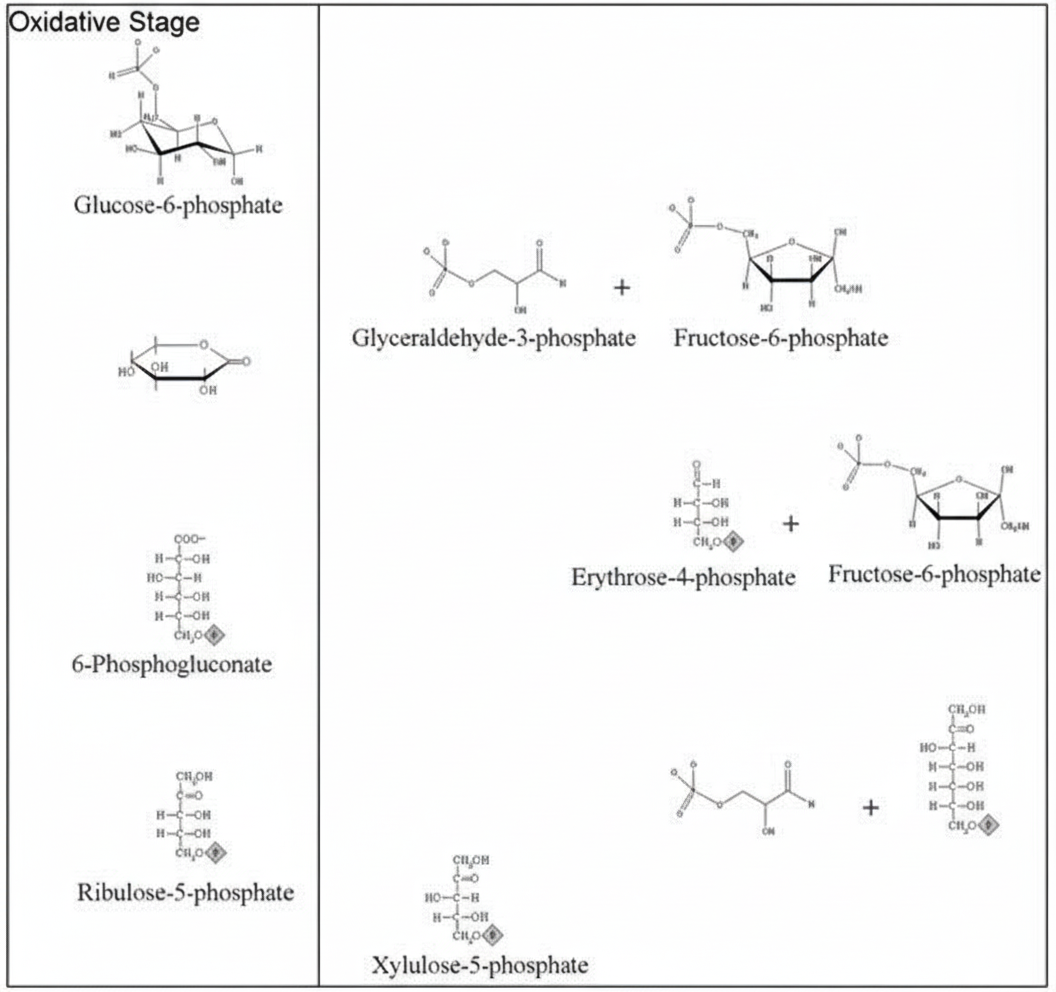
Which enzyme catalyzes the rate-limiting step of the pentose phosphate pathway?
Which of the following enzymes is stimulated by glucagon?
Activity of which of the following enzymes is increased in a diabetic state?
A 3-month-old infant presented with irritability, lethargy between feedings, and a potbelly. Physical examination revealed an enlarged liver. Blood work between feedings showed elevated lactate and uric acid levels, along with hypoglycemia. This child most likely has a mutation in which one of the following enzymes?
Type II glycogen storage disorder is due to deficiency of which enzyme?
Which carbohydrate is related to blood grouping?
Explanation: ### Explanation The brain typically relies on glucose as its primary fuel. However, during prolonged starvation (exceeding 2–3 days), the body undergoes metabolic adaptation to preserve muscle mass and maintain brain function. **1. Why Ketone Bodies are Correct:** As starvation progresses, glycogen stores are depleted within 24 hours. The liver begins producing **ketone bodies** (Acetoacetate and β-hydroxybutyrate) via ketogenesis from fatty acid oxidation. By day 7 of starvation, the brain adapts to utilize ketone bodies for up to **70% of its energy requirements**. This shift is crucial because it reduces the brain's demand for glucose, thereby decreasing the need for gluconeogenesis and sparing skeletal muscle proteins from being broken down. **2. Why Other Options are Incorrect:** * **Fatty Acids:** Although the body has vast fat stores, long-chain fatty acids cannot cross the **blood-brain barrier (BBB)**. Therefore, the brain cannot use them directly for energy. * **Protein Breakdown:** While gluconeogenesis from amino acids (like alanine) occurs early in starvation, it is not the *major* supply by day 7. Relying solely on protein would lead to rapid muscle wasting and respiratory failure. * **Carbohydrate Breakdown:** Liver glycogen is exhausted within the first 12–24 hours of fasting. By day 7, exogenous and stored carbohydrates are non-existent. **High-Yield Clinical Pearls for NEET-PG:** * **Rate-limiting enzyme of ketogenesis:** HMG-CoA Synthase (Mitochondrial). * **Brain Adaptation:** The brain cannot use ketone bodies immediately; it requires a few days to induce the enzymes (e.g., thiophorase) necessary for ketoacidosis. * **Organ that cannot use ketones:** The **Liver** (lacks thiophorase) and **RBCs** (lack mitochondria). * **Order of fuel preference in starvation:** Glucose (early) → Ketone bodies (prolonged).
Explanation: **Explanation:** The conversion of fructose to pyruvate occurs via the glycolytic pathway. To determine the **net** ATP produced by **substrate-level phosphorylation (SLP)**, we must calculate the ATP consumed versus the ATP generated. 1. **Investment Phase:** Fructose enters the pathway by being phosphorylated. In the liver (the primary site), Fructose is converted to Fructose-1-phosphate by *fructokinase*, consuming **1 ATP**. It is then cleaved into DHAP and Glyceraldehyde. Glyceraldehyde is phosphorylated to Glyceraldehyde-3-phosphate (G3P) by *triokinase*, consuming another **1 ATP**. * *Total ATP Consumed = 2.* 2. **Payoff Phase:** Each of the two G3P molecules proceeds through the remainder of glycolysis. SLP occurs at two steps: * 1,3-bisphosphoglycerate → 3-phosphoglycerate (via *phosphoglycerate kinase*): 1 ATP × 2 = 2 ATP. * Phosphoenolpyruvate → Pyruvate (via *pyruvate kinase*): 1 ATP × 2 = 2 ATP. * *Total ATP Generated via SLP = 4.* 3. **Net Yield:** 4 (Generated) - 2 (Consumed) = **2 ATP**. **Analysis of Incorrect Options:** * **B (3):** This would be the net yield if starting from Glycogen (skipping the hexokinase step), but not from free fructose. * **C (4):** This is the **gross** yield of SLP, not the **net** yield. * **D (5):** This might be confused with the total energy yield including oxidative phosphorylation (NADH), but the question specifically asks for SLP. **High-Yield Clinical Pearls for NEET-PG:** * **Essential Fructosuria:** Deficiency of *Fructokinase*; a benign condition where fructose appears in urine. * **Hereditary Fructose Intolerance (HFI):** Deficiency of *Aldolase B*; leads to trapping of Fructose-1-P, causing severe hypoglycemia and liver damage. * **Rate-limiting step:** Unlike glucose, fructose bypasses the major rate-limiting enzyme **PFK-1**, leading to more rapid lipogenesis.
Explanation: ### Explanation **Correct Option: A. Von Gierke's disease (GSD Type I)** Von Gierke’s disease is caused by a deficiency of **Glucose-6-Phosphatase**, the enzyme responsible for the final step of both glycogenolysis and gluconeogenesis. * **Hypoglycemia:** Since the liver cannot release free glucose into the blood, severe fasting hypoglycemia occurs. * **Hepatomegaly:** Excess Glucose-6-Phosphate (G6P) is diverted into glycogen synthesis, leading to massive accumulation in the liver. * **Acidosis (Lactic Acidosis):** G6P enters the glycolytic pathway, producing excess pyruvate which is converted to lactate. * **Hyperlipidemia:** Low insulin levels and G6P shunting toward fatty acid synthesis lead to increased VLDL and triglycerides. **Why other options are incorrect:** * **B. Conn's disease:** This is primary hyperaldosteronism, characterized by hypertension and hypokalemia, not metabolic hypoglycemia or hepatomegaly. * **C. Pompe's disease (GSD Type II):** Caused by **Acid Maltase** deficiency. It primarily affects the heart (cardiomegaly) and muscles. While it causes hepatomegaly, it **does not** cause hypoglycemia because the primary glycogenolytic pathway in the cytoplasm remains intact. **High-Yield Clinical Pearls for NEET-PG:** * **Hyperuricemia:** A hallmark of Von Gierke’s. Increased G6P enters the HMP shunt, producing excess Ribose-5-P, which leads to increased purine degradation and uric acid (Gout). * **Doll-like facies:** Infants often present with "cherubic" faces due to fat deposition. * **Treatment:** Frequent feedings with uncooked cornstarch (slow-release glucose) and avoidance of fructose/galactose.
Explanation: ### Explanation The patient is presenting with a **diabetic cataract**, characterized by the grayish-white opacification of the lens. This is a classic complication of chronic hyperglycemia. **1. Why Aldose Reductase Pathway is Correct:** In the lens, when glucose levels are high, the enzyme **Aldose Reductase** (the first step of the Polyol Pathway) reduces glucose into **Sorbitol** using NADPH as a cofactor. * **The Problem:** Sorbitol is a sugar alcohol that is polar and cannot easily diffuse out of the lens cells. * **The Consequence:** Sorbitol accumulates, creating a strong **osmotic gradient** that draws water into the lens. This leads to swelling, disruption of lens fibers, and denaturation of proteins, resulting in opacification (cataract). * *Note:* The enzyme Sorbitol Dehydrogenase (which converts sorbitol to fructose) is very low or absent in the lens, exacerbating the accumulation. **2. Why Other Options are Incorrect:** * **B. Amino acid degradation:** This involves the breakdown of proteins for energy or gluconeogenesis; it does not directly cause structural lens damage in diabetes. * **C. Citric acid cycle (TCA):** This is the central aerobic pathway for ATP production. While glucose enters this cycle, its overactivity does not cause the osmotic damage seen in cataracts. * **D. Oxidative phosphorylation:** This occurs in the mitochondria to produce ATP. While oxidative stress (ROS) contributes to diabetic complications, the primary mechanism for acute lens opacification in hyperglycemia is the polyol-mediated osmotic effect. **Clinical Pearls for NEET-PG:** * **Tissues involved in Polyol Pathway:** Lens, Retina, Schwann cells (neuropathy), and Kidneys (nephropathy). These tissues are **insulin-independent** for glucose uptake (GLUT-1/GLUT-3). * **Enzyme Deficiency:** Galactosemia can also cause cataracts via the same pathway, where **Galactitol** (dulcitol) is formed from galactose by Aldose Reductase. * **Key Cofactor:** Aldose reductase consumes **NADPH**, which depletes the pool available for Glutathione Reductase, increasing oxidative stress.
Explanation: **Explanation:** The **Pentose Phosphate Pathway (PPP)**, also known as the Hexose Monophosphate (HMP) Shunt, occurs in the cytosol and is essential for generating **NADPH** (for reductive biosynthesis) and **Ribose-5-phosphate** (for nucleotide synthesis). **Why Option A is correct:** **Glucose-6-phosphate dehydrogenase (G6PD)** catalyzes the conversion of Glucose-6-phosphate to 6-phosphogluconolactone. This is the **first and rate-limiting step** of the oxidative phase. The enzyme is highly regulated; it is irreversibly committed to the pathway and is competitively inhibited by high levels of NADPH (feedback inhibition). **Why the other options are incorrect:** * **B. Gluconolactonase:** This enzyme acts in the second step to hydrolyze 6-phosphogluconolactone into 6-phosphogluconate. It is a rapid, non-rate-limiting reaction. * **C. 6-phosphogluconate dehydrogenase:** This catalyzes the second oxidative step (forming Ribulose-5-phosphate). While it also produces NADPH, it is not the primary regulatory checkpoint. * **D. Transketolase:** This enzyme functions in the **non-oxidative (reversible) phase**. It requires **Thiamine pyrophosphate (TPP)** as a cofactor. While clinically significant, it does not control the pathway's rate. **NEET-PG High-Yield Pearls:** * **G6PD Deficiency:** The most common enzymopathy worldwide. It leads to **hemolytic anemia** under oxidative stress (e.g., Fava beans, Primaquine, Infection) because RBCs cannot regenerate reduced glutathione due to a lack of NADPH. * **Heinz Bodies & Bite Cells:** Classic peripheral smear findings in G6PD deficiency. * **Transketolase Activity:** Measuring erythrocyte transketolase activity is the gold standard for diagnosing **Thiamine (B1) deficiency**. * **Tissue Distribution:** The HMP shunt is most active in tissues requiring fatty acid or steroid synthesis (Adrenal cortex, Liver, Mammary glands, Testes).
Explanation: ### Explanation **Concept: The Glucagon-Insulin Balance** Glucagon is a catabolic hormone released during fasting. It acts via the **cAMP-Protein Kinase A (PKA) pathway**, which leads to the **phosphorylation** of key metabolic enzymes. In the liver, phosphorylation acts as a "switch" that activates degradative enzymes and inactivates synthetic enzymes. **1. Why Glycogen Phosphorylase is Correct:** Glucagon binds to G-protein coupled receptors, increasing cAMP and activating PKA. PKA phosphorylates **Phosphorylase Kinase**, which in turn phosphorylates **Glycogen Phosphorylase** (converting it from the inactive 'b' form to the active 'a' form). This triggers glycogenolysis to maintain blood glucose levels during fasting. **2. Why the Other Options are Incorrect:** * **Acetyl-CoA Carboxylase (A):** This is the rate-limiting enzyme for fatty acid synthesis. It is **inhibited** by phosphorylation (via glucagon/AMPK) and stimulated by insulin. * **Glycogen Synthase (C):** This enzyme is **inactivated** by phosphorylation. Glucagon prevents glycogen storage while promoting its breakdown. * **HMG-CoA Reductase (D):** The rate-limiting enzyme for cholesterol synthesis. Like most biosynthetic enzymes, it is **inhibited** by glucagon-mediated phosphorylation and activated by insulin. **Clinical Pearls & High-Yield Facts for NEET-PG:** * **Rule of Thumb:** Most enzymes in the **dephosphorylated** state are active under **Insulin** influence, while enzymes in the **phosphorylated** state are active under **Glucagon** influence (Exception: Glycogen Phosphorylase and Fructose-2,6-Bisphosphatase). * **Second Messenger:** Glucagon uses **cAMP**, whereas Insulin uses a **Tyrosine Kinase** signaling pathway. * **Tissue Specificity:** Glucagon acts primarily on the **liver**. It has no effect on muscle glycogen because muscle cells lack glucagon receptors.
Explanation: **Explanation:** In a diabetic state (specifically Type 1 or advanced Type 2), there is a relative or absolute deficiency of insulin. Insulin normally promotes glucose oxidation and inhibits gluconeogenesis. When insulin is low, the body shifts into a "fasting-like" state characterized by high rates of gluconeogenesis and fatty acid oxidation. **Why Pyruvate Dehydrogenase (PDH) is the correct answer:** Actually, there appears to be a conceptual nuance in this question. In a diabetic state, **PDH activity is typically DECREASED**, not increased. PDH is inhibited by high levels of Acetyl-CoA and NADH produced during fatty acid oxidation (common in diabetes). However, if we look at the enzymes listed, Pyruvate Carboxylase, PEP Carboxykinase, and Glucose-6-Phosphatase are all **Gluconeogenic enzymes**, which are characteristically **INCREASED** in diabetes to produce more glucose. *Note: If the question asks which enzyme's activity is increased, the gluconeogenic enzymes (A, B, D) are the standard answers. If the question intended to ask which is **decreased**, PDH (C) would be the answer. Given the checkmark on PDH, it suggests a focus on its regulation: PDH Kinase is activated in diabetes, which phosphorylates and **inactivates** PDH.* **Analysis of Options:** * **A, B, & D (Pyruvate Carboxylase, PEPCK, G6Pase):** These are the key regulatory enzymes of **Gluconeogenesis**. In diabetes, the lack of insulin and excess glucagon leads to the induction of these enzymes, contributing to hyperglycemia. * **C (Pyruvate Dehydrogenase):** This enzyme converts Pyruvate to Acetyl-CoA. In diabetes, it is inhibited to conserve three-carbon compounds for gluconeogenesis. **High-Yield Clinical Pearls for NEET-PG:** * **Insulin/Glucagon Ratio:** A low ratio (as in diabetes) induces the "Four Key Gluconeogenic Enzymes": Pyruvate Carboxylase, PEPCK, Fructose 1,6-bisphosphatase, and Glucose-6-Phosphatase. * **PDH Regulation:** PDH is inactivated by **phosphorylation** (via PDH Kinase). PDH Kinase is activated by Acetyl-CoA and NADH, both of which are elevated in diabetes due to lipolysis. * **Biotin Requirement:** Pyruvate Carboxylase requires Biotin (B7) and is activated by Acetyl-CoA.
Explanation: This clinical presentation is classic for **Von Gierke Disease (Glycogen Storage Disease Type I)**. ### **Explanation of the Correct Answer** **Glucose-6-phosphatase (G6Pase)** is the final enzyme in both glycogenolysis and gluconeogenesis, responsible for converting glucose-6-phosphate into free glucose in the liver. * **Hypoglycemia:** A deficiency prevents the liver from releasing glucose into the blood during fasting. * **Hepatomegaly:** Excess glucose-6-phosphate is diverted into glycogen synthesis and lipid production, leading to a "fatty" enlarged liver (potbelly). * **Lactic Acidosis:** Accumulated G6P enters the glycolytic pathway, increasing pyruvate and lactate. * **Hyperuricemia:** Increased G6P shunts into the Pentose Phosphate Pathway, increasing ribose-5-phosphate, which drives purine synthesis and subsequent degradation to uric acid. ### **Why Other Options are Incorrect** * **A. Liver glycogen phosphorylase (Hers Disease):** While it causes hepatomegaly and mild hypoglycemia, it does **not** typically present with significant lactic acidosis or hyperuricemia because gluconeogenesis remains intact. * **B. Glycogen synthase:** Deficiency leads to fasting hypoglycemia but results in a **small liver** (no glycogen storage) and does not cause lactic acidosis. * **D. Muscle glycogen phosphorylase (McArdle Disease):** This enzyme is muscle-specific. Deficiency causes exercise intolerance and cramps, but **no hypoglycemia or hepatomegaly**, as the liver is unaffected. ### **NEET-PG High-Yield Pearls** * **GSD Type I subtypes:** Type Ia (G6Pase deficiency); Type Ib (G6P translocase deficiency—presents with **neutropenia** and recurrent infections). * **Biochemical Markers:** "Doll-like facies," hyperlipidemia (xanthomas), hyperuricemia, and lactic acidosis. * **Treatment:** Frequent oral cornstarch (slow-release glucose) and avoidance of fructose/galactose (which worsen G6P accumulation).
Explanation: **Explanation:** **Type II Glycogen Storage Disease (GSD)**, also known as **Pompe disease**, is caused by a deficiency of the lysosomal enzyme **$\alpha$-1,4-glucosidase** (also called **Acid Maltase**). Unlike other GSDs, Pompe disease is unique because it is a **Lysosomal Storage Disorder**. While most glycogen breakdown occurs in the cytosol via glycogen phosphorylase, about 1-3% of glycogen is degraded within lysosomes by $\alpha$-glucosidase. A deficiency leads to the massive accumulation of glycogen within vacuoles in nearly all tissues, most significantly affecting the heart and skeletal muscles. **Analysis of Options:** * **Option A (Correct):** $\alpha$-Glucosidase is the enzyme responsible for breaking down glycogen into glucose within lysosomes. Its deficiency leads to Pompe disease. * **Option B (Incorrect):** $\alpha$-galactosidase A deficiency causes **Fabry disease**, a sphingolipidosis characterized by angiokeratomas and renal failure. * **Option C (Incorrect):** Muscle phosphorylase deficiency causes **Type V GSD (McArdle disease)**, which presents with exercise-induced cramps and myoglobinuria. * **Option D (Incorrect):** Acid Lipase deficiency leads to **Wolman disease** or Cholesteryl Ester Storage Disease. **High-Yield Clinical Pearls for NEET-PG:** * **Mnemonic:** "Pompe affects the **Pump** (Heart)." * **Clinical Triad:** Cardiomegaly (HOCM), hypotonia ("Floppy baby"), and macroglossia. * **Key Distinction:** It is the only GSD that is also a Lysosomal Storage Disorder. * **Blood Glucose:** Unlike Type I (von Gierke), blood glucose levels are typically **normal** in Pompe disease because cytosolic glycogenolysis remains intact.
Explanation: **Explanation:** The correct answer is **Fucose** (specifically L-fucose). **1. Why Fucose is correct:** Blood group antigens (ABO system) are complex oligosaccharides located on the surface of red blood cells. The fundamental precursor for these antigens is the **H-substance**. The formation of the H-substance requires the attachment of **L-fucose** to a terminal galactose residue of a precursor chain, a reaction catalyzed by the enzyme *fucosyltransferase*. * **Type O:** Has only the H-substance (fucose attached). * **Type A:** Has N-acetylgalactosamine added to the H-substance. * **Type B:** Has an extra galactose added to the H-substance. Without fucose, the H-antigen cannot be formed, leading to the rare **Bombay Phenotype**. **2. Why other options are incorrect:** * **Arabinose:** A five-carbon sugar (pentose) found in plant gums and glycoproteins, but it plays no role in human blood group determination. * **Xylulose:** A pentose sugar involved in the **Uronic Acid Pathway**. L-xylulose accumulation is seen in *Essential Pentosuria* due to xylitol dehydrogenase deficiency. * **Xylose:** A pentose sugar used clinically in the **D-xylose absorption test** to differentiate between malabsorption caused by mucosal disease (e.g., Celiac) versus pancreatic insufficiency. **3. Clinical Pearls for NEET-PG:** * **L-Fucose** is a deoxy-sugar (6-deoxy-L-galactose). * **Bombay Phenotype (hh):** Individuals lack the H-gene and cannot attach fucose. They produce anti-H antibodies and can only receive blood from other Bombay phenotype donors. * **I-cell Disease:** Characterized by a deficiency in phosphorylating mannose residues, but fucose remains the key marker for blood groups.
Carbohydrate Chemistry and Classification
Practice Questions
Glycolysis: Reactions and Regulation
Practice Questions
Gluconeogenesis: Reactions and Regulation
Practice Questions
Glycogen Metabolism: Synthesis and Breakdown
Practice Questions
Glycogen Storage Diseases
Practice Questions
Pentose Phosphate Pathway
Practice Questions
Metabolism of Fructose and Galactose
Practice Questions
Disorders of Fructose and Galactose Metabolism
Practice Questions
Blood Glucose Regulation
Practice Questions
Diabetes Mellitus: Biochemical Aspects
Practice Questions
Glycosylation and Glycoproteins
Practice Questions
Lactose Intolerance and Galactosemia
Practice Questions
Get full access to all questions, explanations, and performance tracking.
Start For Free