Pyruvate forms alanine by:
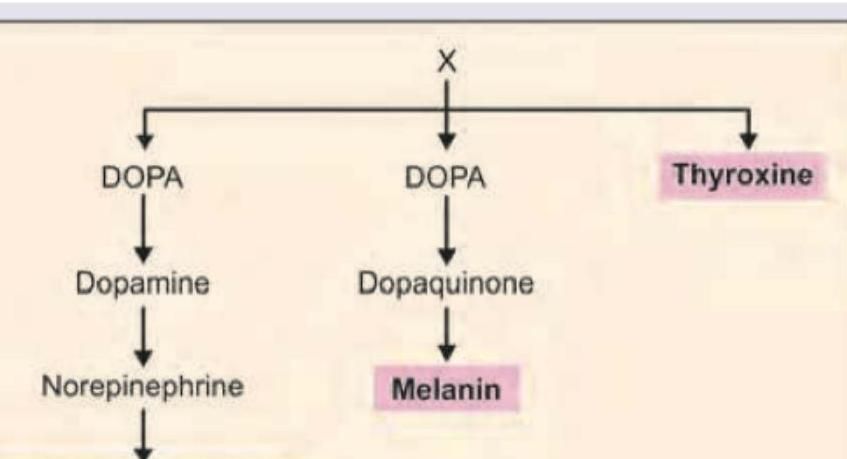
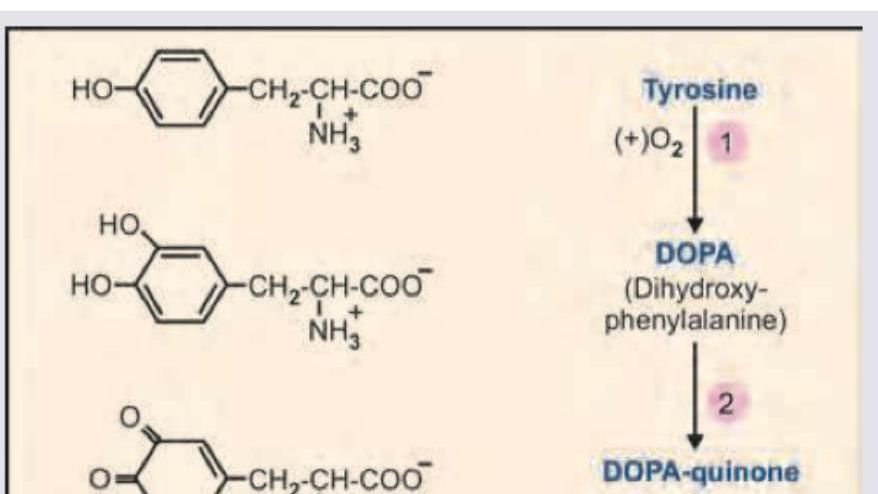
Tyrosine is utilized in the synthesis of all the following except?
'D'-form of amino acid is derived from?
Tryptophan deficiency leads to which of the following conditions?
Carbamoyl phosphate is a precursor in which of the following metabolic pathways?
Niacin is synthesized from which amino acid?
A 6-day-old newborn infant develops ketonuria, seizures, and hypoglycemia. What is the most likely diagnosis?
What is true regarding glutamine?
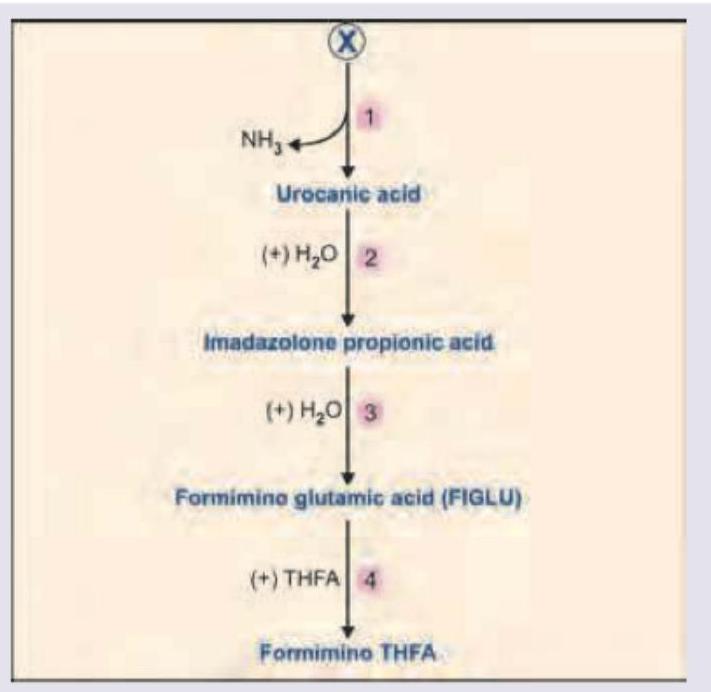
FIGLU is an intermediate product of the metabolism of which amino acid?
Which statement is true regarding non-essential amino acids?
Explanation: **Explanation:** The conversion of pyruvate to alanine is a classic example of a **transamination** reaction. In this process, an alpha-amino group is transferred from a donor amino acid (usually glutamate) to an alpha-keto acid (pyruvate). **Why Transamination is Correct:** This reaction is catalyzed by the enzyme **Alanine Aminotransferase (ALT)**, also known as Serum Glutamate-Pyruvate Transaminase (SGPT). The reaction requires **Pyridoxal Phosphate (Vitamin B6)** as a mandatory cofactor. Pyruvate (the keto acid) accepts the amino group to become Alanine, while Glutamate is converted into alpha-ketoglutarate. **Analysis of Incorrect Options:** * **Oxidation:** This involves the loss of electrons or hydrogen. While pyruvate undergoes oxidative decarboxylation to form Acetyl-CoA (via PDH complex), it does not form alanine through this pathway. * **Hydroxylation:** This involves the addition of a hydroxyl (-OH) group (e.g., Phenylalanine to Tyrosine). Pyruvate does not possess a structure that undergoes hydroxylation to form an amino acid. * **Deamination:** (Often confused with transamination) This involves the removal of an amino group as free ammonia, rather than its transfer. **High-Yield Clinical Pearls for NEET-PG:** * **Cahill Cycle (Glucose-Alanine Cycle):** This is the physiological process where muscle protein is degraded; amino groups are transferred to pyruvate to form alanine, which is then transported to the liver for gluconeogenesis. * **Cofactor:** Always remember that **Vitamin B6 (PLP)** is the essential cofactor for all transaminases. * **Diagnostic Marker:** ALT (SGPT) is a highly specific marker for **hepatocellular injury** because it is primarily found in the liver cytoplasm.
Explanation: **Explanation:** The correct answer is **Melatonin** because it is synthesized from the amino acid **Tryptophan**, not Tyrosine. **1. Why Melatonin is the correct answer:** Melatonin is the hormone responsible for the sleep-wake cycle (circadian rhythm). Its synthesis pathway begins with **Tryptophan**, which is converted to 5-hydroxytryptophan, then to Serotonin, and finally to Melatonin in the pineal gland. **2. Why the other options are incorrect (Tyrosine derivatives):** Tyrosine serves as a precursor for several vital biological molecules through different pathways: * **Melanin:** In melanocytes, Tyrosine is converted to DOPA and then to Melanin by the enzyme **Tyrosinase**. (Deficiency leads to Albinism). * **Dopamine:** Tyrosine is the starting point for catecholamine synthesis. It is converted to L-DOPA by *Tyrosine hydroxylase*, which then forms **Dopamine**, Norepinephrine, and Epinephrine. * **Thyroxine (T4):** In the thyroid gland, Tyrosine residues on the protein thyroglobulin are iodinated to produce thyroid hormones (T3 and T4). **High-Yield Clinical Pearls for NEET-PG:** * **Tryptophan Derivatives:** Remember the "3 Ms & 1 S": **M**elatonin, **M**agnesium (cofactor), **N**iacin (**M**ethyl-nicotinamide), and **S**erotonin. * **PKU Connection:** In Phenylketonuria (PKU), Phenylalanine cannot be converted to Tyrosine. Thus, Tyrosine becomes an **essential amino acid** for these patients. * **Rate-limiting step:** Tyrosine hydroxylase is the rate-limiting enzyme for catecholamine synthesis. * **Alkaptonuria:** Caused by a deficiency of Homogentisate oxidase in the Tyrosine catabolic pathway, leading to dark urine and ochronosis.
Explanation: **Explanation:** In the human body, almost all amino acids used for protein synthesis are in the **'L' (Levo) configuration**. The human enzymatic machinery is stereospecific and is generally incapable of synthesizing 'D' (Dextro) amino acids endogenously. Therefore, any 'D'-amino acids found in the human system are primarily derived **from external sources**, such as the diet (e.g., fermented foods) or the metabolic activity of intestinal microbiota. * **Why Option C is correct:** 'D'-amino acids are prevalent in bacterial cell walls (e.g., D-Alanine and D-Glutamate in peptidoglycan). These enter the human body through the gut flora or dietary intake. Once absorbed, they are metabolized by the enzyme **D-Amino Acid Oxidase (DAAO)**, primarily in the liver and kidneys, to be converted into alpha-keto acids for energy or converted back to 'L' forms. * **Why Options A, B, and D are incorrect:** The liver and muscles possess the enzymes to synthesize and interconvert 'L'-amino acids (via transamination and deamination), but they lack the **racemases** required to produce 'D'-isomers from 'L'-precursors or to synthesize 'D'-forms de novo. **High-Yield Clinical Pearls for NEET-PG:** * **Exception:** Small amounts of **D-Serine** and **D-Aspartate** are synthesized in the human brain; D-Serine acts as a co-agonist at NMDA receptors. * **D-Amino Acid Oxidase (DAAO):** An FAD-dependent peroxisomal enzyme that oxidative deaminates 'D'-amino acids. * **Bacterial Cell Walls:** Contain D-Alanine; this is the target for antibiotics like **Cycloserine** (inhibits D-Ala-D-Ala ligase). * **Mnemonic:** **L**-Amino acids are for **L**ife (proteins); **D**-Amino acids are from **D**iet/Bacteria.
Explanation: **Explanation:** **Correct Answer: C. Hartnup disease** Hartnup disease is an autosomal recessive disorder caused by a mutation in the **SLC6A19 gene**, which encodes a neutral amino acid transporter in the proximal renal tubules and intestinal mucosa. This leads to the malabsorption and excessive urinary loss of neutral amino acids, most significantly **Tryptophan**. Since Tryptophan is a precursor for **Niacin (Vitamin B3)**, its deficiency results in pellagra-like symptoms, including a photosensitive dermatitis, cerebellar ataxia, and aminoaciduria. **Analysis of Incorrect Options:** * **A. Her’s Disease:** This is Glycogen Storage Disease Type VI, caused by a deficiency in **liver glycogen phosphorylase**, leading to hepatomegaly and mild hypoglycemia. It is unrelated to amino acid metabolism. * **B. Lesch-Nyhan Syndrome:** An X-linked recessive disorder caused by a deficiency of **HGPRT**, an enzyme in the purine salvage pathway. It presents with hyperuricemia, intellectual disability, and self-mutilation. * **D. Alkaptonuria:** A disorder of tyrosine metabolism caused by a deficiency of **homogentisate oxidase**. It is characterized by the accumulation of homogentisic acid, leading to dark urine (on standing) and ochronosis. **High-Yield Clinical Pearls for NEET-PG:** * **The 3 D’s of Pellagra:** Dermatitis, Diarrhea, and Dementia are seen in Hartnup disease due to secondary Niacin deficiency. * **Diagnosis:** Characterized by "neutral aminoaciduria" (valine, leucine, isoleucine, phenylalanine, tryptophan). * **Treatment:** High-protein diet and nicotinic acid (Niacin) supplementation. * **Blue Diaper Syndrome:** A related condition where bacterial breakdown of unabsorbed tryptophan in the gut leads to indicanuria, turning the diaper blue.
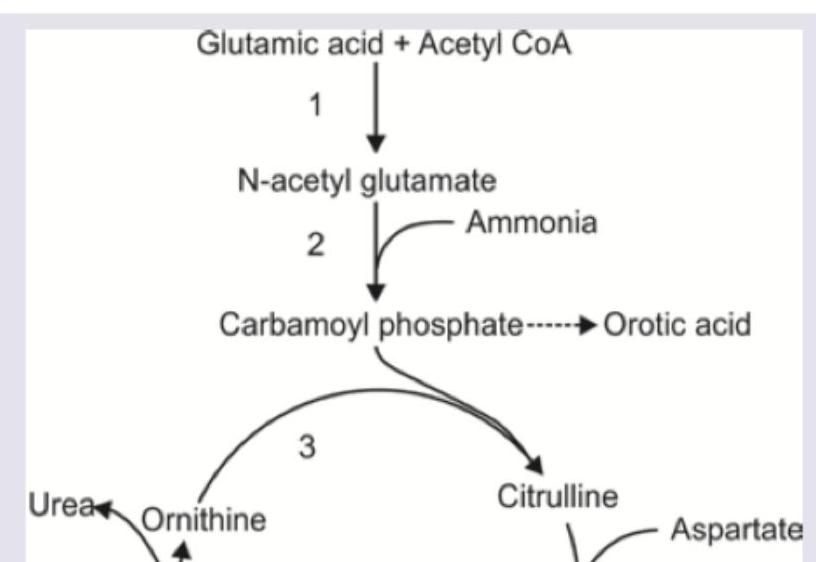
Explanation: **Explanation:** **1. Why Urea Synthesis is Correct:** Carbamoyl phosphate is a critical intermediate in the **Urea Cycle** (Ornithine cycle). It is synthesized in the mitochondria of hepatocytes from ammonia ($NH_3$) and bicarbonate ($HCO_3^-$) by the enzyme **Carbamoyl Phosphate Synthetase I (CPS-I)**. This reaction requires 2 ATP molecules and is the rate-limiting step of the cycle. Once formed, carbamoyl phosphate reacts with ornithine to form citrulline, facilitating the excretion of toxic nitrogenous waste as urea. **2. Why the Other Options are Incorrect:** * **B. Uric acid synthesis:** Uric acid is the end product of **purine catabolism** (adenine and guanine). It does not involve carbamoyl phosphate. * **C. Pyruvic acid metabolism:** Pyruvate is a key junction in carbohydrate metabolism, leading to the TCA cycle (via Acetyl-CoA), gluconeogenesis, or lactate formation. It does not utilize carbamoyl phosphate. * **D. Stearic acid synthesis:** This is a fatty acid synthesis pathway (lipogenesis) occurring in the cytosol, utilizing Acetyl-CoA and NADPH. **3. Clinical Pearls & High-Yield Facts for NEET-PG:** * **Two Forms of CPS:** Do not confuse **CPS-I** (Mitochondrial; Urea cycle; activated by N-acetylglutamate) with **CPS-II** (Cytosolic; Pyrimidine synthesis). Carbamoyl phosphate is a precursor for **both** Urea and Pyrimidines. * **N-acetylglutamate (NAG):** This is the essential allosteric activator for CPS-I. Deficiency of NAG leads to hyperammonemia. * **Orotic Aciduria:** If the urea cycle is blocked after CPS-I (e.g., Ornithine Transcarbamoylase deficiency), carbamoyl phosphate leaks into the cytosol and enters the pyrimidine pathway, leading to increased orotic acid levels.
Explanation: **Explanation:** **Tryptophan** is the correct answer because it serves as the precursor for the endogenous synthesis of **Niacin (Vitamin B3)** via the **Kynurenine pathway**. In humans, approximately **60 mg of Tryptophan** is required to synthesize **1 mg of Niacin**. This process is clinically significant because it requires **Vitamin B6 (Pyridoxine)** as a cofactor for the enzyme kynureninase; a deficiency in B6 can lead to secondary niacin deficiency. **Analysis of Incorrect Options:** * **Arginine (A):** This amino acid is the precursor for **Nitric Oxide (NO)**, Creatine, and Urea. * **Histidine (B):** It undergoes decarboxylation to form **Histamine**, a key mediator in allergic reactions and gastric acid secretion. * **Tyrosine (D):** It is the precursor for **Catecholamines** (Dopamine, Epinephrine, Norepinephrine), **Thyroid hormones** (T3, T4), and **Melanin**. **High-Yield Clinical Pearls for NEET-PG:** * **Hartnup Disease:** A genetic defect in the transport of neutral amino acids (including Tryptophan) in the gut and kidneys. It manifests with **Pellagra-like symptoms** (Dermatitis, Diarrhea, Dementia) due to decreased niacin synthesis. * **Carcinoid Syndrome:** Large amounts of Tryptophan are diverted to produce **Serotonin**, leading to a deficiency in Niacin synthesis and subsequent Pellagra. * **Corn-based diets:** Populations relying solely on maize (corn) are at risk for Pellagra because corn is low in Tryptophan and its Niacin is in a bound, unabsorbable form (Niacytin).
Explanation: **Explanation:** The clinical presentation of a neonate with **ketonuria, seizures, and hypoglycemia** within the first week of life is highly suggestive of a metabolic emergency involving amino acid metabolism. **1. Why Aromatic Amino Aciduria is Correct:** Aromatic amino aciduria (specifically **Maple Syrup Urine Disease - MSUD**) is the most likely diagnosis. MSUD is caused by a deficiency in the **Branched-Chain Alpha-Keto Acid Dehydrogenase (BCKAD)** complex. This leads to the accumulation of branched-chain amino acids (Leucine, Isoleucine, Valine) and their corresponding alpha-keto acids. * **Ketonuria:** The accumulation of keto acids leads to metabolic acidosis and ketonuria. * **Hypoglycemia:** High levels of Leucine stimulate insulin secretion (hyperinsulinism), leading to profound hypoglycemia. * **Seizures:** Both hypoglycemia and the neurotoxicity of accumulated keto acids trigger neonatal seizures. **2. Why the other options are incorrect:** * **Phenylketonuria (PKU):** While it involves an aromatic amino acid (Phenylalanine), it typically presents later in infancy with developmental delay and "mousy" odor. It does **not** cause acute neonatal hypoglycemia or ketonuria. * **Intrauterine infection (TORCH):** While it can cause seizures, it usually presents with hepatosplenomegaly, jaundice, and rashes, rather than metabolic ketonuria and hypoglycemia. * **Tyrosinemia:** Type I can cause liver failure and hypoglycemia, but it usually presents slightly later (weeks to months) and is characterized by a "cabbage-like" odor and renal tubular defects rather than primary acute ketonuria. **High-Yield Clinical Pearls for NEET-PG:** * **MSUD Odor:** "Maple syrup" or "burnt sugar" odor in urine/earwax. * **Diagnostic Test:** Elevated levels of **Alloisoleucine** in plasma is pathognomonic. * **Enzyme Cofactors:** The BCKAD complex requires five cofactors: **T**hiamine (B1), **R**iboflavin (B2), **N**iacin (B3), **P**antothenate (B5), and **L**ipoic acid (**T**ender **R**eves **N**ever **P**lay **L**ate).
Explanation: **Explanation:** **1. Why Option A is Correct:** Glutamine is the **primary non-toxic carrier of ammonia** in the blood. In peripheral tissues (especially the brain and lungs), ammonia is combined with glutamate by the enzyme **glutamine synthetase** to form glutamine. This process effectively "sequesters" free ammonia, which is highly neurotoxic. Glutamine then travels through the circulation to the liver or kidneys, where the enzyme **glutaminase** releases the ammonia for urea synthesis or excretion, respectively. **2. Why the Other Options are Incorrect:** * **Option B:** While glutamine can be synthesized within the brain, it does **not** freely cross the blood-brain barrier (BBB) in significant amounts from the blood to the brain. Conversely, its precursor, glutamate, is also restricted. The brain relies on local synthesis to manage ammonia levels. * **Option C:** Glutamine is **not toxic**; it is a neutral, non-toxic amino acid. It is actually the mechanism used to *prevent* the toxicity associated with free ammonia (NH₃). * **Option D:** Glutamine is primarily stored and synthesized in **skeletal muscle**, not smooth muscle. Skeletal muscle is the largest producer of glutamine in the body. **Clinical Pearls for NEET-PG:** * **Hyperammonemia Connection:** In hepatic encephalopathy, high levels of ammonia lead to excessive glutamine synthesis in astrocytes. This causes an osmotic imbalance, leading to **astrocytic swelling and cerebral edema**. * **Renal Role:** In the kidneys, glutamine metabolism is crucial for **acid-base balance**; the ammonia released helps buffer hydrogen ions (forming $NH_4^+$) to be excreted in urine. * **Most Abundant:** Glutamine is the most abundant free amino acid in human blood.
Explanation: **Explanation:** **1. Why Histidine is Correct:** FIGLU (**Formiminoglutamate**) is a key metabolic intermediate in the catabolism of **Histidine**. The pathway involves the conversion of Histidine to Urocanate, then to 4-Imidazolone-5-propionate, and finally to FIGLU. In the final step, the formimino group of FIGLU is transferred to Tetrahydrofolate (THF) by the enzyme *formiminotransferase*, yielding **Glutamate** and N5-formimino-THF. **2. Why Other Options are Incorrect:** * **Glutamine:** It is converted directly to Glutamate by the enzyme *Glutaminase*, releasing ammonia. It does not involve FIGLU. * **Alanine:** It undergoes transamination via ALT (Alanine Aminotransferase) to directly form **Pyruvate**. * **Tryptophan:** This is a complex pathway leading to intermediates like Kynurenine and eventually to Alanine, Acetyl-CoA, or Nicotinate (Vitamin B3). It does not produce FIGLU. **3. Clinical Pearls & High-Yield Facts for NEET-PG:** * **FIGLU Excretion Test:** Since the conversion of FIGLU to Glutamate requires **Folic Acid (THF)**, a deficiency in folate leads to the accumulation and increased urinary excretion of FIGLU. This is used as a diagnostic clinical test for **Folic Acid deficiency**. * **Histidinemia:** A rare metabolic disorder caused by a deficiency of *Histidase*, the first enzyme in the pathway, leading to elevated levels of Histidine in blood and urine. * **Mnemonic:** Remember **"Histidine → FIGLU → Folate"** to link the amino acid, the intermediate, and the required vitamin co-factor.
Explanation: ### Explanation **1. Why the Correct Answer is Right:** Amino acids are classified as **essential** (must be obtained from the diet) or **non-essential** (can be synthesized by the body). Non-essential amino acids (NEAAs) are synthesized through various metabolic pathways, often using carbon skeletons from glucose metabolism (Kreb’s cycle intermediates) or by the modification of essential amino acids. * **Example:** **Tyrosine** (non-essential) is synthesized directly from **Phenylalanine** (essential) via the enzyme phenylalanine hydroxylase. Similarly, **Cysteine** (non-essential) derives its sulfur atom from **Methionine** (essential). **2. Analysis of Incorrect Options:** * **Option A:** Incorrect. Both essential and non-essential amino acids are structural building blocks of tissue proteins. There is no functional distinction in their role within a polypeptide chain. * **Option C:** Incorrect. NEAAs play critical roles in metabolism beyond protein synthesis. For instance, **Glycine** is essential for heme and purine synthesis, while **Glutamate** acts as a key neurotransmitter and a hub for transamination reactions. * **Option D:** Incorrect. Synthesis of NEAAs is a normal, continuous physiological process in healthy individuals to maintain nitrogen balance. **3. High-Yield Clinical Pearls for NEET-PG:** * **Semi-essential Amino Acids:** Arginine and Histidine are considered semi-essential because they are required in larger amounts during periods of rapid growth (infancy/pregnancy) than the body can synthesize. * **Purely Ketogenic:** Leucine and Lysine (both are essential). * **Glucogenic & Ketogenic:** Phenylalanine, Tyrosine, Tryptophan, Isoleucine (Mnemonic: **PITTT**). * **Clinical Correlation:** In **Phenylketonuria (PKU)**, the conversion of Phenylalanine to Tyrosine is blocked. Consequently, Tyrosine becomes a **conditionally essential** amino acid for these patients.
Protein Digestion and Absorption
Practice Questions
Transamination and Deamination
Practice Questions
Urea Cycle
Practice Questions
Disorders of Urea Cycle
Practice Questions
Metabolism of Individual Amino Acids
Practice Questions
Inborn Errors of Amino Acid Metabolism
Practice Questions
Phenylketonuria and Alkaptonuria
Practice Questions
Homocystinuria and Methionine Metabolism
Practice Questions
Synthesis of Biologically Important Compounds from Amino Acids
Practice Questions
Nitrogen Balance
Practice Questions
Ammonia Metabolism and Toxicity
Practice Questions
One-Carbon Transfer Reactions
Practice Questions
Get full access to all questions, explanations, and performance tracking.
Start For Free