
Supraglottic Airway Devices — MCQs

Patient with BMI 40 presents for emergency surgery. All are correct about airway management EXCEPT:
A patient is admitted following a road traffic accident. He has sustained significant blunt injury to his head, chest and abdomen and has a Glasgow Coma Scale score of 8/15. His saturations are poor at 89% on 15 L of oxygen a rebreathing mask. You note bruising around both eyes and blood-stained fluid issuing from his left ear, which forms concentric circles when dripped on a white sheet. You wish to support his airway to improve oxygenation. The first choice of airway adjunct would be
Which of the following is a characteristic of the Supreme Laryngeal Mask Airway (LMA)?
What is the recommended position of a child during an asthmatic attack?
Which of the following is the safest initial approach to open the airway in a patient with maxillofacial trauma?
Size of the laryngeal mask airway for normal adults-
Which of the following is a second-generation laryngeal mask airway (LMA)?
What is the most reliable indicator to prevent esophageal intubation?
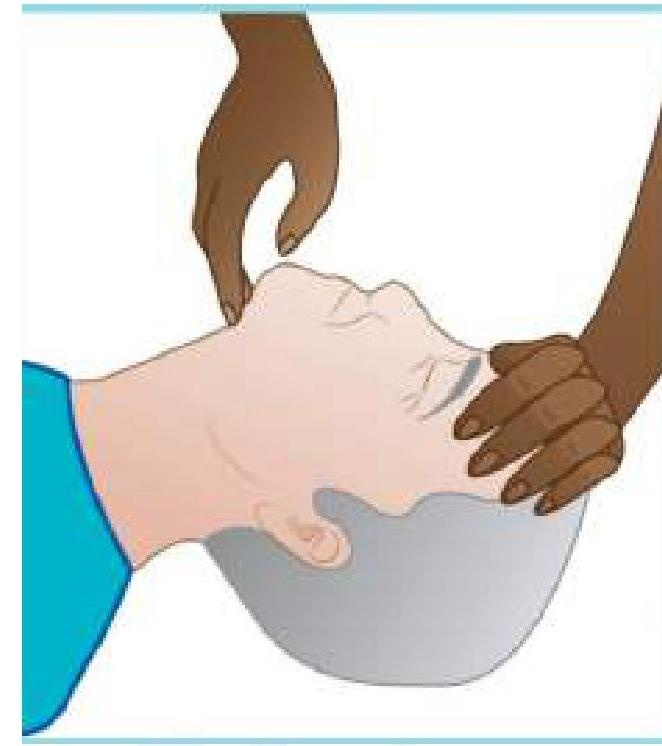
An unconscious adult without suspected cervical spine injury requires airway opening. The rescuer places one hand on the patient’s forehead to tilt the head backward and uses the fingertips of the other hand under the bony part of the chin to lift it upward. Which airway-opening maneuver is being performed?
All are features of difficult airway except which of the following?
Want unlimited practice?
Get full access to all questions, explanations, and performance tracking.
Scan to download app