In an ankle block, which of the following nerves is typically NOT blocked?
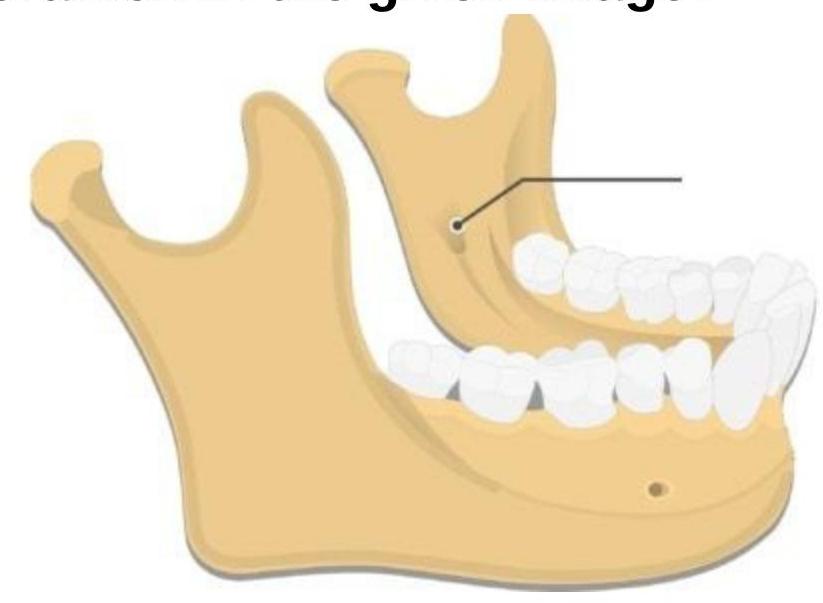
Which of the following techniques of local anesthesia requires extraoral landmarks?
The Macintosh indicator is used for what purpose?
A 24-year-old female is examined by an obstetrician in a delivery room. The obstetrician injects lidocaine near the tip of the ischial spine. Which nerve is blocked by the drug?
What is the anesthesia modality of choice for a 65-year-old male patient with a history of coronary artery disease diagnosed with hemorrhoids undergoing hemorrhoidectomy?
Following spinal subarachnoid block, a patient develops hypotension. Which of the following measures is NOT used for its management?
Peribulbar injection is given in which space?
Which ester local anesthetic undergoes significant liver metabolism?
All of the following are absolute contraindications for neuraxial anesthesia, EXCEPT:
Neuraxial blocks as a primary anesthetic technique can be used for which of the following surgeries?
Explanation: The ankle block is a regional anesthesia technique that involves the infiltration of local anesthetic to block the **five nerves** that provide sensory innervation to the foot. **Why the Common Peroneal Nerve is the Correct Answer:** The **Common Peroneal Nerve** is a major branch of the sciatic nerve that bifurcates at the level of the popliteal fossa (near the fibular head) into the superficial and deep peroneal nerves. By the time these branches reach the ankle, the common peroneal nerve no longer exists as a single trunk. Therefore, it is not targeted during an ankle block; rather, its terminal branches are blocked individually. **Explanation of Incorrect Options:** * **Superficial Peroneal Nerve:** A terminal branch of the common peroneal nerve. It provides sensation to the dorsum of the foot and is blocked via a subcutaneous wheal between the lateral malleolus and the anterior tibial artery. * **Deep Peroneal Nerve:** Another terminal branch of the common peroneal nerve. It innervates the first web space and is blocked deep to the extensor retinaculum, lateral to the dorsalis pedis artery. * **Saphenous Nerve:** The only nerve in the ankle block that is a branch of the **femoral nerve**. It provides sensation to the medial malleolus and is blocked via a subcutaneous wheal around the great saphenous vein. **High-Yield Clinical Pearls for NEET-PG:** * **The Five Nerves of Ankle Block:** 1. **Deep Peroneal** (Deep) 2. **Posterior Tibial** (Deep - most difficult to block, supplies the sole) 3. **Saphenous** (Superficial) 4. **Superficial Peroneal** (Superficial) 5. **Sural** (Superficial - supplies the lateral aspect) * **Adrenaline Avoidance:** Epinephrine is traditionally avoided in ankle blocks due to the risk of ischemia in terminal arteries (end-arteries) supplying the toes. * **Motor Sparing:** Unlike a spinal or popliteal block, an ankle block is primarily sensory, allowing for some preserved motor function of the foot.
Explanation: The **Gow-Gates technique** is a true mandibular nerve block that anesthetizes almost the entire distribution of V3. It is unique because it relies on **extraoral landmarks** to determine the needle's path and depth. ### Why Gow-Gates is Correct: The target for this block is the lateral aspect of the **condylar neck**, just below the insertion of the lateral pterygoid muscle. To achieve this, the clinician must align the needle with two specific extraoral landmarks: 1. The **intertragic notch** of the ear. 2. The **corner of the mouth** (commissure) on the contralateral side. The needle is directed toward the tragus, and the patient must keep their mouth wide open to bring the condyle into an anterior position. ### Why Other Options are Incorrect: * **High Tuberosity Approach:** This is an intraoral technique used for the Posterior Superior Alveolar (PSA) nerve block. It relies on the mucobuccal fold and the maxillary tuberosity. * **Fischer 123:** This is a traditional "three-stage" intraoral technique for the Inferior Alveolar Nerve Block (IANB). It uses intraoral landmarks like the coronoid notch, pterygomandibular raphe, and the occlusal plane. * **Vazirani-Akinosi:** Also known as the "closed-mouth" block. While it is used when patients have trismus, it is strictly an **intraoral** technique, using the maxillary mucobuccal fold at the level of the third molar as the primary landmark. ### High-Yield Clinical Pearls for NEET-PG: * **Gow-Gates Success Rate:** Higher (>95%) than the traditional IANB because it deposits anesthetic at a higher trunk level, reducing anatomical variations (like accessory innervation from the mylohyoid nerve). * **Vazirani-Akinosi:** Indicated for patients with **trismus** (limited mouth opening). * **Highest Aspiration Rate:** The traditional IANB has a higher positive aspiration rate (10-15%) compared to Gow-Gates (<2%). * **Nerves Anesthetized in Gow-Gates:** Inferior alveolar, lingual, mylohyoid, mental, incisive, auriculotemporal, and buccal nerves.
Explanation: The **Macintosh indicator** (also known as the Macintosh balloon) is a classic device used for the **localization of the extradural (epidural) space**. ### 1. Why the correct answer is right The identification of the epidural space relies on the principle of **"Loss of Resistance" (LOR)**. The epidural space has a sub-atmospheric (negative) pressure. The Macintosh indicator consists of a small, sensitive rubber balloon attached to the hub of an epidural needle. * The balloon is inflated with a small amount of air while the needle is in the ligamentum flavum (high resistance). * As the needle enters the epidural space, the negative pressure and the lack of resistance cause the balloon to **abruptly deflate**, signaling correct placement. ### 2. Why the other options are wrong * **Option A:** Neuromuscular blockade is assessed using a **Peripheral Nerve Stimulator** (e.g., Train-of-Four monitoring). * **Option C:** The level/depth of general anesthesia is monitored using clinical signs or processed EEG monitors like **BIS (Bispectral Index)** or Entropy. * **Option D:** Respiratory depression is monitored via **Capnography (EtCO2)** and Pulse Oximetry (SpO2). ### 3. High-Yield Clinical Pearls for NEET-PG * **Other LOR Devices:** Apart from the Macintosh balloon, the **Odom’s indicator** (a glass capillary tube with a bubble) and the **Zander’s modified syringe** are also used for epidural localization. * **Gold Standard:** The most common clinical method remains the **Loss of Resistance to Saline** (preferred over air to avoid the risk of air embolism or patchy block). * **Distance:** In an average adult, the distance from the skin to the epidural space is approximately **4–6 cm**. * **Ligamentum Flavum:** This is the thickest ligament the needle pierces before entering the epidural space; it provides the "gritty" sensation and high resistance.
Explanation: ### Explanation **Correct Answer: B. Pudendal Nerve** The **pudendal nerve (S2–S4)** is the primary nerve blocked during a pudendal nerve block, a common procedure used in the second stage of labor for vaginal deliveries or minor perineal surgeries. **Anatomical Basis:** The pudendal nerve exits the pelvis through the greater sciatic foramen, passes behind the **sacrospinous ligament**, and re-enters through the lesser sciatic foramen. The **ischial spine** serves as the key clinical landmark for this block. When an anesthetic (like lidocaine) is injected transvaginally or transperineally near the tip of the ischial spine, it anesthetizes the nerve as it crosses the sacrospinous ligament. This provides sensory loss to the perineum and the lower third of the vagina. --- ### Analysis of Incorrect Options: * **A. Genitofemoral nerve (L1, L2):** Its femoral branch provides sensation to the upper anterior thigh, while the genital branch supplies the labia majora/scrotum and the cremasteric muscle. It does not pass near the ischial spine. * **C. Obturator nerve (L2–L4):** This nerve passes through the obturator canal to supply the adductor muscles of the thigh and the skin of the medial thigh. * **D. Iliohypogastric nerve (T12, L1):** This nerve supplies the skin over the hypogastric region and the lateral gluteal area. --- ### High-Yield Clinical Pearls for NEET-PG: 1. **Landmark:** The **ischial spine** is the most important palpable landmark for a pudendal block. 2. **Nerve Roots:** Pudendal nerve originates from the anterior rami of **S2, S3, and S4**. 3. **Limitations:** A pudendal block provides perineal anesthesia but **does not** abolish the pain of uterine contractions (which is mediated by T10–L1 sympathetic fibers). 4. **Complication:** Accidental intravascular injection into the **internal pudendal artery** (which runs adjacent to the nerve) is a potential risk.
Explanation: **Explanation:** **Why Saddle Anesthesia is the Correct Choice:** Saddle anesthesia is a form of **low spinal anesthesia** specifically designed to block the sacral dermatomes (S1–S5). It is achieved by injecting a small volume of hyperbaric local anesthetic while the patient remains in a sitting position for 3-5 minutes. This ensures the drug settles at the base of the dural sac. In a 65-year-old patient with **coronary artery disease (CAD)**, this is the ideal modality because it provides dense sensory blockade of the perineum (the "saddle" area) while causing **minimal sympathetic blockade**. Unlike standard spinal anesthesia, it avoids significant hypotension and tachycardia, thereby maintaining hemodynamic stability and myocardial oxygen balance—crucial for patients with CAD. **Analysis of Incorrect Options:** * **Spinal Anesthesia (Option A):** While effective, a standard spinal block often reaches higher dermatomes (T10 or above), leading to widespread vasodilation and a drop in blood pressure, which can trigger myocardial ischemia in CAD patients. * **General Anesthesia (Option B):** GA involves intubation and extubation, which are associated with significant sympathetic surges (hypertension and tachycardia), increasing the risk of perioperative cardiac events. * **Caudal Anesthesia (Option D):** Though used for perineal surgery, it is technically more difficult in elderly patients due to calcification of the sacrococcygeal ligament and requires larger volumes of anesthetic, which may lead to unpredictable levels of blockade. **High-Yield Clinical Pearls for NEET-PG:** * **Positioning:** Patient must remain **sitting** for at least 3–5 minutes to fix the hyperbaric drug to the sacral roots. * **Dermatomes:** It targets **S1 to S5**. * **Drug Choice:** Hyperbaric Bupivacaine (0.5%) is most commonly used. * **Indication:** Ideal for short perineal procedures like hemorrhoidectomy, perianal abscess drainage, and cystoscopy.
Explanation: **Explanation:** Hypotension following spinal anesthesia is primarily caused by a **sympathetic blockade**, leading to venous pooling (decreased preload) and arterial vasodilation (decreased systemic vascular resistance). **Why "Lowering the head end" is the correct answer (NOT used):** While Trendelenburg (head-down) position was historically used to increase venous return, it is **avoided** immediately after a spinal block using hyperbaric local anesthetics. Lowering the head end can cause the anesthetic drug to spread cephalad (upward) due to gravity, potentially leading to a **"High Spinal"** or **"Total Spinal."** This can cause respiratory paralysis by blocking the phrenic nerve (C3-C5) and severe bradycardia by blocking cardioaccelerator fibers (T1-T4). **Analysis of other options:** * **Option B (Preloading):** Administering 500–1000 ml of crystalloids (like Ringer's Lactate) before the block expands intravascular volume to compensate for the impending vasodilation. * **Option C (Vasopressors):** Drugs like Phenylephrine or Methoxamine (alpha-1 agonists) cause vasoconstriction, directly counteracting the sympathetic block. * **Option D (Inotropes):** Dopamine or Ephedrine are used if hypotension is accompanied by bradycardia, as they provide both vasoconstriction and positive inotropic/chronotropic effects. **High-Yield Clinical Pearls for NEET-PG:** * **Level of Block:** Sympathetic denervation usually extends **2–3 segments higher** than the sensory block. * **Bezold-Jarisch Reflex:** Severe hypotension and bradycardia after spinal anesthesia can occur due to this reflex (triggered by low ventricular volume). * **Drug of Choice:** **Phenylephrine** is currently preferred for managing spinal-induced hypotension in obstetric patients as it maintains fetal pH better than ephedrine. * **Co-loading:** Administering fluids *at the same time* as the block is initiated is now considered more effective than pre-loading.
Explanation: **Explanation:** The correct answer is **C. Periorbital space**. In ophthalmic regional anesthesia, the goal is to deposit local anesthetic around the globe to achieve sensory block and akinesia. The **peribulbar block** involves injecting the anesthetic into the space **outside the muscle cone** (extraconal space) but within the orbit. This space is anatomically referred to as the **periorbital space**. The anesthetic then diffuses into the muscle cone and across the lids to provide the desired effect. **Analysis of Options:** * **A. Subtenon space:** This refers to the space between the Tenon’s capsule and the sclera. A Sub-Tenon block involves a blunt cannula injection directly into this potential space, providing rapid anesthesia with a lower risk of globe perforation. * **B. Muscle cone:** This is the target for a **Retrobulbar block**. In this technique, the needle penetrates the muscle cone (intraconal space) to deposit anesthetic near the ciliary nerves and ganglion. While effective, it carries a higher risk of optic nerve injury and brainstem anesthesia. * **D. Subperiorbital space:** This is a potential space between the periorbita (periosteum of the orbit) and the bony orbital wall, typically not the target for routine ophthalmic blocks. **High-Yield Clinical Pearls for NEET-PG:** * **Peribulbar vs. Retrobulbar:** Peribulbar is generally considered safer because the needle remains **extraconal**, reducing the risk of retrobulbar hemorrhage and optic nerve trauma. * **Volume:** Peribulbar blocks require a larger volume of anesthetic (6–10 mL) compared to retrobulbar blocks (2–4 mL). * **Hyaluronidase:** Often added to the local anesthetic mix to promote tissue diffusion, improving the success rate of the peribulbar block. * **Complication:** The most serious (though rare) complication of orbital blocks is **"Post-retrobulbar apnea syndrome"** due to accidental injection into the CNS via the optic nerve sheath.
Explanation: **Explanation:** Local anesthetics (LAs) are classified into two groups based on their chemical linkage: **Esters** and **Amides**. The primary metabolic pathway for most ester LAs is rapid hydrolysis by **pseudocholinesterase** (plasma cholinesterase) in the blood. **Why Cocaine is the Correct Answer:** Cocaine is a unique ester local anesthetic. Unlike other esters that are metabolized almost exclusively in the plasma, **Cocaine undergoes significant metabolism in the liver** via carboxylesterase enzymes. While some of it is hydrolyzed by plasma cholinesterase, the hepatic pathway is a major route for its transformation into metabolites like benzoylecgonine (which is excreted in the urine). **Analysis of Incorrect Options:** * **Procaine & Chloroprocaine:** These are classic esters with very short half-lives. They are rapidly and completely hydrolyzed by plasma pseudocholinesterase. Chloroprocaine is the shortest-acting LA due to this rapid metabolism. * **Tetracaine:** A long-acting ester, it is also metabolized by plasma pseudocholinesterase, though at a slower rate than procaine. **NEET-PG High-Yield Pearls:** 1. **Metabolism Rule:** Remember the "i" rule. Am**i**des (Lidocaine, Bupivacaine, Ropivacaine) have two "i"s in their name and are metabolized in the **Liver**. Esters (one "i") are metabolized in the **Plasma**. Cocaine is the notable exception. 2. **Vasoconstriction:** Cocaine is the only local anesthetic that causes **vasoconstriction** by blocking the reuptake of norepinephrine. All other LAs (except to some extent Ropivacaine/Levobupivacaine) are vasodilators. 3. **PABA:** Metabolism of ester LAs produces **para-aminobenzoic acid (PABA)**, which is responsible for the higher incidence of allergic reactions compared to amides.
Explanation: **Explanation:** Neuraxial anesthesia (Spinal/Epidural) involves blocking sympathetic outflow, leading to significant physiological changes. Understanding the distinction between absolute and relative contraindications is high-yield for NEET-PG. **Why Bowel Perforation is the Correct Answer:** Bowel perforation is **not** a contraindication for neuraxial anesthesia; in fact, it is often considered a **relative indication**. Spinal anesthesia causes a "contracted, quiet bowel" due to the blockade of sympathetic fibers (T5–L2) while leaving parasympathetic (vagal) tone unopposed. This improves surgical exposure and reduces the risk of aspiration compared to general anesthesia in a "full stomach" emergency. **Analysis of Incorrect Options (Absolute Contraindications):** * **Patient on Anticoagulants:** This is an absolute contraindication due to the high risk of **spinal/epidural hematoma**, which can lead to permanent neurological deficits or paraplegia. * **Fixed Output State:** Conditions like severe aortic or mitral stenosis are absolute contraindications. Neuraxial blocks cause peripheral vasodilation and a drop in systemic vascular resistance (SVR). Patients with fixed cardiac output cannot increase their stroke volume to compensate, leading to catastrophic hypotension and cardiac arrest. * **Hypovolemic Shock:** Severe hypovolemia is an absolute contraindication. The sympathetic blockade causes massive vasodilation, which, in the absence of adequate intravascular volume, leads to profound, irreversible circulatory collapse. **High-Yield Clinical Pearls:** * **Absolute Contraindications:** Patient refusal (most important), infection at the site, raised ICP (risk of herniation), and severe coagulopathy. * **Relative Contraindications:** Sepsis, neurological disorders (e.g., Multiple Sclerosis), and minor skeletal deformities. * **Sympathetic Blockade:** Usually extends 2–6 segments higher than the sensory block.
Explanation: **Explanation:** Neuraxial blocks (Spinal, Epidural, and Combined Spinal-Epidural) are versatile anesthetic techniques. While commonly associated with the lower body, they can be utilized as the **primary anesthetic** for surgeries involving the upper abdomen. **Why Upper Abdominal Surgery is the Correct Answer:** Neuraxial anesthesia can provide both surgical anesthesia and excellent muscle relaxation for upper abdominal procedures (e.g., open cholecystectomy or gastrectomy). To achieve this, a high block level (typically **T4-T5**) is required. While General Anesthesia (GA) is often preferred today to secure the airway and manage respiratory changes, neuraxial blocks remain a valid primary technique, especially in patients where GA is contraindicated. **Analysis of Other Options:** * **Lower Abdominal, Urogenital, and Lower Extremity Surgeries:** These are the **most common** indications for neuraxial blocks. However, the question asks which surgery *can* be used with this technique. In the context of standard medical examinations, when "Upper Abdominal Surgery" is provided as an option alongside lower-body surgeries, it highlights the examiner's intent to test the **upper limit** of where neuraxial blocks can safely serve as the sole anesthetic. *Note: In some versions of this question, if "All of the above" is not an option, the "most inclusive" or "highest level" surgery is often the focus of the clinical concept being tested.* **High-Yield Clinical Pearls for NEET-PG:** * **Block Levels:** * Upper Abdominal: T4 * Lower Abdominal: T6 * Transurethral Resection of Prostate (TURP): T10 * Hip Surgery/Vaginal Delivery: T10 * Foot/Ankle: L2 * **Cardiovascular Effect:** High neuraxial blocks (above T4) can block **cardioaccelerator fibers**, leading to bradycardia and hypotension. * **Absolute Contraindications:** Patient refusal, increased intracranial pressure (ICP), infection at the site, and severe coagulopathy.
Neuraxial Anatomy
Practice Questions
Spinal Anesthesia
Practice Questions
Epidural Anesthesia
Practice Questions
Combined Spinal-Epidural Anesthesia
Practice Questions
Peripheral Nerve Blocks: Upper Extremity
Practice Questions
Peripheral Nerve Blocks: Lower Extremity
Practice Questions
Truncal Blocks
Practice Questions
Ultrasound-Guided Regional Anesthesia
Practice Questions
Complications of Regional Anesthesia
Practice Questions
Regional Anesthesia in Pediatric Patients
Practice Questions
Regional Anesthesia in Obstetrics
Practice Questions
Continuous Peripheral Nerve Catheters
Practice Questions
Get full access to all questions, explanations, and performance tracking.
Start For Free