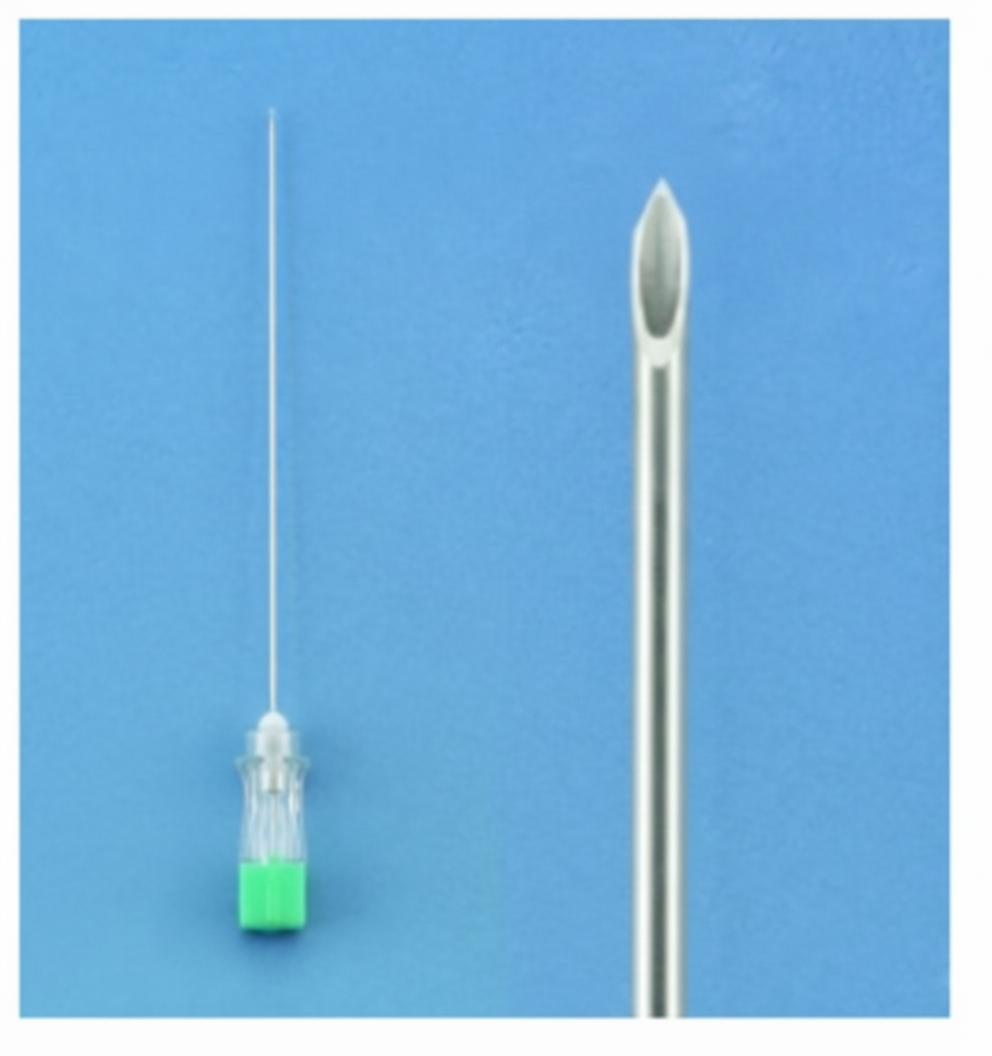
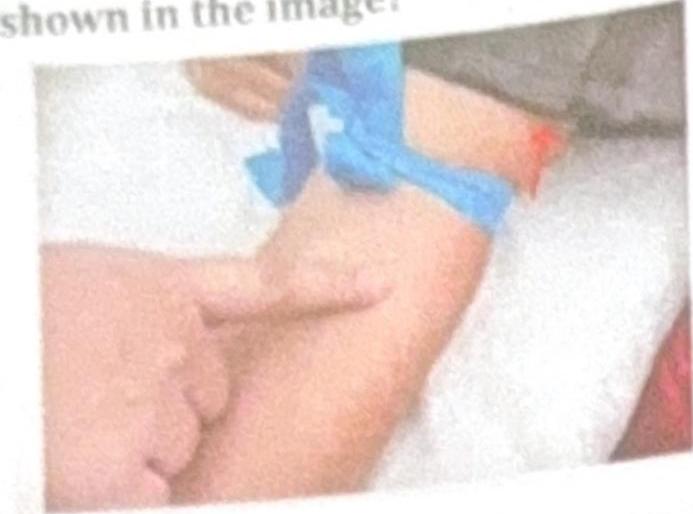
Complications of stellate ganglion block include all of the following except?
Which nerves are anesthetized in an incisive nerve block?
All are methods of regional anesthesia except?
Differential blockade is achieved by central neuraxial blockade. What is the primary mechanism?
Which sensation is the last to recover following spinal anesthesia?
What type of anesthesia is typically used during a coronary angiography procedure?
Which drug is contraindicated for Bier's block?
In the extraoral technique for mandibular nerve block, after contacting the pterygoid plate, in which direction is the needle directed?
Which cranial nerve is most commonly involved in spinal anesthesia?
Which of the following is the longest acting local anesthetic?
Explanation: **Explanation:** The **Stellate Ganglion Block (SGB)** involves injecting local anesthetic at the level of the C6 (Chassaignac’s tubercle) or C7 vertebra to block the sympathetic supply to the head, neck, and upper extremities. **Why Mueller's Syndrome is the correct answer:** The hallmark of a successful stellate ganglion block is **Horner’s Syndrome**, not Mueller’s syndrome. Horner’s syndrome consists of the triad of **Miosis, Ptosis, and Anhidrosis** (due to sympathetic paralysis). **Mueller’s sign** (systolic pulsations of the uvula) is associated with aortic regurgitation, and **Mueller’s maneuver** is a respiratory maneuver; neither is a complication or expected finding of SGB. **Analysis of incorrect options (Potential Complications):** * **Mediastinitis:** Rare but possible if the esophagus is accidentally perforated during the needle advancement, leading to deep neck space infection and downward spread. * **Cardiac Arrest:** This can occur due to accidental **intravascular injection** into the vertebral artery (leading to immediate seizures/coma) or the carotid artery. It can also occur via **total spinal anesthesia** if the anesthetic enters the dural sleeve. * **Pneumothorax:** This is a classic risk, especially when using the **C7 approach**, as the cupula of the lung lies in close proximity to the stellate ganglion. **High-Yield Clinical Pearls for NEET-PG:** 1. **Chassaignac’s Tubercle:** The prominent anterior tubercle of the **C6** transverse process; the most common landmark for SGB. 2. **Horner’s Syndrome:** Indicates a successful block but is also considered a "side effect" the patient should be warned about. 3. **Recurrent Laryngeal Nerve Block:** Can lead to hoarseness of voice; patients should be advised not to eat/drink until it resolves to prevent aspiration. 4. **Phrenic Nerve Block:** Can cause temporary diaphragmatic paralysis.
Explanation: **Explanation** The **incisive nerve block** is a variation of the mental nerve block, used primarily for dental procedures involving the mandibular premolars, canines, and incisors. **Why Option B is Correct:** The incisive nerve is a terminal branch of the **inferior alveolar nerve**. At the mental foramen, the inferior alveolar nerve bifurcates into two branches: 1. **The Mental Nerve:** Exits the foramen to provide sensory innervation to the skin of the chin and the mucous membrane of the lower lip. 2. **The Incisive Nerve:** Remains within the mandibular canal, continuing anteriorly to innervate the pulp of the anterior teeth and the associated bone. When local anesthetic is deposited at the mental foramen and **digital pressure** is applied to force the solution into the foramen, both the mental and incisive nerves are anesthetized. **Analysis of Incorrect Options:** * **Option A:** Anesthetizing only the incisive nerve is clinically impossible with this technique, as the anesthetic must pass the mental nerve at the foramen to reach the incisive canal. * **Options C & D:** The **Inferior Alveolar Nerve (IAN)** is located proximal to the mental foramen. A mental/incisive block is a peripheral block and does not provide the "true" mandibular anesthesia (lingual or molar coverage) seen in a standard IAN block. **High-Yield Clinical Pearls for NEET-PG:** * **Technique:** To ensure the incisive nerve is blocked (and not just the mental nerve), the clinician must apply pressure over the foramen for 2 minutes after injection. * **Coverage:** It provides pulpal anesthesia to the 1st premolar, canine, and incisors, but **not** the lingual soft tissues (which require a separate lingual nerve block). * **Landmark:** The mental foramen is most commonly located between the apices of the **first and second mandibular premolars**.
Explanation: **Explanation:** The core distinction in anesthesia lies between **Regional Anesthesia**, which involves the reversible loss of sensation in a specific body part by blocking nerve conduction, and **General Anesthesia**, which involves a drug-induced loss of consciousness. **Why D is the correct answer:** **Total Intravenous Anesthesia (TIVA)** is a technique of **General Anesthesia** where hypnosis, analgesia, and muscle relaxation are achieved solely through intravenous agents (like Propofol and Opioids), bypassing inhalational agents. Since it results in a systemic effect and loss of consciousness, it does not fall under regional anesthesia. **Why the other options are incorrect:** * **A. Topical Anesthesia:** A form of local/regional anesthesia where agents (e.g., EMLA cream, Lignocaine spray) are applied to mucous membranes or skin to block superficial nerve endings. * **B. Bier’s Block (Intravenous Regional Anesthesia - IVRA):** A regional technique where a local anesthetic is injected intravenously into a limb distal to a double-cuff tourniquet, providing anesthesia for short surgical procedures. * **C. Nerve Block:** A classic regional technique where local anesthetic is injected near a specific nerve or plexus (e.g., Brachial plexus block) to anesthetize a specific dermatomal distribution. **High-Yield Clinical Pearls for NEET-PG:** * **Bier’s Block:** Prilocaine (0.5%) is the drug of choice due to its low systemic toxicity; Bupivacaine is strictly contraindicated due to cardiotoxicity. * **TIVA:** Propofol is the "gold standard" agent for TIVA because of its rapid metabolism and short context-sensitive half-life. * **Regional Anesthesia Classification:** Includes Central Neuraxial Blocks (Spinal, Epidural), Peripheral Nerve Blocks, and Field Blocks.
Explanation: **Explanation:** **Differential blockade** refers to the phenomenon where different types of nerve fibers (autonomic, sensory, and motor) are blocked at different concentrations or times. **Why Epidural Anesthesia is the Correct Answer:** In **Epidural anesthesia**, the local anesthetic must diffuse through the dural cuff and the nerve sheath to reach the nerve roots. Because different nerve fibers have varying diameters and degrees of myelination, they exhibit different sensitivities to the concentration of the drug. By titrating the concentration of the local anesthetic (e.g., using 0.125% Bupivacaine), a clinician can achieve a "walking epidural" where **autonomic and sensory fibers are blocked, but motor function is preserved.** This distinct separation of block levels is the hallmark of differential blockade. **Why Other Options are Incorrect:** * **Spinal Anesthesia:** While a minor degree of differential block exists (the "zone of differential blockade" where the sympathetic block is 2-6 segments higher than the sensory block), it is not the primary clinical goal. In spinal anesthesia, the drug is deposited directly into the CSF, bathing the nerves in a high concentration that typically results in a **dense, non-selective block** of all fiber types simultaneously. * **Both/Neither:** These are incorrect because the clinical utility and primary mechanism of achieving a selective, graded block are specific to the epidural space. **High-Yield NEET-PG Pearls:** * **Order of Blockade:** Autonomic (B fibers) → Pain/Temperature (A-delta & C) → Touch/Pressure (A-beta) → Motor (A-alpha). * **Recovery Order:** The reverse of the blockade order (Motor recovers first). * **Clinical Application:** Differential blockade in epidurals is vital for **painless labor** (sensory block without motor loss) and **postoperative analgesia**.
Explanation: The order of nerve fiber blockade and recovery in spinal anesthesia is determined by the **size and myelination** of the nerve fibers. This concept is known as **Differential Nerve Blockade**. ### Why Preganglionic Sympathetic Function is Correct Preganglionic sympathetic fibers are **Type B fibers**. These are small, lightly myelinated fibers that are the most sensitive to local anesthetics. * **During Onset:** They are the **first** to be blocked. * **During Recovery:** They are the **last** to recover because they require the lowest concentration of local anesthetic to remain inhibited. Even as the drug concentration dissipates, it remains high enough to keep these small fibers blocked long after larger fibers have regained function. ### Explanation of Incorrect Options The sequence of recovery is generally the **reverse** of the sequence of onset: * **B. Motor function:** Mediated by **Type A-alpha** fibers (large, heavily myelinated). These are the most resistant to local anesthetics; thus, they are the last to be blocked and the **first to recover**. * **C. Proprioception:** Mediated by **Type A-beta** fibers. These recover shortly after motor function but before pain and temperature. * **A. Pain:** Mediated by **Type A-delta and C** fibers. These recover after motor and touch sensations but before the sympathetic fibers. ### NEET-PG High-Yield Pearls * **Sequence of Onset (First to Last):** B fibers (Sympathetic) → A-delta & C (Pain/Temp) → A-gamma (Muscle spindle) → A-beta (Touch/Pressure) → A-alpha (Motor). * **Sequence of Recovery:** Reverse of onset (Motor recovers first; Sympathetic recovers last). * **The "Two-Segment Rule":** In spinal anesthesia, the level of sympathetic block is typically **2 segments higher** than the sensory block, which is in turn higher than the motor block. * **Critical Fact:** The primary cause of hypotension in spinal anesthesia is the blockade of these B-fibers, leading to venous pooling and decreased systemic vascular resistance.
Explanation: **Explanation:** **Coronary Angiography (CAG)** is a minimally invasive diagnostic procedure performed in a cardiac catheterization lab. The procedure involves percutaneous access through a peripheral artery (most commonly the **radial artery** or the **femoral artery**) to visualize the coronary anatomy using contrast dye under fluoroscopy. 1. **Why Local Anesthesia is Correct:** The primary goal is to provide analgesia at the skin puncture site. **Local anesthesia** (typically 1–2% Lidocaine) is infiltrated subcutaneously at the access site to block pain during needle insertion and sheath placement. Since the procedure is minimally invasive and requires the patient to follow commands (like breath-holding or coughing) to optimize imaging, maintaining consciousness is essential. 2. **Why Other Options are Incorrect:** * **General Anesthesia (GA):** GA is unnecessary for CAG as it involves significant risks (intubation, hemodynamic fluctuations) and prevents patient cooperation. It is reserved for complex cardiac surgeries (e.g., CABG) or unstable patients. * **Epidural & Caudal Anesthesia:** These are forms of neuraxial blockade used for surgeries involving the lower abdomen, pelvis, or lower limbs. They provide no benefit for arterial access in the arm or groin and carry risks of hypotension and spinal hematoma, especially since patients undergoing angiography are often anticoagulated. **High-Yield Clinical Pearls for NEET-PG:** * **Radial vs. Femoral:** The radial approach is currently preferred due to lower bleeding complications and immediate ambulation. * **Allen’s Test:** Always perform/check for collateral circulation before radial artery cannulation. * **Sedation:** While local anesthesia is the mainstay, "Monitored Anesthesia Care" (MAC) with mild IV sedation (e.g., Midazolam) may be used for anxious patients, but the primary anesthetic remains local.
Explanation: **Explanation:** The correct answer is **Bupivacaine**. **Bier’s Block (Intravenous Regional Anesthesia - IVRA)** involves injecting a local anesthetic into a vein of an exsanguinated limb distal to a double-cuff tourniquet. The primary risk associated with this procedure is the accidental or premature release of the tourniquet, leading to a massive systemic bolus of the anesthetic drug into the circulation. **Why Bupivacaine is Contraindicated:** Bupivacaine is highly **cardiotoxic**. It has a high affinity for myocardial sodium channels and dissociates slowly during diastole ("fast-in, slow-out" kinetics). If systemic toxicity occurs due to tourniquet failure, Bupivacaine can cause refractory ventricular arrhythmias and cardiac arrest that are extremely difficult to resuscitate. Therefore, its use in IVRA is strictly contraindicated. **Analysis of Other Options:** * **Lidocaine (0.5%):** The gold standard and most commonly used drug for Bier’s block due to its excellent safety profile and rapid onset. * **Prilocaine (0.5%):** Considered the safest drug for IVRA because it has the highest therapeutic index and lowest systemic toxicity. However, in high doses, it carries a risk of methemoglobinemia. * **Dibucaine:** While not commonly used for IVRA, it is not specifically contraindicated like Bupivacaine; however, ester-type anesthetics are generally avoided due to allergy risks. **High-Yield Clinical Pearls for NEET-PG:** * **Drug of Choice:** Prilocaine (safest) or Lidocaine (most common). * **Chlorprocaine:** Also contraindicated in Bier's block due to a high risk of thrombophlebitis. * **Minimum Tourniquet Time:** The tourniquet must remain inflated for at least **20 minutes** to allow for tissue fixation of the drug and prevent immediate systemic toxicity. * **Preservative-free** solutions must always be used to prevent thrombophlebitis.
Explanation: The mandibular nerve block (extraoral approach) is a high-yield topic in regional anesthesia, specifically for procedures involving the lower jaw and tongue. ### **Explanation of the Correct Answer** The extraoral technique (Gow-Gates or lateral approach) involves advancing the needle through the mandibular notch until it contacts the **lateral pterygoid plate**. The lateral pterygoid plate serves as a crucial bony landmark. * **The Concept:** The mandibular nerve (V3) exits the skull via the **foramen ovale**, which is located **posterior and slightly superior** to the lateral pterygoid plate. * **The Maneuver:** Once the needle touches the bone (usually at a depth of 4–5 cm), it is withdrawn slightly and redirected **posteriorly** (and slightly superiorly) to "slip off" the posterior edge of the plate to reach the nerve trunk near the foramen. ### **Analysis of Incorrect Options** * **A. Anteriorly:** Moving anteriorly would lead the needle toward the infratemporal surface of the maxilla and away from the nerve’s exit point. * **C. Superiorly:** While a slight superior tilt is often used, the primary redirection required to bypass the bony obstruction of the pterygoid plate is posterior. * **D. Inferiorly:** Directing the needle inferiorly would lead toward the pterygomandibular space but would likely miss the main trunk of the mandibular nerve as it exits the skull. ### **High-Yield Clinical Pearls for NEET-PG** * **Landmarks:** The needle is inserted through the midpoint of the zygomatic arch, passing through the mandibular notch. * **Depth:** Contact with the pterygoid plate usually occurs at **4–5 cm**. If bone is not hit by 5 cm, the needle may be too deep (risk of pharyngeal puncture). * **Complications:** The most common complication of this block is **intravascular injection** (maxillary artery) or hematoma. * **Nerves Blocked:** This technique provides anesthesia to the auriculotemporal, inferior alveolar, lingual, and buccal nerves.
Explanation: **Explanation:** The correct answer is **Cranial Nerve VI (Abducens Nerve)**. **Why it is correct:** The involvement of cranial nerves following spinal anesthesia is typically a complication of **Post-Dural Puncture Headache (PDPH)**. When the dura is punctured, a continuous leak of cerebrospinal fluid (CSF) can lead to low intracranial pressure (intracranial hypotension). This loss of "cushioning" causes the brain to sag downwards. The **Abducens nerve (CN VI)** has the longest intracranial course and is tethered at the petrous part of the temporal bone. As the brain shifts caudally, it exerts traction on the nerve, leading to palsy. Clinically, this manifests as **diplopia** (double vision) and failure of lateral gaze. **Why the other options are incorrect:** * **Cranial Nerve I (Olfactory):** This nerve is located anteriorly and superiorly; it is not affected by the downward displacement of the brainstem. * **Cranial Nerve IX (Glossopharyngeal) & X (Vagus):** While these nerves are located in the posterior fossa, they are not as susceptible to traction as the Abducens nerve due to their shorter intracranial paths and different anatomical attachments. **High-Yield Clinical Pearls for NEET-PG:** * **Incidence:** CN VI palsy occurs in approximately 1 in 300 to 1 in 8,000 spinal anesthetics. * **Presentation:** It usually appears 4–14 days after the dural puncture. * **Prognosis:** Most cases are transient and resolve spontaneously within weeks as CSF pressure normalizes. * **Other Nerves:** While CN VI is most common (75% of cases), CN III and CN IV can also be involved, though much more rarely. * **Prevention/Treatment:** Conservative management of PDPH (fluids, caffeine) or an **Epidural Blood Patch** to stop the CSF leak.
Explanation: **Explanation:** The duration of action of a local anesthetic (LA) is primarily determined by its **protein binding capacity** and **lipid solubility**. **Dibucaine (Option C)** is an amide-linked local anesthetic that is the most potent, most toxic, and longest-acting among the options provided. It has an exceptionally high affinity for plasma proteins and high lipid solubility, giving it a duration of action significantly longer than bupivacaine. While its clinical use is limited today (primarily used for the "Dibucaine Number" to detect atypical pseudocholinesterase), it remains the correct answer in the context of pharmacological duration. **Analysis of Incorrect Options:** * **Bupivacaine (Option A):** A potent, long-acting amide LA commonly used for spinal and epidural anesthesia. While it is long-acting (3–6 hours), it is shorter-acting than Dibucaine. * **Ropivacaine (Option B):** An S-enantiomer of bupivacaine with a similar duration of action but slightly less cardiotoxicity. Its duration is comparable to or slightly less than bupivacaine. * **Tetracaine (Option D):** An ester-linked anesthetic used mainly for spinal and topical anesthesia. It is long-acting for an ester but does not exceed the duration of Dibucaine. **High-Yield Clinical Pearls for NEET-PG:** * **Dibucaine Number:** A measure of the quality of pseudocholinesterase. Normal = 80 (Dibucaine inhibits 80% of the enzyme); Atypical = 20. It helps diagnose prolonged apnea after Succinylcholine administration. * **Potency & Duration:** Lipid solubility determines **potency**, while protein binding determines **duration of action**. * **Cardiotoxicity:** Bupivacaine is the most cardiotoxic (binds strongly to sodium channels during diastole). Intralipid 20% is the antidote for Local Anesthetic Systemic Toxicity (LAST).
Neuraxial Anatomy
Practice Questions
Spinal Anesthesia
Practice Questions
Epidural Anesthesia
Practice Questions
Combined Spinal-Epidural Anesthesia
Practice Questions
Peripheral Nerve Blocks: Upper Extremity
Practice Questions
Peripheral Nerve Blocks: Lower Extremity
Practice Questions
Truncal Blocks
Practice Questions
Ultrasound-Guided Regional Anesthesia
Practice Questions
Complications of Regional Anesthesia
Practice Questions
Regional Anesthesia in Pediatric Patients
Practice Questions
Regional Anesthesia in Obstetrics
Practice Questions
Continuous Peripheral Nerve Catheters
Practice Questions
Get full access to all questions, explanations, and performance tracking.
Start For Free