What is the vasopressor of choice in hypotension produced during subarachnoid block?
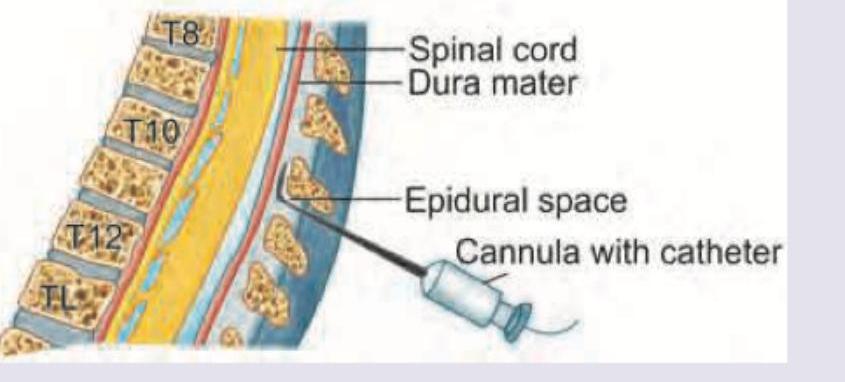
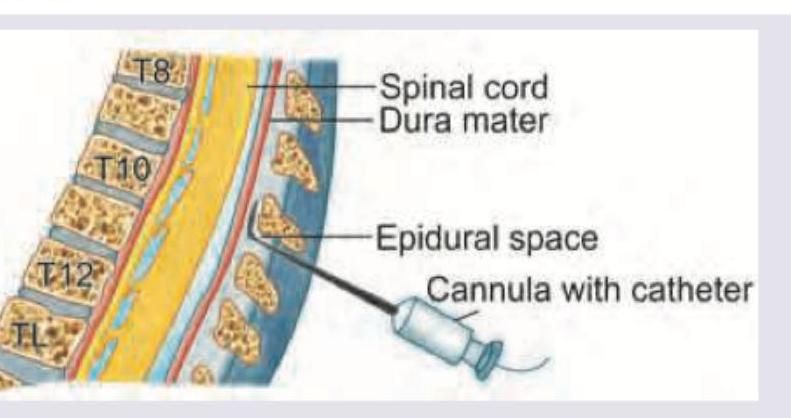
For which of the following is continuous epidural anaesthesia used?
Regarding lidocaine, which of the following statements is false?
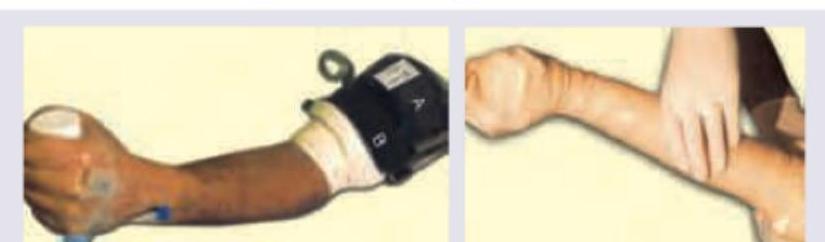
EMLA cream is effective in relieving pain of which procedures?
What is true regarding a bilateral mandibular block?
Local anesthetic toxicity is maximally seen with which of the following routes of administration?
What is the order of absorption routes for local anesthetics, from fastest to slowest?
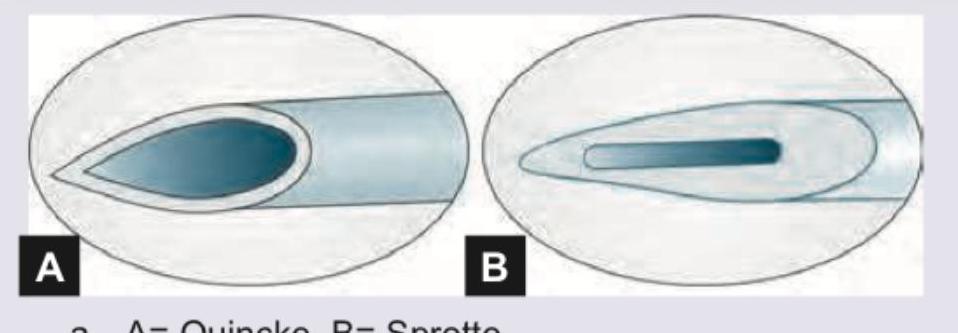
Which of the following is NOT true about post-spinal headache?
The topical use of which of the following local anesthetics is not recommended?
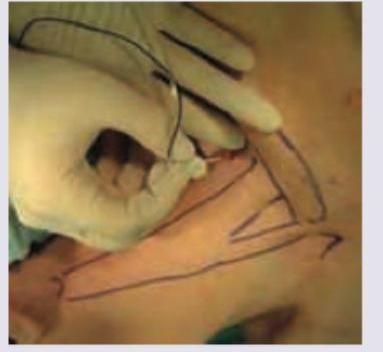
The block shown in the diagram is going to affect all of the following nerves EXCEPT?

Explanation: **Explanation:** Hypotension during **Subarachnoid Block (SAB)** is primarily caused by a sympathetic blockade, leading to venous pooling (decreased preload) and arterial vasodilation (decreased systemic vascular resistance). **Why Ephedrine is the Correct Choice:** Ephedrine is traditionally considered the drug of choice because it is a **mixed-acting sympathomimetic** (direct and indirect action on $\alpha$ and $\beta$ receptors). 1. **$\beta_1$ activity:** Increases heart rate and cardiac contractility. 2. **$\alpha_1$ activity:** Causes peripheral vasoconstriction. Crucially, in obstetric anesthesia, Ephedrine is preferred because it maintains **uteroplacental blood flow** better than pure alpha-agonists, although recent trends are shifting toward Phenylephrine in specific maternal contexts. **Analysis of Incorrect Options:** * **Mephenteramine:** Similar to Ephedrine but less potent. While commonly used in Indian clinical practice, Ephedrine remains the standard textbook answer for exams. * **Adrenaline:** A potent catecholamine used for cardiac arrest or anaphylaxis. It is too potent for routine post-spinal hypotension and can cause dangerous tachycardia and arrhythmias. * **Dopamine:** Requires infusion and is typically reserved for cardiogenic or septic shock; its onset is too slow for the acute management of spinal-induced hypotension. **High-Yield Clinical Pearls for NEET-PG:** * **Phenylephrine** is now often considered the "gold standard" for spinal hypotension in **obstetric patients** to avoid fetal acidosis, but **Ephedrine** remains the classic "choice" in general surgical scenarios and standard MCQ patterns. * The first-line management for post-spinal hypotension is **fluid pre-loading or co-loading** (crystalloids/colloids). * If hypotension is accompanied by **bradycardia** (due to block of T1-T4 cardioaccelerator fibers), Ephedrine or Atropine is mandatory.
Explanation: **Explanation:** Continuous epidural anesthesia (CEA) involves the placement of a catheter into the epidural space, allowing for the titrated administration of local anesthetics and opioids over an extended period. **Why Option A is Correct:** The primary clinical advantage of a continuous epidural catheter is **postoperative analgesia**. By providing a continuous infusion or Patient-Controlled Epidural Analgesia (PCEA), it ensures superior pain relief compared to systemic opioids. This promotes early mobilization, reduces pulmonary complications (by allowing deep breathing without pain), and facilitates faster recovery of bowel function (early return of peristalsis). **Analysis of Incorrect Options:** * **Option B:** While an epidural can extend the duration of anesthesia, the question asks for the primary *use* of the "continuous" technique. Single-shot epidurals can suffice for many surgeries; the "continuous" aspect is specifically valued for its transition into the postoperative period. * **Option C:** Epidural anesthesia is a form of **Regional Anesthesia**, not General Anesthesia (GA). While it can be combined with GA (Combined Spinal-Epidural or GA-Epidural), they are distinct techniques. * **Option D:** While epidurals *can* be used in children (often via the caudal route), it is not a primary indication for choosing the continuous technique over others. **High-Yield NEET-PG Pearls:** * **Site of Action:** The primary site of action for local anesthetics in an epidural is the **spinal nerve roots** as they exit the dural sac. * **Loss of Resistance (LOR):** The most common technique to identify the epidural space is the LOR to saline or air. * **Test Dose:** A standard test dose (3 mL of 1.5% Lidocaine with 1:200,000 Adrenaline) is used to rule out accidental **intravascular** (tachycardia) or **intrathecal** (total spinal) injection. * **Contraindications:** Absolute contraindications include patient refusal, local infection at the site, and uncorrected coagulopathy.
Explanation: ### Explanation **1. Why Option C is the correct (false) statement:** Local anesthetics are classified into two groups based on their chemical linkage: **Amides** and **Esters**. Lidocaine (Lignocaine) is an **Amide-type** local anesthetic, not an ester. * **High-Yield Rule:** Amide anesthetics have two "i"s in their name (e.g., L**i**doca**i**ne, Pr**i**loca**i**ne, Bup**i**vaca**i**ne, Rop**i**vaca**i**ne). Ester anesthetics have only one "i" (e.g., Coca**i**ne, Proca**i**ne, Benzoca**i**ne, Tetraca**i**ne). Amides are metabolized in the liver, whereas esters are metabolized by plasma pseudocholinesterase. **2. Analysis of other options:** * **Option A (True):** Lidocaine is the most widely used local anesthetic due to its rapid onset and intermediate duration of action. It works by blocking voltage-gated sodium channels. * **Option B (True):** Lidocaine is a **Class IB anti-arrhythmic**. It is used intravenously to treat ventricular arrhythmias, particularly those associated with acute myocardial infarction or cardiac surgery. * **Option D (True):** Lidocaine has excellent penetrative properties and is effective on mucous membranes. It is commonly used as a topical spray (10%) for airway anesthesia or as a jelly (2%) for urethral lubrication and anesthesia. **3. Clinical Pearls for NEET-PG:** * **Maximum Dose:** The maximum dose of plain lidocaine is **4 mg/kg**, and with adrenaline, it is **7 mg/kg**. * **Toxicity:** Early signs of LAST (Local Anesthetic Systemic Toxicity) include perioral numbness, metallic taste, and tinnitus. * **Metabolism:** Since lidocaine is metabolized by hepatic microsomal enzymes (CYP1A2), its clearance is reduced in patients with liver disease or congestive heart failure. * **EMLA Cream:** A eutectic mixture of Lidocaine (2.5%) and Prilocaine (2.5%) used for topical skin anesthesia.
Explanation: **Explanation:** **EMLA (Eutectic Mixture of Local Anesthetics)** is a topical anesthetic consisting of a 1:1 mixture of **2.5% Lidocaine and 2.5% Prilocaine**. The term "eutectic" refers to the fact that the combination has a melting point lower than either drug individually, allowing it to exist as an oil at room temperature. This property enhances its penetration through intact skin to reach the underlying dermis. **Why "All of the Above" is correct:** EMLA cream is specifically designed to provide surface anesthesia for procedures involving skin penetration. * **Venipuncture & Arterial Cannulation:** It effectively numbs the skin and subcutaneous tissue, significantly reducing the pain associated with needle insertion into vessels. * **Lumbar Puncture:** While it does not provide deep anesthesia for the spinal ligaments, it effectively numbs the initial skin puncture site, which is often the most distressing part of the procedure for pediatric or anxious patients. **High-Yield Clinical Pearls for NEET-PG:** 1. **Application Time:** For optimal effect, EMLA must be applied under an **occlusive dressing** for at least **45–60 minutes**. Maximum depth of penetration (approx. 5 mm) is achieved after 120 minutes. 2. **Contraindications:** It should **not** be used on broken skin, mucous membranes, or in patients with a known allergy to amide-type local anesthetics. 3. **Methemoglobinemia:** Due to the presence of Prilocaine (which metabolizes to o-toluidine), EMLA should be used with caution in infants under 3 months of age or those taking other methemoglobin-inducing drugs. 4. **Vasoconstriction/Vasodilation:** It initially causes vasoconstriction followed by vasodilation, which may occasionally make small vein cannulation slightly more challenging.
Explanation: ### Explanation **Correct Answer: C. It is not contraindicated.** The mandibular nerve block (specifically the Inferior Alveolar Nerve Block) is a common procedure in dentistry and maxillofacial surgery. A **bilateral mandibular block** is frequently performed for procedures involving both sides of the mandible (e.g., bilateral extractions or fracture reductions). The underlying medical concept is that the mandibular nerve is a sensory nerve for the teeth and lower jaw, and its motor component (nerve to mylohyoid and muscles of mastication) does not control the extrinsic muscles of the tongue (like the genioglossus), which are responsible for maintaining an open airway. Therefore, there is no physiological contraindication to performing it bilaterally. **Analysis of Incorrect Options:** * **Option A:** This is a common myth. The tongue is primarily controlled by the **hypoglossal nerve (CN XII)**. Anesthetizing the mandibular nerve (CN V3) affects sensation to the anterior two-thirds of the tongue (via the lingual nerve) but does not cause motor paralysis or loss of muscle tone. Thus, the patient cannot "swallow" their tongue. * **Option B:** Space infections (like Ludwig’s Angina) are caused by bacterial spread into submandibular or sublingual spaces, usually due to odontogenic infections. A sterile injection technique for a block does not cause infection. * **Option D:** It is a routine clinical procedure and is not "rarely performed." It is indicated whenever bilateral mandibular anesthesia is required for patient comfort. **High-Yield Clinical Pearls for NEET-PG:** * **Nerve involved:** The Inferior Alveolar Nerve (a branch of the Mandibular division of the Trigeminal nerve). * **Landmark:** The mandibular foramen, located on the medial surface of the ramus. * **Complication:** The most common complication of a mandibular block is a **hematoma** or transient **facial nerve palsy** (if the anesthetic is injected too posteriorly into the parotid gland). * **Airway Safety:** While the tongue won't be swallowed, bilateral anesthesia of the lingual nerve can lead to a loss of sensory perception, increasing the risk of accidental biting of the tongue or lips.
Explanation: The systemic absorption of local anesthetics (LA) depends primarily on the **vascularity** of the injection site. The higher the blood flow to the area, the faster the drug enters the systemic circulation, increasing the peak plasma concentration and the risk of Local Anesthetic Systemic Toxicity (LAST). **Why Intercostal Space Block is Correct:** The intercostal space is highly vascular. When LA is injected here, it is rapidly absorbed into the systemic circulation due to the proximity of the intercostal vessels. This route consistently produces the **highest peak plasma levels** of local anesthetics compared to any other regional technique. **Analysis of Other Options:** * **Caudal and Epidural Blocks:** While these areas are vascular (epidural venous plexus), the absorption rate is lower than the intercostal route. Caudal blocks generally have slightly higher absorption rates than lumbar epidurals but remain lower than intercostal blocks. * **Sciatic-Femoral Nerve Block:** These are peripheral nerve blocks involving large tissue areas with relatively lower vascularity compared to the trunk or airway mucosa, resulting in slower systemic absorption. **High-Yield Clinical Pearls for NEET-PG:** * **Mnemonic for Rate of Absorption (Highest to Lowest):** **"I** **I**nhailed **E**very **C**onfusing **B**it of **S**ubcutaneous **S**tuff" **I**ntercostal > **I**nguinal/Caudal > **E**pidural > **C**ervical Plexus > **B**rachial Plexus > **S**ciatic/Femoral > **S**ubcutaneous. * **Most Toxic LA:** Bupivacaine (due to high cardiotoxicity). * **Treatment of Choice for LAST:** 20% Intralipid emulsion (Lipid Rescue). * **Early Sign of Toxicity:** Perioral numbness, metallic taste, or tinnitus.
Explanation: **Explanation:** The rate of systemic absorption of local anesthetics (LA) is primarily determined by the **vascularity** of the injection site. Higher blood flow leads to faster absorption into the systemic circulation, increasing the risk of Local Anesthetic Systemic Toxicity (LAST). 1. **Tracheal:** The tracheal mucosa is highly vascular, leading to the most rapid absorption (comparable to an intravenous injection). 2. **Intercostal:** The intercostal space contains a high density of vessels, making it the fastest peripheral nerve block site for absorption. 3. **Lumbar Epidural:** While vascular, the epidural space contains fat and a lower density of vessels compared to the intercostal or tracheal routes. 4. **Subcutaneous:** This area has relatively poor perfusion, resulting in the slowest absorption rate. **Analysis of Options:** * **Option B (Correct):** Correctly follows the vascularity gradient: **T**racheal > **I**ntercostal > **C**audal > **E**pidural > **B**rachial plexus > **S**ciatic/Femoral > **S**ubcutaneous. * **Option A:** Incorrectly places Lumbar epidural before Intercostal. Intercostal blocks always result in higher peak plasma levels than epidural blocks. * **Option C:** This is the reverse order; subcutaneous is the slowest, not the fastest. * **Option D:** Incorrectly places Lumbar epidural as the fastest route. **High-Yield Clinical Pearls for NEET-PG:** * **Mnemonic:** Remember **"BICEPS"** or **"TI CEBSS"** (**T**racheal, **I**ntercostal, **C**audal, **E**pidural, **B**rachial plexus, **S**ciatic, **S**ubcutaneous). * **LAST Risk:** The site of injection is the most important patient-independent factor for predicting systemic toxicity. * **Vasoconstrictors:** Adding Epinephrine (1:200,000) reduces the rate of absorption, especially in highly vascular areas like the intercostal space.
Explanation: **Explanation:** Post-Dural Puncture Headache (PDPH) occurs due to the leakage of cerebrospinal fluid (CSF) through a dural hole, leading to low CSF pressure and compensatory cerebral vasodilation. **Why Option D is the Correct Answer (The False Statement):** Contrary to the option, **old age is a protective factor**, not a risk factor. PDPH is most common in young adults (20–40 years), particularly pregnant women. In the elderly, the dura is less elastic and the epidural space is more fibrotic, which helps the dural puncture site seal more quickly, reducing the incidence of headache. **Analysis of Other Options:** * **Option A:** PDPH is characteristically **positional**. It worsens within seconds of sitting or standing and is significantly relieved by lying flat (supine). * **Option B:** The pain is typically bilateral and most commonly felt in the **frontal or occipital** regions, sometimes radiating to the neck and shoulders. * **Option C:** Using a **small-bore needle** (e.g., 25G–27G) and non-cutting "pencil-point" needles (e.g., Sprotte or Whitacre) significantly reduces the risk by creating a smaller, more easily healed dural defect. **High-Yield Clinical Pearls for NEET-PG:** * **Gold Standard Treatment:** Epidural Blood Patch (EBP) is the most effective treatment for persistent PDPH. * **Needle Type:** Pencil-point needles (Whitacre/Sprotte) have a lower incidence of PDPH compared to cutting-tip needles (Quincke). * **Orientation:** If using a cutting needle, the bevel should be kept parallel to the longitudinal fibers of the dura to minimize damage. * **Conservative Management:** Includes bed rest, aggressive hydration, and oral/IV caffeine (which causes cerebral vasoconstriction).
Explanation: **Explanation:** The correct answer is **Bupivacaine**. Local anesthetics (LAs) are categorized based on their ability to penetrate mucous membranes and skin. For an agent to be effective topically, it must possess high lipid solubility and the ability to diffuse through tissues rapidly. **1. Why Bupivacaine is the correct answer:** Bupivacaine is a long-acting amide local anesthetic primarily used for infiltration, nerve blocks, and epidural/spinal anesthesia. It is **not recommended for topical use** because it has poor penetrative capacity through intact skin or mucous membranes. Furthermore, its high systemic toxicity (specifically **cardiotoxicity**) makes it a dangerous choice for topical application over large or vascular surfaces, as systemic absorption could lead to refractory arrhythmias. **2. Analysis of Incorrect Options:** * **Lidocaine (Option A):** The most versatile LA. It is highly effective topically and is available in various formulations (2% jelly, 4% solution, 5% ointment, 10% spray) for airway topicalization and urethral lubrication. * **Cocaine (Option C):** The only naturally occurring LA and a potent vasoconstrictor. It is used topically in ENT procedures (e.g., nasal surgery) to provide both anesthesia and shrinkage of the nasal mucosa. * **Dibucaine (Option D):** A quinoline derivative and one of the most potent, long-acting LAs. It is used almost exclusively topically (e.g., for hemorrhoids or skin irritations) due to its high toxicity when injected. **3. High-Yield Clinical Pearls for NEET-PG:** * **EMLA Cream:** A eutectic mixture of 2.5% Lidocaine and 2.5% Prilocaine, used for topical skin anesthesia before venipuncture. * **Benzocaine:** Commonly used topically for dental procedures and throat lozenges; however, it is a known cause of **methemoglobinemia**. * **Bupivacaine Toxicity:** Characterized by a low CC/CNS ratio (dose required for cardiovascular collapse vs. CNS toxicity), making it the most cardiotoxic common LA. Intralipid (20%) is the antidote for systemic toxicity.
Explanation: ***Buccal nerve*** - The **buccal nerve** is a branch of the **anterior division of mandibular nerve (V3)** and is NOT blocked by the inferior alveolar nerve block (IANB). - It requires a **separate buccal nerve block** as it has a different anatomical pathway and injection site. *Inferior alveolar nerve* - This nerve is the **primary target** of the IANB and is completely anesthetized during the procedure. - It provides sensation to the **mandibular teeth** and **lower lip** on the injected side. *Lingual nerve* - The **lingual nerve** runs close to the inferior alveolar nerve and is routinely blocked during IANB. - It provides sensation to the **anterior two-thirds of the tongue** and **floor of the mouth**. *Mental nerve* - The **mental nerve** is the terminal branch of the inferior alveolar nerve that exits through the **mental foramen**. - It is blocked as part of the IANB since it's a continuation of the inferior alveolar nerve pathway.
Neuraxial Anatomy
Practice Questions
Spinal Anesthesia
Practice Questions
Epidural Anesthesia
Practice Questions
Combined Spinal-Epidural Anesthesia
Practice Questions
Peripheral Nerve Blocks: Upper Extremity
Practice Questions
Peripheral Nerve Blocks: Lower Extremity
Practice Questions
Truncal Blocks
Practice Questions
Ultrasound-Guided Regional Anesthesia
Practice Questions
Complications of Regional Anesthesia
Practice Questions
Regional Anesthesia in Pediatric Patients
Practice Questions
Regional Anesthesia in Obstetrics
Practice Questions
Continuous Peripheral Nerve Catheters
Practice Questions
Get full access to all questions, explanations, and performance tracking.
Start For Free