Cerebral metabolism and O2 consumption are increased by which of the following agents?
Which IV anesthetic causes increased cerebral blood flow and cerebral metabolic rate?
Intracranial pressure is increased by which of the following anesthetic agents?
Which of the following increases cerebral oxygen consumption?
During surgery for aortic arch aneurysm under deep hypothermic circulatory arrest, which anesthetic agent administered prior to circulatory arrest also provides cerebral protection?
Which muscle relaxant is known to increase intracranial pressure?
If pneumocephalus is created either by surgery or by performance of a pneumoencephalogram, it is suggested that nitrous oxide be avoided for how many days?
Which inhalational agent is used in patients with raised intracranial tension?
Brain dead individuals have all of the following features EXCEPT?
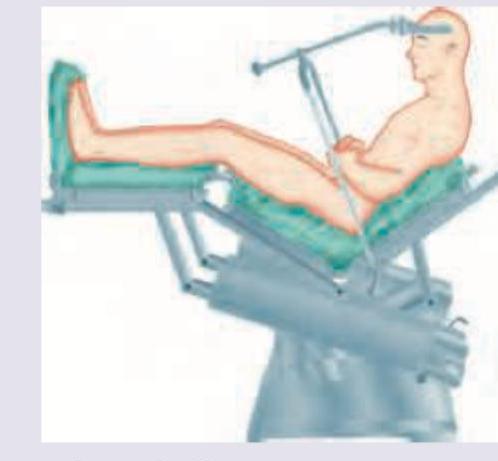
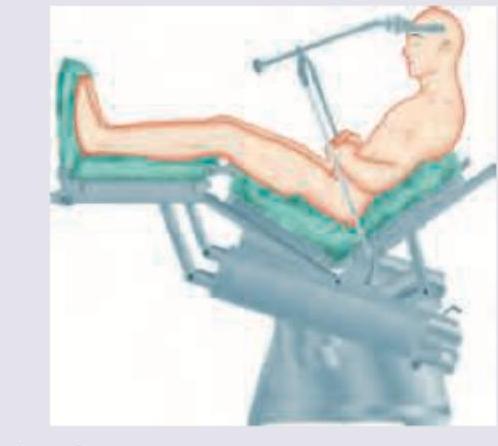
A patient is scheduled for neurosurgery for posterior fossa tumor. During the surgery the BP crashes and Et CO2 suddenly decreases to zero. All are true regarding the condition leading to this catastrophe except:
Explanation: **Explanation:** The correct answer is **Ketamine**. **1. Why Ketamine is Correct:** Most intravenous anesthetics are "cerebral protectants" because they cause **cerebral vasoconstriction**, which leads to a decrease in Cerebral Blood Flow (CBF), Cerebral Metabolic Rate of Oxygen (CMRO2), and Intracranial Pressure (ICP). **Ketamine is the notable exception.** It is a potent cerebral vasodilator that **increases CMRO2**, CBF, and ICP. It achieves this through sympathetic stimulation and neuronal activation, making it generally contraindicated in patients with space-occupying lesions or head injuries where intracranial compliance is compromised. **2. Why the Other Options are Incorrect:** * **Propofol (Option A):** This is the gold standard for neuro-anesthesia. It causes a dose-dependent **decrease** in CMRO2 and CBF (coupling), leading to a significant reduction in ICP. * **Atracurium (Option C):** As a neuromuscular blocking agent, it does not cross the blood-brain barrier and has **no direct effect** on cerebral metabolism or oxygen consumption. * **Fentanyl (Option D):** Opioids generally cause a mild **decrease** or no change in CMRO2 and CBF, provided that ventilation is maintained (as hypercapnia from respiratory depression could indirectly increase ICP). **High-Yield Clinical Pearls for NEET-PG:** * **The "Rule of Exceptions":** While almost all IV anesthetics decrease CMRO2/CBF, **Ketamine** increases them. While almost all Inhalational agents increase CBF (vasodilation), they decrease CMRO2 (uncoupling). * **Etomidate:** Also decreases CMRO2 and ICP, making it useful for induction in hemodynamically unstable neurosurgical patients. * **Thiopentone:** Historically used for "brain protection" during focal ischemia because it significantly reduces CMRO2 until the EEG becomes isoelectric.
Explanation: **Explanation** In neuroanesthesia, the relationship between Cerebral Blood Flow (CBF) and the Cerebral Metabolic Rate of Oxygen consumption ($CMRO_2$) is critical. Most intravenous anesthetics exhibit **"flow-metabolism coupling,"** where a decrease in brain activity leads to a proportional decrease in blood flow. **Ketamine (The Correct Answer):** Ketamine is the unique exception among IV induction agents. It acts as a potent cerebral vasodilator, leading to a significant **increase in CBF** (by 60-80%). Simultaneously, it **increases $CMRO_2$** due to sympathetic stimulation and neuronal activation in certain brain regions. This combination can lead to a rise in **Intracranial Pressure (ICP)**, making it traditionally contraindicated in patients with space-occupying lesions or head injuries (though this is relative if the patient is ventilated). **Why the others are incorrect:** * **Thiopentone:** A potent cerebral vasoconstrictor that significantly reduces both $CMRO_2$ and CBF. It is often used for "brain protection" during focal ischemia. * **Etomidate:** Decreases $CMRO_2$ and CBF while maintaining hemodynamic stability. It is preferred for induction in patients with limited cardiac reserve. * **Propofol:** Causes a dose-dependent reduction in $CMRO_2$ and CBF, leading to a decrease in ICP. **High-Yield Clinical Pearls for NEET-PG:** * **The "Inverse Steal" (Robin Hood) Phenomenon:** Thiopentone and Propofol cause vasoconstriction in healthy brain tissue, shunting blood toward ischemic areas (where vessels are already maximally dilated). * **Ketamine & IOP:** Ketamine also increases Intraocular Pressure (IOP), unlike most other induction agents. * **Drug of Choice for ICP:** Thiopentone or Propofol are preferred when the goal is to reduce ICP.
Explanation: **Explanation:** The regulation of Intracranial Pressure (ICP) in neuroanesthesia is primarily governed by the relationship between Cerebral Metabolic Rate of Oxygen (CMRO2) and Cerebral Blood Flow (CBF). **Why Ketamine is the Correct Answer:** Ketamine is a unique intravenous anesthetic that acts as a **potent cerebral vasodilator**. It increases CBF by 60–80% without a corresponding decrease in CMRO2. This increase in cerebral blood volume directly leads to an **elevation in ICP**. Additionally, ketamine can interfere with the reabsorption of cerebrospinal fluid (CSF), further contributing to intracranial hypertension. Therefore, it is traditionally contraindicated in patients with space-occupying lesions or head injuries. **Why Other Options are Incorrect:** * **Thiopentone, Propofol, and Etomidate** are all potent **cerebral vasoconstrictors**. * They cause **"Flow-Metabolism Coupling"**: they decrease CMRO2, which leads to a compensatory decrease in CBF. * By reducing cerebral blood volume, these agents effectively **lower ICP**, making them the drugs of choice for neurosurgical induction. Thiopentone, specifically, is known for its neuroprotective "burst suppression" on EEG. **High-Yield Clinical Pearls for NEET-PG:** * **The Exception:** While Ketamine increases ICP, recent evidence suggests this effect may be blunted if the patient is well-ventilated (maintaining normocapnia) and co-administered with benzodiazepines or propofol. * **Inhalational Agents:** All volatile anesthetics (Halothane > Isoflurane > Sevoflurane) increase ICP due to vasodilation, especially at doses >1 MAC. * **Drug of Choice:** **Propofol** is currently the preferred agent for neuro-induction due to its rapid onset and ability to reduce ICP and CMRO2. * **Etomidate** is preferred in hemodynamically unstable neurosurgical patients as it maintains Cerebral Perfusion Pressure (CPP) while lowering ICP.
Explanation: **Explanation:** The primary determinant of cerebral metabolic rate for oxygen (**CMRO2**) is neuronal activity. In neuroanesthesia, most intravenous anesthetics are "cerebro-protective" because they decrease both CMRO2 and Cerebral Blood Flow (CBF). **1. Why Ketamine is Correct:** Ketamine is a unique intravenous anesthetic (an NMDA receptor antagonist) that causes **dissociative anesthesia**. Unlike most other induction agents, it **increases CMRO2**, CBF, and intracranial pressure (ICP). It stimulates the sympathetic nervous system and increases neuronal activity in certain brain regions, leading to an increase in oxygen demand. **2. Why the Other Options are Incorrect:** * **Propofol (Option A):** A potent cerebral metabolic suppressant. It causes a dose-dependent decrease in CMRO2 and CBF, making it a preferred agent for neurosurgery. * **Thiopentone (Option C):** A barbiturate that significantly reduces CMRO2 by suppressing neuronal electrical activity. It is historically used for "brain protection" during focal ischemia. * **Alfentanil (Option D):** As an opioid, it generally causes a mild decrease or maintains stability in CMRO2 and CBF, provided ventilation is controlled and $PaCO_2$ remains normal. **Clinical Pearls for NEET-PG:** * **The "Rule of Exceptions":** Almost all IV anesthetics decrease CMRO2 and CBF; **Ketamine** is the notable exception. * **Inhalational Agents:** Most volatile anesthetics (like Isoflurane) **decrease CMRO2** but **increase CBF** (due to vasodilation), a phenomenon known as "uncoupling." * **Drug of Choice:** Propofol is the induction agent of choice in neurosurgery due to its rapid onset and ability to reduce ICP. * **Ketamine Caution:** Traditionally contraindicated in patients with space-occupying lesions or high ICP, though it may be used if the patient is adequately ventilated and co-administered with benzodiazepines/propofol.
Explanation: **Explanation:** **Thiopental sodium** is the classic gold-standard induction agent for cerebral protection during procedures involving focal ischemia or circulatory arrest, such as aortic arch surgery. **Why Thiopental is Correct:** The primary mechanism for its neuroprotective effect is the **dose-dependent suppression of the Cerebral Metabolic Rate of Oxygen (CMRO2)**. Thiopental reduces neuronal electrical activity until the EEG becomes isoelectric (flat), effectively decreasing the brain’s oxygen demand by approximately 50%. This "metabolic depression" preserves high-energy phosphates and delays neuronal death during periods of zero or low blood flow. It also reduces cerebral blood volume and intracranial pressure (ICP). **Analysis of Incorrect Options:** * **Etomidate (A):** While it decreases CMRO2 and ICP, it is generally avoided in prolonged surgeries or high-stress states like aortic repair due to its side effect of **adrenocortical suppression** (inhibition of 11-beta-hydroxylase). * **Propofol (C):** Propofol does reduce CMRO2 and is used for neuroprotection; however, in the specific context of deep hypothermic circulatory arrest (DHCA), Thiopental has a longer history of proven efficacy and is the traditional "textbook" answer for this surgical scenario. * **Ketamine (D):** Historically contraindicated in neurosurgery because it **increases** cerebral blood flow, CMRO2, and ICP, making it the opposite of a neuroprotective agent in this context. **High-Yield Clinical Pearls for NEET-PG:** * **Barbiturate Coma:** Thiopental is used to induce "barbiturate coma" for refractory intracranial hypertension. * **Inverse Steal Phenomenon (Robin Hood Effect):** Thiopental causes vasoconstriction in healthy brain tissue, shunting blood toward ischemic areas where vessels are already maximally dilated. * **DHCA Temperature:** Deep hypothermia is typically defined as 18°C–20°C, which further reduces CMRO2 synergistically with Thiopental.
Explanation: **Explanation:** **Suxamethonium (Succinylcholine)** is the correct answer because it is the only muscle relaxant listed that consistently increases intracranial pressure (ICP). The underlying mechanism is attributed to a transient increase in cerebral blood flow (CBF) and cerebral metabolic rate of oxygen ($CMRO_2$). Additionally, the intense fasciculations caused by this depolarizing agent increase central venous pressure and muscle spindle activity, which further contributes to the rise in ICP. While this increase is usually modest and transient, it can be clinically significant in patients with severely reduced intracranial compliance. **Analysis of Incorrect Options:** * **Mivacurium & Atracurium:** These are benzylisoquinolinium non-depolarizing relaxants. While they can cause histamine release (which might lead to vasodilation and a theoretical rise in ICP), they do not directly increase ICP. In clinical practice, they are generally considered safe for neurosurgery if hypotension is avoided. * **Vecuronium:** This is an aminosteroid non-depolarizing relaxant. It is considered "neuro-neutral" as it has no effect on ICP, heart rate, or blood pressure, making it a preferred choice for maintenance in neuroanesthesia. **High-Yield Clinical Pearls for NEET-PG:** * **The "Pre-curarization" Technique:** The rise in ICP caused by Suxamethonium can be attenuated by administering a small "defasciculating" dose of a non-depolarizing muscle relaxant (e.g., Vecuronium) 3 minutes prior to induction. * **Rocunorium** is the preferred alternative to Suxamethonium for Rapid Sequence Induction (RSI) in neurosurgical emergencies where increased ICP is a concern. * **Pancuronium** should be avoided in neuroanesthesia because it causes tachycardia and hypertension, which can indirectly increase ICP.
Explanation: **Explanation:** The correct answer is **7 days**. This recommendation is based on the physical properties of **Nitrous Oxide ($N_2O$)** and its interaction with closed gas spaces in the body. **1. Underlying Medical Concept:** Nitrous oxide is 34 times more soluble in blood than nitrogen. When $N_2O$ is administered, it diffuses from the blood into an air-filled cavity (like a pneumocephalus) much faster than nitrogen can diffuse out. This leads to a rapid increase in the volume or pressure of the air pocket. In the rigid intracranial vault, this expansion can cause **Tension Pneumocephalus**, leading to brain herniation or neurological deterioration. Studies on gas reabsorption show that it takes approximately **7 days** for intracranial air to be sufficiently absorbed to safely allow $N_2O$ use without risking expansion. **2. Analysis of Options:** * **Options A, B, and C (4, 5, 6 days):** These timeframes are insufficient. While some air may be absorbed, a significant volume often remains. Clinical guidelines and standard textbooks (like Miller’s Anesthesia) specify a 7-day safety window to ensure complete or near-complete resolution of the air pocket. **3. High-Yield Clinical Pearls for NEET-PG:** * **The "Second Gas Effect" and "Diffusion Hypoxia"** are other key $N_2O$ concepts often tested. * **Contraindications for $N_2O$:** Pneumothorax (most common), air embolism, bowel obstruction, intraocular gas bubbles (post-vitrectomy), and middle ear surgeries. * **Post-Vitrectomy Rule:** If **SF6 (Sulfur hexafluoride)** was used in the eye, avoid $N_2O$ for **7–10 days**. If **C3F8 (Perfluoropropane)** was used, avoid it for **8 weeks**. * **Tension Pneumocephalus Sign:** Look for the **"Mount Fuji Sign"** on a CT scan (separation of frontal lobes by air).
Explanation: ### Explanation In neuroanesthesia, the primary goal is to maintain the balance between **Cerebral Blood Flow (CBF)** and **Cerebral Metabolic Rate of Oxygen (CMRO₂)** while preventing increases in **Intracranial Pressure (ICP)**. **Why Isoflurane is the Correct Answer:** Isoflurane is considered the gold standard inhalational agent for neurosurgery. It provides a potent reduction in CMRO₂ (neuroprotection) while having a relatively modest effect on cerebral vasodilation compared to older agents. Most importantly, at concentrations below 1 MAC, the decrease in CMRO₂ offsets the direct vasodilatory effect, resulting in minimal changes to CBF and ICP. It also preserves **cerebral autoregulation** better than other agents, making it the safest choice among the options for patients with raised ICT. **Analysis of Incorrect Options:** * **Enflurane:** It is strictly contraindicated in neurosurgery because it can induce **seizure-like activity** on EEG, which significantly increases CMRO₂ and ICP. * **Desflurane:** It can cause sympathetic stimulation and a rapid increase in CBF, especially during induction or dose escalation, which can lead to a dangerous rise in ICP. * **Sevoflurane:** While commonly used, it can impair cerebral autoregulation more than isoflurane at higher concentrations. However, in modern practice, it is a close second to isoflurane. In the context of standard PG exams, Isoflurane remains the classic "textbook" answer for raised ICT. **High-Yield Clinical Pearls for NEET-PG:** * **Ideal Agent:** **Propofol** (IV) is actually superior to all inhalational agents for raised ICT as it reduces both CBF and CMRO₂ (coupling). * **Nitrous Oxide (N₂O):** Should be avoided in neurosurgery as it increases CBF and can expand a pneumocephalus. * **Hyperventilation:** If an inhalational agent must be used, mild hypocapnia (PaCO₂ 30-35 mmHg) can blunt the vasodilatory response and help lower ICP.
Explanation: ### Explanation **Concept Overview:** Brain death is defined as the irreversible loss of all functions of the entire brain, including the brainstem. To certify brain death, there must be a known irreversible cause, absence of confounding factors (like hypothermia or drug toxicity), and a **complete absence of brainstem reflexes**. **Why "Only pain is preserved" is the Correct Answer:** In a brain-dead individual, the brainstem is non-functional. Since the processing of painful stimuli occurs via the thalamus and cortex, and the motor response to pain is mediated through the brainstem or higher centers, a brain-dead patient will show **no purposeful or grimacing response to pain**. While spinal reflexes (like the knee jerk or plantar withdrawal) may persist because the spinal cord is separate from the brain, "pain" as a sensory-motor integration is lost. Therefore, the statement that pain is preserved is false. **Analysis of Incorrect Options:** * **A. Dolls eye movement (Oculocephalic reflex):** This reflex involves Cranial Nerves (CN) III, VI, and VIII and the brainstem pathways. In brain death, the eyes remain fixed in the midline when the head is turned (absent reflex). * **B. Oculo-vestibular reflex (Caloric test):** This is tested by irrigating the ear with ice-cold water. A normal response is nystagmus; in brain death, there is no eye movement, confirming brainstem failure. * **D. Corneal reflex:** This reflex involves CN V (sensory) and CN VII (motor). Its absence indicates midbrain and pontine dysfunction, a requirement for brain death diagnosis. **High-Yield Clinical Pearls for NEET-PG:** * **The Apnea Test** is the "Gold Standard" for confirming brain death. It is positive if the patient fails to breathe despite a $PaCO_2 \geq 60$ mmHg (or $20$ mmHg above baseline) and a $pH < 7.3$. * **Order of Reflex Loss:** Usually, cortical functions go first, followed by brainstem reflexes. * **Spinal Reflexes:** Presence of deep tendon reflexes or the "Lazarus sign" (spontaneous arm movements) does **not** rule out brain death, as these are mediated by the spinal cord. * **Prerequisites:** Core temperature must be $>36.5^\circ C$ and Systolic BP must be $>100$ mmHg before testing.
Explanation: ***High pressure in cerebral venous sinuses is a major risk factor*** - **Venous air embolism** (VAE) is a known complication of neurosurgery in the sitting position, where the surgical field is **above the level of the heart**. - In such cases, a **negative pressure gradient** between the surgical site and the heart allows air to be entrained into open veins, making **low or subatmospheric pressure in cerebral venous sinuses** a major risk factor, not high pressure. *Mill wheel murmur* - A **"mill wheel" murmur** (or "churning" sound) can sometimes be heard over the precordium when a large amount of air enters the right ventricle, indicating **venous air embolism**. - This is a classic, though not always present, clinical sign of a significant air embolism. *TEE is the most sensitive investigation step* - **Transesophageal echocardiography (TEE)** is indeed considered the **most sensitive monitoring technique** for detecting venous air embolism. - It can detect very small amounts of air within the heart before significant hemodynamic changes occur. *Nitrous oxide accentuates the hemodynamic collapse* - If a venous air embolism occurs, **nitrous oxide (N2O)** should be immediately discontinued because it can **expand the size of the air embolus**, especially if it crosses into the arterial circulation through a patent foramen ovale. - This expansion can worsen hemodynamic compromise and exacerbate ischemic injury.
Cerebral Physiology and Pathophysiology
Practice Questions
Anesthetics and Cerebral Blood Flow
Practice Questions
Intracranial Pressure Management
Practice Questions
Anesthesia for Supratentorial Craniotomy
Practice Questions
Anesthesia for Infratentorial Craniotomy
Practice Questions
Anesthesia for Traumatic Brain Injury
Practice Questions
Neuromonitoring Techniques
Practice Questions
Anesthesia for Spine Surgery
Practice Questions
Anesthesia for Neurovascular Procedures
Practice Questions
Awake Craniotomy
Practice Questions
Neuromuscular Disorders
Practice Questions
Postoperative Care in Neurosurgical Patients
Practice Questions
Get full access to all questions, explanations, and performance tracking.
Start For Free