A 32-year-old male janitor complains of a swollen face during the past week. A CT scan reveals an expanding hematoma in the superior mediastinum. Mediastinal tamponade is most likely to manifest as which of the following?
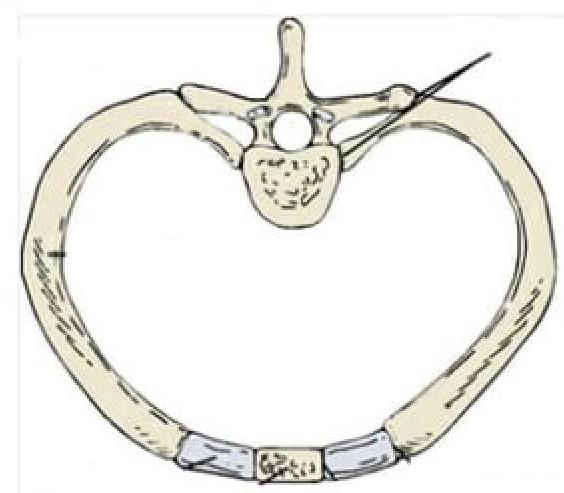
The second costochondral joint is a?
Which of the following statements regarding the diaphragm are true?
At which vertebral level does the inferior vena cava pass through the diaphragm?
Which of the following muscles attaches to the first rib?
What is the name of the pleura that covers the surface of the lungs?
In which part of the esophagus do foreign bodies most commonly lodge?
Diaphragmatic hernias can occur through all of the following anatomical structures EXCEPT:
Which tissue undergoes cyclic changes in women's breasts?
A 35-year-old female is admitted to the emergency department because of cardiac arrhythmia. ECG examination reveals that the patient suffers from atrial fibrillation. Where is the mass of specialized conducting tissue that initiates the cardiac cycle located?
Explanation: **Explanation** The clinical presentation describes **Mediastinal Tamponade**, a condition where an expanding mass (in this case, a hematoma) within the confined space of the superior mediastinum exerts pressure on thin-walled structures. **Why Option D is Correct:** The **Superior Vena Cava (SVC)** and the **Brachiocephalic veins** are located in the superior mediastinum. These veins have low intravascular pressure and thin walls, making them highly susceptible to external compression. When a hematoma expands, it compresses these vessels, obstructing venous return from the head, neck, and upper extremities. This leads to **venous congestion**, manifesting as facial swelling (as seen in this patient), jugular venous distension, and bilateral upper extremity edema. **Analysis of Incorrect Options:** * **A. Hypertension:** Compression of the heart or great vessels typically leads to *hypotension* due to decreased cardiac output, not hypertension. * **B. Increased pulse pressure during inspiration:** This is physiologically incorrect. In conditions like cardiac tamponade, there is a *decrease* in systolic blood pressure (>10 mmHg) during inspiration, known as **Pulsus Paradoxus**. * **C. Paresis of the right arm:** This would imply involvement of the Brachial Plexus. While the plexus is near the superior mediastinum, it is a peripheral nerve structure located in the neck/axilla; venous obstruction is a much more common and immediate result of mediastinal pressure. **High-Yield Clinical Pearls for NEET-PG:** * **Superior Mediastinum Boundaries:** Superiorly by the thoracic inlet and inferiorly by the plane of Ludwig (T4-T5). * **SVC Syndrome:** Most commonly caused by malignancy (e.g., bronchogenic carcinoma) but can be acute due to trauma/hematoma. * **Key Structures at Risk:** SVC, Brachiocephalic veins, Trachea (causing stridor), and Esophagus (causing dysphagia). * **Pulsus Paradoxus:** Characteristic of *Cardiac* Tamponade, not necessarily isolated superior mediastinal compression.
Explanation: ### Explanation **1. Why Synchondrosis is Correct:** The **costochondral joints** are the junctions between the ribs and their respective costal cartilages. Anatomically, all costochondral joints (from the 1st to the 10th rib) are classified as **Primary Cartilaginous joints (Synchondroses)**. In these joints, the perichondrium of the cartilage is continuous with the periosteum of the rib, allowing for no movement. This provides the structural stability required for the thoracic cage while allowing for growth. **2. Why Other Options are Incorrect:** * **Synovial Joint:** While the **sternocostal joints** (between costal cartilage and sternum) from the 2nd to 7th ribs are synovial [1], the *costochondral* joints are not. Synovial joints are characterized by a joint cavity and mobility, which costochondral junctions lack. * **Fibrous Joint / Syndesmosis:** These joints are held together by dense fibrous connective tissue (e.g., sutures of the skull or the inferior tibiofibular joint). Costochondral junctions involve hyaline cartilage [1], not purely fibrous tissue. **3. NEET-PG High-Yield Pearls:** * **Costochondral vs. Sternocostal:** Do not confuse them. All costochondral joints are **Synchondroses**. The 1st sternocostal joint is a **Synchondrosis**, but the 2nd–7th sternocostal joints are **Synovial (Plane type)**. * **Manubriosternal Joint:** Usually a secondary cartilaginous joint (Symphysis). * **Xiphisternal Joint:** Usually a primary cartilaginous joint (Synchondrosis). * **Clinical Correlation:** **Tietze Syndrome** (Costochondritis) is the inflammation of these joints, often presenting as chest pain that mimics angina but is localized and tender to palpation.
Explanation: To solve this question, we must evaluate the anatomical landmarks and physiological characteristics of the diaphragm, a high-yield topic for NEET-PG. ### **Analysis of Statements** * **(a) The right crus is shorter than the left crus:** **False.** The **right crus** is longer and thicker, arising from the bodies of L1–L3 vertebrae, whereas the left crus arises only from L1–L2. * **(b) The esophagus passes through the diaphragm at the level of T10:** **True.** The esophageal opening is located in the muscular part of the diaphragm at the level of the 10th thoracic vertebra. * **(c) The inferior vena cava passes through the diaphragm at the level of T10:** **False.** The caval opening is located in the central tendon at the level of **T8**. * **(d) The aorta passes through the diaphragm at the level of T8:** **False.** The aortic hiatus is the lowest major opening, located at the level of **T12**. * **(e) The diaphragm is the primary muscle of inspiration:** **True.** It accounts for approximately 75% of the change in intrathoracic volume during quiet breathing [1]. ### **Why Option B is Correct** Option B correctly identifies that only statements **(b)** and **(e)** are anatomically and physiologically accurate. ### **High-Yield NEET-PG Pearls** * **Major Openings Mnemonic (I Eat Apples):** * **I**VC: **8** letters (**T8**) * **E**sophagus: **10** letters (**T10**) * **A**ortic Hiatus: **12** letters (**T12**) * **Right Crus:** It forms a "sling" around the esophagus, acting as a physiological sphincter to prevent gastroesophageal reflux. * **Nerve Supply:** "C3, 4, 5 keep the diaphragm alive" (Phrenic nerve) [1]. Note that while the phrenic nerve provides all motor supply, the peripheral parts receive sensory supply from the lower six intercostal nerves.
Explanation: The diaphragm features three major openings (hiatuses) that allow structures to pass between the thorax and the abdomen. These are high-yield topics for NEET-PG, often remembered by the mnemonic **"I Eat 10 Eggs At 12"** (IVC-8, Esophagus-10, Aorta-12). ### 1. Why T8 is Correct The **Vena Caval Opening** is located in the central tendon of the diaphragm, slightly to the right of the midline, at the level of the **T8 vertebra**. Because it is situated in the inelastic central tendon, the opening actually dilates during inspiration. This decrease in intrathoracic pressure combined with the widening of the IVC facilitates venous return to the heart. ### 2. Analysis of Incorrect Options * **A. T6:** This level is too superior. No major diaphragmatic hiatus exists here; it corresponds roughly to the level of the horizontal fissure of the right lung. * **C. T10:** This is the level of the **Esophageal Opening**. It transmits the esophagus, the left and right vagus nerves (as trunks), and the esophageal branches of the left gastric vessels. * **D. T12:** This is the level of the **Aortic Opening**. It is an osseofibrous passage behind the diaphragm (not through the muscle itself) and transmits the Aorta, Azygos vein, and Thoracic duct. ### 3. Clinical Pearls & High-Yield Facts * **Phrenic Nerve:** The right phrenic nerve passes through the T8 opening along with the IVC. * **Inspiration Effect:** During inspiration, the IVC opening **dilates** (improving flow), while the Esophageal opening (T10) is **constricted** by the pinch-cock effect of the right crus, preventing gastric reflux. * **Mnemonic:** * **V**ena Cava = 8 letters (**T8**) * **E**sophagus = 10 letters (**T10**) * **A**ortic Hiatus = 12 letters (**T12**)
Explanation: ### Explanation The **first rib** is a highly high-yield topic in Anatomy because it serves as a critical landmark for the root of the neck and the thoracic outlet. **1. Why Scalenus Medius is Correct:** The **Scalenus medius** is the largest and longest of the scalene muscles. It originates from the posterior tubercles of the transverse processes of C2–C7 and inserts onto the **superior surface of the first rib**, specifically behind the groove for the subclavian artery. **2. Analysis of Incorrect Options:** * **Scalenus posterior (A):** This muscle passes further down to attach to the **outer surface of the second rib**. It does not attach to the first rib. * **Serratus posterior superior (B):** This is a thin, quadrilateral muscle situated at the upper back. It attaches to the **upper borders of the 2nd to 5th ribs**, lateral to their angles. It does not have an attachment on the 1st rib. **3. High-Yield Clinical Pearls for NEET-PG:** * **Scalenus Anterior:** This is the most important landmark on the first rib. It inserts into the **Scalene tubercle (Lisfranc's tubercle)**. * **The "Sandwich" Rule:** The **Subclavian Artery** and the **Brachial Plexus** pass *between* the Scalenus anterior and Scalenus medius. Conversely, the **Subclavian Vein** passes *anterior* to the Scalenus anterior. * **Structures on the First Rib (Medial to Lateral):** Subclavian vein → Scalenus anterior (tubercle) → Subclavian artery → Lower trunk of Brachial plexus → Scalenus medius. * **Ossification:** The first rib is the first to begin ossification but can sometimes be incomplete, leading to a "cervical rib" mimic on X-rays.
Explanation: **Explanation:** The pleura is a serous membrane that forms a double-layered sac surrounding each lung. 1. **Why Option C is Correct:** The **Visceral Pleura** (also known as the pulmonary pleura) is the inner layer that is firmly adherent to all surfaces of the lungs, including the horizontal and oblique fissures [1], [2]. It cannot be separated from the lung parenchyma. It is insensitive to pain because its nerve supply is derived from the autonomic nervous system (vasomotor nerves) [1]. 2. **Why the Other Options are Incorrect:** * **Option A (Pleural Cavity):** This is the potential space located *between* the visceral and parietal layers [2]. It normally contains only a thin film of serous fluid. * **Option B (Pleural Fluid):** This is the serous lubricant found within the pleural cavity that reduces friction during respiration. * **Option D (Parietal Pleura):** This is the thicker, outer layer that lines the thoracic wall, diaphragm, and mediastinum [1], [2]. Unlike the visceral pleura, it is highly sensitive to pain (supplied by somatic intercostal and phrenic nerves) [1]. **High-Yield NEET-PG Pearls:** * **Development:** The pleura develops from the **lateral plate mesoderm** (Splanchnopleuric layer forms visceral pleura; Somatopleuric layer forms parietal pleura). * **Nerve Supply:** The parietal pleura is the source of "pleuritic chest pain." The **phrenic nerve** supplies the mediastinal and central diaphragmatic pleura, while **intercostal nerves** supply the costal and peripheral diaphragmatic pleura [1]. * **Clinical Correlation:** Inflammation of the pleura is called **pleurisy**. An accumulation of excess fluid in the pleural cavity is a **pleural effusion**.
Explanation: The esophagus has four physiological constrictions where the lumen is naturally narrowed. These sites are the most common locations for foreign bodies to lodge, with the **cricopharyngeus muscle** being the most frequent. ### 1. Why the Cricopharyngeus is Correct The cricopharyngeus muscle (at the level of **C6**) forms the **upper esophageal sphincter (UES)**. This is the narrowest point of the entire esophagus (approximately 1.5 cm in diameter). Because it is the first and tightest bottleneck, most swallowed foreign bodies (coins, fish bones, boluses) fail to pass this point and become impacted here. ### 2. Analysis of Incorrect Options * **A. The thoracic inlet:** While the esophagus is slightly narrowed here (level of T2), it is wider than the cricopharyngeal opening. * **C. The level of the aortic arch:** This is the second anatomical constriction (level of T4), caused by the arch of the aorta crossing the esophagus. It is a common site for secondary impaction but less frequent than the UES. * **D. The level of the left main bronchus:** This is the third constriction (level of T5/T6). While clinically relevant, it is rarely the primary site of obstruction compared to the UES. ### 3. High-Yield Clinical Pearls for NEET-PG * **The Four Constrictions:** 1. **6 inches (15cm)** from incisors: Cricopharyngeus (Narrowest). 2. **9 inches (22cm)** from incisors: Aortic arch. 3. **11 inches (27cm)** from incisors: Left main bronchus. 4. **15 inches (40cm)** from incisors: Diaphragmatic hiatus (Lower esophageal sphincter). * **Radiology Tip:** On a PA/AP X-ray, a coin lodged in the esophagus appears as a **circular disk** (coronal plane), whereas a coin in the trachea appears as a **vertical line** (sagittal plane). * **Most common site for perforation:** Also the cricopharyngeus (specifically Killian’s dehiscence).
Explanation: The diaphragm is a musculofascial sheet with several natural openings and potential weak areas. Diaphragmatic hernias occur when abdominal contents protrude into the thoracic cavity through these weak points. **Why the Inferior Vena Cava (IVC) opening is the correct answer:** The IVC opening (Caval hiatus) is located at the level of **T8** within the **central tendon** of the diaphragm. Because the margins of this opening are tendinous and the IVC is firmly adherent to the opening's walls, it is structurally rigid. This anatomical stability prevents the herniation of abdominal viscera through this site. **Analysis of incorrect options:** * **Esophageal opening (T10):** This is a muscular opening. Laxity in the phrenicoesophageal ligament or widening of the muscular pillars (crura) leads to **Hiatal Hernias**, the most common type of adult diaphragmatic hernia [1]. * **Costovertebral triangle (Bochdalek’s Foramen):** This is a posterior developmental gap between the costal and lumbar attachments. It is the most common site for **congenital diaphragmatic hernias (CDH)**, typically occurring on the left side. * **Costal and sternal attachments (Morgagni’s Foramen):** A small gap (Space of Larrey) exists between the sternal and costal origins. Herniation here is known as **Morgagni’s Hernia**, which is usually anterior and right-sided. **NEET-PG High-Yield Pearls:** 1. **Mnemonic for Levels:** **I** **8** **10** **E**ggs **A**t **12** (IVC-T8, Esophagus-T10, Aorta-T12). 2. **Bochdalek is Back and Left:** Most common CDH, located posterolaterally. 3. **Morgagni is Midline/Anterior:** Less common, often contains omentum or transverse colon. 4. The **Aortic hiatus (T12)** is also not a true opening in the diaphragm (it is behind it); therefore, herniation does not occur there either.
Explanation: **Explanation:** The correct answer is **None of the above** because the tissue that undergoes significant cyclic changes in the female breast is the **Glandular tissue (Parenchyma)**, specifically the terminal duct lobular units (TDLU). 1. **Why "None of the above" is correct:** The female breast is composed of glandular, fibrous, and adipose tissues [1]. Under the influence of the ovarian cycle (Estrogen and Progesterone), it is the **glandular epithelium** that proliferates [3]. During the luteal phase (post-ovulation), progesterone causes the terminal ducts to sprout and the alveoli to enlarge [2]. If pregnancy does not occur, these changes regress during menstruation via apoptosis. None of the listed tissues (Adipose or Fibrous) possess the hormonal receptors required to undergo these specific structural cyclic fluctuations. 2. **Why other options are incorrect:** * **A. Adipose tissue:** This provides the bulk and shape of the breast but remains relatively constant regardless of the menstrual cycle [1]. It does not proliferate or regress cyclically [2]. * **B. Fibrous tissue:** This forms the "Stroma" (including Cooper’s ligaments). While it provides structural support, it does not undergo cyclic physiological changes [1]. * **C. Papillomatosis:** This is a pathological condition (hyperplasia of the lining of the mammary ducts) and not a normal physiological tissue or process [4]. **High-Yield Clinical Pearls for NEET-PG:** * **Hormonal Control:** Estrogen is primarily responsible for **ductal growth**, while Progesterone is responsible for **alveolar/lobular development** [3]. * **Cyclic Mastalgia:** The vascular engorgement and interstitial edema occurring in the glandular tissue during the luteal phase are the primary causes of premenstrual breast tenderness. * **Lymphatic Drainage:** 75% of breast lymph drains into the **Axillary nodes** (primarily the Pectoral/Anterior group). * **Milk Production:** Prolactin stimulates milk secretion, while Oxytocin (via the let-down reflex) causes contraction of myoepithelial cells for milk ejection.
Explanation: ### Explanation **Concept:** The question asks for the location of the **Sinoatrial (SA) Node**, which is the "pacemaker" of the heart responsible for initiating the cardiac cycle. Anatomically, the SA node is a spindle-shaped structure located subepicardially in the wall of the right atrium. It is situated at the **upper end of the crista terminalis**, precisely at the **junction of the superior vena cava (SVC) and the right atrium** [1]. **Analysis of Options:** * **Option C (Correct):** The SA node is located at the superior end of the sulcus terminalis, near the opening of the SVC [1]. This is the physiological starting point for electrical impulses. * **Option A (Incorrect):** This describes the general vicinity of the **Atrioventricular (AV) node**. Specifically, the AV node is located in the **Koch’s Triangle**, bounded by the coronary sinus orifice, the tendon of Todaro, and the septal leaflet of the tricuspid valve [1]. * **Option B (Incorrect):** The inferior vena cava enters the right atrium at the lower, posterior aspect. No specialized conducting tissue initiates the cycle here. * **Option D (Incorrect):** The area between the atria (interatrial septum) contains the AV node (inferiorly) [1] and Bachmann’s bundle, but it is not the site of initiation. **NEET-PG High-Yield Pearls:** 1. **Arterial Supply:** In 60% of individuals, the SA node is supplied by the **Right Coronary Artery**; in 40%, it is supplied by the Left Circumflex Artery. 2. **Koch’s Triangle:** Essential landmark for the AV node during electrophysiology studies. 3. **Crista Terminalis:** The internal ridge separating the smooth posterior part (sinus venarum) from the rough anterior part (pectinate muscles) of the right atrium; the SA node lies at its cephalic peak. 4. **Clinical Correlation:** In Atrial Fibrillation, the SA node’s pacemaker function is overwhelmed by rapid, disorganized electrical impulses, often originating from the pulmonary veins [2].
Thoracic Wall and Diaphragm
Practice Questions
Pleura and Lungs
Practice Questions
Mediastinum
Practice Questions
Heart and Pericardium
Practice Questions
Great Vessels and Azygos System
Practice Questions
Thoracic Duct and Lymphatics
Practice Questions
Autonomic Innervation
Practice Questions
Applied Anatomy and Clinical Correlations
Practice Questions
Thoracic Imaging and Cross-sectional Anatomy
Practice Questions
Embryological Development of Thoracic Structures
Practice Questions
Get full access to all questions, explanations, and performance tracking.
Start For Free