A child is eating while lying supine in bed and aspirates a peanut. Which bronchopulmonary segment is this foreign object most likely to enter?
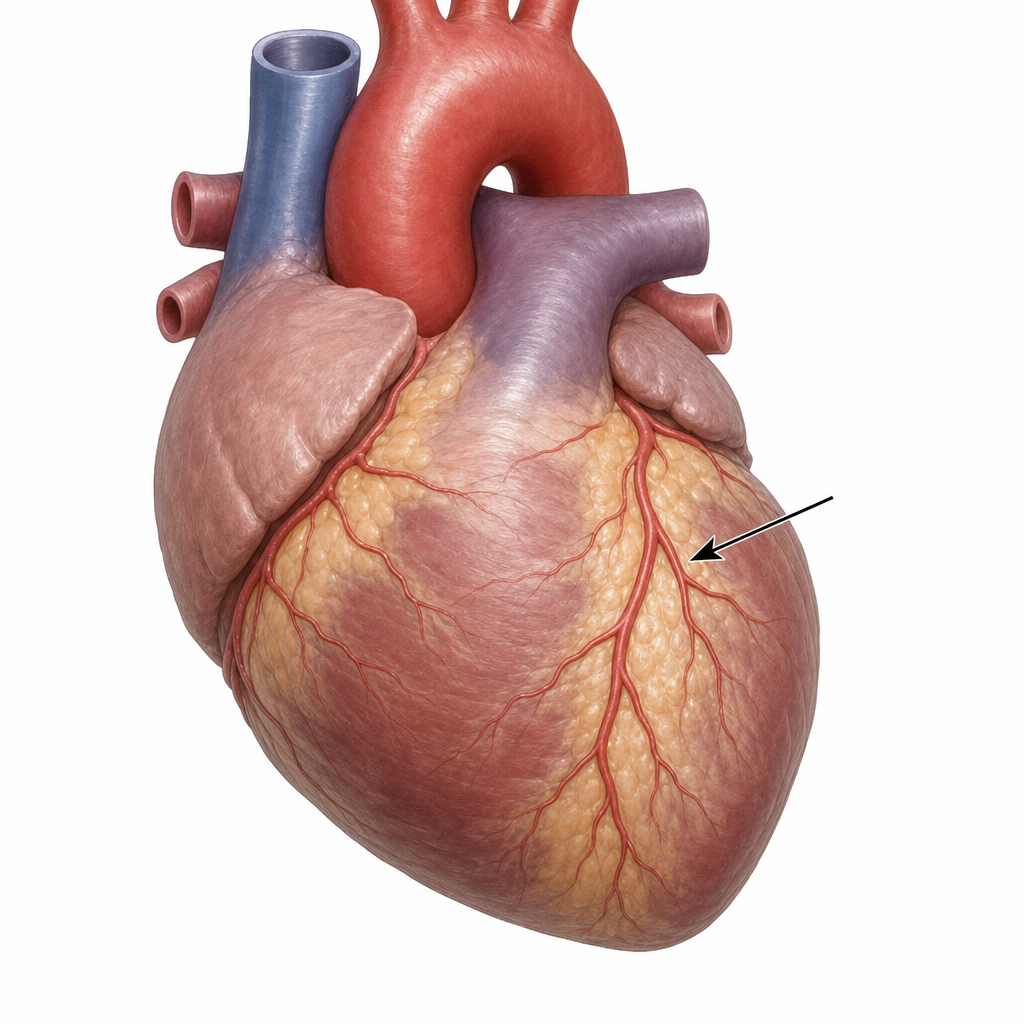
What is the function of the Wenckebach bundle?
A 46-year-old patient presents with complaints of chest pain and headache. A computed tomography (CT) scan reveals a tumor located just superior to the root of the right lung. Blood flow in which of the following veins is most likely blocked by this tumor?
During a mastectomy on a 60-year-old female patient, which artery gives origin to the small branches supplying the medial side of the breast?
Which of the following muscles is enclosed within the clavipectoral fascia?
Which muscle forms the medial wall of the axilla?
Which of the following ducts commences in the abdomen as an elongated lymph sac superior to the cisterna chyli?
All are true about the branches of the aorta except?
During cardiac catheterization of a 6-year-old child, contrast medium released into the arch of the aorta is immediately visible in the left pulmonary artery. What is the most likely explanation for this finding?
The arch of aorta lies in which mediastinum?
Explanation: ### Explanation The location of an aspirated foreign body is determined by two factors: **anatomy** and **posture**. **1. Why the Correct Answer is Right:** * **Anatomy:** The right main bronchus is wider, shorter, and more vertical (approx. 25°) than the left main bronchus (approx. 45°). Therefore, foreign bodies preferentially enter the right lung. * **Posture (Supine):** When a patient is in the **supine position** (lying on their back), gravity directs the object toward the most posterior opening of the bronchial tree. The **superior segment of the right lower lobe** is the first bronchus that arises posteriorly from the right main bronchus. Consequently, it is the most common site for aspiration in a supine patient. **2. Analysis of Incorrect Options:** * **A & B (Apical segments):** These segments are located at the top of the lungs. Gravity would only direct an object here if the patient were in a head-down (Trendelenburg) position. * **C (Medial segment of right middle lobe):** This segment is located anteriorly. It is a common site for pathology in "Middle Lobe Syndrome" but not a primary site for aspiration in the supine position. **3. Clinical Pearls for NEET-PG:** * **Standing/Sitting Position:** If aspiration occurs while upright, the object typically lodges in the **Posterior basal segment of the right lower lobe**. * **Right Side Lying:** If the patient is lying on their right side, the **Posterior segment of the right upper lobe** is the most likely site. * **Mnemonic:** "Where it goes depends on how you chose to pose." * **Supine:** Superior segment (Lower lobe). * **Upright:** Basal segment (Lower lobe). * **Lateral:** Posterior segment (Upper lobe).
Explanation: **Explanation:** The **Wenckebach bundle** (also known as the **Middle Internodal Tract**) is one of the three specialized pathways of atrial myocardium that conduct electrical impulses from the Sinoatrial (SA) node to the Atrioventricular (AV) node [1]. **Why Option D is Correct:** The conduction system of the heart relies on three internodal tracts to ensure organized atrial contraction and timely delivery of the impulse to the AV node [1]: 1. **Thorel’s bundle:** Posterior tract. 2. **Wenckebach’s bundle:** Middle tract. 3. **Bachmann’s bundle:** Anterior tract (which also sends a branch to the left atrium). Therefore, the primary function of the Wenckebach bundle is relaying impulses between the two nodes [1]. **Analysis of Incorrect Options:** * **Option A:** While damage to the conduction system can cause heart block, the Wenckebach bundle itself is a physiological pathway. "Wenckebach phenomenon" (Mobitz Type I) refers to a specific type of AV block, which is a clinical entity distinct from the anatomical bundle. * **Option B:** The **Purkinje fibers** are the fastest conducting tissues in the heart (approx. 4 m/s), not the internodal tracts. * **Option C:** An abnormal connection between the atrium and ventricle is known as an **accessory pathway** (e.g., the Bundle of Kent in WPW syndrome) [2]. **High-Yield Clinical Pearls for NEET-PG:** * **Bachmann’s Bundle:** The only tract that provides inter-atrial conduction (SA node to Left Atrium) [1]. * **Conduction Velocity Hierarchy:** Purkinje fibers (Fastest) > Atria/Ventricles > AV Node (Slowest - causes physiological delay). * **Location:** The Wenckebach bundle curves behind the superior vena cava before entering the AV node.
Explanation: The correct answer is **B. Arch of the azygos vein.** **1. Why the Arch of the Azygos Vein is Correct:** The anatomical relationship of the structures at the hilum (root) of the lung is a high-yield topic. The **azygos vein** ascends in the posterior mediastinum and, upon reaching the level of the **T4 thoracic vertebra**, it arches anteriorly over the **root of the right lung** [1] to drain into the Superior Vena Cava (SVC). Therefore, any space-occupying lesion or tumor located immediately superior to the right lung root will directly compress or block the arch of the azygos vein. **2. Why the Other Options are Incorrect:** * **A. Hemiazygos vein:** This vein is located on the **left side** of the posterior mediastinum. It typically crosses to the right at the level of T8 to join the azygos vein and is not related to the right lung root. * **C. Right subclavian vein:** This vein is located in the lower neck and superior to the first rib, far above the root of the lung. * **D. Right brachiocephalic vein:** This is formed by the union of the internal jugular and subclavian veins. While it is in the superior mediastinum, it lies more superior and anterior, rather than directly "hooking" over the right lung root. **3. NEET-PG High-Yield Pearls:** * **Azygos Arch:** It marks the boundary between the superior and inferior mediastinum at the level of the Sternal Angle (Angle of Louis) [1]. * **Right vs. Left:** Remember that the **Azygos vein** is on the right, while the **Hemiazygos** and **Accessory Hemiazygos** are on the left. * **SVC Syndrome:** Tumors in this region (like Pancoast tumors or bronchogenic carcinoma) can compress the SVC or the azygos vein, leading to distended veins over the chest wall as collateral circulation develops.
Explanation: **Explanation:** The blood supply to the breast is derived from three primary sources. The **Internal Thoracic Artery** (a branch of the first part of the subclavian artery) provides the **medial mammary branches**. These arise from its 2nd, 3rd, and 4th perforating branches, which pierce the intercostal spaces to supply the medial quadrants of the breast [3]. **Analysis of Options:** * **Internal Thoracic Artery (Correct):** As mentioned, its perforating branches are the chief supply to the medial side. * **Musculophrenic Artery:** This is a terminal branch of the internal thoracic artery that supplies the lower intercostal spaces and the diaphragm; it does not contribute significantly to breast vascularity. * **Posterior Intercostal Artery:** These arteries (specifically the 2nd, 3rd, and 4th) provide lateral mammary branches, supplying the **lateral and deep** aspects of the breast, not the medial side. * **Superior Epigastric Artery:** The other terminal branch of the internal thoracic artery, it supplies the rectus abdominis and the upper abdominal wall [1]. **High-Yield Facts for NEET-PG:** 1. **Lateral Supply:** The lateral side of the breast is primarily supplied by the **Lateral Thoracic Artery** (a branch of the 2nd part of the axillary artery) and the **Acromiothoracic artery**. 2. **Venous Drainage:** Most venous blood drains into the axillary vein, but some drains into the internal thoracic and posterior intercostal veins. The latter provides a pathway for **vertebral metastasis** via the azygos system. 3. **Clinical Pearl:** During mastectomy, the **Long Thoracic Nerve** (supplying Serratus Anterior) and the **Thoracodorsal Nerve** (supplying Latissimus Dorsi) are at risk and must be preserved [2].
Explanation: **Explanation:** The **clavipectoral fascia** is a strong fascial sheet situated deep to the pectoralis major muscle. It extends vertically from the clavicle above to the axillary fascia below. Its anatomical arrangement is a high-yield topic for NEET-PG due to the specific structures it encloses and those that pierce it. **1. Why Subclavius is Correct:** As the clavipectoral fascia descends from the clavicle, it splits into two layers to enclose the **subclavius** muscle. These layers then fuse to form a single sheet (the costocoracoid membrane) before splitting again to enclose the **pectoralis minor** muscle. Therefore, both the subclavius and pectoralis minor are the only two muscles contained within this fascia. **2. Why Other Options are Incorrect:** * **Pectoralis major:** This muscle lies superficial to the clavipectoral fascia [1]. It is enclosed by its own dedicated pectoral fascia. * **Serratus anterior:** This muscle forms the medial wall of the axilla and is covered by the serratus fascia, not the clavipectoral fascia. * **Coracobrachialis:** This muscle is located in the arm (originating from the coracoid process) and is not enclosed by this fascia, though the fascia attaches to the coracoid process nearby. **3. High-Yield Clinical Pearls:** * **Structures piercing the fascia:** Remember the mnemonic **"CALL"** or **"LACS"**: 1. **L**ateral pectoral nerve 2. **A**cro-thoracic artery (Thoracoacromial artery) 3. **C**ephalic vein 4. **L**ymphatics (from the breast to apical axillary nodes) * **Suspensory ligament of axilla:** The part of the fascia extending from the pectoralis minor to the axillary fascia is called the suspensory ligament; it maintains the characteristic concavity of the armpit.
Explanation: The axilla is a pyramid-shaped space between the upper arm and the chest wall. Understanding its boundaries is a high-yield topic for NEET-PG. ### **Analysis of the Correct Answer** The **Serratus anterior** muscle (along with the upper 4-5 ribs and intercostal muscles) forms the **medial wall** of the axilla. *Note: There appears to be a discrepancy in the provided key. In standard anatomical teaching (Gray’s Anatomy), the Serratus anterior is the medial wall. If the question intended to identify the medial wall, **Option D** is the correct anatomical answer.* ### **Analysis of Incorrect Options** * **Subscapularis (Option A):** Forms the majority of the **posterior wall** of the axilla. * **Teres major (Option B):** Forms the lower part of the **posterior wall** (along with the Latissimus dorsi) [1]. * **Teres minor (Option C):** This muscle is located on the posterior aspect of the scapula but **does not** contribute to the boundaries of the axilla. It is part of the rotator cuff. ### **High-Yield Clinical Pearls for NEET-PG** * **Anterior Wall:** Formed by Pectoralis major, Pectoralis minor, and the clavipectoral fascia. * **Posterior Wall:** Formed by Subscapularis (upper), Teres major, and Latissimus dorsi (lower) [1]. * **Lateral Wall:** The narrowest wall, formed by the bicipital groove of the humerus. * **The "Winged Scapula":** Damage to the **Long Thoracic Nerve** (Nerve of Bell), which supplies the Serratus anterior (medial wall), leads to winging of the scapula. This is a classic exam favorite. * **Axillary Contents:** Axillary artery/vein, cords of the brachial plexus, and axillary lymph nodes [1].
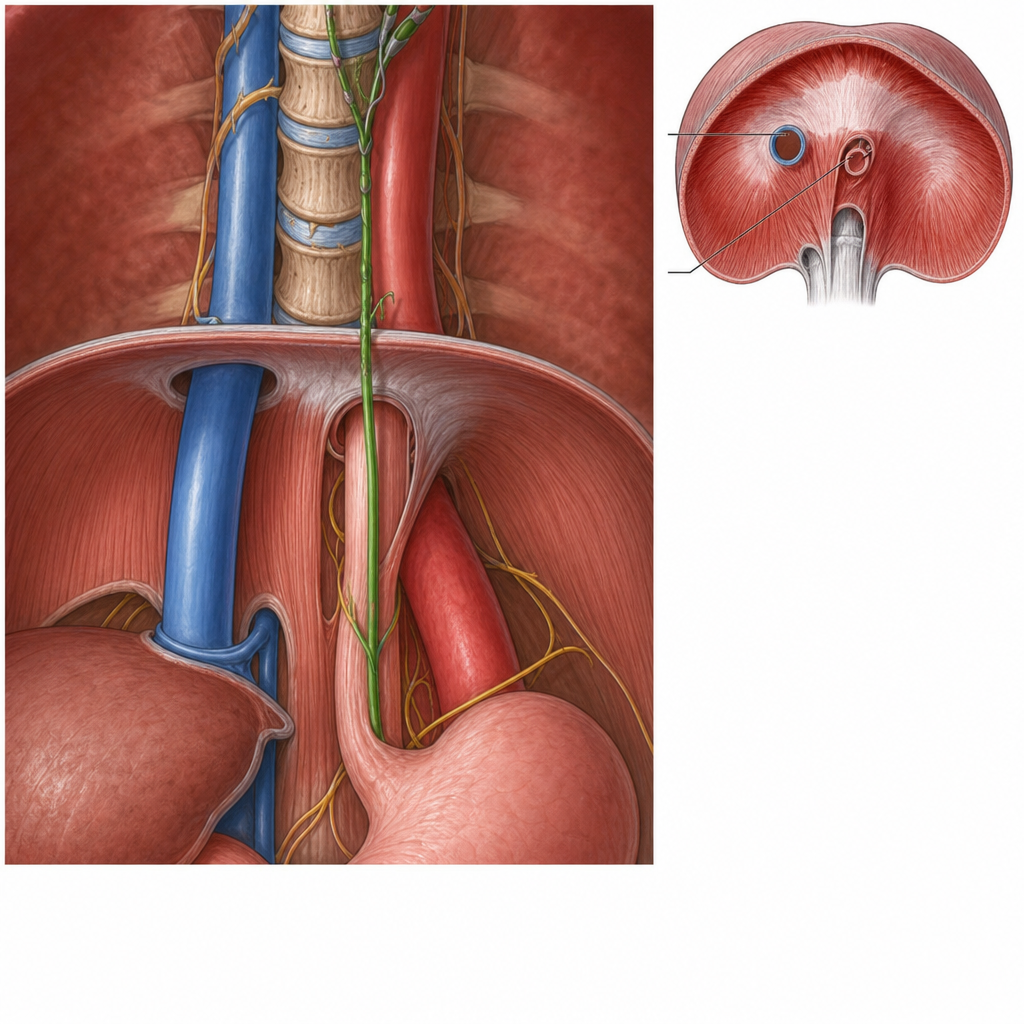
Explanation: The **Thoracic duct** is the largest lymphatic vessel in the body. It typically commences in the abdomen at the level of the **L1-L2 vertebrae** as a dilated, sac-like structure called the **cisterna chyli** [1]. It then ascends through the aortic opening of the diaphragm to enter the posterior mediastinum [2]. It drains lymph from the entire body except for the right upper quadrant (which is drained by the right lymphatic duct). **Analysis of Options:** * **Thoracic duct (Correct):** It begins as the cisterna chyli (or just superior to it) in the abdomen. It is a high-yield structure in anatomy due to its unique course: it starts on the right side, crosses to the left at the level of **T5**, and eventually empties into the junction of the left internal jugular and left subclavian veins. * **Gartner’s duct:** This is a vestigial remnant of the mesonephric (Wolffian) duct in females, found in the broad ligament of the uterus. It is unrelated to the lymphatic system. * **Bile duct & Hepatic duct:** These are parts of the biliary system responsible for transporting bile from the liver/gallbladder to the duodenum. They do not originate from a lymph sac. **High-Yield NEET-PG Pearls:** * **Length:** Approximately 45 cm (18 inches). * **Relations at Aortic Hiatus:** The thoracic duct lies between the **Azygos vein** (on the right) and the **Aorta** (on the left). * **Clinical Significance:** Injury to the duct during thoracic surgery leads to **Chylothorax** (accumulation of milky lymph in the pleural cavity). * **Virchow’s Node:** Enlargement of the left supraclavicular lymph node (Troisier’s sign) often indicates abdominal malignancy (e.g., gastric cancer) because the thoracic duct carries malignant cells to this site.
Explanation: The aorta is the largest artery in the body, divided into the ascending aorta, the arch of the aorta, and the descending aorta. Understanding its branching pattern is crucial for NEET-PG. ### **Explanation of the Correct Answer (D)** The **coronary arteries** (Right and Left) do **not** arise from the arch of the aorta. Instead, they arise from the **ascending aorta**, specifically from the right and left aortic sinuses (Sinuses of Valsalva) just above the aortic valve. This is a high-yield distinction: the ascending aorta has only two branches (the coronaries), while the arch typically has three. ### **Analysis of Other Options** * **Option A:** The arch of the aorta begins and ends at the **sternal angle (Angle of Louis)**, which corresponds to the lower border of the **T4 vertebra**. It starts as a continuation of the ascending aorta and ends by becoming the descending thoracic aorta. * **Option B:** The three major branches—the **Brachiocephalic trunk, Left Common Carotid, and Left Subclavian artery**—all arise from the **convexity** (superior aspect) of the arch. * **Option C:** The **left recurrent laryngeal nerve** hooks around the concavity of the aortic arch, specifically lateral to the **ligamentum arteriosum** [1], before ascending in the tracheoesophageal groove [1]. (Note: The right recurrent laryngeal nerve hooks around the right subclavian artery). ### **High-Yield Clinical Pearls** * **Aortic Arch Level:** T4 is the "magical level" where the arch starts, ends, and where the trachea bifurcates. * **Anomalous Origin:** The most common variation of the arch is a "Bovine Arch," where the left common carotid arises from the brachiocephalic trunk. * **Coarctation of Aorta:** Usually occurs just distal to the origin of the left subclavian artery (near the ductus arteriosus).
Explanation: The clinical scenario describes a **left-to-right shunt** occurring specifically between the aorta and the pulmonary circulation [1]. **1. Why Patent Ductus Arteriosus (PDA) is correct:** The ductus arteriosus is a fetal vessel connecting the **arch of the aorta** (distal to the left subclavian artery) to the **left pulmonary artery** [1]. In normal development, it closes shortly after birth to become the *ligamentum arteriosum*. If it remains patent, the higher pressure in the aorta forces blood (and contrast medium) directly into the pulmonary artery [2]. This explains why contrast injected into the aortic arch is immediately visible in the left pulmonary artery. **2. Why the other options are incorrect:** * **Atrial Septal Defect (ASD):** This involves a shunt between the left and right atria. Contrast in the aorta would have already passed the atria; it would not flow "backward" from the aorta to the pulmonary artery through an ASD. * **Mitral Stenosis:** This is a valvular narrowing between the left atrium and left ventricle. While it causes pulmonary congestion, it does not create an anatomical communication between the aorta and the pulmonary artery. * **Patent Ductus Venosus:** This is a fetal shunt that bypasses the liver, connecting the umbilical vein to the inferior vena cava. It has no direct connection to the aorta or pulmonary arteries. **High-Yield NEET-PG Pearls:** * **Embryology:** The ductus arteriosus is derived from the **left 6th aortic arch**. * **Clinical Sign:** PDA is characterized by a **"machinery-type" continuous murmur**, loudest at the left infraclavicular area. * **Management:** **Indomethacin** (NSAID) is used to close a PDA in premature infants (by inhibiting prostaglandins), while **Prostaglandin E1** is used to keep it open in cyanotic heart disease.
Explanation: **Explanation:** The mediastinum is divided into **superior** and **inferior** compartments by an imaginary horizontal plane (the **Transverse Thoracic Plane of Ludwig**) passing from the sternal angle (Angle of Louis) to the lower border of the T4 vertebra [2]. 1. **Why Superior Mediastinum is Correct:** The arch of aorta begins and ends at the level of the sternal angle. However, its entire course loops upward into the **superior mediastinum**. It starts as a continuation of the ascending aorta at the T4/T5 level, arches superiorly and posteriorly to the left of the trachea, and then descends to become the thoracic aorta at the same T4/T5 level [1]. 2. **Why other options are incorrect:** * **Middle Mediastinum:** This contains the heart, the pericardium, and the **ascending aorta** [1]. Once the aorta leaves the pericardial sac and begins to arch, it enters the superior mediastinum. * **Posterior Mediastinum:** This contains the **descending thoracic aorta**, which begins after the arch ends at the level of T4 [1]. * **Anterior Mediastinum:** This is a narrow space between the sternum and pericardium, containing mainly the thymus (in children), lymph nodes, and connective tissue [1]. It does not contain the aorta. **High-Yield Clinical Pearls for NEET-PG:** * **The "T4" Level:** This is the most important landmark in thoracic anatomy. At this level: the Arch of Aorta begins and ends, the Trachea bifurcates (Carina), and the Azygos vein drains into the SVC. * **Branches of the Arch:** From right to left—Brachiocephalic trunk, Left Common Carotid, and Left Subclavian artery. * **Aortic Knuckle:** On a PA view chest X-ray, the arch of the aorta is visible as the "aortic knuckle" or "aortic bud."
Thoracic Wall and Diaphragm
Practice Questions
Pleura and Lungs
Practice Questions
Mediastinum
Practice Questions
Heart and Pericardium
Practice Questions
Great Vessels and Azygos System
Practice Questions
Thoracic Duct and Lymphatics
Practice Questions
Autonomic Innervation
Practice Questions
Applied Anatomy and Clinical Correlations
Practice Questions
Thoracic Imaging and Cross-sectional Anatomy
Practice Questions
Embryological Development of Thoracic Structures
Practice Questions
Get full access to all questions, explanations, and performance tracking.
Start For Free