The right coronary artery supplies all of the following parts of the conducting system in the heart except:
What is the normal fluid level in the pericardial cavity?
What is referred to as a "Potential Anastomosis"?
Which artery supplies the upper one-third of the esophagus?
A 40-year-old male underwent coronary artery bypass grafting. During the procedure, the surgeon applied a clamp to the vessel lying anterior to the transverse pericardial sinus. Identify this vessel.
Which of the following statements regarding the diaphragm is true?
Which structure passes through the esophageal hiatus?
Which of the following statements regarding cardiac conduction functions are TRUE/FALSE?
The arrow-marked structure drains into which chamber of the heart?

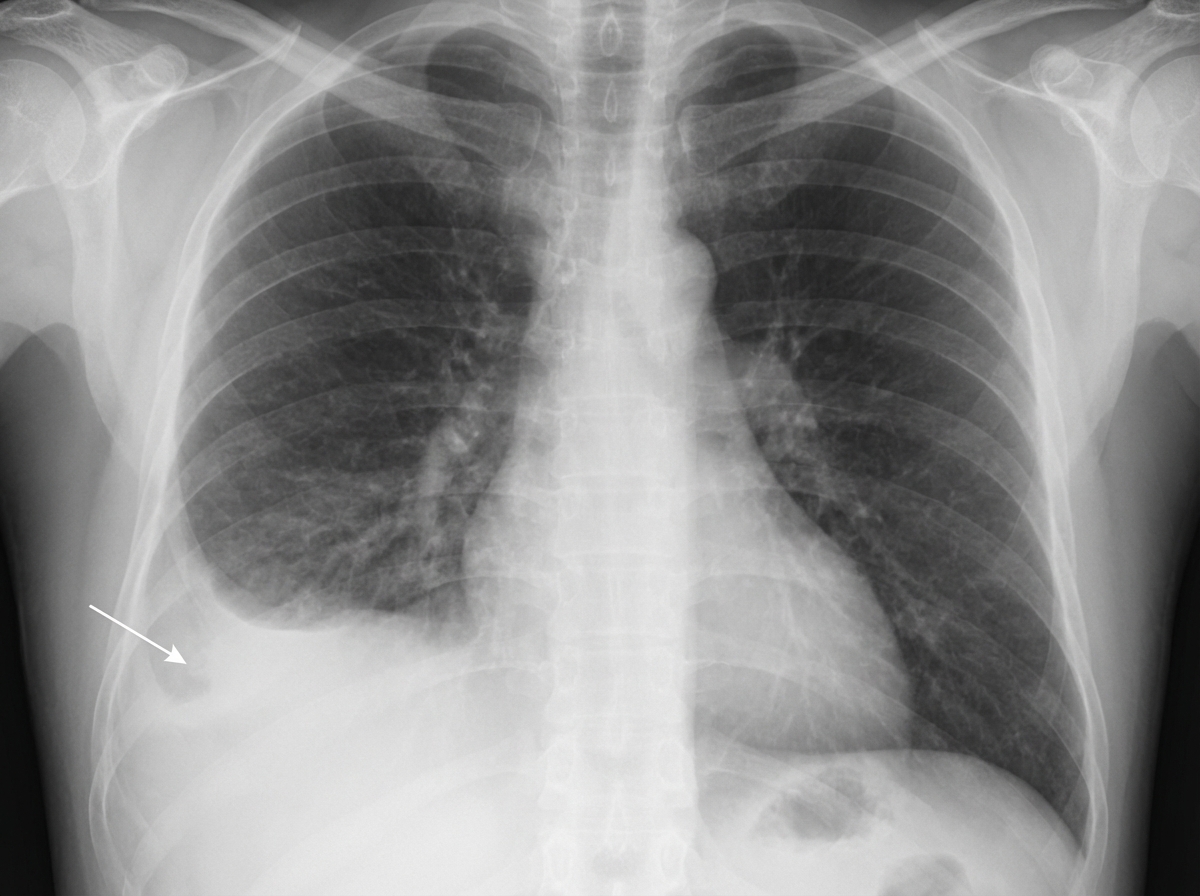
All are true about extralobar pulmonary sequestration except:
Explanation: The blood supply to the heart's conducting system is a high-yield topic in NEET-PG Anatomy. The **Right Coronary Artery (RCA)** is typically the dominant vessel supplying the primary nodes, while the **Left Coronary Artery (LCA)** handles the distal bundle branches [1]. ### **Explanation of the Correct Answer** **D. Right Bundle Branch:** This is the correct answer because the Right Bundle Branch (RBB) is primarily supplied by the **Left Anterior Descending (LAD) artery**, a branch of the LCA [1]. Specifically, the septal branches of the LAD supply the anterior two-thirds of the interventricular septum, where the RBB is located. ### **Analysis of Incorrect Options** * **A. SA Node:** In approximately **60% of individuals**, the SA nodal artery arises from the RCA [2]. (In the remaining 40%, it arises from the Left Circumflex artery). * **B. AV Node:** In **80-90% of individuals** (right-dominant hearts), the AV nodal artery arises from the RCA at the crux of the heart [2]. * **C. AV Bundle (Bundle of His):** The proximal part of the AV bundle is supplied by the AV nodal artery (branch of RCA). While the distal part has dual supply, the RCA remains a major contributor [2]. ### **High-Yield Clinical Pearls for NEET-PG** * **Dominance:** Cardiac dominance is determined by which artery gives off the **Posterior Descending Artery (PDA)**. 70-80% are Right Dominant (RCA) [1]. * **Inferior Wall MI:** Usually involves the RCA. Look for bradycardia or heart blocks on the ECG because the RCA supplies the SA and AV nodes. * **Left Bundle Branch (LBB):** Has a dual blood supply from both the LAD and the PDA, making it more resistant to ischemic damage than the RBB. * **Moderator Band:** Contains the right bundle branch and is supplied by the **LAD**.
Explanation: **Explanation:** The pericardial cavity is a potential space located between the visceral and parietal layers of the serous pericardium. Under normal physiological conditions, it contains a small amount of **serous fluid (pericardial fluid)** that acts as a lubricant, reducing friction between the heart and the pericardium during each heartbeat. **Why Option A is Correct:** In a healthy adult, the normal volume of pericardial fluid is typically between **15 ml to 50 ml**. This fluid is an ultrafiltrate of plasma. In the context of standard medical examinations like NEET-PG, **50 ml** is recognized as the upper limit of the normal physiological range. **Why Other Options are Incorrect:** * **Options B, C, and D (100 ml, 150 ml, 200 ml):** These volumes exceed the normal physiological limit. An accumulation of fluid beyond 50 ml is clinically defined as a **pericardial effusion**. While the pericardium can stretch to accommodate larger volumes if the fluid accumulates slowly, these values represent pathological states. **High-Yield Clinical Pearls for NEET-PG:** * **Cardiac Tamponade:** This occurs when fluid accumulates rapidly or in large amounts (usually >200 ml), increasing intrapericardial pressure and restricting diastolic filling. * **Beck’s Triad:** A classic sign of acute cardiac tamponade consisting of **Hypotension, Distended neck veins (JVP), and Muffled heart sounds.** * **Pericardiocentesis:** The procedure to drain excess fluid, typically performed at the **left 5th or 6th intercostal space** near the sternum or via the **subxiphoid approach** (Larrey’s point) aiming towards the left shoulder.
Explanation: ### Explanation **Correct Answer: C. Coronary artery** #### Why it is correct: In anatomy, a **Potential Anastomosis** refers to a connection between two vessels that exists anatomically but is functionally insufficient to maintain tissue viability if one vessel is suddenly occluded. The **coronary arteries** are the classic example of "Functional End Arteries." While microscopic anastomoses exist between the right and left coronary systems (e.g., in the interventricular septum), they are too small to provide adequate collateral circulation during an acute myocardial infarction [1]. These channels only become "actual" or functional over time if there is a slow, chronic narrowing (like atherosclerosis), allowing the vessels to dilate and carry significant blood flow [1]. #### Why the other options are incorrect: * **A. Labial branch of facial artery:** These form **Actual Anastomoses**. The superior and inferior labial arteries from both sides of the face join freely across the midline, providing robust, immediate collateral flow. * **B. Intercostal artery:** These also form **Actual Anastomoses**. The anterior intercostal arteries (from the internal thoracic) and posterior intercostal arteries (from the aorta) meet and communicate freely within the intercostal spaces [2]. * **C. Arterial arcades of mesentery:** These are highly efficient **Actual Anastomoses** (e.g., the Marginal Artery of Drummond). They ensure continuous blood supply to the intestines even if a specific branch of the mesenteric artery is compressed during peristalsis. #### NEET-PG High-Yield Pearls: * **True End Arteries:** These have *no* anatomical anastomoses. Occlusion leads to immediate death of the supplied tissue. Examples: Central artery of the retina (most famous), branches of the splenic artery, and the renal artery. * **Functional End Arteries:** Anatomical anastomoses exist but are functionally ineffective during acute blocks. Examples: Coronary arteries and the Circle of Willis (in some individuals). * **Clinical Correlation:** The "potential" nature of coronary anastomoses explains why sudden thrombus causes an MI, whereas a patient with 90% chronic stenosis might remain asymptomatic at rest due to collateral development [1].
Explanation: The esophagus is a muscular tube approximately 25 cm long, divided into three anatomical segments, each receiving its blood supply from the nearest major arterial trunk. **Correct Answer: B. Inferior thyroid artery** The **upper one-third (cervical part)** of the esophagus is located in the neck. It receives its primary blood supply from the **inferior thyroid artery**, which is a branch of the thyrocervical trunk (from the subclavian artery) [1]. This reflects the developmental origin and proximity of the esophagus to the thyroid gland in the cervical region. **Explanation of Incorrect Options:** * **A. Superior pharyngeal artery:** This is not a standard anatomical term for esophageal supply. The superior thyroid artery (from the external carotid) supplies the larynx and thyroid but does not significantly contribute to the esophagus. * **C. Thoracic aorta:** This supplies the **middle one-third (thoracic part)** of the esophagus via direct esophageal branches and bronchial arteries. * **D. Inferior phrenic artery:** Along with the **left gastric artery**, this supplies the **lower one-third (abdominal part)** of the esophagus as it passes through the diaphragm. **High-Yield NEET-PG Pearls:** 1. **Venous Drainage:** The upper 1/3 drains into the inferior thyroid veins, the middle 1/3 into the azygos system, and the lower 1/3 into the left gastric vein (portal system). 2. **Portosystemic Anastomosis:** The lower 1/3 is a critical site for portosystemic anastomosis; portal hypertension leads to **esophageal varices**. 3. **Nerve Supply:** The upper 1/3 consists of striated muscle (supplied by the recurrent laryngeal nerve), while the lower 2/3 consists of smooth muscle (supplied by the esophageal plexus/vagus).
Explanation: The **transverse pericardial sinus** is a critical anatomical landmark in cardiac surgery. It is a horizontal passage within the pericardial cavity located posterior to the arterial outflow tract and anterior to the venous inflow tract. **1. Why Aorta is Correct:** The transverse sinus separates the **arteries** (Aorta and Pulmonary Trunk) from the **veins** (Superior Vena Cava and Pulmonary Veins). Specifically, the **Ascending Aorta** and the **Pulmonary Trunk** lie immediately **anterior** to the sinus. During surgeries like Coronary Artery Bypass Grafting (CABG) or heart transplants, a surgeon can pass a finger or a clamp through this sinus to isolate the aorta and pulmonary trunk for cross-clamping [1], allowing the diversion of blood to a cardiopulmonary bypass machine [3]. **2. Why Other Options are Incorrect:** * **B. Pulmonary Artery:** While the pulmonary trunk is also anterior to the sinus, the **Aorta** is the primary vessel clamped to stop systemic circulation during bypass [2]. In the context of standard surgical "clamping" for bypass, the Aorta is the high-yield answer. * **C. Inferior Vena Cava:** The IVC is located inferiorly and posteriorly; it does not form a boundary of the transverse sinus. * **D. Superior Vena Cava:** The SVC lies **posterior** to the transverse sinus (forming its posterior boundary along with the left atrium). **NEET-PG High-Yield Pearls:** * **Boundaries of Transverse Sinus:** Anteriorly: Ascending Aorta & Pulmonary Trunk; Posteriorly: SVC & Left Atrium; Inferiorly: Left Atrium. * **Oblique Sinus:** A blind-ending cul-de-sac located behind the heart, bounded by the pulmonary veins and IVC. It allows for the expansion of the left atrium. * **Development:** The transverse sinus is formed by the degeneration of the **dorsal mesocardium**.
Explanation: The diaphragm is a crucial musculofascial partition containing three major openings [1]. Understanding the specific structures traversing these openings is high-yield for NEET-PG. ### **Explanation of the Correct Option** **C. The azygos vein is a content of the aortic opening.** The **Aortic Opening** (T12 level) is an osseo-aponeurotic opening located behind the median arcuate ligament. It transmits three primary structures, often remembered by the mnemonic **"ATA"**: 1. **A**orta 2. **T**horacic duct 3. **A**zygos vein (Note: The hemiazygos vein may also pass through the left crus). ### **Analysis of Incorrect Options** * **A. Thoracic duct (Oesophageal opening):** Incorrect. The thoracic duct passes through the **Aortic opening** (T12). The esophageal opening (T10) transmits the esophagus, gastric nerves (vagi), and esophageal branches of the left gastric vessels. * **B. Left vagus nerve (Venacaval opening):** Incorrect. Both the left and right vagus nerves pass through the **Esophageal opening** (T10). The venacaval opening (T8) transmits the IVC and the right phrenic nerve. * **D. Sympathetic chain (Lateral arcuate ligament):** Incorrect. The sympathetic chain passes behind the **medial arcuate ligament**. The lateral arcuate ligament arches over the quadratus lumborum and transmits the subcostal neurovascular bundle. ### **High-Yield Clinical Pearls** * **Levels Mnemonic:** **I** (IVC) **8** **E**at (Esophagus) **10** **A**ggies (Aorta) **12**. * **Phrenic Nerve:** The **Right** phrenic nerve passes through the venacaval opening (T8), while the **Left** phrenic nerve pierces the muscular part of the left dome. * **Splanchnic Nerves:** Greater, lesser, and least splanchnic nerves pierce the **crura** of the diaphragm.
Explanation: The diaphragm contains three major openings (hiatuses) through which structures pass between the thorax and abdomen. The **esophageal hiatus** is located at the level of **T10** within the fibers of the right crus [1]. **Correct Answer Explanation:** * **Left Phrenic Nerve:** While the right phrenic nerve typically passes through the caval opening (T8), the **left phrenic nerve** pierces the muscular part of the left dome of the diaphragm. However, in many anatomical variations and standard NEET-PG textbooks, it is noted that branches of the left phrenic nerve frequently pass through the **esophageal hiatus** to reach the inferior surface of the diaphragm. **Analysis of Incorrect Options:** * **Left and Right Vagus Nerves:** These do pass through the esophageal hiatus, but they do so as the **Anterior and Posterior Vagal Trunks**, respectively [1]. In the context of "single best answer" questions, examiners often distinguish between the nerve itself and the formed trunks. * **Left Gastric Artery:** This artery arises from the celiac trunk *below* the diaphragm. It does not pass through the hiatus; rather, the **esophageal branches** of the left gastric artery ascend through the hiatus to supply the lower esophagus. **High-Yield Clinical Pearls for NEET-PG:** * **Mnemonic (Levels):** **I** **8** **10** **E**ggs **A**t **12** (IVC at T8, Esophagus at T10, Aorta at T12). * **Esophageal Hiatus (T10) Contents:** Esophagus, Anterior/Posterior Vagal Trunks, Esophageal branches of Left Gastric vessels, and Lymphatics. * **Caval Opening (T8) Contents:** IVC and Right Phrenic Nerve. * **Aortic Hiatus (T12) Contents:** Aorta, Azygos vein, and Thoracic duct (**Red, White, and Blue**).
Explanation: ### Explanation: Cardiac Conduction System The cardiac conduction system consists of specialized myogenic tissue that initiates and coordinates the rhythmic contraction of the heart [1]. **Analysis of Statements:** * **(a) SA Node is the Pacemaker (TRUE):** Located at the junction of the superior vena cava and the right atrium, the Sinoatrial (SA) node has the highest intrinsic rate of depolarization (60–100 bpm), making it the primary pacemaker [1], [2]. * **(b) AV Node is the Pacemaker (FALSE):** The Atrioventricular (AV) node acts as a "gatekeeper" or secondary pacemaker. It provides a critical delay (AV delay) to allow ventricular filling but does not normally initiate the rhythm [3]. * **(c) AV Node is the Gateway to Ventricles (TRUE):** It is the only electrical bridge between the atria and ventricles (due to the non-conductive fibrous skeleton of the heart). * **(d) Purkinje Fibers are in the Atria (FALSE):** Purkinje fibers are the terminal branches of the conduction system located in the **subendocardial layer of the ventricles**, facilitating rapid ventricular contraction [1]. * **(e) Bundle of His is the only link between Atria and Ventricles (TRUE):** The Bundle of His (Atrioventricular bundle) is the specialized tract that pierces the fibrous trigone to conduct impulses from the AV node to the ventricles [1]. **Why Option C is Correct:** It accurately identifies that the SA node initiates the impulse (a), the AV node serves as the essential gateway (c), and the Bundle of His provides the anatomical link (e), while correctly rejecting the false locations/roles of the AV node and Purkinje fibers (b, d). **High-Yield NEET-PG Pearls:** * **Blood Supply:** The SA node is supplied by the SA nodal artery (branch of RCA in 60%). The AV node is supplied by the AV nodal artery (branch of RCA in 90%—Right Dominance). * **Conduction Speed:** **Purkinje fibers** have the fastest conduction velocity (4 m/s), while the **AV node** has the slowest (0.01–0.05 m/s) [3]. * **Location:** The AV node is located in the **Triangle of Koch** (bounded by the Tendon of Todaro, septal leaflet of the tricuspid valve, and the coronary sinus orifice).
Explanation: ***Right atrium*** - The **superior vena cava (SVC)** drains **deoxygenated blood** from the upper body directly into the right atrium. - Along with the **inferior vena cava** and **coronary sinus**, it forms the three main venous returns to the right atrium. *Left atrium* - Receives **oxygenated blood** from the **four pulmonary veins** (two from each lung), not from the SVC. - Functions as the receiving chamber for blood returning from **pulmonary circulation** after oxygenation. *Right ventricle* - Receives blood from the **right atrium** through the **tricuspid valve**, not directly from venous structures. - Functions to pump **deoxygenated blood** to the lungs via the **pulmonary trunk**. *Left ventricle* - Receives **oxygenated blood** from the **left atrium** through the **mitral valve**. - Functions as the main pumping chamber, sending blood to **systemic circulation** via the **aorta**.
Explanation: Explanation: Pulmonary sequestration is a rare congenital anomaly where a portion of non-functioning lung tissue lacks communication with the tracheobronchial tree and receives its blood supply from the systemic circulation (usually the thoracic or abdominal aorta) [1]. It is divided into two types: Intralobar (ILS) and Extralobar (ELS) [1]. Why Option D is the Correct Answer (The False Statement): Extralobar sequestration (ELS) is an anatomically distinct mass located outside the normal visceral pleura. Because it has its own separate pleural investment and is not connected to the normal bronchial tree, it can be simply excised (sequestrectomy) without sacrificing any normal lung tissue. In contrast, Intralobar sequestration (ILS) is embedded within the normal lung (usually the lower lobe) and shares its visceral pleura; therefore, it requires a lobectomy or segmentectomy for removal. Analysis of Other Options: * Option A: ELS shows a strong male predilection (Male:Female ratio of approximately 3:1 or 4:1) [1]. * Option B: By definition, ELS is "extra" to the lung and is enclosed in its own separate pleural sac, making it an independent accessory organ [1]. * Option C: ELS is frequently associated with other congenital anomalies (up to 40-60% of cases), most commonly congenital diaphragmatic hernia (CDH), cardiac defects, and chest wall deformities [1]. High-Yield Clinical Pearls for NEET-PG: * Venous Drainage: ELS usually drains into the systemic venous system (azygos/hemi-azygos), whereas ILS usually drains into the pulmonary veins. * Presentation: ELS is often diagnosed in neonates/infants due to associated anomalies [1]. ILS often presents later in childhood or adulthood with recurrent pneumonia. * Location: 90% of ELS cases occur on the left side, often between the lower lobe and the diaphragm.
Thoracic Wall and Diaphragm
Practice Questions
Pleura and Lungs
Practice Questions
Mediastinum
Practice Questions
Heart and Pericardium
Practice Questions
Great Vessels and Azygos System
Practice Questions
Thoracic Duct and Lymphatics
Practice Questions
Autonomic Innervation
Practice Questions
Applied Anatomy and Clinical Correlations
Practice Questions
Thoracic Imaging and Cross-sectional Anatomy
Practice Questions
Embryological Development of Thoracic Structures
Practice Questions
Get full access to all questions, explanations, and performance tracking.
Start For Free