Talon cusp can be seen in which of the following syndromes?
Which of the following statements is not true regarding thoracic outlet syndrome?
All of the following statements are true for the metaphysis of a bone except?
Which of the following is an example of a saddle joint?
All of the following are fibrous joints except?
Which of the following is a synovial joint of the condylar variety?
All of the following organs have no lymphatic capillaries EXCEPT:
Atavistic epiphysis is seen in which of the following anatomical structures?
Craniosacral outflow is mediated by which of the following nervous system divisions?
Which of the following statements best describes metarterioles, vessels interposed between arterioles and capillary beds?
Explanation: **Explanation:** A **Talon cusp** (also known as dens evaginatus) is a rare developmental dental anomaly characterized by an accessory cusp-like projection located on the lingual or facial surface of an anterior tooth. It is composed of normal enamel, dentin, and sometimes contains a pulp horn. **Why "All of the above" is correct:** Talon cusps are frequently associated with specific genetic and developmental syndromes. The underlying medical concept involves a disturbance in the **morphodifferentiation stage** of tooth development. * **Rubinstein-Taybi Syndrome:** This is the most classic association. It is characterized by broad thumbs/great toes, intellectual disability, and facial dysmorphism. Talon cusps are a hallmark dental finding in these patients. * **Mohr Syndrome (Orofaciodigital Syndrome Type II):** Characterized by cleft tongue, polydactyly, and facial anomalies. Dental anomalies, including talon cusps, are common. * **Sturge-Weber Syndrome:** While primarily a neurocutaneous disorder (port-wine stain, leptomeningeal angiomas), it is associated with various dental abnormalities, including talon cusps. **Clinical Pearls for NEET-PG:** * **Most Common Site:** Maxillary permanent lateral incisor (followed by central incisors). * **Shape:** It resembles an eagle’s talon, hence the name. * **Complications:** Occlusal interference, displacement of teeth, plaque trap leading to caries, and irritation of the tongue. * **Other Associations:** It can also be seen in **Sturge-Weber syndrome**, **Incontinentia pigmenti**, and **Ellis-van Creveld syndrome**. * **Management:** Gradual reduction of the cusp (to allow reparative dentin formation) or endodontic treatment if the pulp is involved.
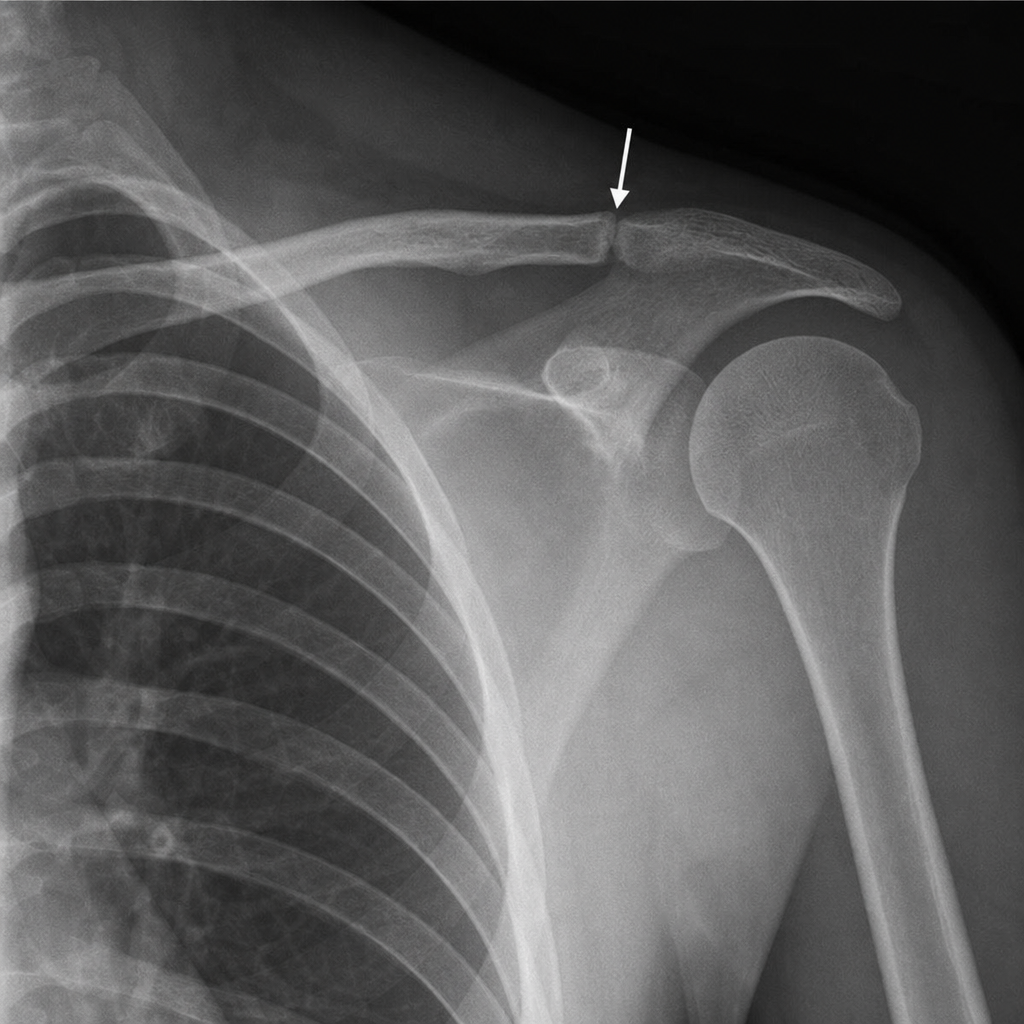
Explanation: Thoracic Outlet Syndrome (TOS) is a clinical condition caused by the compression of neurovascular structures (brachial plexus and subclavian vessels) as they pass through the superior thoracic aperture [1]. **1. Why Option A is the Correct Answer (False Statement):** The **lower trunk of the brachial plexus (C8-T1)** is the most commonly compressed neural structure in TOS. This manifests as sensory loss and motor weakness in the distribution of the **ulnar nerve**, not the radial nerve. The radial nerve arises from the posterior cord (C5-T1) and is rarely the primary focus of compression in this syndrome. **2. Analysis of Other Options:** * **Option B:** True. Approximately 90-95% of TOS cases are **neurogenic**, presenting with pain, numbness, and wasting of intrinsic hand muscles (Gilliatt-Sumner hand) [1]. Vascular symptoms (venous or arterial) are much less common. * **Option C:** True. Surgical management often involves the **resection of the first rib** or a cervical rib to decompress the space and relieve pressure on the plexus and subclavian artery. * **Option D:** True. **Adson’s Test** is a classic clinical maneuver where the patient’s arm is extended and the head is rotated toward the affected side while taking a deep breath. A disappearance or significant weakening of the radial pulse indicates a positive test. **Clinical Pearls for NEET-PG:** * **Most common cause:** Presence of a **Cervical Rib** (an accessory rib arising from C7) or a fibrous band. * **Boundaries of the Scalene Triangle:** Anterior scalene, middle scalene, and the first rib. * **Differential Diagnosis:** Must be distinguished from Pancoast tumor (which also affects the lower trunk) and Carpal Tunnel Syndrome. * **Paget-Schroetter Syndrome:** This is "effort thrombosis" of the subclavian vein, a severe vascular form of TOS.
Explanation: The **metaphysis** is the region of a long bone between the epiphysis and the diaphysis. It is one of the most clinically significant areas in pediatric orthopedics. ### **Explanation of Options** * **Option C (Correct):** This statement is false. The metaphysis is the **zone of active growth**. It contains the epiphyseal plate (growth plate) where chondrocyte proliferation and ossification occur [1]. Therefore, growth activity is **maximal**, not negligible. * **Option A:** This is true. Anatomically, the metaphysis is the expanded end of the diaphysis that abuts the epiphyseal cartilage. * **Option B:** This is true. The metaphysis receives a profuse blood supply from nutrient arteries and periosteal vessels, forming a rich vascular plexus to support rapid bone formation. * **Option C:** This is true. In children, the metaphyseal arteries end in **"hairpin loops"** near the growth plate. These loops cause sluggish blood flow, allowing bacteria to settle, making it the most common site for **acute hematogenous osteomyelitis**. ### **High-Yield NEET-PG Pearls** 1. **Vascularity:** After the epiphyseal plate fuses (adulthood), the vascular communication between the metaphysis and epiphysis is established. 2. **Tumors:** The metaphysis is the "favorite" site for many bone tumors, most notably **Osteosarcoma** [2], **Osteochondroma**, and **Giant Cell Tumor** (which starts in the metaphysis but often involves the epiphysis) [1]. 3. **Healing:** Due to its high vascularity and presence of osteogenic cells, fractures in the metaphyseal region generally heal faster than those in the diaphyseal region.
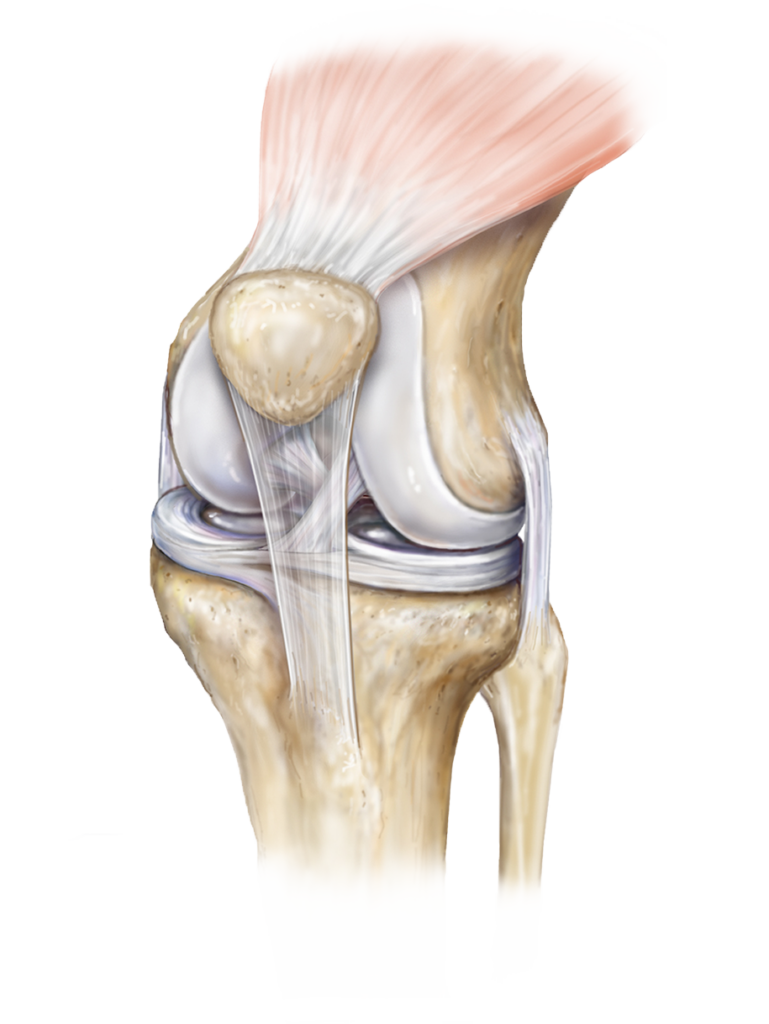
Explanation: ### Explanation **Correct Answer: A & B (Carpo-metacarpal joint of the thumb)** A **Saddle (Sellar) joint** is a type of synovial joint where the opposing surfaces are reciprocally concavo-convex (shaped like a rider sitting on a saddle). This unique geometry allows for movement in two primary planes (biaxial)—flexion/extension and abduction/adduction—while also permitting **circumduction** and the critical movement of **opposition**. The 1st Carpo-metacarpal (CMC) joint, between the trapezium and the base of the first metacarpal, is the classic anatomical example of this joint type. **Analysis of Incorrect Options:** * **Ankle Joint (C):** This is a **Hinge (Ginglymus)** joint. It primarily allows movement in one plane (dorsiflexion and plantarflexion) between the talus and the mortise formed by the tibia and fibula. * **Knee Joint (D):** This is classified as a **Modified Hinge** joint (or complex bicondylar joint). While it primarily performs flexion and extension, it also allows for a small degree of medial and lateral rotation (the "locking" mechanism), distinguishing it from a pure hinge or saddle joint. **High-Yield Clinical Pearls for NEET-PG:** * **Other Saddle Joints:** Sternoclavicular joint, Incudomalleolar joint (in the middle ear), and the Calcaneocuboid joint. * **The Thumb CMC Joint:** It is the most common site for osteoarthritis in the hand due to the high mechanical stress placed on its unique saddle-shaped surfaces [1]. * **Movement Note:** Although saddle joints are biaxial, the 1st CMC joint allows for "conjunct rotation," which is essential for the opposition of the thumb against other fingers.
Explanation: ### Explanation The classification of joints is based on the type of connective tissue that binds the bones together. This question tests your ability to distinguish between **fibrous joints** and **synovial joints**. **Why Option A is Correct:** The **Temporomandibular Joint (TMJ)** is a **synovial joint** (specifically a bicondylar variety) [1]. Unlike fibrous joints, it features a joint cavity, a synovial membrane, and a fibrous capsule [1]. A unique high-yield feature of the TMJ is that its articular surfaces are covered by **fibrocartilage** rather than the typical hyaline cartilage, and it contains an intra-articular disc that divides the joint into two separate compartments. **Why the Other Options are Incorrect:** Fibrous joints are characterized by bones held together by dense fibrous connective tissue with no joint cavity. They include: * **B. Suture:** Found exclusively in the skull (e.g., sagittal suture). These are immovable (synarthroses). * **C. Gomphosis:** A specialized "peg-and-socket" fibrous joint, specifically the articulation of teeth within the alveolar processes of the mandible and maxilla. * **D. Syndesmosis:** A joint where bones are joined by an interosseous membrane or ligament (e.g., the inferior tibiofibular joint). These allow for slight movement. **High-Yield Clinical Pearls for NEET-PG:** * **Schindylesis:** A rare type of fibrous joint where a ridge of one bone fits into a groove of another (e.g., between the vomer and the rostrum of the sphenoid). * **Primary Cartilaginous (Synchondrosis):** Joined by hyaline cartilage; usually temporary (e.g., epiphyseal plate). * **Secondary Cartilaginous (Symphysis):** Joined by fibrocartilage; always occurs in the midline (e.g., Pubic symphysis, Manubriosternal joint). * **TMJ Development:** It is the only synovial joint in the body where the articular surfaces are not covered by hyaline cartilage.
Explanation: ### Explanation The **Metacarpophalangeal (MCP) joint** is a classic example of a **condylar (ellipsoid) synovial joint**. In this variety, an oval-shaped convex articular surface (the metacarpal head) fits into a complementary elliptical concavity (the base of the proximal phalanx). This structural arrangement allows for movement in two axes (biaxial): flexion/extension and abduction/adduction, along with limited circumduction. **Analysis of Options:** * **A. First Carpometacarpal Joint:** This is a **Saddle (Sellar)** joint. The articular surfaces are reciprocally concavo-convex, allowing for the unique mobility of the thumb, including opposition. The carpometacarpal joint at the base of the thumb is frequently affected by osteoarthritis [1]. * **C. Interphalangeal Joint:** These are **Hinge (Ginglymus)** joints. They are uniaxial, permitting movement only in one plane (flexion and extension). * **D. Radiocarpal Joint:** While often grouped with ellipsoid joints, the wrist joint is technically a **complex ellipsoid** joint. However, in the context of standard anatomical classification for exams, the MCP joints are the quintessential "condylar" examples, whereas the radiocarpal is more frequently termed "ellipsoid." **High-Yield Clinical Pearls for NEET-PG:** * **Biaxial Joints:** Both Condylar and Saddle joints are biaxial. The key difference is that Saddle joints allow for axial rotation (though not as an independent movement), whereas Condylar joints do not. * **Knee Joint:** Often a source of confusion, the knee is a **complex synovial joint** (modified hinge/bicondylar), not a simple condylar joint. * **Atlanto-occipital joint:** Another high-yield example of a **condylar** synovial joint. * **Temporomandibular Joint (TMJ):** Classified as a **bicondylar** or complex synovial joint.
Explanation: The lymphatic system is responsible for draining interstitial fluid from tissues. However, certain specialized tissues in the body are "lymph-free" and lack traditional lymphatic capillaries. [1] **1. Why Liver is the Correct Answer:** The liver is one of the most lymph-productive organs in the body, producing nearly **25% to 50% of the total lymph** that enters the thoracic duct. While the hepatic parenchyma contains unique leaky capillaries called sinusoids, the lymphatic capillaries are located in the **Space of Mall** (a space between the portal tract and the hepatocytes). [2] This lymph eventually drains into the hepatic lymph nodes. **2. Why the Other Options are Incorrect:** * **Brain and Spinal Cord (CNS):** The Central Nervous System (CNS) is traditionally considered to lack conventional lymphatic vessels. [1] Instead, it utilizes the **Glymphatic system** (a perivascular pathway involving astrocytes) and the cerebrospinal fluid (CSF) for waste clearance. * **Eyeball:** Most structures of the eyeball, including the cornea, lens, and vitreous humor, are devoid of lymphatic vessels to maintain optical clarity and immune privilege. [1] (Note: The conjunctiva does have lymphatics, but the internal eyeball does not). **3. High-Yield Facts for NEET-PG:** * **List of Lymph-free areas:** CNS (Brain/Spinal cord), Eyeball, Internal Ear, Epidermis, Cartilage, Bone marrow, and Splenic pulp. [1] * **The Liver Exception:** Despite having sinusoids instead of typical capillaries, the liver is a "lymph-generating powerhouse." * **Placenta:** The placenta is another notable organ that lacks lymphatic vessels. * **Cornea:** It is famously avascular and alymphatic, which is why corneal transplants have a high success rate (low risk of immune rejection). [1]
Explanation: ### Explanation **Concept of Atavistic Epiphysis** An **atavistic epiphysis** refers to a bone that was once an independent element in lower animals (phylogenetically) but has become fused to another bone in humans, appearing as an epiphysis during development. **Why the Coracoid Process is Correct:** In lower vertebrates (like reptiles and birds), the **coracoid** is a separate, large bone that connects the scapula to the sternum. In humans, it has "regressed" to become a small projection of the scapula. It develops from independent centers of ossification and later fuses with the scapula, making it the classic example of an atavistic epiphysis. **Analysis of Incorrect Options:** * **A & C (Trochanters of femur & Tubercles of humerus):** These are examples of **Traction Epiphyses**. They develop under the influence of the pull of muscles (e.g., gluteal muscles on the trochanter, rotator cuff on the tubercles). * **B (Lower end of radius):** This is a **Pressure Epiphysis**. These are found at the ends of long bones and are involved in transmitting body weight across a joint. **High-Yield Clinical Pearls for NEET-PG:** * **Pressure Epiphysis:** Articular in nature; takes part in joint formation (e.g., Head of femur, Lower end of radius). * **Traction Epiphysis:** Non-articular; provides attachment to tendons (e.g., Mastoid process, Trochanters). * **Atavistic Epiphysis:** Other examples include the **Os trigonum** (posterior tubercle of talus) and the **Posterior tubercle of the atlas**. * **Aberrant Epiphysis:** An epiphysis at an unusual site, such as at the head of the first metacarpal or the base of other metacarpals.
Explanation: ### Explanation The Autonomic Nervous System (ANS) is divided into the Sympathetic and Parasympathetic systems based on their anatomical origin and physiological function [1]. **Why the correct answer is right:** The **Parasympathetic nervous system** is known as the **Craniosacral outflow** because its **preganglionic cell bodies** are located in two specific areas [1]: 1. **Cranial part:** Nuclei of cranial nerves **III (Oculomotor), VII (Facial), IX (Glossopharyngeal), and X (Vagus)** in the brainstem [1]. 2. **Sacral part:** Lateral gray column of spinal cord segments **S2, S3, and S4** [1]. These preganglionic fibers are typically long and travel to ganglia located near or within the target organs [1]. **Why the incorrect options are wrong:** * **Options A & B (Sympathetic):** The Sympathetic nervous system is referred to as the **Thoracolumbar outflow**. Its preganglionic cell bodies are located in the lateral horn of the spinal cord from **T1 to L2** [1]. * **Option C (Parasympathetic postganglionic):** While postganglionic fibers do carry the signal to the effector organ, the term "outflow" specifically refers to the **exit point from the Central Nervous System (CNS)**, which is always composed of preganglionic fibers [1]. **High-Yield Clinical Pearls for NEET-PG:** * **Fiber Length:** Parasympathetic = Long preganglionic, short postganglionic. Sympathetic = Short preganglionic, long postganglionic [1]. * **Neurotransmitters:** All preganglionic fibers (both systems) release **Acetylcholine (ACh)** [1]. * **Vagus Nerve (CN X):** Provides 75-80% of all parasympathetic outflow, supplying thoracic and abdominal viscera up to the splenic flexure of the colon [1]. * **Pelvic Splanchnic Nerves:** These are the S2-S4 preganglionic fibers that supply the hindgut and pelvic viscera [1].
Explanation: Metarterioles are unique microcirculatory vessels that act as a structural and functional bridge between arterioles and capillaries. **1. Why Option C is Correct:** Metarterioles are characterized by a discontinuous layer of smooth muscle cells [1]. At the point where a true capillary branches off from a metarteriole, a specialized circular band of smooth muscle called the **precapillary sphincter** is located [1]. These sphincters act as "gatekeepers," contracting or relaxing in response to local metabolic demands (e.g., O2, CO2, pH) to regulate the volume of blood entering the capillary bed [1]. **2. Why the Other Options are Incorrect:** * **Option A:** Metarterioles regulate blood flow **into capillaries**, not arterioles. Arterioles themselves are the primary resistance vessels that regulate systemic blood pressure. * **Option B:** The flow of blood is from the metarteriole **into** the thoroughfare channel. The thoroughfare channel is the distal, muscle-free continuation of the metarteriole that leads directly to a postcapillary venule. * **Option C:** Unlike arterioles, which have a **complete** (continuous) layer of smooth muscle in the tunica media, metarterioles have an **interrupted** (discontinuous) layer of smooth muscle cells [1]. **NEET-PG High-Yield Pearls:** * **Microcirculation Sequence:** Arteriole → Metarteriole → Capillary bed → Postcapillary venule [1]. * **Vasomotion:** The intermittent contraction and relaxation of precapillary sphincters and metarterioles is known as vasomotion. * **Resistance:** Arterioles provide the greatest resistance to peripheral blood flow, but metarterioles provide the fine-tuning for local tissue perfusion. * **Histology Tip:** If you see a vessel with a single layer of smooth muscle that is not continuous, it is likely a metarteriole [1].
Skeletal System
Practice Questions
Articular System
Practice Questions
Muscular System
Practice Questions
Cardiovascular System
Practice Questions
Lymphatic System
Practice Questions
Nervous System
Practice Questions
Respiratory System
Practice Questions
Digestive System
Practice Questions
Urinary System
Practice Questions
Reproductive System
Practice Questions
Endocrine System
Practice Questions
Integumentary System
Practice Questions
Get full access to all questions, explanations, and performance tracking.
Start For Free