Which of the following supplies structures in the head, neck, thorax, and abdomen?
The coracoid process is a kind of epiphysis that develops due to:
Which of the following is a traction epiphysis?
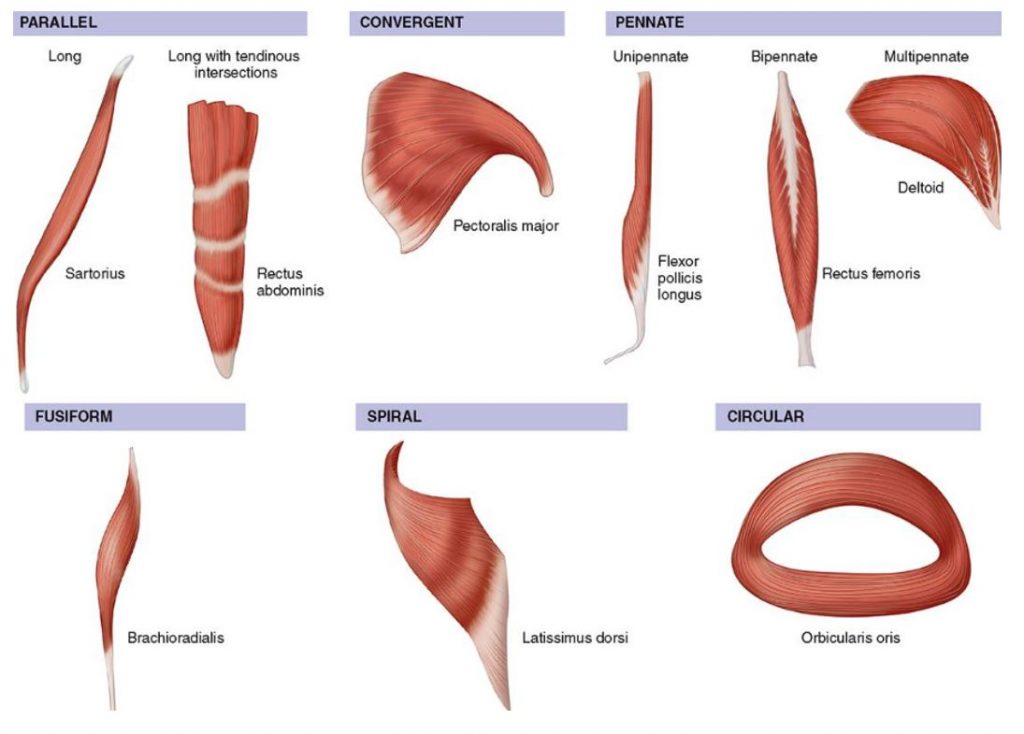
Which of the following is a multipennate muscle?
Lymphatics are found in:
Which of the following joints does not have a fibrocartilaginous intra-articular disc?
Which of the following is an example of an ellipsoid joint?
Which is the longest muscle of the body?
What best defines vasa vasorum?
What type of joint is a syndesmosis?
Explanation: The **Vagus Nerve (CN X)** is the longest cranial nerve and is unique because it extends far beyond the head and neck to provide extensive parasympathetic innervation to the thoracic and abdominal viscera. ### Why Vagus Nerve is Correct: The Vagus nerve exits the skull through the jugular foramen and descends within the carotid sheath. Its distribution includes: * **Head & Neck:** Provides sensory supply to the external acoustic meatus and dura of the posterior cranial fossa; motor supply to the muscles of the pharynx and larynx. * **Thorax:** Forms the pulmonary and esophageal plexuses; provides parasympathetic supply to the heart and lungs. * **Abdomen:** Passes through the diaphragm as the esophageal trunks to supply the stomach, liver, pancreas, and the gastrointestinal tract up to the junction of the proximal two-thirds and distal one-third of the transverse colon. ### Why Other Options are Incorrect: * **Internal Carotid Artery:** Primarily supplies the brain (Circle of Willis) and the eyes. It does not descend into the thorax or abdomen. * **12th Cranial Nerve (Hypoglossal):** Purely motor nerve supplying the intrinsic and extrinsic muscles of the tongue (except palatoglossus). Its course is limited to the head and upper neck. * **Accessory Cranial Nerve (CN XI):** Supplies the Sternocleidomastoid and Trapezius muscles. It is restricted to the neck and back. ### NEET-PG High-Yield Pearls: * **The "Midgut-Hindgut" Boundary:** The Vagus nerve supplies the gut only up to the **distal 1/3rd of the transverse colon**. Beyond this point, parasympathetic supply is taken over by the **Pelvic Splanchnic Nerves (S2-S4)**. * **Recurrent Laryngeal Nerve:** A branch of the Vagus; the left loops under the arch of the aorta (thorax), while the right loops under the subclavian artery (neck). * **Arnold’s Nerve:** The auricular branch of the Vagus; stimulation (e.g., cleaning the ear) can cause a reflex cough or fainting (vasovagal syncope).
Explanation: The **coracoid process** of the scapula is a classic example of an **atavistic epiphysis**. **1. Why Atavistic forces is correct:** In evolutionary biology, an atavistic epiphysis represents a bone that was once an independent element in lower vertebrates (like the coracoid bone in reptiles and birds) but has become fused to another bone in mammals. In humans, the coracoid process is no longer a separate bone but develops from its own ossification center and eventually fuses with the scapula [1]. This "evolutionary remnant" behavior defines atavistic development. **2. Why other options are incorrect:** * **Pressure Epiphysis:** These develop at the ends of long bones and are subjected to pressure during weight-bearing or joint movement (e.g., Head of the femur, Lower end of the radius) [1]. They contribute to the length of the bone. * **Traction Epiphysis:** These develop due to the pull (traction) of tendons or muscles. They do not take part in joint formation (e.g., Greater and lesser trochanters of the femur, Tubercles of the humerus). * **Aberrant Epiphysis:** These are deviations from the normal pattern and are not always present (e.g., epiphysis at the base of the second metacarpal instead of the head). **High-Yield Facts for NEET-PG:** * **Classification of Epiphyses:** * **Pressure:** Articular (e.g., Head of Humerus) [2]. * **Traction:** Non-articular (e.g., Mastoid process, Trochanters). * **Atavistic:** Phylogenetically independent (e.g., Coracoid process, Os trigonum of talus). * **Ossification:** The coracoid process has two main centers of ossification: one for the main body and another (sub-coracoid) for the base which contributes to the glenoid cavity [1]. * **Clinical Pearl:** The coracoid process serves as the origin for the short head of biceps brachii and coracobrachialis, and the insertion for pectoralis minor.
Explanation: **Explanation:** In anatomy, epiphyses are classified based on their developmental characteristics. A **traction epiphysis** is a non-articular part of a bone that develops under the influence of the pull (traction) of attached tendons or muscles [1]. It does not contribute to the length of the bone but serves as a site for muscle attachment. **1. Why Option B is Correct:** The **Lesser tubercle of the humerus** is a classic example of a traction epiphysis. It develops due to the traction exerted by the **subscapularis muscle**. Other common examples include the greater tubercle of the humerus, the trochanters of the femur, and the mastoid process. **2. Analysis of Incorrect Options:** * **A. Head of humerus:** This is a **pressure epiphysis**. Pressure epiphyses are articular, located at the ends of long bones, and transmit the weight of the body. They are responsible for the longitudinal growth of the bone [1]. * **C. Deltoid tuberosity:** This is not an epiphysis at all; it is a **diaphyseal modification** (an outgrowth on the shaft of the bone). * **D. Coracoid process:** This is an example of an **atavistic epiphysis**. These represent bones that were phylogenetically independent in lower animals but have become fused to another bone in humans. **High-Yield Clinical Pearls for NEET-PG:** * **Pressure Epiphysis:** Articular, transmits weight (e.g., Head of femur, Lower end of radius). * **Traction Epiphysis:** Non-articular, site of muscle attachment (e.g., Tubercles, Trochanters). * **Atavistic Epiphysis:** Phylogenetically independent (e.g., Coracoid process of scapula, Os trigonum). * **Aberrant Epiphysis:** Not always present (e.g., Epiphysis at the head of the 1st metacarpal or base of other metacarpals).
Explanation: **Explanation:** The classification of muscles based on fascicular architecture is a high-yield topic in Anatomy. **Pennate muscles** have fibers that run obliquely to the long axis of the muscle, attaching to a central tendon like the barbs of a feather. This arrangement allows for a higher concentration of muscle fibers, prioritizing **power** over range of motion. **1. Why Deltoid is correct:** The **Deltoid** (specifically its middle/acromial part) is the classic example of a **multipennate muscle**. In this arrangement, several septa of connective tissue extend into the muscle from the origin, and the muscle fibers extend obliquely between these septa to converge onto a central tendon. This structure provides the immense strength required for shoulder abduction. **2. Analysis of Incorrect Options:** * **Flexor pollicis longus:** This is a **unipennate** muscle. The fibers are arranged on only one side of the tendon (like one half of a feather). * **Extensor pollicis longus:** This is also a **unipennate** muscle. * **Flexor hallucis longus:** This is a **bipennate** muscle. In bipennate muscles, fibers are arranged on both sides of a central tendon (like a whole feather). Another common example is the Rectus femoris. **3. NEET-PG High-Yield Pearls:** * **Unipennate:** Flexor pollicis longus, Tibialis posterior. * **Bipennate:** Rectus femoris, Dorsal interossei, Peroneus tertius. * **Multipennate:** Deltoid (middle fibers), Subscapularis. * **Circumpennate:** Tibialis anterior (fibers converge from all sides onto a central tendon). * **Cruciate:** Sternocleidomastoid, Adductor magnus (fibers cross each other).
Explanation: The lymphatic system is responsible for draining interstitial fluid, proteins, and antigens from tissues. However, lymphatics are not distributed uniformly throughout the body. **Why Dermis of Skin is Correct:** The skin is a primary immunological barrier. The **dermis** contains a rich network of lymphatic capillaries (initial lymphatics) that drain into the superficial and deep plexuses [2]. These are essential for maintaining fluid balance and transporting immune cells (like Langerhans cells) to regional lymph nodes. **Why Other Options are Incorrect:** * **Brain (A):** The Central Nervous System (CNS) lacks traditional lymphatic vessels [1]. Instead, it utilizes the **"Glymphatic system"** (glial-associated lymphatic system), where cerebrospinal fluid (CSF) interchanges with interstitial fluid via perivascular spaces. * **Choroid (B):** The eyeball (specifically the retina, cornea, and choroid) is devoid of lymphatics [1]. Fluid drainage in the eye is primarily managed by the aqueous humor pathways. * **Internal Ear (C):** Similar to the CNS, the internal ear is a specialized sensory organ that lacks a lymphatic capillary network. **High-Yield NEET-PG Pearls:** * **Avascular/Lymph-free zones:** Lymphatics are notably **absent** in the CNS, eyeball, internal ear, hyaline cartilage, epidermis, splenic pulp, and bone marrow [1]. * **Placenta:** The placenta also lacks lymphatic vessels. * **Largest Lymphatic Vessel:** The Thoracic Duct (drains 3/4ths of the body) [1]. * **Clinical Correlation:** Obstruction of dermal lymphatics (e.g., by filarial worms or malignancy) leads to **Lymphedema**, classically presenting as non-pitting edema or "Peau d'orange" appearance in breast cancer.
Explanation: ### Explanation The presence of a **fibrocartilaginous intra-articular disc** (or meniscus) is a characteristic feature of certain synovial joints. These discs serve to increase joint stability, absorb shock, and allow for complex movements by dividing the joint cavity into compartments. **Why the Shoulder Joint is the Correct Answer:** The **Shoulder (Glenohumeral) joint** does not contain an intra-articular disc. Instead, it features a **Glenoid Labrum**, which is a fibrocartilaginous rim that deepens the shallow glenoid cavity to accommodate the humeral head. While both are fibrocartilage, a labrum is a peripheral ring, whereas a disc is a structure that spans the joint space. **Analysis of Incorrect Options:** * **Temporomandibular Joint (TMJ):** Contains a complete fibrocartilaginous disc that divides the joint into upper (meniscotemporal) and lower (meniscomandibular) compartments, facilitating gliding and hinge movements respectively. * **Sternoclavicular Joint:** Contains a complete articular disc that compensates for the incongruity between the clavicle and the manubrium, acting as a vital shock absorber during overhead lifting. * **Inferior Radioulnar Joint:** Contains a triangular fibrocartilage disc (part of the **TFCC** - Triangular Fibrocartilage Complex) that separates the distal ulna from the carpal bones. **High-Yield NEET-PG Pearls:** 1. **Memory Aid:** Joints with discs/menisci include the TMJ, Sternoclavicular, Acromioclavicular, Inferior Radioulnar, and Knee joints. 2. **Histology Note:** Most articular surfaces are covered by hyaline cartilage; however, the **TMJ** and **Sternoclavicular** joints are unique because their surfaces are covered by **fibrocartilage**. 3. **Clinical Fact:** The disc of the Sternoclavicular joint is the only structure preventing the medial end of the clavicle from being driven upwards and inwards during trauma.
Explanation: Explanation: The **Wrist joint (Radiocarpal joint)** is a classic example of an **ellipsoid (condyloid) joint**. In this type of synovial joint, an oval-shaped convex surface (the distal end of the radius and the articular disc) fits into an elliptical concave cavity (formed by the scaphoid, lunate, and triquetrum). This configuration allows for movement in two planes (biaxial): flexion/extension and abduction/adduction (radial/ulnar deviation), along with circumduction, but prohibits axial rotation. **Analysis of Incorrect Options:** * **B. Knee Joint:** This is a **complex synovial joint**, primarily classified as a **modified hinge joint** (or bicondylar joint). It allows flexion and extension, with some degree of medial and lateral rotation when the knee is flexed. * **C. Ankle Joint:** This is a **hinge joint** (ginglymus) formed by the tibia, fibula, and talus. It primarily permits uniaxial movement: dorsiflexion and plantarflexion. * **D. Shoulder Joint:** This is a **ball-and-socket joint** (spheroidal). It is multiaxial, allowing the greatest range of motion in the body, including rotation. **NEET-PG High-Yield Pearls:** * **Other Ellipsoid Joints:** Metacarpophalangeal (MCP) joints and the Atlanto-occipital joint (the "Yes" joint). * **Saddle Joint (Sellar):** Frequently tested; the prime example is the **1st Carpometacarpal joint** (base of the thumb). * **Pivot Joint (Trochoid):** Examples include the Atlanto-axial joint (the "No" joint) and the Superior Radioulnar joint. * **Note:** The wrist joint proper does *not* include the ulna; the ulna is separated from the carpal bones by an articular disc.
Explanation: **Explanation:** The **Sartorius muscle** is the correct answer as it is the longest muscle in the human body. It is a thin, long, strap-like muscle that runs obliquely across the anterior compartment of the thigh. **1. Why Sartorius is correct:** The Sartorius originates from the **Anterior Superior Iliac Spine (ASIS)** and inserts into the medial surface of the proximal tibia (part of the **Pes Anserinus**). Because it crosses two joints—the hip and the knee—its length is significant, typically exceeding 50 cm in adults. It is often referred to as the "Tailor's muscle" because its actions (flexion, abduction, and lateral rotation of the hip; flexion of the knee) allow one to sit in a cross-legged position. **2. Why other options are incorrect:** * **Extraocular muscles:** These are among the smallest and most precisely controlled muscles in the body, responsible for eye movement. * **External oblique:** While it is a broad, flat muscle of the abdominal wall, its linear length does not exceed that of the Sartorius. * **Popliteal muscle:** This is a short, flat, triangular muscle located at the floor of the popliteal fossa, known as the "key" to unlocking the knee joint. **High-Yield Clinical Pearls for NEET-PG:** * **Pes Anserinus:** The Sartorius inserts along with the **Gracilis** and **Semitendinosus** (SGS) into the medial tibia. * **Femoral Triangle:** The Sartorius forms the **lateral boundary** of the femoral triangle. * **Adductor Canal (Hunter’s Canal):** The Sartorius forms the **roof** of this canal. * **Smallest Muscle:** For comparison, the **Stapedius** (in the middle ear) is the smallest muscle in the body. * **Largest Muscle:** The **Gluteus Maximus** is the largest (by volume/mass).
Explanation: The term **vasa vasorum** literally translates from Latin as "vessels of the vessels." In large blood vessels (like the aorta or vena cava), the vessel wall is too thick for oxygen and nutrients to reach the outer layers (tunica adventitia and outer tunica media) via simple diffusion from the main lumen. Therefore, the vasa vasorum acts as a specialized network of small arteries, capillaries, and veins that supply these outer layers. **2. Why the other options are incorrect:** * **Option B & D:** Small blood vessels that supply nerves are called **vasa nervorum**. These are critical for maintaining the metabolic needs of peripheral nerves; their occlusion is a primary cause of diabetic neuropathy. * **Option C:** Vessels that accompany arteries are simply part of the neurovascular bundle or may be referred to as **venae comitantes** (veins that wrap around an artery to utilize arterial heat and pulsations to aid venous return). **3. NEET-PG High-Yield Pearls:** * **Location:** Vasa vasorum are most abundant in **large veins** compared to large arteries. * **Clinical Significance:** In **Syphilitic Aortitis**, the vasa vasorum of the ascending aorta undergo "endarteritis obliterans" (inflammation and narrowing). * **Atherosclerosis:** Proliferation of vasa vasorum into the tunica media is often associated with the progression of atherosclerotic plaques.
Explanation: **Explanation:** **1. Why Fibrous is Correct:** A **syndesmosis** is a type of **fibrous joint** where two adjacent bones are linked by a strong membrane or ligament (interosseous membrane). Unlike sutures, the bones are farther apart, and unlike gomphoses, they are not "bolted" into a socket. The primary function of a syndesmosis is to allow minimal movement (amphiarthrosis) while maintaining stability between long bones. Classic examples include the **middle radio-ulnar joint** and the **inferior tibio-fibular joint**. **2. Why Other Options are Incorrect:** * **Synovial:** These joints are characterized by a fluid-filled joint cavity and a synovial membrane (e.g., knee, shoulder). They are highly mobile (diarthroses), whereas syndesmoses lack a cavity and have limited mobility. * **Cartilaginous:** These joints are joined by hyaline cartilage (Primary/Synchondrosis) or fibrocartilage (Secondary/Symphysis). Examples include the epiphyseal plate and pubic symphysis. * **Gliding:** This is a functional sub-type of **synovial joints** (e.g., intercarpal joints) where flat articular surfaces slide over each other. **3. NEET-PG High-Yield Pearls:** * **Clinical Significance:** A "High Ankle Sprain" involves an injury to the **inferior tibio-fibular syndesmosis**. * **Classification Hierarchy:** Remember the three types of Fibrous joints: **Sutures** (skull), **Gomphoses** (teeth in sockets), and **Syndesmoses** (interosseous membranes). * **Functional Note:** While most fibrous joints are synarthroses (immovable), the syndesmosis is specifically an **amphiarthrosis** (slightly movable).
Skeletal System
Practice Questions
Articular System
Practice Questions
Muscular System
Practice Questions
Cardiovascular System
Practice Questions
Lymphatic System
Practice Questions
Nervous System
Practice Questions
Respiratory System
Practice Questions
Digestive System
Practice Questions
Urinary System
Practice Questions
Reproductive System
Practice Questions
Endocrine System
Practice Questions
Integumentary System
Practice Questions
Get full access to all questions, explanations, and performance tracking.
Start For Free