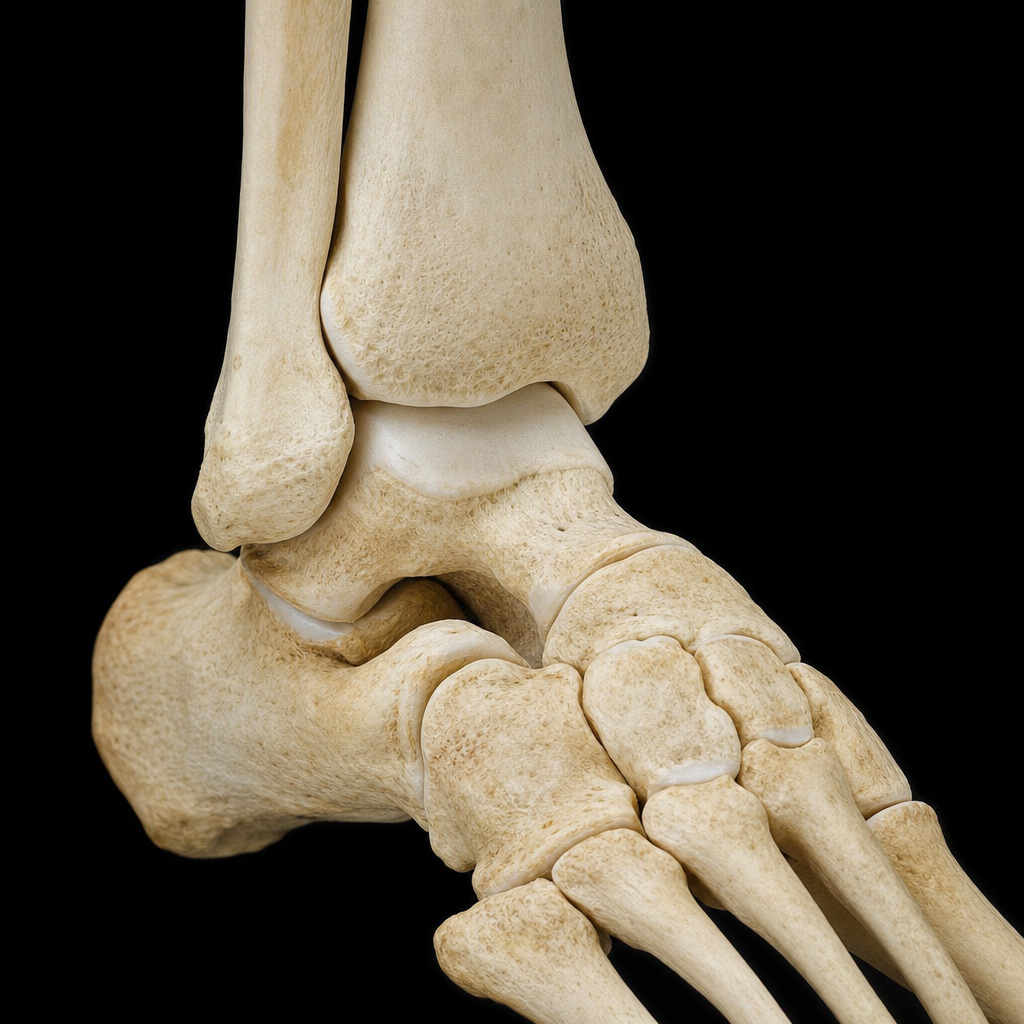
Which of the following bones has no medullary cavity?
In starvation, which component is the last to disappear?
Which among the following is not a composite muscle?
Which of the following vessels does not cross the midline of the body?
Which of the following statements regarding bone anatomy is true?
What are the slightly movable articulations where contiguous bony surfaces are connected by broad flattened disks of fibrocartilage or united by interosseous ligaments called?
What is true about hyaline cartilage?
Which one of the following is a multipennate muscle?
All of the following anatomical structures lack lymphatics, except:
Which of the following statements is untrue about articular cartilage?
Explanation: **Explanation:** The **Clavicle** is a unique bone in the human body and is often referred to as a "modified long bone." Unlike typical long bones, the clavicle **lacks a medullary (marrow) cavity**. Instead, its internal structure consists of cancellous (spongy) bone surrounded by a thick layer of compact bone. **Why Clavicle is the Correct Answer:** 1. **Ossification:** It is the first bone to start ossifying in the fetus (5th–6th week) and the only long bone that undergoes **membranous ossification** (though it has endochondral growth at the ends) [1]. 2. **Structure:** Because it lacks a central medullary canal, it does not house a significant amount of bone marrow compared to other long bones. **Why Other Options are Incorrect:** * **Ulna (A), Fibula (C), and Humerus (D):** These are classic long bones of the appendicular skeleton. All typical long bones possess a distinct **diaphysis (shaft)** containing a central medullary cavity filled with yellow or red bone marrow, which is essential for hematopoiesis and fat storage [2]. **High-Yield Clinical Pearls for NEET-PG:** * **Horizontal Orientation:** The clavicle is the only long bone placed horizontally in the body. * **Common Fracture Site:** The junction between the medial two-thirds and lateral one-third is the weakest point and the most common site of fracture. * **No Medullary Cavity:** This is a frequent "except" type question in anatomy. * **Transmission of Force:** It transmits the weight of the upper limb to the axial skeleton via the sternoclavicular joint.
Explanation: **Explanation:** The correct answer is **Buccal fat** (also known as the Suctorial pad of Bichat). **Why it is correct:** In the human body, adipose tissue is categorized into two functional types: **storage fat** (metabolic) and **structural fat** (mechanical). Storage fat (found in the abdomen and subcutaneous layers) is mobilized quickly during energy deficits to provide fuel [1]. Structural fat, however, serves a mechanical purpose such as cushioning organs or facilitating movement. The **Buccal Pad of Fat**, located between the buccinator and masseter muscles, is considered structural fat. Its primary role is to prevent the collapse of the cheeks during sucking (especially in infants) and to facilitate the movement of masticatory muscles. Because it is structural rather than purely metabolic, it is the last to be mobilized, remaining visible even in cases of advanced starvation or marasmus. **Why the other options are incorrect:** * **Fat around the abdomen:** This is primary storage (white) adipose tissue. It is among the first to be mobilized during a caloric deficit [1]. * **Fat around the eyes (Periorbital fat):** While somewhat protective, it is mobilized much earlier than buccal fat, leading to the "sunken eyes" appearance seen in severe malnutrition. * **Fat in the mesentery:** This is visceral storage fat. It is metabolically active and is readily depleted to maintain blood glucose levels during starvation [1]. **Clinical Pearls for NEET-PG:** * **Location:** The buccal pad of fat lies in the buccal space, superficial to the buccinator muscle. * **Clinical Sign:** In severe malnutrition (Marasmus), the disappearance of the buccal pad of fat is a sign of extreme, end-stage emaciation. * **Surgical relevance:** It is often used as a pedicled flap for intraoral grafting due to its rich vascularity.
Explanation: ### Explanation A **composite (or hybrid) muscle** is defined as a muscle that is supplied by two or more different nerves. This usually occurs because the muscle develops from more than one embryonic origin or spans different functional compartments. **Analysis of Options:** * **Pectineus:** It is a hybrid muscle of the hip. It is supplied by the **Femoral nerve** (L2, L3) and frequently receives a branch from the **Obturator nerve** (L2, L3). It acts as both a flexor and an adductor of the thigh. * **Flexor Digitorum Superficialis (FDS):** While traditionally the Flexor Digitorum *Profundus* is the classic hybrid muscle of the forearm, the FDS is also considered a composite muscle in advanced anatomy. It has two heads (humero-ulnar and radial) and receives dual innervation from the **Median nerve** and the **Ulnar nerve** (though the ulnar contribution is variable, it is a recognized anatomical fact in PG-level entrance exams). * **Biceps Brachii:** This is a classic composite muscle of the arm. Both heads are primarily supplied by the **Musculocutaneous nerve**, but the **Radial nerve** also provides sensory/proprioceptive fibers to the muscle. **Why "None of the above" is correct:** Since all three muscles listed (Pectineus, FDS, and Biceps Brachii) possess dual nerve supplies, they all qualify as composite muscles. Therefore, none of them can be singled out as "not" being a composite muscle. --- ### High-Yield Clinical Pearls for NEET-PG: * **Classic Hybrid Muscles of the Lower Limb:** Adductor Magnus (Obturator & Sciatic/Tibial nerves) and Biceps Femoris (Tibial & Common Peroneal nerves). * **Classic Hybrid Muscles of the Upper Limb:** Brachialis (Musculocutaneous & Radial nerves) and Flexor Digitorum Profundus (Median & Ulnar nerves). * **Subscapularis** is also a hybrid muscle, supplied by both the Upper and Lower Subscapular nerves.
Explanation: To answer this question, one must understand the asymmetrical drainage patterns of the venous system in relation to the **Inferior Vena Cava (IVC)** and the **Superior Vena Cava (SVC)**, both of which are situated to the right of the midline. [1] ### **Explanation of the Correct Option** * **A. Left gonadal vein:** This is the correct answer. Unlike the right gonadal vein (which drains directly into the IVC), the **left gonadal vein drains into the left renal vein** at a right angle. [1] Since the left renal vein is located on the left side of the aorta before it crosses the midline, the left gonadal vein itself remains entirely on the left side of the body and does not cross the midline. ### **Analysis of Incorrect Options** * **B. Left renal vein:** The IVC is on the right. To reach it, the left renal vein must travel from the left kidney, **crossing the midline** anterior to the abdominal aorta (and posterior to the superior mesenteric artery). * **C. Left brachiocephalic vein:** The SVC is on the right. The left brachiocephalic vein is formed behind the left sternoclavicular joint and must **cross the midline** (behind the manubrium) to join the right brachiocephalic vein to form the SVC. * **D. Hemiazygous vein:** This vein drains the lower left posterior intercostal spaces. To reach its destination, it **crosses the midline** (usually at the level of T8) from left to right to drain into the Azygos vein. ### **NEET-PG High-Yield Pearls** * **Nutcracker Syndrome:** Compression of the **left renal vein** between the SMA and the Aorta. This can cause left-sided varicocele because it obstructs the drainage of the **left gonadal vein.** * **Length Comparison:** The **left renal vein** is significantly longer than the right renal vein (as it has to cross the midline). Conversely, the **right renal artery** is longer than the left. * **Azygos System:** The Azygos vein is on the right; the Hemiazygos and Accessory Hemiazygos are on the left and must cross the midline to drain.
Explanation: ### Explanation **1. Why Option A is Correct:** Osteoblasts are bone-forming cells derived from osteoprogenitor cells [1]. During the process of bone deposition, some osteoblasts become trapped within the bony matrix they secrete (in spaces called lacunae). Once encased, they differentiate into **osteocytes**, which are mature bone cells responsible for maintaining the mineralized matrix and sensing mechanical strain [1], [2]. **2. Why the Other Options are Incorrect:** * **Option B:** Longitudinal growth of bone occurs at the **epiphyseal plate** (physis), located between the epiphysis and metaphysis [2]. The diaphysis is the shaft of the bone and is primarily responsible for structural support, not primary longitudinal growth. * **Option C:** The correct anatomical sequence from the end of a long bone toward the center is: **Epiphysis → Physis (Growth plate) → Metaphysis → Diaphysis** [2]. Thus, the metaphysis is located between the epiphysis and the diaphysis. * **Option D:** Interphalangeal joints are **hinge joints** (Ginglymus), allowing movement in only one plane (flexion/extension). A classic example of a **saddle joint** is the first carpometacarpal joint (at the base of the thumb). **3. NEET-PG High-Yield Pearls:** * **Osteoclasts:** These are multinucleated giant cells derived from the **monocyte-macrophage lineage** (not from osteoblasts) and are responsible for bone resorption [1]. * **Metaphysis:** This is the most vascular zone of a long bone and is the most common site for **acute osteomyelitis** in children due to the presence of hairpin vascular loops. * **Woven vs. Lamellar Bone:** Woven bone is immature, disorganized bone seen in fetal development and fracture healing; it is eventually replaced by organized lamellar bone [1].
Explanation: ### Explanation The question describes **Amphiarthroses**, which are functional classifications of joints characterized by limited or slight mobility. **1. Why Amphiarthroses is Correct:** Amphiarthroses (cartilaginous joints) are defined by the presence of a fibrocartilaginous disc or an interosseous ligament connecting the bony surfaces. These are subdivided into: * **Symphyses:** Bony surfaces are connected by a broad, flat disc of fibrocartilage (e.g., Pubic symphysis, Intervertebral discs). * **Syndesmoses:** Bones are united by an interosseous ligament or membrane (e.g., Inferior tibiofibular joint). **2. Why the Other Options are Incorrect:** * **Gomphosis (A):** This is a specialized fibrous joint (synarthrosis) where a conical process fits into a socket, specifically the teeth in the alveolar processes of the maxilla and mandible. It allows for virtually no movement. * **Enarthroses (B):** Also known as "Ball and Socket" joints (e.g., Hip and Shoulder). These are a subtype of diarthroses and are characterized by multiaxial, free movement, not "slight" movement. * **Diarthroses (C):** These are freely movable synovial joints characterized by a joint cavity, synovial fluid, and an articular capsule. They represent the most common and mobile joints in the body. **3. NEET-PG High-Yield Pearls:** * **Synarthroses:** Immovable (e.g., Sutures of the skull). * **Amphiarthroses:** Slightly movable (e.g., Manubriosternal joint). * **Diarthroses:** Freely movable (e.g., Knee, Elbow). * **Clinical Note:** The **Pubic Symphysis** (an amphiarthrosis) becomes more mobile during pregnancy due to the hormone **relaxin**, facilitating childbirth. * **Primary vs. Secondary Cartilaginous Joints:** Primary (Synchondroses) involve hyaline cartilage and usually disappear with age (e.g., epiphyseal plate); Secondary (Symphyses) involve fibrocartilage and persist throughout life in the midline of the body.
Explanation: ### Explanation **Correct Option: A** Hyaline cartilage is the most abundant type of cartilage in the body. Its primary function in the skeletal system is to provide a smooth, low-friction surface for movement [1]. In most synovial joints, the bone ends are capped with a specialized form of hyaline cartilage known as **articular cartilage**. It lacks a perichondrium, allowing for a perfectly smooth interface and efficient nutrient diffusion from the synovial fluid [1]. **Analysis of Incorrect Options:** * **Option B:** While most synovial joints feature hyaline cartilage, there are notable exceptions. The **Temporomandibular joint (TMJ)** and the **Sternoclavicular joint** are lined by **fibrocartilage** rather than hyaline cartilage. * **Option C:** Unlike other hyaline cartilages (like costal or laryngeal cartilages) which tend to calcify and ossify with age, **articular cartilage does not ossify** under physiological conditions. Its persistence is vital for joint function. * **Option D:** Articular cartilage is designed to **enhance mobility**, not limit it. It reduces friction (coefficient of friction is lower than ice on ice) and acts as a shock absorber to protect the underlying subchondral bone [1]. **High-Yield Clinical Pearls for NEET-PG:** * **Composition:** Hyaline cartilage is characterized by **Type II Collagen** and a ground substance rich in aggrecan [1]. * **Avascularity:** It is avascular, aneural, and alymphatic [1]. It derives nutrition via **diffusion** from the synovial fluid (facilitated by the "milking action" of joint movement) [1]. * **Regeneration:** Due to the lack of perichondrium and blood supply, articular cartilage has a very **poor regenerative capacity**. * **Locations:** Tracheal rings, larynx (thyroid, cricoid), costal cartilages, and the nasal septum.
Explanation: The classification of muscles based on fascicular architecture is a high-yield topic in Anatomy. **Pennate muscles** have fibers that run obliquely to the long axis of the muscle, resembling a feather. This arrangement allows for a higher number of muscle fibers per unit area, prioritizing **power** over range of motion. * **Deltoid (Correct):** The acromial (middle) fibers of the deltoid are the classic example of a **multipennate** muscle. In this arrangement, several septa of connective tissue extend into the muscle, and fibers attach obliquely to these septa from multiple directions. This structure provides the immense strength required for shoulder abduction. * **Tibialis anterior (Incorrect):** This is a **circumpennate** (or sometimes classified as bipennate) muscle. The fibers converge from the circumference of the muscle toward a central tendon. * **Tibialis posterior (Incorrect):** This is a **unipennate** muscle. The fibers are arranged on only one side of the tendon, similar to one half of a feather. * **Latissimus dorsi (Incorrect):** This is a **triangular (convergent)** muscle. The fibers originate from a broad area and converge to a single narrow tendon of insertion. **High-Yield NEET-PG Pearls:** 1. **Unipennate:** Flexor pollicis longus, Tibialis posterior. 2. **Bipennate:** Rectus femoris, Dorsal interossei. 3. **Multipennate:** Deltoid (middle fibers), Subscapularis. 4. **Circumpennate:** Tibialis anterior. 5. **Cruciate:** Sternocleidomastoid, Masseter (fibers cross each other).
Explanation: The lymphatic system is responsible for draining interstitial fluid from tissues; however, certain organs and tissues are traditionally considered "lymph-free." [1] **1. Why Liver is the Correct Answer:** The liver is actually one of the most prolific lymph-producing organs in the body, accounting for nearly **25% to 50% of the total lymph** flowing through the thoracic duct. While the hepatic lobules lack traditional lymphatic vessels, the fluid (plasma) filters through the sinusoidal endothelial fenestrae into the **Space of Disse**. [2] From here, it drains into the lymphatic vessels located in the portal tracts. Therefore, the liver is rich in lymphatics, making it the correct "exception" in this list. **2. Why the Other Options are Incorrect:** * **Brain (CNS):** The parenchyma of the brain and spinal cord lacks traditional lymphatic vessels. [1] Instead, waste clearance is managed by the **Glymphatic system** (glial-associated lymphatic system) and cerebrospinal fluid (CSF) drainage. * **Internal Ear:** The labyrinth of the internal ear is a fluid-filled space (endolymph and perilymph) that lacks a dedicated lymphatic capillary network. * **Cornea:** To maintain optical clarity (transparency), the cornea is **avascular and alymphatic**. [1] The presence of lymphatics in the cornea is usually a pathological sign (neovascularization). **Clinical Pearls for NEET-PG:** * **Other sites lacking lymphatics:** Bone marrow, Splenic pulp, Hyaline cartilage, Epidermis, and Placenta. [1] * **High-Yield Fact:** The liver lymph has a very high protein concentration (nearly as high as plasma) because of the highly permeable nature of hepatic sinusoids. [2] * **Dural Lymphatics:** Recent research has identified lymphatic vessels in the **dura mater**, but the brain parenchyma itself remains devoid of them.
Explanation: The correct answer is **B**, as it is a false statement. While the vast majority of synovial joints are lined by hyaline cartilage, there are notable exceptions. **1. Why Option B is the correct answer (Untrue statement):** Not all synovial joints contain hyaline cartilage. Joints that develop from **intramembranous ossification** are lined by **fibrocartilage** instead. The classic examples are the **Temporomandibular joint (TMJ)** and the **Sternoclavicular joint**. In these joints, the articular surfaces are covered by collagenous tissue rather than pure hyaline cartilage. **2. Analysis of other options:** * **Option A (True):** By definition, the articulating bone ends in a synovial joint are covered by a layer of articular cartilage to reduce friction and absorb shock [1]. * **Option C (True):** Unlike other hyaline cartilages (like costal cartilage), articular cartilage **does not ossify** with age. However, it may undergo thinning or fibrillation (as seen in osteoarthritis) [1]. * **Option D (True):** Articular cartilage is **aneural, avascular, and alymphatic** [1]. It lacks a **perichondrium**, which allows for a smooth, frictionless surface. It derives its nutrition primarily via diffusion from the **synovial fluid** [1]. **High-Yield NEET-PG Pearls:** * **Type II Collagen** is the predominant collagen type in hyaline articular cartilage [1]. * **Nutrition:** Since it is avascular, it relies on the "pump action" during joint movement to circulate synovial fluid [1]. * **Regeneration:** Due to the lack of perichondrium and blood supply, articular cartilage has a very poor regenerative capacity. * **Exception to remember:** TMJ = Fibrocartilage.
Skeletal System
Practice Questions
Articular System
Practice Questions
Muscular System
Practice Questions
Cardiovascular System
Practice Questions
Lymphatic System
Practice Questions
Nervous System
Practice Questions
Respiratory System
Practice Questions
Digestive System
Practice Questions
Urinary System
Practice Questions
Reproductive System
Practice Questions
Endocrine System
Practice Questions
Integumentary System
Practice Questions
Get full access to all questions, explanations, and performance tracking.
Start For Free