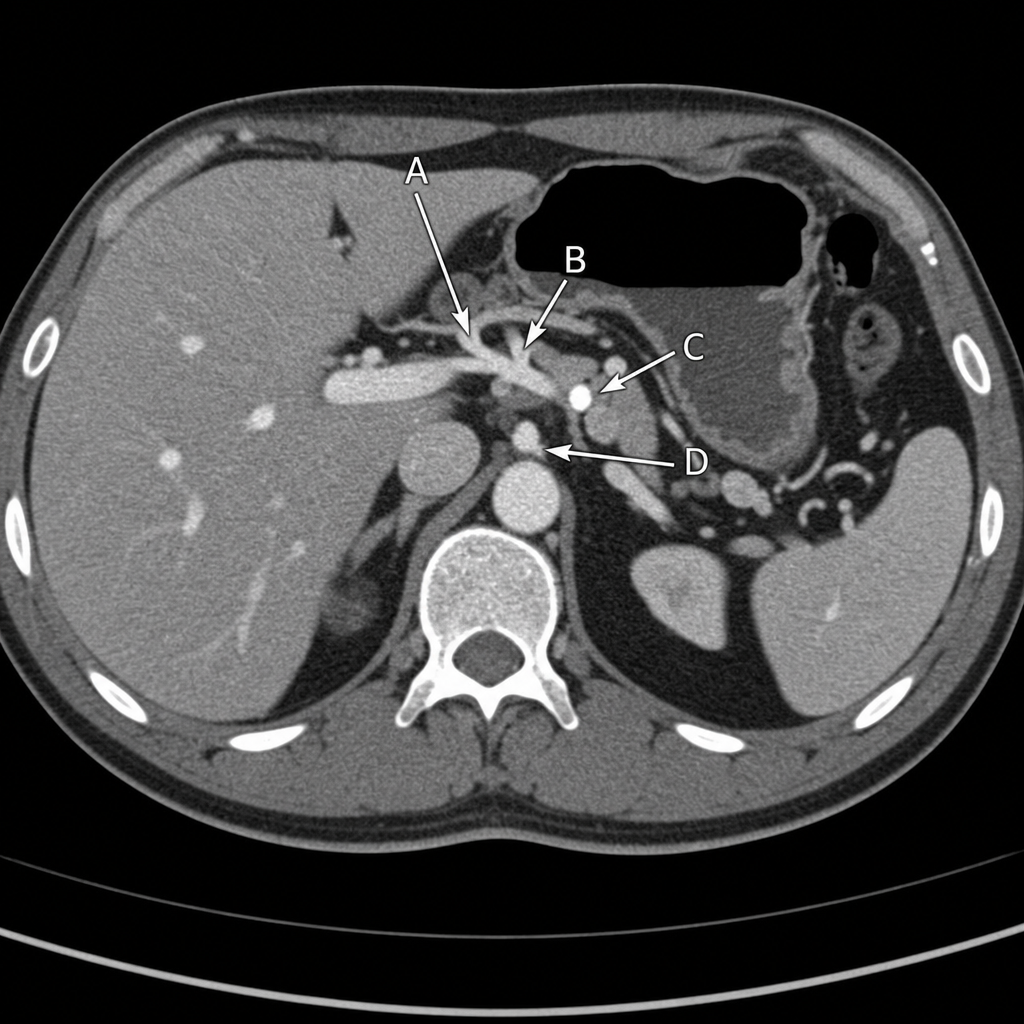
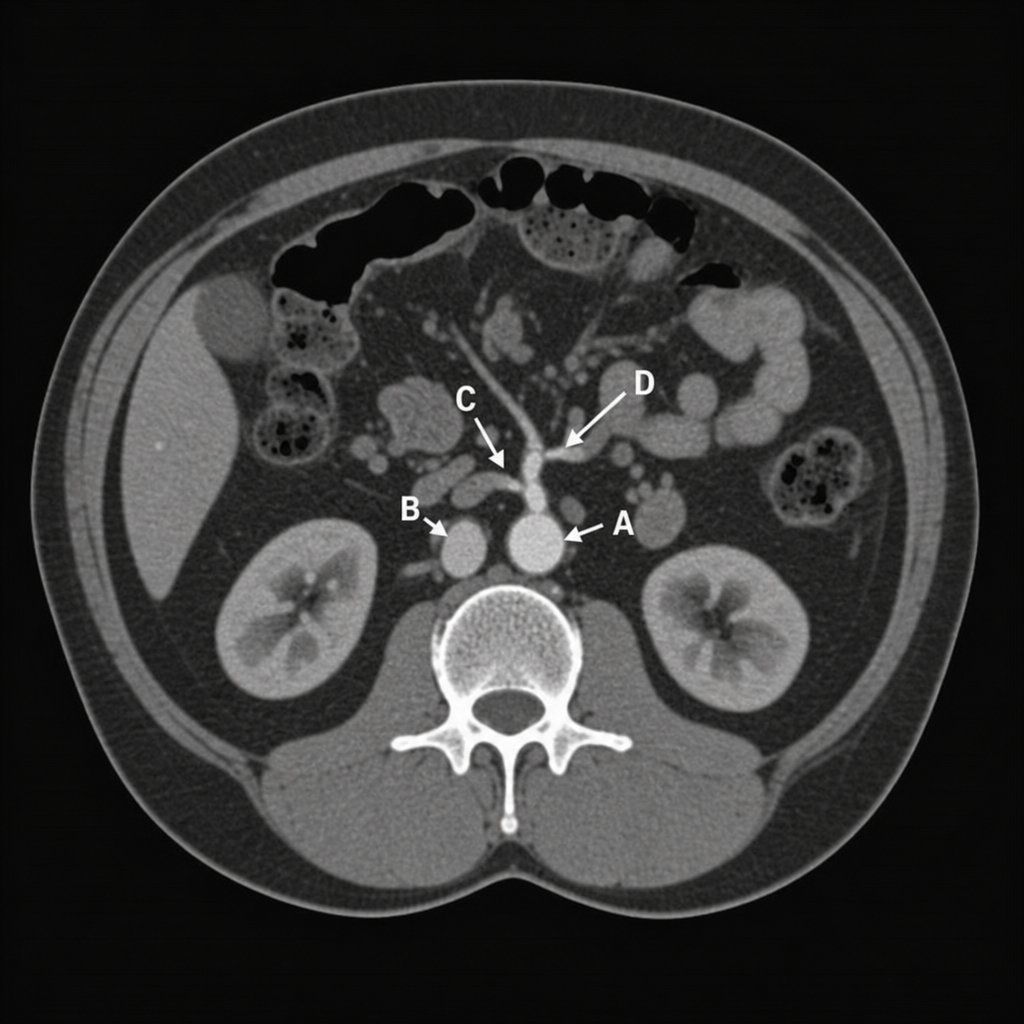
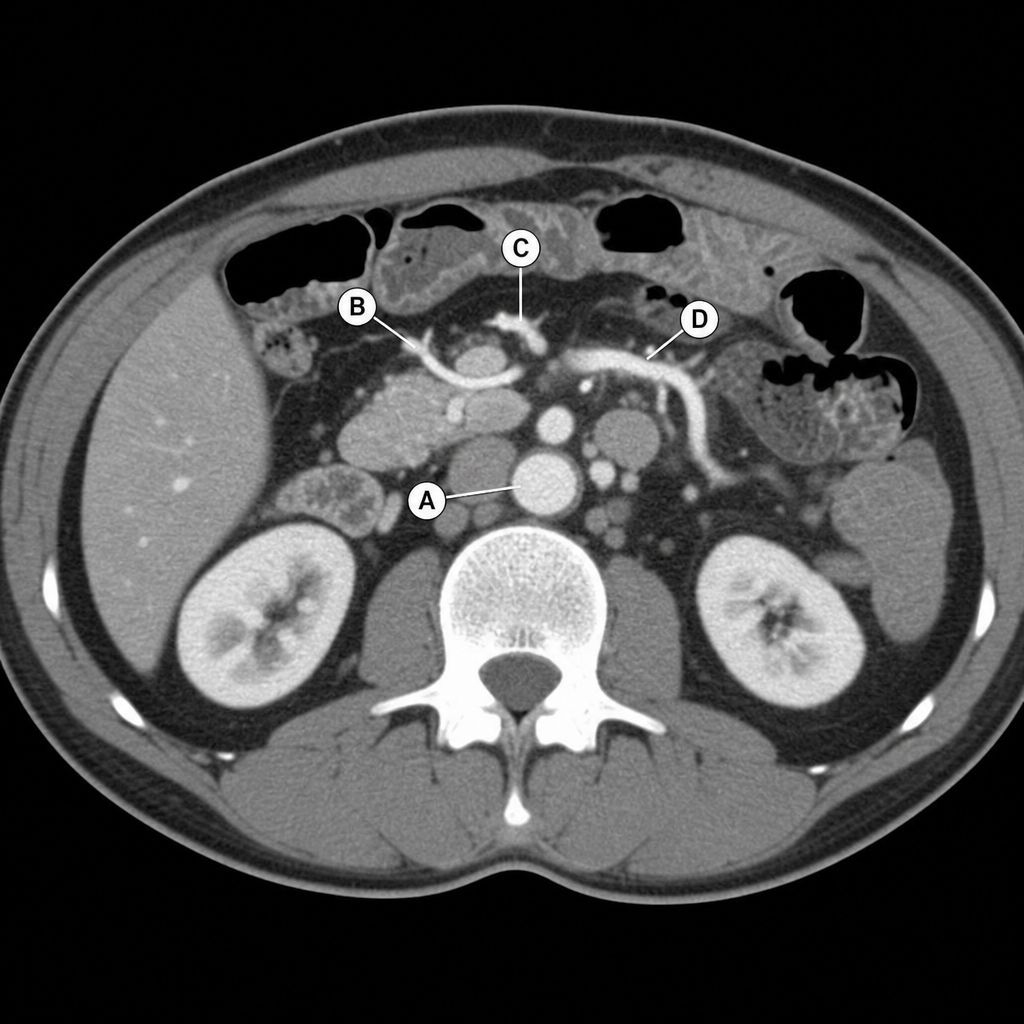
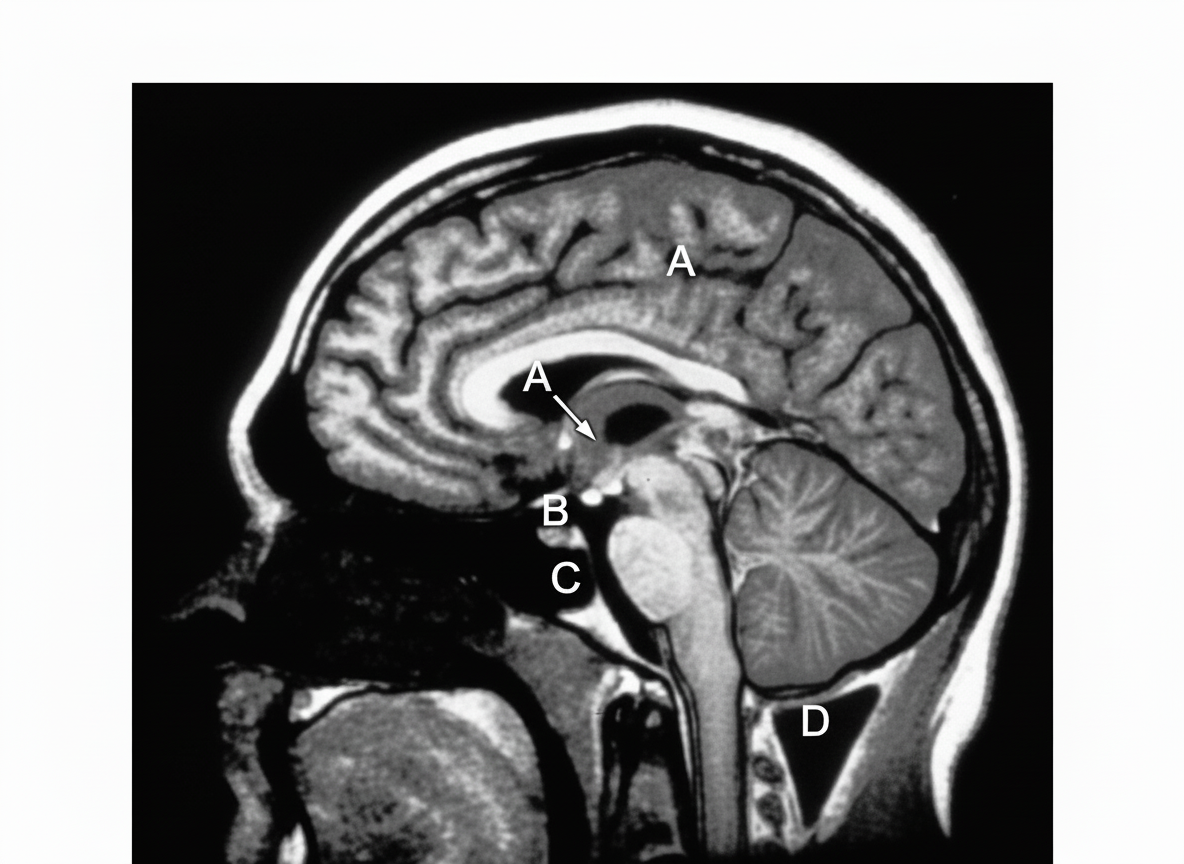
Which of the following is NOT a part of the anterior segment of the eye?
What are the lines of skin used as guidelines for making incisions called?
A routine periapical radiograph of an upper central incisor reveals a periapical radiolucency in relation to tooth 11. Clinically, there is no carious lesion involvement, and the patient reports no history of pain or discomfort in the tooth. What is the most probable diagnosis?
Knowledge of the segmental cutaneous innervation of the skin of the lower extremity is important in determining the level of intervertebral disc disease. S1 nerve root irritation will result in pain located along which area?
The optical axis of the eye meets the retina at a point which:
Needle for thoracocentesis is inserted most commonly at which anatomical location?
Pogonion is present on which anatomical landmark?
At which vertebral level is the fundus of the gallbladder typically located?
Saphenous vein cannulation is performed at which anatomical landmark?
What is the average distance of the fovea from the temporal margin of the optic disc?
Explanation: The eye is anatomically divided into two main segments: the **Anterior Segment** and the **Posterior Segment**. The boundary between these two segments is the **posterior capsule of the lens** (or the iris-lens diaphragm) [2]. **1. Why Vitreous is the Correct Answer:** The **Vitreous humor** (or vitreous body) is located behind the lens and occupies the **Posterior Segment** [3]. This segment comprises the posterior two-thirds of the eyeball and includes the vitreous, retina, choroid, and optic nerve head [2]. Therefore, the vitreous is NOT a part of the anterior segment. **2. Why the Other Options are Incorrect:** * **Cornea (Option B):** This is the transparent front part of the eye and forms the outermost boundary of the anterior segment [2]. * **Lens (Option A):** The lens, along with the ciliary body and iris, is part of the anterior segment [1]. Specifically, the anterior segment is further subdivided by the iris into the **Anterior Chamber** (between cornea and iris) and the **Posterior Chamber** (between iris and lens) [1][4]. **High-Yield Clinical Pearls for NEET-PG:** * **Anterior Segment:** Includes Cornea, Iris, Ciliary body, Lens, and Aqueous humor. * **Posterior Segment:** Includes Vitreous, Retina, Choroid, and Optic Nerve. * **Aqueous vs. Vitreous:** Aqueous humor (found in the anterior segment) is constantly produced and drained, whereas the Vitreous humor (found in the posterior segment) is a static, gel-like substance [1][3]. * **Blood-Aqueous Barrier:** Located in the anterior segment (ciliary epithelium), while the **Blood-Retinal Barrier** is in the posterior segment.
Explanation: **Explanation:** **Langer’s lines** (also known as cleavage lines) are the correct answer. These lines correspond to the natural orientation of collagen fibers within the dermis [1]. In most body areas, these fibers run parallel to the direction of least skin tension. * **Clinical Significance:** Surgeons use these lines as a guide for making incisions [3]. An incision made parallel to Langer’s lines heals with minimal tension, resulting in a fine, linear scar [1]. Conversely, an incision made perpendicular to these lines is pulled apart by the underlying collagen tension, leading to wider, more prominent (hypertrophic) scarring and delayed healing [2]. **Analysis of Incorrect Options:** * **Blaschko’s lines:** These are non-random cutaneous patterns that do not correspond to muscular, vascular, or lymphatic structures. They represent the pathways of epidermal cell migration and proliferation during embryonic development. Many genetic skin diseases (e.g., Incontinentia Pigmenti) follow these lines. * **Kraissl’s lines:** (Often confused with Langer’s) These are lines of maximum skin tension. While Langer’s lines were originally defined in cadavers, Kraissl’s lines are defined in living individuals and are generally perpendicular to the action of underlying muscles [1]. * **Futcher’s lines:** Also known as Voigt’s lines, these are pigmentary demarcation lines typically seen on the lateral aspect of the arms or legs where there is a transition between more deeply pigmented and lighter skin. **High-Yield NEET-PG Pearls:** * Langer’s lines are generally **perpendicular** to the action of the underlying muscles [1]. * On the limbs, they tend to run **longitudinally**, while on the trunk and neck, they tend to run **circumferentially** [3]. * For the best cosmetic outcome in neck surgery (e.g., thyroidectomy), incisions are made in the horizontal skin creases, which follow Langer’s lines.
Explanation: ### Explanation **1. Why the Correct Answer is Right:** The **incisive foramen** (nasopalatine foramen) is an anatomical opening in the midline of the hard palate, located posterior to the central incisors. On a periapical radiograph, it appears as an oval or heart-shaped **radiolucency**. Due to the angle of the X-ray beam (parallax effect), this anatomical void can often be projected directly over the apex of the upper central incisors (specifically tooth 11 or 21). The key clinical differentiator here is the **vitality of the tooth**. The question states there is no caries, no pain, and no clinical symptoms. In such cases, a radiolucency at the apex is likely an anatomical landmark rather than pathology. To confirm, a clinician would perform a pulp vitality test or take a second radiograph at a different horizontal angle; if the radiolucency "shifts" away from the apex, it is confirmed as the incisive foramen. **2. Why the Incorrect Options are Wrong:** * **Options A & B (Periapical Granuloma/Abscess):** These are inflammatory pathologies resulting from a necrotic (dead) pulp, usually caused by deep caries or trauma. Clinical signs such as tooth discoloration, pain on percussion, or a history of decay would be present. Since the tooth is clinically healthy and asymptomatic, these diagnoses are unlikely. **3. NEET-PG High-Yield Pearls:** * **Anatomical Landmarks:** Always rule out the **Incisive Foramen** (midline), **Mental Foramen** (near mandibular premolars), and **Maxillary Sinus** (near upper molars) before diagnosing periapical pathology. * **Parallax Rule (SLOB Rule):** Same Lingual, Opposite Buccal. This principle is used to differentiate superimposed anatomical structures from the actual root apex. * **Clinical Correlation:** A radiolucency + a **vital** tooth = Anatomical landmark. A radiolucency + a **non-vital** tooth = Periapical pathology.
Explanation: The sensory distribution of the lower limb is determined by specific dermatomes. The **S1 nerve root** provides cutaneous innervation to the **lateral side of the foot**, the little toe, and the lateral aspect of the sole. In the context of intervertebral disc disease, a herniation at the **L5-S1 level** typically compresses the S1 nerve root, leading to radiating pain (sciatica) and sensory loss along this specific distribution [1]. **Analysis of Options:** * **Option A (Anterior aspect of the thigh):** This area is primarily supplied by the **L2 and L3** nerve roots via the anterior cutaneous branches of the femoral nerve. * **Option B (Medial aspect of the thigh):** This region is supplied by the **L2 and L3** nerve roots via the obturator nerve. * **Option C (Anteromedial aspect of the leg):** This area is supplied by the **L4** nerve root (specifically via the saphenous nerve). Pain here often indicates an L3-L4 disc prolapse. * **Option D (Lateral side of the foot):** This is the classic dermatomal map for **S1**. **Clinical Pearls for NEET-PG:** * **S1 Radiculopathy:** Apart from lateral foot numbness, it is characterized by weakness in **plantar flexion** (gastrocnemius/soleus) and a **diminished or absent Ankle Jerk reflex**. * **L4 Radiculopathy:** Associated with weakness in knee extension and a diminished **Knee Jerk reflex**. * **L5 Radiculopathy:** The most common site; results in pain/numbness on the **dorsum of the foot** and weakness in **Great Toe extension** (Extensor Hallucis Longus). No major reflex is lost. [1] * **Memory Aid:** S1 = "Sole and Small toe" (Lateral side). L4 = "Down to the Floor" (Medial malleolus). L5 = "Largest toe" (Great toe).
Explanation: ### Explanation The correct answer is **B. Is nasal to the fovea centralis.** To understand this, we must distinguish between the two primary axes of the eye: 1. **Optical Axis:** The theoretical line passing through the geometric centers of the cornea and the lens [1]. It represents the anatomical center of the eyeball. 2. **Visual Axis:** The line passing from the object of interest through the nodal point of the eye to the **fovea centralis** (the area of highest visual acuity) [3]. In the human eye, these two axes do not coincide. The eyeball is slightly rotated laterally relative to the optical axis. Consequently, the optical axis strikes the posterior pole of the retina at a point situated **nasal (medial)** to the fovea centralis. Conversely, the fovea centralis is located approximately 2.5–3 mm **temporal (lateral)** to the exit of the optical axis. #### Analysis of Incorrect Options: * **Option A:** The optical axis and visual axis are separated by an angle (Angle Alpha), so they do not coincide at the fovea [2]. * **Option C:** The fovea is temporal to the optical axis; therefore, the optical axis must be nasal to the fovea. * **Option D:** The optic disc (blind spot) is located much further nasally (about 3–4 mm nasal to the posterior pole) [3]. The optical axis meets the retina between the fovea and the optic disc. #### High-Yield Clinical Pearls for NEET-PG: * **Angle Kappa:** The angle between the visual axis and the pupillary axis. It is clinically significant in evaluating pseudo-strabismus [2]. * **Macula Lutea:** A yellowish area (due to xanthophyll pigment) at the posterior pole. The **fovea centralis** is a depression in its center containing only cones [3]. * **Optic Disc:** Known as the "blind spot" because it lacks photoreceptors [3]. It is located medial (nasal) to the posterior pole of the eye.
Explanation: **Explanation:** **Thoracocentesis** (pleural tap) is a procedure performed to remove fluid or air from the pleural space. The **5th intercostal space (ICS) in the midaxillary line** is the preferred site because it is the most dependent part of the pleural cavity when the patient is supine or semi-recumbent, and it safely avoids injury to the diaphragm, liver, and spleen. **Analysis of Options:** * **Option A (Correct):** The 5th ICS in the midaxillary line is the "safe zone." It is high enough to avoid the diaphragm (which rises to the 5th rib during expiration) and low enough to drain fluid effectively. * **Option B & C:** These sites are too high for effective fluid drainage. The 2nd or 3rd ICS in the midclavicular line is traditionally used for needle decompression of a **tension pneumothorax**, but not for fluid aspiration. * **Option D:** The 9th ICS in the midclavicular line is too low. The diaphragm and underlying abdominal viscera (liver on the right, spleen on the left) are at high risk of perforation at this level. **Clinical Pearls for NEET-PG:** 1. **The "Safe Triangle":** Bound by the lateral border of the pectoralis major, the anterior border of the latissimus dorsi, and the 5th ICS [2]. This is the standard site for chest tube insertion. 2. **Needle Position:** The needle must always be inserted at the **upper border of the lower rib** to avoid the **intercostal neurovascular bundle** (VAN: Vein, Artery, Nerve), which runs in the costal groove at the inferior border of the upper rib [1]. 3. **Anatomical Limits:** In the midaxillary line, the lung ends at the 8th rib, while the pleura ends at the 10th rib. Thoracocentesis is typically performed between these levels (usually 7th–9th ICS) if the patient is sitting upright, but the 5th ICS remains the safest landmark for general access.
Explanation: The Pogonion (Pg) is a key anthropometric and cephalometric landmark defined as the most anterior (prominent) point on the bony chin (mandibular symphysis) in the midsagittal plane. It is used extensively in orthodontics and maxillofacial surgery to assess the profile and the degree of chin prominence. Analysis of Options: * Option D (Correct): By definition, Pogonion represents the most forward-projecting point of the chin's contour. * Option C (Incorrect): The lowest point on the mandibular symphysis is known as the Menton (Me). * Option B (Incorrect): The hyoid bone is a separate structure in the neck; it does not contain the Pogonion. * Option A (Incorrect): The submentum refers to the area below the chin; the Pogonion is located on the anterior surface of the mandible itself. High-Yield Cephalometric Landmarks (NEET-PG Essentials): To distinguish between similar landmarks on the mandibular symphysis, remember: 1. Gnathion (Gn): The most anteroinferior point on the symphysis (midpoint between Pogonion and Menton). 2. Menton (Me): The most inferior (lowest) point. 3. Pogonion (Pg): The most anterior point. 4. Nasion: The junction of the frontonasal suture in the midline. 5. B-Point (Supramentale): The deepest point on the concavity of the anterior mandible between the alveolar crest and the chin.
Explanation: The fundus of the gallbladder is a high-yield anatomical landmark in surface anatomy. It is typically located at the level of the **L1 vertebra**. [1] **Why L1 is correct:** The fundus of the gallbladder lies at the intersection of the **right transpyloric plane** and the **right semilunar line** (lateral border of the rectus abdominis). The transpyloric plane is a horizontal plane passing through the midpoint between the suprasternal notch and the pubic symphysis, which corresponds to the lower border of the **L1 vertebra**. At this point, the fundus comes into contact with the anterior abdominal wall at the tip of the **9th right costal cartilage**. **Why other options are incorrect:** * **L3:** This level corresponds to the **subcostal plane** and the origin of the inferior mesenteric artery. It is too low for the gallbladder. * **S1:** This level corresponds to the **sacral promontory** and the pelvic brim. * **S3:** This level marks the beginning of the **rectum** where the sigmoid colon loses its mesentery. **Clinical Pearls for NEET-PG:** * **Murphy’s Point:** The surface projection of the gallbladder fundus. [1] Pressure here during deep inspiration causes sharp pain in patients with cholecystitis (**Murphy’s Sign**). * **Transpyloric Plane (L1) Landmarks:** Includes the pylorus of the stomach, hila of both kidneys (left at L1, right slightly lower), neck of the pancreas, and the origin of the superior mesenteric artery. * **Radiological Note:** On an erect X-ray or cholecystogram, the gallbladder may descend to L2 or L3 due to gravity, but its standard anatomical position is L1.
Explanation: Explanation: 1. Why Option A is Correct: The Great Saphenous Vein (GSV) is the longest vein in the body. At the level of the ankle, its anatomical position is highly constant: it passes approximately 1 to 2 cm anterior and superior to the medial malleolus [1]. Because of this predictable location and its relatively large caliber, it is the preferred site for an emergency venous cut-down when peripheral veins are collapsed (e.g., in hypovolemic shock). At this site, the vein is accompanied by the saphenous nerve [2]. 2. Why Other Options are Incorrect: * Option B (Fossa Ovalis): This is the site of the saphenous opening in the fascia lata where the GSV joins the femoral vein (saphenofemoral junction). While clinically significant for varicose vein surgery (Trendelenburg procedure), it is too deep and anatomically complex for routine bedside cannulation or cut-down [2]. * Option C (Popliteal Fossa): The Small Saphenous Vein (not the Great Saphenous) typically terminates here by piercing the deep fascia to join the popliteal vein. It is located posteriorly, making it an impractical site for emergency access. 3. Clinical Pearls for NEET-PG: * Nerve Injury: During a saphenous cut-down at the medial malleolus, the saphenous nerve is at risk [2]. Injury leads to numbness along the medial aspect of the foot. * Course: The GSV passes behind the medial condyle of the femur at the knee and through the fossa ovalis in the thigh. * Valves: It contains approximately 10–12 valves, with the most consistent one located at the saphenofemoral junction. * Direction of Flow: Always remember that the GSV drains the medial end of the dorsal venous arch of the foot [1].
Explanation: ### Explanation The **optic disc** and the **fovea centralis** are two critical landmarks on the posterior pole of the retina [1]. Understanding their spatial relationship is essential for both clinical fundoscopy and radiological anatomy. **Why Option B is Correct:** The average diameter of the optic disc is approximately **1.5 mm**. Anatomically, the fovea centralis is located approximately **3 mm (or 2 disc diameters)** temporal to the temporal margin of the optic disc. It also lies slightly inferior (about 0.5 mm) to the horizontal meridian of the disc. This 2-disc-diameter (2 DD) rule is a standard clinical measurement used to locate the macula during ophthalmoscopy. **Analysis of Incorrect Options:** * **Option A (1 DD):** This distance is too short. At 1 DD (1.5 mm), you would still be within the peripapillary area, not yet reaching the macula. * **Option C & D (3 & 4 DD):** These distances (4.5 mm to 6 mm) would place the point of focus far into the peripheral temporal retina, well beyond the boundaries of the fovea and the macula lutea. **High-Yield Clinical Pearls for NEET-PG:** * **The "Blind Spot":** The optic disc is the physiological blind spot because it lacks photoreceptors. It is located **nasal** to the fovea. * **Fovea vs. Macula:** The macula is roughly 5.5 mm in diameter; the fovea is the central pit (1.5 mm), and the **foveola** (0.35 mm) is the center-most part containing only cones for maximum visual acuity. * **Vascularity:** The fovea is avascular (Foveal Avascular Zone - FAZ), receiving nutrition from the underlying choriocapillaris, which is why it appears darker on fundoscopy. * **Rule of Thumb:** In fundus photography, the distance from the center of the disc to the fovea is approximately **2.5 disc diameters**. However, from the **temporal margin**, the standard answer is **2 disc diameters**.
Surface Landmarks of the Head and Neck
Practice Questions
Surface Landmarks of the Thorax
Practice Questions
Surface Landmarks of the Abdomen
Practice Questions
Surface Landmarks of the Limbs
Practice Questions
Radiographic Anatomy
Practice Questions
CT Anatomy
Practice Questions
MRI Anatomy
Practice Questions
Ultrasonographic Anatomy
Practice Questions
Angiographic Anatomy
Practice Questions
Sectional and Cross-sectional Anatomy
Practice Questions
Anatomical Correlations in Common Imaging
Practice Questions
Interventional Radiological Anatomy
Practice Questions
Get full access to all questions, explanations, and performance tracking.
Start For Free