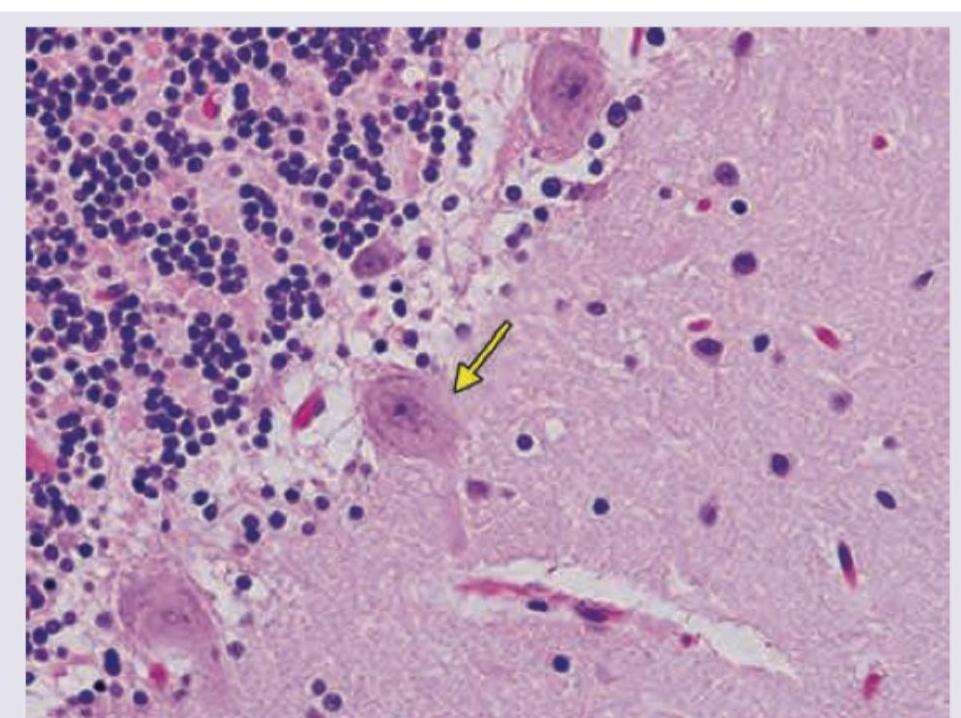
Shadow casting is a technique used in which type of microscopy?
Lymphocytes are located in each of the following tissues or organs EXCEPT one. What is the exception?
Transitional epithelium is seen in all of the following structures except?
Which organ is characterized by the presence of centroacinar cells?
Fenestrated capillaries are present in which of the following locations?
Periaeriolar lymphoid sheaths are seen in which organ?
Which of the following procedures is used as a routine technique for karyotyping using light microscopy?
What is the difference between the epithelium of the oral cavity and the lining epithelium of a typical cyst?
Cuboidal epithelium lines which of the following structures?
The portion of the skin that serves as a barrier to water loss is the:
Explanation: **Explanation:** **Shadow Casting** (also known as heavy metal shadowing) is a specialized technique used in **Electron Microscopy (EM)** to enhance contrast and reveal the three-dimensional surface morphology of microscopic specimens, such as viruses, isolated organelles, or DNA molecules. 1. **Why Electron Microscopy is correct:** In this process, the specimen is placed in a vacuum chamber and sprayed at an oblique angle with a thin layer of heavy metal (like platinum or gold). The metal deposits on one side of the particle, while the "lee" side remains uncoated, creating a "shadow." When viewed under an electron beam, the metal-coated areas block electrons, while the shadow areas allow them to pass, resulting in a high-contrast, 3D-like image of the specimen's topography. 2. **Why other options are incorrect:** * **Light Microscopy:** Uses visible light and glass lenses; contrast is usually achieved through chemical staining (e.g., H&E), not metal shadowing. * **Dark Field Microscopy:** Uses a special condenser to scatter light so only the light reflected by the specimen enters the objective. It is used for viewing live, unstained thin organisms like *Treponema pallidum*. * **Atomic Force Microscopy:** Uses a physical probe (cantilever) to "feel" the surface of a specimen at the atomic level; it does not require shadow casting. **High-Yield Facts for NEET-PG:** * **Transmission Electron Microscopy (TEM):** Best for internal ultra-structure (2D). * **Scanning Electron Microscopy (SEM):** Best for surface architecture (3D). * **Negative Staining:** Another EM technique (using phosphotungstic acid) where the background is stained, leaving the specimen bright; commonly used for rapid viral identification. * **Freeze-Fracture:** A technique used with EM to study the internal organization of cell membranes.
Explanation: The correct answer is **A. Brain**. **1. Why the Brain is the Exception:** The brain is considered an **immunologically privileged site**. Under normal physiological conditions, the **Blood-Brain Barrier (BBB)**—composed of tight junctions between endothelial cells, a thick basement membrane, and astrocyte foot processes—prevents the free entry of peripheral immune cells, including lymphocytes, into the central nervous system (CNS) parenchyma. While the brain has its own resident immune cells called **microglia** (derived from yolk sac macrophages), it lacks organized lymphatic tissue and a resident lymphocyte population [1]. **2. Analysis of Incorrect Options:** * **B. Spleen:** This is the largest secondary lymphoid organ. The **White Pulp** of the spleen specifically contains the Periarteriolar Lymphoid Sheaths (PALS) rich in T-cells and lymphoid follicles rich in B-cells [2]. * **C. Lymph Nodes:** These are secondary lymphoid organs designed to filter lymph. They contain distinct regions for lymphocytes: the **cortex** (B-cells) and the **paracortex** (T-cells) [1]. * **D. Thymus Gland:** This is a primary lymphoid organ. It is the site of **T-cell maturation** and differentiation, where thymocytes (immature lymphocytes) undergo positive and negative selection [1]. **3. NEET-PG High-Yield Pearls:** * **Microglia:** The only immune cells resident in the brain; they are of mesenchymal origin, unlike neurons/glia which are neuroectodermal [1]. * **MALT:** Lymphocytes are also found in Mucosa-Associated Lymphoid Tissue (e.g., Peyer’s patches in the ileum, tonsils). * **Glymphatic System:** While the brain lacks traditional lymphatics, the "glymphatic system" facilitates waste clearance via CSF and interstitial fluid exchange. * **Virchow-Robin Spaces:** Small numbers of lymphocytes may be found in these perivascular spaces, but not within the brain tissue itself.
Explanation: **Explanation:** The correct answer is **Collecting duct**. **1. Why Collecting Duct is the correct answer:** Transitional epithelium (also known as **Urothelium**) is a specialized stratified epithelium designed to withstand stretch and protect underlying tissues from the toxic effects of urine [1]. It lines the urinary tract starting from the **renal calyces down to the proximal part of the urethra**. The **Collecting duct**, however, is part of the renal parenchyma (the nephron's drainage system within the kidney). It is lined by **simple cuboidal epithelium** (which transitions to simple columnar epithelium in the larger ducts of Bellini). Since it is not lined by transitional epithelium, it is the correct "except" choice. **2. Analysis of Incorrect Options:** * **Calyces (Minor and Major):** These represent the beginning of the extra-renal excretory pathway and are lined by transitional epithelium. * **Ureter:** This muscular tube requires the distensibility provided by transitional epithelium to transport urine via peristalsis. * **Bladder:** The bladder features the thickest layer of transitional epithelium to accommodate significant volume changes [2]. **3. Clinical Pearls & High-Yield Facts for NEET-PG:** * **Umbrella Cells:** The most superficial layer of transitional epithelium consists of large, dome-shaped "Umbrella cells" which contain **uroplakin** proteins that form a mucosal barrier. * **Extent of Urothelium:** It lines the Renal Pelvis → Calyces → Ureters → Urinary Bladder → Prostatic Urethra (in males) and the majority of the female urethra [1]. * **Histology Tip:** Transitional epithelium is characterized by its ability to change shape; when the organ is empty, cells appear cuboidal/columnar, but when distended, they flatten to appear squamous.
Explanation: The correct answer is **Pancreas**. **1. Why Pancreas is Correct:** The exocrine pancreas is composed of serous acini. **Centroacinar cells** are a unique histological feature of the pancreas; they represent the intra-acinar portion of the **intercalated ducts**. These cells are pale-staining, spindle-shaped cells located in the center of the acinus. They are responsible for secreting a watery, bicarbonate-rich fluid [1] in response to the hormone **secretin**, which helps neutralize gastric acid in the duodenum [2]. **2. Why Other Options are Incorrect:** * **Liver:** The structural unit is the hepatic lobule, characterized by hepatocytes arranged in cords, sinusoids, and the portal triad (bile duct, hepatic artery, portal vein). It does not contain acinar units with central duct cells. * **Kidney:** The functional unit is the nephron. While it contains various tubular cells (proximal, distal, collecting ducts), it lacks exocrine acini and centroacinar cells. * **Spleen:** This is a lymphoid organ characterized by red pulp (sinusoids) and white pulp (periarteriolar lymphoid sheaths and follicles). It has no ductal system. **3. High-Yield Clinical Pearls for NEET-PG:** * **Distinctive Feature:** The presence of centroacinar cells and the **absence of striated ducts** are the two primary ways to histologically distinguish the pancreas from the parotid gland. * **Secretin Test:** This clinical test evaluates pancreatic function by measuring the bicarbonate output from centroacinar and ductal cells [4]. * **Islets of Langerhans:** While centroacinar cells mark the exocrine part, the endocrine part consists of Islets (Alpha, Beta, Delta cells), most numerous in the **tail** of the pancreas [3].
Explanation: **Explanation:** Capillaries are classified into three types based on the continuity of their endothelial lining and basal lamina. **Fenestrated capillaries** are characterized by the presence of small circular pores (fenestrae) in the endothelial cells, which are often covered by a thin diaphragm [1]. These allow for the rapid exchange of molecules and are found in tissues where high rates of filtration or absorption occur [1], [2]. **Why the Correct Answer is Right:** * **Small Intestine:** The primary function here is the absorption of nutrients from the lumen into the bloodstream. Fenestrated capillaries in the villi facilitate this rapid transport [1]. Other typical locations include the **Glomeruli of the kidney**, **Exocrine glands**, and **Endocrine glands** (for hormone release) [1]. **Why the Other Options are Incorrect:** * **Skin, Skeletal Muscle, and Brain (Options A, B, C):** These tissues contain **Continuous capillaries**. These are the most common type, featuring tight junctions and an uninterrupted endothelial lining [1]. * In the **Brain**, these continuous capillaries are further specialized with thick tight junctions to form the **Blood-Brain Barrier (BBB)** [3]. * In **Skin and Muscle**, they allow for regulated transport via pinocytotic vesicles. **High-Yield Clinical Pearls for NEET-PG:** 1. **Sinusoidal (Discontinuous) Capillaries:** These have large gaps and a discontinuous basement membrane. They are found in the **Liver, Spleen, and Bone Marrow** to allow the passage of whole cells and large proteins [1]. 2. **Mnemonic for Fenestrated:** "**P**ancreas, **I**ntestine, **K**idney, **E**ndocrine" (**PIKE**). 3. **Blood-Thymus Barrier:** Also utilizes continuous capillaries to prevent premature antigenic exposure to T-cells.
Explanation: **Explanation:** The correct answer is **Spleen**. **1. Why Spleen is Correct:** The spleen is a secondary lymphoid organ characterized by two distinct regions: Red Pulp and White Pulp. [2] The **Periarteriolar Lymphoid Sheaths (PALS)** are a defining feature of the **White Pulp**. They consist of a cylindrical collection of lymphocytes (predominantly **T-cells**) that surround the central arterioles. [1] When these sheaths expand to form lymphoid follicles (containing B-cells), they are known as Malpighian corpuscles. **2. Why Other Options are Incorrect:** * **Liver:** The structural unit is the hepatic lobule. While it contains specialized macrophages (Kupffer cells), it does not possess organized lymphoid sheaths around arterioles. * **Kidney:** The functional unit is the nephron. The vascular arrangement involves the glomerulus and peritubular capillaries, but no lymphoid sheathing exists. * **Heart:** Composed of myocardium (cardiac muscle), it lacks organized lymphatic tissue. **3. NEET-PG High-Yield Pearls:** * **PALS = T-cells:** Remember that PALS is specifically a **T-cell zone**. [1] In DiGeorge syndrome (thymic hypoplasia), the PALS region of the spleen will be depleted. * **Marginal Zone:** The area between the red and white pulp where antigen-presenting cells (APCs) capture blood-borne antigens. * **Splenic Circulation:** The spleen has an "open circulation" in humans, where blood from penicillar arterioles empties into the splenic cords before entering sinusoids. * **Post-Splenectomy:** Patients are at risk of infections from encapsulated organisms (e.g., *S. pneumoniae, H. influenzae, N. meningitidis*) due to the loss of splenic macrophages and B-cells.
Explanation: Karyotyping is the process of pairing and ordering all the chromosomes of an organism to provide a genome-wide snapshot of an individual's chromosomes. [1] **Why G-banding is correct:** **G-banding (Giemsa banding)** is the gold standard and most widely used routine technique for clinical karyotyping. [1] The process involves treating chromosomes with **Trypsin** (to partially digest proteins) followed by **Giemsa stain**. This produces a characteristic pattern of alternating light and dark bands: * **Dark bands (G-positive):** Represent AT-rich, gene-poor, heterochromatic regions that replicate late. [1] * **Light bands (G-negative):** Represent GC-rich, gene-dense, euchromatic regions that replicate early. [1] This unique banding pattern allows for the identification of specific chromosomes and the detection of structural abnormalities like deletions or translocations. [1] **Analysis of Incorrect Options:** * **A. C-banding (Constitutive heterochromatin):** Specifically stains the centromeres and regions containing constitutive heterochromatin (e.g., chromosomes 1, 9, 16, and Y). It is not used for routine whole-genome screening. * **C. Q-banding (Quinacrine):** Uses fluorescent staining viewed under UV light. It was the first banding method developed but is not "routine" because it requires a fluorescence microscope and the stain fades quickly. * **D. V-staining:** This is a distractor and is not a standard nomenclature for chromosome banding techniques. **High-Yield Clinical Pearls for NEET-PG:** * **Sample Collection:** For postnatal karyotyping, **Peripheral Blood Lymphocytes** (T-cells) are most commonly used. * **Mitotic Inhibitor:** **Colchicine** is added to arrest cells in **Metaphase**, as chromosomes are most condensed and visible during this stage. [1] * **R-banding (Reverse):** Produces a pattern opposite to G-banding; it is useful for studying the distal ends (telomeres) of chromosomes. * **Resolution:** Standard G-banding identifies 400–550 bands per haploid set. [1] High-resolution banding (using prophase/prometaphase) can identify up to 850 bands.
Explanation: ### Explanation The fundamental difference between the epithelium of the oral cavity and the lining of a typical cyst lies in the **regenerative capacity** and the presence of a distinct **Stratum Germinativum (Basal Layer)**. **1. Why Stratum Germinativum is the Correct Answer:** The oral cavity is lined by stratified squamous epithelium (mostly non-keratinized, except for the gingiva and hard palate). This epithelium is a "true" tissue characterized by a well-defined **stratum germinativum**, which contains stem cells that undergo continuous mitosis to replace desquamated surface cells [1]. In contrast, most typical cysts (especially simple or pseudocysts) possess a lining that is often attenuated, flattened, or lacks a functional, proliferative basal regenerative layer. The presence of a organized stratum germinativum is a hallmark of the mature, self-renewing oral mucosa. **2. Analysis of Incorrect Options:** * **A. Stratum Corneum:** This is the outermost keratinized layer. While present in the "masticatory mucosa" (hard palate), it is absent in the "lining mucosa" (cheeks, floor of mouth) and most cysts. It is not a universal differentiating factor. * **B. Stratum Lucidum:** This layer is exclusively found in **thick skin** (palms and soles). It is absent in both the oral cavity and typical cysts. * **D. Stratum Spinosum:** Also known as the prickle cell layer, it is often present in both stratified oral epithelium and many odontogenic cysts (like Radicular or Dentigerous cysts). Therefore, it does not serve as the primary distinguishing feature. ### NEET-PG High-Yield Pearls * **Mnemonic for Skin/Mucosa Layers (Deep to Superficial):** **B**asal (**G**erminativum) $\rightarrow$ **S**pinosum $\rightarrow$ **G**ranulosum $\rightarrow$ **L**ucidum $\rightarrow$ **C**orneum (*"**B**ritish **S**pies **G**et **L**ucky **C**hance"*). * **Clinical Note:** In pathology, if a cyst lining undergoes neoplastic transformation (e.g., into an Ameloblastoma), the basal cells become prominent and polarized, mimicking the stratum germinativum. * **Histology Tip:** The oral cavity is primarily **Non-keratinized Stratified Squamous Epithelium**, except for areas of high friction.
Explanation: **Explanation:** The renal tubule is lined by different types of epithelia, specifically adapted to the physiological functions of each segment. [1] **Correct Option: (A) Distal Convoluted Tubule (DCT)** The DCT is lined by **simple cuboidal epithelium**. Unlike the proximal tubule, the cells here lack a prominent brush border (microvilli), giving the lumen a cleaner, more distinct appearance under light microscopy. This structure supports its role in the selective secretion and reabsorption of ions under hormonal influence (e.g., Aldosterone). **Analysis of Incorrect Options:** * **(B) Descending Loop of Henle:** The thin descending limb is lined by **simple squamous epithelium**, which is highly permeable to water but impermeable to solutes. * **(C) Proximal Convoluted Tubule (PCT):** While the PCT is also cuboidal, it is specifically characterized as **simple cuboidal epithelium with a prominent brush border** (microvilli). [1] This increases the surface area for the reabsorption of 65-70% of the glomerular filtrate. In exams, if "Cuboidal" and "Brush-bordered Cuboidal" are both options, the latter is specific to the PCT. * **(D) Ascending Loop of Henle:** This segment is divided into two parts: the thin ascending limb (simple squamous) and the **thick ascending limb (simple cuboidal)**. However, in standard medical nomenclature and competitive exams, the DCT is the classic textbook example for simple cuboidal epithelium in the nephron. **High-Yield Clinical Pearls for NEET-PG:** * **Simple Squamous:** Lines the Bowman’s capsule (parietal layer), thin Loop of Henle, and Alveoli (Type I pneumocytes). * **Simple Columnar:** Lines the Stomach, Intestines, and Gallbladder. * **Ciliated Columnar:** Found in the Fallopian tubes and Bronchioles. * **Transitional Epithelium (Urothelium):** Lines the Renal pelvis, Ureter, and Urinary bladder.
Explanation: The **Epidermis** is the correct answer because it functions as the body’s primary physical and chemical barrier [1]. Specifically, the **Stratum Corneum** (the outermost layer of the epidermis) is responsible for preventing transepidermal water loss (TEWL) [1]. This is achieved through a "brick and mortar" arrangement: keratinocytes act as bricks, while a lipid-rich extracellular matrix (containing ceramides, cholesterol, and fatty acids) acts as the mortar, creating a waterproof seal. **Analysis of Incorrect Options:** * **Dermis:** This is the vascular, connective tissue layer located beneath the epidermis. While it provides structural integrity and contains appendages (like sweat glands), it does not act as a barrier to water loss; in fact, it houses the interstitial fluid that the epidermis protects [1]. * **Subcutaneous tissue (Hypodermis):** This layer consists primarily of adipose tissue. Its main functions are thermal insulation, energy storage, and shock absorption, rather than acting as a water barrier. * **Deep fascia:** This is a dense connective tissue membrane that surrounds muscles and organs. It provides support and reduces friction between muscle groups but has no role in cutaneous water regulation. **High-Yield Clinical Pearls for NEET-PG:** * **Stratum Granulosum:** Contains **Lamellar bodies** (Odland bodies) which secrete the lipids necessary for the epidermal water barrier. * **Filaggrin:** A key protein in the stratum corneum that binds keratin filaments. Mutations in the filaggrin gene lead to **Ichthyosis vulgaris** and **Atopic Dermatitis** due to a defective skin barrier. * **Burn Management:** In full-thickness burns, the loss of the epidermis leads to massive fluid loss and hypovolemic shock, highlighting its role as a water barrier.
Cellular Ultrastructure
Practice Questions
Microscopic Anatomy of Epithelial Tissues
Practice Questions
Microscopic Anatomy of Connective Tissues
Practice Questions
Microscopic Anatomy of Muscle Tissues
Practice Questions
Microscopic Anatomy of Nervous Tissues
Practice Questions
Microscopic Anatomy of Blood and Immune System
Practice Questions
Microscopic Anatomy of Endocrine Glands
Practice Questions
Microscopic Anatomy of Digestive System
Practice Questions
Microscopic Anatomy of Respiratory System
Practice Questions
Microscopic Anatomy of Urinary System
Practice Questions
Microscopic Anatomy of Reproductive System
Practice Questions
Techniques in Microscopic Anatomy
Practice Questions
Get full access to all questions, explanations, and performance tracking.
Start For Free