
Homologous and Analogous Structures — MCQs

Which of the following is an atavistic epiphysis?
What is the primary function of the otolith organs?
Mutations are due to changes in:
The helical structure model of two polynucleotide chains of DNA was proposed by whom?
A skull was recovered from a forest. According to inquest papers, a girl had gone missing 15 days back. The skull was sent to the forensic research lab. Which of the following would identify it as a female skull? 1. Large frontal and parietal eminence 2. Heavy cheek bones 3. Smooth glabella 4. Square orbits 5. Narrow mastoid
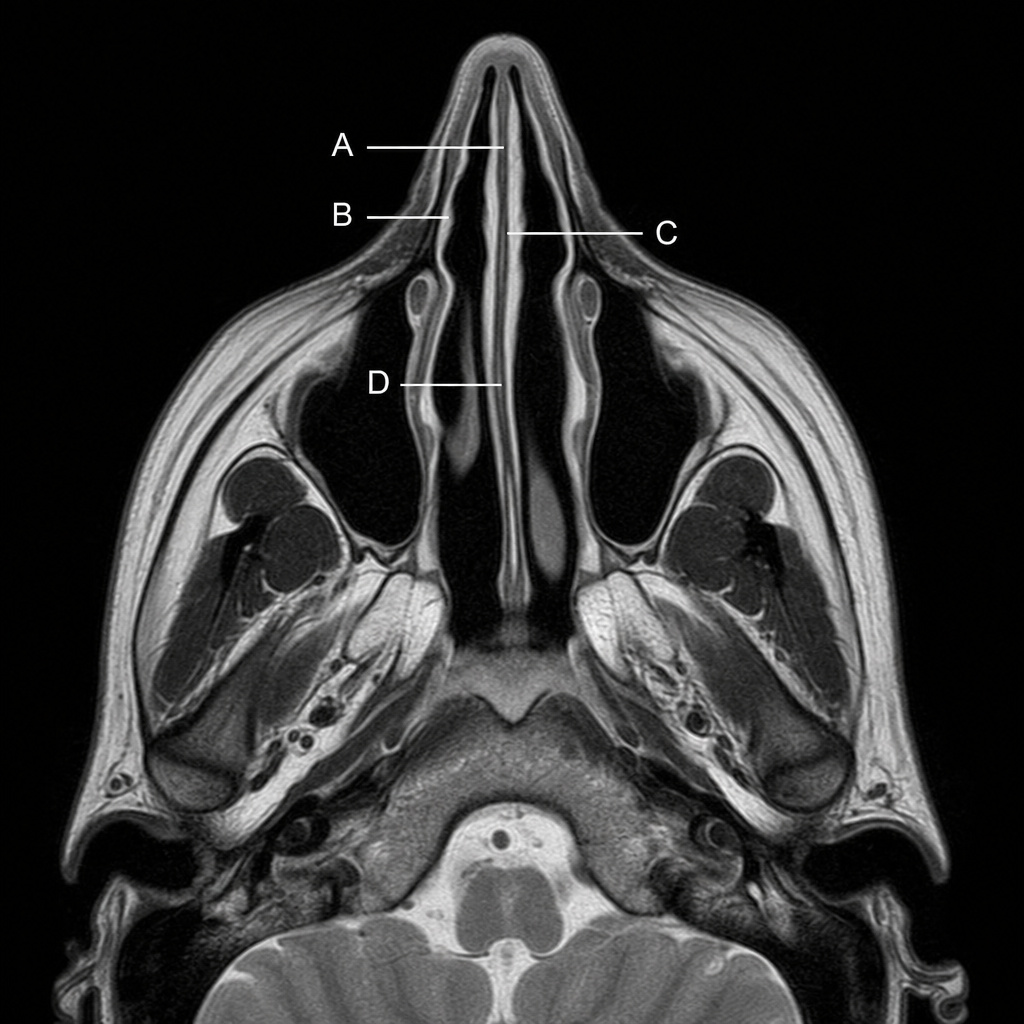
Choose the appropriate lettered structure in this MRI scan showing a transaxial section through the head. Which structure is formed by the perpendicular plate of the ethmoid bone, vomer, and septal cartilage?
The following ocular structure is not derived from surface ectoderm –
A comparative anatomist is evaluating the evolutionary significance of the recurrent laryngeal nerve's circuitous route in humans. A patient with thyroid cancer has involvement of this nerve. Synthesizing embryological and comparative data, which explanation best accounts for this anatomical arrangement?
A patient presents with polydactyly showing 7 fingers on one hand. Analyzing this from an evolutionary perspective, which statement best explains this anomaly in relation to comparative anatomy?
During a neck dissection, a surgeon identifies a small cystic structure anterior to the carotid bifurcation. Histology shows chromaffin-like cells. From a comparative anatomy perspective, this structure is homologous to which organ in lower vertebrates?
Want unlimited practice?
Get full access to all questions, explanations, and performance tracking.
Scan to download app