Anatomy
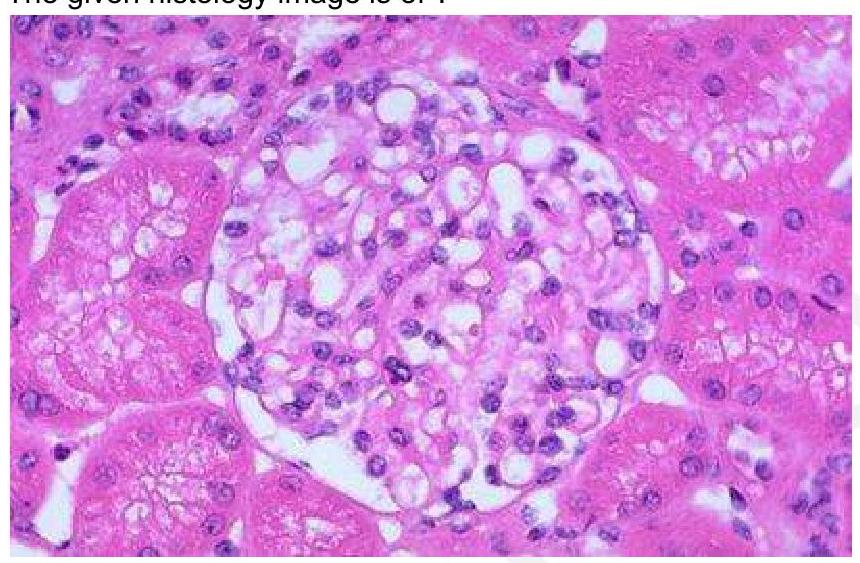
2 questionsThe given histology image is of which structure?
A patient is brought to the OPD by his wife, complaining about difficulty expressing emotions and lack of participation in daily activities. On examination, resting tremors and rigidity are noted. Given the possible diagnosis, which part of the brain is affected in this patient?
NEET-PG 2023 - Anatomy NEET-PG Practice Questions and MCQs
Question 81: The given histology image is of which structure?
- A. Pancreatic islet cells
- B. Hassall's corpuscles
- C. Glomerulus (Correct Answer)
- D. Leydig cells in the testis
Explanation: ***Glomerulus*** - The glomerulus is characterized by a **tuft of capillaries** surrounded by Bowman's capsule, responsible for filtration in the kidney [1]. - Histological examination typically shows a **dense network of capillaries** and **mesangial cells**, which are distinct features of the glomeruli [1]. *Hassall's corpuscles* - Found in the **thymus**, they are round structures composed of epithelial cells, crucial in T-cell maturation. - Histologically, they present as concentric layers of **epithelial cells** and are not found in the kidney. *Leydig cells of testis* - Located in the **interstitial tissue** of the testes, these cells produce testosterone and are typically larger than glomerular cells. - They are characterized by their **eosinophilic cytoplasm** and round nuclei, differing markedly from the structures found in the glomerulus. *Pancreatic islet cells* - Islet cells are involved in **hormone production**, predominantly insulin and glucagon, and are located in the pancreas. - Histologically, they appear as small clusters dispersed among **exocrine pancreas**, which is different from the highly organized structure of the glomerulus. **References:** [1] Cross SS. Underwood's Pathology: A Clinical Approach. 6th ed. Common Clinical Problems From Diseases Of The Urinary And Male Genital Tracts, pp. 522-523.
Question 82: A patient is brought to the OPD by his wife, complaining about difficulty expressing emotions and lack of participation in daily activities. On examination, resting tremors and rigidity are noted. Given the possible diagnosis, which part of the brain is affected in this patient?
- A. Basal ganglia (Correct Answer)
- B. Hippocampus
- C. Cerebellum
- D. Premotor cortex
Explanation: **Basal ganglia (Correct)** - The symptoms described—**resting tremors**, **rigidity**, difficulty expressing emotions, and lack of participation—are classic features of **Parkinson's disease**, which is characterized by the degeneration of dopaminergic neurons in the **substantia nigra**, a component of the basal ganglia [1]. - The basal ganglia play a crucial role in motor control, learning, and emotion, and their dysfunction leads to the characteristic motor and non-motor symptoms observed [2]. *Hippocampus (Incorrect)* - The hippocampus is primarily involved in **memory formation** and spatial navigation. - Damage to the hippocampus typically results in **amnesia** or difficulties with new learning, not motor symptoms like tremors or rigidity [3]. *Cerebellum (Incorrect)* - The cerebellum is responsible for **coordination**, balance, and fine motor control [2]. - **Cerebellar dysfunction** typically manifests as **ataxia**, dysmetria, and intention tremors, which differ from the resting tremors and rigidity seen in this patient. *Premotor cortex (Incorrect)* - The premotor cortex is involved in the planning and preparation of movements, as well as the control of trunk and proximal limb muscles. - While it contributes to motor control, its primary dysfunction does not typically cause the combination of **resting tremors** and **rigidity** characteristic of Parkinson's disease.
Internal Medicine
2 questionsA chronic alcoholic patient presented to the casualty with confusion, ataxia, and painful eye movements. What vitamin deficiency is commonly associated with these symptoms?
A young patient presents with a large retroperitoneal hemorrhage and a history of intermittent knee swelling after strenuous exercise. There is no history of mucosal bleeding. Which of the following clotting factors is primarily deficient in Hemophilia A?
NEET-PG 2023 - Internal Medicine NEET-PG Practice Questions and MCQs
Question 81: A chronic alcoholic patient presented to the casualty with confusion, ataxia, and painful eye movements. What vitamin deficiency is commonly associated with these symptoms?
- A. Hypocalcemia
- B. Thiamine (Vitamin B1) deficiency (Correct Answer)
- C. Subacute combined degeneration (Vitamin B12 deficiency)
- D. Pellagra (Niacin deficiency)
Explanation: ***Thiamine (Vitamin B1) deficiency*** - The constellation of **confusion**, **ataxia**, and **ophthalmoplegia** (often presenting as painful eye movements) in a chronic alcoholic patient is highly characteristic of **Wernicke encephalopathy**, which results from thiamine deficiency [1]. - Chronic alcohol abuse severely impairs the **absorption**, **utilization**, and **storage** of thiamine, making this population particularly vulnerable to deficiency [1]. *Hypocalcemia* - Symptoms of hypocalcemia typically include **tetany**, **muscle cramps**, **paresthesias**, and in severe cases, seizures or cardiac arrhythmias, which are not described here. - While chronic alcoholism can affect calcium metabolism, hypocalcemia does not primarily manifest with the neurological triad observed. *Subacute combined degeneration (Vitamin B12 deficiency)* - This condition primarily affects the **dorsal columns** and **corticospinal tracts** of the spinal cord, leading to ataxia, paresthesias, and weakness, but typically does not cause acute confusion or painful eye movements. - While alcohol abuse can also be associated with B12 deficiency, the presented symptoms are not classic for subacute combined degeneration. *Pellagra (Niacin deficiency)* - Pellagra is characterized by the "3 Ds": **dermatitis**, **diarrhea**, and **dementia** (which is a progressive cognitive decline rather than acute confusion). - The presence of ataxia and painful eye movements is not a primary feature of niacin deficiency.
Question 82: A young patient presents with a large retroperitoneal hemorrhage and a history of intermittent knee swelling after strenuous exercise. There is no history of mucosal bleeding. Which of the following clotting factors is primarily deficient in Hemophilia A?
- A. Von Willebrand factor
- B. Lupus anticoagulant
- C. Factor VIII (Correct Answer)
- D. Factor IX
Explanation: ***Factors VIII and IX*** - The symptoms indicate a **hemophilia**, where deficiencies in factors VIII or IX lead to a tendency for **retroperitoneal hemorrhage** and joint swelling, particularly after exercise [1]. - Intermittent swelling of the knees indicates **hemarthrosis**, a common manifestation in hemophilia, supporting the dysfunction of these factors [1]. *Factors XI and XII* - These factors are part of the **intrinsic pathway** but are not primarily associated with **joint bleeding** or sporadic retroperitoneal hemorrhage in young patients. - Deficiencies of these factors typically lead to a milder form of bleeding disorders and not the severe joint symptoms seen here. *Von Willebrand factor* - This factor is crucial for **platelet adhesion** and is associated with **mucosal bleeding**, which is not reported in this patient's history [2]. - The patient's **retroperitoneal hemorrhage** and knee swelling are not characteristic of von Willebrand disease, which typically involves more superficial bleeding [1,2]. *Lupus anticoagulant* - This is an **antiphospholipid antibody** associated with **thrombosis** rather than bleeding, and does not explain the joint swelling or hemorrhagic symptoms. - It leads to a false-positive on coagulation tests and can result in complications like recurrent **thromboembolic events**, rather than bleeding tendencies.
Microbiology
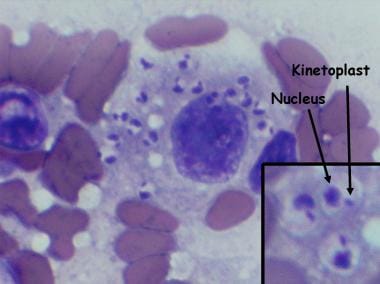
1 questionsA lady from West Rajasthan presented with an ulcer surrounded by erythema on the right leg. Microscopy of the biopsy from the edge of the ulcer showed organisms with dark staining nuclei and kinetoplast. What is the most likely causative agent? (Refer to the provided image)

NEET-PG 2023 - Microbiology NEET-PG Practice Questions and MCQs
Question 81: A lady from West Rajasthan presented with an ulcer surrounded by erythema on the right leg. Microscopy of the biopsy from the edge of the ulcer showed organisms with dark staining nuclei and kinetoplast. What is the most likely causative agent? (Refer to the provided image)
- A. Leishmania tropica (Correct Answer)
- B. Babesia microti
- C. Trypanosoma brucei
- D. Histoplasma capsulatum
Explanation: ***Leishmania tropica*** - The presence of an ulcer with surrounding erythema in **West Rajasthan**, along with microscopy showing organisms with a **nucleus and kinetoplast**, is highly characteristic of **cutaneous leishmaniasis** caused by *Leishmania tropica*. - The organisms seen are **amastigotes** within macrophages in skin lesions, which are identified by their distinct **nucleus and kinetoplast** on microscopy. - West Rajasthan is an **endemic area** for cutaneous leishmaniasis. *Babesia microti* - *Babesia microti* causes **babesiosis**, a tick-borne illness affecting red blood cells, leading to **hemolytic anemia** and malaria-like symptoms. - It does not typically cause **skin ulcers** and its characteristic form in smears is a **ring form or tetrad ("Maltese cross")** within red blood cells, not organisms with kinetoplasts in macrophages. *Trypanosoma brucei* - *Trypanosoma brucei* causes **African trypanosomiasis (sleeping sickness)**, presenting with fever, headaches, joint pain, and neurological symptoms, possibly a **chancre** at the inoculation site. - While it has a **kinetoplast**, it exists as a flagellated **trypomastigote** in the blood and CSF, not as an **amastigote** in macrophages within a skin ulcer. - Additionally, this is **geographically incorrect** for West Rajasthan. *Histoplasma capsulatum* - *Histoplasma capsulatum* is a **fungus** that causes **histoplasmosis**, primarily affecting the respiratory system, especially in immunocompromised individuals. - It does **not possess a kinetoplast** and while it can cause disseminated disease with skin lesions, the microscopic appearance would be **yeast forms** within macrophages, not organisms with kinetoplasts.
Obstetrics and Gynecology
1 questionsA woman comes with complaints of pain and swelling in the perineal area. She also has complaints of difficulty in walking and sitting. She gives a history of multiple sexual partners. On examination, a tender swelling is seen with redness on the labia. What is the most likely diagnosis?
NEET-PG 2023 - Obstetrics and Gynecology NEET-PG Practice Questions and MCQs
Question 81: A woman comes with complaints of pain and swelling in the perineal area. She also has complaints of difficulty in walking and sitting. She gives a history of multiple sexual partners. On examination, a tender swelling is seen with redness on the labia. What is the most likely diagnosis?
- A. Chlamydial infection
- B. Bartholin abscess (Correct Answer)
- C. Genital Tuberculosis
- D. Herpes infection
Explanation: ***Bartholin abscess*** - The presentation of **painful, tender swelling with redness** on the labia, especially causing difficulty in walking and sitting, is classic for a **Bartholin gland abscess**. - **Multiple sexual partners** can increase the risk of infection leading to abscess formation due to bacterial contamination. *Chlamydial infection* - While Chlamydia is a sexually transmitted infection, it typically manifests as **cervicitis**, **urethritis**, or pelvic inflammatory disease, often with a discharge. - It does not directly cause an acute, localized labial abscess as described. *Genital Tuberculosis* - Genital tuberculosis is a **chronic condition** that usually presents with menstrual irregularities, infertility, or chronic pelvic pain. - It rarely causes an acute, tender labial swelling or abscess. *Herpes infection* - Genital herpes presents with **painful vesicles or ulcers** on the genitalia, often associated with a prodrome of itching or tingling. - It does not typically cause a single, large, tender, and red fluctuant swelling indicative of an abscess.
Ophthalmology
1 questionsWhat is the dye and filter used to diagnose corneal ulcers?
NEET-PG 2023 - Ophthalmology NEET-PG Practice Questions and MCQs
Question 81: What is the dye and filter used to diagnose corneal ulcers?
- A. Lissamine green dye - visualized under green filter
- B. Lissamine blue dye - visualized under cobalt blue filter
- C. Fluorescein dye - visualized under green filter
- D. Fluorescein dye - visualized under cobalt blue filter (Correct Answer)
Explanation: ***Fluorescein dye - visualized under cobalt blue filter*** - **Fluorescein dye** is applied to the eye, and it stains areas of **epithelial defects**, such as those found in corneal ulcers, appearing bright green. - The **cobalt blue filter** enhances the visibility and fluorescence of the stained areas, making corneal ulcers clearly discernible. *Lissamine green dye - visualized under green filter* - **Lissamine green** is used to identify **devitalized cells** and **mucous filaments** on the ocular surface, rather than primary corneal epithelial defects. - It is visualized under **white light or red-free filter**, not a green filter, and is less suitable for diagnosing corneal ulcers directly. *Lissamine blue dye - visualized under cobalt blue filter* - This option refers to a non-existent dye combination for routine corneal ulcer diagnosis. **Lissamine blue** is not a standard ophthalmic dye for this purpose. - While a cobalt blue filter is used with fluorescein, it is not paired with a "Lissamine blue dye." *Fluorescein dye - visualized under green filter* - **Fluorescein dye** is indeed the correct dye for diagnosing corneal ulcers by staining epithelial defects. - However, it is visualized under a **cobalt blue filter**, not a green filter, to maximize fluorescence and contrast.
Pediatrics
1 questionsA 3-month-old baby presents with deafness, cataract, and patent ductus arteriosus. Which of the following is the most likely diagnosis?
NEET-PG 2023 - Pediatrics NEET-PG Practice Questions and MCQs
Question 81: A 3-month-old baby presents with deafness, cataract, and patent ductus arteriosus. Which of the following is the most likely diagnosis?
- A. Congenital herpes simplex virus infection
- B. Congenital toxoplasmosis
- C. Congenital cytomegalovirus infection
- D. Congenital rubella syndrome (Correct Answer)
Explanation: ***Congenital rubella syndrome*** - The classic triad of **deafness**, **cataracts**, and **patent ductus arteriosus (PDA)** is highly characteristic of congenital rubella syndrome. - This syndrome results from **maternal rubella infection** during the first trimester of pregnancy. *Congenital herpes simplex virus infection* - Typically presents with **skin vesicles**, **keratoconjunctivitis**, and **encephalitis**. - **Deafness, cataracts, and PDA** are not common features of congenital HSV. *Congenital toxoplasmosis* - The classic triad involves **chorioretinitis**, **hydrocephalus**, and **intracranial calcifications**. - While it can cause microcephaly and seizures, **deafness, cataracts, and PDA** are not hallmark features. *Congenital cytomegalovirus infection* - Often causes **sensorineural hearing loss** and sometimes **chorioretinitis**, but the combination with **cataracts** and **PDA** is atypical. - Other common features include **periventricular calcifications**, **hepatosplenomegaly**, and **thrombocytopenia**.
Pharmacology
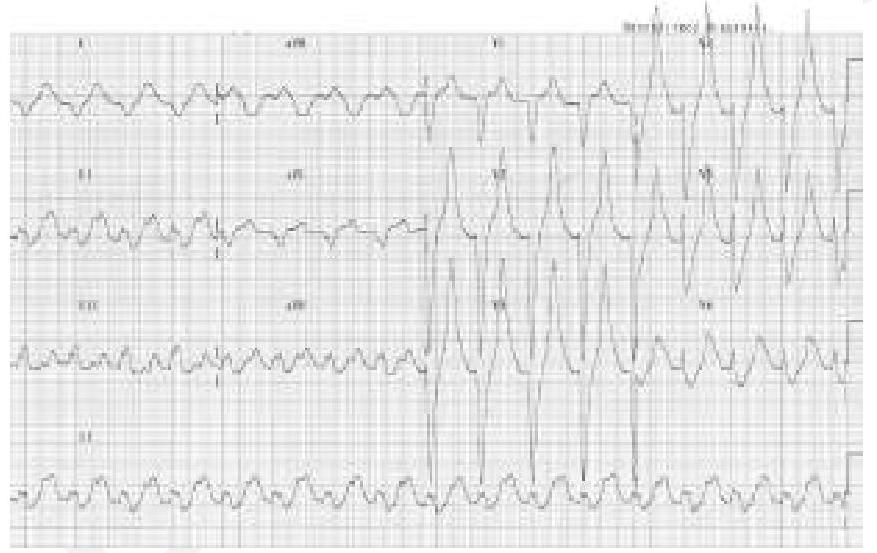
2 questionsA patient who is a known case of hypertension on multiple anti-hypertensive medications came to OPD. His ECG finding is given below. Which of the following drugs is responsible for the ECG finding? (Image of ECG finding)

A 3-week-old infant presents with a cough and sore throat. The mother reports that the infant develops a paroxysm of cough followed by apnea. The total leucocyte count is >50,000 cells/μL. Based on these symptoms, which of the following drugs is the most appropriate treatment for this patient?
NEET-PG 2023 - Pharmacology NEET-PG Practice Questions and MCQs
Question 81: A patient who is a known case of hypertension on multiple anti-hypertensive medications came to OPD. His ECG finding is given below. Which of the following drugs is responsible for the ECG finding? (Image of ECG finding)
- A. Prazosin
- B. Metoprolol
- C. Hydrochlorothiazide
- D. Spironolactone (Correct Answer)
Explanation: ***Spironolactone*** - The ECG shows a **tall, peaked T wave**, which is characteristic of **hyperkalemia**. - **Spironolactone** is a **potassium-sparing diuretic**, and its use, especially in combination with other medications or in patients with **renal impairment**, can lead to **hyperkalemia**. *Prazosin* - Prazosin is an **alpha-1 adrenergic blocker** used for **hypertension**. - It does **not directly affect potassium levels** and is not associated with the ECG changes seen in hyperkalemia. *Metoprolol* - Metoprolol is a **beta-blocker** primarily used for **hypertension**, **angina**, and **arrhythmias**. - It does **not significantly cause hyperkalemia** or the characteristic ECG changes shown. *Hydrochlorothiazide* - Hydrochlorothiazide is a **thiazide diuretic** that typically causes **hypokalemia**, not hyperkalemia, by **increasing potassium excretion**. - The ECG findings associated with hypokalemia would include **flattened T waves** or **prominent U waves**.
Question 82: A 3-week-old infant presents with a cough and sore throat. The mother reports that the infant develops a paroxysm of cough followed by apnea. The total leucocyte count is >50,000 cells/μL. Based on these symptoms, which of the following drugs is the most appropriate treatment for this patient?
- A. Azithromycin (Correct Answer)
- B. Amoxicillin
- C. Cotrimoxazole
- D. Erythromycin
Explanation: ***Azithromycin*** - This infant's symptoms are highly suggestive of **pertussis** (whooping cough), characterized by **paroxysmal coughs** followed by **apnea** in young infants, along with **marked leukocytosis**. - **Macrolides** are the treatment of choice due to their effectiveness against *Bordetella pertussis*; **azithromycin** is preferred in infants due to better tolerability and a shorter course compared to erythromycin. *Amoxicillin* - **Amoxicillin** is a penicillin-class antibiotic primarily effective against various bacterial respiratory infections, but it has **no activity against *Bordetella pertussis***. - Using amoxicillin for pertussis would lead to **treatment failure** and a worsening of the infant's condition. *Cotrimoxazole* - While **cotrimoxazole** (trimethoprim-sulfamethoxazole) can be used as an alternative for pertussis in patients **allergic to macrolides**, it is **not the first-line treatment** in infants. - It carries a risk of **kernicterus** in newborns and young infants due to displacement of bilirubin from albumin, so it is generally avoided. *Erythromycin* - **Erythromycin** is a macrolide and is effective against *Bordetella pertussis*, but it is **associated with a higher incidence of infantile hypertrophic pyloric stenosis** when given to young infants. - Due to this adverse effect, **azithromycin** is generally preferred over erythromycin in infants for pertussis treatment.