Biochemistry
1 questionsA patient presenting with bleeding gums and easy bruisability was diagnosed with scurvy. This condition results from a deficiency of which of the following?
NEET-PG 2023 - Biochemistry NEET-PG Practice Questions and MCQs
Question 31: A patient presenting with bleeding gums and easy bruisability was diagnosed with scurvy. This condition results from a deficiency of which of the following?
- A. Inhibition of vitamin K
- B. Increased collagen breakdown
- C. Defective collagen synthesis
- D. Low vitamin C (Correct Answer)
Explanation: ***Low vitamin C*** - **Scurvy** is directly caused by a severe deficiency of **vitamin C (ascorbic acid)**. - Vitamin C is a cofactor for **prolyl hydroxylase** and **lysyl hydroxylase**, enzymes essential for **collagen synthesis**. - Its deficiency leads to defective collagen formation, resulting in weakened connective tissues and fragile capillaries, explaining the bleeding gums and easy bruising. *Inhibition of vitamin K* - **Vitamin K** is crucial for the synthesis of **blood clotting factors** (II, VII, IX, X). - Its inhibition (e.g., by warfarin) would lead to bleeding disorders but does not explain the characteristic connective tissue problems (poor wound healing, perifollicular hemorrhages) seen in scurvy. *Increased collagen breakdown* - Conditions like **Ehlers-Danlos syndrome** involve abnormal collagen structure leading to tissue fragility. - Scurvy is characterized by a problem in the *synthesis* rather than the increased *breakdown* of collagen. *Defective collagen synthesis* - While this describes the **pathophysiological mechanism** of scurvy, it is not the answer to what the patient is *deficient in*. - The question asks for the underlying **nutritional deficiency**, which is **vitamin C**—the root cause that leads to defective collagen synthesis.
Internal Medicine
4 questionsA chronic alcoholic is brought to the emergency department with confusion, ataxia, and painful eye movements, including nystagmus. The 6th cranial nerve is also involved. What is the likely diagnosis?
A patient hailing from Delhi presents with fever, arthralgia, and extensive petechial rash for 3 days. Lab investigations revealed a hemoglobin of 9 g/ dL, a white blood cell count of 9000 cells/mm3, a platelet count of 20000 cells/mm3, and a prolonged bleeding time. The clotting time was normal. What is the most likely diagnosis?
A patient with a history of alcohol dependence syndrome presents with sudden and unintentional weight loss. What is the most likely diagnosis?
A young male came to the hospital with a clean-cut wound without any bleeding. The patient received a full course of tetanus vaccination 10 years ago. What is the best management for this patient?
NEET-PG 2023 - Internal Medicine NEET-PG Practice Questions and MCQs
Question 31: A chronic alcoholic is brought to the emergency department with confusion, ataxia, and painful eye movements, including nystagmus. The 6th cranial nerve is also involved. What is the likely diagnosis?
- A. Wernicke's encephalopathy (Correct Answer)
- B. Korsakoff psychosis
- C. Delirium tremens
- D. De Clerambault syndrome
Explanation: ***Wernicke's encephalopathy*** - This diagnosis aligns perfectly with the classic triad of **confusion, ataxia, and ophthalmoplegia** (manifested as painful eye movements, nystagmus, and 6th cranial nerve involvement) in the setting of chronic alcoholism [1], [2]. - It is caused by **thiamine (vitamin B1) deficiency**, common in chronic alcoholics due to malnutrition and impaired absorption [1]. *Korsakoff psychosis* - This condition is typically a **later complication** of Wernicke's encephalopathy, characterized by profound **anterograde and retrograde amnesia**, confabulation, and apathy [2]. - While an alcoholic patient might develop this, the immediate presentation with acute confusion, ataxia, and cranial nerve signs points to Wernicke's encephalopathy being the more acute and primary diagnosis in this scenario. *Delirium tremens* - This is a severe form of **alcohol withdrawal**, typically occurring 48-96 hours after the last drink, and is characterized by **global confusion, hallucinations (often visual), severe autonomic instability** (tachycardia, hypertension, fever, sweating), and seizures [3]. - While confusion is present, the specific neurological signs like ataxia and ophthalmoplegia are not typical of delirium tremens. *De Clerambault syndrome* - Also known as **erotomania**, this is a rare delusional disorder where an individual has a fixed, false belief that another person, usually of higher social status, is in love with them. - This is a **psychiatric disorder** with no relation to the neurological symptoms or alcohol-related complications described in the patient.
Question 32: A patient hailing from Delhi presents with fever, arthralgia, and extensive petechial rash for 3 days. Lab investigations revealed a hemoglobin of 9 g/ dL, a white blood cell count of 9000 cells/mm3, a platelet count of 20000 cells/mm3, and a prolonged bleeding time. The clotting time was normal. What is the most likely diagnosis?
- A. Dengue (Correct Answer)
- B. Malaria
- C. Scrub typhus
- D. Typhoid
Explanation: Dengue - The combination of **fever, arthralgia, extensive petechial rash**, and severe **thrombocytopenia** (platelet count 20,000/mm³) with **prolonged bleeding time** is highly characteristic of severe dengue infection, especially in an endemic area like Delhi [1]. - While leukocytosis (WBC 9000/mm³) is not typical for dengue (usually causes leukopenia), the other features strongly point to dengue hemorrhagic fever [1]. *Malaria* - Typically presents with **intermittent high fever**, chills, and sweats. While it can cause some thrombocytopenia and anemia, the **extensive petechial rash** is not a characteristic feature. - **Thrombocytopenia** in malaria is usually milder than observed here, and prolonged bleeding time is less common [2]. *Scrub typhus* - Caused by Orientia tsutsugamushi, it is characterized by **fever, headache, myalgia, and a characteristic eschar** (necrotic ulcer) at the bite site, which is not mentioned. - While it can cause rash and some thrombocytopenia, the **petechial rash** and such severe thrombocytopenia with prolonged bleeding time are less typical. *Typhoid* - Presents with **sustained high fever**, headache, bradycardia, and sometimes a **rose spot rash** (maculopapular), which is different from a petechial rash. - Typhoid typically causes **leukopenia** and can lead to gastrointestinal complications like intestinal bleeding, but severe thrombocytopenia and extensive petechiae are not common presenting features.
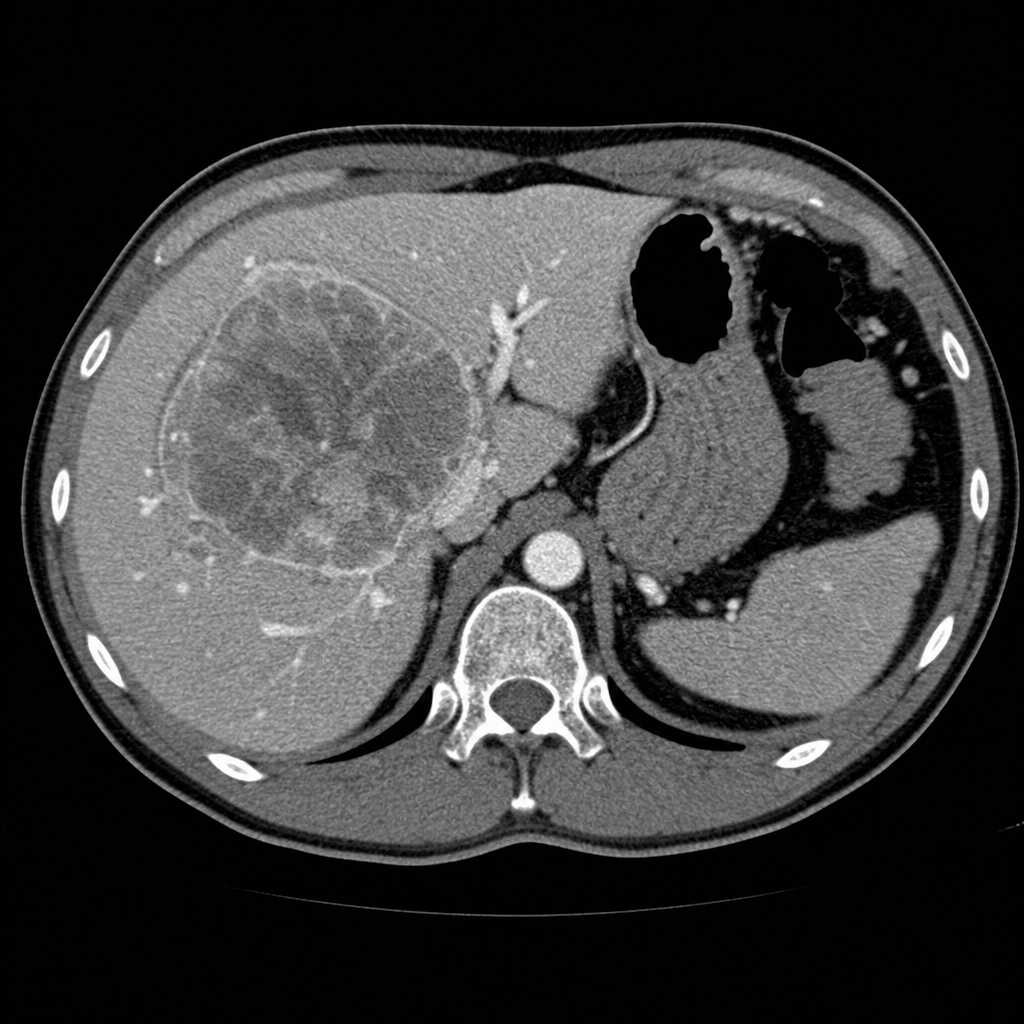
Question 33: A patient with a history of alcohol dependence syndrome presents with sudden and unintentional weight loss. What is the most likely diagnosis?
- A. Hepatic adenoma
- B. Cholangiocarcinoma
- C. Hepatocellular carcinoma (Correct Answer)
- D. Alcoholic hepatitis
Explanation: ***Hepatocellular carcinoma*** - The **alpha-fetoprotein (AFP)** level of **600 ng/mL** is significantly elevated, suggesting a diagnosis of hepatocellular carcinoma, especially in a patient with a history of **alcohol dependence syndrome** [1]. - The **AST/ALT ratio of 0.5** indicates significant liver damage, commonly seen in chronic liver disease leading to **hepatocellular cancer**. *Alcoholic hepatitis* - Typically presents with **elevated AST and ALT**, usually with a ratio >2:1, which is not the case here [2]. - May cause weight loss, as alcoholic patients often lose weight due to self-neglect and poor dietary intake, but the **elevated AFP** is not characteristic of merely alcoholic hepatitis [3]. *Cholangiocarcinoma* - This type of cancer primarily presents with **biliary obstruction** symptoms, such as jaundice, which is not indicated here given **normal bilirubin levels**. - Does not typically lead to such high levels of **AFP**, making it less likely with the provided lab results. *Hepatic adenoma* - More commonly associated with **oral contraceptive use** or anabolic steroid use, not primarily alcohol dependence. - AFP levels are usually normal or only mildly elevated in hepatic adenoma, making this option less viable with an **AFP level of 600 ng/mL**.
Question 34: A young male came to the hospital with a clean-cut wound without any bleeding. The patient received a full course of tetanus vaccination 10 years ago. What is the best management for this patient?
- A. Single-dose tetanus toxoid (Correct Answer)
- B. Human tetanus immunoglobulin only
- C. Human tetanus immunoglobulin and a full course of vaccine
- D. No treatment required
Explanation: ***Single-dose tetanus toxoid*** - For a **clean-cut wound** in a patient who completed a **primary tetanus vaccination series** and received their last dose more than 5 years ago but less than 10 years ago, a **single booster dose** of tetanus toxoid is recommended. [1] - A booster ensures continued protection, as vaccine-induced immunity wanes over time, but the prior full course provides a robust anamnestic response with a single dose. *Human tetanus immunoglobulin and a full course of vaccine* - This regimen (tetanus immunoglobulin + vaccine) is typically reserved for patients with **unvaccinated status**, an **unknown vaccination history**, or a **severely contaminated wound** (e.g., rusty nail, soil contamination) who have not been fully vaccinated. - The patient had a **clean-cut wound** and completed a full course of vaccination 10 years ago, making immunoglobulin unnecessary and a full course of vaccine excessive. *Human tetanus immunoglobulin only* - Administering **tetanus immunoglobulin alone** is appropriate for immediate, passive immunity in situations where a patient is unvaccinated or has an unknown vaccination status and has a significant risk of tetanus from a contaminated wound. [2] - This patient has a clean wound and a history of full vaccination, so a booster is sufficient to stimulate active immunity. *No treatment required* - While the patient was fully vaccinated 10 years ago, the protection from tetanus vaccination can **wane over time**, especially after 5-10 years. - A **booster dose** is crucial to maintain adequate protection against tetanus, even for a clean wound, given the 10-year interval since the last dose.
Obstetrics and Gynecology
1 questionsA female presents with 6 weeks of amenorrhea, experiencing vaginal bleeding and slight abdominal pain. A urine pregnancy test is positive, and her hCG level is 2800 IU/L. A mass measuring 3 x 2.5 cm is observed on the left adnexa. She is hemodynamically stable. What is the most appropriate management for this patient?
NEET-PG 2023 - Obstetrics and Gynecology NEET-PG Practice Questions and MCQs
Question 31: A female presents with 6 weeks of amenorrhea, experiencing vaginal bleeding and slight abdominal pain. A urine pregnancy test is positive, and her hCG level is 2800 IU/L. A mass measuring 3 x 2.5 cm is observed on the left adnexa. She is hemodynamically stable. What is the most appropriate management for this patient?
- A. Oral methotrexate
- B. Single-dose methotrexate injection (Correct Answer)
- C. Serial methotrexate + leucovorin rescue
- D. Salpingectomy
Explanation: ***Single-dose methotrexate injection*** - The patient presents with a **hemodynamically stable ectopic pregnancy**, as suggested by the positive pregnancy test, amenorrhea, vaginal bleeding, abdominal pain, an hCG level of 2800 IU/L, and an adnexal mass. - A single-dose methotrexate injection is the **first-line medical management** for ectopic pregnancies in stable patients, particularly when hCG levels are typically below 5000 IU/L and the mass size is less than 4 cm (or 3.5 cm in some guidelines). *Oral methotrexate* - **Oral methotrexate** is not typically used for the treatment of ectopic pregnancy due to unpredictable absorption and less reliable therapeutic efficacy compared to intramuscular administration. - The **intramuscular route** is preferred to ensure consistent systemic exposure and effectiveness in dissolving the ectopic gestation. *Serial methotrexate + leucovorin rescue* - **Leucovorin rescue** is used to mitigate the adverse effects of high-dose methotrexate, typically in cancer chemotherapy, and is not indicated for the standard treatment of ectopic pregnancy. - Serial doses of methotrexate without leucovorin may be given if the initial single dose fails, but **leucovorin is not part of the standard initial treatment protocol** for ectopic pregnancy. *Salpingectomy* - **Salpingectomy (surgical removal of the fallopian tube)** is indicated for ectopic pregnancies that are **hemodynamically unstable**, ruptured, too large for medical management (e.g., >4 cm), or in cases where medical management with methotrexate fails or is contraindicated. - Since this patient is **hemodynamically stable** and meets the criteria for medical management, surgery is not the most appropriate initial management.
Pharmacology
1 questionsA patient given digoxin started having side effects like nausea and vomiting. The serum concentration of digoxin was 4 ng/mL. The plasma therapeutic range is 1-2 ng/mL. If the half-life of digoxin is 40 hours, how long should one wait before resuming the treatment?
NEET-PG 2023 - Pharmacology NEET-PG Practice Questions and MCQs
Question 31: A patient given digoxin started having side effects like nausea and vomiting. The serum concentration of digoxin was 4 ng/mL. The plasma therapeutic range is 1-2 ng/mL. If the half-life of digoxin is 40 hours, how long should one wait before resuming the treatment?
- A. 120 hours
- B. 140-180 hours
- C. 1 half-life (40 hours)
- D. 80 hours (Correct Answer)
Explanation: ***80 hours (2 half-lives)***- Current digoxin level is **4 ng/mL**, which is **twice the upper therapeutic limit** (2 ng/mL), causing toxicity with nausea and vomiting [1]- After **1 half-life (40 hours)**: concentration reduces to 2 ng/mL (upper therapeutic limit) [2]- After **2 half-lives (80 hours)**: concentration reduces to 1 ng/mL (mid-therapeutic range) [2]- **Clinical rationale**: While 2 ng/mL is technically within range, waiting for 2 half-lives ensures the level is comfortably in the **middle of the therapeutic window** (1 ng/mL), providing a **safer margin** before resuming treatment in a patient who just experienced toxicity- This conservative approach minimizes risk of recurrent toxicity, especially important given the patient's recent symptoms at 4 ng/mL*1 half-life (40 hours)*- After 1 half-life, digoxin level would be 2 ng/mL, which is at the **upper limit** of the therapeutic range- While technically within the therapeutic range, this leaves **minimal safety margin** in a patient who just experienced toxicity- Starting treatment immediately at this level carries higher risk of recurrent side effects*120 hours (3 half-lives)*- After 3 half-lives, the concentration would be **0.5 ng/mL**, which is **below the therapeutic range** (1-2 ng/mL)- This is overly conservative and would **unnecessarily delay** resumption of essential cardiac medication- Could lead to inadequate control of the underlying condition (heart failure or atrial fibrillation)*140-180 hours (3.5-4.5 half-lives)*- This would reduce digoxin to **0.25-0.35 ng/mL**, well below therapeutic levels- This **excessive delay** is not clinically justified and could worsen the patient's cardiac condition- No standard protocol recommends waiting this long before resuming digoxin therapy
Psychiatry
2 questionsA woman, who is 4 days postpartum, presented with tearfulness, mood swings, and occasional insomnia. What is the likely diagnosis?
A 78-year-old woman presents with a progressive decline in daily activity. She gives a history of convulsions and visual hallucinations. She does not talk to anyone and keeps looking at the sky. Pathological examination shows the presence of Lewy bodies within the neurons. What is the most probable diagnosis?
NEET-PG 2023 - Psychiatry NEET-PG Practice Questions and MCQs
Question 31: A woman, who is 4 days postpartum, presented with tearfulness, mood swings, and occasional insomnia. What is the likely diagnosis?
- A. Postpartum depression
- B. Postpartum blues (Correct Answer)
- C. Postpartum psychosis
- D. Postpartum anxiety
Explanation: ***Postpartum blues*** - This condition presents with mild, transient symptoms like **tearfulness**, **mood swings**, and **insomnia** typically peaking around **4-5 days postpartum** and resolving within two weeks. - It is a very common, self-limiting condition impacting up to 80% of new mothers, attributed to drastic **hormonal shifts** post-delivery. *Postpartum depression* - Symptoms are similar to postpartum blues but are more **severe**, last longer (typically **beyond two weeks**), and significantly impair functioning. - It often includes feelings of **hopelessness**, pervasive sadness, loss of pleasure, and sometimes thoughts of harming oneself or the baby. *Postpartum psychosis* - This is a severe psychiatric emergency characterized by **hallucinations**, delusions, disorganized thinking, and bizarre behavior, usually within the first 2-3 weeks postpartum. - It is a rare condition requiring **urgent medical intervention** due to the high risk of harm to mother and baby. *Postpartum anxiety* - While anxiety can co-occur with postpartum blues or depression, primary postpartum anxiety specifically involves excessive and **uncontrollable worry** or fear, often about the baby's health or safety. - It does not typically present with the prominent **tearfulness** and **mood swings** characteristic of blues or depression.
Question 32: A 78-year-old woman presents with a progressive decline in daily activity. She gives a history of convulsions and visual hallucinations. She does not talk to anyone and keeps looking at the sky. Pathological examination shows the presence of Lewy bodies within the neurons. What is the most probable diagnosis?
- A. Prion disease
- B. Huntington's disease
- C. Lewy body dementia (Correct Answer)
- D. Alzheimer's disease
Explanation: ***Lewy body dementia*** - The presence of **progressive cognitive decline**, **visual hallucinations**, and **convulsions** in an elderly patient is highly indicative of Lewy body dementia. - The definitive pathological finding of **Lewy bodies** within neurons confirms the diagnosis. *Prion disease* - Characterized by rapidly progressive dementia, **myoclonus**, and cerebellar ataxia, without typical visual hallucinations or convulsions. - Pathological examination typically shows **spongiform changes** and accumulation of abnormal prion protein, not Lewy bodies. *Huntington's disease* - Presents with a classic triad of **motor dysfunction** (chorea), psychiatric symptoms, and cognitive decline, typically with an earlier onset (30-50 years). - It is an inherited neurodegenerative disorder, and its pathology involves neuronal loss in the striatum, without Lewy bodies. *Alzheimer's disease* - The most common cause of dementia, characterized by **memory impairment** as an early and prominent feature. - Pathological findings include **amyloid plaques** and **neurofibrillary tangles**, not Lewy bodies, and visual hallucinations are less common or occur later in the disease.
Surgery
1 questionsA 23-year-old male patient presents with midline swelling in the neck. The swelling moves with deglutition and protrusion of the tongue. What is the likely diagnosis?
NEET-PG 2023 - Surgery NEET-PG Practice Questions and MCQs
Question 31: A 23-year-old male patient presents with midline swelling in the neck. The swelling moves with deglutition and protrusion of the tongue. What is the likely diagnosis?
- A. Brachial cyst
- B. Thyroglossal cyst (Correct Answer)
- C. Plunging ranula
- D. Dermoid cyst
Explanation: ***Thyroglossal cyst*** - A **thyroglossal cyst** is a congenital anomaly that arises from the persistent **thyroglossal duct**, a remnant of the thyroid's embryologic descent. - Its classic diagnostic feature is its movement with **deglutition** (due to attachment to the hyoid bone, which moves during swallowing) and **protrusion of the tongue** (as the thyroglossal duct is connected to the base of the tongue). *Brachial cyst* - A **brachial cyst** is a congenital neck mass that typically presents as a lateral neck swelling, often located along the anterior border of the **sternocleidomastoid muscle**. - Unlike a thyroglossal cyst, it does not typically move with **deglutition** or **tongue protrusion**. *Plunging ranula* - A **plunging ranula** is a type of mucocele that arises from the **sublingual gland** and extends below the mylohyoid muscle into the neck. - It presents as a cervical mass but is typically located in the floor of the mouth or submandibular region and does not move with **deglutition** or **tongue protrusion**. *Dermoid cyst* - A **dermoid cyst** is a congenital cyst that can occur anywhere on the body, including the head and neck, often presenting as a painless mass. - It arises from sequestered embryonic ectoderm and mesoderm, containing skin appendages, but it does not move with **deglutition** or **tongue protrusion**.