Internal Medicine
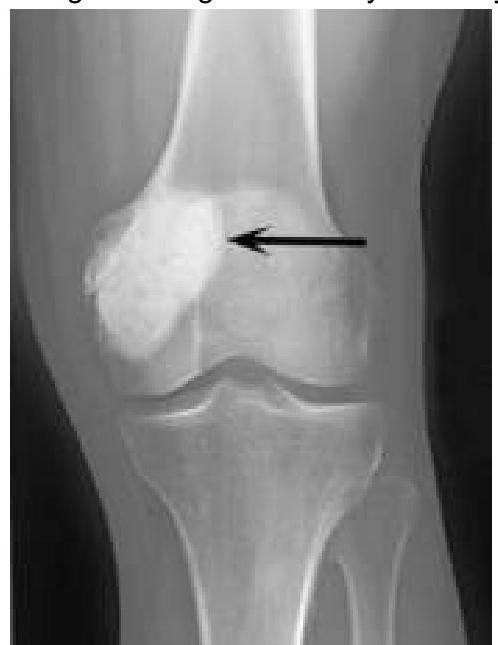
2 questionsA patient complains of loss of visual acuity, deafness, and enlargement of the maxilla.
What type of murmur is most likely associated with a patient presenting with elevated JVP, large v-waves, and a loud systolic murmur?
NEET-PG 2023 - Internal Medicine NEET-PG Practice Questions and MCQs
Question 11: A patient complains of loss of visual acuity, deafness, and enlargement of the maxilla.
- A. Fibrous dysplasia
- B. Osteogenesis imperfecta
- C. Paget's disease (Correct Answer)
- D. Osteomalacia
Explanation: ***Paget's disease*** [1] - Characterized by abnormal **bone remodeling**, leading to an increase in bone size and deformity, particularly in the **maxilla**, causing enlargement [1]. - Associated with complications such as **loss of visual acuity** (due to involvement of the skull) and **deafness** from auditory canal changes [1][2], making this the most fitting diagnosis. *Fibrous dysplasia* - Typically presents with **fibrous replacement** of bone, not specifically causing deafness or visual acuity loss. - Customarily involves the **classic "ground glass" appearance** on imaging, not the structural enlargement seen in Paget's disease. *Osteogenesis imperfecta* - Mainly causes **brittle bones** and frequent fractures, not associated with **maxillary enlargement** or changes in auditory function. - Rarely causes visual acuity loss, which is not a feature of this condition. *Osteomalacia* - Primarily characterized by **softening of bones** due to vitamin D deficiency, leading to weakness rather than structural changes like maxillary enlargement. - Symptoms like **bone pain** or **muscle weakness** occur, but not specifically loss of auditory function or visual acuity. **References:** [1] Kumar V, Abbas AK, et al.. Robbins and Cotran Pathologic Basis of Disease. 9th ed. Bones, Joints, and Soft Tissue Tumors, pp. 1192-1194. [2] Cross SS. Underwood's Pathology: A Clinical Approach. 6th ed. Common Clinical Problems From Osteoarticular And Connective Tissue Disease, pp. 669-670.
Question 12: What type of murmur is most likely associated with a patient presenting with elevated JVP, large v-waves, and a loud systolic murmur?
- A. Functional murmur
- B. Tricuspid stenosis
- C. Pulmonary stenosis
- D. Tricuspid regurgitation (Correct Answer)
Explanation: ***Tricuspid regurgitation*** - **Elevated JVP** with prominent **v-waves** and a **loud systolic murmur** are classic findings for tricuspid regurgitation. [1] The large v-waves are due to blood regurgitating into the right atrium during ventricular systole. - The murmur is typically **holosystolic** and may increase with inspiration (Carvallo's sign). *Functional murmur* - Functional murmurs are generally **benign**, not associated with significant hemodynamic compromise, and rarely present with elevated JVP or prominent v-waves. - They are typically **soft**, early or mid-systolic, and often change intensity with position. *Tricuspid stenosis* - Tricuspid stenosis would cause an **elevated JVP**, but the prominent wave would be an **a-wave** (due to increased right atrial pressure during atrial contraction), not a v-wave. - The murmur associated with tricuspid stenosis is a **diastolic rumble**, not a systolic murmur. [3] *Pulmonary stenosis* - Pulmonary stenosis presents with a **systolic ejection murmur** at the upper left sternal border and can cause elevated JVP due to right ventricular hypertrophy and failure. [2] - However, it typically does not cause prominent **v-waves** in the JVP, as the issue is outflow obstruction from the right ventricle, not regurgitation into the right atrium.
Obstetrics and Gynecology
2 questionsA lady undergoes radical hysterectomy for suspected stage Ib cancer cervix. Histopathology reveals cancer extension to the lower part of the uterine body with positive surgical margins. What is the next step of management?
Hysteroscopy is indicated in all of the following except:
NEET-PG 2023 - Obstetrics and Gynecology NEET-PG Practice Questions and MCQs
Question 11: A lady undergoes radical hysterectomy for suspected stage Ib cancer cervix. Histopathology reveals cancer extension to the lower part of the uterine body with positive surgical margins. What is the next step of management?
- A. Chemoradiation (Correct Answer)
- B. Chemotherapy
- C. Radiotherapy
- D. Follow-up
Explanation: ***Correct Option: Chemoradiation*** - **Positive surgical margins** after radical hysterectomy represent a **high-risk feature** requiring adjuvant concurrent chemoradiation. - According to **GOG 109 trial** and **NCCN/ESGO guidelines**, high-risk features (positive surgical margins, parametrial involvement, or positive pelvic lymph nodes) mandate **concurrent chemoradiation** (external beam radiotherapy + cisplatin-based chemotherapy). - **Cisplatin-based chemoradiation** improves local control and overall survival compared to radiotherapy alone in high-risk post-operative cervical cancer. - The combination provides both local control (radiation) and systemic treatment (chemotherapy) to address micrometastatic disease. *Incorrect Option: Radiotherapy* - Radiotherapy alone is used for **intermediate-risk features** (large tumor size >4 cm, deep stromal invasion, lymphovascular space invasion) without positive margins or nodal involvement. - In this case with **positive surgical margins**, radiotherapy alone is insufficient and would miss the survival benefit provided by concurrent chemotherapy. - The presence of positive margins elevates this to high-risk category requiring combined modality treatment. *Incorrect Option: Chemotherapy* - Chemotherapy alone (without radiation) is not standard adjuvant treatment after radical hysterectomy. - Systemic chemotherapy as a single modality is reserved for recurrent or metastatic disease. - The standard in high-risk post-operative cases is **concurrent** chemoradiation, not sequential therapy. *Incorrect Option: Follow-up* - Follow-up alone is contraindicated with **positive surgical margins**, which indicate residual microscopic disease. - Without adjuvant treatment, the risk of local recurrence and distant metastasis is unacceptably high. - Active intervention with chemoradiation is essential to improve disease-free and overall survival.
Question 12: Hysteroscopy is indicated in all of the following except:
- A. Asherman syndrome
- B. Infertility
- C. Misplaced intrauterine devices
- D. Active pelvic infection (Correct Answer)
Explanation: ***Active pelvic infection*** - An **active pelvic infection** is a **contraindication** to hysteroscopy due to the risk of exacerbating the infection and spreading it systemically. - Performing hysteroscopy in the presence of infection can lead to **sepsis** or worsening of pelvic inflammatory disease. *Asherman syndrome* - **Asherman syndrome**, characterized by **intrauterine adhesions**, is a common indication for hysteroscopy to diagnose and surgically resect the adhesions. - Hysteroscopy allows for direct visualization and **lysis of adhesions** to restore uterine cavity integrity. *Infertility* - **Infertility** is a frequent indication for hysteroscopy to evaluate the uterine cavity for **structural abnormalities** such as polyps, fibroids, or septa that might impede conception or implantation. - It helps in identifying and often correcting intrauterine pathologies that contribute to a woman's inability to conceive. *Misplaced intrauterine devices* - Hysteroscopy is indicated for the retrieval of **misplaced or embedded intrauterine devices (IUDs)**, especially if they cannot be removed by simpler methods. - It provides direct visualization of the uterine cavity to help locate and safely extract the IUD, preventing further complications.
Ophthalmology
1 questionsEsotropia is commonly seen in which type of refractive error?
NEET-PG 2023 - Ophthalmology NEET-PG Practice Questions and MCQs
Question 11: Esotropia is commonly seen in which type of refractive error?
- A. Myopia
- B. Hypermetropia (Correct Answer)
- C. Astigmatism
- D. Presbyopia
Explanation: ***Hypermetropia*** - **Esotropia**, or convergent strabismus, is commonly associated with **uncorrected hypermetropia**, especially in children. - The constant effort to **accommodate** to see clearly for hypermetropic individuals can lead to excessive convergence, causing the eye to turn inward. *Myopia* - Myopia, or **nearsightedness**, rarely causes esotropia. - In some cases, high myopia can be associated with **exotropia** (divergent strabismus) due to reduced accommodative effort. *Astigmatism* - **Astigmatism** causes blurry vision at all distances due to an irregularly shaped cornea or lens, but it is not directly linked to specific forms of strabismus like esotropia or exotropia. - While it can contribute to **amblyopia** if severe and uncorrected, it does not typically cause the eyes to turn inward. *Presbyopia* - **Presbyopia** is an age-related loss of the eye's ability to focus on nearby objects due to stiffening of the lens. - It affects accommodation but does not cause strabismus such as esotropia; it typically begins around age 40.
Orthopaedics
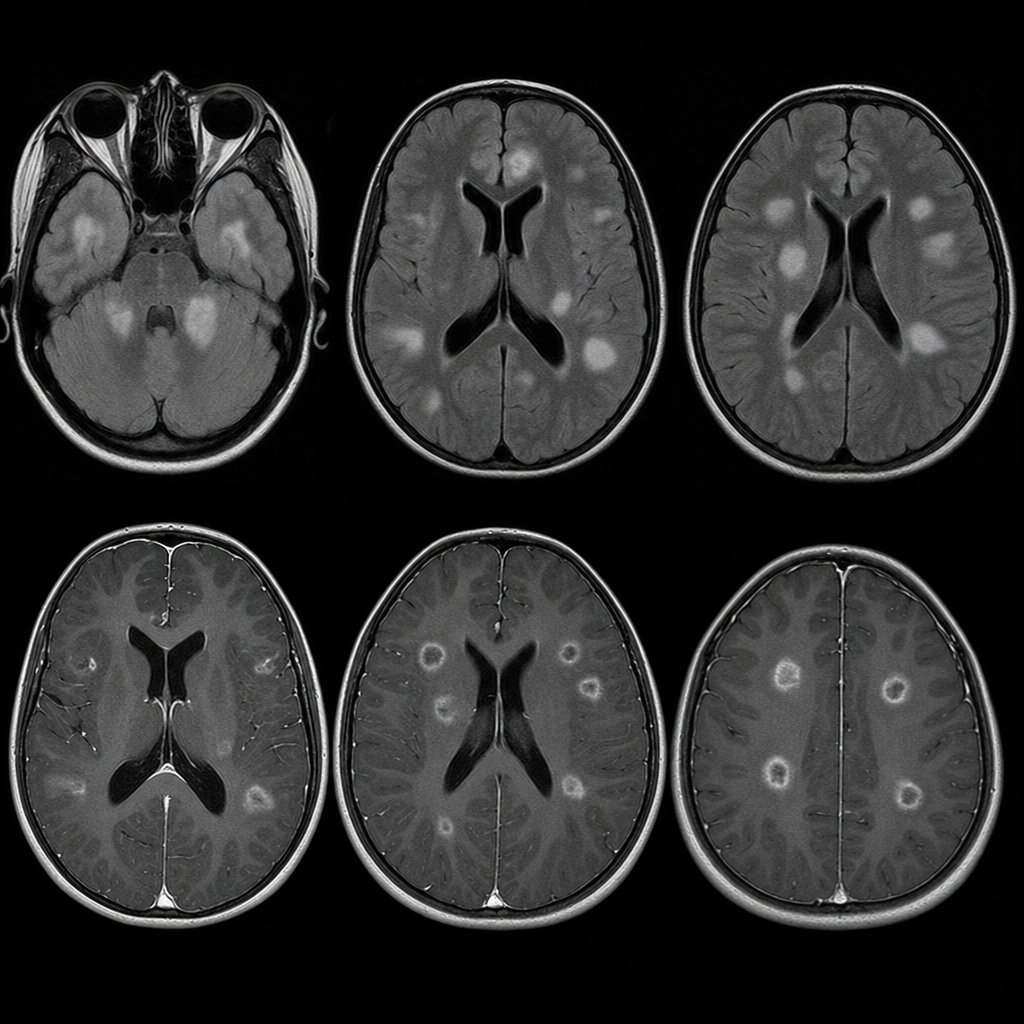
1 questionsPatellar tendon-bearing P.O.P. cast is indicated in the following fracture:
NEET-PG 2023 - Orthopaedics NEET-PG Practice Questions and MCQs
Question 11: Patellar tendon-bearing P.O.P. cast is indicated in the following fracture:
- A. Fracture of the tibia (Correct Answer)
- B. Fracture of the patella
- C. Fracture of the femur
- D. Fracture of the medial malleolus
Explanation: ***Fracture of the tibia*** - A **patellar tendon-bearing (PTB) cast** is specifically designed to bypass the knee joint and transfer weight from the patellar tendon to the cast, offloading the tibia. - This design is particularly useful for **stable, distal tibia fractures** where partial weight-bearing is desired to promote healing. *Fracture of the patella* - A PTB cast would place direct pressure on the **patella**, which is contraindicated in a patellar fracture. - Patellar fractures often require a **cylinder cast** or surgical fixation to immobilize the knee. *Fracture of the femur* - Femoral fractures are typically **more proximal** and require **traction**, **internal fixation**, or a **spica cast** for stabilization. - A PTB cast would not provide adequate immobilization or weight-bearing relief for a femoral fracture due to its design. *Fracture of the medial malleolus* - Medial malleolus fractures involve the **ankle joint**, which is distal to the area covered by a PTB cast. - These fractures typically require a **short leg cast** or surgical repair, focusing on ankle stabilization.
Pharmacology
2 questionsA patient on atracurium develops seizures due to accumulation of which substance?
A child presented with a history of ingestion of an unknown plant and developed mydriasis, tachycardia, dry mouth, warm skin, and delirium. Which of the following groups of drugs is likely to be responsible for the symptoms of this child?
NEET-PG 2023 - Pharmacology NEET-PG Practice Questions and MCQs
Question 11: A patient on atracurium develops seizures due to accumulation of which substance?
- A. Atracurium acid
- B. Laudanosine (Correct Answer)
- C. Cisatracurium
- D. Histamine
Explanation: ***Laudanosine*** - Atracurium is metabolized into **laudanosine**, a **neurotoxic metabolite** that can accumulate, particularly in patients with renal or hepatic dysfunction, leading to **seizures** and central nervous system excitation. - Due to its potential for neurotoxicity, atracurium is often replaced by **cisatracurium**, which produces less laudanosine. *Cisatracurium* - **Cisatracurium** is an isomer of atracurium that is also metabolized via **Hofmann elimination** but produces significantly **less laudanosine**. - It is preferred in patients with **renal or hepatic impairment** due to its reduced potential for metabolite accumulation and neurotoxicity. *Atracurium acid* - Atracurium acid is one of the **inactive metabolites** of atracurium, along with laudanosine. - Unlike laudanosine, atracurium acid is **not neurotoxic** and does not contribute to seizure activity. *Histamine* - Atracurium can cause an **immediate release of histamine**, leading to transient hypotension, flushing, and bronchospasm, especially with rapid bolus injection. - While histamine release is an adverse effect of atracurium, it is **not directly responsible for seizure activity**.
Question 12: A child presented with a history of ingestion of an unknown plant and developed mydriasis, tachycardia, dry mouth, warm skin, and delirium. Which of the following groups of drugs is likely to be responsible for the symptoms of this child?
- A. Anticholinergic (Correct Answer)
- B. Sympathomimetic
- C. Opioid
- D. Benzodiazepine
Explanation: ***Anticholinergic*** - The constellation of mydriasis, tachycardia, dry mouth, warm skin, and delirium is classic for **anticholinergic toxicity**, often described as "hot as a hare, blind as a bat, dry as a bone, red as a beet, and mad as a hatter." - This toxidrome is caused by the blockade of **muscarinic acetylcholine receptors**, leading to widespread inhibition of parasympathetic nervous system functions. - Common plant sources include **Datura** (jimsonweed) and **Atropa belladonna** (deadly nightshade). *Sympathomimetic* - While **mydriasis** and **tachycardia** can be present, sympathomimetic toxicity typically causes **diaphoresis (sweating)** and **hypertension**, not dry skin and mouth. - Patients often present with agitation, paranoia, and potentially seizures, but the key differentiating factor is the presence of profuse sweating. *Opioid* - Opioid overdose is characterized by the classic triad of **miosis (pinpoint pupils)**, **respiratory depression**, and **CNS depression (coma)**, none of which are present in this case. - Other common symptoms include bradycardia, hypotension, and hypothermia, which are contrary to the child's presentation. *Benzodiazepine* - Benzodiazepine overdose typically causes **CNS depression** including drowsiness, ataxia, and slurred speech, but usually spares vital signs unless combined with other depressants. - **Mydriasis**, **tachycardia**, and **dry mouth** are not characteristic symptoms of benzodiazepine toxicity; pupils are typically normal or slightly dilated due to hypoxia in severe cases.
Psychiatry
1 questionsWhat is the most likely diagnosis in an infant who presents with recurrent fractures and multiple bony deformities?
NEET-PG 2023 - Psychiatry NEET-PG Practice Questions and MCQs
Question 11: What is the most likely diagnosis in an infant who presents with recurrent fractures and multiple bony deformities?
- A. Achondroplasia
- B. Rickets
- C. Osteogenesis imperfecta (Correct Answer)
- D. Ehlers-Danlos syndrome
- E. Osteopetrosis
Explanation: ***Osteogenesis imperfecta*** - This genetic disorder is characterized by **fragile bones** due to defects in **type I collagen**, leading to recurrent fractures and bony deformities. - Other classic features include **blue sclera**, **dentinogenesis imperfecta**, and **hearing loss**, all stemming from collagen abnormalities. *Achondroplasia* - This is a common cause of **dwarfism** due to a genetic mutation affecting **cartilage formation**, primarily impacting long bone growth. - While it causes short stature and distinct facial features, **recurrent fractures** are not its primary clinical manifestation. *Ehlers-Danlos syndrome* - This group of genetic disorders affects **connective tissues**, resulting in **joint hypermobility**, **skin hyperextensibility**, and tissue fragility. - While it can lead to complications like joint dislocations and vascular issues, **recurrent bony fractures** are not its hallmark; rather, it's connective tissue fragility that is key. *Rickets* - This condition is caused by a **deficiency of vitamin D, calcium, or phosphate**, leading to impaired bone mineralization and bone softening. - It presents with **bowed legs**, **rachitic rosary**, and bone pain, but typically not **recurrent fractures** from fragile bones in infancy, unless severe and prolonged. *Osteopetrosis* - Also known as **marble bone disease**, this genetic disorder causes **abnormally dense bones** due to defective osteoclast function. - While bones are dense, they are paradoxically **brittle and prone to fractures**, but the classic presentation includes **bone sclerosis on X-ray**, **hepatosplenomegaly**, and **cranial nerve compression**, rather than multiple bony deformities typical of osteogenesis imperfecta.
Surgery
1 questionsPatients with chronic pancreatitis often exhibit a "chain of lakes" appearance in ERCP examinations. Management is?
NEET-PG 2023 - Surgery NEET-PG Practice Questions and MCQs
Question 11: Patients with chronic pancreatitis often exhibit a "chain of lakes" appearance in ERCP examinations. Management is?
- A. Total pancreatectomy
- B. Resecting the tail of pancreas and performing a pancreaticojejunostomy
- C. Sphincteroplasty
- D. Side to side pancreaticojejunostomy (Correct Answer)
Explanation: ***Side to side pancreaticojejunostomy*** - This procedure, specifically a **Puestow procedure**, is the gold standard for managing painful chronic pancreatitis with a dilated main pancreatic duct (≥6-7 mm) and multiple strictures, presenting as a "chain of lakes" on ERCP. - It involves dividing the small bowel, closing one end, and connecting the other to a longitudinal incision made along the dilated pancreatic duct, thereby allowing drainage of pancreatic secretions into the jejunum and alleviating pain. *Total pancreatectomy* - This is a highly morbid procedure reserved for very severe cases of chronic pancreatitis that are refractory to other treatments, often associated with unmanageable pain and severe exocrine and endocrine insufficiency. - It would necessitate lifelong **enzyme replacement therapy** and **insulin for diabetes**, indicating its use as a last resort. *Sphincteroplasty* - This procedure involves widening the sphincter of Oddi and is primarily used for **biliary obstruction** or **pancreatitis secondary to sphincter dysfunction**, not for the widespread strictures and dilated ducts typical of chronic pancreatitis with a "chain of lakes" appearance. - While it can improve drainage, it does not address the extensive ductal pathology seen in many cases of chronic pancreatitis with multiple strictures. *Resecting the tail of pancreas and performing a pancreaticojejunostomy* - This describes a **distal pancreatectomy with pancreaticojejunostomy**, which is suitable for lesions or pathologies primarily confined to the **body or tail of the pancreas**, such as certain tumors or cysts. - It would not effectively address the diffuse ductal changes and multiple strictures throughout the entire pancreas that cause the "chain of lakes" appearance in chronic pancreatitis, which usually requires decompression of the entire duct system.