Anatomy
1 questionsA patient was admitted with skull base trauma. The doctor was testing the marked structure in the pharyngeal region. Which of the following nerves was being tested?
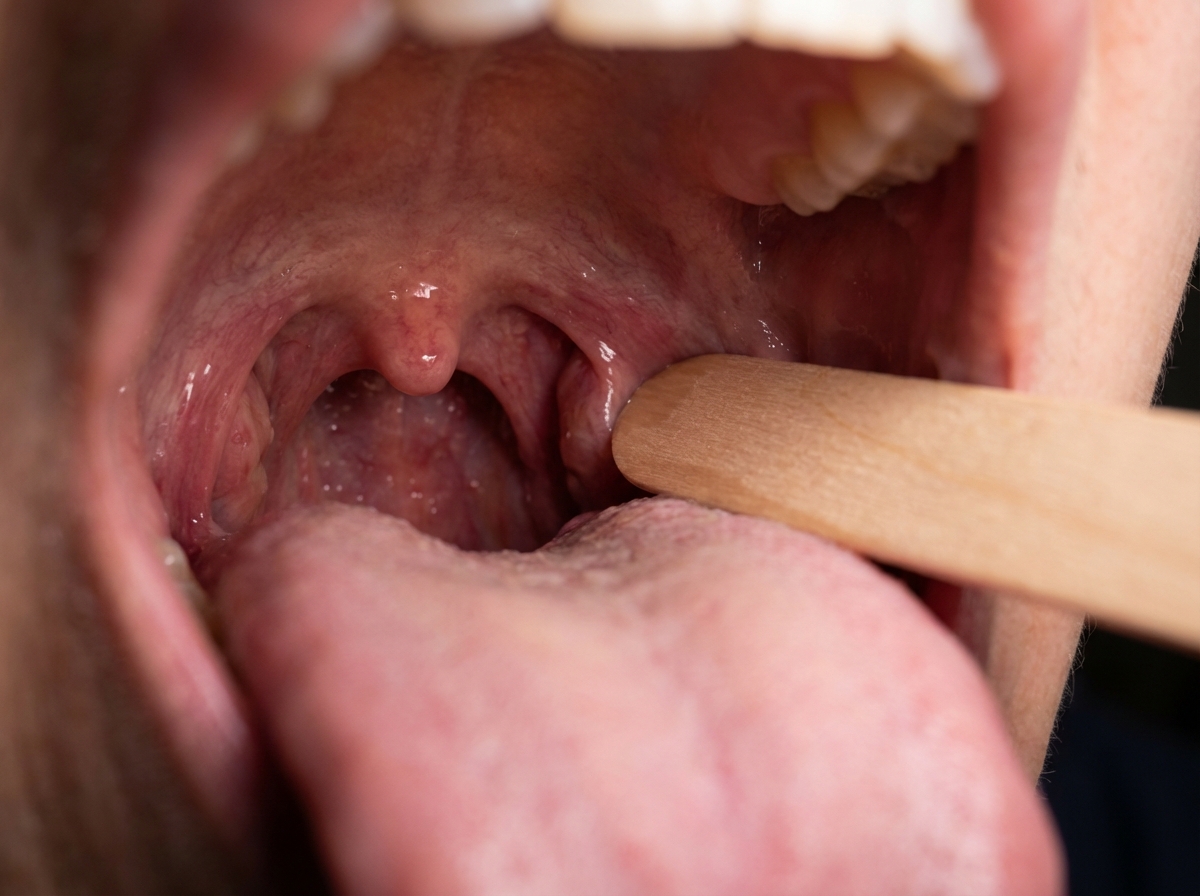
NEET-PG 2021 - Anatomy NEET-PG Practice Questions and MCQs
Question 71: A patient was admitted with skull base trauma. The doctor was testing the marked structure in the pharyngeal region. Which of the following nerves was being tested?
- A. Trigeminal nerve
- B. Facial nerve
- C. Glossopharyngeal nerve (Correct Answer)
- D. Vagus
- E. Hypoglossal nerve
Explanation: ***Glossopharyngeal nerve*** - The image shows a probe stimulating the posterior part of the **pharynx**, which elicits the **gag reflex**. - The afferent limb of the **gag reflex** is mediated primarily by the **glossopharyngeal nerve (CN IX)**, which detects sensation from the posterior tongue and pharynx. *Trigeminal nerve* - The **trigeminal nerve (CN V)** primarily mediates sensation from the face, teeth, and anterior two-thirds of the tongue, and motor control of the **muscles of mastication**. - It does not have a primary role in the sensation or reflex of the posterior pharyngeal wall. *Facial nerve* - The **facial nerve (CN VII)** is responsible for the **muscles of facial expression**, taste from the anterior two-thirds of the tongue, and parasympathetic innervation to several glands. - While it contributes to some aspects of swallowing, it is not the main sensory nerve for the gag reflex from the posterior pharynx. *Vagus* - The **vagus nerve (CN X)** provides the efferent limb of the gag reflex, causing pharyngeal muscle contraction. - However, the sensory input from the posterior pharynx (the afferent limb being tested by the probe) is primarily carried by the **glossopharyngeal nerve**. *Hypoglossal nerve* - The **hypoglossal nerve (CN XII)** provides motor innervation to the intrinsic and extrinsic muscles of the tongue. - While it is relevant in skull base trauma, it does not mediate sensation from the pharynx or the gag reflex being tested in the image.
Behavioral Science
1 questionsA child is learning the steps of hand hygiene. Which domain of learning is primarily involved?
NEET-PG 2021 - Behavioral Science NEET-PG Practice Questions and MCQs
Question 71: A child is learning the steps of hand hygiene. Which domain of learning is primarily involved?
- A. Cognitive
- B. Affective
- C. Psychomotor (Correct Answer)
- D. Affective & cognitive
- E. Cognitive & Psychomotor
Explanation: ***Psychomotor*** - The **psychomotor domain** involves the acquisition of skills that require coordination of mental and physical activities, such as performing a physical task like hand hygiene. - This domain focuses on the ability to carry out **physical movements** with precision and coordination. *Cognitive* - The **cognitive domain** primarily deals with intellectual understanding, knowledge, and problem-solving, which would involve understanding *why* hand hygiene is important, not the physical act itself. - While essential for appreciating the *rationale* behind the steps, it does not encompass the *execution* of the skill. *Affective* - The **affective domain** relates to emotions, attitudes, values, and appreciation for the task, such as a child's **willingness to perform hand hygiene**. - It involves feelings and motivations rather than the physical or intellectual mastery of a skill. *Affective & cognitive* - While both affective (motivation, willingness) and cognitive (understanding the importance) domains play a supportive role, neither directly addresses the **physical execution** of the learned steps. - The primary domain for *learning the steps* (i.e., actually performing the actions) is psychomotor. *Cognitive & Psychomotor* - While both cognitive (understanding) and psychomotor (physical execution) domains are involved in the overall learning process, the question specifically asks about **learning the steps**, which primarily emphasizes the **psychomotor** aspect. - The cognitive component is foundational but secondary to the actual motor skill acquisition being described.
Community Medicine
1 questionsA 55-year-old patient from Chhattisgarh presents with progressive muscle weakness, stiffness of both lower limbs, and complete paralysis. What is the most important history that should be asked?
NEET-PG 2021 - Community Medicine NEET-PG Practice Questions and MCQs
Question 71: A 55-year-old patient from Chhattisgarh presents with progressive muscle weakness, stiffness of both lower limbs, and complete paralysis. What is the most important history that should be asked?
- A. Medical history
- B. History of present illness
- C. Dietary history (Correct Answer)
- D. Socioeconomic history
Explanation: ***Dietary history*** - In a patient from **Chhattisgarh** with progressive muscle weakness and paralysis, a detailed **dietary history** is crucial to investigate potential **lathyrism**. - **Lathyrism** is a neurotoxic disorder caused by the consumption of **Lathyrus sativus (Khesari dal)**, a legume common in this region, especially during famines or droughts. *Medical history* - While important for general assessment, a broad medical history might not immediately pinpoint the specific dietary toxin relevant to progressive paralysis in this region. - It would likely cover existing conditions and medications, but not specifically focus on the unique risk of **lathyrism** from regional food consumption. *History of present illness* - This history would detail the onset, progression, and characteristics of the muscle weakness and paralysis. - While essential for understanding the clinical course, it would not inherently identify the underlying cause without specifically probing dietary factors that could lead to such symptoms in this geographical context. *Socioeconomic history* - This history can provide context about living conditions and access to food, which might indirectly suggest dietary patterns. - However, it does not directly ask about specific food intake or the consumption of potentially toxic staples like **Khesari dal**, which is a more direct and critical line of questioning.
ENT
1 questionsA woman visits the ENT outpatient department with complaints of nasal obstruction. On examination, greenish-black crusts were found in the nasal cavity covering the turbinates and septum, and she also had complete anosmia (lack of sense of smell). What other sign is most likely to be found on examination in this case?
NEET-PG 2021 - ENT NEET-PG Practice Questions and MCQs
Question 71: A woman visits the ENT outpatient department with complaints of nasal obstruction. On examination, greenish-black crusts were found in the nasal cavity covering the turbinates and septum, and she also had complete anosmia (lack of sense of smell). What other sign is most likely to be found on examination in this case?
- A. Hypertrophied inferior turbinate
- B. Polyp
- C. Foreign Body
- D. Roomy nasal cavity (Correct Answer)
Explanation: ***Roomy nasal cavity*** - The presence of **greenish-black crusts**, **anosmia**, and **nasal obstruction** in the context of chronic atrophy of the nasal mucosa strongly suggests **atrophic rhinitis**. - **Atrophic rhinitis** (also known as ozena) is characterized by progressive atrophy of the nasal mucosa, turbinates, and underlying bone, leading to an abnormally **wide and roomy nasal cavity**. *Hypertrophied inferior turbinate* - **Hypertrophied turbinates** typically result in nasal obstruction but would present with a narrow, rather than a roomy, nasal cavity. - There would also be no greenish-black crusts or complete anosmia with simple turbinate hypertrophy. *Polyp* - **Nasal polyps** are typically pale, glistening, grape-like masses that cause nasal obstruction and hyposmia but do not cause greenish-black crusts or a roomy nasal cavity. - They usually result from chronic inflammation and are often associated with conditions like allergic rhinitis or asthma. *Foreign Body* - A **nasal foreign body** would cause unilateral nasal obstruction and often a foul-smelling, purulent discharge, but not typically greenish-black crusts or a roomy nasal cavity. - It would also not explain the complete anosmia unless it severely obstructed both nasal passages for an extended period, which is less likely than atrophic rhinitis.
Ophthalmology
1 questionsWhat is the SI unit of illuminance (brightness of light on a surface)?
NEET-PG 2021 - Ophthalmology NEET-PG Practice Questions and MCQs
Question 71: What is the SI unit of illuminance (brightness of light on a surface)?
- A. Luminance
- B. Lux (Correct Answer)
- C. Candela
- D. Lumen
Explanation: ***Lux*** - **Lux** is the SI unit specifically designated for **illuminance**, which measures the **luminous flux** incident on a surface per unit area. - It quantifies the perceived **brightness** of light on a surface, taking into account the human eye's sensitivity to different wavelengths. *Luminance* - **Luminance** is a measure of the **intensity of light emitted or reflected from a surface** in a given direction, expressed in candelas per square meter (cd/m²). - It describes the brightness of a surface as perceived by the eye, but unlike illuminance, it is **independent of the incident light**. *Candela* - The **candela** is the SI base unit of **luminous intensity**, measuring the **power emitted by a light source in a particular direction**. - It doesn't describe the **brightness on a surface** but rather the output of the light source itself. *Lumen* - The **lumen** is the SI unit of **luminous flux**, representing the total amount of **visible light emitted by a source per unit time**. - While related to brightness, it describes the **total light output** of a source, not the illuminance on a specific surface.
Physiology
1 questionsWhich transporter is responsible for the absorption of glucose in the intestine when a person is given Oral Rehydration Solution (ORS)?
NEET-PG 2021 - Physiology NEET-PG Practice Questions and MCQs
Question 71: Which transporter is responsible for the absorption of glucose in the intestine when a person is given Oral Rehydration Solution (ORS)?
- A. GLP-1
- B. SGLT-2
- C. SGLT-1 (Correct Answer)
- D. GLUT-1
Explanation: ***SGLT-1 (Sodium-Glucose cotransporter 1)*** - **SGLT-1** is the primary transporter responsible for the **active absorption of glucose** and galactose from the intestinal lumen into enterocytes, utilizing the electrochemical gradient of sodium. - The mechanism of **ORS** relies on the co-transport of sodium and glucose via SGLT-1, which also facilitates the osmotic movement of water, making it effective for rehydration. *GLP-1 (Glucagon-like peptide-1)* - **GLP-1** is an **incretin hormone** that stimulates insulin secretion and inhibits glucagon release from the pancreas, playing a role in glucose homeostasis. - It is not a transporter for glucose absorption from the intestine but rather a **signaling molecule** involved in metabolic regulation. *SGLT-2 (Sodium-Glucose cotransporter 2)* - **SGLT-2** is predominantly found in the **renal tubules**, where it is responsible for the majority of glucose reabsorption from the filtrate back into the bloodstream. - While it is a glucose transporter, its primary role is in the **kidney**, not in intestinal glucose absorption. *GLUT-1 (Glucose Transporter 1)* - **GLUT-1** is found in all cell types and is primarily responsible for **basal glucose uptake** by cells, particularly high in red blood cells and at the blood-brain barrier. - It is a **facilitated diffusion transporter** and is not the primary mechanism for glucose absorption from the intestinal lumen.
Radiology
1 questionsA patient with a history of chronic ear infection now presents with manifestations, including headache and vomiting. A CT brain image is shown. What is the most probable diagnosis?

NEET-PG 2021 - Radiology NEET-PG Practice Questions and MCQs
Question 71: A patient with a history of chronic ear infection now presents with manifestations, including headache and vomiting. A CT brain image is shown. What is the most probable diagnosis?
- A. Meningitis
- B. Extradural Abscess
- C. Cerebral Abscess
- D. Temporal lobe Abscess (Correct Answer)
Explanation: ***Temporal lobe Abscess*** - The CT scan shows a **ring-enhancing lesion** with significant surrounding edema, which is characteristic of a **brain abscess**. - Given the history of a **chronic ear infection**, the temporal lobe is a common site for bacterial spread from the mastoid air cells or middle ear. *Meningitis* - Meningitis involves inflammation of the **meninges** and typically presents with diffuse changes on imaging, such as sulcal effacement or leptomeningeal enhancement, rather than a focal, encapsulated lesion. - While it can cause headache and vomiting, the CT image does not show findings typical of meningitis. *Extradural Abscess* - An extradural (or epidural) abscess is located **between the dura mater and the skull bone**. - It would typically appear as a collection outside the brain parenchyma, potentially causing mass effect but distinct from an intraparenchymal lesion seen in the image. *Cerebral Abscess* - The image does show a **cerebral abscess**, but this option is less specific than "Temporal lobe abscess." - The question asks for the **most probable diagnosis**, and combining the imaging findings with the patient's history of ear infection points to a specific location within the cerebrum.
Surgery
3 questionsA 35-year-old male presents with posterior epistaxis. Conservative management including nasal packing to stop the bleeding was unsuccessful. What is the next step in the management of this patient?
Which of the following is a common topical use of the medicine shown in the image?

A child who underwent a tonsillectomy started bleeding while lying in the ward post-operatively. Which of the following is the most appropriate management step?
NEET-PG 2021 - Surgery NEET-PG Practice Questions and MCQs
Question 71: A 35-year-old male presents with posterior epistaxis. Conservative management including nasal packing to stop the bleeding was unsuccessful. What is the next step in the management of this patient?
- A. Internal carotid artery (ICA) ligation
- B. Maxillary artery ligation
- C. External carotid artery (ECA) ligation
- D. Endoscopic sphenopalatine artery ligation (Correct Answer)
Explanation: ***Endoscopic sphenopalatine artery ligation*** - **Sphenopalatine artery ligation** is the most common surgical intervention for **posterior epistaxis** that is refractory to conservative management (e.g., nasal packing). - It is highly effective because the sphenopalatine artery is the major blood supply to the **posterior nasal cavity**. *Internal carotid artery (ICA) ligation* - **ICA ligation** is rarely performed for epistaxis due to the risk of **neurological complications**, such as stroke. - The ICA primarily supplies the brain, and its contribution to nasal bleeding is indirect and not typically the primary source. *Maxillary artery ligation* - The **maxillary artery** is the parent artery of the sphenopalatine artery, but ligating it more proximally carries a higher risk of complications and is less precise. - Due to the deep anatomical location, this approach is more invasive and technically challenging than sphenopalatine artery ligation. *External carotid artery (ECA) ligation* - **ECA ligation** is a more proximal and less selective procedure than sphenopalatine artery ligation, meaning other vessels may be ligated unnecessarily. - While it can reduce blood flow, it may not be as effective as direct sphenopalatine artery ligation for controlling severe posterior epistaxis, as collateral blood flow can still occur.
Question 72: Which of the following is a common topical use of the medicine shown in the image?
- A. Rhino cerebral mucormycosis
- B. Inlay type I myringoplasty
- C. Post-adenoidectomy to control bleeding (Correct Answer)
- D. Subglottic stenosis
Explanation: ***Post-adenoidectomy to control bleeding*** - The image shows **Neo-Synephrine (phenylephrine)**, a potent **alpha-adrenergic agonist** that causes **vasoconstriction**. - Its vasoconstrictive properties make it useful topically to reduce **bleeding** during and after surgical procedures like **adenoidectomy**. *Rhino cerebral mucormycosis* - This is a serious fungal infection requiring systemic antifungal therapy, often **amphotericin B**. Topical phenylephrine has no role in treating the infection itself. - While bleeding might be a symptom of mucormycosis, phenylephrine would only offer temporary symptomatic relief, not address the underlying fungal pathology. *Inlay type I myringoplasty* - Myringoplasty is a surgical procedure to repair a perforated eardrum. Topical phenylephrine is not indicated for this procedure. - The primary goal of this surgery is to reconstruct the **tympanic membrane**, and phenylephrine would not contribute to tissue healing or graft integration. *Subglottic stenosis* - This condition involves narrowing of the airway below the vocal cords, often requiring surgical intervention or corticosteroids. - Phenylephrine is a decongestant and vasoconstrictor, and as such, it does not have a therapeutic role in resolving the **fibrotic narrowing** characteristic of subglottic stenosis.
Question 73: A child who underwent a tonsillectomy started bleeding while lying in the ward post-operatively. Which of the following is the most appropriate management step?
- A. Take to OT, remove the clot & re-ligation (Correct Answer)
- B. Conservative management
- C. Take to OT & pressure packing
- D. Cautery
Explanation: ***Take to OT, remove the clot & re-ligation*** - **Post-tonsillectomy bleeding** is a surgical emergency requiring immediate intervention to prevent airway compromise and significant blood loss. - The most definitive management involves returning to the **operating theatre** for direct visualization, removal of any obstructing clots, and **re-ligation** of the bleeding vessel. *Conservative management* - **Conservative management** is generally insufficient for significant post-tonsillectomy bleeding, as it does not address the source of hemorrhage and can lead to severe complications. - While minor oozing might be observed, active bleeding often indicates a larger vessel injury that requires **surgical hemostasis**. *Take to OT & pressure packing* - While **pressure packing** can temporarily slow bleeding, it is not a definitive long-term solution as it does not directly identify and treat the bleeding vessel. - Furthermore, pharyngeal packing in a child carries a risk of **airway obstruction** and aspiration, making it less suitable than direct re-ligation. *Cautery* - **Cautery** is a method of hemostasis, but it is typically performed in the operating theatre under direct vision, often after clot removal. - It is not a stand-alone initial management step in the ward for active bleeding without proper surgical assessment and preparation.