Biostatistics
1 questionsA researcher wants to determine whether there is an association between CRP values and the risk of MI or cancer. Four relative risk (RR) values were plotted $(0.5,1.5,1.7,1.8)$ with respect to CRP levels. What conclusion can be drawn?
NEET-PG 2021 - Biostatistics NEET-PG Practice Questions and MCQs
Question 61: A researcher wants to determine whether there is an association between CRP values and the risk of MI or cancer. Four relative risk (RR) values were plotted $(0.5,1.5,1.7,1.8)$ with respect to CRP levels. What conclusion can be drawn?
- A. CRP has no relationship
- B. CRP decreases & disease decreases
- C. CRP increases disease/cancer risk (Correct Answer)
- D. No association in first interval
- E. CRP shows protective effect in first interval
Explanation: ***CRP increases disease/cancer risk*** - A **relative risk (RR)** greater than 1 indicates an increased risk of the outcome (MI or cancer) in the exposed group (higher CRP levels) compared to the unexposed group. - The plots show RRs of 1.5, 1.7, and 1.8, all of which are greater than 1, consistently indicating that higher CRP levels are associated with an elevated risk for MI or cancer. - The overall trend across the four intervals demonstrates a positive association between CRP and disease risk. *CRP has no relationship* - This conclusion is incorrect because three of the four plotted RR values (1.5, 1.7, 1.8) are above 1, indicating a positive association or increased risk. - An RR of 1 signifies no relationship, but the majority of values clearly deviate from 1, showing a definite association. *CRP decreases & disease decreases* - While one RR value (0.5) suggests a decreased risk, the majority of the given RRs (1.5, 1.7, 1.8) are greater than 1, indicating an increased risk. - This option would only be true if all or most RR values were less than 1, implying a protective effect, which is not the overall trend here. *No association in first interval* - The first interval shows an RR of 0.5. An RR of 1 indicates no association, while an RR of 0.5 actually indicates a **decreased risk or protective effect**, rather than no association. - Therefore, stating "no association" for the first interval is inaccurate given the definition of relative risk. *CRP shows protective effect in first interval* - While the first interval RR of 0.5 does suggest a protective effect in isolation, this option fails to capture the **overall conclusion** from all four data points. - When interpreting multiple RR values together, the predominant pattern (three values >1) indicates an overall increased risk, making this a misleading conclusion for the study as a whole.
Community Medicine
4 questionsIn an outbreak of encephalitis in a community, according to the Universal Immunization Schedule, what is the route of administration for the vaccine likely used for the infection?
Low air velocity will be measured by
At which level is the School Health Service typically provided?
In a post-Diwali air pollution index chart, an AQI value of 470 was recorded. What level of air pollution does this indicate?
NEET-PG 2021 - Community Medicine NEET-PG Practice Questions and MCQs
Question 61: In an outbreak of encephalitis in a community, according to the Universal Immunization Schedule, what is the route of administration for the vaccine likely used for the infection?
- A. Live & subcutaneous
- B. Killed & intramuscular
- C. Live & intramuscular (Correct Answer)
- D. Killed & subcutaneous
Explanation: ***Live & intramuscular*** - The most common cause of encephalitis in outbreaks included in the Universal Immunization Schedule is **Japanese Encephalitis (JE)**, for which the **live attenuated SA 14-14-2 vaccine** is administered **intramuscularly**. - As per the **National Immunization Schedule of India (current UIP)**, JE vaccine is given via **IM route** at 9-12 months of age. - **Live attenuated vaccines** stimulate a strong, long-lasting immune response, often with a single dose. *Incorrect: Live & subcutaneous* - While the older **inactivated JE vaccine** (used before 2013) was given subcutaneously, the **current live attenuated SA 14-14-2 vaccine** used in India's UIP is administered **intramuscularly**. - Subcutaneous route was appropriate for the older killed vaccine formulation but not for the current live vaccine. *Incorrect: Killed & intramuscular* - The current JE vaccine in India's UIP is **live attenuated, not killed**. - While killed vaccines are often given intramuscularly (e.g., inactivated polio), the primary vaccine for encephalitis outbreaks is the **live SA 14-14-2 vaccine**. - Killed vaccines typically require **multiple doses** and boosters to achieve adequate immunity. *Incorrect: Killed & subcutaneous* - Although the **older inactivated (killed) JE vaccine** was given subcutaneously before 2013, this has been replaced in the UIP. - The **current standard** is the live attenuated vaccine given intramuscularly, which provides better immunogenicity and requires fewer doses.
Question 62: Low air velocity will be measured by
- A. Beckmann thermometer
- B. Globe thermometer
- C. Kata thermometer (Correct Answer)
- D. Wet bulb thermometer
Explanation: ***Kata thermometer*** - A **Kata thermometer** is specifically designed to measure **low air velocities** by assessing the cooling power of the air. - It measures the rate of heat loss from a heated bulb, which is influenced by air movement, providing an indirect measure of low air speed. *Beckmans thermometer* - A **Beckmann thermometer** is used for precise measurement of **small temperature differences** and changes, not air velocity. - It has a large range of mercury in its reservoir and can be adjusted to different starting temperatures, making it unsuitable for air flow. *Globe thermometer* - A **globe thermometer** primarily measures **radiant heat** in an environment. - It consists of a thermometer bulb inside a black sphere, used to assess the mean radiant temperature and effective temperature, not air velocity. *Wet thermometer* - A **wet-bulb thermometer** is part of a psychrometer used to measure **humidity**. - It measures the temperature of evaporation and is used to determine the **dew point** and **relative humidity**, not air velocity.
Question 63: At which level is the School Health Service typically provided?
- A. Subdistrict
- B. Subcentre
- C. District
- D. PHC (Correct Answer)
Explanation: ***Correct Option: PHC*** - The **Primary Health Centre (PHC)** is the most common and appropriate level for providing the School Health Service. - PHCs serve as the first point of contact for healthcare in India, making them ideal for reaching a large number of schools within their catchment area for **preventive and basic curative care**. - Under the School Health Program (part of Ayushman Bharat initiative), PHCs are designated to provide comprehensive health services to schools in their catchment areas. *Incorrect Option: Subdistrict* - The subdistrict level, which typically includes Community Health Centers (CHCs) and Taluka hospitals, provides more specialized services than PHCs. - While it can support school health programs, it's not the primary or most frequent point of service delivery for routine school health activities. *Incorrect Option: Subcentre* - Subcentres are the most peripheral health facilities, offering basic care and outreach services, often managed by ANMs and ASHA workers. - While they contribute to community health, their capacity is generally limited for comprehensive School Health Services, which often require a broader range of resources available at a PHC. *Incorrect Option: District* - The district level oversees the entire health system within its jurisdiction and provides tertiary or advanced care through district hospitals. - School Health Services are coordinated at this level, but direct provision of routine health checks and services mainly occurs at the more localized PHC level.
Question 64: In a post-Diwali air pollution index chart, an AQI value of 470 was recorded. What level of air pollution does this indicate?
- A. Moderate
- B. Very poor
- C. Poor
- D. Severe (Correct Answer)
Explanation: ***Severe*** - An **AQI value of 470** falls into the **401-500 range**, which is classified as severe according to most air quality index standards. - This level indicates a high risk of respiratory effects on healthy people and serious health impacts on those with lung diseases. *Moderate* - The moderate category typically spans AQI values from **51 to 100**, indicating acceptable air quality with some risk for sensitive individuals. - An AQI of 470 is significantly higher than this range. *Very poor* - The very poor category generally ranges from AQI values of **301 to 400**, suggesting health warnings of emergency conditions. - While concerning, an AQI of 470 exceeds this level, indicating an even more critical situation. *Poor* - The poor category usually covers AQI values from **201 to 300**, signifying a likely impact on the health of vulnerable groups. - An AQI of 470 is much higher than the poor category, indicating a more hazardous level of pollution.
Internal Medicine
1 questionsA male presents with urethral discharge as shown in the figure. What is the most likely cause?
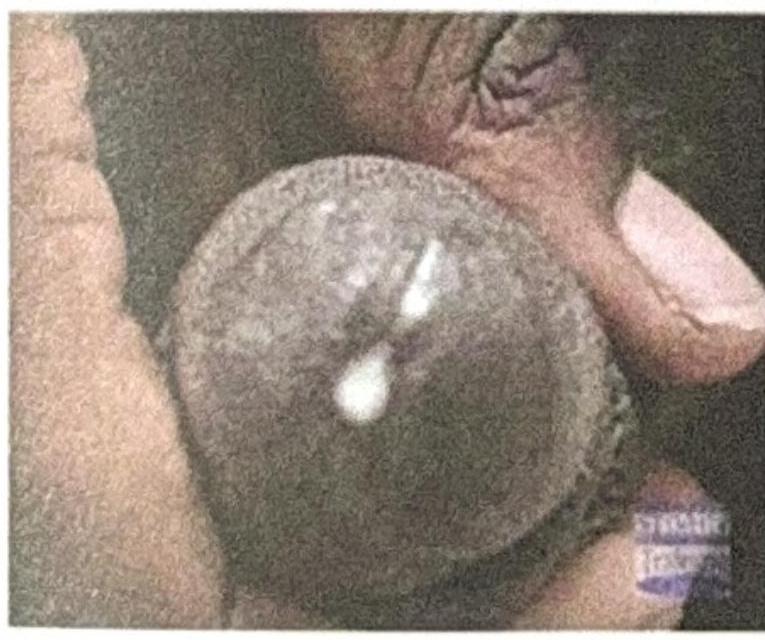
NEET-PG 2021 - Internal Medicine NEET-PG Practice Questions and MCQs
Question 61: A male presents with urethral discharge as shown in the figure. What is the most likely cause?
- A. HIV
- B. Haemophilus ducreyi
- C. Gonorrhea (Correct Answer)
- D. Syphilis
Explanation: ***Gonorrhea*** - The image depicts **purulent urethral discharge**, a classic symptom frequently seen in **gonococcal urethritis**. - **Neisseria gonorrhoeae** commonly causes urethritis with a thick, yellowish, or greenish discharge. *HIV* - HIV primarily affects the immune system and does not typically present with **gonorrhea-like urethral discharge** as a direct symptom. - While HIV can increase susceptibility to other STIs, the discharge itself is not a direct manifestation of HIV infection. *Haemophilus ducreyi* - This bacterium is the causative agent of **chancroid**, which presents as painful genital ulcers, not urethral discharge. - **Chancroid ulcers** are typically soft, ragged, and associated with tender inguinal lymphadenopathy. *Syphilis* - Syphilis, caused by **Treponema pallidum**, presents with a **painless chancre** in its primary stage, not urethral discharge. - Later stages of syphilis involve rashes, neurological symptoms, or gummas, which are distinct from the penile discharge shown.
Management
1 questionsFor evaluating the functioning of a health center, which is the most important determinant for assessing clinical management?
NEET-PG 2021 - Management NEET-PG Practice Questions and MCQs
Question 61: For evaluating the functioning of a health center, which is the most important determinant for assessing clinical management?
- A. Structure
- B. Input
- C. Process (Correct Answer)
- D. Outcome
- E. Output
Explanation: ***Process*** - Evaluating the **process** involves assessing the actual delivery of care, including adherence to clinical guidelines, patient-provider interactions, and the timeliness and appropriateness of services. This directly reflects the quality of **clinical management**. - It focuses on *how* care is provided, which is crucial for identifying areas of strength and weakness in the day-to-day operations of a health center's clinical functions. *Structure* - **Structure** refers to the resources and settings in which care is provided, such as facilities, equipment, staff qualifications, and organizational policies. - While important, a good structure does not guarantee good clinical management; the structure offers the potential for quality, but the actual delivery of care (process) is what matters most for assessment. *Input* - **Input** is a broad term often overlapping with structure, referring to the resources poured into the system like funding, staff, and materials. - Like structure, input provides the necessary components, but evaluating them alone does not directly assess the *effectiveness* or *quality* of clinical management. *Output* - **Output** refers to the immediate results of service delivery, such as the number of patients seen, procedures performed, or services rendered. - While outputs can be measured, they represent quantity rather than quality and do not directly assess the appropriateness or effectiveness of clinical management itself. *Outcome* - **Outcome** measures the end results of care, such as patient health status, satisfaction, or mortality rates. - While outcomes are critical, they are often influenced by many factors beyond direct clinical management (e.g., patient adherence, social determinants of health) and may not immediately reflect the quality of the *process* of care delivery itself.
Microbiology
1 questionsA group of people ate patty late at night and experienced bouts of vomiting early in the morning. What is the most likely cause?
NEET-PG 2021 - Microbiology NEET-PG Practice Questions and MCQs
Question 61: A group of people ate patty late at night and experienced bouts of vomiting early in the morning. What is the most likely cause?
- A. Escherichia coli
- B. Staphylococcus aureus (Correct Answer)
- C. Lactobacillus
- D. Bacillus cereus
Explanation: ***Staphylococcus aureus*** - This scenario describes classic **Staphylococcal food poisoning** with rapid onset of vomiting (4-8 hours after ingestion). - *S. aureus* produces preformed **heat-stable enterotoxins** in contaminated foods left at room temperature, particularly **meat products, pastries, and cream-filled items**. - Clinical hallmark: **Prominent vomiting** with minimal diarrhea and rapid resolution (24 hours). - The timing (late night eating → early morning vomiting) and food item (patty) make this the **definitive diagnosis**. *Escherichia coli* - Most pathogenic *E. coli* strains (ETEC, EHEC, EPEC) have **longer incubation periods** (1-3 days). - Typically presents with **diarrhea as the predominant symptom**, not isolated vomiting. - The rapid onset of symptoms excludes direct bacterial infection and indicates preformed toxin ingestion. *Lactobacillus* - These are **probiotic bacteria** and part of normal human flora (gut, vagina, mouth). - Not pathogenic and not associated with food poisoning. - Used therapeutically to prevent antibiotic-associated diarrhea. *Bacillus cereus* - While *B. cereus* has an emetic form with rapid onset (1-5 hours), it is **classically associated with reheated fried rice** and starchy foods, not meat products. - The emetic toxin (cereulide) is produced in improperly stored rice, not patties. - The food item (patty) clearly points to *S. aureus* rather than *B. cereus*.
Obstetrics and Gynecology
1 questionsA pregnant woman, whose niece contracted varicella while living in the same house, tested negative for serum antibodies to varicella. What does this result indicate?
NEET-PG 2021 - Obstetrics and Gynecology NEET-PG Practice Questions and MCQs
Question 61: A pregnant woman, whose niece contracted varicella while living in the same house, tested negative for serum antibodies to varicella. What does this result indicate?
- A. She is susceptible to zoster
- B. She is immune to zoster
- C. She is immune to chicken pox
- D. She is susceptible to chickenpox (Correct Answer)
Explanation: ***She is susceptible to chickenpox*** - A negative test for serum antibodies to varicella indicates a **lack of protective immunity** to the varicella-zoster virus (VZV). - This woman has not previously been infected with VZV or vaccinated, making her **susceptible to primary infection (chickenpox)** upon exposure. *She is susceptible to zoster* - **Zoster (shingles)** is caused by the **reactivation of latent VZV** in individuals who have previously had chickenpox. - Since she tested negative for antibodies, she has not had chickenpox and thus **cannot harbor latent VZV** to reactivate. *She is immune to zoster* - Immunity to zoster implies that she has had chickenpox and subsequently developed a robust immune response to prevent viral reactivation. - A negative antibody test directly contradicts this, as it signifies no prior exposure or immune response. *She is immune to chicken pox* - Immunity to chickenpox is established by the presence of **varicella antibodies**, which are absent in this case. - A negative antibody result means she is **not immune** and is therefore at risk of contracting chickenpox if exposed.
Pediatrics
1 questionsA child is a known case of HIV with a CD4 count of 50 . Which of the following vaccines should be avoided in this child?
NEET-PG 2021 - Pediatrics NEET-PG Practice Questions and MCQs
Question 61: A child is a known case of HIV with a CD4 count of 50 . Which of the following vaccines should be avoided in this child?
- A. MMR
- B. TT
- C. BCG (Correct Answer)
- D. DPT
- E. OPV
Explanation: ***BCG*** - **BCG vaccine** contains live attenuated bacteria and is **absolutely contraindicated** in severely immunocompromised individuals, such as an **HIV-positive child with a CD4 count of 50**, due to the risk of disseminated BCG infection. - A **CD4 count of 50** indicates severe immunosuppression (AIDS stage), making live vaccines like BCG extremely unsafe. - **This is the most strongly contraindicated vaccine** in this clinical scenario. *MMR* - **MMR (Measles, Mumps, Rubella) vaccine** is a live attenuated vaccine that is generally contraindicated in **severely immunocompromised HIV patients** with **CD4 count <200 cells/µL**. - With a **CD4 count of 50**, this vaccine would typically be contraindicated due to severe immunosuppression. - However, **BCG carries a higher risk** of disseminated infection and is more strongly contraindicated. *OPV* - **OPV (Oral Polio Vaccine)** is a live attenuated vaccine and is contraindicated in **immunocompromised individuals** including those with severe HIV infection. - However, most vaccination programs now use **IPV (Inactivated Polio Vaccine)** which is safe for HIV-positive children. - **BCG remains the most critical contraindication** in severe immunosuppression. *TT* - **TT (Tetanus Toxoid)** is an inactivated vaccine containing no live organisms and is **safe for immunocompromised individuals**, including those with HIV. - Inactivated vaccines are generally recommended for HIV-positive individuals to provide protection against common infections. *DPT* - **DPT (Diphtheria, Pertussis, Tetanus)** is an inactivated vaccine and is **safe for immunocompromised children** with HIV. - It does not pose a risk of infection from the vaccine itself and is crucial for protecting against these severe childhood diseases.