Anatomy
1 questionsWhile performing a lumbar puncture on a patient presenting with fever, neck rigidity, and altered sensorium, what is the last structure to be encountered by the needle?
NEET-PG 2021 - Anatomy NEET-PG Practice Questions and MCQs
Question 161: While performing a lumbar puncture on a patient presenting with fever, neck rigidity, and altered sensorium, what is the last structure to be encountered by the needle?
- A. Dura mater
- B. Pia mater
- C. Ligamentum flavum
- D. Arachnoid membrane (Correct Answer)
- E. Supraspinous ligament
Explanation: ***Arachnoid membrane*** - The **arachnoid membrane** is the innermost layer the needle punctures before entering the **subarachnoid space** where cerebrospinal fluid (CSF) is collected. - The needle passes through skin, subcutaneous tissue, supraspinous ligament, interspinous ligament, ligamentum flavum, epidural space, and dura mater, with arachnoid mater being the last barrier. *Dura mater* - The **dura mater** is pierced **before** the arachnoid membrane and before entering the subarachnoid space. - It is a tough, fibrous membrane forming the outermost layer of the **meninges**. *Pia mater* - The **pia mater** is in direct contact with the spinal cord and is **not punctured** during a properly performed lumbar puncture. - It is the innermost meningeal layer, adherent to the neural tissue itself. *Ligamentum flavum* - The **ligamentum flavum** is encountered **early** in the lumbar puncture procedure, prior to the epidural space and the meningeal layers. - It is a strong ligament connecting the laminae of adjacent vertebrae. *Supraspinous ligament* - The **supraspinous ligament** is one of the **first structures** encountered during lumbar puncture, after penetrating skin and subcutaneous tissue. - It connects the spinous processes of adjacent vertebrae and is pierced well before reaching the meningeal layers.
Anesthesiology
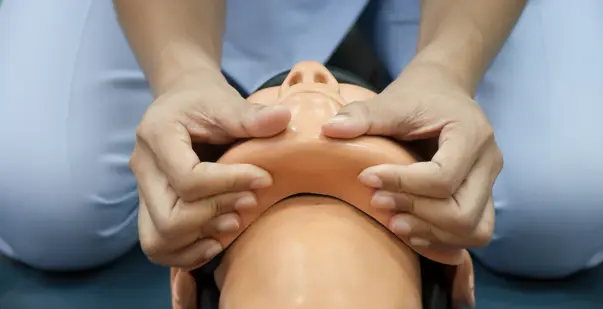
3 questionsThe procedure shown in the image is performed to maintain the airway. Which of the following techniques is being used?
A young male was administered regional anesthesia with 0.25% bupivacaine. The patient became unresponsive, and the pulse became unrecordable. What is the best management in this situation?
A patient is undergoing surgery where anesthesia is maintained with halothane. The patient develops hyperthermia and muscle rigidity. Which of the following agents is most likely responsible?
NEET-PG 2021 - Anesthesiology NEET-PG Practice Questions and MCQs
Question 161: The procedure shown in the image is performed to maintain the airway. Which of the following techniques is being used?
- A. Jaw thrust (Correct Answer)
- B. Head stabilization
- C. In line manual stabilization
- D. Head tilt chin lift
Explanation: ***Jaw thrust*** - The image distinctly shows a rescuer performing a **jaw thrust maneuver** by placing fingers under the angles of the patient's mandible and displacing the jaw forward. - This technique is used to open the airway by lifting the tongue off the posterior pharyngeal wall, especially in cases of suspected **cervical spine injury**. *Head stabilization* - While important in trauma, **head stabilization alone** does not open the airway; it prevents movement without actively repositioning the jaw or head. - Head stabilization is a supportive technique, often used in conjunction with airway maneuvers, but it is not the primary airway-opening technique depicted. *In line manual stabilization* - **In-line manual stabilization** is a method where a rescuer holds the patient's head and neck in a neutral, in-line position to prevent movement, particularly during transport or other interventions. - This technique is used to protect the spine from further injury and prevents any movement from the head or neck. *Head tilt chin lift* - The **head tilt-chin lift** involves tilting the head back and lifting the chin, which is a different hand placement and body movement than what is shown. - This maneuver is contraindicated in suspected cervical spine injuries due to the risk of exacerbating spinal cord damage.
Question 162: A young male was administered regional anesthesia with 0.25% bupivacaine. The patient became unresponsive, and the pulse became unrecordable. What is the best management in this situation?
- A. ECPR with calcium
- B. ECPR with dobutamine
- C. ECPR with 20% intralipid (Correct Answer)
- D. ECPR with sodium bicarbonate
Explanation: ***ECPR with 20% intralipid*** - The scenario describes **Local Anesthetic Systemic Toxicity (LAST)**, likely due to bupivacaine, leading to cardiovascular collapse. - **Intralipid 20%** is the first-line treatment for LAST-induced cardiovascular toxicity, as it acts as a lipid sink for the lipophilic local anesthetic. *ECPR with calcium* - While calcium may be used in certain cardiac arrest scenarios, it is **not the primary treatment for bupivacaine-induced cardiovascular collapse** and LAST. - Calcium might offer some cardiac support but does not directly neutralize the local anesthetic's toxic effects. *ECPR with dobutamine* - **Dobutamine is an inotropic agent** used to improve cardiac contractility but is not indicated as a primary rescue therapy for severe LAST. - It would not address the underlying toxicity caused by bupivacaine and could potentially worsen the situation by increasing myocardial oxygen demand without reversing toxin effects. *ECPR with sodium bicarbonate* - **Sodium bicarbonate** is used to treat metabolic acidosis and can be beneficial in certain drug overdoses to enhance excretion or stabilize cardiac membranes. - However, it is **not the primary or most effective treatment for bupivacaine-induced LAST** and cardiovascular collapse compared to lipid emulsion therapy.
Question 163: A patient is undergoing surgery where anesthesia is maintained with halothane. The patient develops hyperthermia and muscle rigidity. Which of the following agents is most likely responsible?
- A. Cisatracurium
- B. D-tubocurarine
- C. Rocuronium
- D. Suxamethonium (Correct Answer)
Explanation: ***Suxamethonium*** - **Suxamethonium** (succinylcholine) is a depolarizing neuromuscular blocker that can trigger **malignant hyperthermia** in susceptible individuals, characterized by **hyperthermia** and **muscle rigidity**. - This adverse reaction occurs due to an uncontrolled release of calcium from the **sarcoplasmic reticulum** in skeletal muscle, leading to sustained muscle contraction and increased metabolism. *Cisatracurium* - **Cisatracurium** is a non-depolarizing neuromuscular blocker, which works by competing with acetylcholine at the **neuromuscular junction**. - It does not typically cause **malignant hyperthermia** and is less likely to be associated with hyperthermia or muscle rigidity as a direct side effect. *D-tubocurarine* - **D-tubocurarine** is a non-depolarizing neuromuscular blocker that causes muscle relaxation by blocking nicotinic acetylcholine receptors. - While it can cause **histamine release**, leading to hypotension and bronchospasm, it is not implicated in triggering **malignant hyperthermia**. *Rocuronium* - **Rocuronium** is a rapid-onset, intermediate-acting non-depolarizing neuromuscular blocker, used for muscle relaxation during surgery. - Like other non-depolarizing agents, it does not directly trigger **malignant hyperthermia** and is not associated with hyperthermia and muscle rigidity in this context.
Microbiology
1 questionsA hair perforation test was performed on a yeast isolate, and the result was positive. Which of the following organisms is associated with a positive hair perforation test?
NEET-PG 2021 - Microbiology NEET-PG Practice Questions and MCQs
Question 161: A hair perforation test was performed on a yeast isolate, and the result was positive. Which of the following organisms is associated with a positive hair perforation test?
- A. Candida tropicalis
- B. Candida glabrata
- C. Candida parapsilosis
- D. Candida albicans (Correct Answer)
Explanation: ***Candida albicans*** - The **hair perforation test** is a classic diagnostic test specifically used to identify *Candida albicans*, which characteristically produces **conical projections** when incubated with sterilized blonde hair in water at room temperature. - This test has historically been used as a simple, rapid method for **presumptive identification** of *C. albicans* from other Candida species, indicating the organism's ability to produce **keratinolytic enzymes**. *Candida tropicalis* - *Candida tropicalis* gives a **negative hair perforation test** and does not produce the characteristic hair perforations seen with *C. albicans*. - While it can form **pseudohyphae** and true hyphae, it can be differentiated from *C. albicans* using this test among others. *Candida glabrata* - *Candida glabrata* does **NOT** produce a positive hair perforation test and typically remains in **yeast form**. - It is distinguished from other Candida species by its **smaller cell size** and inability to form germ tubes or hair perforations. *Candida parapsilosis* - *Candida parapsilosis* also gives a **negative hair perforation test** and does not produce hair perforations. - This species can form **pseudohyphae** but the hair perforation test helps distinguish it from *C. albicans*.
OB/GYN
1 questionsA 23-year-old primigravida lives in the same house as her school-going nephew, who contracted a varicella infection. The woman approached the medical center and was tested for varicella antibodies, with a negative result. Which of the following statements are true?
NEET-PG 2021 - OB/GYN NEET-PG Practice Questions and MCQs
Question 161: A 23-year-old primigravida lives in the same house as her school-going nephew, who contracted a varicella infection. The woman approached the medical center and was tested for varicella antibodies, with a negative result. Which of the following statements are true?
- A. She is susceptible to zoster
- B. She is immune to chickenpox
- C. She is susceptible to chickenpox (Correct Answer)
- D. She is immune to zoster
Explanation: ***She is susceptible to chickenpox*** - A **negative varicella antibody test** indicates she has not previously been exposed to the **varicella-zoster virus (VZV)** and therefore lacks protective immunity. - As a **primigravida** living with an actively infected individual, she is at high risk of contracting primary chickenpox due to her susceptible status. *She is susceptible to zoster* - **Zoster (shingles)** is caused by the **reactivation of latent VZV** from a previous chickenpox infection, which she has not had. - Without a prior chickenpox infection, there is no dormant virus to reactivate, so susceptibility to zoster is not applicable. *She is immune to chickenpox* - **Immunity to chickenpox** is conferred by prior infection or vaccination, which would result in a **positive varicella antibody test**. - Her **negative antibody test** directly refutes the claim of immunity. *She is immune to zoster* - **Immunity to zoster** is not a primary concept; rather, zoster develops from the reactivation of latent VZV after a primary infection with chickenpox. - Since she is susceptible to chickenpox, she cannot be immune to zoster, which requires prior infection.
Pathology
1 questionsA child undergoes prophylactic irradiation as preparation for bone marrow transplantation (BMT) for treatment of acute lymphoblastic leukemia (ALL). Which of the following cell types will be least affected by the radiation?
NEET-PG 2021 - Pathology NEET-PG Practice Questions and MCQs
Question 161: A child undergoes prophylactic irradiation as preparation for bone marrow transplantation (BMT) for treatment of acute lymphoblastic leukemia (ALL). Which of the following cell types will be least affected by the radiation?
- A. Spermatogonia
- B. Bone marrow
- C. Intestinal epithelial cells
- D. Neurons (Correct Answer)
Explanation: ***Neurons*** - **Neurons** are highly differentiated cells with very low rates of cell division in adults. As radiation primarily targets rapidly dividing cells [4], **neurons are least susceptible** to radiation damage. - While high doses of radiation can eventually damage neurons, their **radioresistance** is significantly higher compared to rapidly proliferating tissues. *Spermatogonia* - **Spermatogonia** are germ cells that undergo continuous and rapid division to produce sperm, making them **highly sensitive to radiation** [2]. - Radiation exposure can lead to **sterility** due to the destruction of these rapidly dividing cells [2]. *Bone marrow* - The **bone marrow** contains hematopoietic stem cells that are responsible for the continuous production of blood cells, involving **rapid cell division** [3]. - It is one of the most **radiosensitive tissues** [1], and radiation exposure can lead to **myelosuppression** and pancytopenia. *Intestinal epithelial cells* - **Intestinal epithelial cells** have a high turnover rate due to their constant shedding and replacement [5], making them **very sensitive to radiation** [1]. - Radiation damage to these cells can cause **mucositis, nausea, vomiting, and diarrhea**. **References:** [1] Cross SS. Underwood's Pathology: A Clinical Approach. 6th ed. (Basic Pathology) introduces the student to key general principles of pathology, both as a medical science and as a clinical activity with a vital role in patient care. Part 2 (Disease Mechanisms) provides fundamental knowledge about the cellular and molecular processes involved in diseases, providing the rationale for their treatment. Part 3 (Systematic Pathology) deals in detail with specific diseases, with emphasis on the clinically important aspects., pp. 112-113. [2] Cross SS. Underwood's Pathology: A Clinical Approach. 6th ed. (Basic Pathology) introduces the student to key general principles of pathology, both as a medical science and as a clinical activity with a vital role in patient care. Part 2 (Disease Mechanisms) provides fundamental knowledge about the cellular and molecular processes involved in diseases, providing the rationale for their treatment. Part 3 (Systematic Pathology) deals in detail with specific diseases, with emphasis on the clinically important aspects., pp. 113-114. [3] Kumar V, Abbas AK, et al.. Robbins and Cotran Pathologic Basis of Disease. 9th ed. Inflammation and Repair, pp. 112-113. [4] Kumar V, Abbas AK, et al.. Robbins and Cotran Pathologic Basis of Disease. 9th ed. Central Nervous System Synapse, pp. 436-437. [5] Cross SS. Underwood's Pathology: A Clinical Approach. 6th ed. (Basic Pathology) introduces the student to key general principles of pathology, both as a medical science and as a clinical activity with a vital role in patient care. Part 2 (Disease Mechanisms) provides fundamental knowledge about the cellular and molecular processes involved in diseases, providing the rationale for their treatment. Part 3 (Systematic Pathology) deals in detail with specific diseases, with emphasis on the clinically important aspects., pp. 79-80.
Radiology
2 questionsA patient presents with abdominal distension. Based on the X-ray, which of the following bowel loops are dilated?

A 30-year-old female presents with sterile pyuria. The radiograph below is provided. What is the most likely diagnosis?

NEET-PG 2021 - Radiology NEET-PG Practice Questions and MCQs
Question 161: A patient presents with abdominal distension. Based on the X-ray, which of the following bowel loops are dilated?
- A. Jejunum (Correct Answer)
- B. Duodenum
- C. Transverse colon
- D. Ileum
Explanation: ***Jejunum*** - The image shows dilated small bowel loops with prominent **valvulae conniventes** (also known as plicae circulares), which are characteristic of the jejunum. - These folds are typically closely spaced and extend across the entire lumen, giving a "coiled spring" or "stack of coins" appearance on plain radiographs when dilated. *Duodenum* - While the duodenum is part of the small bowel, it is the most proximal segment and typically not as diffusely involved in generalized small bowel dilation as the jejunum and ileum unless the obstruction is very high. - The valvulae conniventes in the duodenum are less prominent and more sparsely distributed compared to the jejunum. *Transverse colon* - The transverse colon is part of the large intestine and would show **haustra**, which are sacculations that do not extend across the entire lumen and are typically more widely spaced than valvulae conniventes. - The dilated loops in the image clearly show mucosal folds that span the entire width of the bowel. *Ileum* - The ileum also has valvulae conniventes, but they are less prominent and more sparsely distributed than in the jejunum. - In cases of small bowel obstruction or dilation, the jejunum characteristically shows more distinct and closely packed valvulae conniventes, making it the most identifiable segment in this image.
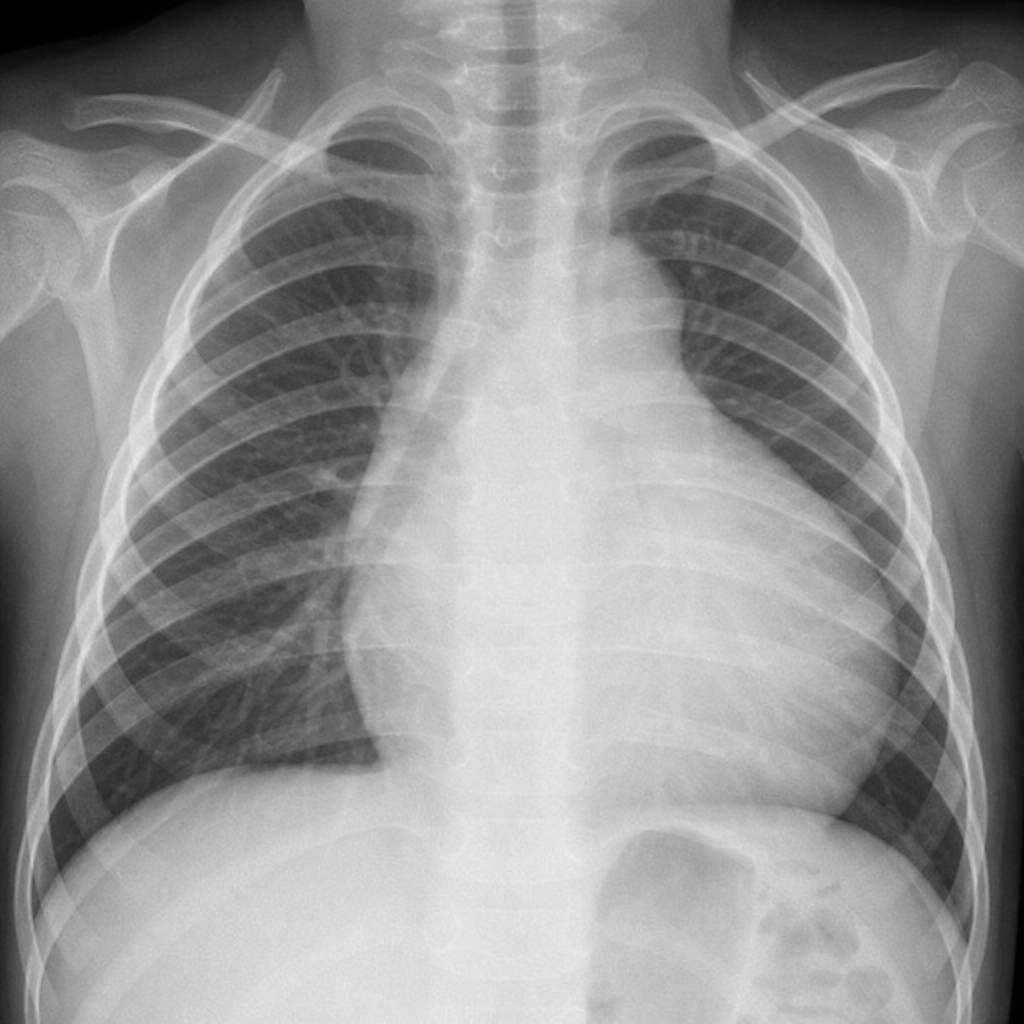
Question 162: A 30-year-old female presents with sterile pyuria. The radiograph below is provided. What is the most likely diagnosis?
- A. Psoas Calcification
- B. Putty Kidney (Correct Answer)
- C. Staghorn calculus
- D. Nephrocalcinosis
Explanation: ***Putty Kidney*** - The image visible in the question shows a **caseous calcification** of the renal parenchyma, which is characteristic of a "putty kidney," a late manifestation of **renal tuberculosis**. - **Sterile pyuria** is commonly associated with renal tuberculosis, where Mycobacterium tuberculosis infection leads to chronic inflammation and granuloma formation in the kidney, eventually resulting in caseous necrosis and calcification. *Psoas Calcification* - This typically refers to calcification within the **psoas muscle**, which would appear as a linear or amorphous calcification along the path of the muscle, an appearance not consistent with the image. - While psoas abscesses can calcify, they would not manifest as widespread renal parenchymal calcification and are not specifically linked to sterile pyuria in this manner. *Staghorn Calculus* - A **staghorn calculus** is a large, branched kidney stone that fills all or part of the renal pelvis and calyces, resembling the antlers of a stag. - While these stones are composed of mineral salts and would be radiopaque, their morphology is distinctly different from the diffuse, caseous calcification seen in the image. *Nephrocalcinosis* - **Nephrocalcinosis** is a condition characterized by diffuse microcalcifications throughout the renal parenchyma, usually affecting the tubules. - The calcifications in the provided image appear more nodular and clustered, consistent with late-stage tuberculous caseous necrosis, rather than the fine, diffuse pattern of nephrocalcinosis.
Surgery
1 questionsA patient involved in a Road Traffic Accident (RTA) presents with: - Absent air entry on the left side of the chest. - Tenderness in the left lower chest wall. What is the next step in the Emergency Medicine Room (EMR) management?
NEET-PG 2021 - Surgery NEET-PG Practice Questions and MCQs
Question 161: A patient involved in a Road Traffic Accident (RTA) presents with: - Absent air entry on the left side of the chest. - Tenderness in the left lower chest wall. What is the next step in the Emergency Medicine Room (EMR) management?
- A. X-ray (Correct Answer)
- B. FAST
- C. DPL
- D. CT
Explanation: ***X-ray*** - In a **hemodynamically stable** patient with absent air entry and chest wall tenderness post-RTA, a **chest X-ray** is the most appropriate initial imaging in the EMR. - It quickly diagnoses conditions like **pneumothorax**, **hemothorax**, or **rib fractures** and guides management decisions. - **Important**: Clinical assessment for **tension pneumothorax** (hypotension, tracheal deviation, distended neck veins) must be done first. If tension pneumothorax is suspected, **immediate needle decompression** is required without waiting for imaging. - X-ray is **rapidly available** and provides crucial information for trauma management in stable patients. *FAST* - **Focused Assessment with Sonography for Trauma (FAST)** is primarily used to detect **intra-abdominal free fluid** (hemoperitoneum) or pericardial effusion in trauma. - While valuable in RTA evaluation, it is not the primary diagnostic tool for absent air entry in the chest. - FAST has limited sensitivity for **pneumothorax** and does not visualize **rib fractures** in detail. *DPL* - **Diagnostic Peritoneal Lavage (DPL)** is an invasive procedure used to detect **intra-abdominal injury** and hemorrhage. - It has largely been replaced by FAST and CT scans due to its invasive nature and lower specificity. - DPL provides **no information about chest injuries** and is irrelevant for evaluating absent air entry. *CT* - A **CT scan** (chest CT) provides highly detailed imaging and is excellent for diagnosing specific chest injuries. - However, it is **time-consuming**, requires patient transport, and is typically reserved for **stable patients** after initial X-ray assessment. - In the immediate EMR setting, X-ray is preferred for rapid decision-making, with CT used for further evaluation if needed.