Dermatology
3 questionsA 30-year-old woman presents with flaccid bullae on her skin that are easy to rupture. A biopsy of the lesion reveals a suprabasal split. What is the most likely diagnosis?
A 53 year-old male presented with erythematous, edematous plaques on his face over pre-existing hypoesthetic patches. He has been experiencing pain for the last 10 days and has been on multibacillary multidrug therapy (MBMDT) for leprosy for the past two months. What is the most likely diagnosis based on the image?

A young girl presents to the outpatient department with rough-surfaced lesions over her elbows and knees. She also complains of diminished vision at night. What is the most likely diagnosis?
NEET-PG 2021 - Dermatology NEET-PG Practice Questions and MCQs
Question 151: A 30-year-old woman presents with flaccid bullae on her skin that are easy to rupture. A biopsy of the lesion reveals a suprabasal split. What is the most likely diagnosis?
- A. Erythema multiforme
- B. Pemphigus vegetans
- C. Pemphigus vulgaris (Correct Answer)
- D. Pemphigus foliaceous
Explanation: ***Pemphigus vulgaris*** - Characterized by **flaccid bullae** that are easily ruptured, and a classic histological finding of a **suprabasal split** in the epidermis, indicating acantholysis just above the basal layer. - Mucosal involvement is common, and the positive **Nikolsky sign** (epidermal detachment with lateral pressure) is often present, which is typical for pemphigus vulgaris due to the superficial nature of the blistering. - The combination of **flaccid bullae + suprabasal split** is pathognomonic for pemphigus vulgaris. *Erythema multiforme* - Typically presents with **targetoid lesions** (concentric rings of erythema) and is often associated with infections, particularly herpes simplex virus (HSV). - Histologically, it shows **interface dermatitis** with vacuolar degeneration of basal cells and scattered necrotic keratinocytes, not a suprabasal split or acantholysis. *Pemphigus vegetans* - A rare variant of pemphigus vulgaris, it presents with **vegetating plaques** in intertriginous areas (axillae, groin), which are eroded but not primarily flaccid bullae covering wide areas. - While it also involves a suprabasal split at the same level as pemphigus vulgaris, the clinical presentation of vegetating plaques rather than widespread flaccid bullae helps differentiate it. *Pemphigus foliaceous* - This autoimmune blistering disease features very **superficial bullae** that rupture so easily they typically present as erosions, crusts, and scaling rather than intact blisters. - Histologically, it shows a **subcorneal or granular layer split** (more superficial than pemphigus vulgaris), not the deeper suprabasal split seen in this patient's biopsy. - Mucosal involvement is **rare** in pemphigus foliaceous, unlike pemphigus vulgaris.
Question 152: A 53 year-old male presented with erythematous, edematous plaques on his face over pre-existing hypoesthetic patches. He has been experiencing pain for the last 10 days and has been on multibacillary multidrug therapy (MBMDT) for leprosy for the past two months. What is the most likely diagnosis based on the image?
- A. Type 1 Lepra reaction (Correct Answer)
- B. Erythema Nodosum Leprosum (ENL)
- C. Cellulitis of the face
- D. Erysipelas
Explanation: ***Type 1 Lepra reaction*** - The patient presents with **erythematous, edematous plaques on pre-existing hypoesthetic patches** on the face, along with pain and current treatment with **multibacillary multidrug therapy (MBMDT)**. This clinical picture is classic for a type 1 lepra reaction, which is a **delayed-type hypersensitivity reaction** to *Mycobacterium leprae* antigens, often seen during or after treatment. - The image shows significant **facial edema** and **erythema**, particularly around the eyes and nose, consistent with the acute inflammation of a type 1 reaction affecting existing skin lesions and nerves, leading to pain. *Erythema Nodosum Leprosum (ENL)* - ENL is a **Type 2 lepra reaction**, characterized by the appearance of **painful, tender, erythematous nodules** over normal skin, often affecting the limbs and trunk, not typically pre-existing hypoesthetic patches. - It is an **immune complex-mediated reaction** and usually presents more acutely with systemic symptoms like fever and malaise, along with the characteristic nodules, which are not primarily visible in the photograph as widespread edematous plaques. *Cellulitis of the face* - Cellulitis is a **bacterial infection** of the deep dermis and subcutaneous tissue, presenting as a **spreading, warm, red, tender area** with poorly defined borders, often associated with fever and lymphadenopathy. - While there is erythema and edema, the chronic nature of the underlying hypoesthetic patches, the patient's history of leprosy, and the specific distribution suggest a reaction related to leprosy rather than a typical acute bacterial infection. *Erysipelas* - Erysipelas is a **superficial bacterial skin infection**, typically caused by *Streptococcus pyogenes*, characterized by a **sharply demarcated, raised, red, warm, and tender plaque**, often on the face, with characteristic "peau d'orange" texture. - Although it causes facial erythema and edema, the clearly defined borders of erysipelas are not evident, and the association with pre-existing hypoesthetic patches in a leprosy patient points more strongly towards a lepra reaction.
Question 153: A young girl presents to the outpatient department with rough-surfaced lesions over her elbows and knees. She also complains of diminished vision at night. What is the most likely diagnosis?
- A. Folliculitis
- B. Pyoderma
- C. Keratosis pilaris
- D. Phrynoderma (Correct Answer)
Explanation: ***Phrynoderma*** - Phrynoderma, also known as **follicular hyperkeratosis**, presents with **rough, horny papules** over extensor surfaces like elbows and knees, often described as "toad skin." - It is a skin manifestation of **vitamin A deficiency**, which also causes **night blindness** (nyctalopia) due to impaired production of rhodopsin. *Folliculitis* - This is an **inflammation of hair follicles**, appearing as small, red bumps or pustules centered around hair follicles. - It is typically caused by bacterial or fungal infections and does not cause **night blindness**. *Pyoderma* - **Pyoderma** refers to a **pus-producing skin infection** caused by bacteria, such as impetigo or cellulitis. - These are characterized by crusts, blisters, or inflamed lesions and are not associated with **rough skin** or **night blindness**. *Keratosis pilaris* - This common genetic condition causes small, rough bumps, typically on the upper arms, thighs, and buttocks, due to **keratin plugging hair follicles**. - While it causes rough skin similar to phrynoderma, it is generally **benign** and does not cause systemic symptoms like **night blindness**.
Microbiology
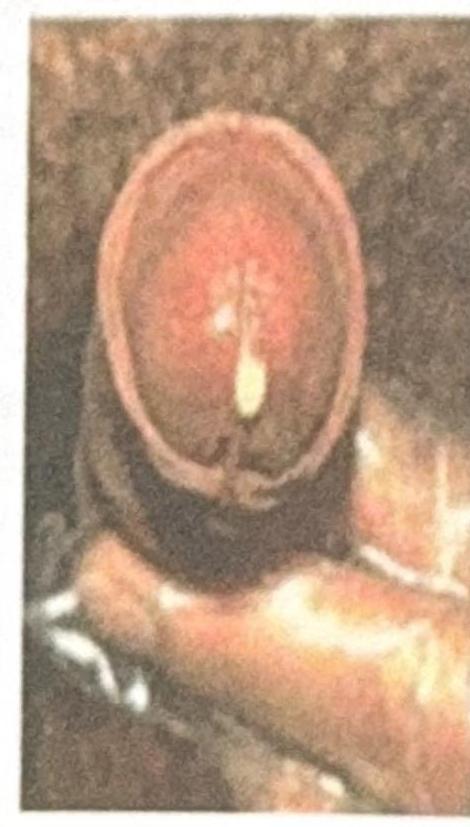
1 questionsA male patient presents with white discharge from the urethra, as shown in the image. What is the most probable causative organism?
NEET-PG 2021 - Microbiology NEET-PG Practice Questions and MCQs
Question 151: A male patient presents with white discharge from the urethra, as shown in the image. What is the most probable causative organism?
- A. Haemophilus ducreyi
- B. Klebsiella granulomatis
- C. Neisseria gonorrhoeae (Correct Answer)
- D. Treponema pallidum
Explanation: ***Neisseria gonorrhoeae*** - Among the given options, *Neisseria gonorrhoeae* is the **most probable causative organism** for **urethral discharge** in males. - Gonorrhea is a common sexually transmitted infection (STI) presenting with **purulent urethritis**, typically with thick, yellow-green discharge, though appearance can vary. - **Clinical note:** While classic gonococcal discharge is purulent and yellow-green, the clinical presentation can vary. None of the other organisms listed cause urethritis with discharge. *Haemophilus ducreyi* - This bacterium causes **chancroid**, a sexually transmitted infection characterized by **painful genital ulcers (chancres)** and **inguinal lymphadenopathy**, not urethral discharge. - Presents with ulcerative lesions, not discharge. *Klebsiella granulomatis* - This organism is responsible for **donovanosis** (granuloma inguinale), which manifests as **painless, progressive ulcerative lesions** on the genitals. - It does not cause urethral discharge; presents with beefy red granulomatous lesions. *Treponema pallidum* - This spirochete causes **syphilis**, which presents with **painless chancres** in the primary stage, **maculopapular rash** in the secondary stage, and gummas or neurological symptoms in later stages. - Urethral discharge is not a typical symptom of syphilis; primary lesions are ulcerative.
OB/GYN
2 questionsA 36-week pregnant woman with mitral stenosis has been on warfarin for anticoagulation. What is the most appropriate next step in her management?
A patient with second-degree cervical prolapse complains of dribbling of urine when coughing. What is the most likely diagnosis?
NEET-PG 2021 - OB/GYN NEET-PG Practice Questions and MCQs
Question 151: A 36-week pregnant woman with mitral stenosis has been on warfarin for anticoagulation. What is the most appropriate next step in her management?
- A. Continue Warfarin
- B. Aspirin + Heparin
- C. Shift to Low Molecular Weight (LMW) Heparin (Correct Answer)
- D. Switch to Aspirin
Explanation: ***Shift to Low Molecular Weight (LMW) Heparin*** - At 36 weeks gestation, **warfarin is contraindicated** due to its teratogenic effects and increased risk of **fetal bleeding**, especially during labor and delivery. - **LMW heparin** does not cross the placenta, making it a safer option for both mother and fetus in late pregnancy, and it can be discontinued prior to delivery to reduce bleeding risk. *Continue Warfarin* - Continuing warfarin at 36 weeks could lead to **fetal warfarin syndrome** if exposure occurred earlier, and significantly increases the risk of **fetal intracranial hemorrhage** during labor. - Warfarin has a narrow therapeutic window and requires close monitoring, making it less practical for ensuring fetal safety during an unpredictable labor and delivery. *Aspirin + Heparin* - While heparin is appropriate, the addition of **aspirin** to anticoagulation in a patient already on warfarin for mitral stenosis does not provide significant additional benefit and could **increase bleeding risk**. - **Unfractionated heparin (UFH)** is generally preferred over LMWH for patients requiring rapid reversal or close monitoring around delivery. *Switch to Aspirin* - **Aspirin alone is insufficient** for anticoagulation in a pregnant woman with mitral stenosis who has been on warfarin, as it does not adequately prevent thromboembolic events. - Mitral stenosis carries a high risk of **thrombus formation** and systemic embolization, necessitating more potent anticoagulation than aspirin provides.
Question 152: A patient with second-degree cervical prolapse complains of dribbling of urine when coughing. What is the most likely diagnosis?
- A. Cystitis
- B. Stress incontinence (Correct Answer)
- C. Overflow incontinence
- D. Functional incontinence
Explanation: ***Stress incontinence*** - **Stress incontinence** is characterized by involuntary urine leakage due to increased intra-abdominal pressure (e.g., coughing, sneezing), which is common in association with **pelvic organ prolapse** like a second-degree cervical prolapse. - The prolapse weakens the **pelvic floor muscles** and supporting structures around the urethra, diminishing its ability to maintain closure during sudden pressure changes. *Cystitis* - **Cystitis** is an inflammation of the bladder, typically presenting with symptoms like painful urination (dysuria), frequent urination, and urgency. - While it can cause bladder irritation, it does not directly lead to urine dribbling with coughing in the absence of other typical infection symptoms. *Overflow incontinence* - **Overflow incontinence** occurs due to an **overfilled bladder** that can't empty completely, leading to constant dribbling or leakage. - This typically results from a **bladder outlet obstruction** or an **underactive detrusor muscle**, not directly from increased abdominal pressure during coughing. *Functional incontinence* - **Functional incontinence** is when a person has control over their bladder but cannot reach the toilet in time due to **physical or cognitive impairments**. - It does not involve a problem with the urinary tract itself but rather with the ability to respond to the urge to urinate.
Pharmacology
3 questionsWhat is a potential consequence of administering indomethacin beyond 36 weeks of gestation?
What is the most suitable antibiotic to treat the condition shown in the image ?

A patient on multidrug therapy (MBMDT) for leprosy presents with inflammation over preexisting lesions and nerve involvement. What is the best approach for treatment?
NEET-PG 2021 - Pharmacology NEET-PG Practice Questions and MCQs
Question 151: What is a potential consequence of administering indomethacin beyond 36 weeks of gestation?
- A. Teratogenic
- B. No effect
- C. Premature closure of the patent ductus arteriosus (PDA) (Correct Answer)
- D. Still birth
- E. Oligohydramnios
Explanation: ***Premature closure of the patent ductus arteriosus (PDA)*** - **Indomethacin**, a non-steroidal anti-inflammatory drug (NSAID), inhibits **prostaglandin synthesis**, which is crucial for maintaining PDA patency in utero. - **Premature closure of the PDA** beyond 36 weeks of gestation can lead to **pulmonary hypertension** and **fetal heart failure**, as blood flow through the fetal circulation would be significantly altered. - This is the **most serious cardiovascular complication** of indomethacin use in late pregnancy. *Teratogenic* - While some medications can be teratogenic (cause birth defects), **indomethacin** is not generally considered to have a significant teratogenic risk when used in the third trimester. - The primary concern with NSAID use in late pregnancy is related to their effects on fetal circulation and renal function, not structural anomalies. *No effect* - This statement is incorrect because **indomethacin** has well-documented and significant effects on fetal circulation, particularly on the **ductus arteriosus**, especially in the third trimester. - Its mechanism of action profoundly impacts the maintenance of the fetal circulatory shunts. *Still birth* - While **indomethacin** use in late pregnancy can lead to serious fetal complications such as **pulmonary hypertension** and **renal dysfunction**, leading to **fetal compromise**, it does not directly or exclusively cause stillbirth. - The specific and most direct consequence on the cardiovascular system is the premature closure of the PDA. *Oligohydramnios* - While **oligohydramnios** (decreased amniotic fluid) can occur with prolonged NSAID use due to **decreased fetal urine output** from renal effects, this is not the primary concern beyond 36 weeks. - The more immediate and serious risk is **premature PDA closure** with its cardiovascular consequences.
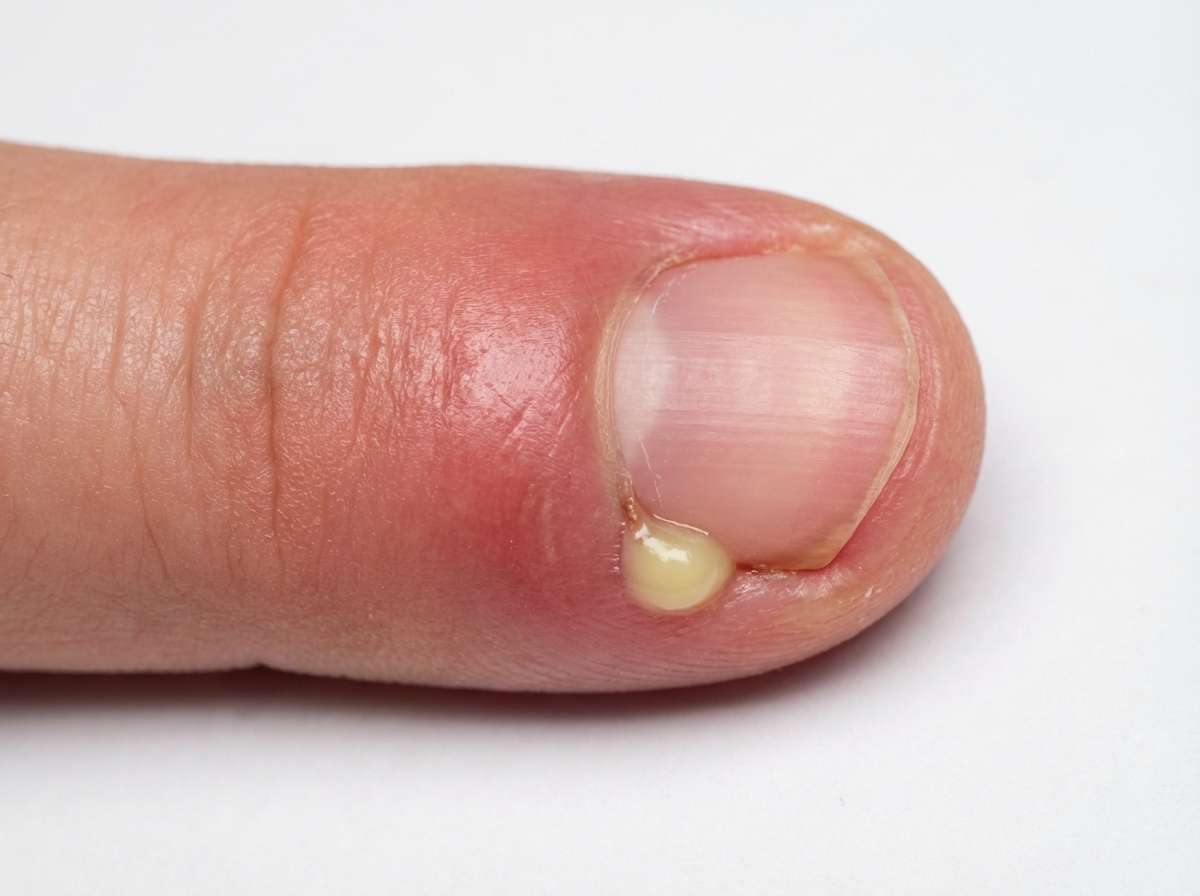
Question 152: What is the most suitable antibiotic to treat the condition shown in the image ?
- A. Norfloxacin
- B. Amoxicillin & Clavulanic Acid (Correct Answer)
- C. Metronidazole
- D. Amikacin
- E. Ciprofloxacin
Explanation: ***Amoxicillin & Clavulanic Acid*** - The image shows a **paronychia** (an infection around the fingernail), likely bacterial, which typically involves **Gram-positive cocci** like *Staphylococcus aureus* or *Streptococcus spp.* - **Amoxicillin & Clavulanic Acid** is a broad-spectrum antibiotic effective against these common skin pathogens, including **beta-lactamase producing strains** of *Staphylococcus aureus* - This is the **first-line empiric treatment** for uncomplicated paronychia *Norfloxacin* - **Norfloxacin** is a **fluoroquinolone** primarily used for **urinary tract infections** and some gastrointestinal infections - It has limited efficacy against the common skin flora responsible for paronychia and is not a first-line choice for skin and soft tissue infections *Metronidazole* - **Metronidazole** is an antibiotic primarily effective against **anaerobic bacteria** and certain parasites - Paronychia is typically caused by aerobic bacteria, making metronidazole an inappropriate choice for empiric treatment *Amikacin* - **Amikacin** is an **aminoglycoside** antibiotic, usually reserved for serious Gram-negative bacterial infections due to its potential **ototoxicity** and **nephrotoxicity** - It is administered intravenously and is not suitable for a localized skin infection like paronychia unless there are severe systemic complications *Ciprofloxacin* - **Ciprofloxacin** is a **fluoroquinolone** with broader coverage than norfloxacin, including some Gram-positive organisms - However, it has **suboptimal activity against Streptococcus species** and methicillin-susceptible *S. aureus* compared to beta-lactam antibiotics - FDA guidelines recommend **avoiding fluoroquinolones for uncomplicated infections** due to serious side effects (tendon rupture, peripheral neuropathy) when safer alternatives exist
Question 153: A patient on multidrug therapy (MBMDT) for leprosy presents with inflammation over preexisting lesions and nerve involvement. What is the best approach for treatment?
- A. Continue anti-leprosy treatment (ALT) and start thalidomide
- B. Continue anti-leprosy treatment (ALT) and start steroids (Correct Answer)
- C. Stop anti-leprosy treatment (ALT) and start thalidomide
- D. Stop anti-leprosy treatment (ALT) and start steroids
- E. Stop anti-leprosy treatment (ALT) temporarily and reassess
Explanation: ***Continue anti-leprosy treatment (ALT) and start steroids*** - The patient is experiencing a **type 1 leprosy reaction (reversal reaction)**, characterized by inflammation over existing lesions and nerve involvement, which requires immediate immunosuppression with **steroids**. - **Anti-leprosy treatment (ALT)** must be continued as the reaction is an immunological phenomenon independent of the ongoing bacterial eradication and stopping it could lead to relapse. *Continue anti-leprosy treatment (ALT) and start thalidomide* - **Thalidomide** is primarily used for **type 2 leprosy reactions (erythema nodosum leprosum, ENL)**, which present with new, painful, tender nodules, fever, and systemic symptoms, not typically aggravated pre-existing lesions and nerve involvement. - While ALT is correctly continued, thalidomide is not the first-line treatment for a type 1 reaction due to its specific indication for ENL. *Stop anti-leprosy treatment (ALT) and start thalidomide* - **Stopping ALT** is incorrect as it can lead to **relapse** of leprosy and development of **drug resistance**. - **Thalidomide** is not indicated for type 1 leprosy reactions, making this approach inappropriate. *Stop anti-leprosy treatment (ALT) and start steroids* - While **steroids** are the correct treatment for **type 1 leprosy reactions**, **stopping ALT** is a critical error that can have severe consequences for the patient's leprosy management. - The reaction is an immune response to dead or dying bacilli, not a failure of ALT, so treatment should be completed. *Stop anti-leprosy treatment (ALT) temporarily and reassess* - **Temporarily stopping ALT** is incorrect even during a leprosy reaction, as reactions are immune-mediated responses to treatment, not adverse drug effects requiring cessation. - Interrupting treatment can lead to **incomplete bacterial eradication**, **relapse**, and potential **drug resistance**; the standard approach is to continue ALT while managing the reaction with immunosuppression.
Physiology
1 questionsWhat is the function of the umbilical artery in fetal circulation?
NEET-PG 2021 - Physiology NEET-PG Practice Questions and MCQs
Question 151: What is the function of the umbilical artery in fetal circulation?
- A. Provide nutrients
- B. None of the options
- C. Carry oxygenated blood from the placenta to the fetus
- D. Carry deoxygenated blood from the fetus to the placenta (Correct Answer)
Explanation: ***Carry deoxygenated blood from the fetus to the placenta*** - The **umbilical arteries** are responsible for transporting **deoxygenated blood** and waste products away from the fetal circulation to the placenta. - There are typically **two umbilical arteries** that branch off the internal iliac arteries of the fetus. *Provide nutrients* - **Nutrient delivery** to the fetus is primarily a function of the **umbilical vein**, which carries oxygenated and nutrient-rich blood from the placenta. - The umbilical arteries carry metabolic waste products away from the fetus, not nutrients to it. *None of the options* - This option is incorrect because one of the provided options accurately describes the function of the umbilical artery. - The specific role of the umbilical artery is distinct from other fetal circulatory components. *Carry oxygenated blood from the placenta to the fetus* - This function is performed by the **umbilical vein**, which brings **oxygen-rich blood** and nutrients from the placenta to the fetus. - The umbilical arteries carry blood in the opposite direction and with a different oxygenation status.