Internal Medicine
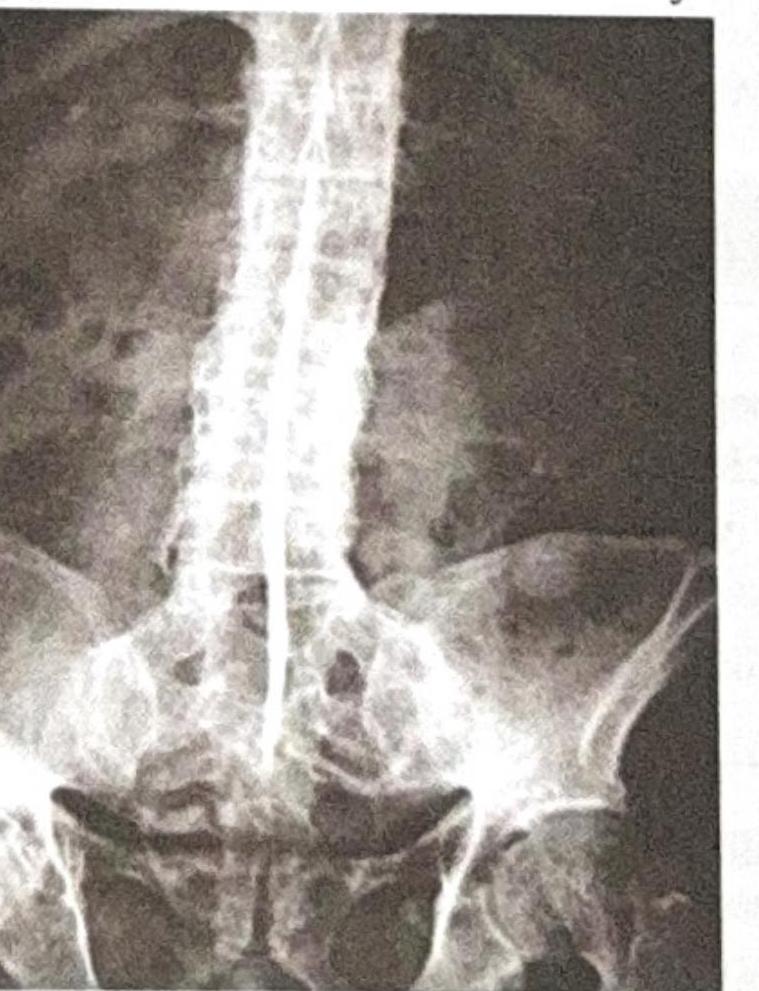
1 questionsA 20-year-old patient presents with chronic low backache and early morning stiffness for the last 2 years. For the past 6 months, they have also experienced bilateral heel pain. What is the most likely diagnosis?
NEET-PG 2021 - Internal Medicine NEET-PG Practice Questions and MCQs
Question 131: A 20-year-old patient presents with chronic low backache and early morning stiffness for the last 2 years. For the past 6 months, they have also experienced bilateral heel pain. What is the most likely diagnosis?
- A. Mechanical pain
- B. Ankylosing spondylitis (Correct Answer)
- C. Disc prolapse
- D. TB spine
Explanation: ***Ankylosing spondylitis*** - The combination of **chronic low backache** and **early morning stiffness** is highly characteristic of inflammatory back pain seen in ankylosing spondylitis. [1] - **Bilateral heel pain** (enthesitis) is a common extra-articular manifestation of ankylosing spondylitis, further supporting the diagnosis. [1] *Mechanical pain* - **Mechanical back pain** typically worsens with activity and improves with rest, in contrast to inflammatory back pain which improves with activity. [2] - It does not usually present with systemic features or enthesitis like heel pain. [2] *Disc prolapse* - **Disc prolapse** usually presents with radicular pain (nerve pain) that radiates down the leg, often unilateral, and is exacerbated by specific movements or coughing. - Early morning stiffness and bilateral heel pain are not typical features of a disc prolapse. *TB spine* - **TB spine** (Pott's disease) often presents with constitutional symptoms like fever, weight loss, and night sweats along with back pain, which are not mentioned here. - While it causes chronic back pain and stiffness, it's typically more localized with vertebral collapse and neurological deficits, and generally doesn't cause bilateral heel pain.
OB/GYN
1 questionsA 27-year-old woman who delivered a female child 9 months ago presents with complaints of absent periods since childbirth. She has been using contraceptive methods for family planning. Her serum beta-hCG level is 4.9 mIU/ ml , prolactin level is $88 \mathrm{ng} / \mathrm{ml}$, and TSH is 3.8 $\mu \mathrm{IU} / \mathrm{ml}$. What is the most likely reason for her amenorrhea?
NEET-PG 2021 - OB/GYN NEET-PG Practice Questions and MCQs
Question 131: A 27-year-old woman who delivered a female child 9 months ago presents with complaints of absent periods since childbirth. She has been using contraceptive methods for family planning. Her serum beta-hCG level is 4.9 mIU/ ml , prolactin level is $88 \mathrm{ng} / \mathrm{ml}$, and TSH is 3.8 $\mu \mathrm{IU} / \mathrm{ml}$. What is the most likely reason for her amenorrhea?
- A. Lactational amenorrhea (Correct Answer)
- B. Hypothyroidism
- C. Prolactinoma
- D. Normal pregnancy
Explanation: ***Lactational amenorrhea*** - The patient describes a history of recent childbirth (9 months ago), amenorrhea, and an elevated **prolactin level** (**88 ng/mL**). - While contraceptive methods are being used, persistent **postpartum amenorrhea** with hyperprolactinemia is commonly seen in women who are breastfeeding, even if intermittently. *Hypothyroidism* - Although **hypothyroidism** can cause amenorrhea, the patient's TSH level of **3.8 μIU/mL** is within the normal reference range, making hypothyroidism an unlikely cause. - While mild thyroid dysfunction can impact menstrual cycles, this TSH level alone is not sufficient to explain **amenorrhea**. *Prolactinoma* - A **prolactinoma** is characterized by significantly elevated prolactin levels, often much higher than the **88 ng/mL** seen in this patient (typically > 100-200 ng/mL). - Given the recent childbirth, the elevated prolactin is more likely physiological due to lactation rather than a **pathological tumor**. *Normal pregnancy* - The patient's serum **beta-hCG level of 4.9 mIU/mL** is below the threshold typically considered diagnostic for pregnancy (usually >25 mIU/mL). - This value indicates that a **normal ongoing pregnancy** is highly unlikely.
Obstetrics and Gynecology
5 questionsA pregnant woman comes for a routine antenatal checkup. She had a history of a twin pregnancy one year ago. What is her gravida and para status?
Which of the following is NOT typically associated with uterine didelphys?
What is the preferred management of a uterine septum?
A woman with a history of primary infertility is found to have two fibroids in the cornual region and bilateral tubal blockage, with normal ovulation and semen analysis. What is the most appropriate treatment?
A 24-year-old female patient presents with a few weeks of amenorrhea, a left adnexal mass on ultrasound, and a beta-hCG level of $2500 \mathrm{mIU} / \mathrm{mL}$. No fetal heart rate is detected on the ultrasound. What is the most appropriate management?
NEET-PG 2021 - Obstetrics and Gynecology NEET-PG Practice Questions and MCQs
Question 131: A pregnant woman comes for a routine antenatal checkup. She had a history of a twin pregnancy one year ago. What is her gravida and para status?
- A. G2P1 (Correct Answer)
- B. G2P3
- C. G2P2
- D. G2P0
Explanation: ***G2P1*** - **Gravida (G)** refers to the total number of confirmed pregnancies, regardless of outcome. This current pregnancy is her second, making her G2. - **Para (P)** denotes the number of pregnancies that have reached viability (typically 20 weeks gestation or more), producing one or more fetuses. Her previous twin pregnancy, regardless of the number of babies, counts as one para event. *G2P3* - While G2 is correct (current pregnancy + previous twin pregnancy), P3 would imply three separate birth events beyond viability, which is not supported by the history of one twin pregnancy. - The number of babies born in a single pregnancy beyond viability does not increase the 'P' count; it refers to the number of pregnancies carried to term. *G2P2* - G2 is correct, but P2 would mean she had two separate pregnancies that reached viability. She only had one previous pregnancy that reached viability (the twin pregnancy). - The para count is determined by the number of deliveries, not the number of fetuses delivered. *G2P0* - While G2 is correct, P0 would mean she has never carried a pregnancy to the point of viability. - Her history clearly states a twin pregnancy one year ago, indicating a previous pregnancy carried to term, making P0 incorrect.
Question 132: Which of the following is NOT typically associated with uterine didelphys?
- A. Premature labor
- B. Endometriosis (Correct Answer)
- C. Transverse lie
- D. Repeated abortion
Explanation: ***Endometriosis*** - **Endometriosis** is a condition where tissue similar to the lining of the uterus grows outside the uterus; it is not typically associated with specific Müllerian anomalies like uterine didelphys. - While both conditions can cause pelvic pain or infertility, there isn't a direct causal link or increased prevalence of endometriosis specifically due to uterine didelphys. *Premature labor* - **Uterine didelphys** involves two separate uteri, each with its own cervix, which can lead to a smaller uterine cavity in each horn, increasing the risk of **premature labor**. - The abnormal uterine shape and reduced cavity size can compromise the ability to carry a pregnancy to term. *Transverse lie* - The presence of **two separate uterine horns** in uterine didelphys can significantly alter the shape of the uterine cavity, making it difficult for the fetus to assume a regular **longitudinal lie**. - This anatomical variation often predisposes to **malpresentation**, such as **transverse lie**, where the baby lies horizontally across the uterus. *Repeated abortion* - Uterine didelphys is associated with a higher incidence of **repeated abortions** due to various factors including the smaller size of each uterine cavity, potential cervical incompetence, and altered blood supply. - The structural abnormalities can prevent proper implantation or adequate growth of the fetus, leading to recurrent pregnancy losses.
Question 133: What is the preferred management of a uterine septum?
- A. Laparoscopic resection of septum
- B. Uterine metroplasty
- C. Laparotomy and resection
- D. Hysteroscopic resection of septum (Correct Answer)
Explanation: ***Hysteroscopic resection of septum*** - **Hysteroscopic resection of a uterine septum** is the preferred management due to its minimally invasive nature and high success rates in improving reproductive outcomes. - This procedure allows direct visualization and precise removal of the septal tissue, preserving the healthy uterine musculature. *Laparoscopic resection of septum* - While laparoscopic approaches are minimally invasive, directly resecting a uterine septum laparoscopically is generally **not the primary method**. - Laparoscopy is often used for diagnostics or in conjunction with hysteroscopy for guidance, but not typically for primary septal resection alone. *Uterine metroplasty* - **Uterine metroplasty** is a broader term for surgical reconstruction of the uterus, typically reserved for more complex uterine anomalies like a **bicornuate uterus**. - It involves more extensive surgical remodeling of the uterine cavity and is generally **more invasive** than hysteroscopic septal resection. *Laparotomy and resection* - **Laparotomy** involves a large abdominal incision and is a more invasive surgical approach with a longer recovery period. - It is generally **reserved for very complex uterine malformations** or cases where hysteroscopic or laparoscopic approaches are not feasible or have failed.
Question 134: A woman with a history of primary infertility is found to have two fibroids in the cornual region and bilateral tubal blockage, with normal ovulation and semen analysis. What is the most appropriate treatment?
- A. Laparoscopic Myomectomy
- B. Uterine Artery Embolization
- C. Hysterectomy
- D. Assisted Reproductive Technology (ART) (Correct Answer)
Explanation: ***Assisted Reproductive Technology (ART)*** - ART, specifically **in vitro fertilization (IVF)**, is the most appropriate treatment as it bypasses both the **tubal blockage** and the **cornual fibroids**, which can interfere with sperm transport and implantation, respectively. - While myomectomy could address the fibroids, it doesn't resolve the tubal blockage, making ART the most direct path to conception given the multifactorial infertility. *Laparoscopic Myomectomy* - This procedure would remove the **fibroids**, which may improve uterine receptivity and reduce potential pregnancy complications. - However, it would not address the **bilateral tubal blockage**, meaning natural conception would still be impossible without further intervention, making it less appropriate as a standalone treatment for primary infertility with multiple causes. *Uterine Artery Embolization* - **Uterine artery embolization (UAE)** is primarily used to manage symptoms of fibroids, such as bleeding and pain, and is generally **not recommended** for women desiring future fertility due to potential risks to ovarian function and uterine blood supply. - It also does not resolve the **tubal factor infertility**. *Hysterectomy* - **Hysterectomy** is the surgical removal of the uterus and is a definitive treatment for problematic fibroids. - However, it permanently **sterilizes** the patient and is therefore completely inappropriate for a woman desiring fertility.
Question 135: A 24-year-old female patient presents with a few weeks of amenorrhea, a left adnexal mass on ultrasound, and a beta-hCG level of $2500 \mathrm{mIU} / \mathrm{mL}$. No fetal heart rate is detected on the ultrasound. What is the most appropriate management?
- A. Expectant management
- B. Salpingectomy
- C. Milking of tube
- D. Single dose methotrexate (Correct Answer)
Explanation: **Single dose methotrexate** - A **beta-hCG level of 2500 mIU/mL** in conjunction with an adnexal mass and no fetal heart rate visible on ultrasound is consistent with an **unruptured ectopic pregnancy** in a hemodynamically stable patient. - **Methotrexate** is a systemic treatment that inhibits trophoblastic cell growth, leading to the resolution of the ectopic pregnancy without surgery. *Expectant management* - This approach is typically reserved for patients with very **low and declining beta-hCG levels** who are completely asymptomatic and have no evidence of rupture. - With a beta-hCG of 2500 mIU/mL and a definite adnexal mass, the risk of rupture is significant, making expectant management inappropriate. *Salpingectomy* - **Salpingectomy** (surgical removal of the fallopian tube) is usually indicated for **ruptured ectopic pregnancies**, hemodynamically unstable patients, or when medical management fails. - While it's an effective treatment, the patient's current presentation (unruptured, stable beta-hCG) allows for a less invasive medical approach first. *Milking of tube* - **"Milking" or "expressing" the tube** is an outdated and potentially harmful maneuver that involves squeezing the fallopian tube to push the ectopic pregnancy out. - This method is associated with **high rates of recurrence** and potential for tubal damage, and is not a recommended treatment for ectopic pregnancy.
Orthopaedics
1 questionsA patient fell off a bicycle and now complains of pain around the hip, with shortening of the affected limb. The hip is held in a position of flexion, adduction, and internal rotation. What is the most likely diagnosis?
NEET-PG 2021 - Orthopaedics NEET-PG Practice Questions and MCQs
Question 131: A patient fell off a bicycle and now complains of pain around the hip, with shortening of the affected limb. The hip is held in a position of flexion, adduction, and internal rotation. What is the most likely diagnosis?
- A. Intertrochanteric fracture (IT fracture)
- B. Transcervical fracture
- C. Posterior dislocation (Correct Answer)
- D. Anterior dislocation
Explanation: **Posterior dislocation** - **Posterior hip dislocations** typically occur after high-energy trauma (e.g., falls from height, motor vehicle accidents) and present with the affected limb in a classic position of **flexion, adduction, and internal rotation**. - **Shortening of the limb** is also a hallmark sign, often due to the femoral head displacing posteriorly and superiorly. *Intertrochanteric fracture (IT fracture)* - **Intertrochanteric fractures** usually present with the affected limb in **external rotation** and shortening, which is contrary to the internal rotation described in the case. - While pain is present, the specific rotational deformity helps differentiate it from a hip dislocation. *Transcervical fracture* - **Transcervical fractures** (femoral neck fractures) also typically present with the leg in **external rotation** and shortening. - These fractures are common in older adults and often associated with less severe trauma or falls. *Anterior dislocation* - **Anterior hip dislocations** are less common and typically present with the affected limb in a position of **flexion, abduction, and external rotation**. - This presentation is directly opposite to the adduction and internal rotation described in the question.
Pharmacology
1 questionsA hypertensive patient wants to conceive. Which of the following medications needs to be stopped before pregnancy?
NEET-PG 2021 - Pharmacology NEET-PG Practice Questions and MCQs
Question 131: A hypertensive patient wants to conceive. Which of the following medications needs to be stopped before pregnancy?
- A. ACE inhibitors (Correct Answer)
- B. Alpha Methyl dopa
- C. Calcium Channel Blockers
- D. Labetalol
- E. Hydralazine
Explanation: ***ACE inhibitors*** - **ACE inhibitors** are **teratogenic** and can cause **fetal kidney damage**, **oligohydramnios**, and **fetal death** if used during pregnancy. - They should be discontinued before conception or immediately upon pregnancy confirmation, and an alternative safe antihypertensive should be initiated. *Alpha Methyl dopa* - **Alpha-methyldopa** is considered one of the **first-line agents** for managing **hypertension in pregnancy** due to its established safety profile. - It reduces peripheral resistance without significantly affecting renal or uteroplacental blood flow. *Calcium Channel Blockers* - **Calcium channel blockers (CCBs)** like nifedipine and amlodipine are **generally considered safe** for use during pregnancy, especially dihydropyridines. - They are often used as **second-line treatments** for managing hypertension in pregnant women. *Labetalol* - **Labetalol** is a **beta-blocker** that is widely used and considered **safe** for treating **hypertension in pregnancy**. - It effectively lowers blood pressure without significant adverse effects on the fetus. *Hydralazine* - **Hydralazine** is a direct vasodilator that is **safe** for use in pregnancy and is commonly used for **acute management** of severe hypertension in pregnant women. - It has a long history of safe use during pregnancy without teratogenic effects.
Radiology
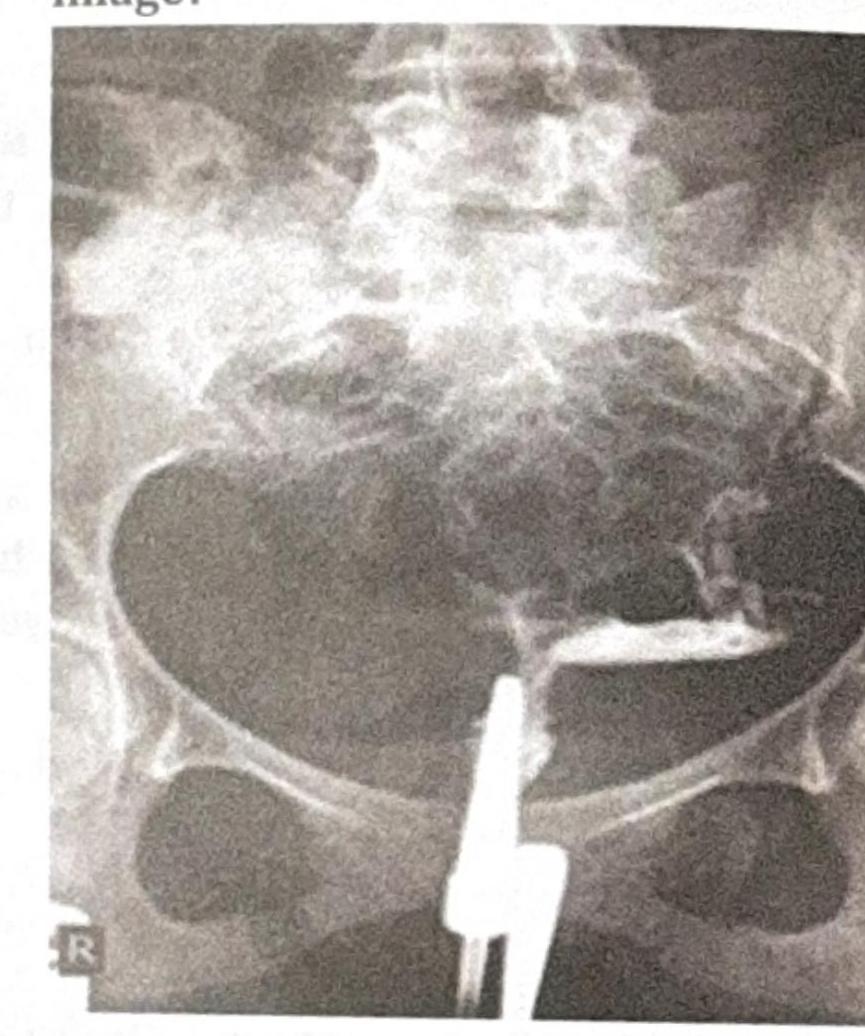
1 questionsWhat is the modality of the test shown in the image?

NEET-PG 2021 - Radiology NEET-PG Practice Questions and MCQs
Question 131: What is the modality of the test shown in the image?
- A. Hysterosalpingography (Correct Answer)
- B. Hysteroscopy
- C. Laparoscopy
- D. Saline infusion sonography
Explanation: ***Hysterosalpingography*** - The image shows a **contrast-filled uterus and fallopian tubes**, characteristic of a **hysterosalpingogram (HSG)**. - An HSG uses **X-rays** and **radiopaque contrast media** to visualize the uterine cavity and assess fallopian tube patency. *Hysteroscopy* - **Hysteroscopy** involves direct visualization of the uterine cavity using a **fiber optic endoscope** inserted through the cervix. - It does not produce an X-ray image with contrast filling the fallopian tubes. *Laparoscopy* - **Laparoscopy** is a minimally invasive surgical procedure that involves inserting a **laparoscope** through an incision in the abdominal wall to view pelvic organs externally. - This image clearly depicts an internal view of the uterus and tubes through contrast, not an external, endoscopic view. *Saline infusion sonography* - **Saline infusion sonography (SIS)**, also known as sonohysterography, uses **ultrasound** imaging during the infusion of saline into the uterus. - While it assesses the uterine cavity, it is an ultrasound-based technique and does not involve X-ray contrast passing through the fallopian tubes, as seen in the image.